
CPI Training Online: Complete Guide to Crisis Prevention Certification Formats, Requirements, and Preparation in 2026
CPI training online explained: blended vs in-person formats, certification requirements, cost, renewal timelines, and free practice questions to pass. 📝
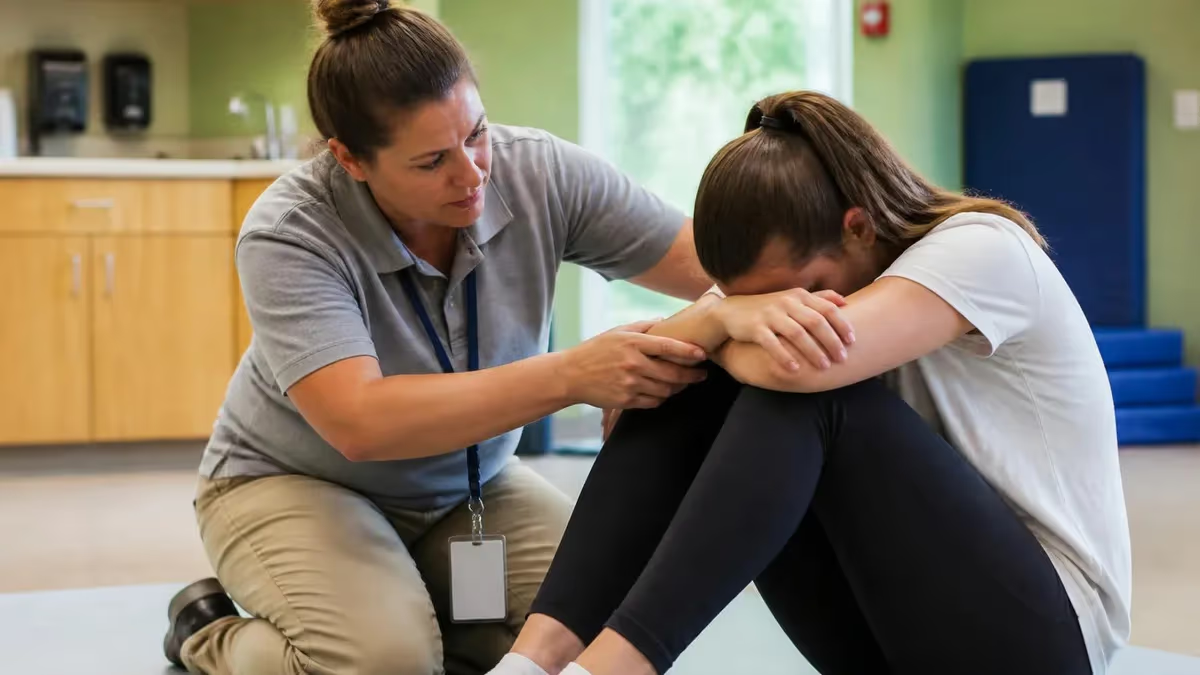
CPI training online has become the default starting point for healthcare workers, educators, behavioral health staff, and direct-support professionals who need a recognized crisis prevention credential. The Crisis Prevention Institute pairs self-paced digital coursework with a hands-on classroom component, creating a blended model that fits busy clinical and school schedules. If you are searching for how the online portion works, what it covers, and whether a fully virtual certificate is even valid, this guide walks through every step so you arrive at your in-person session prepared and confident rather than guessing. Practice with the free Crisis Prevention Intervention Certification practice test on PracticeTestGeeks (7 questions with answer explanations).
The phrase "online training" causes a lot of confusion, and clearing it up early saves you money and frustration. CPI's Nonviolent Crisis Intervention program is intentionally blended: the cognitive material, the verbal de-escalation theory, and the risk-assessment frameworks live online, while the physical disengagement and holding skills must be practiced and evaluated face to face. No legitimate provider issues a complete CPI card from a video alone, because employers and accreditation bodies require demonstrated competency in person before signing off on a worker.
Understanding the structure matters because most learners underestimate the cognitive load of the online module. You are not clicking through slides; you are absorbing a behavioral model that includes the Crisis Development Model, the Integrated Experience, and a structured cpi training online framework that guides how staff weigh risk against intervention. Treating the online portion as a checkbox is the most common reason people freeze during the classroom practical and have to repeat the session entirely.
This article is written for a United States audience navigating real workplace requirements. Whether your employer mandates certification for a hospital unit, a special-education classroom, a residential treatment facility, or a juvenile-justice setting, the expectations are similar: complete the e-learning, pass the knowledge checks, attend the instructor-led skills day, and pass a competency evaluation. We will cover formats, costs, timelines, renewal cycles, and the exact study habits that separate first-attempt passers from repeaters.
You will also find honest discussion of what online CPI cannot do. It cannot replace muscle memory for safe physical interventions, it cannot certify you without an evaluator present, and it cannot be rushed the night before your skills day. The learners who struggle are almost always the ones who treated the digital component as background noise during a commute instead of focused study with notes, replays, and self-quizzing on the core behavioral models.
By the end, you will know precisely how to sequence your preparation, which practice questions sharpen the concepts that matter, and how to walk into your instructor-led session ready to demonstrate both verbal and physical competency. We have layered in free practice quizzes, a study checklist, a realistic timeline, and a frequently-asked-questions section drawn from the questions US learners ask most often before they ever decide to enroll.
Free Crisis Prevention Intervention Certification Study Tools
Interactive Crisis Prevention Intervention Certification resources on PracticeTestGeeks, free to start:
- Crisis Prevention Intervention Certification flashcards — review key terms and concepts card by card
- Crisis Prevention Intervention Certification study guide — topic-by-topic overview of what the exam covers
- Crisis Prevention Intervention Certification cheat sheet — one-page printable summary for last-minute review
CPI Training Online by the Numbers
- CPI's Nonviolent Crisis Intervention 3rd Edition Instructor Certification program requires completion of its program components and an exam passing score of 80%. (Crisis Prevention Institute)
- CPI Instructor Certification is valid for two years from the original certification date. (Crisis Prevention Institute)
- CPI Certified Instructors must attend renewal training every two years to maintain certification. (Crisis Prevention Institute)
- The CPI Nonviolent Crisis Intervention 3rd Edition Instructor Certification final exam is completed online. (Crisis Prevention Institute)
- Organizations select CPI Instructor Certification candidates with CPI based on communication skills, teaching ability, and commitment to the training philosophy. (Crisis Prevention Institute)
Facts verified Oct 18, 2026 against Crisis Prevention Institute. Dates that have passed are removed automatically.
CPI Exam at a Glance
| Item | Detail | Official source |
|---|---|---|
| Passing score (Nonviolent Crisis Intervention Instructor Certification, 3rd Edition) | 80%, plus completion of program components | Crisis Prevention Institute |
| Validity (CPI Instructor Certification) | 2 years from original certification | Crisis Prevention Institute |
| Renewal (CPI Instructor Certification) | Renewal training every 2 years | Crisis Prevention Institute |
| Delivery (Nonviolent Crisis Intervention Instructor Certification, 3rd Edition) | Online final exam | Crisis Prevention Institute |
| Eligibility (CPI Instructor Certification) | Organization-selected candidates with communication and teaching skills | Crisis Prevention Institute |
Facts verified Oct 18, 2026 against Crisis Prevention Institute. Dates that have passed are removed automatically.
How CPI Training Online Works: The Core Steps
Your employer or training coordinator registers you and you receive login credentials. The online portal hosts the cognitive modules, knowledge checks, and downloadable reference materials you complete before your scheduled classroom day.
Work through de-escalation theory, the Crisis Development Model, and risk-assessment frameworks. Each module includes embedded knowledge checks you must pass before unlocking the next section and earning your e-learning completion certificate.
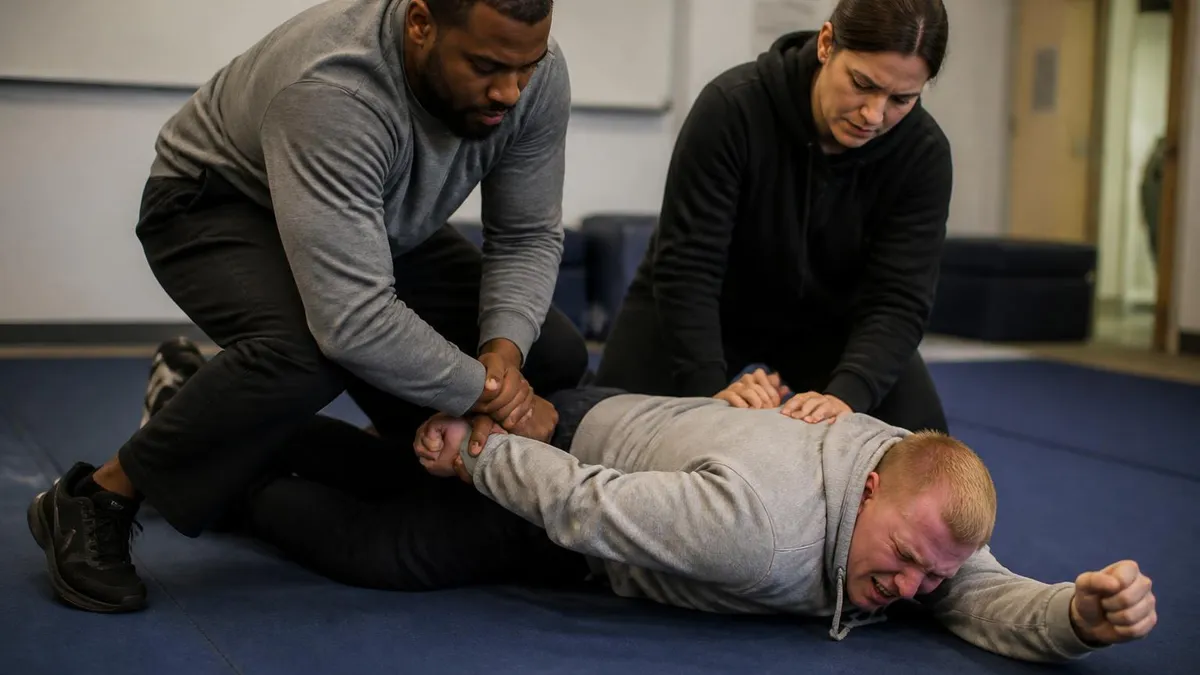
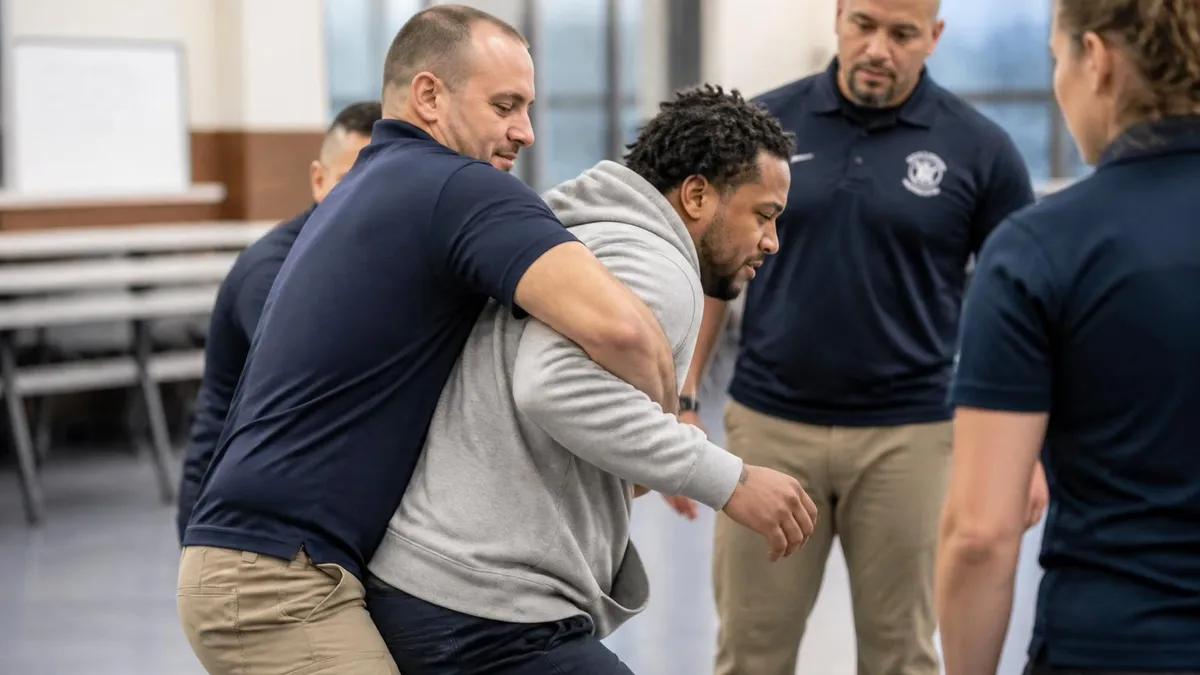
Meet your certified instructor in person to practice verbal interventions and safe physical disengagement techniques. This face-to-face component cannot be skipped and is required for a valid, employer-recognized certification.
Demonstrate both knowledge and physical skills under instructor observation. Once you meet the competency standard, you receive your dated CPI certification card confirming you are cleared to apply the techniques on the job.
The online cognitive module is the intellectual backbone of CPI, and it covers far more than a quick orientation. You begin with the Crisis Development Model, a four-stage map of escalating behavior: anxiety, defensive, risk behavior, and tension reduction. For each behavior level, CPI pairs a recommended staff response, and memorizing those pairings is essential because the classroom evaluation and every knowledge check assume you can match a behavior to the correct intervention instantly without hesitation or second-guessing yourself.
Next, the online material teaches the Integrated Experience, the principle that staff behavior and the individual's behavior continuously influence one another. This concept reframes de-escalation as something you control through your own tone, posture, and word choice rather than something you simply react to. Learners who internalize the Integrated Experience tend to perform far better in role-play, because they understand that a calm, deliberate response can interrupt an escalation cycle before it reaches the risk-behavior stage entirely.
The verbal escalation continuum is another major online unit. You study questioning, refusal, release, intimidation, and tension reduction, learning a specific supportive response for each. CPI emphasizes that most crises never require physical intervention, so the online curriculum invests heavily in language, empathy, and the difference between an information-seeking question and a challenging question designed to test your authority or provoke a reaction from staff members.
Risk assessment is where the online portion connects to real decision-making, and this is where a structured framework like the cpi training online matrix earns its place in your notes. The module teaches you to weigh the likelihood and severity of harm against the risks of intervening, so you never default to physical techniques when a verbal or environmental option is safer for everyone, including the person in crisis and bystanders nearby.
The online content also addresses the physical-skills theory you will perform in class. Before you ever touch a partner, you learn the principles behind personal safety, the rationale for least-restrictive interventions, and the post-crisis debriefing model. CPI frames physical techniques as last resorts governed by reasonable, proportionate, and necessary standards, and the online theory ensures you understand the why before the classroom drills the how into your muscle memory.
Finally, the module covers documentation and the COPING model used in post-crisis debriefing. You learn how to reconnect with the individual, review what happened, and plan to prevent recurrence. Many learners overlook this section because it feels administrative, but knowledge checks frequently test it, and employers value staff who can document an incident clearly and lead a constructive debrief that restores the therapeutic relationship after a difficult event.
CPI Training Online Formats Compared
The blended format is CPI's flagship model and the one most US employers use. You complete the cognitive e-learning online at your own pace, then attend a shorter in-person skills day. This reduces classroom time, lets staff learn theory on individual schedules, and concentrates instructor hours on hands-on practice and competency evaluation rather than lecturing through slides everyone could read alone at home.
Blended works best for organizations training many staff who cannot all leave the floor at once. Learners finish the online portion across a week, then attend a focused practical. The trade-off is discipline: because nobody watches you click through modules, it is easy to skim. Treat the online segment as graded study, take notes, and you will arrive ready for the demanding physical evaluation.
Is CPI Training Online Right for You?
- +Complete cognitive modules on your own schedule around shift work
- +Pause, replay, and review difficult concepts as many times as needed
- +Reduces time away from clinical or classroom duties
- +Standardized, consistent content delivery across an entire organization
- +Built-in knowledge checks confirm understanding before the skills day
- +Downloadable reference materials you keep for ongoing review
- +Lets employers train large cohorts without scheduling everyone at once
- −Cannot certify you alone — an in-person skills day is mandatory
- −Requires self-discipline since no one monitors your progress
- −Easy to skim and arrive underprepared for the physical evaluation
- −No live instructor to answer questions in pure self-paced mode
- −Physical disengagement skills cannot be learned from video
- −Some learners retain less without face-to-face instruction
- −Technical or login issues can delay access to required modules
CPI Training Online Pre-Enrollment Readiness Checklist
- ✓Confirm your employer requires CPI specifically, not a different program like MANDT or Handle With Care.
- ✓Verify the course includes a required in-person skills day, not online only.
- ✓Check whether you need the Nonviolent Crisis Intervention or Verbal Intervention tier.
- ✓Ask which certification validity period your employer accepts (one or two years).
- ✓Test your device and browser can access the e-learning portal before day one.
- ✓Block focused study time for the cognitive modules instead of clicking through during a commute.
- ✓Download and print the reference materials for note-taking during the modules.
- ✓Schedule your in-person skills day before starting so you have a firm deadline.
- ✓Practice the Crisis Development Model behavior-to-response pairings until they are automatic.
- ✓Complete free practice questions to identify weak areas before the classroom evaluation.
Online alone never equals a valid CPI card
No matter how a provider markets it, a fully virtual or video-only CPI certificate is not recognized by US hospitals, schools, or behavioral health employers. The physical disengagement and holding techniques must be demonstrated and evaluated in person. Always confirm your enrollment includes a scheduled, instructor-led skills day before you pay.
Certification, renewal, and validity cause more confusion than any other part of CPI training online, so it pays to understand the lifecycle before you enroll. When you complete both the online cognitive modules and the in-person skills evaluation, your instructor issues a dated certification confirming you met the competency standard. That date matters because CPI certifications expire, and most US employers require renewal on a fixed cycle to keep your credential active and your unit fully compliant.
The standard renewal window is one to two years depending on your employer's policy and the specific program tier. Healthcare and behavioral-health settings often mandate annual recertification because regulatory bodies and accreditation surveyors expect current credentials on file. Schools and lower-risk environments may accept a two-year cycle. Always confirm the exact expiration your organization enforces, because letting a card lapse can pull you off direct-care duties until you requalify, which disrupts staffing badly.
Renewal is generally shorter than initial certification but still includes both components. You typically refresh the cognitive content online, then attend an abbreviated in-person skills session to re-demonstrate competency. The online refresher is faster because you already know the models, but instructors still require you to perform physical techniques safely. Do not assume renewal is a formality; evaluators fail learners who have lost their physical skills since the previous certification cycle.
It is worth understanding the difference between a learner credential and an instructor credential. The path described throughout this guide certifies you to apply CPI techniques in your role. A separate, longer Instructor Certification Program trains you to teach CPI to others within your organization. For deeper detail on credentialing tiers, the full cpi training online resource pages on credentialing explain how learner and instructor pathways diverge and what each requires.
Documentation of your certification is something many learners overlook until they need it. Keep a copy of your dated card and your e-learning completion certificate, because employers, surveyors, and new employers during onboarding will ask for proof. If you change jobs, a current CPI card can transfer your readiness, though the new employer may still require you to recertify on their schedule or with their preferred internal instructor for liability and consistency reasons.
Finally, understand that lapsed certifications usually cannot simply be extended. If your card expires, most organizations require you to repeat the full initial training rather than a quick refresher, which costs more time and money. Track your expiration date, set a calendar reminder sixty days out, and coordinate renewal early. Proactive scheduling keeps you continuously certified and avoids the gap that pulls you from patient or student contact during a backlog.
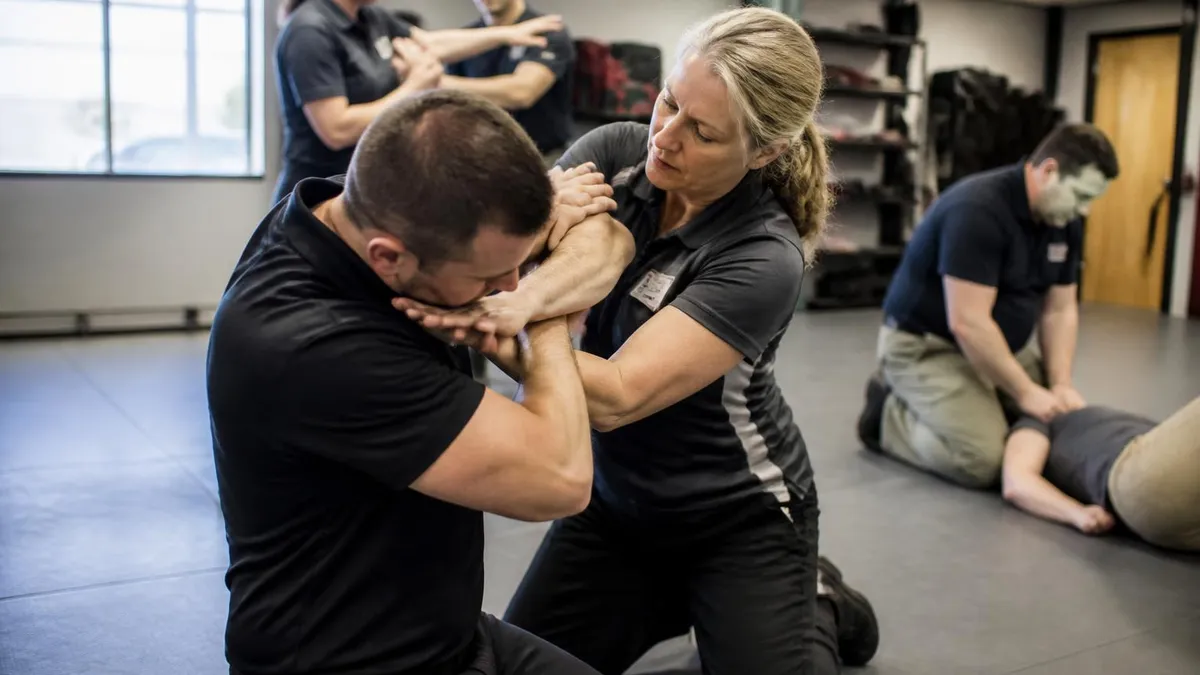
If your CPI card expires before you renew, many employers require you to repeat the entire initial training instead of a shorter refresher. Set a reminder at least 60 days before your expiration date and book your renewal skills session early to avoid being pulled from direct-care duties.
Passing the skills evaluation is where online preparation either pays off or exposes gaps, so treat the in-person day as a performance you rehearsed online. The evaluation has two halves: a cognitive component testing your grasp of the models, and a practical component where you demonstrate verbal de-escalation and safe physical techniques. Learners who studied the online material deeply move through both calmly, while those who skimmed freeze when an instructor asks them to apply a concept under mild pressure.
For the cognitive portion, instructors expect instant recall of the Crisis Development Model and the matching staff responses. When prompted with a behavior at the defensive level, you should immediately name the directive response without pausing to reconstruct the chart. This automaticity only comes from active recall, not passive rereading, which is exactly why working through a structured cpi training online practice set before your skills day produces noticeably stronger evaluation performance.
The verbal de-escalation role-plays test whether you can hold composure and choose supportive language while a partner or instructor plays an escalating individual. Evaluators watch your tone, body position, personal space, and word choice. They are checking that you de-escalate rather than argue, that you set limits clearly and respectfully, and that you recognize when an individual is seeking genuine information versus testing your authority with a challenging question.
The physical skills are the portion online study cannot fully prepare you for, and that is by design. You must demonstrate disengagement techniques and, depending on your tier, holding skills with correct body mechanics, balance, and least-restrictive principles. Instructors fail learners who use unsafe force, lose their footing, or apply techniques mechanically without the judgment to know when intervention is actually warranted versus when verbal options still remain available.
Anxiety is the biggest avoidable obstacle on evaluation day, and preparation is the cure. Learners who completed practice questions, rehearsed the models, and arrived having slept well perform markedly better than those cramming in the parking lot. The physical techniques especially require a calm body; tension and rushing cause the exact balance and control errors that evaluators flag. Confidence comes from genuine readiness, not from hoping the instructor decides to go easy on you.
If you do not pass on the first attempt, it is not the end of your certification. Most instructors provide specific feedback and allow a re-evaluation, sometimes the same day for a minor correction or on a later date for broader gaps. Treat any retake as targeted practice rather than a failure. Identify the precise technique or concept that tripped you, drill it deliberately, and return demonstrating clear improvement on the specific competency the evaluator flagged.
With the formats, requirements, and evaluation expectations clear, here is the practical preparation strategy that consistently produces first-attempt passes. Start by sequencing your study so the online cognitive modules come first, with focused sittings of about forty-five minutes each rather than one marathon session. Spaced study beats cramming for retention of behavioral models, and breaking the modules across several days lets the Crisis Development Model and verbal continuum settle into long-term memory before your skills day.
Take handwritten notes as you move through the e-learning, because the act of writing forces deeper processing than passive watching. Create a one-page cheat sheet that pairs each behavior level with its staff response and each verbal escalation stage with its supportive intervention. Review that sheet daily in the week before your classroom session. This single artifact becomes your highest-yield study tool and the thing you scan one last time in the parking lot.
Use practice questions strategically rather than randomly. After each online module, complete a matching practice quiz to surface gaps while the content is fresh, then revisit the questions you missed two days later to confirm the correction stuck. Active recall through quizzing is the single most efficient study method for the cognitive portion, and it builds the instant-retrieval speed evaluators expect when they prompt you with a behavior and wait for the correct response.
Rehearse the verbal de-escalation language out loud, even alone, before your skills day. Saying supportive limit-setting phrases aloud makes them feel natural under the mild pressure of role-play, where many learners default to arguing or freezing. Practice naming an information-seeking question versus a challenging question, and rehearse a calm, respectful limit-setting script you can adapt. Comfort with the words frees your attention for body position and tone during the actual evaluation.
Prepare your body for the physical component by arriving rested, hydrated, and in clothing that allows free movement. The disengagement techniques demand balance and controlled motion, and fatigue or stiff clothing directly cause the footing and control errors evaluators flag. Eat a real meal beforehand, because low energy late in a six-to-eight-hour skills day degrades exactly the coordination and patience the practical evaluation is designed to test under realistic conditions.
Finally, manage logistics so nothing derails you on the day. Confirm the location, parking, and start time, complete your online module well before the deadline rather than the night before, and bring your e-learning completion proof if your instructor requires it. Arrive early, introduce yourself, and ask clarifying questions during practice rather than waiting until the evaluation. Instructors respond well to engaged learners, and that engagement frequently translates into clearer feedback that helps you pass.
Sample Crisis Prevention Intervention Certification Practice Questions
Try these questions from our free Crisis Prevention Intervention Certification practice tests. The correct answer and an explanation follow each question.
What is the role of documentation in Exercise Modifications & Progressions for Crisis Prevention Intervention Certification?
- A. It is unnecessary paperwork
- B. It provides an accurate record for accountability and reference
- C. It should only be done monthly
- D. It is only for management review
Answer: B. It provides an accurate record for accountability and reference
Proper documentation in Exercise Modifications & Progressions ensures accountability, traceability, and serves as a reference for future decisions.
Which approach best supports quality outcomes in Anatomy & Kinesiology for Crisis Prevention Intervention Certification?
- A. Rushing through tasks
- B. Systematic application of evidence-based methods
- C. Relying solely on intuition
- D. Avoiding quality checks
Answer: B. Systematic application of evidence-based methods
Evidence-based methods provide a reliable foundation for achieving consistent, high-quality outcomes.
In Crisis Prevention Intervention Certification practice, what should a professional do when facing a conflict of interest?
- A. Ignore it and proceed
- B. Disclose the conflict and recuse if necessary
- C. Hide the conflict from others
- D. Let someone else decide
Answer: B. Disclose the conflict and recuse if necessary
Disclosing conflicts of interest maintains transparency and trust, allowing appropriate action to be taken to prevent bias.
What is the role of documentation in Motivational Techniques for Crisis Prevention Intervention Certification?
- A. It is unnecessary paperwork
- B. It provides an accurate record for accountability and reference
- C. It should only be done monthly
- D. It is only for management review
Answer: B. It provides an accurate record for accountability and reference
Proper documentation in Motivational Techniques ensures accountability, traceability, and serves as a reference for future decisions.
Take the full Crisis Prevention Intervention Certification practice test
CPI Questions and Answers
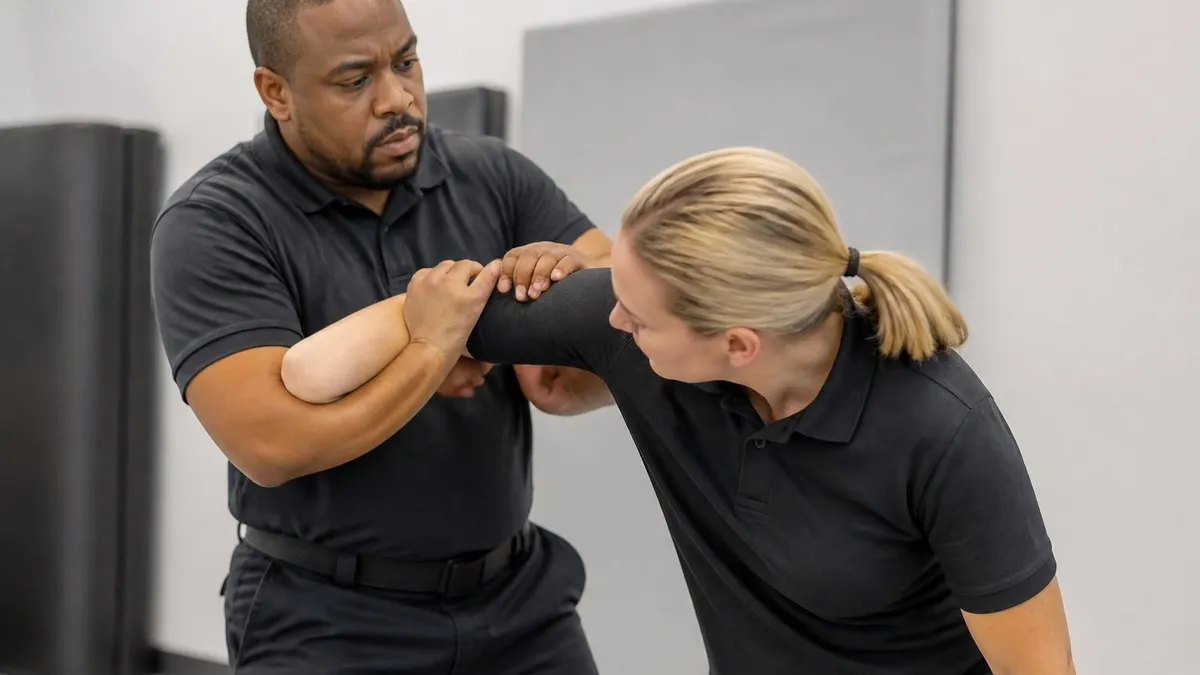
CPI Decision Making Matrix: Complete Guide to Crisis Risk Assessment and Staff Response
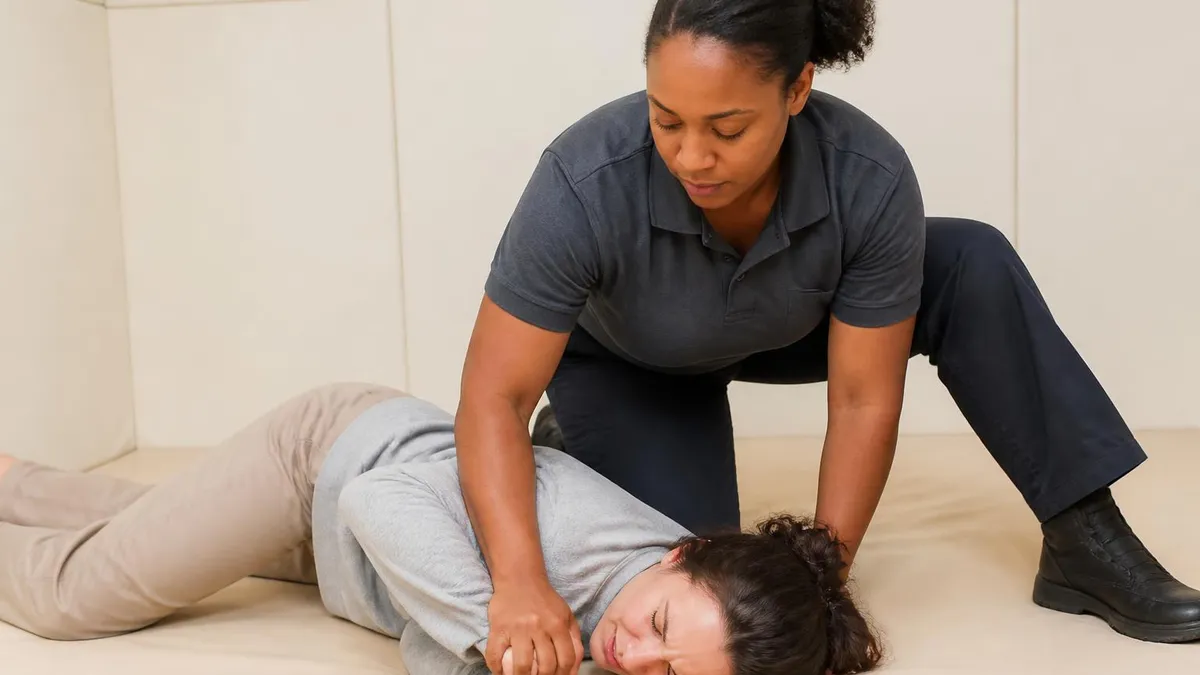
What Is CPI Training?
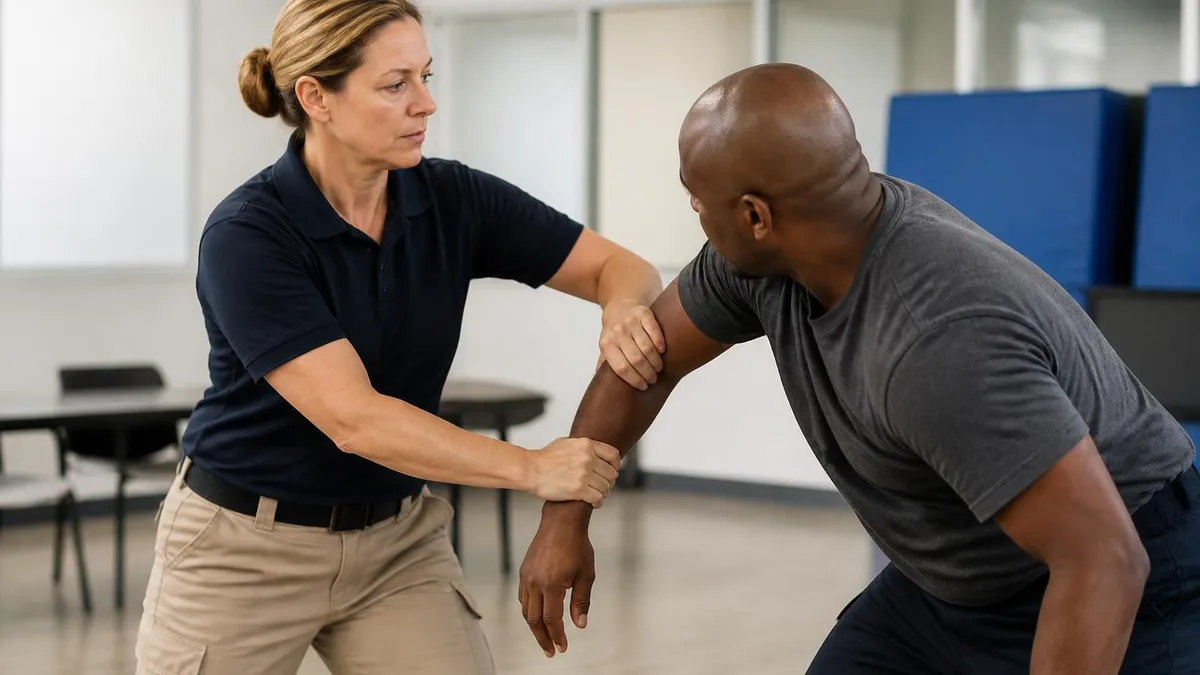
CPI Supportive Approach: Complete Guide to Stage 2 De-escalation and Anxiety Response
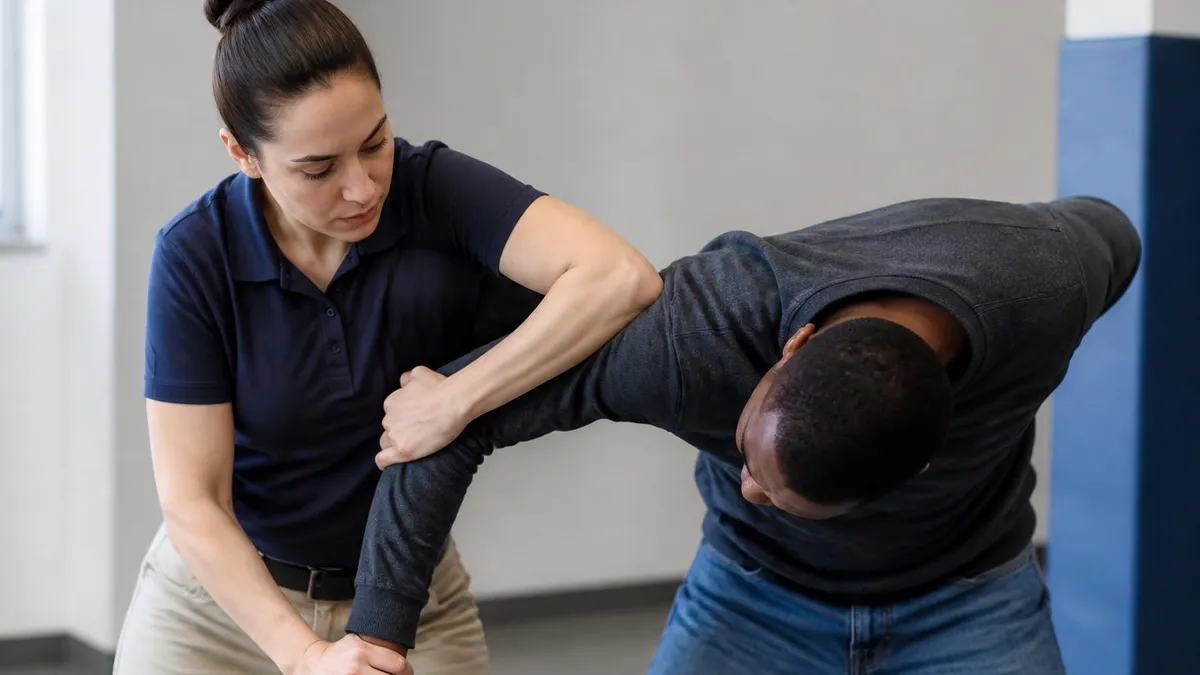
CPI Training Certification: Complete Guide to Crisis Prevention Intervention Credentialing

CPI Certification Online Free: What's Real, What Costs Money, and How to Prepare (2026)
How this page was made: written with AI tools and published by Nathan Beja, founder of Practice Test Geeks, who is responsible for its content. Exam facts are checked against the official sources listed below. Not reviewed by a subject-matter expert. Editorial policy
Sources & references
Exam facts on this page (fees, format, dates, passing scores) are checked against these official sources; the date is our last check. Editorial policy
- crisisprevention.com — Eligibility, renewal, score validity · verified Oct 2026