
CPI in Healthcare — Complete Guide (2026 October)
CPI in healthcare explained: 🎓 why hospitals require Crisis Prevention Institute training, NCI vs VI courses, TJC and CMS rules, cost, and renewal in 2026 October.
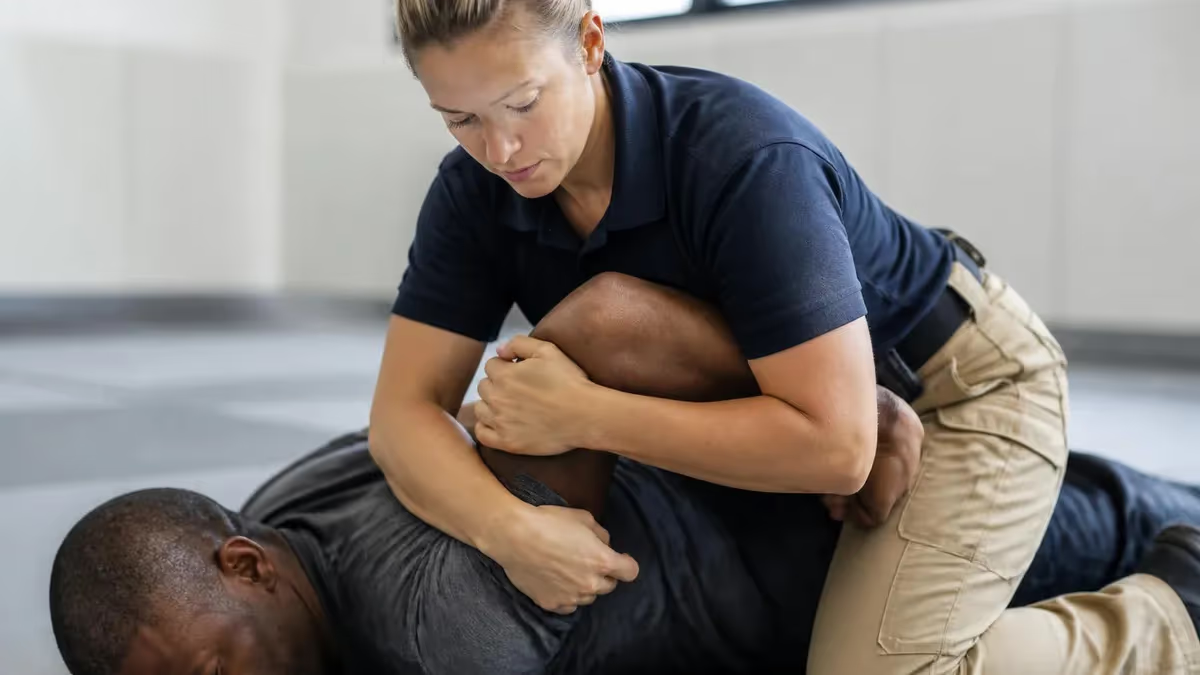
CPI in healthcare isn't an HR checkbox — it's the framework hospitals lean on every shift when a patient escalates. CPI stands for the Crisis Prevention Institute, the Wisconsin-based training company whose Nonviolent Crisis Intervention program has become the most widely required de-escalation curriculum in U.S. hospital systems. If you work in a hospital, psych unit, ED, ICU, or long-term care facility, there's a real chance your badge access depends on a current CPI card.
Why does the program show up in nearly every onboarding packet? Three regulators pushed it there. The Joint Commission ties accreditation to restraint reduction and staff de-escalation training. CMS Conditions of Participation require evidence that staff are trained to use the least restrictive intervention. OSHA's Workplace Violence Prevention guidance for healthcare and social service workers cites structured de-escalation programs like CPI as the front-line defense. Miss any of those and the hospital risks accreditation, federal reimbursement, or a citation.
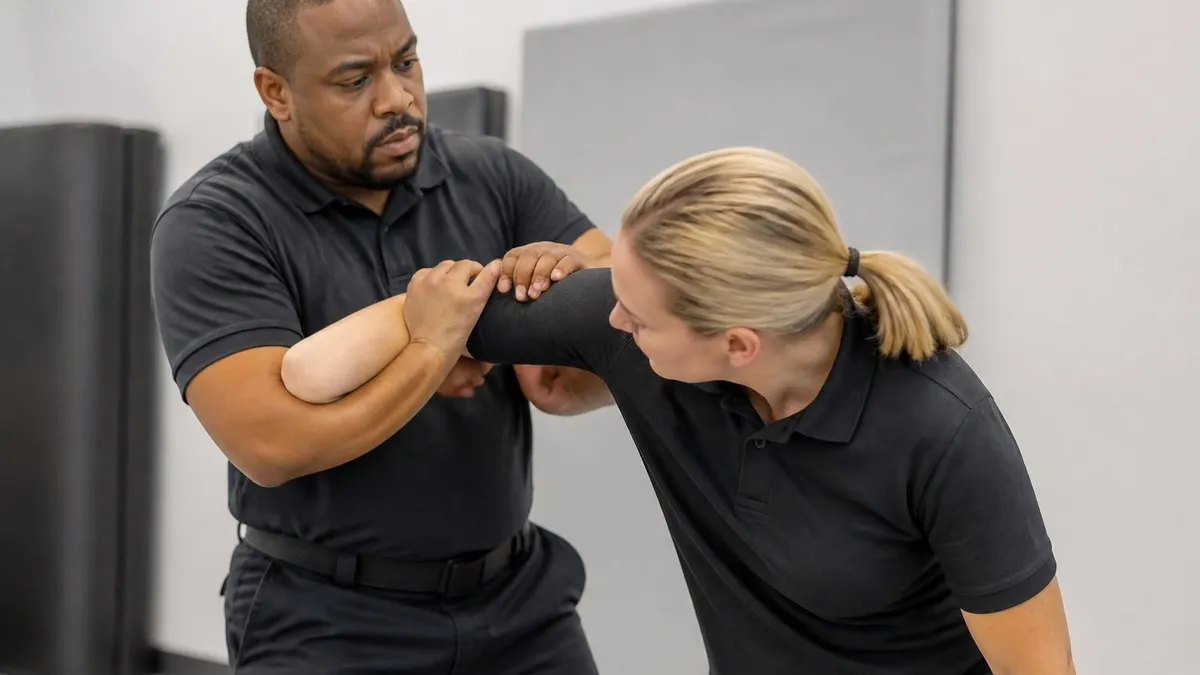
The curriculum splits into two main tracks. Verbal Intervention (VI) teaches the talking and assessment skills only. Nonviolent Crisis Intervention (NCI), the older and more comprehensive program, adds personal safety techniques and trained holds for high-risk situations. Some facilities run NCI for clinical floor staff and VI for outpatient or administrative teams. Others certify everyone in NCI. The choice depends on patient acuity, state regulation, and risk tolerance.
Costs land between $150 and $300 per provider for the standard course, with steep organizational discounts when hospitals license CPI's train-the-trainer model and certify their own instructors. Certifications last 12 months and require a refresher every year — there's no two-year card, no grandfather clause, no exceptions. Lapse it and you don't respond on rapid-response calls until you're recertified.
This guide covers exactly how cpi training powerpoint shows up across healthcare settings, what the Crisis Development Model actually looks like at bedside, which units require which certification level, and the documentation expected after every intervention. You'll see the real numbers behind cost, renewal cycles, and the regulatory standards that make this training non-optional in 2026.
One quick honest note before we go further. CPI isn't a magic shield. Trained staff still get hurt, and untrained staff sometimes manage hard situations brilliantly. What CPI gives you is a shared language and a defensible framework — so when something goes sideways, the response is coordinated and the documentation holds up to review.
CPI in Healthcare by the Numbers

Why Healthcare Systems Require CPI Certification
TJC requires evidence of staff training on restraint reduction and de-escalation. CPI's documented framework satisfies the standard directly and produces audit-ready records.
Federal reimbursement depends on showing staff are trained in the least-restrictive intervention principle. CMS surveyors specifically look for de-escalation training documentation.
OSHA's healthcare and social services guidance cites structured de-escalation programs as the primary engineering and administrative control. CPI is the most-cited brand.
Many state Departments of Health require CPI or an equivalent certification for psychiatric units, behavioral health residential, and youth treatment facilities.
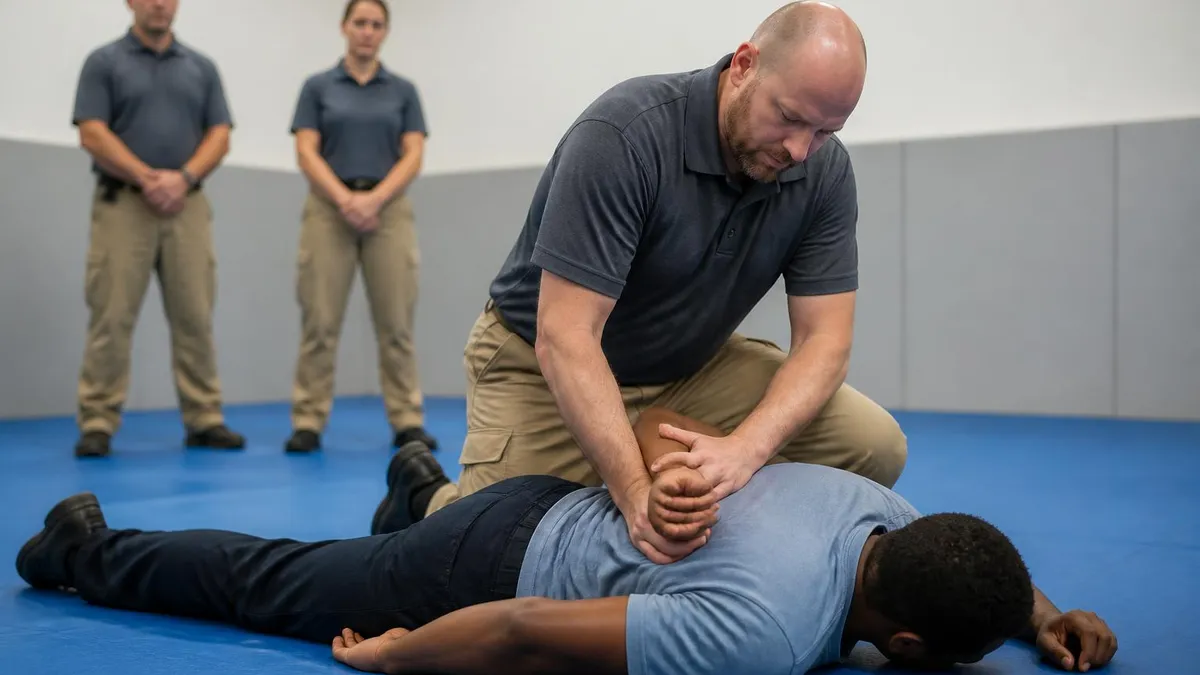
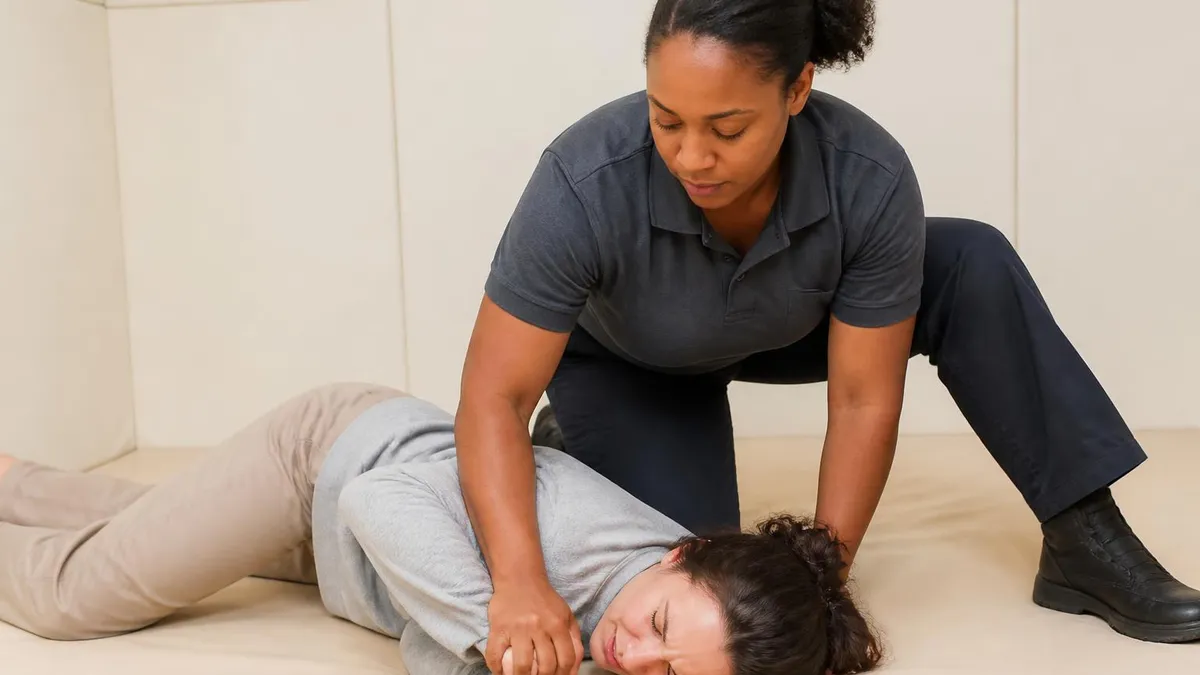
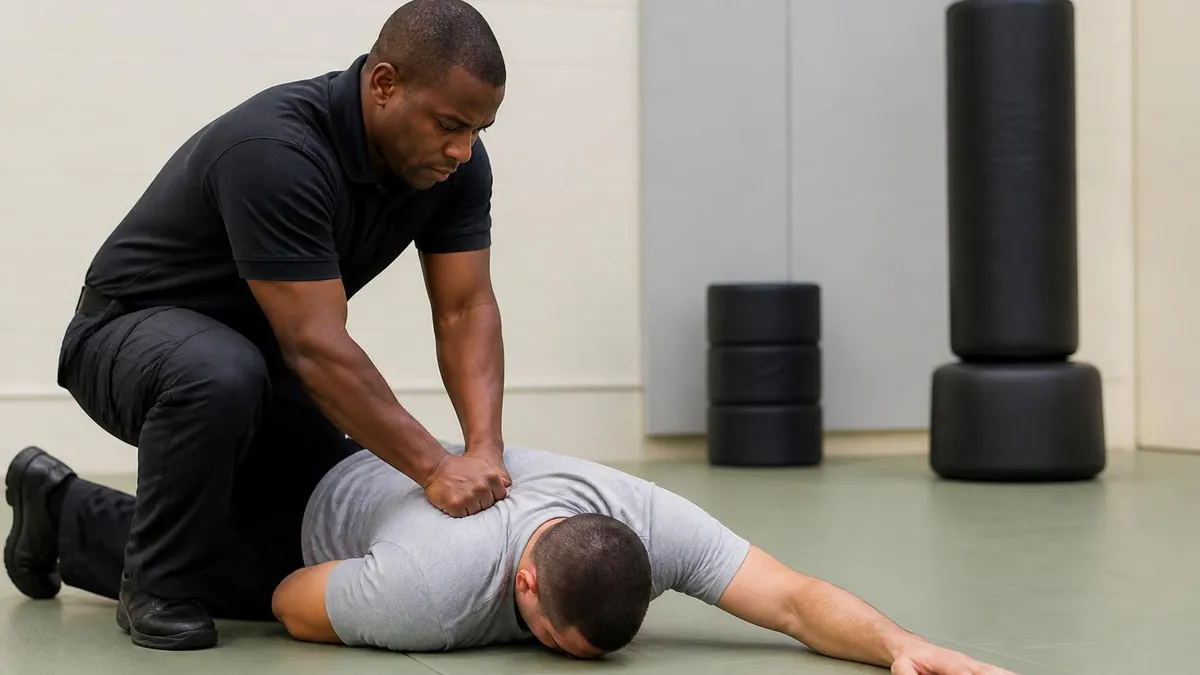
Choosing between Nonviolent Crisis Intervention and Verbal Intervention isn't a preference — it depends on what your role actually requires. NCI is the comprehensive program. It runs about 14 to 18 hours of training depending on the format and covers the full curriculum: behavior assessment, the Crisis Development Model, verbal de-escalation, personal safety techniques, team intervention, trained physical holds, and post-crisis review. Hospitals certify clinical floor staff, security, behavioral health technicians, and rapid-response teams in NCI because they're the people who may need to apply a hold safely.
Verbal Intervention is the lighter cousin. It covers everything in NCI except the physical techniques and trained holds. VI runs about 6 to 8 hours and is ideal for outpatient clinics, administrative staff, registration desks, food service, and anyone who interacts with patients but isn't expected to physically intervene. The verbal skills are identical to NCI — same Crisis Development Model, same paraverbal techniques, same limit-setting framework. Just no holds.
NCI Advanced Physical is a third option for high-acuity settings. Psychiatric inpatient units, forensic units, and emergency departments with high behavioral volume often add this on top of NCI. It deepens the physical intervention skills, adds floor management techniques, and trains staff for the rare situations where standard NCI holds aren't sufficient. The Joint Commission generally expects facilities with regular restraint use to have Advanced Physical-trained staff available on every shift.
MAPA — Management of Actual or Potential Aggression — is CPI's international equivalent program, primarily used in the UK, Ireland, Canada, and Australia. The principles are nearly identical to NCI but the terminology and some of the holds differ slightly to align with local regulation. If you're certified in MAPA and moving to a U.S. healthcare role, most hospitals will require you to convert to NCI rather than accepting the international card. The reverse is also true.
Renewal is annual across all tracks. There's no longer-term card. CPI took the position years ago that skills decay faster than once-every-two-years training can address, especially for physical techniques. Most hospitals build the refresher into mandatory annual competencies alongside CPR and fire safety. Refreshers run about 4 to 6 hours for NCI and 2 to 3 hours for VI. Miss the renewal window and you start fresh — not from a refresher but from the full initial certification, which costs the hospital more and pulls you off the floor longer.
The instructor pipeline is worth knowing. Hospitals that train more than about 50 staff per year usually license CPI's train-the-trainer program and certify their own internal instructors. An instructor course runs about 4 days and costs roughly $2,500 to $3,500 per person, after which that instructor can train unlimited staff at the facility. This is how large health systems control costs and ensure refreshers happen on schedule — they bring training in-house rather than paying CPI per-provider rates.
The Crisis Development Model in Bedside Practice
The first behavior level is anxiety — noticeable changes in baseline behavior that signal rising distress. In healthcare settings, this looks like pacing, repeated call-light use, raised voice on the phone, withdrawal from staff who were previously trusted, or sudden refusal of medication or food. The patient may not know they're escalating yet, which is exactly why this stage matters most.
CPI calls the matching staff response 'supportive.' That means empathic listening, open body posture, lower vocal volume than the patient, and validating statements that acknowledge the underlying feeling without endorsing any harmful behavior. Bedside nurses who master this stage prevent the majority of incidents from ever reaching the next level. It's the highest-ROI skill in the entire CPI curriculum and the most under-practiced.

CPI Practice Test Questions
Prepare for the CPI - Crisis Prevention Intervention Certification exam with our free practice test modules. Each quiz covers key topics to help you pass on your first try.
CPI Anatomy & Kinesiology
CPI Exam Questions covering Anatomy & Kinesiology. Master CPI Test concepts for certification prep.
CPI Behavioral Risk Assessment & Interven...
Free CPI Practice Test featuring Behavioral Risk Assessment & Intervention. Improve your CPI Exam score with mock test prep.
CPI Client Assessment & Programming
CPI Mock Exam on Client Assessment & Programming. CPI Study Guide questions to pass on your first try.
CPI Post-Crisis Debriefing & Recovery
CPI Test Prep for CPI Post-Crisis Debriefing & Recovery. Practice CPI Quiz questions and boost your score.
CPI Post-Incident Debriefing & Documentation
CPI Questions and Answers on CPI Post-Incident Debriefing & Documentation. Free CPI practice for exam readiness.
CPI Trauma-Informed Care & Mental Health A...
CPI Mock Test covering CPI Trauma-Informed Care & Mental Health Awareness. Online CPI Test practice with instant feedback.
CPI Trauma-Informed Care Principles
Free CPI Quiz on CPI Trauma-Informed Care Principles. CPI Exam prep questions with detailed explanations.
CPI De-escalation Techniques & Conflict Re...
CPI Practice Questions for De-escalation Techniques & Conflict Resolution. Build confidence for your CPI certification exam.
CPI Ethical & Legal Compliance
CPI Test Online for Ethical & Legal Compliance. Free practice with instant results and feedback.
CPI Exercise Modifications & Progressions
CPI Study Material on Exercise Modifications & Progressions. Prepare effectively with real exam-style questions.
CPI Group Instruction & Class Design
Free CPI Test covering Group Instruction & Class Design. Practice and track your CPI exam readiness.
CPI Injury Prevention & Rehabilitation
CPI Exam Questions covering Injury Prevention & Rehabilitation. Master CPI Test concepts for certification prep.
CPI Motivational Techniques
Free CPI Practice Test featuring Motivational Techniques. Improve your CPI Exam score with mock test prep.
CPI Nutrition & Lifestyle Guidance
CPI Mock Exam on Nutrition & Lifestyle Guidance. CPI Study Guide questions to pass on your first try.
CPI shows up differently across healthcare settings, and the differences matter when you're choosing which course to take or which staff to certify. Emergency departments are arguably the most CPI-intensive environment in the hospital. ED nurses, techs, and security all carry the certification because behavioral patients arrive at the door at all hours, often in altered states from substances, mental health crises, or medical conditions like delirium or hypoglycemia. The high-acuity, low-information nature of triage makes the Crisis Development Model essential.
Psychiatric inpatient units run on CPI almost exclusively. Every clinical staff member — nurses, mental health technicians, social workers, occupational therapists — holds NCI or higher. Most psych units also have Advanced Physical-certified staff on every shift. Restraint reduction is a measurable quality metric on these units, and CPI's framework is the documented method for showing surveyors how staff reach the least-restrictive intervention principle in real time.
Medical-surgical floors weren't traditionally CPI environments, but that's changed. Patients post-anesthesia, patients with dementia, patients in withdrawal, and patients with delirium can escalate suddenly even on a quiet ortho or general medicine floor. Most hospitals now certify all bedside nursing staff in either NCI or VI, with rapid-response teams adding Advanced Physical. The cost is real but so is the alternative — untrained staff improvising during an escalation is the leading source of staff injuries reported under OSHA.
Intensive care units use CPI primarily for emergence delirium, ventilator agitation, and family member escalation in waiting areas. The patient population may be sedated or non-verbal, but family in a stressful situation can absolutely escalate, and the bedside ICU nurse is the first responder. The verbal skills from cpi supportive approach training translate directly to managing difficult family conversations during end-of-life decisions, code situations, or unexpected complications.
Pediatric units adapt CPI heavily. The Crisis Development Model still applies but the verbal techniques and physical interventions are modified for size, developmental stage, and the presence of caregivers. Many pediatric hospitals run a specialized curriculum that layers child-development principles on top of standard NCI. School-based health programs and pediatric behavioral health units are the most common settings for this hybrid approach.
Long-term care and skilled nursing facilities have become major CPI adopters in the past decade. Residents with advanced dementia present unique challenges — the same behavior can be the dementia, an unmet need, a UTI, or pain, and the response that works one shift may fail the next. CPI's emphasis on present-moment assessment and least-restrictive response is well-suited to dementia care, which is why CMS surveyors increasingly expect to see CPI or equivalent documentation in SNFs flagged for behavioral concerns.
Home health and hospice teams are the newest CPI adopters. Clinicians work alone in unpredictable environments, often without backup. Verbal Intervention training has become standard for new hires at most major home health agencies because the personal safety and assessment frameworks help clinicians decide when to call for backup, when to leave a home, and how to document concerns for follow-up. The physical intervention components are less relevant — the goal is verbal skill and situational assessment, not restraint capacity.
Is CPI the Right Choice for Your Healthcare Facility?
- +Satisfies Joint Commission and CMS documentation requirements directly with audit-ready records
- +Reduces workplace violence injuries by 40 to 65 percent in published facility case studies
- +Provides a shared assessment language across nursing, security, and behavioral health teams
- +Annual refresher cycle keeps skills current and supports just-in-time competency documentation
- +Train-the-trainer model dramatically reduces per-provider cost for systems above 50 staff per year
- +Scales across settings from ED to LTC without major curriculum changes
- −Annual refresher requirement creates ongoing scheduling burden for managers and educators
- −Per-provider cost adds up quickly without an in-house certified instructor
- −Physical techniques require regular practice or skills decay between annual refreshers
- −Some staff perceive the framework as overly formal for everyday verbal interactions
- −Initial certification consumes one to two full workdays per staff member
- −Documentation expectations after any intervention add charting time to already busy shifts
Pros and Cons at a Glance
| Pros | Cons |
|---|---|
| Satisfies Joint Commission and CMS documentation requirements directly with audit-ready records | Annual refresher requirement creates ongoing scheduling burden for managers and educators |
| Provides a shared assessment language across nursing, security, and behavioral health teams | Per-provider cost adds up quickly without an in-house certified instructor |
| Annual refresher cycle keeps skills current and supports just-in-time competency documentation | Physical techniques require regular practice or skills decay between annual refreshers |
| Scales across settings from ED to LTC without major curriculum changes | Some staff perceive the framework as overly formal for everyday verbal interactions |
Regulatory Standards Your CPI Program Must Satisfy
- ✓Joint Commission PC.03.05.01 — leadership establishes restraint-reduction strategies and trains staff
- ✓Joint Commission PC.03.05.07 — staff are competent to minimize restraint use through de-escalation
- ✓CMS 42 CFR 482.13(e) — restraints used only when less restrictive interventions have proven ineffective
- ✓CMS 42 CFR 482.13(f) — staff trained and demonstrate competency in safe application of restraints
- ✓OSHA 3148 — Guidelines for Preventing Workplace Violence in Healthcare and Social Service Workers
- ✓State Department of Health behavioral health residential rules (varies by state)
- ✓Medicare Conditions of Participation for psychiatric hospitals — annual competency required
- ✓ANA Position Statement on the reduction of patient restraint and seclusion
- ✓Facility-specific restraint policy that mirrors CPI documentation framework
- ✓Annual training calendar showing every covered staff member is current within 12 months

The verbal skills decay fastest — practice them weekly, not annually
Physical techniques get the attention during refresher training, but the verbal skills are what actually prevent incidents from reaching the physical stage. Schedule brief monthly huddles where your team rehearses limit-setting language, paraverbal tone, and Crisis Development Model recognition. Five minutes a week beats four hours once a year — every time.
Getting certified the first time is straightforward but the logistics catch people off guard. The standard NCI initial course runs across two consecutive days, usually 8 hours per day, and is held in person because the physical techniques require live partner practice. Some providers now offer a blended option where the cognitive content is online and the physical practice is condensed to a single in-person day, but the full in-person version remains the most common. Plan to be off the floor for two complete workdays.
Cost ranges from $150 to $300 per provider for individual enrollment in a public course. Hospitals usually pay less per head through volume discounts or by hosting CPI instructors on-site, which spreads the trainer's travel and time fee across 12 to 20 staff per session. The break-even point for licensing your own train-the-trainer program is roughly 40 to 50 staff per year — above that, in-house instructors save real money over a three-year horizon.
Verbal Intervention is cheaper and faster. The initial course runs 6 to 8 hours in a single day and typically costs $75 to $150 per provider when delivered in person. Many systems now run VI virtually with breakout rooms for role-play, which trims cost further. The verbal-only certification is sufficient for any role that doesn't require physical intervention capacity, which makes it the smart choice for outpatient clinics, administrative areas, and primary care offices.
The renewal cycle is non-negotiable at 12 months. CPI tracks card expirations centrally and most hospital training systems integrate the data into their learning management system to send 60-day, 30-day, and 7-day reminders to staff and managers. Lapse the renewal and your facility may pull your access to behavioral health units, rapid-response calls, or any role where current certification is a competency requirement. Recertifying after a lapse usually means repeating the initial course, not the refresher — so don't let it slip.
Documentation expectations after any CPI-related intervention are heavier than most staff expect. Every restrictive intervention requires a written narrative that includes the precipitating behavior, the Crisis Development Model level identified, the verbal techniques attempted, the rationale for moving to physical intervention if applicable, the duration of the hold, vital signs monitored during the hold, and the de-escalation indicators that led to release. Facilities that fail to document this thoroughly have lost accreditation, faced lawsuits, and triggered CMS conditions on continued participation. The matrix-based cpi decision making matrix gives you the documentation framework — use it every time.
One last practical tip. If you're brand new to healthcare and just starting your CPI journey, don't try to absorb everything in the initial course. Focus on the Crisis Development Model and the verbal techniques first — those are the skills you'll use every shift. The physical techniques are for the rare 1 percent of situations that escalate past verbal de-escalation. Trying to master holds before you've internalized the verbal framework is the most common reason new staff feel overwhelmed by CPI training. Get the talking right and the holds will rarely be necessary.
Every CPI-related restrictive intervention must be documented within your facility's policy window, typically 24 hours and often the same shift. Missing the window or writing vague narratives has triggered CMS citations, lost accreditation, and personal license review. If you can't articulate why the Crisis Development Model level justified the response, regulators will assume the intervention was unjustified — regardless of what actually happened.
A few honest closing notes before you decide which CPI path to start. CPI is not the only de-escalation framework in healthcare — Handle With Care, Pro-ACT, and Mandt System all compete in this space, and each has loyal users.
CPI's market dominance in U.S. hospitals comes from a combination of brand recognition with The Joint Commission surveyors, strong documentation tools, and the maturity of its train-the-trainer program. If your facility is choosing a framework for the first time, all four are defensible — but the rest of this guide assumes CPI because that's what 75 percent of you will actually encounter.
Onboarding sequence matters. New hires at most hospitals complete CPI within the first 90 days of employment, often during orientation week. Don't wait. The longer you go without certification, the more uncomfortable the gap becomes when you're suddenly asked to respond to a behavioral call and have to step back. Talk to your educator on day one about getting scheduled into the next available cohort.
If you're an experienced clinician moving between systems, your old CPI card may or may not transfer cleanly. CPI tracks certifications centrally and your new hospital can verify your status, but they'll usually require you to attend their next refresher within 30 days regardless of when your previous certification expired. This is partly a competency check and partly so the new facility's instructor can introduce you to local policies and documentation systems.
Burnout among CPI instructors is a real and underreported issue. Teaching the same curriculum repeatedly, often to skeptical or tired learners after their full shift, wears people down. If you're considering becoming an instructor, build in your own refresher schedule, find a co-instructor to share the load, and rotate the lead role across the team. The best programs aren't run by one heroic instructor — they're run by a small, supportive team that swaps responsibilities.
Watch for curriculum updates. CPI revises NCI roughly every 5 to 7 years, with smaller annual updates to specific modules. Major revisions in recent years have emphasized trauma-informed care principles, autism-specific considerations, and dementia-specific adaptations. When a major revision drops, your instructor will need additional training before your facility can update its program — so plan the budget and the calendar accordingly.
Finally, treat every patient interaction as practice. The framework only becomes second nature when you use it in low-stakes moments — the patient who's irritated about a long wait, the family member frustrated by a delay, the colleague snapping under pressure. Each of those is a real opportunity to rehearse paraverbal tone, limit-setting, and present-moment assessment. By the time a true crisis hits, the response should feel automatic because you've practiced it a thousand times in moments that didn't seem like training at all.
Sample Crisis Prevention Intervention Certification Practice Questions
Try these questions from our free Crisis Prevention Intervention Certification practice tests. The correct answer and an explanation follow each question.
Which verbal technique best aligns with CPI motivational principles when an individual says, 'No one cares about me'?
- A. Telling the person they are wrong and listing who cares
- B. Dismissing the comment and redirecting to the task at hand
- C. Empathically reflecting: 'It sounds like you're feeling really alone right now'
- D. Warning the person that negative thinking will lead to consequences
Answer: C. Empathically reflecting: 'It sounds like you're feeling really alone right now'
Empathic reflection validates the individual's feelings, building rapport and creating the emotional safety needed for motivation to change.
In CPI, the SEEDS acronym describes individual contributors to behavior. Which SEEDS element relates most directly to motivational receptivity?
- A. Sickness
- B. Emotional State
- C. Diet
- D. Sleep
Answer: B. Emotional State
Emotional state (the E in SEEDS) directly affects how receptive an individual is to motivational strategies and intervention.
A staff member notices their colleague applying a hold that compresses the individual's neck. What is the correct CPI response?
- A. Wait until the intervention ends to report it
- B. Verbally redirect the colleague and adjust the hold immediately
- C. Increase pressure elsewhere to compensate
- D. Document the observation and do nothing in the moment
Answer: B. Verbally redirect the colleague and adjust the hold immediately
Immediate verbal redirection and hold adjustment is required because neck compression poses an acute risk of serious injury or death.
What is the role of professional ethics in crisis prevention?
- A. To allow for unrestricted decision-making
- B. To ensure responsible decisions that prioritize safety and dignity
- C. To justify unnecessary interventions
- D. To reduce practitioner accountability
Answer: B. To ensure responsible decisions that prioritize safety and dignity
The role of professional ethics in crisis prevention is to guide practitioners in making responsible decisions that prioritize the safety and dignity of all individuals involved. Ethical principles ensure interventions are humane, respectful, and effective, preventing harm and promoting positive outcomes. They provide a moral compass for navigating complex and sensitive situations.
Take the full Crisis Prevention Intervention Certification practice test
CPI Questions and Answers
About the Author

Educational Psychologist & Academic Test Preparation Expert
Columbia University Teachers CollegeDr. Lisa Patel holds a Doctorate in Education from Columbia University Teachers College and has spent 17 years researching standardized test design and academic assessment. She has developed preparation programs for SAT, ACT, GRE, LSAT, UCAT, and numerous professional licensing exams, helping students of all backgrounds achieve their target scores.
Join the Discussion
Connect with other students preparing for this exam. Share tips, ask questions, and get advice from people who have been there.
View discussion (8 replies)