
CPI Nonviolent Crisis Intervention Training: Complete Certification Study Guide
📗 Master CPI nonviolent crisis intervention training with our complete certification study guide. Practice questions, exam tips, and pass strategies inside.
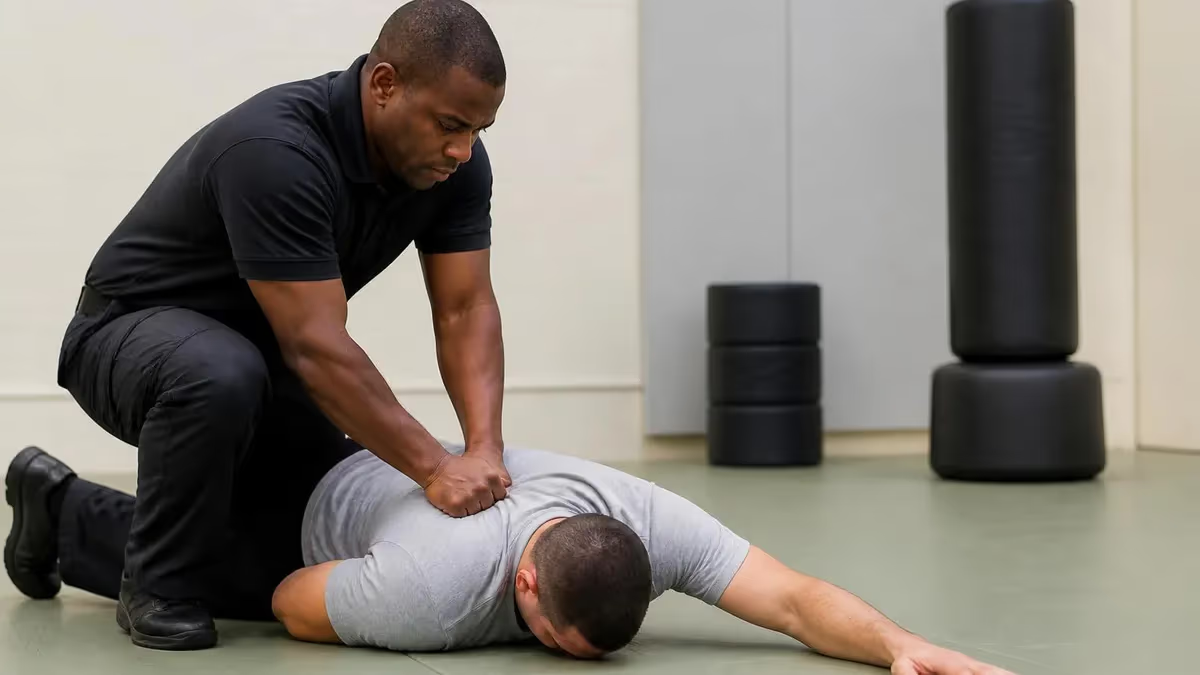
CPI nonviolent crisis intervention training is the gold-standard de-escalation certification used by healthcare workers, educators, behavioral health professionals, and human service staff across the United States. Developed by the Crisis Prevention Institute in 1980, the program teaches a structured framework for recognizing escalating behavior, intervening verbally, and—only when absolutely necessary—using safe physical disengagement techniques. More than 17 million professionals have completed the program worldwide, and roughly 90% of major U.S. hospital systems require staff to hold an active CPI certification before working with patients who present a behavioral risk.
The training is built around the Crisis Development Model, an evidence-based framework that maps four predictable stages of a behavioral crisis to four matching staff responses. Rather than reacting on instinct, certified staff learn to identify the precise moment a person shifts from anxiety to defensive behavior, then deploy verbal de-escalation tools long before the situation requires hands-on intervention. This proactive philosophy is what separates CPI from purely physical restraint programs and what makes it acceptable under Joint Commission, CMS, and state licensing standards.
If you are preparing for your initial certification or your annual refresher, this study guide walks you through every domain tested on the written and practical exam. You will learn the Crisis Development Model, the Verbal Escalation Continuum, the Decision-Making Matrix, COPING Model debriefing, and the physical safety interventions taught in the Foundation, Advanced, and Advanced & Emergency course tiers. We also explain how the 2024–2026 curriculum revisions changed terminology, scoring weights, and renewal requirements.
Most candidates underestimate the written portion of the test. The exam is open-book in many sites, but the scenario-based questions require you to apply the framework, not just recite definitions. You need to know why a Supportive response matches Anxiety, why a Directive matches Defensive, and how the Decision-Making Matrix narrows your options when risk behavior emerges. Memorizing the acronyms alone will not get you past 70%, which is the minimum passing score at most training centers.
This guide also addresses the practical skills test, where instructors evaluate your stance, your release technique, and your team communication during a simulated scenario. Many candidates lose points not because their physical technique is wrong, but because they forget to verbalize what they are doing, fail to call for help, or skip the post-crisis debrief. We break down each scoring rubric so you know exactly what evaluators are watching for during the live demonstration.
Beyond the exam itself, you will leave this article with a concrete study schedule, a checklist of every concept you need to review, and ten frequently asked questions answered by certified instructors. For a deeper look at the underlying decision framework, see our companion piece on the CPI Decision Making Matrix: Complete Guide to Crisis Risk Assessment and Staff Response, which goes into far greater detail on the risk-assessment component of the test.
Whether you are a first-time learner sitting for the Foundation course or a seasoned nurse renewing your Advanced certification, the strategies in this guide will dramatically improve your odds of passing on the first attempt. Bookmark this page, work through the practice quizzes embedded throughout, and treat the framework as a clinical tool—not just a credential—because the skills you build here will protect you, your colleagues, and the individuals you serve every shift you work.
CPI Training by the Numbers
Key Facts at a Glance
| Item | Value | Details |
|---|---|---|
| Foundation Course Length | 8 hrs | Single-day classroom |
| Minimum Passing Score | 70% | Written and practical |
| Certification Validity | 1 yr | Annual refresher required |
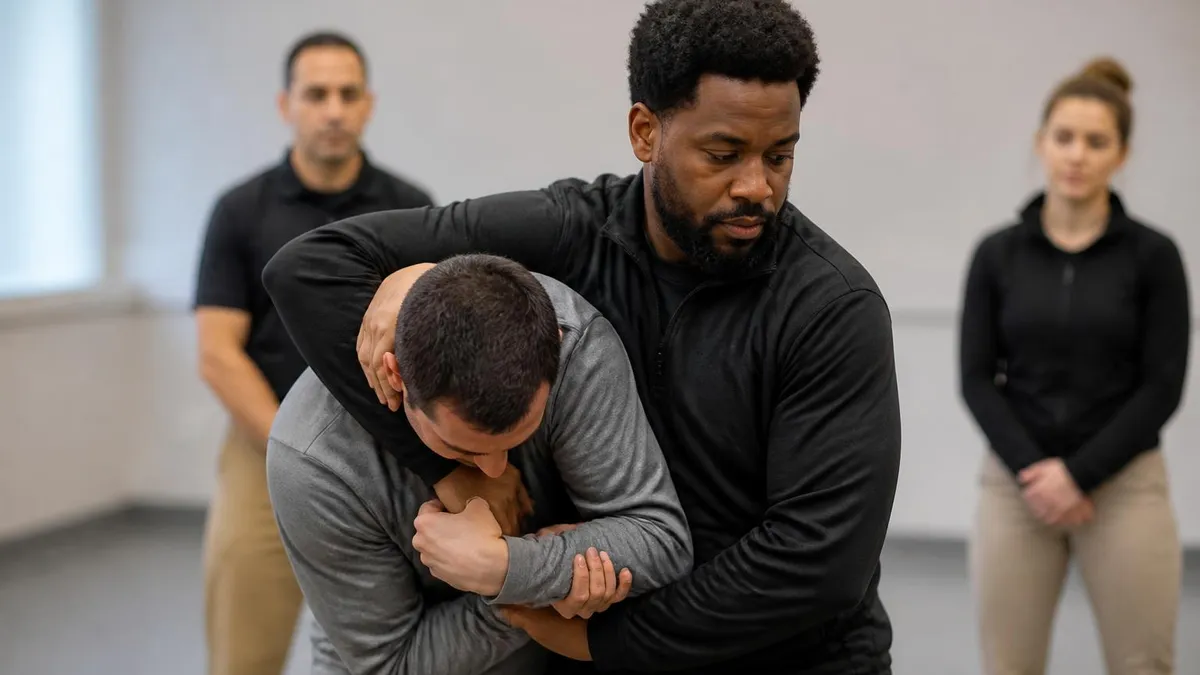
CPI Course Tiers and Format
An 8-hour classroom program covering verbal de-escalation, the Crisis Development Model, and basic personal safety skills. Designed for staff in low-to-moderate risk environments like schools and outpatient clinics.
A 12-to-16-hour program adding holding and team-control techniques for staff who may need to physically intervene. Common in inpatient psychiatric units, residential treatment, and emergency departments.
The most comprehensive tier, adding floor and seated holds plus emergency disengagement skills. Required for staff in high-acuity behavioral health settings and forensic psychiatric facilities.
A 4-day train-the-trainer program that authorizes you to teach Foundation or Advanced courses within your organization for two years before re-certification is required.
A hybrid format combining 4 hours of self-paced online modules with a 4-hour in-person skills lab. Popular for hospital systems balancing staffing demands with compliance deadlines.
The Crisis Development Model is the conceptual backbone of CPI nonviolent crisis intervention training, and it appears on every certification exam in some form. The model maps four distinct levels of behavior—Anxiety, Defensive, Risk Behavior, and Tension Reduction—to four matching staff responses: Supportive, Directive, Physical Intervention, and Therapeutic Rapport. Memorizing the pairing is straightforward, but the exam will test whether you can identify each stage from a brief scenario description, which is where most candidates lose points.
Anxiety is the earliest observable stage and presents as a noticeable change in baseline behavior. A person may pace, fidget, withdraw, repeat questions, or display unusual silence. The correct staff response is Supportive—an empathic, nonjudgmental approach that acknowledges feelings without confronting behavior. Common Supportive techniques include active listening, open posture, and validating statements such as "I can see this is really frustrating." The mistake many test-takers make is jumping straight to limit-setting before the person has actually crossed into defensive behavior.
Defensive behavior is the verbal challenge stage. The individual becomes belligerent, questions authority, refuses requests, or makes intimidating statements. Here you shift to a Directive response, which means setting clear, simple, enforceable limits. CPI teaches the limit-setting formula of stating the negative consequence first, then the positive choice, and then allowing time for the person to decide. Rushed or punitive limits almost always escalate the situation, which is a recurring theme in scenario questions.
Risk behavior is the stage at which the person becomes an imminent danger to self or others. This is the only stage at which physical intervention is justified under the CPI framework, and only as a last resort when verbal techniques have failed and the risk of harm clearly outweighs the risk of intervention. The Decision-Making Matrix you'll see later in the course gives you a structured way to weigh those risks in real time, and our deep-dive on CPI Training: Complete Guide to Crisis Prevention Intervention Certification walks through several worked examples.
Tension Reduction is the recovery stage that occurs after the crisis has de-escalated. The person typically experiences a drop in adrenaline, fatigue, embarrassment, or remorse. Staff respond with Therapeutic Rapport—reestablishing communication, processing what happened, and rebuilding trust. This is the stage most often skipped in real practice, but the exam treats it as essential because it prevents repeat incidents and supports learning for both the individual and the staff team.
One nuance the test loves to probe is the difference between Defensive and Risk behavior. Verbal threats, even loud ones, are Defensive unless accompanied by an imminent physical act. Throwing a chair, charging at staff, or producing a weapon shifts the stage to Risk behavior. Confusing the two leads candidates to recommend physical intervention prematurely, which is automatically scored as incorrect because it violates the least-restrictive-intervention principle baked into the model.
Finally, remember that the model is not strictly linear. A person can cycle back from Defensive to Anxiety with effective Supportive responses, or jump directly from Anxiety to Risk if a triggering event occurs. Strong test performers describe behavior as fluid and emphasize continuous reassessment. When you see scenario questions phrased as "what is the most appropriate next response," you are being asked to read the current stage, not the previous one.
CPI Practice Test Questions
Prepare for the CPI - Crisis Prevention Intervention Certification exam with our free practice test modules. Each quiz covers key topics to help you pass on your first try.
CPI Anatomy & Kinesiology
CPI Exam Questions covering Anatomy & Kinesiology. Master CPI Test concepts for certification prep.
CPI Behavioral Risk Assessment & Interven...
Free CPI Practice Test featuring Behavioral Risk Assessment & Intervention. Improve your CPI Exam score with mock test prep.
CPI Client Assessment & Programming
CPI Mock Exam on Client Assessment & Programming. CPI Study Guide questions to pass on your first try.
CPI Post-Crisis Debriefing & Recovery
CPI Test Prep for CPI Post-Crisis Debriefing & Recovery. Practice CPI Quiz questions and boost your score.
CPI Post-Incident Debriefing & Documentation
CPI Questions and Answers on CPI Post-Incident Debriefing & Documentation. Free CPI practice for exam readiness.
CPI Trauma-Informed Care & Mental Health A...
CPI Mock Test covering CPI Trauma-Informed Care & Mental Health Awareness. Online CPI Test practice with instant feedback.
CPI Trauma-Informed Care Principles
Free CPI Quiz on CPI Trauma-Informed Care Principles. CPI Exam prep questions with detailed explanations.
CPI De-escalation Techniques & Conflict Re...
CPI Practice Questions for De-escalation Techniques & Conflict Resolution. Build confidence for your CPI certification exam.
CPI Ethical & Legal Compliance
CPI Test Online for Ethical & Legal Compliance. Free practice with instant results and feedback.
CPI Exercise Modifications & Progressions
CPI Study Material on Exercise Modifications & Progressions. Prepare effectively with real exam-style questions.
CPI Group Instruction & Class Design
Free CPI Test covering Group Instruction & Class Design. Practice and track your CPI exam readiness.
CPI Injury Prevention & Rehabilitation
CPI Exam Questions covering Injury Prevention & Rehabilitation. Master CPI Test concepts for certification prep.
CPI Motivational Techniques
Free CPI Practice Test featuring Motivational Techniques. Improve your CPI Exam score with mock test prep.
CPI Nutrition & Lifestyle Guidance
CPI Mock Exam on Nutrition & Lifestyle Guidance. CPI Study Guide questions to pass on your first try.
Verbal De-escalation Tools in CPI Nonviolent Crisis Intervention Training
The Verbal Escalation Continuum breaks defensive behavior into five recognizable patterns: Questioning, Refusal, Release, Intimidation, and Tension Reduction. Each requires a different verbal technique. Questioning is split into information-seeking (answer it factually) and challenging (redirect, do not engage). Refusal calls for clear limit-setting, while Release—venting and emotional outbursts—requires you to allow ventilation in a safe environment without interruption.
Intimidation is the most dangerous verbal stage and requires you to take threats seriously, call for backup, and avoid power struggles. Tension Reduction at the verbal level signals de-escalation and is your cue to reestablish therapeutic rapport. Exam questions frequently present a quote and ask you to identify which point on the continuum it represents, so practice categorizing statements quickly.

Is CPI Certification Worth It for Your Career?
- +Required by most U.S. hospitals, schools, and behavioral health employers, expanding your job options
- +Nationally recognized credential accepted across all 50 states and most international employers
- +Provides legally defensible documentation framework if an incident is investigated
- +Reduces workplace injuries by an average of 35% according to published CPI outcomes data
- +Builds confidence handling difficult interactions far beyond clinical settings
- +Certification stacks well with CNA, RBT, BCBA, and nursing credentials
- +Annual refresher keeps skills sharp and counts toward continuing education hours
- −Initial certification cost can reach $350 and is rarely reimbursed by smaller employers
- −Requires in-person skills demonstration, which can be hard to schedule around clinical shifts
- −Annual recertification deadline creates ongoing administrative burden
- −Physical skills can be physically demanding for staff with mobility limitations
- −Some online providers misrepresent themselves as CPI when they are not authorized
- −Foundation course alone may not satisfy state requirements for restraint-authorized settings
- −Skills can fade quickly without regular practice between annual refreshers
Your CPI Nonviolent Crisis Intervention Training Exam Prep Checklist
- ✓Memorize the four stages of the Crisis Development Model and their matching staff responses
- ✓Identify each point on the five-step Verbal Escalation Continuum from sample dialogue
- ✓Recite the five keys to empathic listening from memory in any order
- ✓Explain the difference between Defensive verbal behavior and Risk behavior in one sentence
- ✓Apply the Decision-Making Matrix to a written scenario involving low, medium, and high risk
- ✓Demonstrate the limit-setting formula using a realistic workplace example
- ✓Practice the COPING Model debrief structure with a study partner aloud
- ✓Review the physical disengagement techniques covered in your specific course tier
- ✓Rehearse calling for help and assigning team roles during a simulated intervention
- ✓Complete at least two full-length practice exams scoring 80% or higher before test day
The Decision-Making Matrix Is the Most-Tested Concept
Across multiple instructor surveys, the Decision-Making Matrix appears in roughly 25% of all written exam questions and underlies nearly every scenario-based item. Candidates who can confidently weigh likelihood and severity of risk against the risks of intervention consistently outperform peers by 15 percentage points or more on the written test.
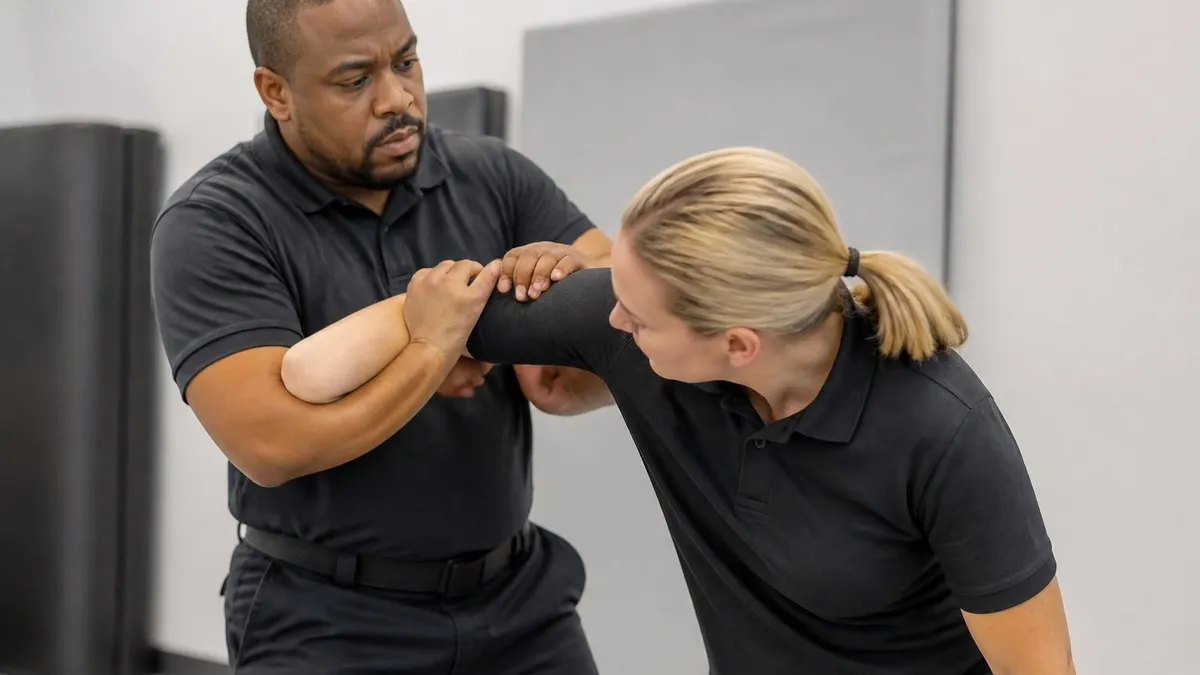
The physical skills component of CPI nonviolent crisis intervention training is what most candidates fear, but it is also the most teachable section because every technique follows a strict protocol that evaluators score against a checklist. The core principle is disengagement, not restraint. Every physical skill in the Foundation and Advanced curricula is designed to free a staff member from a grab, hold, or assault and to create distance—not to subdue the other person. This distinction matters legally and ethically, and the exam reinforces it with multiple questions on least-restrictive-intervention principles.
The basic personal safety skills taught in Foundation include the supportive stance, the strike-and-kick block, and disengagements from one-handed and two-handed wrist grabs, hair pulls, clothing grabs, choke attempts, and bite releases. Each technique begins with the supportive stance: feet shoulder-width apart, one foot slightly back, knees soft, hands open and visible at chest height. Evaluators score your stance before they score the technique itself, so getting this fundamental right is non-negotiable.
Advanced Physical Skills adds team control positions, transport techniques, and standing and seated holds. These holds are taught with two or three staff members and are scored on coordinated communication as much as physical positioning. The lead staff member calls the technique aloud, assigns roles, and counts down before any movement. Silent or chaotic team execution is automatically marked down regardless of how technically clean the hold appears.
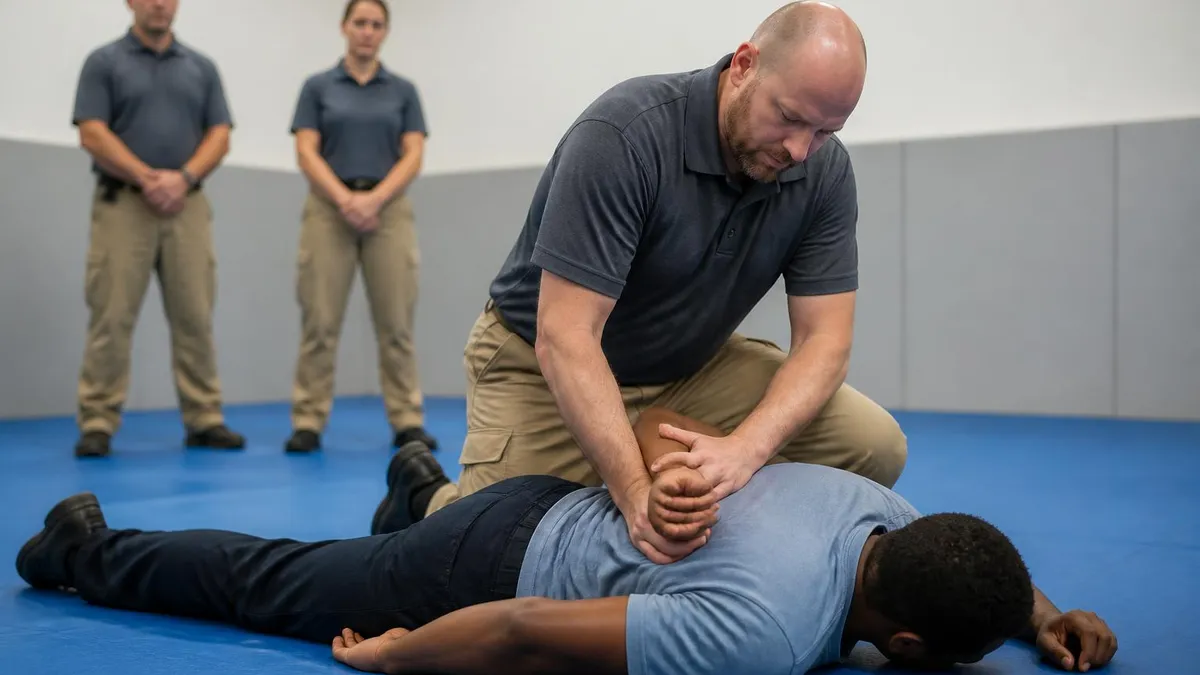
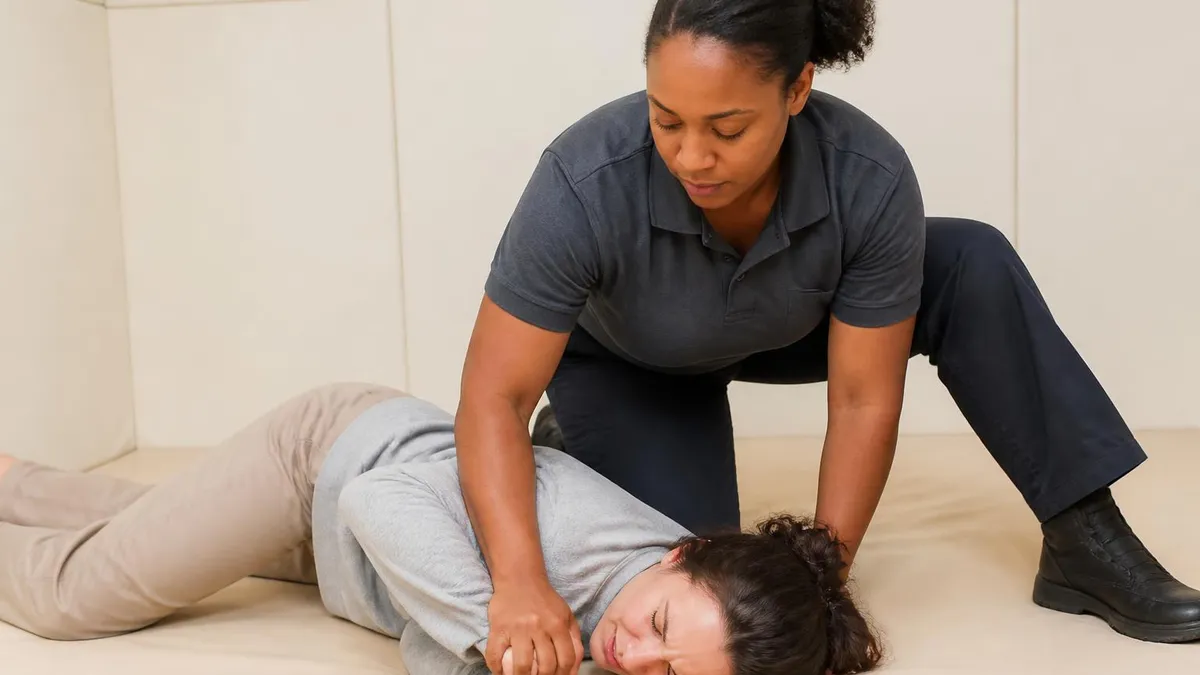
The Advanced & Emergency tier extends to floor holds, emergency disengagements during high-acuity assaults, and weapon-presence considerations. This tier is the most physically demanding and includes ongoing assessment language that staff must verbalize throughout—checking the individual's respiration, color, and verbal responsiveness every 30 seconds. Forgetting to verbalize these checks is one of the top reasons candidates fail the practical exam at this level.
Body mechanics are tested throughout. CPI emphasizes lowering your center of gravity, maintaining a strong base, using your legs rather than your back, and never placing pressure on the chest, neck, or face. Positional asphyxia—restricting breathing through hold position—is the single most dangerous outcome CPI training is designed to prevent. Expect at least one written question on the warning signs of positional asphyxia and the immediate actions staff must take.
The post-intervention phase is part of the physical skills evaluation, not separate from it. As soon as the individual is calm and the hold is released, you must transition into Therapeutic Rapport and initiate the COPING Model debrief. Evaluators watch for a smooth handoff from physical control to verbal reassurance, and they will deduct points if you walk away or move directly to documentation without first reestablishing rapport with the person.
Practice partners matter. Work with someone who has either completed the course already or is preparing alongside you, and rehearse the techniques in slow motion until the movements feel natural. Filming yourself with a phone is one of the most underused study strategies—watching the footage back almost always reveals stance errors, missed verbalization, or rushed technique that you cannot feel in the moment. Spend at least three practice sessions of 30 minutes each before your skills test.

Never place pressure on the chest, abdomen, neck, or face during any hold. Warning signs of positional asphyxia include the person stating they cannot breathe, gurgling sounds, sudden silence after vocal resistance, color changes around the lips, or loss of consciousness. If any sign appears, release the hold immediately and call for medical assistance—failure to do so has resulted in fatalities and is grounds for criminal liability.
CPI certification is valid for one year from the date you complete your initial course, and recertification requires a refresher course before that anniversary date. Many employers schedule refreshers as a one-day, four-to-six-hour session that revisits the Crisis Development Model, refreshes physical skills, and concludes with abbreviated written and practical assessments. If you let your certification lapse by more than 30 days at most training centers, you must retake the full initial course rather than the shorter refresher, so calendar reminders are essential.
Instructor certification follows a different timeline. CPI Certified Instructors must complete a four-day train-the-trainer program and recertify every two years through an instructor renewal course. Instructors are also required to teach a minimum number of participants each certification cycle to maintain active status. If you are pursuing instructor certification to roll out CPI in your organization, plan for both the upfront time investment and the ongoing teaching commitment when budgeting your continuing professional development hours.
The renewal exam is shorter than the initial test but no easier. Most refresher exams contain 25 to 35 written questions drawn primarily from the Crisis Development Model, the Verbal Escalation Continuum, and the Decision-Making Matrix, plus a condensed practical demonstration. The pass threshold remains 70%, and you typically have two attempts before being required to retake the full course. Reviewing your original course manual the week before your refresher dramatically improves your success rate.
If you are switching employers between certifications, confirm that your new employer accepts your existing CPI credential before assuming portability. The certification itself is portable, but some healthcare systems require staff to take an internal refresher even when an active CPI card is on file. For a fuller breakdown of certification logistics and employer requirements, our guide on How to Ace Your CPI Certification: Top Tips for Crisis Prevention Intervention covers the administrative side in depth.
Documentation matters during renewal periods. Keep a copy of your original certification card, your course completion certificate, and any continuing education credits earned through CPI-approved supplementary modules. If you ever face a workplace investigation involving a behavioral incident, this documentation establishes that you were trained in current best practices at the time of the event—a critical detail for both employer protection and personal liability defense.
Some states have introduced additional regulatory requirements layered on top of CPI certification. For example, several states now require licensed behavioral health facilities to document specific de-escalation training hours per staff member per year, even when CPI is the primary curriculum used. Check your state's behavioral health licensing rules at least once per renewal cycle to make sure you are still in compliance with both CPI standards and any state-specific overlays.
Finally, treat the period between certifications as practice time, not a break. The skills you learn fade measurably within 90 days without rehearsal, and behavioral incidents do not wait for your annual refresher. Many high-performing teams run brief 15-minute monthly skill drills during huddles, rotating through stance, disengagement, and team-hold positions. These small, frequent practice sessions keep muscle memory fresh and dramatically reduce hesitation when a real situation unfolds on the unit.
With the framework, physical skills, and renewal process covered, the final piece of CPI nonviolent crisis intervention training success is your exam-week strategy. The week before your test, shift from broad review to active recall. Quiz yourself out loud, simulate scenarios with a partner, and practice writing the Crisis Development Model and Verbal Escalation Continuum from memory on a blank sheet of paper each morning. Active recall consistently outperforms passive rereading in retention research, and CPI material is no exception.
Sleep is the most underrated study tool. Memory consolidation occurs during deep and REM sleep, and candidates who sleep at least seven hours the night before their certification consistently outperform sleep-deprived peers. Avoid cramming the night before. Instead, do a 30-minute light review of your most-missed practice questions, then close the books, eat a normal dinner, and prioritize rest. Walking into the exam alert is worth more than three additional hours of late-night review.
On test day, read every scenario question twice. The CPI written exam often embeds a key detail—age of the individual, environmental factor, presence of weapons, or staffing level—that completely changes the correct answer. Underline these details on your scratch paper before you commit to an answer choice. Many test-takers select the technically correct intervention but miss that the scenario specifies a context where that intervention is not the least-restrictive option available.
For the practical skills portion, slow down. Evaluators are not timing how fast you complete each technique; they are scoring accuracy, verbalization, and safety. Take a breath before each demonstration, state your stance and intent aloud, and check on your simulated client throughout. Rushing causes stance errors, skipped verbalization, and missed team communication—all of which cost points. A confident, deliberate demonstration almost always outscores a fast, sloppy one.
If you do not pass on the first attempt, most training centers allow a second attempt within 30 days at no additional cost. Use the gap productively by reviewing the specific items you missed, requesting feedback from your instructor, and pairing with a colleague who passed on the first try. The retake pass rate among candidates who follow this process exceeds 90%, so a first-attempt failure is rarely the end of the road if you respond constructively.
After certification, keep the CPI workbook accessible. The reference materials are designed for ongoing use on the unit, not just exam preparation. Many veteran clinicians keep the Crisis Development Model and Decision-Making Matrix taped inside a locker or workstation drawer for quick reference during shift. Treating these tools as living clinical aids—rather than one-time study materials—is what separates staff who use CPI effectively from those who simply hold the credential.
Finally, share what you learn. Teaching the framework to a less-experienced colleague is one of the most powerful ways to deepen your own mastery. Whether you formally pursue instructor certification or informally mentor a new hire, articulating the model out loud forces you to organize concepts into clear, transferable language. Two years into using CPI consistently, you will find that the skills extend far beyond clinical practice—into parenting, leadership, and any high-stakes interpersonal situation where staying calm under pressure changes outcomes.
CPI Questions and Answers

About the Author

Educational Psychologist & Academic Test Preparation Expert
Columbia University Teachers CollegeDr. Lisa Patel holds a Doctorate in Education from Columbia University Teachers College and has spent 17 years researching standardized test design and academic assessment. She has developed preparation programs for SAT, ACT, GRE, LSAT, UCAT, and numerous professional licensing exams, helping students of all backgrounds achieve their target scores.
Join the Discussion
Connect with other students preparing for this exam. Share tips, ask questions, and get advice from people who have been there.
View discussion (8 replies)