
Cosmetology Software: Tools, Technology, and What Every Beauty School Student Should Know
Find cosmetology school near me + learn the software tools used in beauty schools. Licensing, renewal, state boards explained. ✅

If you have been searching for a cosmetology school near me, you have probably already discovered that modern beauty education involves far more than scissors, combs, and color bowls. Today's cosmetology programs integrate dedicated salon management software, digital scheduling platforms, inventory tracking tools, and online learning portals that prepare graduates for the realities of running or working in a professional salon. Understanding what cosmetology software does — and why schools use it — gives you a genuine head start before your first day of class.
Cosmetology software refers to the suite of digital tools designed to manage the business side of beauty services. These platforms handle everything from client appointment booking and point-of-sale transactions to employee payroll, chemical inventory logs, and state board hour-tracking compliance. Leading programs like Meevo 2, Vagaro, Mindbody, and Salon Iris are taught at many accredited beauty schools because graduates who can navigate these systems are immediately more valuable to salon employers upon licensure.
Understanding what is cosmetology goes beyond the technical services themselves. The profession blends artistry, science, client psychology, and small-business acumen into a single career path. A licensed cosmetologist may own their own suite, rent a booth, work in a commission salon, or eventually manage multiple locations. Each scenario requires comfort with digital tools that track revenue, commissions, supply costs, and regulatory compliance — making software literacy part of the modern cosmetology curriculum.
The technology landscape inside beauty schools has shifted dramatically over the past decade. Schools that once relied on paper sign-in sheets and handwritten appointment books now use cloud-based platforms that sync attendance records directly with state board hour-tracking systems. For students in states with strict hour requirements — such as those monitored by the arizona state board of cosmetology — digital logs eliminate disputes about whether a student has completed the minimum required clock hours before sitting for licensure exams.
From a test-prep perspective, cosmetology state board exams do not directly quiz students on specific software brand names. However, the business and career management sections of most written exams cover concepts that software tools operationalize: appointment scheduling ethics, sanitation record-keeping, inventory control, basic bookkeeping, and client communication standards. Students who have spent months using real salon management software in their school clinic often find these exam sections intuitive because they have seen the concepts applied in practice.
This article walks you through the major categories of cosmetology software used in schools and salons, explains how technology intersects with licensing requirements, and helps you understand the business fundamentals you will need to pass your state board exam and thrive in your career. Whether you are still comparing cosmetology colleges or already enrolled and studying for your written exam, this guide gives you the context to make sense of the digital tools surrounding your education.
We will also cover how software supports cosmetology license renewal, why state boards increasingly accept or require digital hour logs, and which specific knowledge areas overlap between software concepts and your written exam content. By the end, you will have a clear picture of how mastering these tools — alongside diligent exam preparation — positions you for long-term success as a licensed cosmetologist.
Cosmetology School & Career by the Numbers

Main Categories of Cosmetology Software
All-in-one systems like Meevo 2, Vagaro, and Mindbody handle appointment scheduling, client records, point-of-sale transactions, staff management, and marketing automation. These are the backbone of modern salon operations and the most widely taught software category in beauty schools.
Cloud-based attendance and hour-logging platforms sync student clock hours directly with state board databases. Schools use these to ensure every student meets minimum requirements before applying for licensure, reducing paperwork errors that can delay exam eligibility.
Dedicated inventory software tracks product usage, reorder points, and Safety Data Sheet (SDS) compliance for chemical services. Understanding inventory control concepts tested on state board exams becomes much clearer once students have managed real product stock in a school clinic setting.
LMS platforms like Canvas or proprietary school portals deliver video lessons, theory quizzes, assignment submissions, and exam simulations. Students can review bacteriology, electricity theory, and anatomy content on-demand, making test prep more flexible and consistent.
State board websites and third-party platforms allow cosmetologists to complete continuing education hours online, track CE credit accumulation, and submit cosmetology license renewal applications digitally — eliminating the delays and mailing costs of paper-based renewal processes.
When you enroll in one of the accredited cosmetology programs across the United States, the first weeks of your education typically alternate between theory instruction and clinic floor practice. Cosmetology software enters the picture almost immediately in modern schools, because your attendance, services performed, and product usage are all logged digitally from day one. This data becomes your official hour record — the evidence you submit to your state board when you apply to sit for the licensure exam.
Salon management software used in school clinics mirrors what graduates encounter in real workplaces. A student checking in a mannequin head for a cut-and-color service follows essentially the same workflow as a licensed stylist checking in a paying client: selecting services, estimating time, noting product usage, and closing the ticket with payment or credit. Schools deliberately use professional-grade software so the transition from student to employed cosmetologist is as seamless as possible in terms of operational skills.
How long is cosmetology school largely depends on whether you attend full-time or part-time and which state you are in. Full-time students typically complete their required hours in 12 to 15 months; part-time students working around jobs or family commitments may take 18 to 24 months or longer. Software-based hour tracking removes ambiguity from this process. Rather than guessing how many hours remain, students can log into their school's attendance portal at any time and see an exact count of completed hours, services performed, and estimated graduation date based on their current pace.
How much is cosmetology school is one of the most common questions prospective students ask. Public community college programs often run between $5,000 and $10,000 in tuition, while private cosmetology colleges may charge $12,000 to $20,000 or more. Financial aid software — specifically the FAFSA portal and school-specific scholarship platforms — plays a major role in making beauty education accessible. Many schools use integrated financial aid management tools that track student eligibility, disbursements, and satisfactory academic progress requirements simultaneously with clinic performance data.
The curriculum at most accredited schools covers business and career management as a formal subject alongside the technical sciences of hair, skin, and nails. This business section, which appears prominently on the state board written exam, covers topics such as appointment book management, client retention strategies, retail selling techniques, salon ownership considerations, and basic profit-and-loss concepts. Software tools make these abstract concepts tangible: when a student uses Vagaro to review a clinic's daily booking report, they are directly practicing the appointment analysis skills tested on the written exam.
Digital learning management systems have also transformed how students prepare for their written exams. Rather than relying solely on textbook reading, students can access module-based video lessons, take embedded knowledge checks, review instructor feedback on assignments, and run timed practice quizzes that mirror the format of the actual state board written test. Schools that adopt strong LMS platforms consistently report higher first-time pass rates on the written exam, because students receive more repetition of theory content in engaging formats.
Understanding the software ecosystem of cosmetology education also helps prospective students evaluate schools more critically. When touring a cosmetology school near me, smart questions to ask include: What salon management software do students use in the clinic? How are clock hours tracked and reported to the state board? Does the school offer an online portal for reviewing your hour progress? Is continuing education for license renewal integrated into the school's digital platform? Schools with strong, modern technology infrastructure signal a commitment to preparing graduates for the contemporary beauty industry.
What Is Cosmetology: School, Software, and State Boards
Cosmetology is the professional study and practice of beauty treatments including hair cutting, coloring, chemical texture services, skin care, nail care, and related services. A cosmetologist is trained in both the technical execution of these services and the underlying sciences — bacteriology, trichology, chemistry, and anatomy — that explain why techniques work and how to perform them safely. Most states require between 1,000 and 1,600 clock hours of accredited education before a candidate may sit for the state board licensing exam.
Modern cosmetology education extends into business operations, client communication, and digital tool proficiency. A working cosmetologist must manage client relationships, track inventory, file tax information, and maintain sanitation records — all tasks now mediated by software platforms. Understanding what is cosmetology in its fullest sense means recognizing that the profession is equal parts craft, science, and small-business management, and that digital literacy increasingly determines who thrives in competitive salon markets.

Cosmetology Software in Schools: Benefits and Challenges
- +Accurate digital hour tracking eliminates disputes about graduation eligibility and state board readiness
- +Students gain hands-on experience with professional salon management platforms before entering the workforce
- +Online learning portals allow flexible theory study that fits around clinic floor schedules and personal commitments
- +Automated inventory tracking teaches real-world supply chain concepts directly tied to written exam business content
- +Cloud-based systems let students check their hour progress anytime, reducing anxiety about meeting graduation timelines
- +Digital license renewal portals save time and postage costs, and some states now mandate online-only renewal submissions
- −Software licensing fees can increase school tuition costs, particularly at smaller private cosmetology colleges
- −Students who struggle with technology may face an additional learning curve on top of mastering technical beauty skills
- −System outages or data syncing errors can temporarily disrupt hour log accuracy, requiring manual corrections by administrators
- −Not all states have fully integrated digital hour reporting, so some students still submit paper logs alongside digital records
- −Privacy concerns arise when client data from school clinics is stored on third-party cloud platforms with varying security standards
- −Rapid software updates may mean skills learned on one platform version don't transfer perfectly to updated interfaces at employers
Pros and Cons at a Glance
| Pros | Cons |
|---|---|
| Accurate digital hour tracking eliminates disputes about graduation eligibility and state board readiness | Software licensing fees can increase school tuition costs, particularly at smaller private cosmetology colleges |
| Students gain hands-on experience with professional salon management platforms before entering the workforce | Students who struggle with technology may face an additional learning curve on top of mastering technical beauty skills |
| Online learning portals allow flexible theory study that fits around clinic floor schedules and personal commitments | System outages or data syncing errors can temporarily disrupt hour log accuracy, requiring manual corrections by administrators |
| Automated inventory tracking teaches real-world supply chain concepts directly tied to written exam business content | Not all states have fully integrated digital hour reporting, so some students still submit paper logs alongside digital records |
| Cloud-based systems let students check their hour progress anytime, reducing anxiety about meeting graduation timelines | Privacy concerns arise when client data from school clinics is stored on third-party cloud platforms with varying security standards |
| Digital license renewal portals save time and postage costs, and some states now mandate online-only renewal submissions | Rapid software updates may mean skills learned on one platform version don't transfer perfectly to updated interfaces at employers |
Cosmetology License Renewal and Software Prep Checklist
- ✓Confirm your state's clock hour requirement and verify your digital log shows the correct completed total before applying for your exam.
- ✓Create accounts on your state board's online portal early — some states require identity verification that takes several business days to process.
- ✓Practice navigating your school's salon management software until you can complete a full service ticket (check-in, service selection, product use, close) without assistance.
- ✓Review the business and career management chapter of your cosmetology textbook alongside your software experience to connect theory to practice.
- ✓Complete at least two full-length cosmetology written exam practice tests covering business concepts, sanitation, anatomy, and chemical services.
- ✓Track your continuing education hours in the same software or portal you will use for license renewal — build the habit before licensure, not after.
- ✓Download and save your digital graduation certificate and hour log from your school portal immediately upon completing your program.
- ✓Familiarize yourself with your state board's renewal cycle — biennial or annual — and calendar your first renewal deadline the day you receive your license.
- ✓Research reciprocity requirements for any states you may move to within the first five years of your career, and preserve all documentation of your original training hours.
- ✓Take targeted practice quizzes on cosmetology business and exam topics at least three times per week during the final month before your state board written exam.
Business Questions Represent Up to 25% of Many State Board Written Exams
Many cosmetology written exams allocate roughly 20–25% of questions to business, career management, and salon operations topics — the same concepts underpinning salon management software. Students who actively use digital scheduling, inventory, and point-of-sale tools during school tend to answer these questions faster and with greater confidence than peers who only read about business concepts without applying them.
Building a sustainable cosmetology career in the current market requires treating technology as a core professional skill rather than an afterthought. Salon owners and booth rental operators who adopt modern software platforms consistently report higher client retention rates, fewer scheduling errors, more effective inventory management, and cleaner tax documentation than those who rely on manual systems. For newly licensed cosmetologists entering the job market, demonstrating comfort with salon software can be a meaningful differentiator during interviews.
The question of how much is cosmetology school often overshadows equally important financial considerations about the ongoing costs of a cosmetology career. After graduating, you will pay licensure exam fees, initial license fees, tools and supply investments, and potentially booth rental fees from your first week of work. Software skills reduce one category of ongoing cost: salon owners value employees who require minimal training on operational systems, and that value often translates into better starting positions, higher commission splits, or faster advancement to management roles.
For cosmetologists who aspire to salon ownership, software literacy becomes non-negotiable. Running a profitable salon requires real-time visibility into appointment booking rates, average ticket values, retail sales performance, payroll as a percentage of revenue, and product cost ratios. Modern salon management platforms present all of this data through dashboard reports and trend graphs, but only operators who understand what the numbers mean can act on them effectively. Schools that incorporate business analysis exercises — using real or simulated software data — are giving students a genuine competitive advantage.
The cosmetologist cosmetologist career path, once considered a linear progression from student to chair to optional ownership, now branches in many directions that all intersect with technology. Education directors use LMS platforms to develop curriculum. Brand educators use video production and social media scheduling tools to reach audiences globally. Product sales representatives rely on CRM software to manage territory accounts. Platform artists use digital booking tools to schedule editorial and competition work. Understanding the broader software ecosystem of the beauty industry helps ambitious graduates identify which path aligns with their strengths and interests.
Specialization within cosmetology increasingly follows software specialization as well. A colorist who masters a salon's color management software — including formula tracking, service history review, and color correction documentation — becomes irreplaceable in that environment. A nail technician who uses appointment software to send automated review requests and birthday discount reminders builds a loyal clientele faster than one who relies solely on word of mouth. These digital habits, practiced from the first day of cosmetology school, compound into significant career advantages over time.
State board exams evaluate foundational knowledge, but long-term career success is built on applied skills. The written exam tests whether you understand salon sanitation protocols; your software skills determine whether you actually maintain digital sanitation logs that protect you from liability during a state inspection. The exam tests whether you understand record-keeping requirements; your software skills determine whether your client intake forms, service history notes, and chemical formulas are stored in a searchable, compliant digital format. Theory and technology reinforce each other throughout a cosmetology career.
Investing in your technology skills during school — beyond just meeting the minimum requirements to graduate — pays dividends that compound for the entire length of your career. Attend every software training session your school offers. Ask instructors to show you features beyond the basics. Explore the reporting and analytics sections of your salon management platform. Read the help documentation when you have downtime on the clinic floor. Every hour spent building software fluency during school is an hour you will not need to spend struggling with operational systems during your first weeks as a licensed professional.

Many states require cosmetologists to complete continuing education hours before their license renewal deadline — and these deadlines begin the day your license is issued, not when you remember to check. Missing a renewal deadline can result in late fees, license lapse, and in some states a requirement to retest. Set a calendar reminder for your renewal date on the same day you receive your license, and research your state's CE requirements before you even graduate.
Cosmetology license renewal is the stage of your career where software tools arguably matter most, because renewal requirements are easy to overlook when you are busy building a clientele. Most states require renewal every one to two years, with mandatory continuing education hours that must be documented and submitted to the state board. Digital CE platforms have made this process dramatically more convenient: licensed cosmetologists can now complete renewal education from any device with an internet connection, often outside of business hours, and have their completions automatically reported to state databases.
The arizona state board of cosmetology renewal process exemplifies the modern digital approach most states are moving toward. Arizona cosmetologists renew their licenses online through the state's licensing portal, with CE completion records synced directly from approved providers. This eliminates the need to mail physical certificates and reduces processing delays significantly. Cosmetologists who maintain digital records of their continuing education — including certificates, course completion screenshots, and confirmation emails — are protected if a renewal submission is disputed or a record is lost in the state system.
For cosmetologists practicing in multiple states simultaneously — a growing trend among platform artists, competition judges, and traveling educators — software tools for managing multiple license renewal timelines are invaluable. Spreadsheet-based calendars, task management apps, and dedicated professional licensing trackers help multi-state practitioners avoid the catastrophic career disruption of an accidental license lapse. Some states have joined interstate compacts that simplify multi-state licensure, but even within compact states, renewal deadlines must be tracked individually.
Continuing education content itself has evolved with digital delivery. CE courses now cover topics far beyond the sanitation and safety refreshers that dominated traditional renewal requirements. Technology-forward CE programs cover digital marketing for salons, social media photography and branding, e-commerce for retail product sales, and even data privacy compliance for client information stored in cloud-based management systems. Cosmetologists who pursue these courses build skills directly applicable to growing their business rather than simply checking a compliance box.
The relationship between software skills and professional income becomes most visible when examining client retention data. Salon management platforms that send automated appointment reminders report rebooking rates 15–30% higher than salons relying on manual reminder calls. This difference in rebooking rate — compounded across a full clientele over a year — can represent tens of thousands of dollars in additional revenue for a skilled stylist. Understanding and using these features is not a luxury; it is a fundamental business skill for any cosmetologist building a career rather than just filling a chair.
Students currently enrolled in cosmetology colleges should ask their instructors explicitly about the business and software content that will appear on their state board written exam. While exam content varies by state, the National Interstate Council of State Boards of Cosmetology (NIC) written exam — used in the majority of states — dedicates a meaningful portion of its question bank to business operations, career management, and professional ethics. These topics map directly to the concepts that salon management software operationalizes daily, making exam prep and software fluency mutually reinforcing activities.
Whether you are researching cosmetology schools for the first time, finishing your clock hours, or preparing for your written exam, the consistent thread connecting all stages is preparation. Understanding the software tools of the industry, the regulatory requirements of your state board, and the business concepts tested on your written exam creates a foundation for a resilient, profitable, and professionally satisfying cosmetology career. The investment in learning these systems thoroughly during school pays returns that extend across your entire professional life.
Practical exam preparation for the cosmetology written test requires a systematic approach that mirrors the structured environment of the exam itself. Most state board written exams present 100 to 120 multiple-choice questions in a timed format, covering science fundamentals, technical service knowledge, sanitation and safety, and business operations. Effective preparation means practicing under realistic conditions — timed sessions, no notes, answering every question even when uncertain — rather than passive reading or casual review.
Creating a weekly study schedule during the final eight weeks before your exam is one of the most reliable strategies for improving first-time pass rates. Allocate specific days to specific content areas: anatomy and physiology one day, chemistry and chemical services another, electricity and light therapy a third, and business and career management a fourth. Rotate through these categories weekly so every topic gets regular attention rather than being crammed in the final days before the exam, when retention is lowest under stress.
Practice tests that simulate the actual exam format are the single most evidence-based preparation tool available. Research on high-stakes professional licensing exams consistently shows that test-format practice outperforms passive study for improving both accuracy and speed. For cosmetology specifically, this means seeking out practice questions that mirror the exact phrasing style of your state's exam — often scenario-based questions that describe a client situation and ask what the cosmetologist should do next, rather than simple fact-recall prompts.
The business and career management content area benefits from a slightly different preparation approach than the science sections. For science topics, memorizing definitions and mechanisms is central. For business topics, applying concepts to realistic scenarios is more effective. Reading a practice question about how to handle a client dispute, a scheduling conflict, or an inventory shortage activates the same applied reasoning you use when navigating salon management software — making your daily software experience a legitimate form of exam preparation that many students overlook.
Weak spots identified through practice testing deserve disproportionate attention in the final study weeks. If you consistently miss questions about electricity and light therapy, that section warrants three times as many review sessions as a section where you score above 85%. Many students make the mistake of repeatedly practicing topics they already know well — a comfortable but inefficient strategy that leaves core weaknesses unaddressed. Tracking your practice test scores by category reveals where additional study time generates the greatest return.
Physical and mental preparation in the days before your exam matters as much as content knowledge. Arriving at the testing center sleep-deprived, anxious, or unfamiliar with the logistics of the exam site predictably reduces performance. Visit the testing center in advance if possible, review check-in requirements including acceptable ID forms, and plan to arrive at least 30 minutes early on exam day. Bring only permitted items — most centers prohibit personal items in the testing room — and trust the preparation you have done rather than attempting last-minute cramming in the parking lot.
Finally, remember that failing the written exam on the first attempt is not career-ending. Approximately half of first-time candidates do not pass on their initial attempt, and most states allow retakes within a reasonable waiting period. Candidates who analyze their score reports after an unsuccessful attempt, identify the specific content areas where they underperformed, and systematically address those gaps before retesting typically improve their scores substantially. The goal is not just to pass, but to understand the content well enough that your knowledge serves you throughout a career, not just during a two-hour exam.
Sample Cosmetology Test Practice Questions
Try these questions from our free Cosmetology Test practice tests. The correct answer and an explanation follow each question.
A cosmetology student who withdraws from a licensed school is required to:
- A. Immediately obtain a temporary permit
- B. Return their student permit to the state board
- C. Notify their supplier accounts
- D. Reapply for admission within 30 days
Answer: B. Return their student permit to the state board
Upon withdrawal from a cosmetology school, the student permit must be returned to the state board as it is no longer valid.
Why should synthetic wigs NOT be styled with high-heat tools?
- A. They become too shiny
- B. Heat permanently melts or damages synthetic fibers
- C. They absorb too much heat
- D. High heat makes them grow longer
Answer: B. Heat permanently melts or damages synthetic fibers
Synthetic wig fibers are plastic-based and will melt, frizz, or become permanently deformed when exposed to the high heat of styling tools.
If an establishment moves, the licensee is required to file for a new establishment license and ensure that the new location complies with the Act's and this chapter's requirements. In accordance with the Act, a relocated beauty culture school must also be inspected before opening. Mobile shops are exempt from this subsection's restrictions.
- A. False
- B. True
Answer: B. True
This statement is true. When an establishment moves, the licensee must apply for a new license for the new location and ensure it meets all regulatory requirements. Relocated beauty culture schools also require re-inspection before opening to verify compliance. Mobile shops are typically exempt from these specific relocation inspection rules due to their nature.
Before opening for business, a beauty culture school must be examined and approved by the department.
- A. False
- B. True
Answer: B. True
This statement is true. To ensure compliance with health, safety, and educational standards, a beauty culture school must undergo examination and approval by the relevant department (e.g., TDLR in Texas) before it can open for business. This inspection verifies that the facility meets all necessary regulations for student training and public safety.
Cosmetology Questions and Answers

FREE Cosmetology Problem Questions and Answers
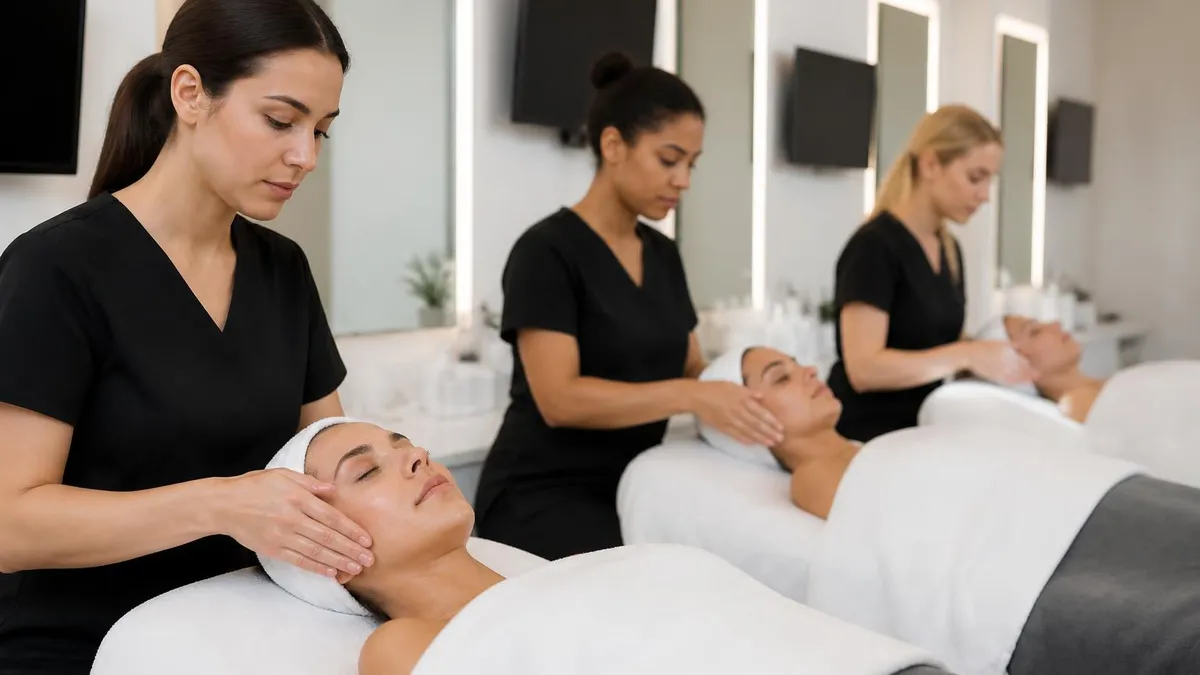
Cosmetology Scholarships 2026: Where to Find Money for Beauty School
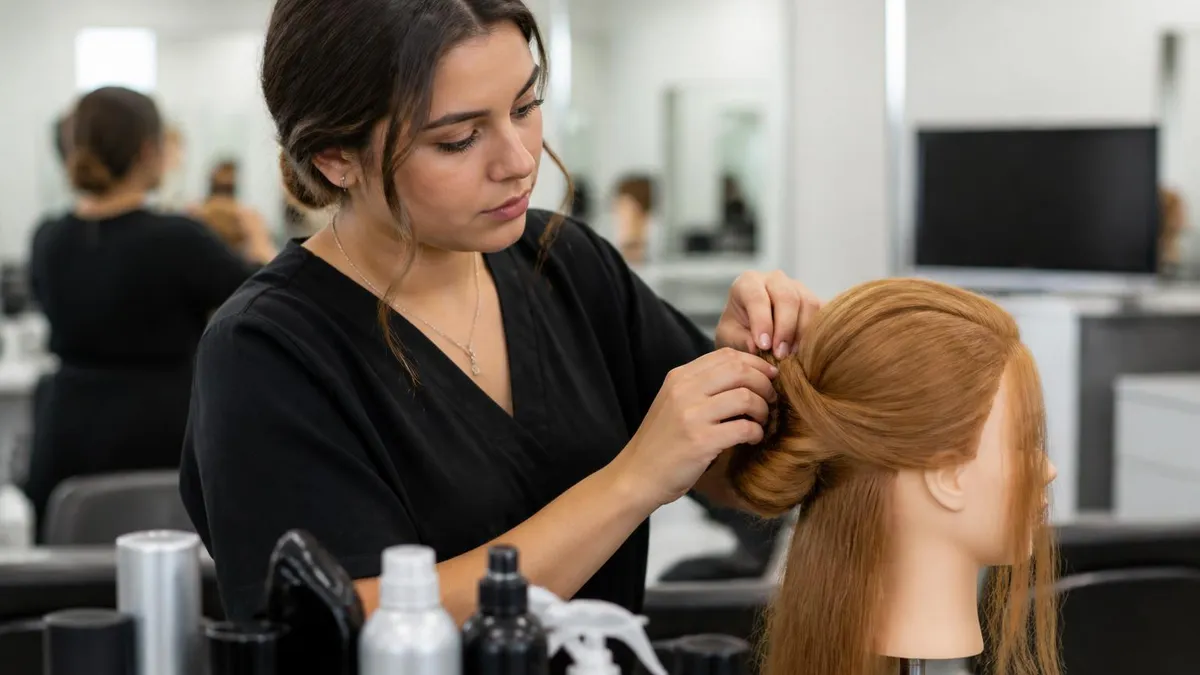
Cosmetology School Locations: Find Beauty Schools by City and State
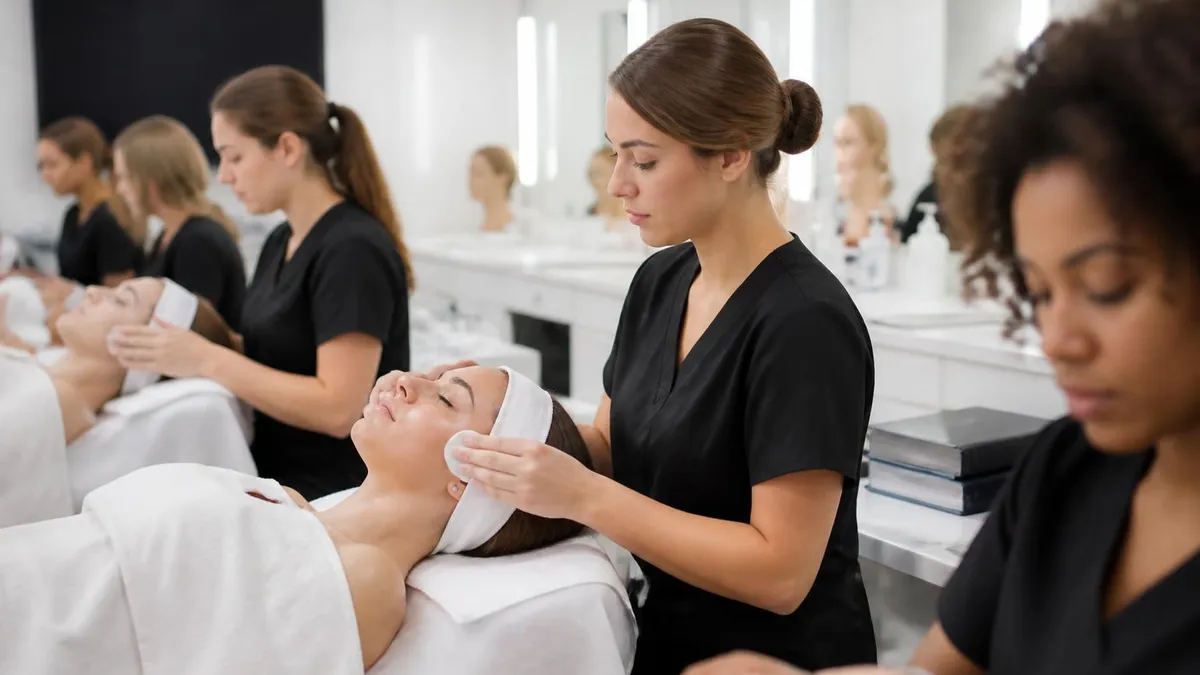
Board of Cosmetology: How State Regulatory Boards Actually Work
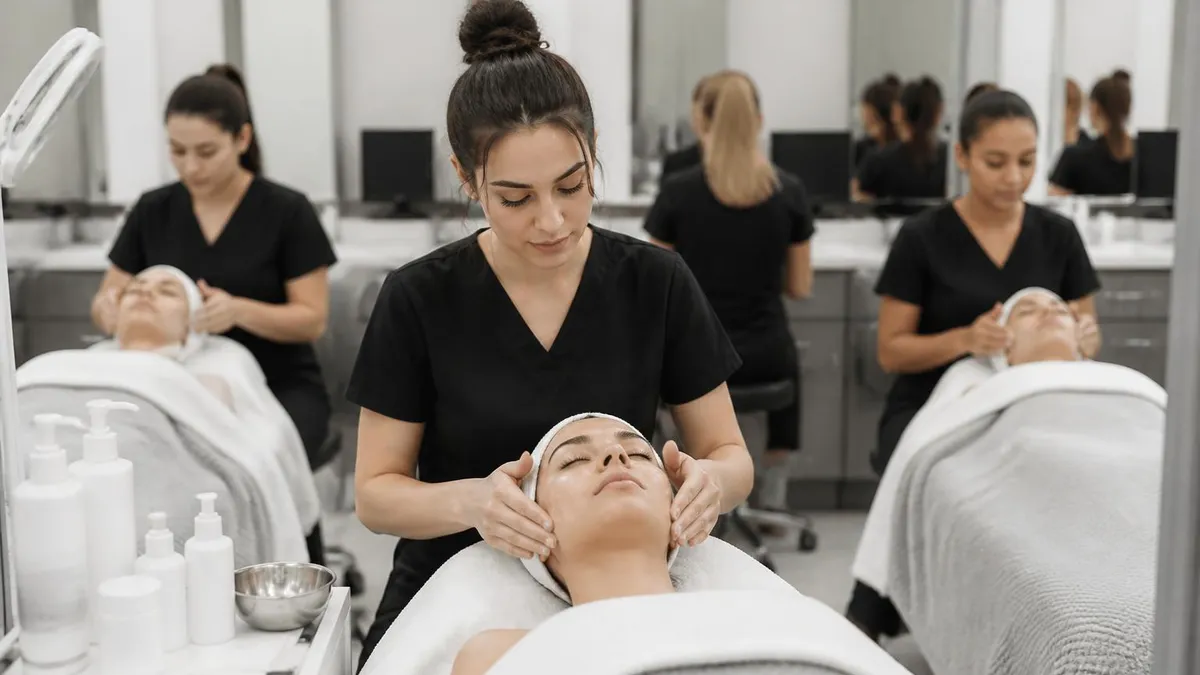
Cosmetology State Board Practice Test: Complete 2026 Prep Guide With Free Questions
About the Author
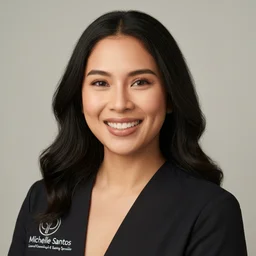
Licensed Cosmetologist & Beauty Licensing Exam Specialist
Paul Mitchell SchoolsMichelle Santos is a licensed cosmetologist with a Bachelor of Science in Esthetics and Salon Management from Paul Mitchell School. She has 16 years of salon industry experience and 8 years preparing students for state cosmetology board exams in theory, practical skills, and sanitation. She specializes in licensure preparation for cosmetologists, estheticians, and nail technicians.
Join the Discussion
Connect with other students preparing for this exam. Share tips, ask questions, and get advice from people who have been there.
View discussion (6 replies)