
Correctional Officer Jobs Los Angeles: Complete Career Guide 2026 September
Correctional officer jobs Los Angeles — salaries, hiring steps, benefits & exam prep. Everything you need to launch your CO career in LA County. 🎯

Correctional officer jobs Los Angeles represent one of the most stable and well-compensated public safety careers available in Southern California today. Los Angeles County operates the largest jail system in the United States, housing over 17,000 inmates across multiple facilities including Men's Central Jail, Twin Towers Correctional Facility, and the Century Regional Detention Facility. This scale means the Los Angeles County Sheriff's Department consistently recruits hundreds of new correctional officers every year, creating genuine career opportunities for motivated candidates willing to meet the demanding requirements.
Much like how brands such as collars and co have built loyal followings by delivering consistent quality and a clear identity, the Los Angeles County Sheriff's Department attracts career-minded individuals who value structure, purpose, and long-term stability. Working as a correctional officer in LA is not simply a job — it is a profession with clearly defined rank structures, union protections, and pathways to advancement that can lead to careers in law enforcement, investigations, and administration. Candidates who understand this framework from the start are positioned to move upward quickly.
The hiring timeline for Los Angeles County correctional officers typically spans four to six months from initial application to academy enrollment. This process includes a written examination, physical agility test, background investigation, psychological evaluation, and medical screening. Each step is designed to identify candidates who can handle the unique psychological and physical demands of working in a secure detention environment. Preparation at every stage is essential — skipping even one element of readiness can result in disqualification late in the process.
Salary and benefits make LA County correctional officer positions highly competitive by national standards. Entry-level officers earn approximately $64,000 annually, with pay scales rising to over $90,000 for experienced officers, not including overtime opportunities that can push total compensation significantly higher. Officers also receive comprehensive healthcare benefits, a defined-benefit pension through the Los Angeles County Employees Retirement Association (LACERA), paid vacation, and education incentive pay for college coursework or bilingual abilities — meaningful additions that substantially increase total compensation.
Los Angeles County's sheer diversity means correctional officers interact with an extraordinarily wide range of individuals every shift. Fluency in Spanish, Mandarin, Armenian, or other languages spoken widely across LA is a genuine asset that often comes with a monthly pay differential. Cultural competency training is embedded in the academy curriculum, and officers who bring real-world language skills to the job frequently find themselves in higher-demand assignments or accelerated promotion tracks. This diversity is one of the defining characteristics of correctional work in LA compared to virtually every other jurisdiction in the country.
For candidates researching correctional officer jobs los angeles from outside Southern California, it is worth noting that Los Angeles County residency is not required at the time of application, though candidates must be willing to relocate before the academy begins. The county draws applicants from across the United States, and its academy — one of the most comprehensive in the country at 16 weeks — prepares officers for the realities of large-scale detention operations in ways smaller jurisdictions simply cannot replicate.
This guide covers everything a prospective LA County correctional officer needs to know: the hiring process from start to finish, salary structures at every level, the physical and academic preparation required to pass the exam and agility test, the realities of daily working life inside LA County facilities, and the long-term career paths available once you earn your badge. Whether you are just exploring the field or are ready to submit your application, the information here will give you a decisive advantage over candidates who walk in underprepared.
LA County Correctional Officer Jobs by the Numbers

LA County CO Hiring Process: Key Stages
Candidates complete a multiple-choice test covering reading comprehension, mathematical reasoning, writing ability, and situational judgment. The exam is scored on a pass/fail basis, and those who pass are ranked by score for further processing. Adequate preparation significantly improves pass rates.
The PAT measures cardiovascular endurance, upper-body strength, and functional movement through a standardized course. Events typically include a timed run, obstacle course, and strength assessments. Candidates who train specifically for the PAT format well in advance dramatically outperform those who rely on general fitness alone.
Among the most thorough background checks in public safety, the LA County process examines employment history, financial records, criminal history, drug use, social media activity, and character references. Honesty throughout is paramount — misrepresentations discovered at any stage result in immediate disqualification.
Candidates complete a written psychological inventory and a one-on-one clinical interview to assess emotional stability and suitability for custodial work. A comprehensive medical exam follows, checking vision, hearing, cardiovascular health, and musculoskeletal fitness to confirm the candidate can safely perform all required duties.
Successful candidates are conditionally offered a position and scheduled for the next available academy class. The 16-week academy is conducted at the Sheriff's Training Academy and covers laws of arrest, custody operations, use of force, emergency response, and inmate management through both classroom instruction and scenario-based training.
Understanding the full compensation picture for correctional officer jobs in Los Angeles County is essential for anyone comparing this career against alternatives in law enforcement, security, or other public safety roles. The base salary alone tells only part of the story. Entry-level officers begin at approximately $64,000 per year, but total compensation including overtime, specialty pay, and benefits can easily push that figure past $95,000 within the first two years of employment for officers willing to work extra shifts in facilities that operate around the clock, every day of the year.
Los Angeles County correctional officers are represented by AFSCME Local 36 (the Association for Los Angeles Deputy Sheriffs also represents sworn personnel), and collective bargaining agreements have historically delivered steady salary increases. Officers receive step increases every year for the first several years of service, meaning predictable pay growth is built into the career path from day one. This structure is similar in spirit to how established brands like duluth trading co have built customer loyalty — through consistent, reliable delivery on clearly communicated promises over time.
Specialty pay differentials are a meaningful part of the LA County compensation structure. Officers assigned to high-security housing units, mental health modules, or medical wards may receive additional hourly differentials reflecting the specialized skills and elevated risk involved in those assignments. Bilingual officers who demonstrate proficiency in a qualifying language through a standardized test earn a monthly bonus of approximately $175, which may seem modest but adds up to over $2,000 annually with no additional work required beyond demonstrating an existing skill.
The defined-benefit pension through LACERA is one of the strongest retirement benefits available to any public employee in California. Most correctional officers participate in the Plan 6 or Plan 3 tier depending on their hire date, with benefits calculated based on a percentage of final average compensation multiplied by years of service. An officer who serves 30 years and retires at the maximum age factor can expect a pension equal to 75–90% of their final salary — a retirement security that private-sector jobs almost never offer at comparable compensation levels.
Healthcare benefits begin on the first day of the academy and extend to eligible family members. Los Angeles County offers multiple plan options including HMO and PPO structures through major California insurers, with the county covering a substantial portion of the premium. Dental and vision coverage are bundled into the benefits package, and officers have access to an Employee Assistance Program providing confidential counseling, financial planning support, and wellness resources — services specifically designed for the unique stressors of custody work.
Education incentive pay rewards officers who pursue college coursework. Officers with an associate degree or 60 college units receive a 2.75% pay increase; those with a bachelor's degree receive a 5.5% boost on top of base salary. Many LA County correctional officers take advantage of tuition reimbursement programs to earn degrees during their careers, simultaneously qualifying for education pay and positioning themselves for competitive promotion processes where college credentials provide an advantage over candidates without them.
Overtime availability in LA County's jail system is among the most consistent in the state due to the sheer size of the workforce and the 24/7 operational requirement across multiple major facilities. Many officers voluntarily work 10–20% above their base hours per year, with overtime paid at time-and-a-half. At the senior pay scale, a single overtime shift can generate $400–$600 in additional compensation. Officers who build a disciplined financial plan around base pay and treat overtime as accelerated savings frequently retire significantly earlier than their peers in other professions.
Toad and Co Comparison: CO Careers vs. Other LA Public Safety Jobs
Many candidates exploring correctional officer jobs in Los Angeles are simultaneously considering applying to become a Los Angeles County Deputy Sheriff. The two roles share a hiring agency — the LA County Sheriff's Department — but diverge significantly in training, assignment, and salary ceiling. Deputy Sheriffs complete a longer academy (approximately 22 weeks) and are sworn peace officers with full arrest authority throughout the county, while correctional officers work exclusively within detention facilities and hold limited peace officer status.
The salary ceiling for Deputy Sheriffs is considerably higher, particularly once specialty assignments like detective, K-9, or patrol sergeant promotions are factored in. However, correctional officer positions are historically easier to obtain, have shorter hiring timelines, and provide a realistic pathway into the Sheriff's Department for candidates who want to earn their way into a sworn role after demonstrating performance inside the facilities. Many current deputies started their careers as correctional officers — the lateral process is well-established and well-regarded within the department.

Pros and Cons of Working as an LA County Correctional Officer
- +Highly competitive starting salary of $64,000 with structured annual step increases built into the contract
- +Comprehensive benefits package including healthcare, dental, vision, and a defined-benefit pension from day one
- +Overtime availability is consistent and significant, with potential to earn $15,000–$25,000 extra annually
- +Clear rank structure and merit-based promotion pathways from officer to sergeant, lieutenant, and beyond
- +Direct pathway into the sworn Deputy Sheriff track for officers who demonstrate strong performance
- +Education incentive pay rewards college coursework with permanent salary increases of up to 5.5%
- −Working conditions are physically demanding and psychologically taxing, with daily exposure to high-conflict environments
- −Shift work includes nights, weekends, and holidays with little initial control over scheduling preferences
- −The hiring process takes four to six months, requiring sustained patience and ongoing preparation throughout
- −Background investigation is among the most rigorous in public safety, disqualifying candidates with financial or character issues
- −Mandatory overtime (forced overtime) is a reality in a large system, particularly for officers with low seniority
- −Cumulative stress and secondary trauma are occupational hazards that require proactive mental health management
LA County Correctional Officer Application Checklist
- ✓Confirm you meet the minimum age requirement of 18 years and possess a high school diploma or GED equivalent.
- ✓Obtain a valid California driver's license or be prepared to get one before academy enrollment begins.
- ✓Gather certified copies of all educational transcripts, including any college coursework completed to date.
- ✓Compile a complete 10-year employment history with supervisor contact information for every position held.
- ✓Begin a structured physical fitness program targeting the 1.5-mile run, push-ups, and sit-ups at least 12 weeks before your PAT date.
- ✓Request your credit report and address any outstanding debts or financial issues that may surface in the background investigation.
- ✓Prepare a detailed personal history statement covering residences, associates, drug use history, and any past legal contacts.
- ✓Review your social media accounts and remove any content that could raise questions about your judgment or character.
- ✓Obtain character references from individuals who can speak specifically to your reliability, integrity, and ability to handle stress.
- ✓Register for and complete the online application through the Los Angeles County Human Resources portal promptly after positions open.
Honesty Is the Single Most Critical Factor in Your Background Investigation
Investigators at the Los Angeles County Sheriff's Department have seen every variety of omission and misrepresentation in background packages. Candidates who disclose past mistakes honestly — including minor drug use, prior job terminations, or financial struggles — and demonstrate genuine growth are regularly advanced to the next stage. Candidates who hide these same facts and are discovered are immediately and permanently disqualified. The background investigation is not a test of a perfect past; it is a test of your integrity right now.
Daily life as a correctional officer in a Los Angeles County facility is unlike virtually any other job in the public sector. Officers arrive for their shifts in a highly controlled environment where every interaction is documented, every decision is subject to review, and the consequences of errors can range from inmate grievances to use-of-force investigations. This reality demands a particular type of professional disposition — calm under pressure, consistent in the application of rules, and perpetually aware of the social dynamics within housing units that can shift without warning.
Most officers in their first year are assigned to housing modules or intake and release operations. Housing module assignments involve supervising a specific unit of inmates, conducting regular safety checks, distributing meals and medications, managing inmate requests, and de-escalating interpersonal conflicts before they become physical altercations. Skilled officers learn quickly that effective communication — calm, clear, and consistent — is the most powerful tool available to them. Force is always a last resort and always generates paperwork, investigations, and potential legal exposure.
The concept of time in CO work takes on a different dimension than in most careers. Shifts are typically 10–12 hours, and the pace can alternate between long periods of watchful monotony and sudden intense activity requiring immediate, coordinated action. Officers describe the psychological experience as similar to being constantly alert without constant action — a state that requires intentional mental recovery outside of work to avoid burnout. Officers who develop effective decompression routines and strong peer support networks consistently report higher job satisfaction and longer careers.
Glenwood Springs CO United States and other smaller jurisdictions give candidates a sense of what correctional work looks like at smaller scales, but nothing fully prepares someone for the operational complexity of a facility housing thousands of inmates in a dense urban environment. LA County facilities run specialized programs including education, vocational training, mental health treatment, and substance abuse intervention — and officers interact with all of these programs as part of their daily responsibilities. Understanding the rehabilitative mission alongside the custodial one helps officers find meaning in their work beyond simple supervision.
The sourdough and co of correctional culture is the informal knowledge passed between experienced officers and rookies — the accumulated wisdom about which situations require immediate escalation, which conflicts can be resolved through conversation, and which inmate behaviors signal something more serious developing beneath the surface. This informal mentorship is invaluable and is one of the strongest arguments for building genuine relationships with senior colleagues in your first years on the job. Officers who isolate themselves professionally learn these lessons much more slowly and often through more painful experience.
Mental health resources for LA County correctional officers have expanded significantly over the past decade, driven by recognition that the cumulative effects of working in high-stress custodial environments have real psychological consequences that affect officer performance, family relationships, and long-term health. The Sheriff's Department provides access to peer support programs, Employee Assistance Program counseling, and critical incident debriefs following major events. Officers who proactively use these resources are not penalized — in fact, experienced supervisors actively encourage their use as evidence of professional maturity and self-awareness.
The career trajectory beyond the entry-level officer role is broad and genuinely exciting. Promotional exams for sergeant open to officers after a minimum period of service, and the LA County Sheriff's Department promotes from within almost exclusively. Specialty assignments including the Emergency Services Detail, the Custody Mental Health team, the Transportation Bureau, and custody investigation units all offer distinct career flavors within the corrections environment. Officers who document their performance, pursue education, and build mentoring relationships consistently find the path to promotion faster and more navigable than those who simply put in time and wait.
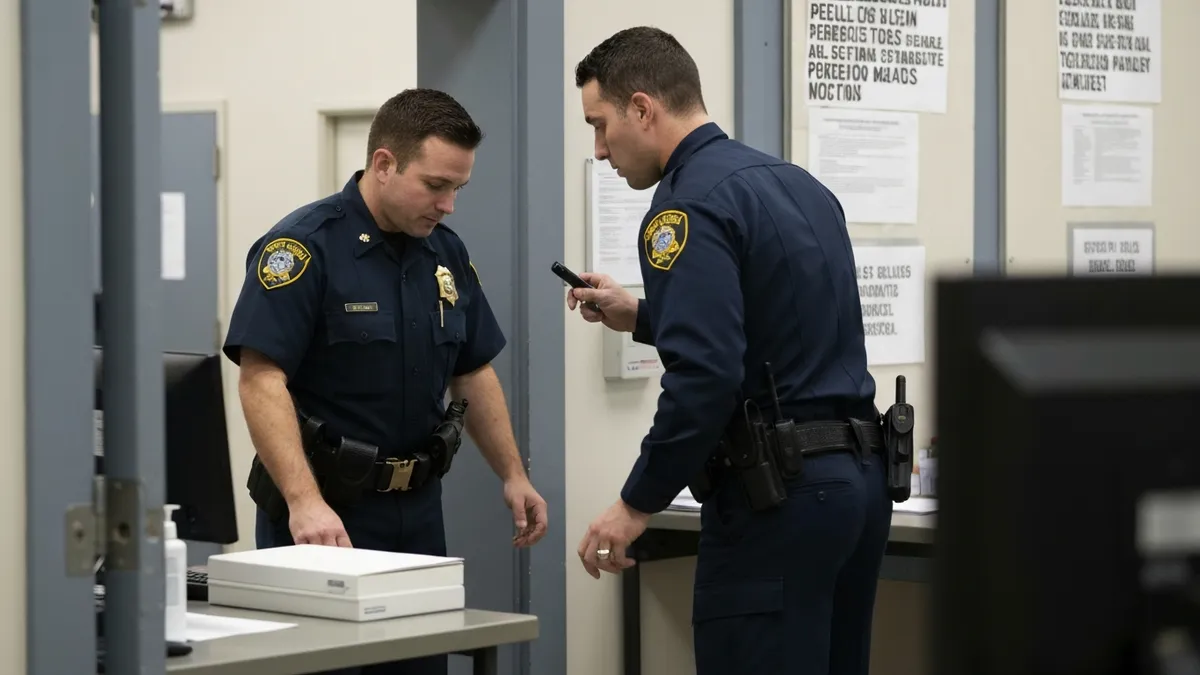
Los Angeles County correctional officer recruitments can open and close within days depending on the size of the current applicant pool. Missing an application window can mean waiting six months or more for the next cycle to open. Set up job alerts through the LA County Human Resources portal (governmentjobs.com) and check the LASD recruitment page at least weekly to ensure you do not miss the filing period. Late applications are never accepted regardless of circumstances.
Preparing for the written examination used in the LA County correctional officer hiring process requires a structured approach that covers the specific content domains tested rather than generic test preparation. The exam measures reading comprehension, mathematical reasoning (basic arithmetic, percentages, and data interpretation), written communication skills, and situational judgment — the last category being the one that trips up the most candidates who have not specifically practiced it. Situational judgment questions present realistic custody scenarios and ask candidates to identify the most appropriate response from four options.
Reading comprehension questions are drawn from passages that simulate the kind of written materials correctional officers encounter on the job — policy manuals, incident reports, legal statutes, and operational directives. Practicing with dense, technical text and answering questions under timed conditions is far more effective preparation than reading general comprehension materials. Candidates who spend four to six weeks reading and summarizing public safety documents, department policy excerpts, and legal summaries enter the exam with a significant advantage over those who rely on intuition alone.
The mathematical component of the exam does not require advanced math, but it does require accuracy under time pressure. Officers calculate medication dosages, interpret population statistics, manage scheduling arithmetic, and handle financial calculations in the normal course of their work, and the exam reflects these practical demands. A candidate who has been out of school for many years should spend dedicated time reviewing percentages, ratios, unit conversions, and basic algebra in the weeks leading up to the examination — thirty minutes of daily practice for six weeks is sufficient to bring most candidates to a competitive level.
Physical preparation for the agility test should begin at least three months before the test date for candidates who are not already in excellent cardiovascular shape. The most common disqualifying failure on the PAT is the 1.5-mile timed run — candidates who train exclusively on shorter distances often fail to develop the aerobic base needed to complete the run within the required time. A progressive running program that builds weekly mileage gradually, supplemented by two strength training sessions per week targeting push-ups, sit-ups, and functional movement patterns, prepares the body efficiently for every element of the PAT.
Psychological preparation is the dimension of CO hiring readiness that candidates most consistently underestimate. The psychological evaluation assesses not just the absence of mental illness but the presence of specific traits that predict success in custody work: emotional regulation, stress tolerance, impulse control, integrity, and the ability to maintain authority without becoming authoritarian.
Candidates who have reflected honestly on their own emotional patterns, sought counseling if needed, and can articulate clearly why they want to work in corrections — and demonstrate genuine insight into what the job actually entails — perform significantly better in the clinical interview component than those who approach it as a formality.
Petlab co and similar wellness brands have built successful followings by helping people optimize their physical and mental health through consistent, evidence-based habits — and the same philosophy applies to CO exam preparation. Consistency over intensity is the governing principle.
Thirty focused minutes of written exam practice, thirty minutes of physical training, and thirty minutes of background investigation documentation review every day for twelve weeks is far more effective than cramming sessions interspersed with inactivity. Building the habits of a disciplined professional before the academy starts also demonstrates to evaluators during the process that you already operate like someone ready to wear the badge.
Finally, candidates who connect with current or former LA County correctional officers for informational conversations gain insights that no study guide can replicate. The correctional officer community in Los Angeles is large and generally welcoming to candidates who approach with genuine respect and curiosity. Ride-along programs and facility tours are available to prospective applicants through the LASD recruitment division and provide an irreplaceable firsthand understanding of the environment you are committing to enter — an experience that will also give you compelling, authentic content for the oral interview and psychological evaluation that follow the written examination and PAT.
The final phase of your preparation for a correctional officer career in Los Angeles County should focus on interview readiness, documentation precision, and the mindset shift from candidate to professional. Candidates who reach the oral interview stage have already cleared the written exam, PAT, and preliminary background screening — they are a self-selected group of serious contenders, and the interview is where character, communication skills, and self-awareness become the deciding factors. Preparation at this stage is as important as any earlier component of the process.
Oral board interviews for LA County correctional officer positions typically involve a panel of two to three evaluators who ask scenario-based and behavioral questions. Common question categories include conflict resolution scenarios, responses to inmate manipulation tactics, examples of past experience handling authority or high-pressure situations, and questions about your understanding of and motivation for the specific role. Answers should be structured using a clear framework — describe the situation, your specific action, and the outcome — and should demonstrate self-reflection rather than just narrative recall.
Documentation errors are among the most avoidable causes of late-stage disqualification. Every date, address, employer contact, and reference name you provide in your personal history statement must be accurate and verifiable. Background investigators cross-reference your documentation against database records, employment verification calls, and personal interviews with listed references. Discrepancies — even ones that seem minor — raise integrity flags that can halt an otherwise strong candidacy. Review every line of your personal history statement multiple times before submission, and keep a personal copy to reference throughout the process.
The rifle paper co philosophy of careful, intentional craft translates well to the background investigation package. Treat every document you submit as a professional work product that reflects your attention to detail and your respect for the process. Sloppy, incomplete, or inconsistent documentation signals that the applicant does not take the job seriously — and background investigators, who read hundreds of packages, notice immediately when a candidate has put genuine care into their submission versus rushed it together at the deadline.
Once you receive a conditional job offer and are scheduled for the academy, the real preparation begins. The 16-week LA County Sheriff's Training Academy is physically and academically demanding by design — it is intended to weed out candidates who are not fully committed to the profession. Officers who arrive at the academy in excellent physical condition, having already studied California Penal Code sections relevant to custody, and having practiced the professional communication skills required in a structured institutional environment consistently outperform their peers during the training period and graduate with stronger early assignments.
Voddler co uk-era streaming culture has normalized binge-consuming information passively, but effective career preparation requires active engagement — practicing scenarios, drilling vocabulary, and rehearsing physical skills. The candidates who succeed in the LA County process are those who treat preparation as a daily discipline rather than a pre-exam sprint. Start now, work consistently, and track your progress objectively. The badge at the end of the academy is not awarded for knowing the right information — it is earned through demonstrating the right professional behaviors, day after day, under observation and pressure.
Your career as an LA County correctional officer will likely span 25–30 years, during which you will witness extraordinary things, build deep professional relationships, and have a direct impact on the safety and operation of one of the most complex public institutions in the United States.
The investment of preparation you make in the next few months is negligible compared to the career and retirement security that awaits on the other side. Approach this process with the seriousness it deserves, use every resource available to you including the practice quizzes and guides on this site, and enter the LA County Sheriff's Department ready to contribute from your first shift.
CO Questions and Answers

Correctional Officer Ranks: Complete Guide to CO Hierarchy, Insignia & Promotion Paths 2026

Correctional Officer Physical Test: Complete Training Guide & Requirements 2026

Colorado Correctional Officer — Corrections Career Guide 2026

Correctional Officer Jobs in CT: Complete Career Guide for Connecticut 2026
Correctional Officer Practice Test PDF 2026
About the Author

Educational Psychologist & Academic Test Preparation Expert
Columbia University Teachers CollegeDr. Lisa Patel holds a Doctorate in Education from Columbia University Teachers College and has spent 17 years researching standardized test design and academic assessment. She has developed preparation programs for SAT, ACT, GRE, LSAT, UCAT, and numerous professional licensing exams, helping students of all backgrounds achieve their target scores.
Join the Discussion
Connect with other students preparing for this exam. Share tips, ask questions, and get advice from people who have been there.
View discussion (9 replies)