
Correctional Officer Jobs: Pay, Requirements & How to Apply 2026 September
Find correctional officer jobs at federal, state, and county facilities. ✏️ Learn requirements, pay, exam prep, and how to apply for CO positions.

Correctional officer jobs are one of the most consistently available positions in public safety. Jails and prisons operate 24 hours a day, 365 days a year — and they always need staff. Nationwide, facilities are chronically short-staffed. If you're looking for a career with steady pay, strong benefits, and real advancement potential, working as a CO is worth serious consideration.
But it's not a job you walk into without preparation. There's a written exam, a physical agility test, a thorough background investigation, and academy training before you ever step onto a housing unit. The agencies that hire correctional officers are looking for candidates who understand what the job demands — not just those who need a paycheck. Knowing what's ahead — and preparing for each stage specifically — is what separates candidates who get hired from those who don't make it past the background check.
This guide covers everything you need: what correctional officer jobs actually involve day to day, the types of facilities that hire COs, where to find openings in your area, what you'll earn at different agency types, and how to navigate each stage of the hiring process from first application to first day on the floor.
- Where to Apply: USAJobs.gov (federal), state DOC websites, county HR portals, Indeed
- Minimum Education: High school diploma or GED
- Minimum Age: 18–21 depending on agency
- Federal Starting Pay: $47,000–$65,000+ with locality
- State Pay Range: $35,000–$70,000+ depending on state
- Academy Training: 3–16 weeks depending on employer
- Key Disqualifiers: Felony conviction, domestic violence misdemeanor, recent drug use
- Job Outlook: High demand — correctional facilities have chronic staffing shortages
What Correctional Officer Jobs Actually Involve
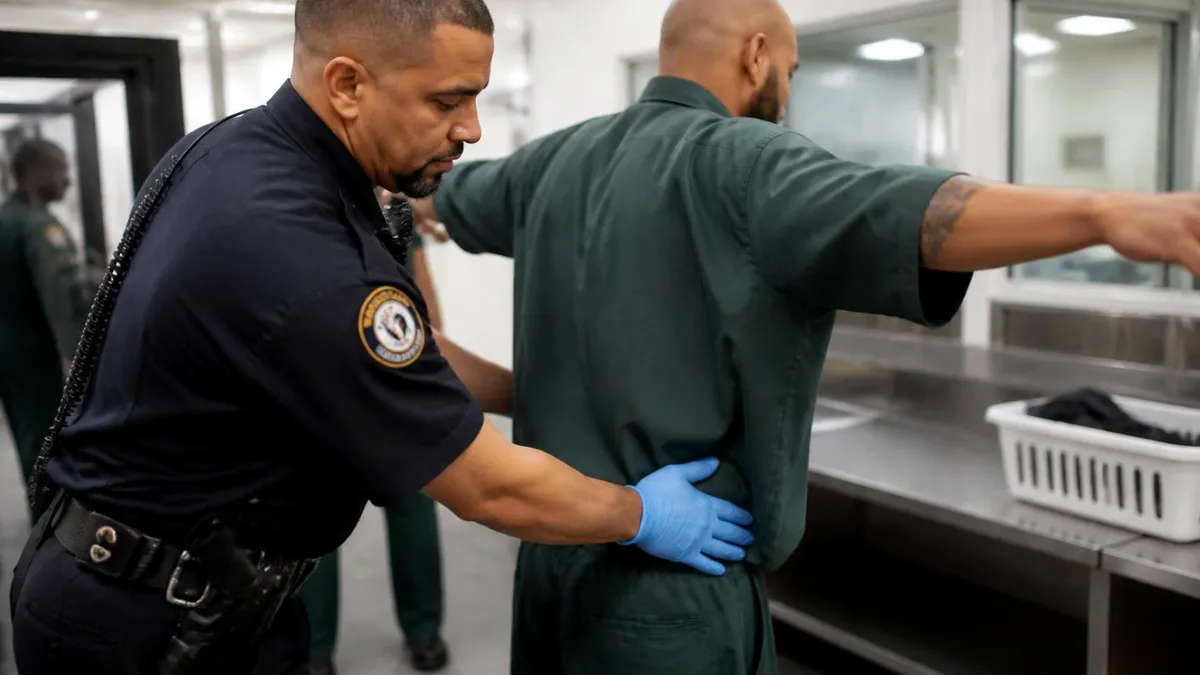
The core duty of a CO is supervision. You're responsible for the safety and security of inmates, staff, and visitors inside a correctional facility. That means monitoring housing units, conducting headcounts, searching cells, escorting inmates to medical or court appointments, and responding to emergencies when they arise — sometimes multiple at once.
On any given shift you might de-escalate a conflict between inmates, write a detailed incident report, conduct a shakedown (cell search) for contraband, or process a new arrival through intake. The work is unpredictable. That's both the challenge and what makes it genuinely engaging for officers who stay in the field long-term — no two shifts are exactly alike.
You're not just a guard at a door. COs enforce facility rules, document inmate behavior, and in some cases provide input for parole board decisions. The position carries real weight. What you document, how you respond, and the relationships you build with inmates directly affect the day-to-day safety of everyone inside the facility.
Physical and mental demands are both substantial. You'll be on your feet for most of an 8-to-12-hour shift, working nights, weekends, and holidays — especially early in your career. Burnout is a documented issue in corrections. The officers who last are those who develop strong professional detachment, good peer support, and habits outside work that provide genuine separation from the job. Mandatory overtime is common, but it meaningfully boosts your annual income.

Types of Facilities Hiring Correctional Officers
Correctional officer jobs exist across several distinct types of institutions — each with its own culture, pay scale, and hiring timeline. Understanding these differences before you apply helps you target the right opportunity and set realistic expectations about compensation and career path.
The correctional officer salary varies most dramatically by facility type. Federal BOP positions pay the highest on average, followed by high cost-of-living states like California and New York. Mid-range states, county jails, and private facilities sit progressively lower — though there are exceptions depending on your location. The comparison below breaks down the key differences so you can prioritize where to apply first based on your situation and career goals.
Correctional Facility Types — Hiring Comparison
- Apply via: USAJobs.gov
- Starting pay: $47,000–$65,000+ with locality
- Benefits: Federal pension (FERS), FEHB health insurance, TSP
- Timeline: 6–12 months from application to hire
- Apply via: State DOC website or civil service portal
- Starting pay: $35,000–$70,000+ (varies by state)
- Benefits: State pension, health insurance, paid leave
- Timeline: 2–6 months typical
- Apply via: County Sheriff or government HR portal
- Starting pay: $32,000–$55,000
- Benefits: Varies by county; often includes pension
- Timeline: 4–10 weeks typical; fastest turnover
- Apply via: CoreCivic, GEO Group career sites; Indeed
- Starting pay: $35,000–$50,000
- Benefits: 401(k), health insurance (less than gov't)
- Timeline: 2–6 weeks — fastest hiring process
Requirements for Correctional Officer Jobs
Most CO positions share a common set of minimum requirements, though specifics vary significantly by employer. Here's what you'll generally need before you apply.
Age: Most agencies require 18 to 21 minimum. The federal BOP requires 18 but has an upper window — you must be hired before 37 for full federal law enforcement retirement eligibility, with some veterans receiving exceptions. State and county agencies typically have no upper age limit.
Education: A high school diploma or GED is the baseline at every level. College credits can earn you a higher federal pay grade entry point, but a four-year degree is not required to get hired anywhere in corrections.
Background check: Thorough and detailed. Felony convictions disqualify you at virtually every agency. Some misdemeanors — domestic violence, dishonesty-related offenses, weapons violations — are also disqualifying. Drug use history matters even without a conviction. Don't assume marijuana is acceptable because it's legal in your state — many agencies still test for it and disqualify based on recent use.
Physical fitness: A physical agility test (PAT) is required. Typical components include a 1.5-mile run under 17–18 minutes, push-ups, and sit-ups within fixed time windows, sometimes an obstacle course. Look up your target agency's specific standards and train for them deliberately — this is the most common preventable failure point for otherwise qualified candidates.
Medical exam: A general physical with vision and hearing components is standard. Certain conditions may be disqualifying depending on the position and agency policy.
Military veterans hold a significant advantage. Most agencies award veterans' preference points in civil service scoring, and military service can substitute for experience requirements in federal hiring. If you have a military background, highlight it prominently — don't assume the agency will find it themselves.
CO Hiring Requirements Checklist
- ✓High school diploma or GED (minimum)
- ✓Minimum age 18–21 depending on agency
- ✓No felony convictions
- ✓Pass comprehensive criminal background investigation
- ✓Pass pre-employment drug screening
- ✓Valid driver's license
- ✓Pass physical agility test (PAT) — run, push-ups, sit-ups
- ✓Pass medical examination including vision and hearing
- ✓Pass written entrance exam
- ✓U.S. citizenship (required for all federal BOP positions)
How to Find and Apply for Correctional Officer Jobs
Where you apply depends entirely on who you're targeting. The tabs above break down the key platforms by employer type. Here's what applies regardless of which agency you're pursuing.
Your application materials matter more than most candidates expect. Tailor your resume to emphasize relevant experience — security work, military service, law enforcement, emergency response, or healthcare. Working with challenging populations is directly relevant and should be highlighted clearly, not buried in a generic job description. Don't leave unexplained employment gaps. Agencies look at the full picture.
Honesty in your background questionnaire is non-negotiable. Agencies verify everything — employment history, education, criminal record, and sometimes financial history. A discovered lie ends your candidacy immediately, often permanently. Dishonesty is treated as a more serious disqualifier than most underlying issues. If you've got something complicated in your history, disclose it proactively and let the agency decide rather than hoping it doesn't come up.
For the correctional officer exam, targeted preparation makes a real difference. Exams typically cover reading comprehension, situational judgment, basic math, and report writing fundamentals. Research which specific test your target agency uses and practice that format directly — familiarity with the structure alone meaningfully improves your score on test day.
Where to Apply by Employer Type
Website: USAJobs.gov
Search for "Correctional Officer" (GS-007) or "Correctional Treatment Specialist." Filter by state and duty location. Read every line of the announcement — USAJOBS auto-screens applications that don't match stated requirements. Tip: your resume must use specific language from the announcement to pass the automated filter. Federal hiring is slow — expect 6 to 12 months. Apply now and keep applying to other agencies in parallel while you wait.

Correctional Officer Salary: What You Can Expect
Pay is one of the biggest variables in correctional officer jobs — it depends heavily on where you work and who employs you. The range is wide, from $32,000 at some county jails to over $70,000 as an entry salary at California state prisons.
Federal BOP officers start on the General Schedule pay scale, typically at GS-5 or GS-6. With locality pay, most federal COs earn $47,000 to $65,000 in their first year. The total package — FERS pension, TSP with agency matching, FEHB health insurance, generous paid leave — is substantially more valuable than the salary number alone. Federal positions are the highest-compensated correctional officer jobs in the country when you account for total compensation.
The correctional officer pay at the state level reflects each state's budget and cost of living. California COs can earn $70,000+ as an entry salary. Texas starts around $40,000. Most states offer defined-benefit pensions. Some states are now offering signing bonuses of $2,000 to $5,000 due to severe staffing shortages — worth factoring in when comparing offers.
County jail corrections officer salaries are generally slightly below state prison rates in the same area, though urban county facilities can pay very competitively. Shift differentials — paid premiums for nights, weekends, and holidays — add meaningful income on top of base pay. Overtime is common and can substantially increase annual earnings, especially at chronically short-staffed facilities where mandatory holdover is frequent.
CO Salary & Training Quick Stats
The CO Written Exam and Academy Training
Getting hired as a correctional officer isn't just filling out an application. You'll move through multiple distinct stages — and each one is a gate you have to pass before advancing to the next.
Written exam: Most agencies require a written entrance exam before extending a conditional offer. Common content covers reading comprehension (read a scenario, answer questions), situational judgment (what would you do if…), report writing basics, and arithmetic. The federal BOP uses its own proprietary exam; many state agencies use standardized civil service tests administered through their civil service commission. Research the specific format for your target employer. Practicing the exact type of content you'll face — rather than generic test prep — makes a measurable difference in your score.
Physical agility test (PAT): Train for this specifically. Showing up undertrained is one of the most common preventable failure points in CO hiring. Typical components: a 1.5-mile run within 17–18 minutes, push-ups and sit-ups within fixed time limits, sometimes an obstacle course or stair climb. Look up your target agency's standards and train to exceed them — not just meet the minimum.
Background investigation: Investigators verify your employment history, education credentials, criminal record, and sometimes conduct neighbor and colleague interviews. The process takes weeks. Be honest about anything complicated in your past — agencies are often more willing to work with candidates who disclose proactively than those caught concealing information they hoped wouldn't surface.
Academy training: Federal BOP training at Glynco, Georgia runs about 3 weeks — residential, meaning you live at the facility throughout. State academies range from 4 to 16 weeks and vary widely in format. Training covers security procedures, use of force, first aid and CPR, legal standards, inmate rights, and emergency response protocols. You'll be tested throughout — failures can mean termination during the probationary period. After academy, a 6-to-12-month probationary period under direct supervision typically follows before you're considered fully independent.
Career Advancement in Corrections
One thing that often gets overlooked about correctional officer jobs is the advancement path. This isn't a dead-end position — it has a well-defined career ladder that rewards tenure and performance.
The standard rank progression in most agencies: Correctional Officer → Corporal or Senior Officer → Sergeant → Lieutenant → Captain → Major → Assistant Superintendent → Warden. Higher ranks come with supervisory responsibility and meaningfully higher compensation. Promotions require a combination of time in service, a passing score on a promotional exam, and a strong performance record. The correctional officer guide for advancement at any specific agency is usually published in the employee handbook — worth reading before you start so you understand what the path looks like from day one.
Beyond rank promotion, specialty assignments can diversify your career without moving up the chain:
- K-9 Unit — Working with trained detection dogs for contraband searches. Competitive, selective, and requires minimum time-in-service to apply.
- Transport / Fugitive Recovery — Moving inmates between facilities or returning escapees, often across state lines.
- Crisis Response / SORT — Special Operations Response Teams handle riots, hostage situations, and major disturbances. Higher physical standards and additional training required.
- Classification — Evaluating inmates for security level and housing assignments through interviews and file review.
- Training Officer / Instructor — Teaching new recruits at the academy or conducting in-service training for current staff.
- Internal Investigations — Internal affairs and criminal investigations involving staff or inmate misconduct.
Some corrections professionals move laterally into probation and parole, federal law enforcement (FBI, DEA, U.S. Marshals Service), facility administration, or private sector security leadership. A corrections career can be a foundation — not just a destination — if you approach it with long-term intention from the start. Officers who treat their CO position as a stepping stone typically build more versatile resumes than those who drift into the work without a plan.
Pros and Cons of Correctional Officer Work
- +Stable government employment with consistent demand nationwide
- +Competitive salary with overtime, shift differentials, and signing bonuses at some agencies
- +Strong benefits package — pension, health insurance, paid leave, retirement
- +Real advancement path from CO to sergeant, lieutenant, captain, warden
- +No college degree required to start — experience and military service valued
- +Job security — correctional facilities can't be outsourced or eliminated easily
- +Veterans' preference in hiring gives military applicants a meaningful advantage
- −High-stress work environment with regular exposure to trauma and crisis situations
- −Mandatory overtime and irregular hours — nights, weekends, and holidays are unavoidable
- −Elevated risk of physical confrontation, injury, and occupational health issues
- −Emotional toll of working with incarcerated populations over a long career
- −High burnout and turnover rates at many facilities, particularly underfunded ones
- −Night and weekend shifts are often unavoidable for new hires without seniority
Pros and Cons at a Glance
| Pros | Cons |
|---|---|
| Stable government employment with consistent demand nationwide | High-stress work environment with regular exposure to trauma and crisis situations |
| Competitive salary with overtime, shift differentials, and signing bonuses at some agencies | Mandatory overtime and irregular hours — nights, weekends, and holidays are unavoidable |
| Strong benefits package — pension, health insurance, paid leave, retirement | Elevated risk of physical confrontation, injury, and occupational health issues |
| Real advancement path from CO to sergeant, lieutenant, captain, warden | Emotional toll of working with incarcerated populations over a long career |
| No college degree required to start — experience and military service valued | High burnout and turnover rates at many facilities, particularly underfunded ones |
| Job security — correctional facilities can't be outsourced or eliminated easily | Night and weekend shifts are often unavoidable for new hires without seniority |
Is a Correctional Officer Career Right for You?
Connecting with the corrections community before you apply is worth doing. Current and former COs on forums like Reddit's r/corrections share honest, unfiltered perspectives on what it's actually like working inside different facilities, states, and agency types. That firsthand context helps you go in with realistic expectations — not a sanitized or dramatized version of what corrections looks like day to day.
The physical demands are real but manageable with preparation. The psychological demands are the part that surprises most new officers. Watching people in crisis, managing manipulation attempts, maintaining authority while still treating people with basic dignity — these skills develop with time and mentorship, not just instinct. Officers who do well long-term tend to have strong professional boundaries, active peer support networks, and genuine separation between work life and personal life outside the facility.
On the practical side, correctional officer jobs offer something increasingly rare in today's job market: genuine stability. Government facilities don't close. Pension plans don't disappear when the market turns. The work is there whether the economy is up or down, because correctional facilities operate regardless of broader economic conditions. For candidates who want a career that provides real financial security without a four-year degree requirement, corrections is one of the most direct paths available — and consistently one of the most underestimated by people who haven't looked into it seriously.
Apply to multiple agencies simultaneously. Don't wait on a single process before moving to the next. Each application represents another option in your hiring pipeline — and the candidate who applies to three agencies typically gets hired faster than the one who waits to hear back from their first choice before taking action.
CO Questions and Answers
About the Author

Educational Psychologist & Academic Test Preparation Expert
Columbia University Teachers CollegeDr. Lisa Patel holds a Doctorate in Education from Columbia University Teachers College and has spent 17 years researching standardized test design and academic assessment. She has developed preparation programs for SAT, ACT, GRE, LSAT, UCAT, and numerous professional licensing exams, helping students of all backgrounds achieve their target scores.
Join the Discussion
Connect with other students preparing for this exam. Share tips, ask questions, and get advice from people who have been there.
View discussion (9 replies)