
Correctional Officer — Complete Guide (2026 September)
⏳ Get ready for your Correctional Officer certification. Practice questions with step-by-step answer explanations and instant scoring.
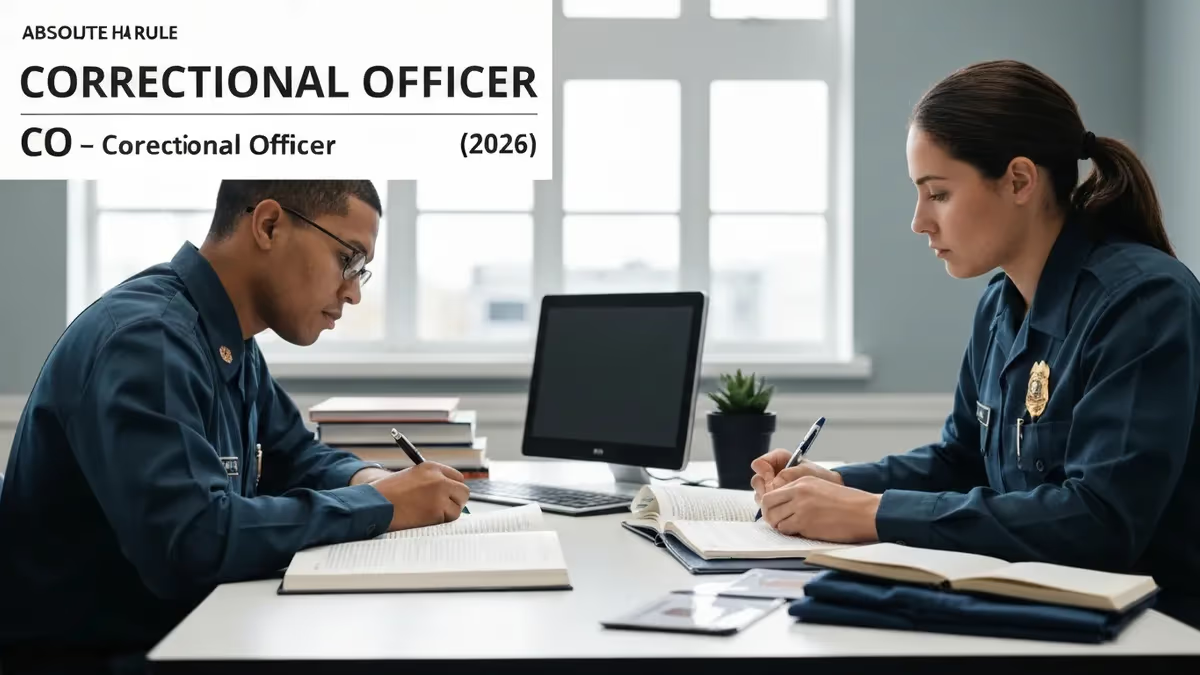
What Is a Correctional Officer?
What is a correctional officer — role and purpose
A correctional officer (CO) is a government-employed law enforcement professional responsible for supervising individuals held in jails, prisons, and detention centers. COs work at the county, state, and federal level — overseeing pre-trial detainees, sentenced felons, juvenile offenders, and federal inmates depending on the facility type.
The role is far more involved than popular culture suggests. Officers manage entire populations, resolve conflicts, conduct searches, respond to emergencies, write detailed incident reports, and enforce facility policies every shift. Their work determines whether a facility is safe or volatile and directly shapes conditions for rehabilitation. According to the Bureau of Labor Statistics, approximately 420,000 correctional officers and jailers are employed across the United States.
Correctional Officer Job Description
Correctional officer job description — core responsibilities
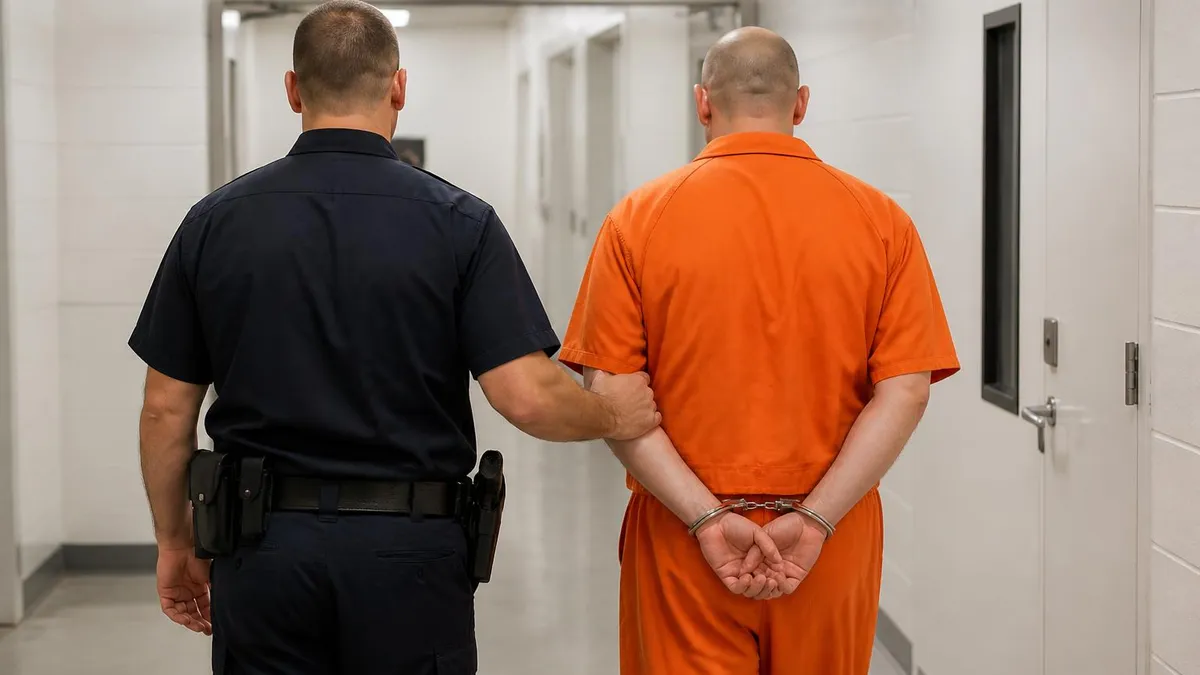
The daily work of a correctional officer demands quick thinking, physical stamina, and clear communication. On any given shift, COs conduct scheduled inmate counts, search cells and common areas for contraband, supervise meals and recreation periods, respond to fights and medical emergencies, escort inmates to court or medical appointments, and write detailed incident reports for the official record.
Beyond security duties, experienced correctional officers often serve on Emergency Response Teams, specialize in K-9 handling or hostage negotiation, or take on roles in inmate classification and rehabilitation program oversight. The career offers significant advancement opportunities for officers who invest in professional development.
Basic Requirements to Become a Correctional Officer
- ✓Must be at least 18–21 years old (minimum age varies by state and agency)
- ✓High school diploma or GED equivalent
- ✓U.S. citizenship or legal work authorization
- ✓Valid driver's license (required by most agencies)
- ✓Pass a background check with no disqualifying criminal convictions
- ✓Pass a physical agility test and full medical examination
- ✓Pass a written entrance exam or civil service test
- ✓Complete a psychological fitness-for-duty evaluation
- ✓Graduate from a state-certified correctional officer training academy
- ✓Pass pre-employment drug screening and ongoing random testing
How to Become a Correctional Officer
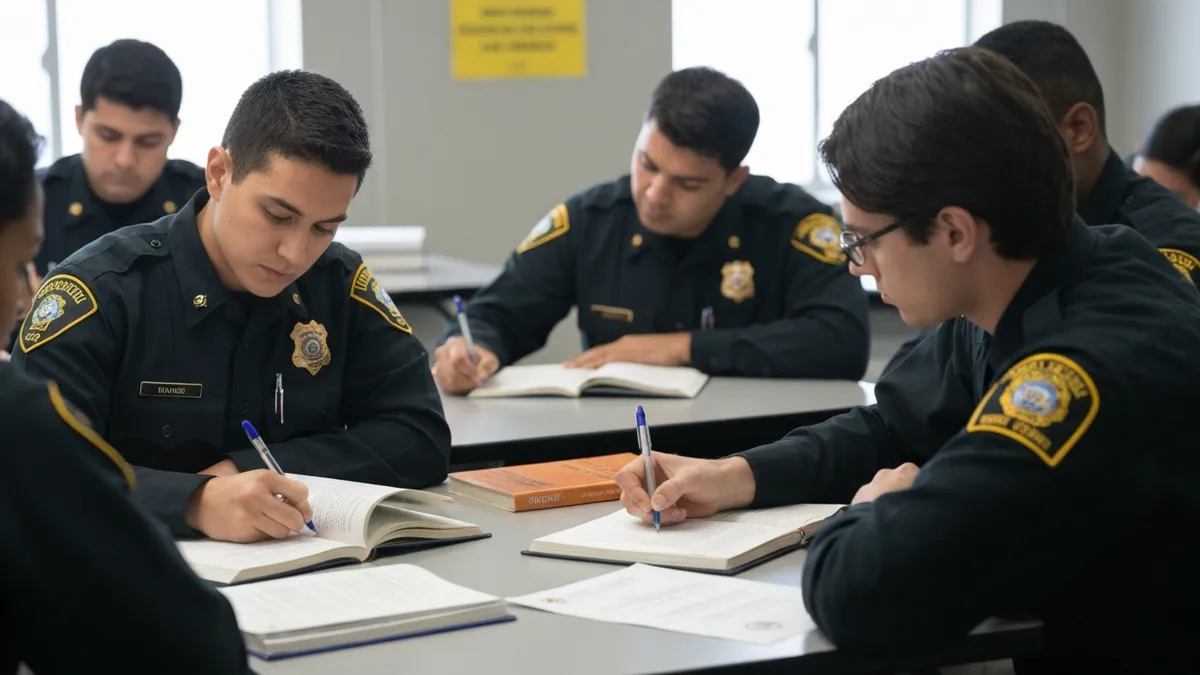
Learning how to become a correctional officer starts with understanding that requirements vary by state, but the path follows a predictable sequence. Candidates first confirm eligibility, submit a formal application, pass a written exam, complete a physical agility test, and clear a background investigation. Those who pass receive a conditional offer, finalized after a medical exam, psychological screening, and drug test.
New officers then attend a training academy — ranging from 4 to 16 weeks depending on the state — covering use-of-force policy, legal rights, crisis intervention, first aid, and report writing. Federal candidates complete a 3-week residential program at FLETC in Glynco, Georgia, before reporting to their assigned institution.
For a deep dive into the written exam content and scoring, visit the what is a correctional officer test guide and take a free practice quiz before your exam date.
Correctional Officer Salary & Pay
Correctional officer salary — national overview
The median annual correctional officers salary in the United States is approximately $51,000 according to BLS data. But base pay is only part of total compensation. Understanding how much do correctional officers make in full requires factoring in overtime — which is routine due to chronic staffing shortages — and government benefits packages that often rival or exceed private-sector offerings at the same base wage.
Correctional officer pay — state and federal differences
Geography drives the biggest wage gaps. California leads nationally with average correctional officer pay exceeding $82,000, followed by New Jersey ($76,000+), Massachusetts ($72,000+), and New York ($70,000+). Southern and Midwestern states offer lower base pay, though lower costs of living partially offset those differences.
Federal Bureau of Prisons officers are compensated under the General Schedule (GS) pay scale, typically at GS-5 or GS-6 on entry. Law Enforcement Availability Pay (LEAP) — a 25% supplement on base salary — pushes total federal CO compensation to $58,000–$78,000 in early career and well over $100,000 at senior grades in high-cost cities. Early retirement eligibility (age 50 with 20 years of service) adds substantial long-term value to federal and most state positions.
Pros and Cons of a Correctional Officer Career
- +Strong job security — facilities operate 24/7, 365 days a year
- +Excellent pension and retirement benefits at most government agencies
- +Early retirement eligibility as young as age 50 in many systems
- +Overtime opportunities that significantly boost annual income
- +Clear advancement path to sergeant, lieutenant, and captain roles
- +Paid academy training — no out-of-pocket education costs to enter
- +Federal health, dental, and vision insurance with employer contributions
- −Daily exposure to violence, trauma, and high-stress situations
- −Mandatory rotating shifts including nights, weekends, and holidays
- −Forced overtime due to chronic understaffing disrupts personal life
- −High rates of occupational burnout and secondary traumatic stress
- −Elevated PTSD risk compared to most other professions
- −Physical danger from inmate confrontations and institutional riots
- −Challenging public perception and morale environment

Working Conditions
COs spend shifts inside secure facilities with limited natural light, constant noise, and exposure to individuals under extreme stress. Research documents elevated rates of chronic stress, sleep disorders, burnout, and PTSD among correctional staff. Many state agencies and the BOP now offer peer support networks, employee assistance programs, and mental health resources designed specifically for corrections professionals.
Despite the challenges, many officers find genuine purpose — particularly those who work in education units, vocational programs, or rehabilitation initiatives. The career builds resilience, leadership under pressure, and problem-solving skills that translate across many fields.
Correctional Officers Strikes
What causes a correctional officer strike?
A correctional officer strike typically erupts when prolonged contract negotiations fail to resolve chronic understaffing, excessive mandatory overtime, inadequate pay relative to job risk, or lack of mental health support. When agencies refuse to act, unions representing correctional officers pursue collective action.
Correctional officers strike — notable examples
The history of correctional officers strike actions in the U.S. is a recurring story of staffing crises and unaddressed safety concerns. In California, the California Correctional Peace Officers Association (CCPOA) has engaged in repeated work stoppages and political campaigns over mandatory overtime and officer safety. In New York, officers have organized around deteriorating conditions at aging facilities.
At the federal level, AFGE Council of Prison Locals — which represents correctional officers across the Bureau of Prisons — has filed repeated grievances over double shifts that force officers to work 16-hour days for weeks at a time. Whether state or federal, the core causes of every major correctional officers strike action are nearly identical: too few officers, too many inmates, and too little institutional support for the humans doing the hardest work.
Prepare for Your CO Career Today
Whether you are researching the field or actively applying, preparation is the key to success as a correctional officer. Start by confirming your state's minimum requirements, then begin practicing for the written entrance exam — it is the first gatekeeping step most agencies use. Our free quizzes cover the exact topic areas tested on the CO exam.
Review the full correctional officer job description and exam guide, then use the practice tests below to identify your weakest areas before test day. Thousands of CO positions open each year across every state — your preparation today determines your placement tomorrow.
CO Questions and Answers
Related Resources

How to Pass the Correctional Officer Exam — Study Tips & Physical Test Prep

Correctional Officer Test 2026: Practice Exam, Physical Test & What to Expect
What Is a Correctional Officer? Duties, Pay, and Path

Correctional Probation Officer — Complete Guide (2026)

Correctional Officer Uniform: Complete Guide to CO Standards, Gear, and Equipment
About the Author

Educational Psychologist & Academic Test Preparation Expert
Columbia University Teachers CollegeDr. Lisa Patel holds a Doctorate in Education from Columbia University Teachers College and has spent 17 years researching standardized test design and academic assessment. She has developed preparation programs for SAT, ACT, GRE, LSAT, UCAT, and numerous professional licensing exams, helping students of all backgrounds achieve their target scores.
Join the Discussion
Connect with other students preparing for this exam. Share tips, ask questions, and get advice from people who have been there.
View discussion (9 replies)