
Correctional Officer: Career Guide, Salary, and Requirements 2026 September
📝 Complete correctional officer career guide: job duties, salary by state, how to become a CO, physical requirements, exam prep, and career advancement

- The median annual salary for correctional officers in the U.S. is approximately $49,610, with federal officers earning significantly more.
- Most state CO positions require a high school diploma or GED, U.S. citizenship, and a clean criminal record.
- All new correctional officers complete academy training ranging from 4–16 weeks depending on the facility and state.
- Correctional officers employed by the federal Bureau of Prisons (BOP) earn a 25% law enforcement availability pay (LEAP) premium on top of base salary.
- The BLS projects correctional officer employment to decline modestly through 2033, but significant turnover-driven hiring creates ongoing job openings.
What Is a ?
A (CO) is a law enforcement professional responsible for overseeing individuals who have been arrested and are awaiting trial or who have been sentenced and are serving time in jail, prison, or other detention facilities. COs maintain security and order within correctional institutions, enforce rules and regulations, supervise daily activities, and respond to emergencies. They work in city and county jails, state prisons, federal penitentiaries, juvenile detention centers, and immigration detention facilities.
The role is more complex than many people realize. Modern correctional officers are not simply guards who lock doors and watch cells. They complete detailed written reports, conduct inmate counts multiple times per shift, supervise work assignments and educational programs, de-escalate conflicts before they become violent, and work alongside counselors, medical staff, and administrators to manage the complex needs of an incarcerated population that includes individuals with serious mental illness, substance use disorders, and chronic health conditions. The job requires both physical readiness and significant interpersonal and communication skills.
Correctional officers work at every level of government: city and county jails typically employ sheriff's deputies or county correctional officers; state prisons employ state correctional officers under the supervision of state departments of corrections; and federal facilities are staffed by Bureau of Prisons (BOP) correctional officers who are federal law enforcement employees with distinct pay and benefit structures. Private correctional companies also operate some facilities under government contracts and employ COs under terms that vary by company and contract.
The emotional and physical demands of correctional work are substantial. Officers work in environments with inherent security risks, manage populations experiencing significant distress, and often work rotating shifts — including overnight, weekend, and holiday rotations — because correctional facilities operate 24 hours a day, 365 days a year. High rates of occupational stress, burnout, and secondary traumatic stress are documented in the workforce, which is one reason many agencies now offer comprehensive employee assistance programs and peer support resources as part of their officer wellness initiatives.
The distinction between jail and prison is important context for understanding correctional officer roles. Jails are short-term facilities — typically run by county sheriffs — that hold individuals awaiting trial, serving sentences of one year or less, or pending transfer to state prison. Prisons are long-term state or federal facilities holding convicted individuals with sentences exceeding one year.
The populations, security challenges, and operational cultures differ meaningfully between jails and prisons, and COs at each develop somewhat different skill sets and professional identities as a result. Juvenile detention facilities add another distinct context, serving youth offenders with rehabilitation-focused programming that operates quite differently from adult facilities.
Public misconceptions about correctional officer work are common. Television and film portrayals emphasize violence and confrontation, but experienced correctional officers consistently identify interpersonal communication — the ability to establish authority without escalating conflict, recognize behavioral signals early, and manage complex institutional relationships across a diverse population — as the skill that determines long-term success in the role. Officers who rely solely on physical authority struggle in modern facilities that emphasize rehabilitation and evidence-based practices. Those who develop genuine communication and de-escalation skills tend to have fewer use-of-force incidents, lower stress, and longer, more satisfying careers.
For individuals drawn to public service, structured careers, and environments where their work directly impacts community safety and human outcomes, correctional officer positions offer a meaningful combination of purpose, stability, and professional development that's worth serious consideration.
Researching the specific state, county, or federal agency where you intend to apply — their current staffing levels, overtime policies, promotional exam schedules, and officer wellness programs — before committing to an application gives you a much clearer picture of what daily life in that system looks like than any general description can provide.
The career rewards those who approach it with professionalism and a genuine commitment to public safety.

Correctional Officer Career at a Glance
Correctional Officer Job Duties
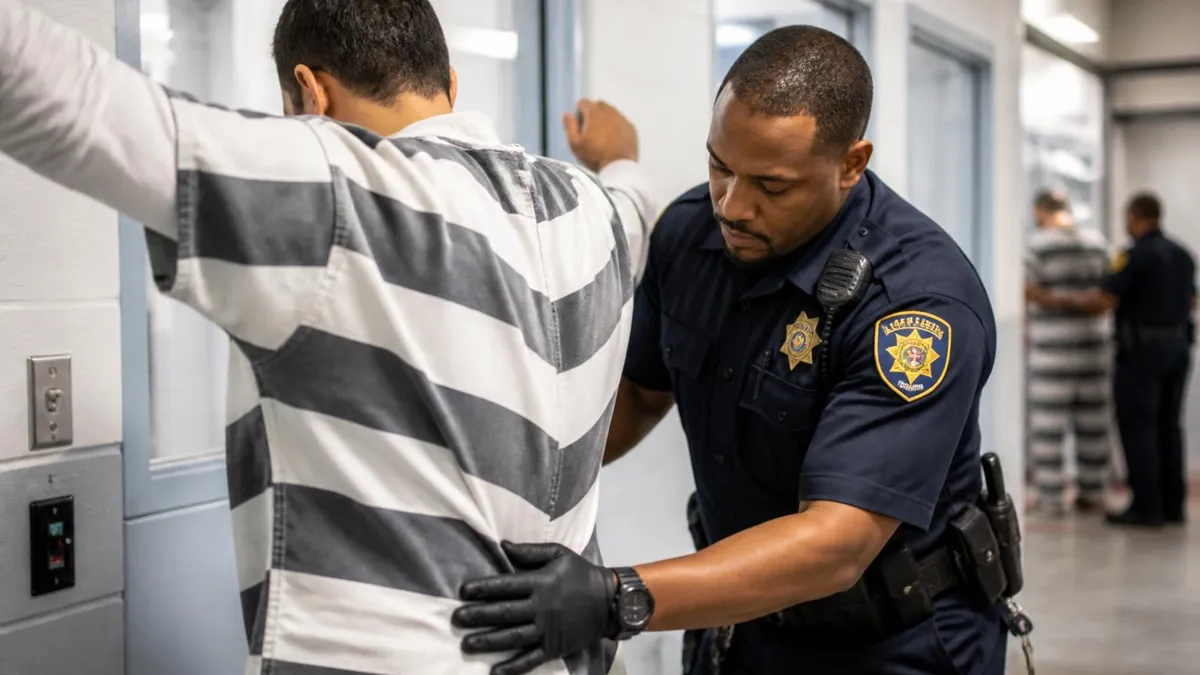
The daily responsibilities of a vary by facility type, shift assignment, and housing unit designation, but most positions share a core set of duties. Security operations are the foundation: conducting multiple inmate counts per shift, performing cell searches and pat-downs to detect contraband, monitoring inmate movement between housing units and programs, and supervising meals, recreation, and work assignments. COs must maintain constant situational awareness in their assigned area, noting behavioral changes that may indicate tension, mental health crises, or planning for rule violations.
Documentation and report writing consume a significant portion of every shift. Every use of force, disciplinary action, medical referral, unusual behavior observation, or incident must be written up in accurate, detailed reports that become permanent records. Quality report writing is a critical skill that directly affects disciplinary hearings, parole board decisions, and legal proceedings — and COs who write poorly or inaccurately create problems that follow them professionally. Many correctional academies spend considerable time on report writing precisely because its importance is so consistently underestimated by candidates entering the field.
Crisis response is a less frequent but high-stakes component of the job. Correctional officers must be prepared to respond to fights between inmates, inmate-on-staff assaults, medical emergencies, fires, escape attempts, and disturbances. They're trained in restraint techniques, first aid, emergency communication procedures, and facility lockdown protocols. How quickly and effectively a CO responds in the first moments of an incident often determines whether it escalates or resolves safely — which is why academy training devotes extensive time to scenario-based practice.
Beyond security functions, modern correctional officers increasingly play a role in rehabilitation-oriented programming. This may include facilitating work assignments and vocational training participation, conducting welfare checks and mental health referrals, and providing consistent structure and behavioral reinforcement that supports program outcomes. Correctional officers who understand this dimension of their role and approach it professionally tend to have better outcomes in their housing units, lower disciplinary rates among their assigned inmates, and greater job satisfaction over time.
Shift assignments affect the day-to-day experience significantly. Officers on day shift (typically 7am–3pm or 6am–2pm) have the most contact with programming, medical, and administrative staff, creating more varied interactions but also more demands from non-security personnel. Evening shift (3pm–11pm) handles recreation, evening programming, and the transition to night quiet hours — often considered the busiest shift. Overnight shift (11pm–7am) is quieter in terms of programming activity but requires constant vigilance during inmate sleep time and involves more independence since less supervisory staff is present.
Officers who excel at report writing often find that this skill becomes a professional differentiator over time. Promotions, disciplinary hearing outcomes, legal proceedings, and administrative decisions all rely on the written record COs create. Officers known for producing clear, accurate, complete reports develop a reputation that supports career advancement in ways that purely physical performance cannot. Investing time early in a career to master institutional report templates and legal documentation standards pays dividends throughout the entire career trajectory.
Building effective working relationships with the inmate population — maintaining appropriate professional boundaries while establishing credibility and consistency — is the long-term foundation of effective correctional supervision that experienced officers identify as the most important skill gap they observe in new officers fresh from academy training.
How to Become a Correctional Officer
Most positions require: U.S. citizenship (or permanent resident status for some local jails), high school diploma or GED, minimum age 18–21 depending on state, valid driver's license, no felony convictions. Federal BOP requires U.S. citizenship and no felony record. Background check requirements are strict — even significant misdemeanor history can disqualify candidates.
Apply through your state's Department of Corrections (DOC) website, USAJOBS.gov for federal positions, or directly to the sheriff's office for county jails. Applications typically include personal history statements covering education, employment, prior criminal history, and drug use. Completeness and honesty are critical — background investigators verify all information.
Many agencies require a written entrance exam testing reading comprehension, writing ability, math, and sometimes situational judgment. Practice tests are available through your state DOC or commercial prep resources. Some agencies use the Correctional Officer Exam (COE) or their own standardized assessment. Preparation improves pass rates significantly.
Physical fitness testing typically includes a push-up test, sit-up test, a 1.5-mile run (often within 15–16 minutes for new hires), and sometimes obstacle courses or agility assessments. Requirements vary by state and age bracket. Training for the specific standards of your target agency several months before testing is the most reliable preparation strategy.
Comprehensive background checks include criminal history, credit history (for federal positions), employment verification, reference interviews, and often a polygraph exam. Drug testing covers recent and historical use. Disqualifiers vary by agency but commonly include felony convictions, recent or habitual drug use, significant financial problems, and integrity violations in prior employment.
Hired COs complete academy training (4–16 weeks) covering security procedures, defensive tactics, use-of-force policy, report writing, emergency procedures, and legal authorities. After academy, most new officers complete 6–12 months of probationary status during which they can be released without cause. On-the-job mentoring supplements academy training.
Correctional Officer Salary
Correctional officer salaries vary significantly by employer type, geographic location, and years of experience. State correctional officers earn a median annual wage of approximately $47,000–$55,000 nationally, but this range is heavily influenced by state policy: California correctional officers represented by the CCPOA union earn among the highest wages in the country, with base salaries often exceeding $70,000, while officers in lower-paying southern states may start below $35,000.
Federal Bureau of Prisons (BOP) correctional officers receive General Schedule (GS) pay typically at the GS-5 to GS-8 range, plus a 25% Law Enforcement Availability Pay (LEAP) premium that significantly boosts compensation. Locality pay adjustments for high-cost areas (Washington D.C., San Francisco, New York) further increase federal officer compensation. Newly hired BOP officers in major metro areas can reach total compensation of $65,000–$80,000 including LEAP and locality within their first few years of service.
Union representation strongly correlates with higher wages in jobs. In states with strong public employee unions — California, New York, Illinois, New Jersey — CO salaries and benefit packages are substantially better than in right-to-work states where union membership is lower. Pension benefits also vary dramatically: states like California and New York offer defined-benefit pensions that provide lifetime income in retirement after 20–25 years of service, while other states have shifted to defined-contribution plans that shift investment risk to the employee.
Overtime is a significant income component for many correctional officers, particularly given chronic understaffing at facilities across the country. Mandatory overtime — where officers are required to stay beyond their scheduled shift to maintain required coverage — is common in many state systems and can add $5,000–$20,000 to annual income. While this overtime income is financially meaningful, the associated fatigue and work-life disruption contribute to the high turnover rates that create the overtime need in the first place. Understanding a potential employer's overtime policies and staffing practices is worth researching before accepting a position.
Geographic variation in CO salaries is large enough to be worth considering when making career decisions. An officer willing to relocate to California, New York, or New Jersey can earn $25,000–$40,000 more annually than the same position in Alabama, Mississippi, or Arkansas — a difference large enough to significantly affect lifetime earnings and retirement savings even after accounting for cost-of-living differences. Some candidates specifically target high-salary states early in their careers, build pension credits, then return to lower-cost regions later while drawing retirement income that was calculated on higher earnings.
Beyond base salary, the total compensation comparison between state and federal positions deserves attention. Federal BOP officers receive FERS retirement (5% agency match), Federal Employees Health Benefits coverage (among the most comprehensive available), federal sick leave and annual leave accrual, law enforcement officer (LEO) retirement provisions that allow retirement at age 50 with 20 years of service, and LEOSA carry permits. These federal benefits are often worth more than the salary premium alone when evaluated over a full career.
Correctional officers who invest in higher education — associate's or bachelor's degrees in criminal justice, social work, or psychology — position themselves both for supervisory advancement within corrections and for lateral transitions into probation, parole, counseling, or law enforcement roles where degree requirements are stricter.

CO Requirements and Qualifications
Most state correctional officer positions require only a high school diploma or GED. Some agencies give preference to candidates with college credits in criminal justice, social work, or psychology, but a degree is rarely required. The federal BOP prefers — but does not mandate — a bachelor's degree or equivalent combination of education and experience. Juvenile detention and specialty correctional programs sometimes require additional education or social work credentials.
Correctional Officer Career Outlook and Advancement
The Bureau of Labor Statistics projects a modest decline in overall employment through 2033, driven by trends toward criminal justice reform, reduced incarceration rates in some states, and technological improvements in facility surveillance and management. However, the BLS simultaneously projects approximately 35,000 annual job openings — a number driven almost entirely by the high turnover rate in the profession rather than net employment growth. In other words, substantial hiring continues not because the field is growing, but because many current officers leave the profession within 3–5 years.
Understanding this dynamic is useful when evaluating correctional officer as a . The high turnover means that opportunities for advancement to senior officer, sergeant, lieutenant, captain, and administrator roles arrive relatively quickly for motivated officers who stay. In a profession where many colleagues leave, officers who remain, perform consistently, and pursue promotional examinations and leadership development often move through the ranks faster than they would in a lower-turnover occupation.
Career advancement in correctional institutions typically follows a structured promotional ladder: officer → corporal or senior officer → sergeant → lieutenant → captain → major or facility administrator. Each promotion step usually requires a written examination, a performance record review, and increasingly at higher levels, supervisory experience and formal leadership development. Many state systems now offer internal leadership academies and tuition assistance for college courses, creating accessible pathways for motivated officers to advance without bearing the full cost of graduate-level criminal justice education independently.
Lateral moves into specialized roles also offer advancement without necessarily pursuing the traditional supervisory path. Classification officers, investigative units, crisis intervention teams, academy instructor positions, and K-9 units represent specialty assignments that often carry additional pay and professional development opportunities. Some experienced correctional officers transition into probation and parole, juvenile justice, federal law enforcement, or private security roles, leveraging their experience managing high-stress interpersonal situations in institutional environments.
The mental health dimension of CO career sustainability is increasingly recognized by agencies and researchers. Studies consistently show that correctional officers experience post-traumatic stress at rates comparable to first responders, higher rates of substance use disorders than the general population, and significantly elevated rates of cardiovascular disease, likely related to shift work disruption of circadian rhythms.
Agencies that have implemented structured peer support programs, proactive employee assistance services, and mandatory wellness contacts — rather than treating mental health needs as individual weaknesses to be managed privately — show measurably better retention and officer wellness outcomes. When evaluating potential employers, asking about their officer wellness programs is as practical a question as asking about salary.
Taking the long view on a correctional officer career — planning intentionally for advancement, continuing education, certification, and eventually a well-funded retirement — transforms what can feel like a demanding and underappreciated job into a career with genuine financial security and professional satisfaction for those who approach it strategically.
Correctional Pros and Cons
- +Correctional has a publicly available content blueprint — you know exactly what to prepare for
- +Multiple preparation pathways accommodate different schedules and budgets
- +Clear score reporting shows specific strengths and weaknesses
- +Study communities share current insights from recent test-takers
- +Retake policies allow recovery from a difficult first attempt
- −Tested content scope requires substantial preparation time
- −No single resource covers everything optimally
- −Exam-day performance can differ from practice test performance
- −Registration, prep, and retake costs accumulate significantly
- −Content changes between versions can make older materials less reliable
Pros and Cons at a Glance
| Pros | Cons |
|---|---|
| Correctional has a publicly available content blueprint — you know exactly what to prepare for | Tested content scope requires substantial preparation time |
| Multiple preparation pathways accommodate different schedules and budgets | No single resource covers everything optimally |
| Clear score reporting shows specific strengths and weaknesses | Exam-day performance can differ from practice test performance |
| Study communities share current insights from recent test-takers | Registration, prep, and retake costs accumulate significantly |
| Retake policies allow recovery from a difficult first attempt | Content changes between versions can make older materials less reliable |
Correctional Officer Questions and Answers
About the Author

Educational Psychologist & Academic Test Preparation Expert
Columbia University Teachers CollegeDr. Lisa Patel holds a Doctorate in Education from Columbia University Teachers College and has spent 17 years researching standardized test design and academic assessment. She has developed preparation programs for SAT, ACT, GRE, LSAT, UCAT, and numerous professional licensing exams, helping students of all backgrounds achieve their target scores.
Join the Discussion
Connect with other students preparing for this exam. Share tips, ask questions, and get advice from people who have been there.
View discussion (9 replies)