
Correctional Officer Jobs in Broward County: Complete Career Guide 2026 September
Explore correctional officer jobs Broward County FL — salary, hiring steps, duties & prep tips. 🎓 Start your CO career today.
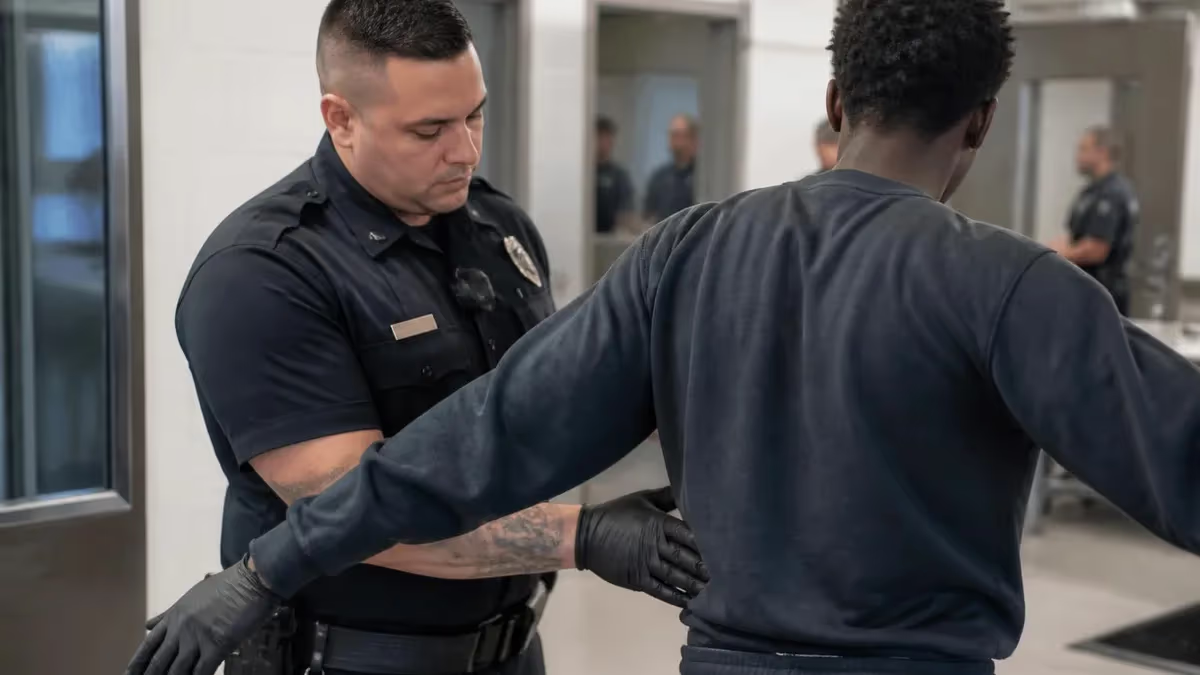
If you have been researching correctional officer jobs in Broward County, you are looking at one of Florida's most active and well-compensated law enforcement career paths. The Broward County Sheriff's Office operates one of the largest jail systems in the southeastern United States, and the demand for qualified correctional officers remains consistently strong.
Much like brands such as collars and co have built reputations on quality and professionalism, Broward County's detention division holds officers to rigorous standards of conduct, training, and performance. Whether you are a first-time applicant or a lateral transfer, understanding the landscape here is your first essential step.
Broward County sits in South Florida, bordered by Miami-Dade to the south and Palm Beach County to the north. The county seat is Fort Lauderdale, and the population exceeds 1.9 million residents, making it the second-most populous county in Florida. That large population translates directly into a substantial detention population, with the Main Jail and Stockade facilities holding thousands of individuals at any given time. Correctional officers assigned to these facilities manage daily operations, maintain safety, and ensure that constitutional standards of custody are upheld around the clock.
The Broward Sheriff's Office, commonly known as BSO, oversees both law enforcement patrol and the corrections division. This dual structure means that correctional officers work within a professional organization that values advancement, education, and specialized assignments. Officers have genuine pathways to move into transportation units, court services, classification, or supervisory roles over the course of a career. The organizational depth here rivals many major metropolitan correctional systems across the country, and competitive salaries reflect that commitment to attracting qualified candidates.
Applicants frequently wonder how Broward County compares to other Florida counties for correctional work. The answer depends on what you value most. Broward offers higher base salaries than most smaller counties, a robust benefits package, access to specialized assignments, and proximity to a major metropolitan area with extensive amenities. The tradeoff is a higher cost of living compared to rural Florida jurisdictions. Most officers find that the compensation package more than offsets living costs, particularly when overtime, shift differentials, and retirement contributions are factored into total compensation.
Preparing thoroughly before applying is not optional — it is a career strategy. The BSO hiring process for correctional officers is multi-stage and competitive, including a written examination, physical fitness assessment, background investigation, polygraph examination, psychological evaluation, and medical screening. Each stage eliminates a percentage of applicants, so candidates who invest time in preparation have a measurable advantage. Understanding what each stage requires, what the timeline looks like, and how to build relevant knowledge will separate serious applicants from those who apply casually and are quickly screened out.
This guide covers every dimension of pursuing correctional officer jobs broward county — from the minimum qualifications through the daily realities of the job, compensation details, advancement opportunities, and study strategies for the written exam. We draw on publicly available BSO hiring data, Florida Department of Corrections certification standards, and practitioner insights to give you the most complete picture available. By the time you finish reading, you will have a concrete action plan for launching or advancing your corrections career in Broward County.
One more note on timing: Broward County periodically opens and closes hiring windows based on budget cycles and facility needs. Checking the official BSO careers portal regularly is essential because positions can appear and fill within weeks. Candidates who have already completed preliminary preparation — physical training, background document collection, and exam study — are positioned to move quickly when a window opens. Procrastination in this process has a real cost, and the candidates who succeed are typically those who treated preparation as an ongoing practice rather than a last-minute sprint.
Broward County CO Career by the Numbers
Minimum Requirements to Become a BSO Correctional Officer
Applicants must be at least 19 years of age and a United States citizen. Florida law sets this floor for all correctional officer certification candidates, and BSO adheres strictly to these statutory requirements throughout the hiring process.
A high school diploma or GED equivalent is the minimum educational requirement. College coursework in criminal justice, psychology, or related fields is not required but is viewed favorably during the competitive scoring and background review phases.
Candidates must have no felony convictions and no disqualifying misdemeanors, particularly domestic violence offenses. A comprehensive background investigation reviews employment history, financial records, driving history, and personal references over a seven-to-ten-year window.
BSO administers a physical fitness assessment covering cardiovascular endurance, upper body strength, and agility. Candidates should begin a structured fitness program at least three months before applying to ensure they meet minimum cutoff scores.
All hired officers must obtain Florida Correctional Officer certification through the Criminal Justice Standards and Training Commission (CJSTC). BSO sponsors recruits through its approved academy program, which runs approximately 770 hours over several months.
Compensation for correctional officers in Broward County reflects the complexity and demands of the work. Entry-level officers with the Broward Sheriff's Office can expect a starting base salary in the range of $52,000 to $58,000 annually, with progression to higher pay grades as seniority and performance reviews accumulate.
Officers who hold Florida law enforcement certification or prior certified corrections experience may be eligible for lateral entry at a higher pay step, bypassing the lowest rungs of the salary schedule. This is a significant financial advantage that experienced officers from agencies like duluth trading co's home states often use when relocating to South Florida.
Beyond base salary, BSO offers a suite of supplemental compensation that substantially increases total earnings. Shift differential pay rewards officers who work evenings, nights, and weekends — which describes the majority of facility coverage shifts. Officers regularly working nights can add several thousand dollars annually to their compensation through differential alone. Overtime opportunities at BSO are frequent given the 24/7 operational requirements of a major detention facility, and voluntary overtime is generally available to officers in good standing who want to maximize their earnings.
Health benefits at BSO are considered among the strongest in Broward County public employment. Officers and their families have access to medical, dental, and vision coverage with a substantial employer contribution covering the majority of premiums. The Florida Retirement System (FRS) provides defined benefit pension coverage, which has become increasingly rare in private-sector employment. Officers who vest in the FRS and complete a full career with BSO can retire with a meaningful monthly pension that provides financial security well into retirement years.
Life insurance, short-term disability coverage, and access to an employee assistance program round out the benefits package. BSO also provides uniforms, equipment, and training at no cost to the officer — an important consideration when calculating true compensation. Officers who must purchase their own uniforms and equipment at smaller agencies can spend hundreds to thousands of dollars annually on gear, so employer-provided equipment has real monetary value that compensation comparisons should reflect.
Paid time off accrues progressively with seniority. New officers typically begin accruing vacation leave and sick leave from the first day of employment, with accrual rates increasing at defined service milestones. Officers with ten or more years of service accumulate vacation time at rates that allow for meaningful multi-week breaks annually. Holiday pay, compensatory time, and personal days further add to the overall leave package that makes BSO an attractive long-term employment destination.
Tuition reimbursement and educational assistance programs allow officers to pursue associate's, bachelor's, or master's degrees while employed, which supports both personal development and career advancement. Officers who earn college degrees often qualify for pay supplements and become more competitive for promotional examinations. The investment in education pays dividends both immediately through pay adjustments and long-term through eligibility for supervisory and administrative positions that come with substantially higher compensation.
Officers who specialize in particular areas — K-9 handler, crisis negotiation, classification, or transportation — often receive additional stipends or are assigned to units with more favorable working conditions. These specialized assignments are competitive and typically require demonstrated performance over several years, but they represent meaningful ways to differentiate a career and increase total compensation beyond the standard salary schedule. Understanding the full compensation picture is essential for making an informed career decision about pursuing corrections work in Broward County.
Daily Duties, Facilities & Time in CO Operations
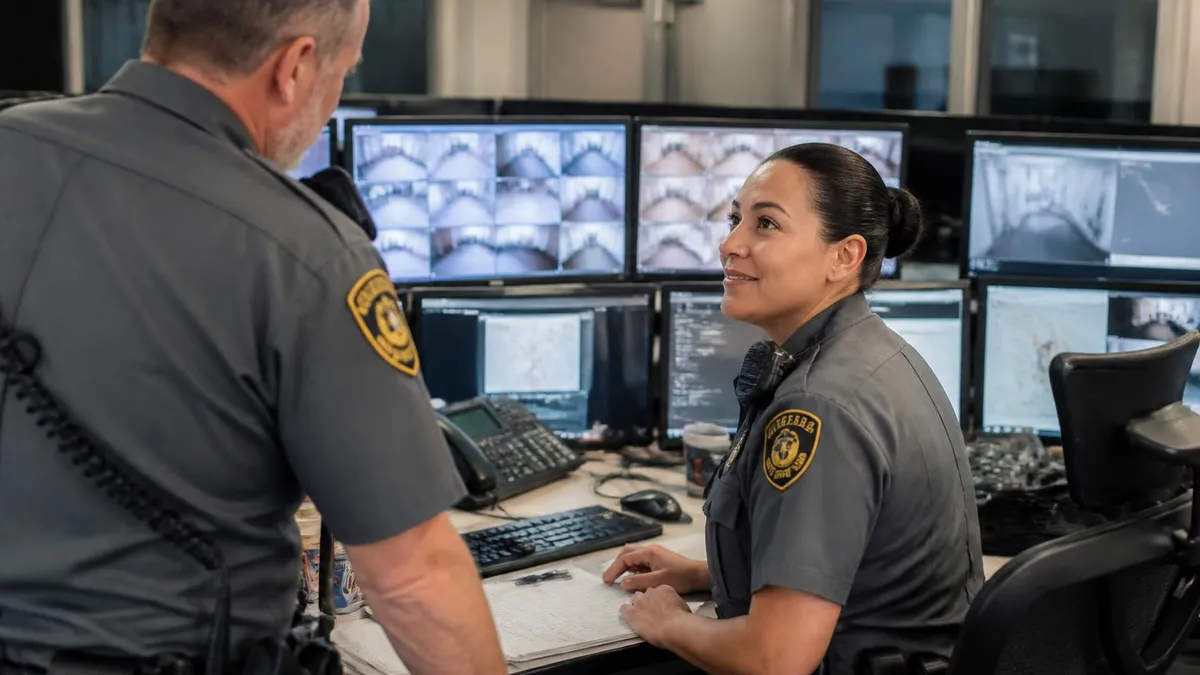
The Broward County Main Jail in downtown Fort Lauderdale is the primary detention facility for the BSO corrections division. Officers assigned here manage intake and booking procedures, conduct regular headcounts, supervise housing units, respond to medical emergencies, and document all significant inmate interactions. The facility operates continuously, meaning officers rotate through day, evening, and night shifts on a structured schedule that ensures full coverage at all times throughout the week.
Daily duties inside the Main Jail include escorting inmates to court appearances, medical appointments, and program activities. Officers conduct thorough searches of housing units for contraband, enforce facility rules, and de-escalate conflicts between inmates before situations become physical confrontations. Accurate documentation through written reports and electronic logs is a core professional responsibility that officers must maintain with precision, as these records may be used in disciplinary proceedings, legal actions, or administrative reviews.

Is a BSO Correctional Officer Career Right for You?
- +Competitive starting salary of $52K–$58K with regular step increases based on seniority and performance reviews
- +Defined benefit pension through Florida Retirement System provides long-term financial security unavailable in most private-sector jobs
- +Comprehensive health, dental, and vision benefits with significant employer contribution toward premiums for officers and families
- +Clear promotional pathways to Corporal, Sergeant, Lieutenant, and Captain within a structured merit-based system
- +Tuition reimbursement program supports pursuit of college degrees while employed without financial burden
- +Specialized assignment opportunities in K-9, crisis negotiation, classification, transport, and community programs
- −High cost of living in Broward County can offset salary advantages compared to corrections work in more rural Florida counties
- −Shift work including nights, weekends, and holidays is unavoidable, particularly for officers with limited seniority
- −The work environment is inherently stressful, with chronic exposure to conflict, trauma, and difficult interpersonal dynamics
- −The hiring process is lengthy, often taking six to nine months from application to academy start date
- −Physical and psychological demands of the job contribute to higher burnout and turnover rates than many other public safety careers
- −New recruits must commit to academy training and a probationary period before achieving full civil service protection
BSO Correctional Officer Application Process Checklist
- ✓Confirm you meet all minimum qualifications including age, citizenship, education, and clean criminal record before applying
- ✓Obtain certified copies of your birth certificate, Social Security card, and all educational diplomas or transcripts
- ✓Compile a complete ten-year employment history including supervisor contact information for every position held
- ✓Gather at least three professional references who can speak to your character, reliability, and work performance
- ✓Begin a structured physical fitness program targeting cardiovascular endurance, push-ups, sit-ups, and a timed run
- ✓Study for the written examination covering reading comprehension, basic math, and situational judgment scenarios
- ✓Resolve any outstanding traffic violations, financial judgments, or credit issues that could raise concerns during background review
- ✓Complete the online application through the BSO careers portal during an active hiring window
- ✓Prepare honest, detailed responses to background questionnaire items covering personal history and prior employment
- ✓Schedule and complete all required assessments including written exam, physical fitness test, and polygraph examination
Background Honesty Is Non-Negotiable
BSO investigators are highly experienced at identifying inconsistencies between application disclosures and what they discover independently. Candidates who proactively disclose minor past issues and explain them honestly are treated far more favorably than those who attempt concealment. A minor youthful indiscretion honestly disclosed rarely disqualifies an otherwise strong candidate — but a discovered omission almost always does. Prepare your full history before you apply and be ready to discuss everything openly.
Career advancement within the Broward Sheriff's Office corrections division follows a structured promotional system that rewards both seniority and demonstrated competence. The first promotional rank above officer is Corporal, which carries supervisory responsibilities over a small team of officers within a specific housing unit or shift. Corporals are expected to mentor newer officers, handle routine disciplinary matters, prepare performance evaluations, and serve as the first point of escalation when officers encounter situations requiring senior guidance. The transition from officer to Corporal is significant both in responsibility and compensation.
Sergeant is the next step above Corporal, and this rank represents a meaningful shift from line supervision to shift management. Sergeants oversee multiple housing units, coordinate between different facility sections, manage staffing adjustments when officers call out sick, and handle more complex inmate grievances and disciplinary hearings. The Sergeant rank requires passing a competitive promotional examination that tests knowledge of BSO policy, Florida corrections law, and supervisory principles. Preparation for this examination typically begins months or even years before the actual test date for officers who are serious about advancing.
Lieutenant and Captain positions represent upper management within the facility hierarchy. These ranks involve scheduling entire shifts, managing budgets, interfacing with legal counsel and court officials, and contributing to facility-wide policy decisions. Much like how brands such as ivy city co establish themselves through consistent quality at every level of their operations, BSO expects its upper management ranks to model the professionalism and judgment that define the organization's culture. Officers who advance to these ranks typically have ten or more years of experience and advanced educational credentials.
Lateral movement into specialized units offers a different kind of career development that does not necessarily follow the vertical promotional ladder. A senior officer might transfer into the Classification Unit, which determines housing assignments and security levels for incoming inmates. This assignment requires strong analytical skills, knowledge of mental health indicators, and the ability to navigate complex case documentation. Classification specialists are valued across the corrections industry, and experience in this area can open doors to positions at state and federal facilities as well as private corrections companies.
The Crisis Intervention Team within BSO handles situations involving inmates experiencing mental health crises. Officers who complete CIT training develop skills in de-escalation, mental health recognition, and coordination with licensed clinicians who work within the facility. These skills are increasingly valued by facilities nationwide as the corrections system grapples with a growing population of individuals with serious mental illness. CIT-trained officers in Broward County often leverage that credential when pursuing advancement or lateral moves to other agencies.
Administrative and training roles represent another advancement pathway for experienced officers who want to step away from direct custody supervision. Training officers work within the BSO academy and in-service training programs, designing and delivering instruction to new recruits and experienced staff. This role requires strong communication skills, subject-matter expertise, and the ability to engage adult learners effectively. Officers in training roles often pursue certifications as Florida Criminal Justice Instructors through FDLE, adding another professional credential to their portfolio.
Retirement planning deserves attention from day one of employment. The Florida Retirement System offers two plan options — the traditional pension plan and an investment plan similar to a 401(k). Most officers who intend to build a full career with BSO choose the pension option, which provides a guaranteed monthly benefit calculated on years of service and average final compensation. Officers can enhance their retirement security by contributing to deferred compensation plans during their working years, maximizing the total benefit available when they eventually separate from service after a full career.

Once hired, BSO correctional officer recruits must complete the full academy program — approximately 770 hours over several months — before being assigned to a facility. Failure to pass academy requirements results in termination of employment. Additionally, officers serve a probationary period of twelve months after academy graduation during which they can be dismissed without the civil service protections that apply to tenured employees. Treat your first year as an extended audition and maintain exemplary performance throughout.
Preparing for the written examination is where many Broward County correctional officer applicants gain or lose their competitive edge. The BSO written assessment evaluates reading comprehension, basic mathematics, and situational judgment. Reading comprehension sections present passages drawn from policy documents, incident reports, or general informational texts and ask candidates to identify main ideas, draw inferences, and answer detail questions accurately. Officers who read extensively in their daily lives typically find these sections manageable, while candidates who rarely read long-form text may need targeted preparation.
Mathematics sections on correctional officer written exams generally focus on arithmetic, basic algebra, and proportional reasoning rather than advanced mathematics. Common question types involve calculating inmate headcounts, determining shift schedules, interpreting statistical reports, and working through scenarios involving ratios and percentages. A candidate who has been out of school for many years may benefit from reviewing foundational math concepts through free online resources before the test date. Timed practice under realistic conditions is especially valuable for building the speed and accuracy needed to complete all questions within the allotted time.
Situational judgment questions present realistic scenarios that a correctional officer might encounter — an inmate behaving erratically, a colleague appearing to violate policy, a visitor attempting to introduce contraband — and ask candidates to select the most appropriate response from several options. These questions evaluate professional judgment, ethical reasoning, and knowledge of corrections principles. Candidates who study real BSO policies, the Florida Model Jail Standards, and general corrections best practices will recognize the principles underlying correct answers even when they have not encountered the exact scenario before.
Physical preparation should begin well before the application window opens. The BSO physical fitness assessment typically includes a timed 1.5-mile run, a push-up component, and a sit-up component, with minimum standards set at levels that represent basic functional fitness. Candidates who have not been exercising regularly should begin a structured program at least twelve weeks before their expected test date. Progressive overload — gradually increasing the intensity and volume of workouts over time — is the most reliable approach to building fitness without injury risk.
The psychological evaluation is a stage of the hiring process that many candidates underestimate. BSO contracts with licensed psychologists who administer standardized personality and psychopathology assessments. These evaluations are designed to identify candidates whose psychological profiles suggest elevated risk for misconduct, excessive use of force, dishonesty, or inability to handle the chronic stressors of corrections work. Candidates cannot meaningfully prepare to pass or fail a psychological evaluation — the best approach is to answer all questions honestly and consistently, as validity scales within the instruments are specifically designed to detect inconsistent or socially desirable responding.
Mock interview preparation is worthwhile for the oral board stage of the BSO hiring process. Oral boards typically include a panel of BSO supervisors or HR staff who ask structured interview questions about your background, motivations for entering corrections, how you have handled conflict in previous employment, and hypothetical scenarios related to the job. Preparing concise, specific answers using the STAR format — Situation, Task, Action, Result — gives candidates a reliable structure for delivering clear, professional responses even when nervous. Practicing with a partner who can provide honest feedback is more valuable than rehearsing alone.
Reference preparation is an often-overlooked element of the application. Candidates should contact all references before listing them and brief them on what the background investigator is likely to ask. References who are caught off-guard may give inconsistent or vague answers that raise more questions than they resolve. Strong references speak specifically to your work ethic, integrity, punctuality, and ability to handle pressure — qualities that directly predict performance in a corrections environment. Avoid listing references who you have not spoken with recently or who may have mixed feelings about your departure from a prior job.
The practical realities of working as a correctional officer in Broward County deserve honest consideration alongside the career benefits. This is emotionally and physically demanding work that exposes officers to human suffering, institutional violence, and chronic stress on a daily basis. Officers who build long successful careers in corrections typically develop strong peer support networks, maintain active lives outside of work, and practice deliberate stress management techniques. Organizations like petlab co have built entire product lines around the concept of systematic wellness — and correctional officers benefit from that same mindset applied to occupational health.
New officers frequently experience a period of adjustment during their first year when the reality of the work diverges from their expectations. Witnessing violence, managing individuals in mental health crisis, working overnight shifts, and navigating the institutional culture of a large correctional facility all require psychological adaptation. BSO's employee assistance program provides confidential counseling services that officers can access without fear that utilization will appear in their personnel file or affect their employment status. Taking advantage of these resources early and often is a professional strength, not a weakness.
Building relationships with experienced colleagues is one of the most valuable things a new officer can do. Veteran officers have institutional knowledge that no manual or training program fully captures — they know which situations tend to escalate, how particular inmates respond to different communication styles, and how to navigate the organizational culture in ways that protect both their safety and their career.
Officers who approach their first assignment with humility and genuine curiosity about what their experienced peers can teach them advance faster and experience less stress than those who assume their academy training has fully prepared them for everything they will encounter.
Physical safety on the job requires constant situational awareness and disciplined adherence to protocols even when they feel routine. Most serious incidents in correctional facilities occur during what officers thought were routine interactions — a routine escort, a routine cell inspection, a routine medication distribution. Complacency is the enemy of officer safety, and the facilities that maintain the best safety records are those where officers consistently follow protocol regardless of how familiar the situation appears. BSO's training program emphasizes this principle, and experienced officers reinforce it constantly through peer culture.
Work-life balance is a genuine challenge in shift work environments. Officers who work nights or rotating schedules report higher rates of sleep disruption, relationship strain, and health issues than day-shift workers. Protecting sleep, maintaining consistent social connections, and scheduling non-negotiable personal time outside of work hours are practices that sustain career longevity. Officers who neglect self-care in the early years of their career often find that accumulated fatigue and stress compromise their performance and health in ways that are difficult to reverse, making proactive wellness habits an investment with compounding returns over a full career.
Community connection enriches corrections careers in ways that purely institutional work cannot. Officers who participate in community outreach programs, mentor youth, or engage with reentry organizations gain perspective that deepens their professional practice. Understanding the community context from which incarcerated individuals come and to which they return changes how officers relate to their work and to the people in their custody. This perspective is increasingly valued by BSO leadership as the field moves toward approaches that balance security with meaningful attention to rehabilitation and successful community reintegration outcomes.
Finally, continuous professional development distinguishes officers who build lasting careers from those who stagnate or burn out. Pursuing advanced training, completing degree programs, obtaining specialty certifications, and actively seeking feedback from supervisors creates an upward trajectory that sustains motivation over the long arc of a career. Much like how companies such as electro and co continuously refine their offerings to stay relevant and competitive, corrections professionals who invest in their own development remain engaged, promotable, and resilient through the inevitable challenges of public safety work in a dynamic, complex environment like Broward County.
CO Questions and Answers

Correctional Officer Ranks: Complete Guide to CO Hierarchy, Insignia & Promotion Paths 2026

Correctional Officer Physical Test: Complete Training Guide & Requirements 2026
Colorado Correctional Officer — Corrections Career Guide 2026

Correctional Officer Jobs in CT: Complete Career Guide for Connecticut 2026
Correctional Officer Practice Test PDF 2026
About the Author

Educational Psychologist & Academic Test Preparation Expert
Columbia University Teachers CollegeDr. Lisa Patel holds a Doctorate in Education from Columbia University Teachers College and has spent 17 years researching standardized test design and academic assessment. She has developed preparation programs for SAT, ACT, GRE, LSAT, UCAT, and numerous professional licensing exams, helping students of all backgrounds achieve their target scores.
Join the Discussion
Connect with other students preparing for this exam. Share tips, ask questions, and get advice from people who have been there.
View discussion (9 replies)