
Female Correctional Officer: Career Guide, Challenges, and Opportunities in CO
Learn what it takes to become a female correctional officer in Colorado. ✍🏼 Roles, pay, challenges, training, and tips for women entering corrections.

The role of a female correctional officer has evolved dramatically over the last four decades, moving from a narrow assignment managing only female inmates to a fully integrated position across all facility types in Colorado. Today, women serve in every corner of the corrections system — from county jails and state prisons to juvenile detention centers and federal institutions.
The phrase "collars and co" captures something real about this profession: it is a job defined by both authority and accountability, and women who enter it are held to every standard their male counterparts face, often while navigating additional layers of scrutiny and bias.
Colorado's Department of Corrections actively recruits women and has implemented policies designed to create equitable working environments. That shift did not happen overnight. It took decades of litigation, advocacy, and the quiet determination of thousands of women who showed up every day and did the job. The result is a profession that is measurably more inclusive, though still far from perfectly balanced. Women make up roughly 27 percent of the correctional officer workforce nationally, and Colorado tracks closely to that figure. Understanding the landscape — the good, the difficult, and the practical — is essential for anyone considering this path.
One comparison that helps frame the culture is the outdoor apparel company Toad and Co, which markets rugged clothing for people who work in demanding environments. Correctional work is similarly unrelenting: it demands physical endurance, sharp situational awareness, and the emotional resilience to manage tense, unpredictable human interactions hour after hour.
Women who thrive in this career typically possess a combination of firmness and de-escalation skill that is, if anything, an asset rather than a limitation. Research consistently shows that female officers tend to rely on verbal communication more than physical force, which often resolves conflicts more safely for everyone involved.
The time in CO corrections spent building seniority matters enormously. Entry-level officers work the least desirable shifts — nights, weekends, and holidays — and earn base pay that starts around $42,000 to $48,000 annually in Colorado depending on facility and classification. With five to ten years of service, however, salary can climb past $65,000, and senior officers with specialized assignments or supervisory roles can earn $80,000 or more. Benefits packages are robust: state health insurance, defined-benefit pensions, and access to education assistance programs that can help fund a bachelor's or master's degree while working.
Geography matters too. Officers working in facilities near Glenwood Springs CO United States, a region served by the Colorado Department of Corrections' Western Slope facilities, often face a different cost-of-living calculus than those near Denver. Salaries are generally consistent statewide, but housing costs in mountain communities can strain a starting officer's budget. Many new COs commute or relocate strategically, and some facilities offer relocation assistance or housing stipends for hard-to-fill positions. Researching the specific facility you apply to is a step that pays dividends before you ever sit down for an interview.
The hiring process in Colorado is multi-staged and thorough. Candidates must pass a written exam, physical agility test, background investigation, psychological evaluation, and medical screening. Facilities associated with larger retail or service brands — much like how Duluth Trading Co built a reputation for gear that genuinely performs — have institutional reputations that matter: some prisons are known for rigorous training cultures and strong mentorship for new officers, while others have higher turnover and less structured onboarding.
Doing your research, talking to current and former officers, and visiting facilities during open hiring events can make a significant difference in finding the right fit for a long-term career.
This guide walks through every key dimension of the female CO career path in Colorado: what the job actually looks like day to day, what the hiring and training pipelines require, how women navigate the unique challenges of the profession, what compensation and advancement look like over a full career, and what study and preparation strategies give you the best shot at getting hired and succeeding once you are on the floor.
Female Correctional Officer in Colorado by the Numbers
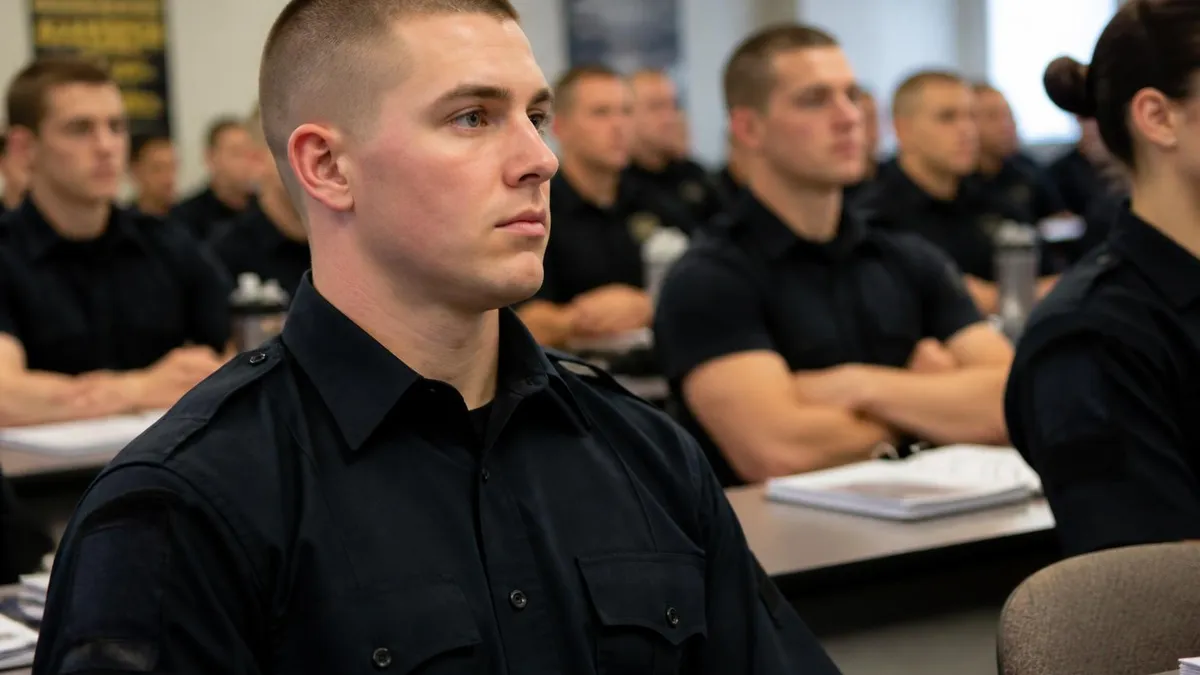
Core Requirements to Become a Female CO in Colorado
Applicants must be at least 18 years old (21 for some facilities), hold a high school diploma or GED, possess a valid driver's license, and be a U.S. citizen or authorized resident. No felony convictions are permitted, and most misdemeanor drug offenses within the past five years will disqualify an applicant.
Colorado uses a gender-normed physical agility test that includes a timed 1.5-mile run, sit-ups, push-ups, and a job-simulation obstacle course. Women must meet the female-specific benchmarks, which are calibrated to occupational necessity. Regular preparation — three to four months of structured cardio and strength training — dramatically improves pass rates.
A thorough background investigation covers criminal history, employment records, financial responsibility, and personal references. Candidates also complete a written psychological evaluation and a clinical interview with a licensed psychologist. Honesty throughout the process is essential; inconsistencies discovered during the investigation are grounds for disqualification even when the underlying issue would not have been.
The CO written test assesses reading comprehension, report writing ability, basic math, and situational judgment. Scores above 70 percent are typically required to advance in the process. Prep materials, practice tests, and study guides are widely available and can meaningfully raise scores for candidates who invest preparation time before test day.
A comprehensive medical exam including vision, hearing, cardiovascular health, and drug screening is required before academy entry. Certain pre-existing conditions may be disqualifying depending on assignment. Vision must typically be correctable to 20/20, and color vision is tested for facilities with specific operational requirements around security panels and displays.
Colorado's correctional officer academy is a sixteen-week residential program operated by the Colorado Department of Corrections at the Fremont Correctional Facility training campus. Every candidate — male or female — completes the same curriculum. The program covers constitutional law and inmate rights, use-of-force continuum and restraint techniques, emergency response protocols, report writing, mental health crisis intervention, and cultural competency. Physical training is woven throughout the academy, not concentrated into a single block, because the department wants graduates who maintain fitness as a professional habit rather than a pre-hire sprint.
For women entering the academy, one of the most frequently cited adjustments is the physical training component. The curriculum requires repeated self-defense drills, takedown techniques, and scenario-based exercises that involve physical contact with role players. Women who have not previously trained in martial arts, wrestling, or combat sports sometimes find the early weeks jarring.
The solution is simple but requires advance planning: take a basic self-defense or grappling course before your academy start date. Eight to twelve weeks of two-sessions-per-week training will give you both the physical conditioning and the muscle memory to navigate those scenarios with confidence rather than anxiety.
Scenario-based training is arguably the most valuable portion of the academy. Recruits practice cell extractions, managing disturbances in common areas, responding to medical emergencies, and de-escalating verbal confrontations. Female recruits often excel in these scenarios because effective verbal de-escalation — reading tone, maintaining calm, adjusting language to the specific individual — tends to align with communication patterns women have developed throughout their lives. Several academy instructors have noted publicly that female cohort members frequently set the bar on scenario performance, even when they are still developing physical confidence.
The mental health crisis intervention module has expanded significantly in recent years, reflecting the reality that Colorado's correctional population has an extremely high prevalence of serious mental illness. Officers today are expected to recognize symptoms of psychosis, depression, and suicidal ideation, and to respond in ways that minimize escalation while keeping the officer and surrounding inmates safe. Female officers who build expertise in this area often find themselves sought out for specialized roles in mental health units, which tend to offer slightly different working conditions and, in some facilities, modest pay differentials.
Report writing is a skill that separates good officers from great ones, and the academy devotes substantial time to it. Every use-of-force incident, medical event, rule violation, and unusual occurrence must be documented with precision and clarity. Poorly written reports create liability for the officer, the facility, and the department.
The standard that instructors push toward is the "collars and co" model of professional accountability: your report should stand alone as a factual record that any reader — including a judge or internal affairs investigator — can evaluate without needing to ask you questions. Women who come to the academy with strong writing backgrounds, whether from college coursework or prior professional experience, often find this module confirms existing strengths.
Graduation from the academy triggers a twelve-month probationary period at the officer's assigned facility. During probation, new officers are paired with field training officers (FTOs) who evaluate performance across dozens of competency categories. The FTO relationship is critical: a supportive, experienced FTO can accelerate a new officer's development dramatically, while a poor FTO match can undermine confidence and create documentation problems. If you feel your FTO assignment is not working, there are formal processes to request reassignment — use them. Probation is not the time to silently absorb a bad working relationship.
Continuing education is available throughout a correctional career in Colorado. The department offers specialized training in crisis negotiation, K-9 handling, firearms instruction, and tactical response. A number of community colleges in Colorado have articulation agreements with the department that allow officers to convert academy hours into college credit, and Ivy City Co partnerships with workforce development organizations have created pathways where corrections experience counts toward criminal justice and social work degrees. Officers who invest in education during their careers consistently report faster advancement and broader options when deciding whether to move into supervisory, administrative, or specialized roles.
Daily Life as a Female CO: Shifts, Posts, and Duties
Day shift in a Colorado state prison typically runs from 6:00 a.m. to 2:00 p.m. and is the most activity-dense period of the operational day. Officers manage inmate movement to programs, work assignments, medical appointments, and meals. The housing unit post requires constant supervision of common areas, responding to requests, documenting behavior, and conducting headcounts at defined intervals. Female officers on day shift often supervise pat-down searches of same-sex inmates, a role that carries both authority and responsibility for maintaining dignity and procedural compliance.
Program escorts and transport assignments are common on day shift. Officers accompany inmates to educational classes, vocational training, religious services, and visitation. These movements require both physical alertness and interpersonal skill, as the transitions between secure areas are among the highest-risk moments in a facility's daily rhythm. Officers who develop a reputation for calm, consistent management of movement tend to earn the trust of both supervisors and the inmate population, which makes the work meaningfully safer over time. Many experienced female COs describe day shift as the shift where professional skills develop most rapidly.

Pros and Cons of a Career as a Female Correctional Officer
- +Stable government employment with strong job security even during economic downturns
- +Defined-benefit pension and comprehensive health benefits for officer and family
- +Opportunities for advancement into supervision, training, and specialized units
- +Meaningful work that directly impacts public safety and inmate rehabilitation outcomes
- +Gender-normed physical standards allow women to compete fairly in the hiring process
- +Colorado actively recruits women and has formal harassment reporting and accountability systems
- −Shift work including nights, weekends, and holidays is mandatory for junior officers
- −Exposure to trauma, violence, and emotionally distressing situations is a daily reality
- −Informal bias and gender-based hazing still occurs in some facilities despite policy protections
- −Physical demands — restraints, extractions, prolonged standing — carry long-term injury risk
- −Mandatory overtime requirements can disrupt personal and family life unexpectedly
- −Starting pay is modest relative to the psychological demands the job places on officers
Hiring Checklist: Steps for Women Entering CO Corrections
- ✓Confirm you meet all basic eligibility requirements including age, citizenship, and clean background.
- ✓Request and study the Colorado DOC physical agility test standards before beginning your prep.
- ✓Start a structured fitness program at least four months before your anticipated test date.
- ✓Take a basic self-defense or defensive tactics course to prepare for academy physical scenarios.
- ✓Gather all required documents: birth certificate, Social Security card, driving record, and prior employment records.
- ✓Complete the online application through the Colorado state careers portal and track your submission status.
- ✓Prepare for the written exam using practice tests that cover reading comprehension and situational judgment.
- ✓Research each facility you list as a preference and speak with current or former officers if possible.
- ✓Practice clear, factual writing because report-writing assessments are part of the evaluation process.
- ✓Line up three to five professional references who can speak to your reliability, judgment, and character under pressure.
Verbal De-escalation Is Your Highest-Value Skill
Studies from the National Institute of Corrections consistently show that female officers initiate fewer use-of-force incidents per inmate contact than their male counterparts — not because of physical limitation, but because they deploy verbal strategies more readily and effectively. In an era when correctional systems are under intense scrutiny for use-of-force practices, this tendency is a genuine professional asset. Developing and refining your de-escalation toolkit before the academy will pay dividends throughout your entire career.
Compensation for correctional officers in Colorado is governed by the state's classified pay system, which ties salary to grade level, years of service, and performance evaluations. Entry-level COs begin at Pay Grade P2, which in 2025 corresponds to a starting salary between $42,000 and $48,000 depending on prior experience and facility location.
The step system provides automatic pay increases at one, two, and four years of service, with merit increases available annually after the first performance review cycle. Officers who reach the five-year mark without a sustained adverse action on their record can generally expect a salary in the $58,000 to $65,000 range.
Advancement opportunities are formally structured in Colorado. The promotional ladder moves from Correctional Officer I through Correctional Officer II (senior officer with expanded responsibilities), Corporal (limited supervisory authority over a shift or housing unit), Sergeant (first-line supervisor), Lieutenant, Captain, and facility-level command staff. Each promotional level requires passing a written and oral examination, meeting time-in-grade requirements, and demonstrating performance ratings that meet or exceed standards. Women who pursue promotion at the same rate as male colleagues advance at comparable rates, though some facilities have been cited in internal reviews for promotional processes that disadvantage women through informal mentorship disparities.
Specialty assignments represent another dimension of compensation and career satisfaction. Colorado facilities have specialized units including mental health management units, restrictive housing, sex offender treatment programs, gang intelligence, and crisis negotiation teams. These assignments often come with small pay differentials — typically three to eight percent above base — and they build marketable expertise. An officer who has served in crisis negotiation, for example, has credentials that are attractive to federal agencies, municipal law enforcement, and private security firms if they eventually transition out of state corrections.
Retirement through the Colorado PERA (Public Employees' Retirement Association) system is one of the most significant financial benefits of a corrections career.
Correctional officers qualify under the Judicial and Corrections division of PERA, which allows retirement at age 50 with 25 years of service, or at age 55 with any service length, or at the Rule of 80 (age plus service years equals 80). The defined-benefit formula calculates monthly retirement income at approximately 2.5 percent of the highest average salary per year of service. An officer who retires at 52 with 27 years of service would receive roughly 67.5 percent of their peak salary as a monthly pension — for life.
Education benefits round out the compensation picture. The Colorado DOC participates in federal Public Service Loan Forgiveness (PSLF), meaning officers who work full-time and make 120 qualifying monthly payments on federal student loans have the remainder forgiven tax-free. For officers who took on student debt before entering corrections, PSLF can represent tens of thousands of dollars in savings. The department also offers tuition assistance for employees pursuing degrees relevant to corrections, criminal justice, social work, psychology, or public administration — up to $3,000 per academic year in recent budget cycles.
Rifle Paper Co is a lifestyle brand whose aesthetic appeal comes from intentional design and attention to detail. There is an analogy there to building a corrections career: the officers who achieve the most meaningful outcomes — personally and professionally — are those who design their career path with intention.
They choose facilities that align with their growth goals, they seek mentors proactively, they complete additional training before it is required, and they manage their physical and mental health as a career-long investment rather than an afterthought. The data on corrections officer burnout is sobering, but it also shows clearly that officers who build strong professional networks and engage with peer support resources consistently sustain healthier careers.
Voddler.co.uk may be a UK streaming platform unrelated to corrections, but the concept of streaming — continuous, uninterrupted delivery — applies well to how top performers in this profession approach professional development. They do not wait for a promotional exam to start studying. They do not wait for a mandatory training to learn something new.
They consistently invest small amounts of time — reading industry publications, completing optional training modules, attending professional association meetings — that compound over years into a career that is substantially richer and more advanced than those who only do the minimum required. For female officers especially, that proactive approach to professional visibility is often the key differentiator in promotional competitions.

Colorado state law and CDOC policy prohibit gender-based discrimination and sexual harassment in correctional workplaces. If you experience harassment, bias in assignment, or retaliation for reporting misconduct, you have formal remedies through the department's Equal Employment Opportunity office, the Colorado Civil Rights Division, and the federal EEOC. Document everything with dates, times, and witnesses. Filing a complaint through proper channels is legally protected, and retaliation for good-faith complaints is itself a terminable offense under state personnel rules.
The challenges that female correctional officers face in Colorado are real, documented, and — importantly — navigable. The most commonly reported challenges fall into three categories: informal workplace culture issues, physical demands over a long career, and the psychological weight of working in a high-stress, often traumatic environment.
Understanding these challenges clearly before you enter the profession is not meant to discourage you; it is meant to give you a realistic foundation from which to build effective personal strategies. Officers who enter corrections with clear eyes about the difficulties consistently report higher job satisfaction than those who discover the realities without preparation.
Workplace culture in correctional facilities has historically been male-dominated, and traces of that culture persist even as the workforce diversifies. New female officers sometimes encounter skepticism about their physical capability, subtle exclusion from informal information networks, or assumptions about their toughness that need to be disproven through consistent performance. The most effective response to these dynamics is neither confrontation nor accommodation — it is excellence. Officers who demonstrate competence day after day, who write thorough reports, who handle difficult situations calmly, and who show up reliably for every shift build reputations that override initial bias remarkably quickly.
Mentorship is arguably the single most impactful variable in a female CO's early career success. Finding a senior officer — male or female — who is willing to share institutional knowledge, provide honest feedback, and advocate for you in promotional and assignment processes creates a career advantage that cannot be replicated through any formal training. Many Colorado facilities now have formal mentorship programs specifically for new officers, and several facilities have women's officer associations that provide peer support and professional development resources. Seek these structures out actively rather than waiting for them to come to you.
Physical longevity is a genuine concern for correctional officers of all genders, but the injury patterns differ somewhat for women. Back injuries, knee injuries from prolonged standing on concrete floors, and repetitive stress injuries from restraint techniques are the most common long-term physical issues.
Investing in high-quality footwear — a recommendation that echoes the practical ethos of brands like Duluth Trading Co, which builds gear specifically for physically demanding work — is one of the simplest and most impactful preventive steps. Facilities are required to provide orthopedically appropriate footwear allowances in many jurisdictions, and using that benefit is advisable from day one.
Psychological wellness in corrections is a topic that has finally received institutional attention in Colorado after years of being treated as an individual problem rather than an organizational responsibility. The department now operates a peer support program staffed by trained officer-volunteers who can provide confidential, informal support during and after critical incidents. Employee Assistance Program (EAP) counseling is available at no cost, and critical incident stress debriefing is required after traumatic events. Female officers who use these resources consistently report lower rates of burnout, PTSD symptom development, and career exit than those who do not.
Work-life balance deserves direct discussion. Mandatory overtime is a structural feature of corrections staffing in Colorado, not an exception. Facilities regularly run below authorized staffing levels, and officers in the bottom half of seniority are frequently required to extend their shifts or report on days off.
This reality collides directly with family and caregiving responsibilities that fall disproportionately on women in most households. Experienced female COs universally advise new officers to build a support network before starting the job: reliable childcare arrangements, clear communication with partners about schedule unpredictability, and a social circle outside of work that provides recovery and perspective.
The long arc of a corrections career, navigated thoughtfully, is genuinely rewarding. Officers who survive the first three years — statistically the hardest period, when the gap between expectation and reality is sharpest — typically report settling into a professional rhythm that they describe as sustainable and meaningful. They understand the population they work with.
They know the facility's systems and culture. They have built relationships with colleagues they trust. And they have developed the professional identity of someone who handles difficult work with skill and integrity — a quality that, like the best work done by a female correctional officer on any given shift, tends to speak for itself without needing to announce itself at all.
Practical preparation for the CO hiring process and academy success comes down to a handful of disciplines practiced consistently over several months. The single highest-return investment is structured study for the written exam. Colorado's exam is not designed to trick candidates — it tests comprehension, judgment, and basic professional literacy. But it does require that you engage with the material actively. Passive reading of study guides produces mediocre results; practicing with timed mock exams, reviewing errors carefully, and retesting on missed topics produces the score gains that separate passing candidates from those who need to retest.
Physical preparation should be sport-specific, not generic. Running three miles three times a week will improve your cardiovascular baseline but will not prepare you for the explosive, multi-directional demands of cell extraction scenarios or the sustained static standing of post assignments. Incorporate interval training — short bursts at high intensity — alongside your distance work.
Add resistance training focused on posterior chain strength (deadlifts, rows, hip hinge movements) because back health under load is what correctional work demands hour after hour. If you have access to a community fitness program or a CrossFit-style gym, the combination of varied movement patterns and peer accountability that these environments provide is well-suited to academy preparation.
Writing practice is underrated. Begin keeping a daily written log of events and observations — nothing elaborate, just a paragraph or two describing what you observed, heard, or did in factual, specific language. This exercise builds the neural habits of precision and objectivity that report writing demands. After four to six weeks, ask someone whose writing you respect to evaluate your entries for clarity and factual precision. The feedback will be instructive, and the habit will serve you throughout your career from your first incident report to your last before retirement.
The psychological preparation for correctional work is something most candidates shortchange. Spend time reading first-person accounts from working correctional officers — books, podcasts, online forums — and sit with the reality of what you are choosing. This is not about discouraging you; it is about building the mental frameworks that allow you to process difficult experiences without accumulating unresolved psychological debt.
Officers who enter corrections having thought seriously about how they will handle witnessing violence, managing suicidal inmates, and working alongside colleagues who have moral character very different from their own are substantially better positioned to maintain their integrity and wellbeing over a full career.
Networking before you are hired is a legitimate and underutilized strategy. Colorado law enforcement and corrections professional associations hold regular meetings and events that are open to prospective members. Attending these events, introducing yourself as someone in the hiring pipeline, and listening to the conversations that experienced officers have gives you a qualitative sense of the profession that no guidebook can replicate. It also creates the kind of informal connection that occasionally surfaces in a facility interview when an interviewer mentions that a colleague vouched for your seriousness and preparation.
Once hired, the first thirty days on the floor with an FTO are the most information-dense of your career. Treat this period as an immersive apprenticeship. Ask more questions than you think you need to. Observe every interaction your FTO has with inmates and with colleagues. Take notes at the end of every shift. Do not confuse confidence with competence — many new officers perform confidently in ways that are subtly incorrect, and course correction is far easier in the first month than after bad habits have calcified. The FTO relationship is temporary; the habits formed during it are not.
Finally, build your long-term vision explicitly. Where do you want to be in your corrections career at the five-year mark? The ten-year mark? What specialized assignments interest you? What supervisory responsibilities align with your strengths? Officers who can answer these questions, even provisionally, make better day-to-day decisions because each decision is evaluated against a directional compass.
The career of a female correctional officer in Colorado offers more genuine opportunity than most people outside the profession realize — higher salary than many private-sector roles requiring the same education level, better benefits than most employers provide, and the kind of work that demands and builds real competence. The path requires preparation, resilience, and clear eyes about the challenges — but for the right person, it delivers something genuinely valuable in return.
CO Questions and Answers

Correctional Officer Training: Complete Guide to CO Academy Programs
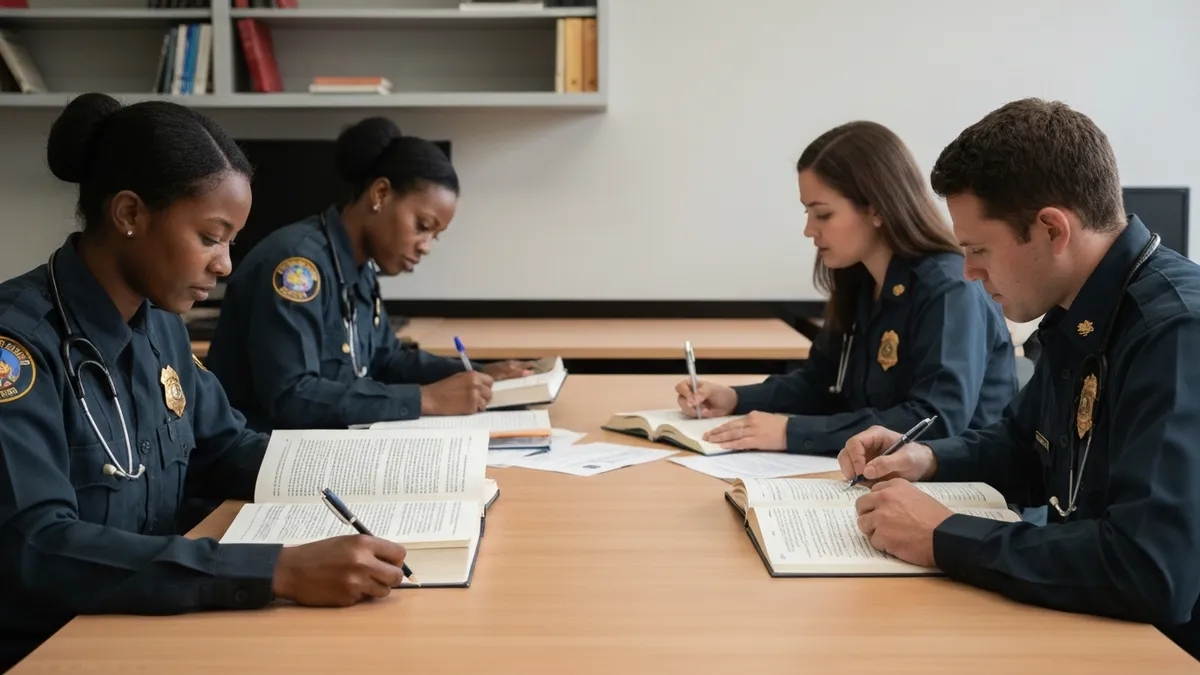
Colorado Correctional Officer — Corrections Career Guide 2026
Correctional Officer Practice Test PDF 2026

Correctional Officer Death: Understanding CO Mortality Risks, Line-of-Duty Losses, and Prevention Strategies
Correctional Officer — Complete Guide (2026)
About the Author

Educational Psychologist & Academic Test Preparation Expert
Columbia University Teachers CollegeDr. Lisa Patel holds a Doctorate in Education from Columbia University Teachers College and has spent 17 years researching standardized test design and academic assessment. She has developed preparation programs for SAT, ACT, GRE, LSAT, UCAT, and numerous professional licensing exams, helping students of all backgrounds achieve their target scores.
Join the Discussion
Connect with other students preparing for this exam. Share tips, ask questions, and get advice from people who have been there.
View discussion (9 replies)