
New York Corrections Officers: Career Guide, Requirements, and What to Expect
🔎 Everything about new york corrections officers: requirements, salary, training, and exam prep. Start your CO career with confidence.

When people search for terms like "collars and co" or wonder about career paths in law enforcement and corrections, they often overlook one of the most demanding and rewarding roles in the public sector: serving as one of New York's corrections officers. New york corrections officers are the backbone of a massive statewide system that manages over 30,000 incarcerated individuals across dozens of facilities, making this one of the largest correctional workforces in the United States. These professionals don't just guard cells — they manage complex human environments, enforce policy, and play a critical role in rehabilitation.
The New York State Department of Corrections and Community Supervision (DOCCS) employs more than 22,000 staff members, a significant portion of whom are uniformed corrections officers. The career attracts individuals from all walks of life, including veterans, college graduates, and people transitioning from related fields like security, social work, and law enforcement. The path is structured and competitive, and understanding how to navigate it is the first step toward landing the job.
Unlike consumer products such as rifle paper co stationery or duluth trading co workwear, a career in corrections isn't something you can simply purchase or order online. It requires meeting strict eligibility criteria, passing a civil service exam, completing an intensive academy, and demonstrating physical and psychological readiness to work in a high-stress, potentially dangerous environment. That said, the investment pays off substantially in job security, benefits, and pension.
This guide covers everything a prospective corrections officer in New York needs to know: the application and hiring process, salary expectations, physical requirements, academy training, and strategies for passing the civil service written exam. Whether you're just starting your research or already registered for the test, this resource will give you a comprehensive map of what lies ahead.
New York corrections officers work in a variety of facility types, from maximum-security prisons like Green Haven and Attica to medium- and minimum-security facilities across the state. Some officers work in facilities near major cities while others are stationed in rural areas — from the Hudson Valley to facilities near glenwood springs co united states style remote regions of upstate New York. Understanding the landscape of the system helps you plan your career geographically as well as professionally.
The job also comes with a strong union presence. The New York State Correctional Officers and Police Benevolent Association (NYSCOPBA) represents the majority of uniformed staff and negotiates contracts covering wages, overtime, healthcare, and workplace safety. Union membership is a significant benefit that distinguishes this career from many private-sector alternatives, offering protections and advocacy that workers in other industries often lack entirely.
For those serious about entering this profession, preparation is key. Studying for the civil service exam, researching ny corrections officer academy curriculum, and building physical fitness well before the hiring process begins can make the difference between getting hired in the next class or waiting another cycle. This guide is designed to help you prepare at every stage of the journey.
New York Corrections Officers by the Numbers

NY Corrections Officer Application & Hiring Process
Register for the Civil Service Exam
Take the Written Exam
Background Investigation
Physical & Psychological Evaluation
Academy Training
Facility Assignment & Probation
One of the strongest selling points of a career as a New York corrections officer is the compensation and benefits package, which rivals or exceeds what many college-educated professionals earn in the private sector. The starting base salary for a newly appointed New York State Correction Officer is approximately $54,000 to $59,000 per year, depending on the negotiated contract in effect at the time of hire. However, base salary tells only part of the story — total compensation is often significantly higher.
Overtime is a major factor in corrections officer earnings. Due to chronic understaffing at many New York facilities, officers are frequently mandated to work additional shifts. Some officers consistently earn 20 to 40 percent above their base salary through overtime alone. When you factor in shift differentials (premium pay for evening and overnight shifts), the annual earnings of experienced officers often exceed $80,000 to $90,000. Senior officers with 10 or more years of service can regularly top $100,000 in total compensation.
The benefits package is equally compelling. New York State provides corrections officers with comprehensive health insurance coverage, covering the officer and eligible dependents at a low cost to the employee. Dental and vision coverage are included. Officers also accrue generous paid leave, including vacation, sick leave, and personal days, which increase with years of service. These benefits are collectively bargained through NYSCOPBA and are among the most competitive offered by any New York State agency.
The pension is arguably the most valuable long-term benefit. New York State Correction Officers are enrolled in the New York State and Local Retirement System (NYSLRS), which provides a defined-benefit pension after 25 years of service. This means that unlike 401(k) plans tied to market performance, a corrections officer who completes a full career is guaranteed a monthly pension payment for life — typically calculated as a percentage of their final average salary. This level of retirement security is increasingly rare in the modern economy.
Beyond base pay and pension, corrections officers in New York are eligible for uniform allowances, reimbursement for certain work-related expenses, and access to credit unions and employee assistance programs. Officers who take on specialized assignments — such as working in special housing units, K-9 units, or transport teams — may receive additional pay differentials. Promotional ranks such as Sergeant, Lieutenant, and Captain come with significant salary increases and expanded responsibilities.
Understanding the full value of this compensation package is important for anyone comparing a corrections career to other opportunities. Much like how brands like petlab co or toad and co build loyalty by offering strong value propositions to their customers, New York's corrections system retains officers through a compensation structure that rewards longevity and dedication with increasingly generous benefits over time.
For candidates who are serious about this career path, researching the current NYSCOPBA contract and understanding how the salary steps progress over a 5-to-10-year period is essential planning. Many officers who entered the system as a backup plan have found it to be the most financially rewarding decision of their careers, particularly when factoring in the value of lifetime pension and retiree health benefits that few private employers can match.
Academy Training: What New York Corrections Officers Learn
The New York State Correction Officer Basic Training program covers foundational topics required for all uniformed staff. Recruits learn the legal framework governing incarceration, including inmate rights, use-of-force laws, and the authority of corrections officers under state and federal law. Topics also include security protocols, contraband control, report writing, and the basics of inmate classification systems that determine housing and program eligibility within facilities.
Physical training is integrated throughout the academy, not just reserved for morning sessions. Recruits practice defensive tactics, restraint techniques, and emergency response procedures under the supervision of certified instructors. Scenario-based exercises simulate real facility situations, requiring recruits to apply policy knowledge under pressure. This combination of classroom learning and hands-on practice prepares officers for the unpredictable nature of daily corrections work across New York's diverse facility landscape.

Is a NY Corrections Officer Career Right for You?
- +Strong starting salary of $54,000+ with rapid growth through overtime and step increases
- +Defined-benefit pension after 25 years — rare and highly valuable in today's economy
- +Comprehensive health, dental, and vision insurance for officer and dependents
- +Strong union representation through NYSCOPBA with negotiated contract protections
- +Job security as a New York State civil service position with layoff protections
- +Clear promotional pathway to Sergeant, Lieutenant, Captain, and beyond
- −High-stress work environment with constant exposure to conflict and trauma
- −Mandatory overtime is common due to understaffing at many facilities
- −Shift work including nights, weekends, and holidays is the norm, not the exception
- −Elevated risk of physical injury compared to most office-based government jobs
- −Remote facility locations in upstate New York may require relocation or long commutes
- −Psychological toll of the work contributes to elevated PTSD and burnout rates among officers
NY Corrections Officer Exam Prep Checklist
- ✓Register for the NYS Civil Service Correction Officer exam through the official civil service portal before the deadline closes.
- ✓Obtain official exam announcements and study the specific content areas listed in the candidate handbook.
- ✓Practice reading comprehension exercises daily — this is the highest-weighted section on most NY corrections exams.
- ✓Complete timed arithmetic and math practice tests to build speed and accuracy under pressure.
- ✓Study memory and observation exercises using sequence recall and detail retention drills.
- ✓Review situational judgment scenarios involving inmate interactions, use-of-force decisions, and reporting obligations.
- ✓Take at least 3 full-length timed practice exams to simulate actual test conditions and identify weak areas.
- ✓Begin a structured physical fitness routine targeting cardiovascular endurance, strength, and flexibility at least 8 weeks before testing.
- ✓Gather all required documents early: birth certificate, proof of education, military discharge papers if applicable.
- ✓Request character references in advance — allow references several weeks to prepare written statements.
Your Exam Score Determines Your Place in Line
New York State ranks all passing candidates by exam score, not just by pass/fail status. A score of 85 versus 70 can mean the difference between being called in the first hiring round or waiting years for an offer. Investing serious preparation time — ideally 6 to 8 weeks of structured study — directly affects how quickly you get hired, which facility you can be assigned to, and how competitive you are for future promotional opportunities.
The day-to-day reality of working as a New York corrections officer is substantially different from what most people picture when they think about the job. Television and film depictions tend to focus on dramatic confrontations, but the actual work is far more nuanced. The majority of an officer's shift involves conducting counts, performing rounds, supervising program movement, managing requests from inmates, completing documentation, and maintaining the kind of calm, consistent presence that prevents incidents before they start.
New York State operates a tiered facility classification system. Maximum-security facilities like Attica, Clinton, and Green Haven house the highest-risk populations and require officers to maintain the strictest security protocols. Medium-security facilities house a broader population and typically offer more programming. Minimum-security camps often focus heavily on work and transitional programming for inmates approaching release. Officers may be assigned to any of these environments, and the day-to-day experience varies considerably depending on the facility type and specific housing unit assignment.
Shift structure in corrections follows a 24/7 operation model. Most facilities run three eight-hour shifts: a day shift, evening shift, and overnight shift. Officers rotate through these shifts based on seniority, bidding processes, and facility needs. New officers typically receive the least desirable shifts — often overnight or rotating schedules — and gain the ability to bid for preferred shifts as they accumulate seniority. This seniority system, governed by the union contract, provides a predictable path to more stable scheduling over time.
One of the most overlooked aspects of the corrections officer role is the volume of documentation required. Officers write incident reports, unusual incident reports, disciplinary reports (known as misbehavior reports), and logbook entries throughout every shift. Accuracy and clarity in documentation are essential — these records can become evidence in administrative hearings, civil lawsuits, or criminal proceedings. Officers who develop strong writing habits early in their careers protect themselves legally and demonstrate professionalism that supports advancement.
Working in a correctional setting also requires a well-developed understanding of inmate behavior and the social dynamics within a facility. Experienced officers learn to read the environment, recognize signs of rising tension between groups, identify potential contraband introduction methods, and build enough rapport with the population to receive information that prevents serious incidents. This combination of vigilance and interpersonal skill is what distinguishes effective officers from those who struggle in the role.
The time in co — or rather, time served on the job — significantly shapes an officer's expertise and opportunities. In corrections, experience compounds. Officers who complete 5 to 10 years of service develop an intuitive understanding of facility dynamics, policy, and procedure that cannot be replicated in a classroom. This accumulated expertise is what makes senior officers invaluable to their facilities and what makes corrections one of the few careers where time on the job translates directly into measurable professional authority and earning potential.
Mental health is a growing conversation in the corrections profession. New York has expanded access to peer support programs, counseling resources, and critical incident debriefing after major events. Organizations like electro and co of the wellness world — employee assistance programs specifically designed for first responders — offer confidential counseling that corrections officers can access without career penalty. Taking advantage of these resources is not a sign of weakness; it is a recognized component of sustainable, long-term service in a demanding field.
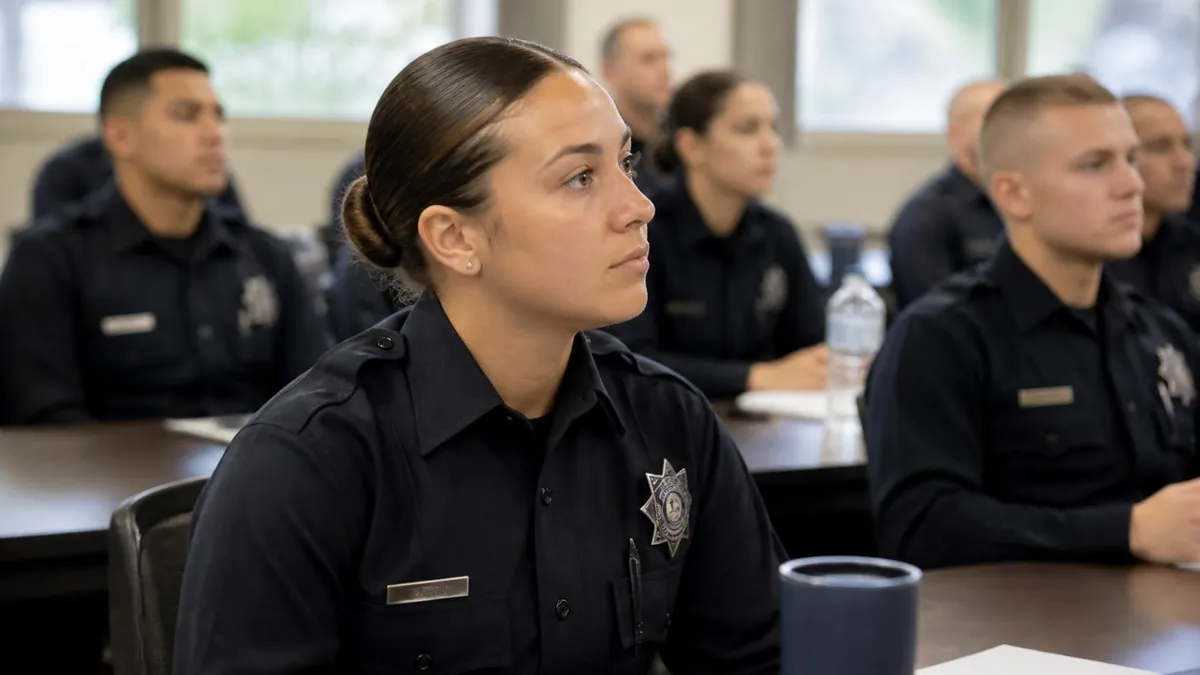
New York State Civil Service exams for Correction Officer are only offered periodically — sometimes with gaps of 2 to 4 years between exam cycles. Missing the registration window means waiting for the next announced exam, which can delay your career entry by years. Monitor the NYS Department of Civil Service website and sign up for exam announcement notifications to ensure you never miss an opportunity to apply.
Career advancement in New York's correctional system is structured, merit-based, and tied to civil service promotional exams — a model that rewards preparation and performance over favoritism. The promotional ladder runs from Correction Officer to Sergeant, then Lieutenant, Captain, Deputy Superintendent, and ultimately Superintendent. Each rank requires a separate civil service examination, and scores on those exams determine who advances. Officers who treat promotional exam preparation as an ongoing professional investment consistently outperform those who study only when a test is imminent.
The Sergeant rank is typically the first promotional step and comes with a significant pay increase and supervisory responsibility over a housing unit or shift. Sergeants are responsible for directing officer assignments, managing inmate issues that require supervisor involvement, approving documentation, and serving as first-level supervisors for disciplinary processes. Preparing for the Sergeant exam requires deep knowledge of DOCCS directives, the employee handbook, and supervisory principles — a different study focus than the initial entrance exam.
Beyond promotion within the uniformed ranks, corrections officers in New York can pursue specialized assignments that provide variety, professional development, and sometimes additional pay. These assignments include the Emergency Response Team (ERT), K-9 units, investigative roles, transportation units, and program officer positions in educational and vocational settings. Specialized assignments often require additional training and are awarded through a competitive process, but they represent meaningful ways to develop new skills and build a more diversified corrections career.
Lateral movement between facilities is also possible, typically driven by seniority and available positions. Officers who prefer urban settings may transfer to facilities near New York City, while those who want a quieter environment may seek postings in upstate facilities. Transfer requests are processed through the union contract's transfer provisions, and approval depends on the needs of the receiving facility and available seniority lists. Understanding this system helps officers plan long-term career geography with intention.
Many corrections officers also pursue educational credentials during their career, taking advantage of DOCCS tuition assistance programs and the GI Bill if they are veterans. A degree in criminal justice, public administration, or psychology can strengthen promotional exam scores, improve written communication skills, and open doors to civilian positions within the Department if an officer eventually decides to move out of the uniformed ranks into administration or policy work.
Sourdough and co — a metaphor for the patient, long-game approach — applies well to corrections career advancement. Just as quality sourdough requires time, consistency, and the right conditions, building a high-level corrections career in New York requires sustained effort over years, not shortcuts. Officers who commit to continuous learning, physical fitness, professional conduct, and community involvement within the profession consistently reach the upper ranks of what is a genuinely impactful and stable government career.
For those ready to start that journey, exploring the resources and training pathways available through agencies, unions, and preparation platforms is the logical next step. Understanding what ny corrections officer academy programs cover, what the civil service exam tests, and what daily service looks like will position any candidate to make an informed decision — and to enter the hiring process with the best possible foundation for success.
Practical exam preparation for the New York Corrections Officer civil service exam requires more than skimming a study guide. The exam is designed to measure specific cognitive abilities that predict job performance, and understanding what those abilities are — and how they are tested — allows candidates to study with precision rather than guessing at content. The four primary domains tested are reading comprehension, mathematical reasoning, memory and observation, and situational judgment. Each requires a different preparation strategy.
Reading comprehension questions present written passages — often resembling actual corrections policies or incident reports — followed by multiple-choice questions that test your ability to extract accurate information, identify main ideas, and draw logical inferences. The best way to prepare is to read dense non-fiction material regularly and practice identifying key facts quickly. Many candidates who struggle on this section do so not because they can't read, but because they read too slowly or over-interpret passages. Practice reading with a clock running to build speed alongside accuracy.
Mathematical reasoning on the corrections exam is not advanced math — it typically covers arithmetic, basic algebra, percentages, ratios, and the ability to read charts or tables. However, the questions are embedded in work-relevant scenarios: calculating how many inmates fit in a certain capacity, determining shift coverage numbers, or reading headcount data from a table. Practicing these applied math scenarios builds the contextual fluency that the exam rewards. A solid 2-week focused math review is usually sufficient for candidates with average math backgrounds.
Memory and observation sections often involve being shown a scene, a passage, or a list of details — then being questioned about those details after a delay. This tests the kind of situational awareness that corrections officers need constantly: the ability to notice, retain, and later recall information about people, events, and environments. Practice this skill by studying images or reading brief narratives and then, after waiting 20 to 30 minutes, writing down as many details as you can recall. This active recall technique is far more effective than passive re-reading.
Situational judgment questions present realistic scenarios involving inmate behavior, officer conduct, chain of command, and policy application. These questions have a correct answer grounded in professional standards and established corrections principles — they are not opinion questions. Studying DOCCS directives, officer conduct standards, and use-of-force policy gives you the framework needed to consistently select the professionally appropriate response rather than relying on intuition alone. Candidates who study policy outperform those who guess based on common sense.
Building physical fitness before the exam and throughout the hiring process is equally important. The physical fitness test typically includes a 1.5-mile run within a set time, push-ups, and sit-ups. Officers who begin conditioning 8 to 12 weeks before the physical evaluation are significantly more likely to pass all components on their first attempt. Failing the physical test removes you from the current hiring cycle, so treating physical preparation with the same seriousness as written exam prep is essential.
Finally, preparing your documentation package early eliminates one of the most common preventable delays in the hiring process. Candidates who arrive at the background investigation phase without proper records — birth certificates, diplomas, DD-214 military discharge papers, court records if applicable — can fall out of the hiring process not because they are disqualified, but because they fail to submit required materials on time. Create a dedicated folder with all required documents well before you expect to be called for the background phase.
CO Questions and Answers

Correctional Officer Training: Complete Guide to CO Academy Programs

Colorado Correctional Officer — Corrections Career Guide 2026
Correctional Officer Practice Test PDF 2026
Juvenile Correctional Officer: Role, Pay, Training and Career Path
Correctional Officer Death: Understanding CO Mortality Risks, Line-of-Duty Losses, and Prevention Strategies
About the Author

Educational Psychologist & Academic Test Preparation Expert
Columbia University Teachers CollegeDr. Lisa Patel holds a Doctorate in Education from Columbia University Teachers College and has spent 17 years researching standardized test design and academic assessment. She has developed preparation programs for SAT, ACT, GRE, LSAT, UCAT, and numerous professional licensing exams, helping students of all backgrounds achieve their target scores.
Join the Discussion
Connect with other students preparing for this exam. Share tips, ask questions, and get advice from people who have been there.
View discussion (9 replies)