
Juvenile Correctional Officer: Role, Pay, Training and Career Path 2026 October
Juvenile correctional officer guide: ❓ duties at detention centers, DJJ hierarchies, training, pay, rehabilitation focus, and how to apply in 2026 October.

Walk into a juvenile detention center on any given Tuesday morning and the first thing that strikes you isn't the locked doors — it's the smell of cafeteria oatmeal, the squeak of sneakers on polished linoleum, and the steady murmur of teenagers asking the staff a hundred small questions before breakfast is even cleared.
That's the world a juvenile correctional officer steps into every shift. The role looks superficially similar to working in an adult facility — uniforms, keys, radios, daily counts — but the actual job is closer to a hybrid of teacher, counselor, and security officer than to anything you'd see on a prison documentary.
A juvenile correctional officer supervises minors held in juvenile detention facilities, treatment centers, and youth correctional camps. The residents are typically aged 10 to 21, though the upper end shifts by state. The mission isn't punishment in the way adult corrections frames it — it's rehabilitation, education, behavioral programming, and getting young people back out the door with a plausible shot at a normal life. Officers run housing units, supervise schoolwork, escort residents to therapy and medical appointments, mediate fights before they happen, and write careful incident reports when prevention fails.
Pay sits roughly in line with adult correctional officer salaries, give or take regional adjustments. Training is often the same basic academy as adult corrections plus a juvenile-specific add-on covering adolescent development, trauma-informed care, and the legal protections that apply to minors. State Department of Juvenile Justice agencies — California's DJJ in Orange County is a recognizable example — operate clear officer ranks like deputy juvenile correctional officer I, II, and III, with promotion ladders into counseling and program-leadership roles.
This guide breaks down the job from every angle: who hires juvenile correctional officers, what an average day actually looks like, how DJJ hierarchies work state-by-state, what training and certification you need, what the pay scale really delivers (and why it matters that retirement plans are usually generous), the rehabilitation programming officers help run, the hardest parts of the work, and how the role compares directly with adult corrections. If you're weighing it as a career, by the end you'll know whether the badge fits.
Juvenile Correctional Officer Key Numbers at a Glance
Key Facts at a Glance
| Item | Value | Details |
|---|---|---|
| Typical resident age range supervised in juvenile facilities | 10–21 | |
| Basic correctional officer academy duration before assignment | 8–12 wks | |
| Additional juvenile-specific training hours after basic academy | 40–160 hrs |
What a Juvenile Correctional Officer Actually Does
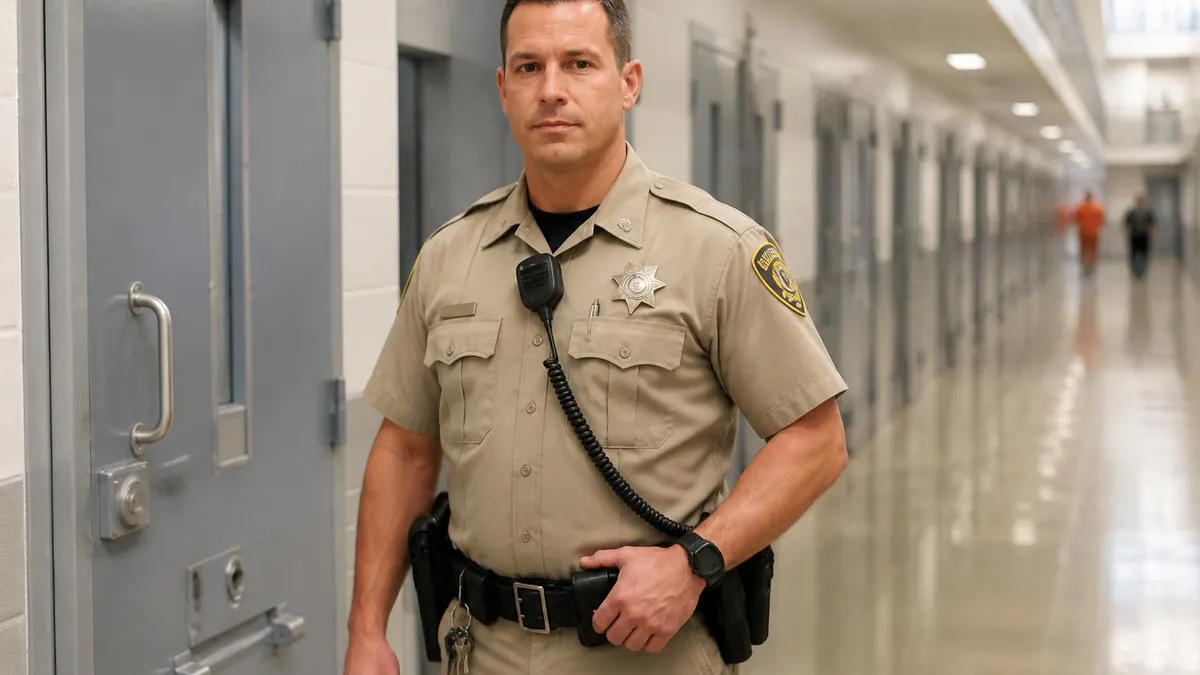
The day starts with shift handoff. Whoever ran the unit overnight walks the incoming officer through anything that happened — a missed bed check, a fight that got broken up at 2 a.m., a resident in crisis who needed mental-health support, a kid who got placed on suicide watch. None of this is in a manual. It's relayed face-to-face, written into the logbook, and signed off. Then the unit wakes up and everything is supervision, supervision, supervision.
Officers run movement — escorting residents from housing to classroom, classroom to recreation, recreation to dinner, dinner back to housing — and every movement is counted, logged, and walked. Counts happen at fixed intervals: typically every 30 minutes during waking hours, hourly overnight. A miscount is a serious incident report. So is a missed door check, an unsecured tool, or a key left on a counter. The administrative tail is heavier than most outside the building realize.
But the actual hard work isn't paperwork. It's the human side. A juvenile correctional officer in a typical unit might supervise 8 to 16 teenagers, most of whom arrive with significant trauma backgrounds — neglect, abuse, untreated learning disabilities, undiagnosed mental health conditions, substance issues, and complicated family situations. The officer is the most consistent adult those kids see all day. Get the relationship right and the unit runs calm. Get it wrong and you spend your shift extinguishing small fires that didn't need to start.
Beyond direct supervision, juvenile correctional officers contribute to treatment planning. They sit in on case-management meetings, log behavioral observations that feed into psychological evaluations, and reinforce behavior plans set by clinical staff. In facilities running cognitive-behavioral programming or restorative-justice circles, officers often co-help sessions alongside counselors. It's a level of involvement you don't typically see in adult corrections, where the clinical staff and the security staff operate more separately.
Compare that to what an adult correctional officer does day-to-day — and the contrast is sharp. Adult CO work is heavier on physical security and headcounts, lighter on developmental conversation. Both jobs are demanding. They're just demanding in different ways.
Rehabilitation, Not Just Detention
The single biggest distinction between juvenile and adult corrections is the explicit mandate. State juvenile-justice statutes nearly all require facilities to rehabilitate, educate, and reintegrate minors back into community life. Adult prisons exist primarily to punish and confine. That single legal framing changes everything a juvenile correctional officer does — from how they speak to residents, to how they document behavior, to how leadership evaluates their daily performance and promotion eligibility on annual review cycles.
Where Juvenile Correctional Officers Work
The setting matters more than most job descriptions admit. A juvenile correctional officer in a short-term detention center has a different daily reality from one working in a long-term commitment facility, and both are different again from staff at a juvenile treatment center or wilderness program. Same uniform, very different job.
Juvenile detention centers hold short-term residents — usually pre-adjudication, awaiting court hearings or placement. Stays average a few weeks to a few months. The pace is fast, the population turns over constantly, and officers spend less time building long-term relationships. Documentation is heavy because each resident's case is in motion. Examples include the OC Juvenile Hall in California or the regional detention centers found in every Texas county.
Juvenile halls in California specifically combine detention and short-term commitment functions. They sit under the Department of Juvenile Justice umbrella for state-level cases and under county probation departments for local ones. Orange County juvenile correctional officers, for example, work under the OC Probation Department running juvenile hall and the Joplin Youth Center.
Long-term commitment facilities hold residents serving adjudicated sentences — often 6 months to several years. Staff get to know residents deeply. The officer-resident dynamic shifts toward genuine mentorship, and the programming is more intensive: structured therapy, vocational training, full academic schooling, and often family-engagement components.
Treatment centers and residential placements serve youth with specific clinical needs — sex-offender treatment, substance-use treatment, or severe mental-health programming. Officers in these settings often hold dual roles, with clinical supervision blended into the security function. Pay sometimes runs higher because of the specialty designation.
Wilderness and ranch programs are rarer but still operating in many western states. Officers in these settings supervise residents through outdoor work, structured group activities, and life-skills training in remote settings. Very different work — less institutional, more high-touch.
Federal facilities exist too. The federal Bureau of Prisons does not run dedicated juvenile facilities anymore — federal juvenile cases are typically housed in contracted state or private facilities. So a juvenile correctional officer career in the United States is almost entirely a state or county role, not a federal one.
Common Juvenile Correctional Officer Settings
Pre-adjudication holding facilities run by county probation or state juvenile justice departments. Fast pace, high resident turnover, less long-term relationship-building, and the heaviest documentation load of any juvenile setting because every resident's case is in motion through the courts.
- ▸Average stay 2 to 8 weeks
- ▸High population turnover weekly
- ▸County or state operated facility
- ▸Heavy court paperwork volume
Adjudicated youth serving 6 months to several years. Staff form genuine mentorship relationships with residents, and rehabilitation programming is intensive — daily school schedules, structured group therapy, vocational training, and family-engagement components are routine.
- ▸Structured therapy daily
- ▸Vocational training programs
- ▸Full academic school schedules
- ▸Family reintegration planning
Residential placements serving residents with specific clinical needs — substance use treatment, sex-offender programming, or severe mental health stabilization. Officers blend security and clinical support roles, often holding additional behavioral health certifications.
- ▸Specialty clinical focus area
- ▸Higher pay tier common
- ▸Dual security plus program role
- ▸Tighter clinician collaboration
Less common but still operating in western states. Officers supervise residents through outdoor work, structured group activities, and life-skills training in remote settings. Less institutional in feel, more direct contact with residents during the working day.
- ▸Outdoor work supervision
- ▸Remote rural facilities
- ▸Smaller staff teams
- ▸Life-skills programming
State DJJ Hierarchies and Officer Ranks
Every state with a juvenile justice agency uses a slightly different rank ladder. California, Texas, Florida, Ohio, New York, and Illinois each have their own job-classification series, though the general shape stays consistent: entry-level officer, senior officer, supervisor, and unit manager. Here's how a few of the bigger systems lay it out.
California — Department of Juvenile Justice (DJJ). Until its 2023 closure, the state-run DJJ used the Youth Correctional Officer (YCO) and Senior Youth Correctional Counselor titles. The legacy system has now devolved to county probation departments, which staff juvenile halls and camps under titles like Deputy Juvenile Correctional Officer I, II, and III. In Orange County, the deputy juvenile correctional officer I is the entry-level title, with promotion ladders through II, III, and into supervising deputy probation officer roles.
Texas — Texas Juvenile Justice Department (TJJD). Officers carry the Juvenile Correctional Officer (JCO) I through V title series, with each rank tied to years of experience, additional training, and demonstrated performance. The most senior JCO V positions function as shift leaders in larger facilities.
Florida — Department of Juvenile Justice. Florida uses Juvenile Detention Officer I and II titles, with senior officers serving as shift supervisors. The state runs 21 detention centers under the DJJ umbrella.
Ohio — Department of Youth Services (DYS). Ohio uses Juvenile Correctional Officer and Juvenile Correctional Officer Lead titles. Lead officers run individual housing units day-to-day.
Pay scales tied to those ranks follow predictable patterns. A deputy juvenile correctional officer I in California's county systems starts in the $58,000–$72,000 range depending on the county, with shift differentials and overtime adding 15–25% in most facilities. By rank III, total compensation can hit six figures including overtime. Texas TJJD starts JCO I roles closer to $40,000 but advances faster — JCO V pay can reach $65,000 base.
The ladder matters because most officers don't stay entry-level for long. Promotion is usually fast — within 18–36 months of academy graduation, depending on facility staffing and openings. Many officers eventually transition into training roles, probation officer positions, or move laterally into adult corrections at higher pay grades.
State-by-State Hiring Requirements
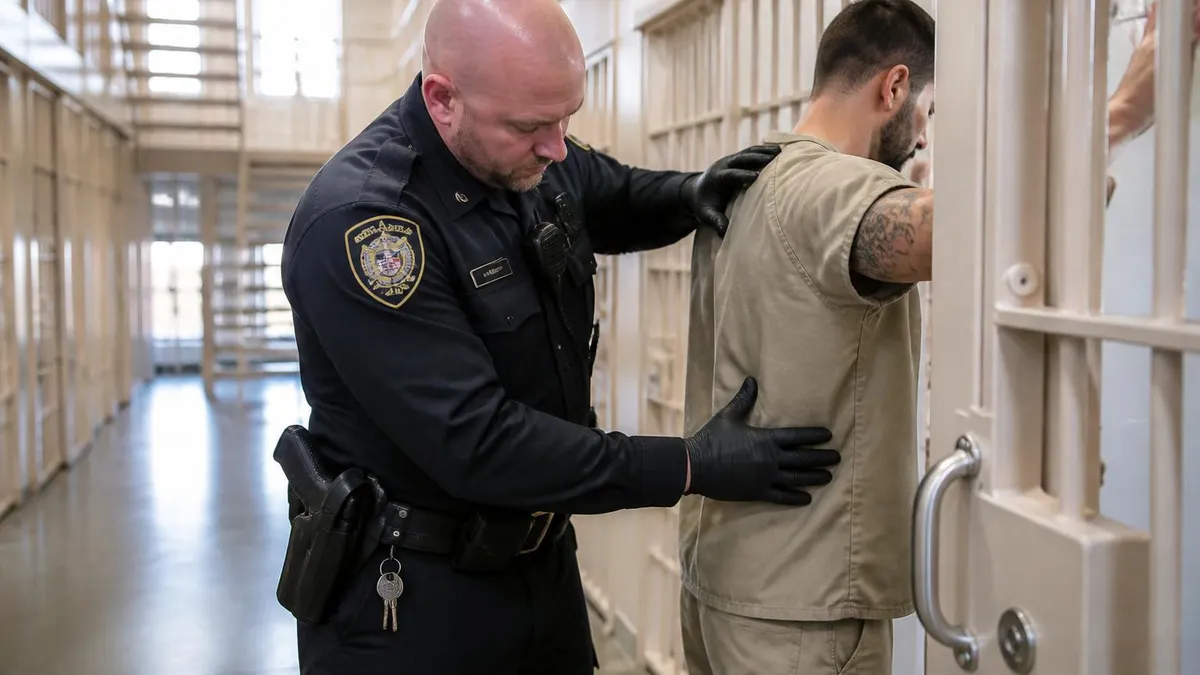
California county juvenile correctional officer roles — for example Orange County's deputy juvenile correctional officer I title — require applicants to be at least 18 years old, hold US citizenship or legal work authorization, possess a high school diploma or GED equivalent, hold a valid California driver's license, and maintain a clean criminal record. Felony convictions and most domestic-violence misdemeanors disqualify automatically. Applicants must also pass state-mandated physical agility, written, and psychological examinations. The Orange County Probation Department additionally runs a thorough background investigation including a polygraph examination.
Training: Basic Academy Plus Juvenile-Specific Modules
Training paths split into two layers. The first is the standard correctional-officer basic academy — typically 8 to 12 weeks of classroom and physical training covering use-of-force, defensive tactics, first aid, report writing, contraband detection, and facility security protocols. The second layer is juvenile-specific: 40 to 160 additional hours covering adolescent brain development, trauma-informed care, motivational interviewing, behavior management for youth, and the legal protections that apply uniquely to minors in custody.
That second layer is where the job genuinely diverges from adult corrections. Adolescent brain development training, for example, walks officers through what's actually happening neurologically in a 14-year-old's brain — why their impulse control is genuinely impaired, why they respond differently to threats and consequences than adults do, and why de-escalation techniques designed for adult populations often don't work on teenagers. Officers who absorb that material run calmer units. Those who don't burn out faster.
Trauma-informed care is the other big module. The vast majority of residents in juvenile facilities carry significant adverse childhood experiences — abuse, neglect, parental incarceration, witnessed violence. Standard authoritarian responses to misbehavior can re-traumatize residents and escalate situations that would otherwise de-escalate. Trauma-informed training shifts the toolkit: officers learn to recognize trauma responses, modulate their tone, and use alternatives to physical restraint wherever possible.
Beyond initial academy, ongoing training is mandatory in every state. Annual in-service hours range from 24 to 80, with refresher topics including suicide prevention, gang awareness, mental-health first aid, and updated use-of-force standards. Some states (California and New York are the strictest) also require quarterly hands-on simulation training for crisis-intervention scenarios.
Specialty certifications open advancement doors. Officers who certify in crisis-intervention team (CIT) techniques, mental-health first aid, or restorative-justice facilitation often move into specialty unit assignments at higher pay grades. Bilingual officers — Spanish particularly, but increasingly Mandarin and Vietnamese in some California counties — get hiring preference and small monthly stipends in many systems.
The training feeds into a clear path to become a correctional officer in the juvenile track, and many officers move into adult corrections later in their careers after building experience and seniority.
There are no federal juvenile correctional officer positions through the Bureau of Prisons — federal juvenile cases are housed in contracted state or private facilities. If you're searching federal job boards looking for juvenile CO roles, you won't find them. The career is built almost entirely at the state and county level.
Pay, Benefits, and What the Compensation Picture Really Looks Like
Salary surveys typically clock juvenile correctional officer pay at roughly the same level as adult correctional officer pay — generally between $48,000 and $72,000 base, with significant variation by state, county, and rank. But base pay is only part of the story. Overtime, shift differential, retirement contributions, and union-negotiated step increases add up to a total compensation picture that's stronger than it looks on a job posting.
Take California as a working example. An Orange County deputy juvenile correctional officer I starts around $66,000 base in 2026. Add 5% night shift differential, regular overtime opportunities (most officers pull 10–20 OT hours a month), and the total cash compensation lands closer to $80,000–$90,000 in year one. The CalPERS pension is the bigger long-term win — typical formula is 2% per year of service at age 50 or 57, fully vested after 5 years.
Texas TJJD entry-level JCO I pay sits around $40,500 base, with $1,200 in additional location pay for staff at remote facilities. Total compensation including OT often reaches $50,000–$55,000 in the first year. The Texas retirement system (ERS or TCDRS depending on agency) offers a defined-benefit pension on top, with employer contributions in the 8–14% range.
Florida DJJ starts juvenile detention officers around $46,000, plus retirement through the Florida Retirement System and one of the most generous accrued-leave policies in state employment. Ohio DYS officers start around $43,000 with PERS pension benefits.
Step increases through union contracts are real. Most systems have predefined annual or biennial step raises tied to years of service, with a clear pay scale published publicly. Combined with rank promotions, an officer who joins at 22 can realistically be earning $85,000–$110,000 base by age 35, before overtime.
Health benefits are typically generous — full medical, dental, and vision for officer and family, with employee contributions running $200–$600 monthly depending on plan and state. Pension benefits remain the biggest draw, and they're a meaningful reason officers stay in the career past the difficult first 3–5 years.
Pre-Application Checklist
- ✓Confirm you meet the state's minimum age requirement, which ranges from 18 to 21 depending on the hiring jurisdiction and agency
- ✓Gather original high school diploma or GED transcripts and have certified copies ready for submission
- ✓Run your own criminal background check before applying, pulling both NCIC federal records and state-level criminal history reports
- ✓Verify you have no disqualifying convictions, including most felonies, certain misdemeanors, and any domestic-violence offenses
- ✓Get current on your state driver's license and any required personal vehicle insurance documentation
- ✓Prepare for the physical agility test, which typically includes timed running, push-ups, sit-ups, and an obstacle course
- ✓Brush up for the written examination covering basic reading comprehension, math, situational judgment, and report-writing skills
- ✓Schedule and complete your psychological evaluation with a department-approved licensed psychologist
- ✓Practice extensively for the panel interview, focusing on conflict scenarios involving teenagers and de-escalation responses
- ✓Pull together professional and personal references who can speak credibly to your character, judgment, and reliability
- ✓Prepare an honest disclosure list of any past employment issues, prior drug use, or other items investigators will surface
The Hardest Parts of the Job
Anyone considering this career should hear the honest version. Juvenile correctional officer work carries real costs alongside its rewards. The pay is decent, the benefits are excellent, the schedule is predictable, but the day-to-day human friction is significant.
Mental-health crisis management is the single hardest part for most officers. A meaningful percentage of residents arrive with untreated mental-illness diagnoses — major depression, PTSD, bipolar disorder, conduct disorder, severe ADHD. Suicide watch happens. Self-harm incidents happen. Officers respond first, before clinical staff arrive. The decisions made in those first sixty seconds — whether to put hands on, how to talk a resident down, whether to call medical immediately or wait — matter enormously. They're also exhausting.
Then there's the academic and developmental gap. Most residents are 2–4 grade levels behind. Many haven't attended school consistently in years. Some can't read at all. As an officer, you're not the teacher, but you're in the schoolroom enforcing focus and behavior, and watching a 16-year-old wrestle with a third-grade worksheet is uncomfortable. The system asks officers to be patient with academic struggle while also enforcing strict behavioral standards. It's a balance you learn over years.
Family dynamics complicate everything. Parents and guardians visit, call, write letters, and sometimes vanish entirely. Officers field family questions, manage tense visitations, and occasionally become the de-facto adult relationship in a resident's life. That's emotionally costly. Some officers handle it well. Others burn out within two years.
Physical risk is real but often misunderstood. Major assaults on staff happen, but they're statistically much less frequent than in adult facilities — the population is smaller, younger, and supervised more closely. The bigger physical toll is repeated low-grade interventions: separating fights, restraining a single resident, de-escalating verbal confrontations dozens of times per shift. It wears on the body and on patience.
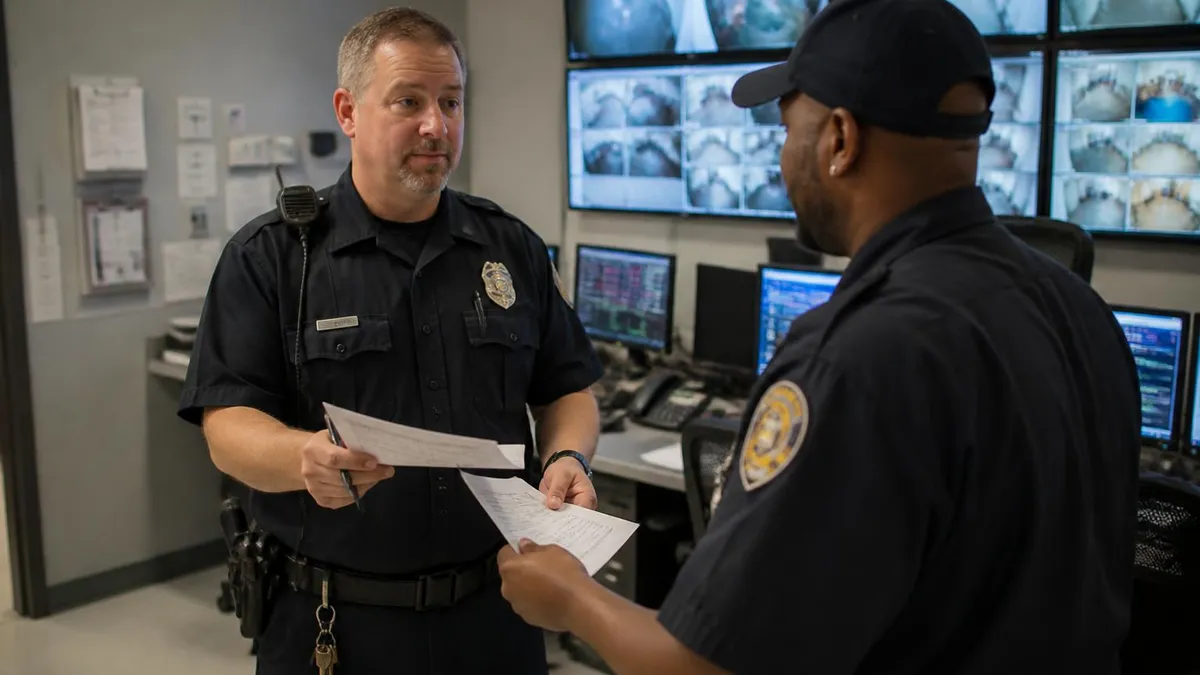
The administrative load surprises new officers. Every incident, every count, every movement is documented. Reports are read by legal teams, judges, and case managers. Sloppy documentation can come back during legal proceedings months later, and the officer ends up testifying in court. It pays to write everything cleanly the first time.
Juvenile Correctional Officer: Honest Pros and Cons
- +Strong pension and health benefits — among the best in public-sector employment
- +Predictable schedules with significant overtime opportunities
- +Genuine purpose — many officers describe meaningful impact on individual residents
- +Clear promotion ladder with regular step increases tied to seniority
- +Smaller staff-to-resident ratios compared to adult prisons mean closer relationships
- +Transferable career — many officers move into adult corrections or probation later
- −Mental-health and trauma exposure is constant and emotionally demanding
- −Shift work includes nights, weekends, and holidays — particularly hard early in career
- −Documentation burden is heavier than most outside the role expect
- −Burnout in first 2–3 years is common, particularly for officers without mentorship
- −Physical risk of low-grade assault is real, even if major incidents are rare
- −Public perception of corrections work is often inaccurate and unfairly negative
How the Job Compares with Adult Corrections
The two careers share a uniform, a basic academy, and a paycheck range. After that they diverge sharply. An adult correctional officer's job structure is heavier on physical security: perimeter control, count accuracy, contraband interdiction, gang dynamics, and a constant background risk of serious violence from a population that knows the institution intimately and often games it deliberately. A juvenile correctional officer's job structure is heavier on developmental supervision: behavior management, school facilitation, treatment-plan reinforcement, and dealing with families.
The populations differ on every dimension. Adult inmates average 30+ years old, often with multiple prior incarcerations, well-established institutional patterns, and harder-edged group dynamics. Juvenile residents average 15–17, are typically first-time placements, have developing brains, and respond — at least sometimes — to relationship-based intervention in ways adults rarely do.
Staff-to-resident ratios are noticeably tighter on the juvenile side. A typical juvenile housing unit runs 8–16 residents per officer; adult cellblocks routinely exceed 1-to-60 during day shifts. That tighter ratio is what makes meaningful rehabilitation programming possible — you simply can't run cognitive-behavioral group therapy when one officer supervises 80 people.
Compensation runs close but isn't identical. Adult corrections officers in larger systems (federal, state DOC) tend to start slightly higher and have access to a wider range of specialty assignments — SWAT-style tactical teams, gang intelligence units, transport units — that don't really exist on the juvenile side. Juvenile correctional officers tend to have closer access to clinical and counseling careers afterward.
Risk profile is the other big difference. Adult corrections carries a real, measurable risk of serious assault — broken bones, stabbings, hostage-taking, occasionally murder. Juvenile corrections carries a much lower risk of major assault but a higher rate of low-grade physical interventions and a heavier emotional toll. Officers who've worked both will often say juvenile work is mentally harder, while adult work is physically more dangerous. Different jobs, different stress profiles. Worth knowing which one suits you before committing to either.
How to Build a Juvenile Correctional Officer Career
The on-ramp is usually shorter than most people expect. Most states accept applicants directly out of high school as long as the minimum age is met (18 in California, 21 in Texas and Ohio). A college degree isn't required for entry, though it speeds up promotion and is essentially required for the probation officer or unit manager track later.
The application process runs 3–8 months in most jurisdictions. After applying, expect a written exam, a physical agility test, a panel interview, a background investigation (NCIC plus state-level history, often with a polygraph), a psychological evaluation, a medical clearance, and a drug screening. Disqualifiers vary by state but typically include felony convictions, certain misdemeanors, recent drug use, and documented dishonesty in prior employment or applications. The honest play is to disclose everything upfront — investigators find things, and a disclosed issue is almost always treated more leniently than an undisclosed one.
Once you're in the academy, performance matters more than most cadets realize. Academy rankings often influence first-assignment placement, and a top-quartile finish can mean assignment to a facility close to home or to a preferred shift. Bottom-quartile finishers get the leftover slots — usually night shift at the farthest facility from a major city.
Year one is survival. The job is unfamiliar, the residents test every new officer, the paperwork is overwhelming, and the shift rotation is brutal. Most officers who quit do so in the first 12 months. Officers who make it through year one almost always make it through year five.
From there the promotion path opens up. By year 3 you're usually eligible for senior officer or shift-supervisor roles. By year 5–7, supervisor and unit manager roles open. By year 10, lateral moves into probation, parole, training academies, or program administration become realistic. The full career trajectory mirrors the broader path to becoming a correctional officer, with juvenile-specific specializations layered on top.
Correctional Officer Questions and Answers
About the Author

Educational Psychologist & Academic Test Preparation Expert
Columbia University Teachers CollegeDr. Lisa Patel holds a Doctorate in Education from Columbia University Teachers College and has spent 17 years researching standardized test design and academic assessment. She has developed preparation programs for SAT, ACT, GRE, LSAT, UCAT, and numerous professional licensing exams, helping students of all backgrounds achieve their target scores.
Join the Discussion
Connect with other students preparing for this exam. Share tips, ask questions, and get advice from people who have been there.
View discussion (9 replies)