
Correctional Officer Duties: Daily Responsibilities & Job Description
💡 What does a correctional officer do? Full breakdown of CO duties, daily shift schedule, use of force, searches, emergencies, and job responsibilities.

Correctional Officer Duties: A Complete Guide to the Job
So what is a correctional officer, really? At the simplest level, a CO is the person responsible for the safety and security of everyone inside a jail, prison, or detention facility. That includes inmates, staff, contractors, volunteers, and visitors. Facilities operate 24 hours a day, every single day of the year — and correctional officers are the staff who keep them functioning around the clock.
The duties of a correctional officer go far beyond what most people picture when they think of the job. Yes, you'll do headcounts and watch housing units. But you'll also conduct cell searches, supervise meals and recreation, transport inmates to court and medical appointments, write incident reports, respond to fights and medical emergencies, and document inmate behavior in detail. On busy shifts, you'll do all of that in a single 12-hour stretch.
The popular image of a CO — keys jangling, leaning against a wall, watching cells — is wildly incomplete. Real correctional work is closer to a paramedic, a security supervisor, a social worker, and an event coordinator rolled into one. You're managing a self-contained community where movement is controlled, every interaction is recorded, and a single overlooked detail can become tomorrow's emergency. The officers who do this work for years describe it as a job where you never quite know what the next eight hours hold, even when the schedule looks the same as yesterday's.
This guide breaks down exactly what correctional officers do day-to-day. We cover primary duties at every facility type, what a typical shift actually looks like from start to finish, the categories of work that fill a CO's day, how use of force and inmate searches work in practice, and how duties differ between federal, state, county, juvenile, and private facilities.
We also walk through the documentation requirements, special team assignments, salary expectations, and the long-term career path. If you're considering becoming a CO — or want to understand what the correctional officer role really involves before you apply — this is the breakdown most candidates wish they had read before signing up for the academy.
- Primary duty: Maintain order, safety, and security inside a correctional facility
- Core tasks: Inmate counts, cell searches, supervision, transport, report writing, emergency response
- Shift length: 8 or 12 hours, rotating, 24/7/365 coverage required
- Inmate counts: Multiple per shift — standing/formal counts and informal counts
- Use of force: Continuum policy — verbal commands first, escalating only when necessary
- Searches: Pat-downs, strip searches (gender-matched, witnessed), cell shakedowns
- Documentation: Daily logs, incident reports, use-of-force reports, disciplinary write-ups
- Court duty: Officers regularly testify about incidents they witnessed or investigated
Primary Duties of a Correctional Officer
The core job description of a correctional officer is straightforward in concept and complicated in practice. The duties of a correctional officer center on supervising inmates inside a jail, prison, juvenile facility, or detention center while ensuring the safety of every person inside the perimeter. That mission breaks down into a number of distinct daily responsibilities.
You'll supervise housing units, sometimes called dorms, blocks, pods, or tiers depending on the facility type. That means visually monitoring inmate activity, intervening early when conflict starts to brew, and enforcing facility rules consistently. Consistency is the part that takes time to learn — inmates notice immediately when one officer enforces a rule and the next officer on shift ignores it. That inconsistency creates manipulation opportunities, and manipulation is how contraband, favors, and eventually compromised officers happen.
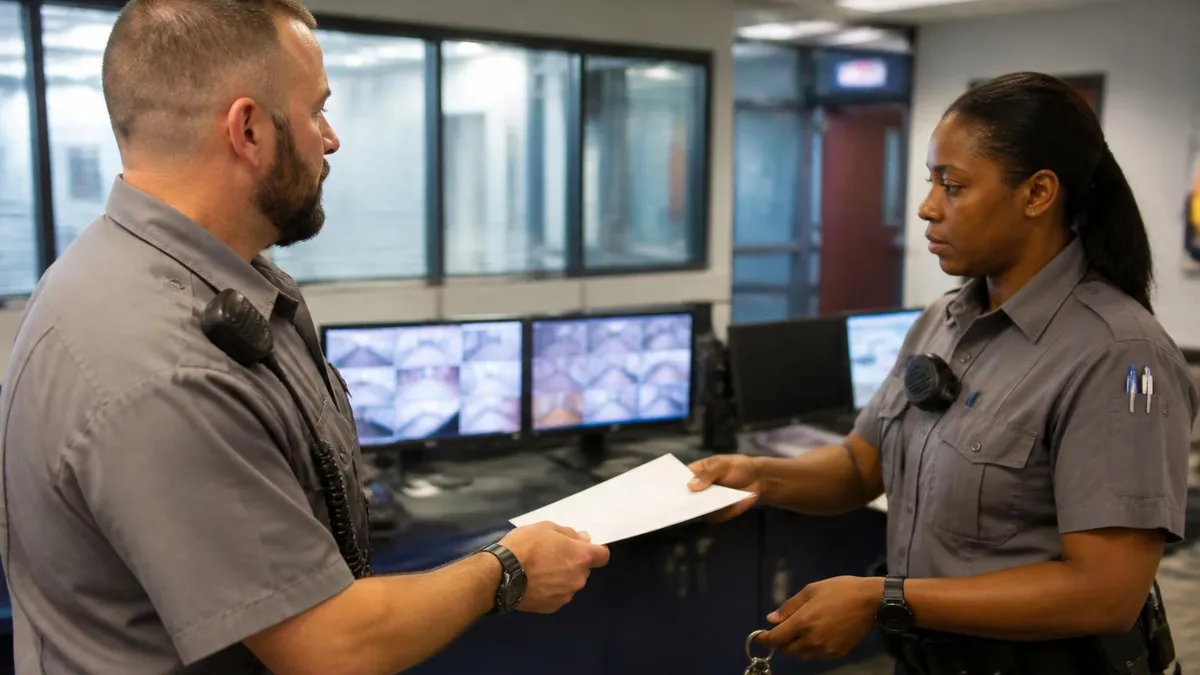
The job responsibilities of a correctional officer also include conducting inmate counts multiple times per shift. Formal counts require every inmate to be physically present and accounted for, with the numbers radioed up to the control room and verified against the master count. A miscounted housing unit halts the entire facility until the discrepancy is resolved — counts matter more than most outsiders realize. Standing counts are typically called in the early morning, mid-shift, after recreation, and before lockdown, though specific count schedules vary by facility security level and policy.
You'll search cells for contraband on a regular schedule and conduct unscheduled shakedowns when intelligence suggests something is being hidden. You'll search inmates returning from work assignments, recreation, or visits. You'll escort inmates to medical, the law library, and chapel services. You'll process intake when new arrivals come into the facility — fingerprints, photographs, property inventory, classification interviews. You'll also respond to inmate requests that fill any quiet moment: medical complaints, mail inquiries, grievance forms, attorney calls, family emergencies. The work is constant, structured, and rarely the same two days in a row.
5 Essential CO Skills
- What it is: Defusing verbal conflict before physical confrontation begins
- Why it matters: Most use-of-force incidents are preventable with strong verbal skills
- Trained at: Academy and annual in-service training
- What it is: Constantly scanning environment for behavioral cues and threats
- Why it matters: Catches problems before they become emergencies
- Develops with: Time on the floor and mentorship from senior officers
- What it is: Following policy consistently — even when no one is watching
- Why it matters: Compromised officers become contraband risks and lawsuit liabilities
- Tested by: Routine integrity checks and background re-investigations
- What it is: Clear, factual, legally defensible documentation of incidents
- Why it matters: Your reports become evidence in court, parole, and discipline cases
- Standard: Who, what, when, where, how — no opinion, no speculation
- What it is: Endurance for 12-hour shifts and capacity to handle physical confrontation
- Why it matters: Tired or out-of-shape officers get hurt and put others at risk
- Tested at: Hiring (PAT) and during academy training
A Typical Day on the Job: What a CO Shift Looks Like
So what does a correctional officer do all day? It depends on the facility, post assignment, and time of day, but the rhythm of a typical shift follows a predictable structure. Most facilities run either three 8-hour shifts or two 12-hour shifts that rotate on a 4-on, 4-off or similar pattern. Either way, your shift starts with briefing.
Briefing covers what happened on the previous shift — fights, lockdowns, intelligence on contraband, inmate moves, court trips, medical issues, anything the oncoming shift needs to know. You sign in, pick up your radio and keys, and head to your assigned post. That post might be a housing unit, a control room, a sally port, a perimeter tower, the visiting room, intake, or any of a dozen other assignments depending on facility size. Post assignments rotate based on seniority, training, and operational needs — newer officers tend to cycle through more posts before settling into preferred ones.
Once on post, you do an initial count and security walk. You check every cell, every door, every safety hazard. Officers call it "counting bodies and counting steel" — verifying inmates are where they belong and that locks, bars, and security hardware are intact. You log your arrival, your count, and any deficiencies you find. Maintenance requests get submitted on the spot, because a broken latch or jammed lock isn't just an inconvenience — it's a security vulnerability that has to be fixed before the next shift inherits it.
From there, the day flows through structured activities: meals served in shifts, recreation and yard time, programs and education, work assignments, mail and canteen distribution, medical call-out, and visits. Between scheduled activities, you're supervising the unit, documenting behavior, breaking up small conflicts before they grow, and dealing with the constant low-level requests that come with managing a population.
At end of shift, you complete your logs, brief the oncoming officer on anything they need to know, and turn over your post. The correction officer role is as much about routine and consistency as it is about emergency response — the routine is what keeps emergencies rare.
A Typical 12-Hour CO Shift
5:30 AM — Briefing
6:00 AM — Standing Count
7:00 AM — Breakfast Movement
9:00 AM — Work & Program Movement
10:30 AM — Cell Search (random)
12:00 PM — Lunch & Count
1:00 PM — Recreation / Yard
3:00 PM — Visitation
4:30 PM — Dinner Movement
6:00 PM — Mail & Canteen
8:00 PM — Lockdown & Count
5:30 AM — Turnover
Use of Force, Searches, and Emergency Response
The most visible parts of correctional officer work involve use of force, inmate searches, and emergency response. These are also the duties most often misrepresented in TV and movies. The reality is more procedural, more documented, and far more cautious than the dramatized version. Every agency operates on a force continuum policy — a strict ladder that officers must climb in order, never skipping steps unless safety requires it.
Verbal commands come first. Loud, clear, repeated directives are the foundation of inmate compliance. The vast majority of incidents end at this stage with experienced officers, which is why de-escalation training is one of the most heavily emphasized parts of academy.
If verbal commands fail and the threat justifies escalation, officers may use soft empty-hand techniques (control holds), then OC spray, then hard empty-hand techniques (strikes), then impact weapons (batons), and only as a last resort, lethal force. Lethal force is almost never authorized for line correctional officers inside a facility — those decisions sit with specialized tactical response teams and, in some federal and high-security state facilities, perimeter tower officers.
Every use of force, no matter how minor, triggers paperwork. The use-of-force report documents the event, the officers involved, the inmates involved, every step on the continuum, and the medical examination of both officer and inmate afterward. These reports are reviewed by supervisors, the warden, and sometimes external oversight bodies. Patterns of force — by individual officers or in specific housing units — are tracked and audited. Honest documentation isn't optional. It's the foundation of legal defensibility and the strongest protection officers have when an incident is later challenged in court.
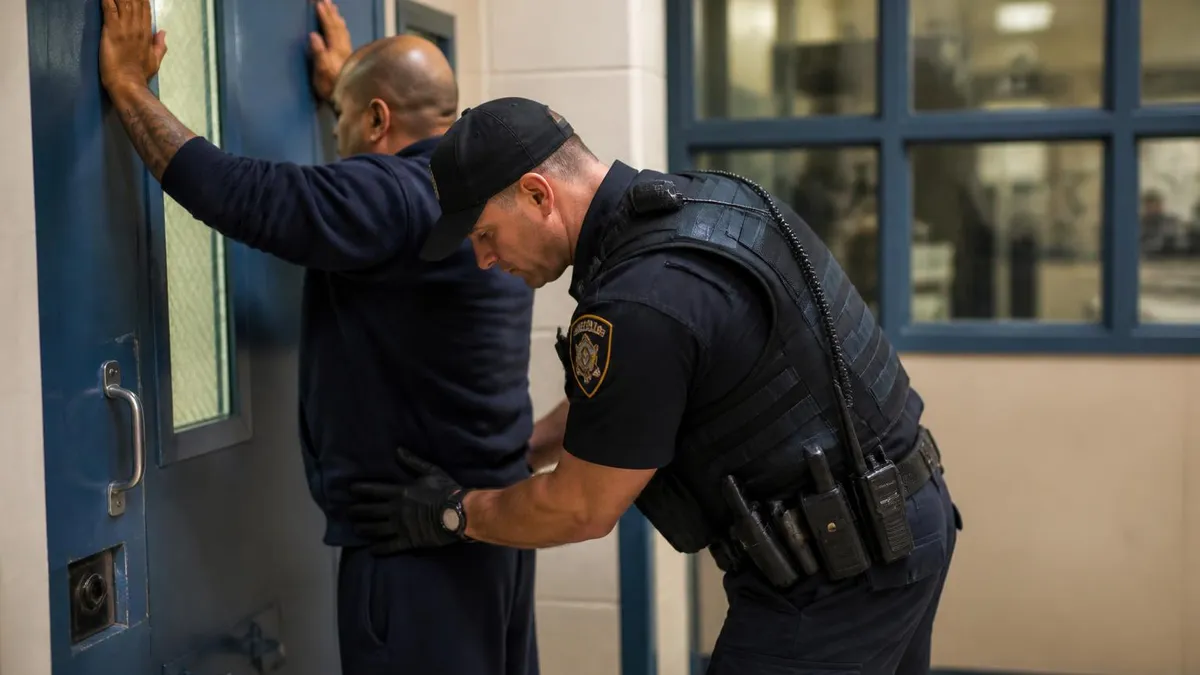
Searches are equally procedural. Pat-down searches happen dozens of times per shift — anytime an inmate moves between secure areas, returns from a visit, or comes back from a work assignment. Strip searches are reserved for higher-risk situations like after a contact visit, suspicion of contraband, or upon intake to the facility. They are always gender-matched (officer and inmate same gender), always witnessed by a second officer, and always documented. Cell searches range from quick spot-checks to full shakedowns involving multiple officers, with every cell item inventoried and the cell torn down and reassembled if intelligence justifies it.
Key CO Duty Categories Explained
Counts, supervision, and documentation. Routine duties make up the bulk of a CO's shift. Standing counts are conducted multiple times daily and require every inmate to be visible. Master count syncs every housing unit's numbers across the facility. Supervision means active visual monitoring of the unit — not desk work. Documentation includes daily logs, behavior notes, and any out-of-the-ordinary observations. These mundane duties are the foundation of facility safety. When they're done well, emergencies stay rare.
Facility Types and How Duties Differ
Not all correctional officer jobs are the same. The duties of correctional officers vary significantly based on the type of facility they work in, the security level of inmates housed there, and the agency that operates it. Understanding these differences matters before you apply, because the day-to-day reality of the job changes considerably from one setting to another. Inmate classifications — minimum, medium, maximum, super-max, and administrative segregation — directly drive what officers do each shift and how much movement is permitted.
Federal Bureau of Prisons (BOP) officers work in U.S. penitentiaries, federal correctional institutions, and federal medical centers. Federal duties tend to be more procedurally rigid, with more standardized national policies and more extensive training requirements. Federal officers can carry firearms on some specialized duty assignments — perimeter posts, transport details, and tactical teams. Pay and benefits are the highest in the field, reflected in the high competition for correctional officer jobs at the federal level.
State Department of Corrections (DOC) officers work in state prisons housing inmates serving sentences of more than one year. Duties include all the core CO responsibilities plus state-specific programs — rehabilitation tracks, vocational training, work release. Population mix varies widely by state. Some states (California, Texas, Florida) operate massive prison systems with extensive specialty assignments. Smaller states may have only a handful of facilities with more generalist staffing where every officer wears multiple operational hats over a typical week.
County jail officers work for the sheriff's office and supervise a population that is in constant flux. Pre-trial detainees, short-sentence inmates, weekend offenders, mental health holds, and people awaiting transfer to state custody all live in the same facility. Intake and release duties dominate. Turnover is high — both in the inmate population and in the staff. Private prison officers (CoreCivic, GEO Group) work in contracted facilities for federal agencies, state DOCs, and ICE.
Duties mirror government facilities but with different policies, pay scales, and benefits. Juvenile correctional officers supervise minors and operate under a more rehabilitation-focused model, with more time spent on programs, counseling support, and education and less on traditional adult-prison security duties. Immigration detention officers work at ICE-contracted facilities, while military police staff brigs that house service members under the UCMJ. Knowing these differences helps you choose where to apply — and what to expect once you do.

Federal vs State Correctional Officer
- +Federal: Higher starting pay ($47K–$65K+ with locality) and federal benefits package
- +Federal: Federal law enforcement retirement (FERS LEO) — full pension at 50 with 20 years
- +Federal: Carry firearms on certain assignments — gun towers, transport, tactical
- +Federal: Strict, standardized national training and policies — predictable structure
- +Federal: Easier path to other federal LE roles (Marshals, ATF, DEA) after service
- −State: Lower starting pay in most states (some exceptions like CA, NY)
- −State: Larger inmate populations, longer sentences, more violent classifications
- −State: Pension and benefits vary widely state-to-state — research before committing
- −State: Some states use mandatory overtime aggressively due to staffing shortages
- −State: Fewer transferable credentials if you later leave corrections for other LE work
Pros and Cons at a Glance
| Pros | Cons |
|---|---|
| Federal: Carry firearms on certain assignments — gun towers, transport, tactical | State: Lower starting pay in most states (some exceptions like CA, NY) |
| Federal: Strict, standardized national training and policies — predictable structure | State: Larger inmate populations, longer sentences, more violent classifications |
| Federal: Easier path to other federal LE roles (Marshals, ATF, DEA) after service | State: Pension and benefits vary widely state-to-state — research before committing |
Skills, Risks, and the Long-Term Career
Beyond the procedural duties, what actually makes a correctional officer successful is a mix of soft skills, situational instinct, and habits built over time on the floor. The job rewards consistency, calm under pressure, and an ability to communicate clearly with people who are sometimes deliberately trying to manipulate or destabilize you. Officers who develop these skills early have far longer, healthier careers than those who rely on physical authority alone.
De-escalation is the single most valuable skill on a CO's resume. Most physical altercations are preventable if the officer reads the situation early and intervenes verbally before it escalates. Situational awareness — the habit of constantly scanning the unit, reading body language, picking up on changes in noise level or movement patterns — is closely related.
So is integrity. Officers who cut corners, do favors for certain inmates, or look the other way on policy violations open themselves up to manipulation and eventually to contraband introduction. The integrity test isn't whether you'd take a bribe — it's whether you enforce policy consistently when no one is watching.
The risks of the job are real and shouldn't be minimized. Assaults on staff happen — usually rare, sometimes serious. Exposure to infectious disease (TB, hepatitis, MRSA) is an occupational reality. The psychological toll is what surprises most new officers. PTSD rates in corrections are comparable to those in combat veterans and active-duty law enforcement. The officers who do best long-term build strong support networks both inside and outside the job, separate work life from home life, and use available mental health resources when needed. Burnout is preventable, but it requires deliberate attention.
The career path runs from line officer through corporal, sergeant, lieutenant, captain, and beyond. Specialty assignments — SORT (Special Operations Response Team), K-9 unit, transport details, classification, gang intelligence, training officer, internal affairs — diversify your experience and make you more promotable. Salary ranges from around $32,000 at entry-level county jails to over $90,000 for senior federal officers with locality pay and overtime.
The correctional officer pay trajectory is one of the strongest in public safety for candidates without a four-year degree. Whether you stay in corrections for a full career or use it as a stepping stone to federal law enforcement, the duties you'll perform as a CO are the foundation of the experience that makes those next moves possible.
Correctional Officer Duties: Key Stats
CO Pre-Shift Checklist
- ✓Sign in and verify duty assignment at the post log
- ✓Draw radio, keys, OC spray, and any post-specific equipment
- ✓Attend shift briefing — note overnight incidents and intelligence
- ✓Read the pass-on log from the prior shift
- ✓Conduct initial walk-through and security inspection of post
- ✓Verify count with previous shift before relieving them
- ✓Check all locks, doors, hardware, and emergency equipment
- ✓Note inmates on restriction, medical hold, or special watch
- ✓Confirm radio channels and emergency communication protocols
- ✓Document arrival and initial conditions in the daily log
Correctional Officer Questions and Answers
About the Author

Educational Psychologist & Academic Test Preparation Expert
Columbia University Teachers CollegeDr. Lisa Patel holds a Doctorate in Education from Columbia University Teachers College and has spent 17 years researching standardized test design and academic assessment. She has developed preparation programs for SAT, ACT, GRE, LSAT, UCAT, and numerous professional licensing exams, helping students of all backgrounds achieve their target scores.
Join the Discussion
Connect with other students preparing for this exam. Share tips, ask questions, and get advice from people who have been there.
View discussion (9 replies)