
What Does a Correctional Officer Do? Inside the Daily Job 2026 October
What does a correctional officer do? Daily duties, inmate supervision, security checks, contraband control, and shift life at county, state, and ✏️
Ask ten people what a correctional officer actually does and you will get ten different answers. Some picture a guard standing by a cell door. Others picture someone breaking up a fight. A few imagine paperwork. The truth is somewhere in the middle of all three. A correctional officer supervises people who have been locked up, keeps the facility safe, and writes down almost everything that happens during the shift. That last part surprises new hires more than anything else.
The job changes based on where you work. A county jail officer deals with intake, bond hearings, and short-term holds. A state prison officer manages long-term inmates serving years or decades. A federal officer with the Bureau of Prisons works inside a tighter, more standardized system. Same uniform in many ways, very different daily rhythm. You will hear officers say the work is twelve hours of routine punctuated by ninety seconds of pure chaos, and that is closer to reality than any TV show.
This guide breaks the job down into what really happens between roll call and the end of a shift. Cell counts, rounds, escorts, searches, incident reports, medical calls, meal service, recreation, lockdowns. You will see how the work shifts based on facility type and assignment, what skills matter most, and why so many officers say the hardest part is not the inmates but the schedule. By the end you should have a clear picture of whether this career fits the kind of work you want to do.

Inside the Daily Job
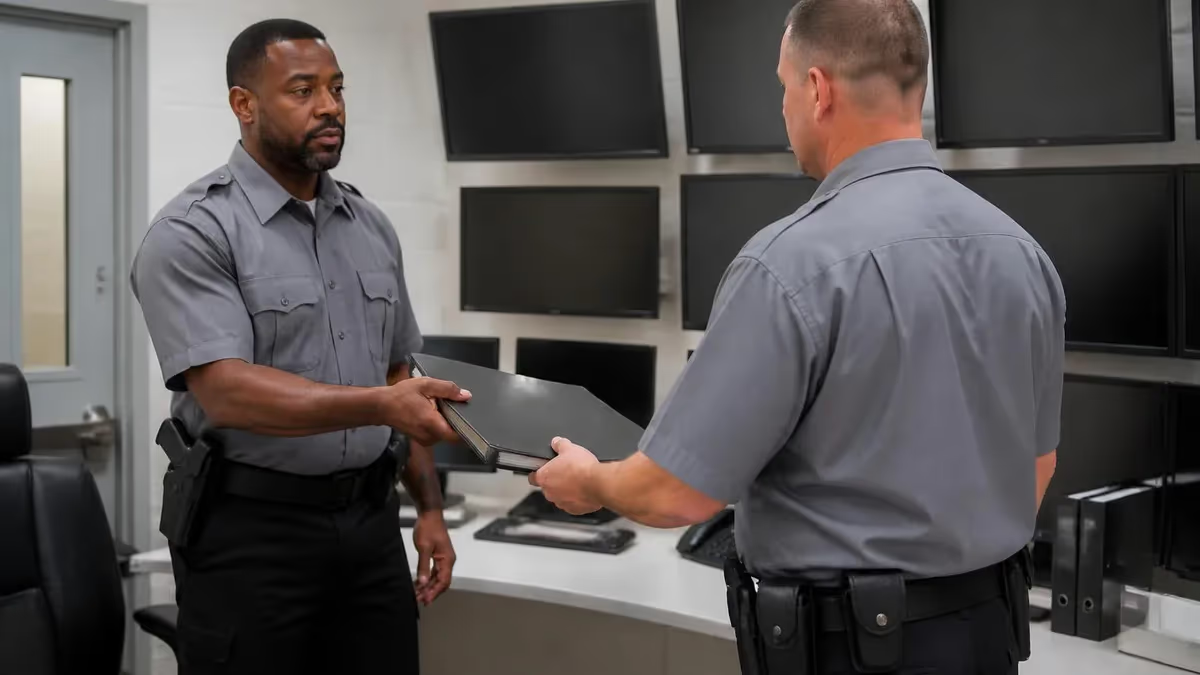
Shifts run on a clock the public never sees. Most facilities use eight-hour, ten-hour, or twelve-hour schedules, often rotating between days, evenings, and overnights. The first hour is roll call, post assignments, equipment checks, and a turnover briefing from the officer leaving the post. You take radios, keys, body alarms, sometimes pepper spray, and a notepad. You sign for everything because every item is tracked.
Then you walk to your post. That might be a housing unit, a control room, a perimeter tower, the visitation area, the law library, the medical wing, or the kitchen. Each post has its own routine and its own paperwork. A housing officer counts inmates, conducts welfare checks, escorts inmates to programs, and breaks up disputes before they escalate. A control room officer never sees an inmate face to face but watches dozens of cameras and operates every door, gate, and lock in the building. Officers rotate between posts so everyone learns the whole facility.
Mealtimes are pressure points. Hundreds of people moving through narrow corridors at the same time creates risk every single day. You stand at choke points, count heads, watch hands, and listen for anything that sounds off. The same applies to rec time, sick call, and shift change in the housing units. Calm shifts depend on officers running the routine the same way every day so inmates know what to expect.
What the Job Actually Is
A correctional officer is a sworn public safety professional who supervises people detained by a county, state, or federal facility. The job covers three pillars: custody (keeping inmates inside and accounted for), care (food, medical access, basic welfare), and control (preventing violence, contraband, and escapes). Everything else on the daily schedule connects back to those three pillars.
Inmate supervision is the foundation of the job, and it is more than just watching. You learn faces, names, and behavior patterns. You notice when an inmate who normally chats with everyone goes quiet, because that change usually means something is brewing. You spot the small alliances, the debts, the rivalries. New officers spend their first six months mostly listening and learning the unit. Experienced officers can walk into a dayroom and read the temperature in about thirty seconds.
Counts happen multiple times per shift. A formal count means every inmate is in their cell or bunk, on their feet, and visible to the officer. The numbers from each unit get called in, totaled, and verified against the master count for the facility. If even one person is unaccounted for the entire facility goes into a count clear hold until the discrepancy is resolved. Most discrepancies turn out to be a miscount, but until it is fixed nothing moves. No meals, no medical, no recreation. The count is sacred.
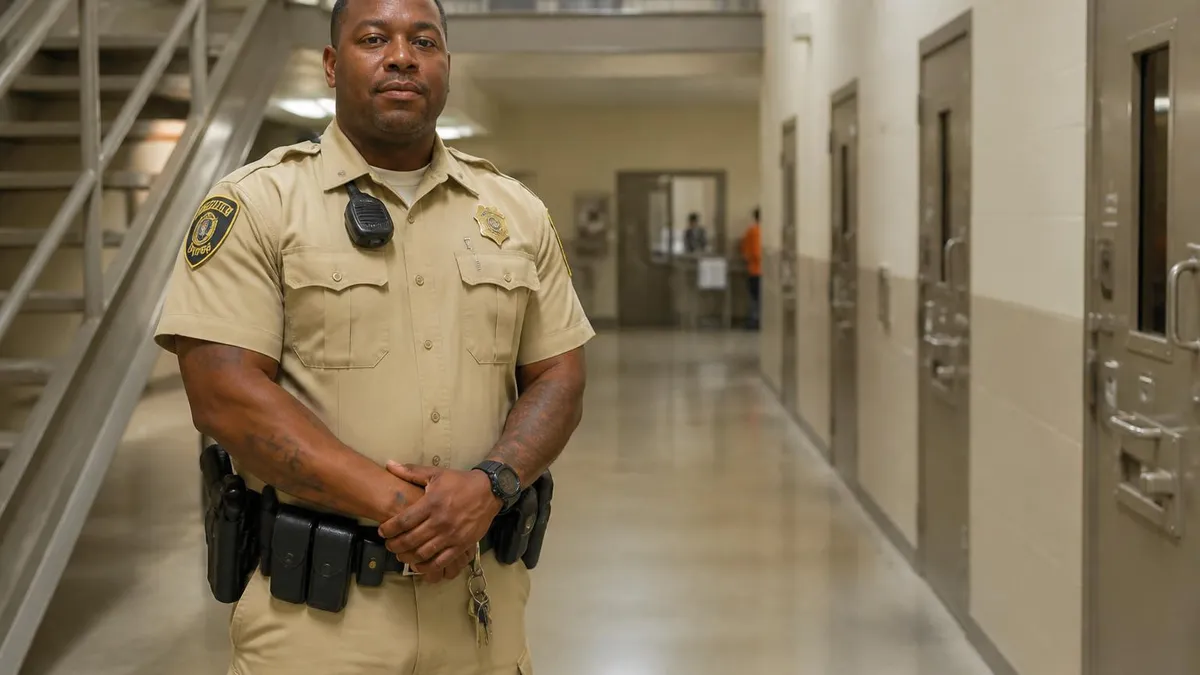
Welfare checks fall between counts. Every thirty minutes (sometimes more often for special housing) you walk the tier and look into each cell to confirm the inmate is breathing, not in distress, and not engaged in something prohibited. You log the time and your initials on the round sheet. The check sounds simple, but it is the single most important task in suicide and overdose prevention. Skipping checks is the fastest way to lose your job and end up named in a lawsuit.
The Four Functions of the Daily Shift
Cell counts, perimeter checks, key control, and inmate movement tracking. If someone is in your facility, you know exactly where they are at all times.
Contraband searches, pat-downs, cell shakedowns, and metal detector posts. You stop weapons, drugs, and phones before they enter circulation.
Welfare checks every 30 minutes, behavior observation, dispute mediation, and unit walkthroughs. You catch problems before they escalate.
Shift logs, incident reports, use-of-force write-ups, and turnover notes. If it is not written down, in court it did not happen.
Security checks are the second pillar and one of the most physical parts of the job. Pat-downs happen any time an inmate moves between secure areas. You search the same way every time so nothing gets missed. Hat, hair, collar, sleeves, chest, waistband, pockets, legs, shoes. It takes about thirty seconds per inmate when you are doing it right. Skip a step and you find out the hard way at three in the morning that someone walked a shank through your checkpoint.
Cell shakedowns are more thorough. You and a partner toss the cell while the inmate is at recreation or in a holding area. Mattress, pillows, bedding, books, legal papers, hygiene items, vents, lights, every surface. You are looking for weapons, drugs, phones, alcohol, gambling tickets, and anything fashioned from items the inmate should not have. A toothbrush filed against the concrete becomes a stabbing weapon in two days. A piece of melted plastic becomes a key.
Contraband control extends beyond cells. Visitation is the most common entry point for drugs and small electronics. Officers on visit duty watch every hand exchange and pull anyone whose behavior looks off into a secondary search room. The mailroom is another front line, especially since strips of paper soaked in synthetic drugs have replaced traditional smuggling for many facilities. Officers read mail, hold it up to light, and sometimes send pieces to a lab. Staff themselves are the largest single source of contraband at most prisons, which is why officers get searched on entry too.
What the Job Looks Like Across Facility Types
County jails hold pre-trial detainees and inmates serving sentences under one year. Population turns over fast — bookings, releases, court runs, and bond hearings happen every single day. Officers do intake (search, fingerprint, classify), release (verify paperwork, return property, escort to lobby), and court escort (chain up, transport, return). You handle a wider mix of people than any other corrections setting, from first-time DUI offenders to violent offenders awaiting trial.
The pace is closer to a busy ER than a prison. You build less long-term familiarity with inmates because most are gone within days. The trade-off is more variety in your workday.
Documentation is the third pillar and the one most likely to bite you if you cut corners. Every shift starts with reviewing the previous officer's log so you know what happened on the unit overnight. Every shift ends with you writing your own log: counts, rounds, inmate movements, incidents, medical calls, visitors, and anything else outside the normal routine. Reports get filed in the facility's records management system within hours of the event, sometimes within minutes for major incidents.
Incident reports are their own animal. Use of force, suicide attempts, fights, contraband finds, staff assaults, sexual misconduct allegations, medical emergencies, escapes (even attempts), every one of these gets a formal report with names, times, locations, witnesses, and a narrative. Reports flow up the chain to a shift supervisor, a captain, and often a deputy warden. If the incident involves use of force, you may need to give a recorded statement and review video footage within twenty-four hours.
Officers who write thorough reports stay out of legal trouble. Officers who write sloppy reports end up testifying about events they barely remember while a defense attorney picks apart every blank space in their report. New officers underestimate how much of the job is writing. Veterans will tell you that good documentation is the difference between a long career and a quick exit.
The physical demands of the job are real, but most officers who quit in the first two years leave because of the schedule, not the inmates. Mandatory overtime, rotating shifts, holidays away from family, and chronic sleep disruption do more damage than the threat of violence. If you cannot adapt to working nights, weekends, and back-to-back doubles, this career will burn you out fast. The officers who thrive plan their sleep, their meals, and their home life around the schedule from day one.
Inmate escorts move the population through the facility without giving anyone an opportunity to fight, escape, or pass contraband. The basic rule is one officer in front, one officer behind, inmate in the middle with hands visible. For higher-security moves, the inmate is in waist chains, leg irons, and sometimes a black box that locks the handcuffs in place. You walk a fixed route on a fixed timeline. If anything breaks the pattern, you call it over the radio and pause.
External escorts are court trips and medical runs. Court trips happen by van or transport bus, sometimes with multiple inmates chained together on a single bench. The driver and a second officer ride with weapons in a locked compartment, which is the only situation outside a perimeter tower where most corrections officers carry firearms.
Medical runs are smaller, usually one officer per inmate, and they take you to a hospital where you stand at the inmate's bedside for hours or days. Hospital details are some of the longest shifts in the job because you cannot leave the inmate's room until you are relieved.
Inside the facility, escorts are constant. Inmates move to programs, to legal calls, to the law library, to religious services, to recreation, to the medical wing, and to disciplinary hearings. Each move is logged. Each move is timed. Officers who run an organized post can move forty inmates to programs in fifteen minutes. Officers who let the unit run themselves end up with thirty inmates in the dayroom and a write-up at the end of the shift.
Typical Tasks in a Single Eight-Hour Shift
- ✓Attend roll call and receive post assignment, equipment, and shift briefing from the outgoing officer
- ✓Conduct two formal cell counts and verify totals with the master count desk before clearing for movement
- ✓Walk welfare checks every thirty minutes and log times on the round sheet for the entire shift
- ✓Pat-search every inmate who moves between secure areas, using the same head-to-toe sequence every time
- ✓Run at least one cell shakedown during shift, often with a partner, and bag and tag any contraband found
- ✓Escort inmates to recreation, medical sick call, programs, court, or visitation according to the daily schedule
- ✓Write a shift log of all movements, incidents, head counts, and unusual observations before turnover to next shift
- ✓File any incident report (use of force, fight, medical event, contraband recovery) before leaving the facility
Violence is part of the job but not the daily reality most outsiders imagine. Most shifts end with no use of force. Fights happen, but they are usually short, between two inmates who already had a beef, and they end the moment officers arrive with verbal commands and a body alarm.
Use of force escalates only when an inmate refuses to comply. You start with verbal commands, then physical control techniques, then chemical agents (OC spray), then a taser or restraint chair if available. Lethal force in corrections is extremely rare and almost always involves the perimeter or an attempted hostage situation.
Medical emergencies are more common than fights. Overdoses, seizures, heart attacks, falls, diabetic episodes, mental health crises, and suicide attempts all happen on a regular basis. Officers are usually first responders, which is why every corrections academy includes CPR, naloxone (Narcan) administration, and basic first aid. You stabilize the inmate, call medical, and document the whole event. If the inmate is transported to a hospital, you ride along or hand off to a transport team. Saving a life is one of the moments officers remember years later.
Suicide watch is its own assignment. An inmate placed on watch is checked every fifteen minutes by a designated officer who logs the inmate's status. Items that could be used for self-harm are removed from the cell. The inmate may be in a paper gown and a suicide-resistant smock. Watch shifts are long, quiet, and emotionally heavy because you are sitting in a chair outside a cell of someone who tried to kill themselves a few hours earlier. Officers who handle these well are the ones who can stay present without going numb.
What Makes the Job Worthwhile vs. What Drives People Out
- +Steady civil service paycheck with full benefits, pension, and overtime that many officers use to clear debt fast
- +Strong sense of mission once you realize that running a calm, fair unit actually keeps inmates safer than chaos does
- +Brotherhood and sisterhood with coworkers because you rely on each other in situations no one outside the job understands
- +Wide internal career paths into transport, K-9, tactical teams, training, classification, investigations, and supervisory ranks
- +Skills that translate directly into law enforcement, federal corrections, military police, security, and parole agent roles
- +Practical training in de-escalation, defensive tactics, first aid, and crisis response that you will use every working day
- −Rotating shifts and mandatory overtime grind down your sleep, your relationships, and your physical health over time
- −Verbal abuse from inmates is constant, and even officers with thick skin describe a slow erosion of patience over years
- −Exposure to violence, suicide, and overdose at a rate most jobs never see, with limited mental health support in many systems
- −Pay starts lower than equivalent law enforcement roles in most states and the gap closes only after several years on the job
- −Mandatory holidays, weekends, and birthdays away from family because someone has to staff the facility every single hour
- −Career stigma in some communities where the job is misunderstood and officers are blamed for failures of the broader system
Pros and Cons at a Glance
| Pros | Cons |
|---|---|
| Steady civil service paycheck with full benefits, pension, and overtime that many officers use to clear debt fast | Rotating shifts and mandatory overtime grind down your sleep, your relationships, and your physical health over time |
| Strong sense of mission once you realize that running a calm, fair unit actually keeps inmates safer than chaos does | Verbal abuse from inmates is constant, and even officers with thick skin describe a slow erosion of patience over years |
| Brotherhood and sisterhood with coworkers because you rely on each other in situations no one outside the job understands | Exposure to violence, suicide, and overdose at a rate most jobs never see, with limited mental health support in many systems |
| Skills that translate directly into law enforcement, federal corrections, military police, security, and parole agent roles | Pay starts lower than equivalent law enforcement roles in most states and the gap closes only after several years on the job |
| Practical training in de-escalation, defensive tactics, first aid, and crisis response that you will use every working day | Mandatory holidays, weekends, and birthdays away from family because someone has to staff the facility every single hour |
Intake and release bookends the job at county jail level. At intake an officer inventories property, runs the inmate through a metal detector and a strip search, photographs and fingerprints them, and verifies the booking paperwork from the arresting agency. Intake officers see everything from drunk drivers to homicide suspects within the same hour.
The skill is moving fast without skipping the search, because the most common contraband entry point in a jail is intake. Officers who learn the rhythm can process a single inmate in under fifteen minutes and a busy night still ends with the booking log fully cleared.
Release is the reverse. You verify the inmate is being released for the right reason (bond posted, time served, charges dismissed, transfer order), return their property from the secure room, walk them through paperwork, and escort them to the lobby. You match every release against a database to make sure no other agency has a hold on them. Releasing an inmate who should have stayed locked up is one of the few mistakes that always ends in a formal investigation. Officers slow down on releases, even when the lobby is full and the family is angry.
State and federal prisons have less daily intake but more inter-facility transfers. Officers in classification handle who goes where based on security level, programming needs, medical status, and gang affiliations. Transfer logistics are surprisingly complex and a single misclassified inmate can spend years in the wrong facility before someone catches it. The classification post is one of the most administrative jobs in corrections but it shapes the lives of thousands of inmates.
To pull the whole job together: a correctional officer is part security professional, part counselor, part EMT, part records clerk, and part referee. You walk in carrying a radio and a notepad, you spend twelve hours making sure a few hundred people stay alive and accounted for, and you leave with a stack of reports filed and a turnover briefing for the next officer. The work is monotonous on a good day and brutal on a bad one. Most days fall somewhere in the middle.
The skill set that matters most is not size or strength, although both help. Communication carries you further than anything else. Officers who can talk an angry inmate back into their cell without raising their voice end careers with fewer use-of-force reports, fewer injuries, and better relationships with both the inmates and the command staff. Verbal de-escalation is the closest thing the profession has to a superpower. Every academy teaches it, but you do not really learn it until you have used it under pressure several dozen times.
Pay and benefits vary widely. Federal officers with the Bureau of Prisons earn the most consistent salaries, typically GS-5 to GS-9 plus locality and law enforcement availability pay. State systems range from low forty thousand a year in some southern states to over ninety thousand in California or New York after a few steps.
County salaries depend entirely on the county budget and union contract. Overtime is universal and many officers double their base pay through overtime alone, although it comes at the cost of sleep and family time. Correctional officer pay data is the easiest place to compare specific states and ranks.
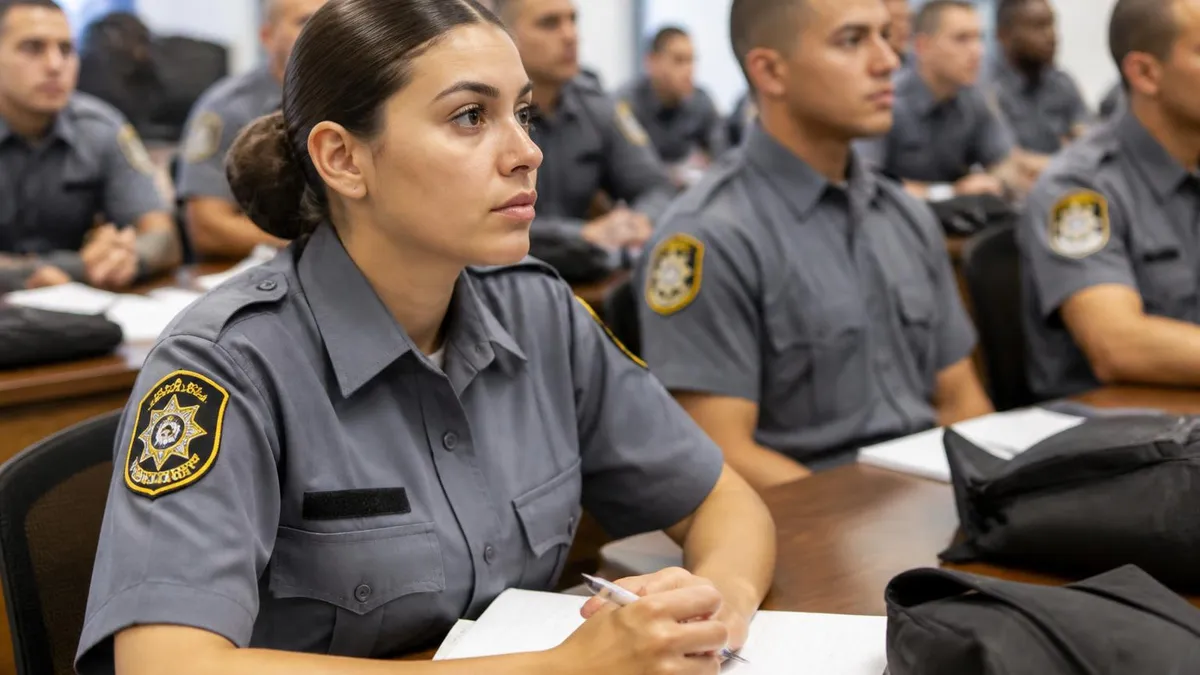
Training to become an officer is shorter than most law enforcement programs, usually six to twelve weeks at an academy plus on-the-job training at your assigned facility. Federal training runs twelve weeks at Glynco. State academies vary from four to sixteen weeks depending on the state. The academy covers laws and policies, defensive tactics, firearms (for armed posts), CPR and first aid, report writing, and ethics. The real learning happens in your first six months on a post, paired with a senior officer who shows you how the facility actually runs day to day.
If you are weighing the career, talk to current officers, ride along on a tour if your local agency offers it, and read a few independent first-person accounts before you commit. The pay, the pension, and the mission attract people for good reasons. The schedule and the environment push people out for equally real reasons.
Knowing which side of that ledger you sit on before you sign up is the single best decision you can make about how to become a correctional officer. The job is steady, meaningful, and tough in ways outsiders almost always underestimate, but for the right person it becomes a career that defines a working life.
Sample Correctional Officer Practice Questions
Try these questions from our free Correctional Officer practice tests. The correct answer and an explanation follow each question.
During a routine cell search, an officer discovers a handmade weapon hidden inside a hollowed-out book. What is the FIRST action the officer should take?
- A. Confiscate the weapon and document the finding per facility protocol
- B. Immediately confront the inmate about the weapon
- C. Return the book to avoid alerting the inmate
- D. Notify the warden before touching anything
Answer: A. Confiscate the weapon and document the finding per facility protocol
The officer should confiscate contraband and document it immediately per established facility protocol before taking further action.
What impact has the COVID-19 pandemic had on correctional officer employment trends?
- A. It eliminated all vacancies because facilities froze hiring permanently
- B. It accelerated officer shortages by increasing resignations, early retirements, and health-related attrition
- C. It expanded employment by requiring double staffing at all facilities
- D. It had no measurable effect on staffing levels
Answer: B. It accelerated officer shortages by increasing resignations, early retirements, and health-related attrition
The pandemic heightened officer health risks in confined facilities, accelerating resignations and early retirements and deepening existing staffing shortages.
What is the minimum educational requirement for most correctional officer positions?
- A. Bachelor's degree in Criminal Justice
- B. Associate's degree in Psychology
- C. High school diploma or equivalent
- D. Master's degree in Law Enforcement
Answer: C. High school diploma or equivalent
While some positions or agencies may prefer higher education, the foundational educational requirement for most correctional officer roles is a high school diploma or its equivalent. This ensures candidates possess basic literacy, comprehension, and general knowledge necessary for the job's responsibilities.
What does 'protective custody' mean in a correctional setting?
- A. Solitary confinement as punishment for rule violations
- B. Separate housing for inmates at risk of harm from the general population
- C. Temporary lock-down status during a facility emergency
- D. Restricted movement imposed by court order
Answer: B. Separate housing for inmates at risk of harm from the general population
Protective custody separates vulnerable inmates who face a credible threat from the general population for their safety.
Correctional Officer Questions and Answers
About the Author

Educational Psychologist & Academic Test Preparation Expert
Columbia University Teachers CollegeDr. Lisa Patel holds a Doctorate in Education from Columbia University Teachers College and has spent 17 years researching standardized test design and academic assessment. She has developed preparation programs for SAT, ACT, GRE, LSAT, UCAT, and numerous professional licensing exams, helping students of all backgrounds achieve their target scores.
Join the Discussion
Connect with other students preparing for this exam. Share tips, ask questions, and get advice from people who have been there.
View discussion (9 replies)