
Correctional Officers Strike: 2026 October New York Wildcat Walkout Report
The 2026 October correctional officers strike shut down 42 NY prisons. 📚 Causes, demands, state response, outcomes, and what it means for COs.
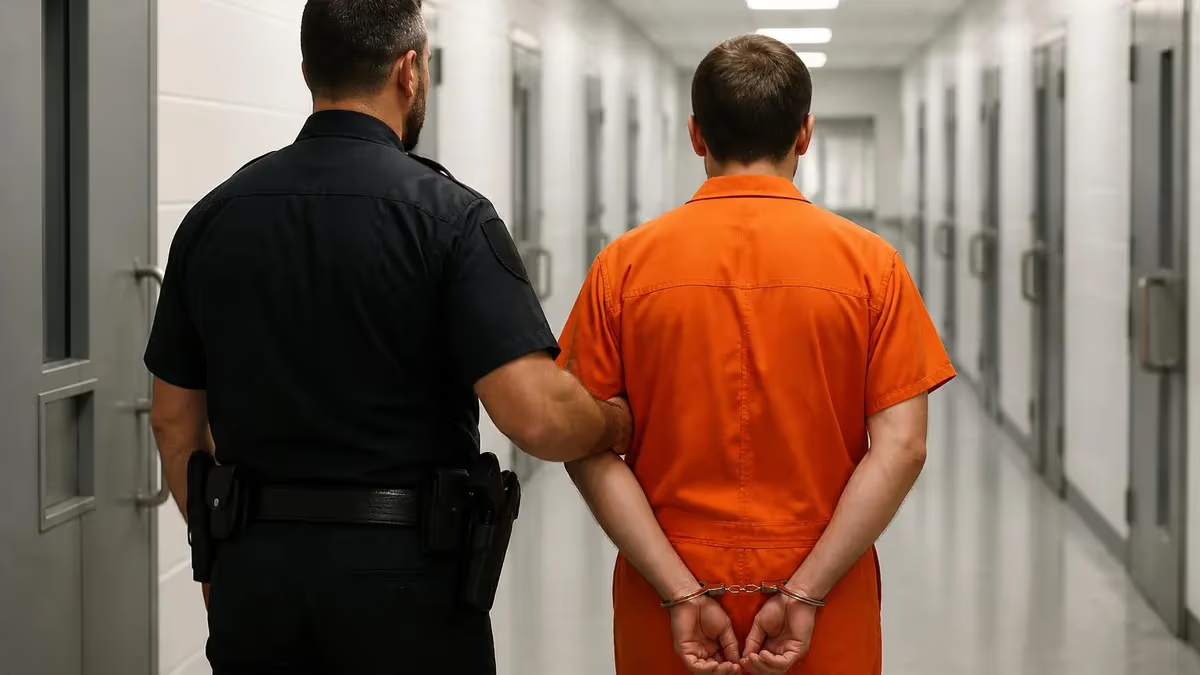
On February 17, 2025, roughly 14,000 correctional officers walked off the job at 42 New York state prisons. It wasn't authorized by their union. It was a wildcat strike — and the largest of its kind in modern American history. The walkout lasted close to three weeks. Governor Kathy Hochul declared a state of emergency within hours and ordered more than 7,000 National Guard troops into facilities to keep them running.
The flashpoint? A mix of long-simmering anger over staffing, the HALT Act, mandatory 24-hour shifts, and the death of inmate Robert Brooks at Marcy Correctional Facility in December 2024. You can read the broader role expectations in this correctional officer career overview. The february correction officers strike report below walks through what sparked it.
You'll see this called different things in different places — a correctional officers strike, a correction officer walkout, a prison guard strike, a correctional officer protest. The names matter less than what it exposed. Decades of staffing neglect. Mandatory overtime baked into the daily schedule. A workforce stretched past breaking. We'll walk you through it day by day, demand by demand, and outcome by outcome. By the end, you should know exactly why officers walked, what the state did about it, and what changed (and what didn't).
The story below pulls together facility-level reporting, state press conferences, union statements, and court filings into one timeline. It's the closest you'll get to a single-source briefing on what was, by any measure, an unprecedented event in American corrections labor history.
Scale: ~14,000 COs across 42 NY state prisons.
Duration: Roughly 23 days (Feb 17 – Mar 12, 2025).
State response: Emergency declared, 7,000+ National Guard deployed, Taylor Law invoked.
Status: Ended with minor concessions, 200+ officers disciplined, HALT Act not repealed.
Most observers point to the HALT Act — the Humane Alternatives to Long-Term Solitary Confinement law that passed in 2022. It capped solitary at 15 days and banned it outright for many vulnerable groups. Officers say it pulled the strongest deterrent against inmate violence. Assaults on staff climbed sharply after rollout, and officers blamed the policy directly. Reformers pushed back — they pointed to decades of research on solitary's psychological damage.
Staffing made it worse. The Department of Corrections was running roughly 6,000 officers short of authorized strength. Mandatory 24-hour shifts became routine. Officers got pulled from one shift straight into another. Sleep deprivation built up over weeks. Then came the Brooks beating death at Marcy in December 2024 — captured on body camera — which triggered firings, indictments, and a political firestorm.
By February, the dam broke. A walkout that began at a handful of upstate facilities spread to dozens overnight. Group chats lit up. Picket lines went up before sunrise. Family members joined in. The wildcat nature of it caught everyone — including union leadership — flat-footed. For a deeper look at the role itself, see this correction officer guide. This wasn't planned in a smoke-filled room. It was rank-and-file rage finally finding a vector.
Officers we spoke with described a slow-motion crisis they'd been warning about for years. Nobody at the political level wanted to spend the budget needed to fix it. So the workforce fixed it themselves — by walking out.
Strike By the Numbers
The strikers came with a list. Repeal or suspend HALT first. Hire roughly 5,000 new officers. End mandatory overtime. Raise pay (current range sat between $54,500 and $75,000 depending on tenure). Add hazard pay. Upgrade PPE and safety gear. And — trickiest — give the wildcat strikers themselves some form of recognition without crushing them under Taylor Law penalties. That last one was always the longest shot.
Not every demand was equally weighted. Most officers we'd describe as core wanted three things: relief from mandatory OT, more bodies on the floor, and some change to HALT. The pay raise mattered, sure — but talking to picketers, the safety angle dominated. Many had been working 80-plus hour weeks for months. Burnout was bone-deep. Some officers were sleeping in their cars between shifts. Pay information is mapped out separately in correctional officer pay.
The demand for hazard pay deserves attention. NY COs are not classified as hazardous duty for retirement purposes — unlike state troopers or firefighters. That means same pension formula despite arguably higher injury exposure. Officers wanted that classification fixed. They also wanted body armor upgrades, stab-resistant vests issued universally (not just in maximum-security yards), and panic buttons that actually worked. Small things on paper. Big things when you're alone on a tier with 60 inmates and a radio that drops calls.
The demand structure mattered politically. By front-loading safety and staffing (broadly popular) over pay (less popular), the strikers gave themselves a cleaner public narrative than a pay-only strike would have produced. That framing helped maintain the early 55% public support number.
How the Strike Unfolded
HALT Act fallout (2022–2025). Officers blamed the solitary cap for a sharp rise in inmate-on-staff assaults. NY DOCCS data showed roughly 1,500 staff assaults in 2024 — a record.
Severe understaffing. ~6,000 officers short of authorized strength. Mandatory 24-hour shifts. Burnout, divorce, and CO suicide rates climbing.
Robert Brooks beating death (Dec 2024). Body-cam footage at Marcy CF prompted indictments and political pressure. Officers felt scapegoated for systemic conditions.
Pay stagnation. Starting pay around $54,500. Veterans topping out near $75,000 base — well below cost of living in much of NY.
The strike wasn't a single coordinated act — it was hundreds of facility-level actions that converged. Officers picketed outside prison gates. They held signs. They blocked vehicle entrances during shift changes (without preventing emergency access). Some wore their uniforms. Most wore street clothes to limit liability. Coordinated phone trees activated at 4 a.m. on Day 1. Retired COs (immune to discipline) handled most media interviews.
Online organizing exploded. Private Facebook groups for COs swelled overnight. WhatsApp threads coordinated picket schedules. State Senators got flooded with calls from members in their districts. Pop-up rallies appeared at the Capitol with little notice. Family members — wives, husbands, kids of officers — became frontline spokespeople when officers themselves wanted lower visibility. The grassroots energy was real, not astroturfed.
Some tactics drew more criticism than others. A small number of officers reportedly slowed the release of perishable food. A handful made comments to inmates that crossed lines. Most picketers stayed disciplined. The strike's broader credibility depended on that discipline holding, and it mostly did. Coordinators warned against any property damage, physical confrontations, or threats. Those warnings worked at most facilities.
Timeline of the Strike
December 2024
January 2025
February 16, 2025
February 17, 2025
February 17–19
February 20 – March 5
March 6, 2025
March 8, 2025
March 12, 2025
March – June 2025
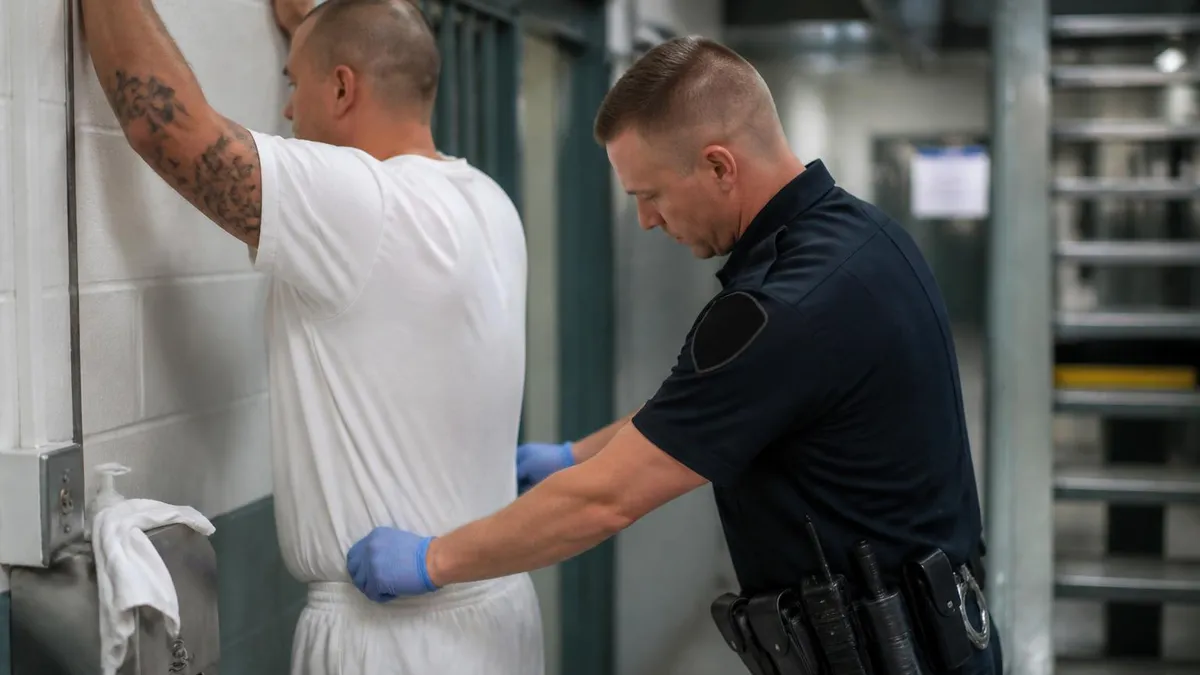
The people locked inside took the hardest hit. Roughly 47,000 inmates went onto 23/7 lockdown for the duration. No yard. No programs. Limited phone access. Mail piled up. Family visits stopped cold for three weeks. Medical appointments backed up — including chronic care and dialysis runs that don't pause for politics. Three inmates died during the strike. Causes are still being investigated, with families demanding independent autopsies.
Advocacy groups documented mental health crises across the system. Suicide watch placements spiked. Self-harm incidents rose. Civil rights attorneys filed emergency motions. The strike's stated cause — officer safety — collided hard with what advocates called collective punishment of incarcerated people. That tension shaped public reaction more than anything else.
Food service degraded fast. National Guard troops aren't trained on prison kitchen operations. Many meals came in cold or short on nutrition. Inmates with medical diets — diabetics, dialysis patients, those on chemo — had the hardest time. Visitation suspension hit families hardest in the second and third weeks. Kids who hadn't seen a parent in months had visits canceled with no rescheduling guarantee. The economic ripple touched bus services, hotels in prison towns, and small businesses that survive on visitor traffic.
Some inmates kept journals during the lockdown that have since circulated through legal aid networks. They describe round-the-clock cell time, fluorescent lights left on for days, and meals delivered cold. The legal exposure for the state is real — civil suits are already filed in federal court.
National implications. Other state DOCs — California, Texas, Florida, Alabama — watched closely. All face similar staffing crises. The federal Bureau of Prisons noted the playbook. Right-to-strike debates flared up in legislatures from Albany to Sacramento. Whether you'll see this happen again depends on whether the underlying conditions get addressed. Most observers say they won't, at least not quickly.
Most strikes you read about happen in the private sector — autoworkers, hotel staff, Hollywood writers. The economics are different. When private-sector workers strike, the employer loses revenue and feels pressure quickly. When COs strike, the state can't shut the facility — it has to keep running. Inmates can't be sent home. So the state's options are different: bring in replacement workers (the National Guard), invoke anti-strike laws, and apply individual discipline rather than negotiate.
That asymmetry shapes everything. Private-sector strikers can outlast an employer financially. Public-sector strikers can't outlast a state government. The use just isn't symmetrical. That's why most CO strikes end with modest gains compared to the demands. The 2025 NY strike fit that pattern. Officers gained visibility and some concessions. They didn't get HALT repealed. They didn't get the staffing they asked for. The math of public-sector labor doesn't bend that way.
What CO strikes do achieve, often, is policy attention. Legislators ignore the slow-rolling crisis until staff walk off. Then everyone notices. The trick — and it's a real one — is converting that attention into structural change before the news cycle moves on. The 2025 strike got attention. Whether it converts to structural change is the open question. Most experienced corrections labor analysts are skeptical. The political will tends to fade fast.
The corrections officer protest playbook will keep evolving. Whether it produces durable change or just episodic eruptions depends on whether legislators treat each strike as a one-off crisis or as a symptom requiring structural fix. So far, the track record favors one-off treatment.
Conditions Officers Cited
- ✓Inmate assaults on staff: 1,500+ in 2024 — record high
- ✓Officer injuries: 500+ documented during 2024
- ✓PTSD rates: 30%+ across the NY CO workforce
- ✓Suicide rate: roughly 40% higher than the general public
- ✓Mandatory 24-hour shifts: routine, not occasional
- ✓Authorized strength gap: ~6,000 officers short
- ✓Inadequate PPE — body armor, stab vests, gloves
- ✓Lack of mental health support and EAP access
- ✓Pension changes that reduced take-home for newer hires
Hochul's position never wavered publicly: no negotiation under duress. The Taylor Law gave her use. Every striking officer lost two days of pay per strike day and faced disciplinary hearings. Some were fired outright for refusing to return. The Attorney General's office opened an inquiry into whether organizers had violated separate state laws. Union leadership at NYSCOPBA was caught flat-footed — they hadn't called the strike.
Still, talks happened. Behind the scenes, intermediaries shuttled framework drafts back and forth. The final return was less a negotiated settlement than a managed retreat. Officers came back. The state took its pound of flesh. Both sides claimed partial victory. Neither walked away happy. Several legislators tried to broker side deals. Most of those collapsed within days.
The hardline carried political cost. Hochul faced criticism from labor allies who felt she'd been too aggressive on Taylor Law penalties. From the other side, prosecutors wanted broader charges than her administration pursued. Some union leaders publicly distanced themselves from her — historically a rare break. The internal DOCCS communications later leaked showed friction between facility wardens (many sympathetic to officers) and central administration. Whether that fracture has healed by 2026 is genuinely unclear. Most reporting suggests it has not.
The hardline approach also affected internal trust within DOCCS. Officers who returned felt watched. Supervisors felt caught between facility loyalty and Albany directives. That residual tension has not fully cleared more than a year later.
HALT Act: What It Does
- Passed: 2022, NY State Legislature
- Solitary cap: 15 days maximum
- Special protections: Bans solitary for mental illness, pregnancy, age 21 and under, age 55 and over
- Alternative: Residential Rehabilitation Units (RRU)
- Stated impact: Removed deterrent for in-facility violence
- Assault data: Staff assaults rose sharply 2022–2024
- RRU staffing: Often understaffed; programs poorly funded
- Officer position: Repeal or major rollback
- Stated intent: Reduce mental health damage from prolonged isolation
- Evidence base: Decades of research on solitary's psychological harm
- Implementation gap: Funding for RRUs lagged the legal mandate
- Post-strike status: Minor procedural tweaks only
Strikes by correctional officers aren't unprecedented — they're just rare. New York saw a CO strike in 1979 that lasted about two weeks. Pennsylvania officers struck at Camp Hill in 1986 and at SCI Pittsburgh in 1987. None of those came anywhere near the scale of February 2025. The 2018 nationwide prison labor strike was inmate-led, not staff-led — different animal entirely.
Alabama COs ran a sickout in 2024 that pressed similar staffing complaints. The NY strike pulled from that energy and went much further. If you're considering this field, the entry-level corrections officer overview walks through duties and requirements. What makes 2025 different from the historical examples isn't just scale — it's the speed of organizing.
The 1979 NY strike took weeks to spread. Officers met in person, passed printed flyers, used pay phones. The 2025 strike spread in hours. WhatsApp, Facebook groups, encrypted apps. Retired officers (immune to discipline) became hubs for coordination. State Police monitoring couldn't keep up. That communication shift is part of why labor analysts think similar strikes are more likely going forward — not just in corrections, but across public-sector workforces where strikes are technically illegal. The tools have outrun the laws.
The lesson for other state corrections systems is straightforward. The conditions that triggered NY 2025 — understaffing, mandatory OT, post-reform safety concerns — exist in nearly every state. The match is the same. The fuel is everywhere. Only the spark varies.
Operational and Financial Impact
Polling told a mixed story. A NYSCOPBA-commissioned poll showed 55% of New Yorkers backed the officers' demands — at least in the abstract. Support softened when respondents heard about the inmate lockdowns. Republican state senators largely backed the strikers. Democratic legislators split, mostly along urban-rural lines. Inmate families organized rallies at the Capitol demanding an end to the lockdowns. Civil rights groups condemned the strike's collateral damage.
Hochul absorbed political hits from both sides — too soft for some, too harsh for others. The press coverage was relentless. Most outlets framed it as a clash between worker safety and inmate rights. Both framings have truth in them. What didn't get enough coverage: the prior decade of policy choices, budget decisions, and staffing neglect that made the explosion almost inevitable.
Job seekers tracking the post-strike hiring picture should check current openings on the correctional officer jobs page. Recruiting cratered post-strike. New hire classes that typically ran 80-100 candidates dropped to under 30. Recruiters reported applicants asking about HALT, mandatory OT, and discipline records before salary. The state's recruiting campaign — including TV spots and social media ads — was paused for several weeks and then restarted with a softer tone emphasizing pay raises rather than the job itself.
Talk radio across upstate NY ran wall-to-wall on the strike for weeks. Coverage was sympathetic to officers. Downstate coverage leaned more toward inmate impact. That geographic split mirrors the political reality of NY's corrections workforce, which is overwhelmingly recruited from upstate communities.
Correctional Officer Strikes: Pros and Cons
- +Forces attention on chronic understaffing that political leaders had ignored
- +Brings media coverage that union grievance procedures rarely generate
- +Pressures legislators to address safety conditions inside facilities
- +Unifies a workforce that's normally fragmented across facilities and shifts
- +Can shift hiring and overtime policy when nothing else has
- +Sets a precedent other CO unions can study and learn from
- −Inmates bear the brunt — lockdowns, suspended visits, delayed medical care
- −Violates the Taylor Law in NY — illegal for public employees
- −Divides union leadership from rank-and-file when leaders can't endorse the action
- −Risks careers — terminations, disciplinary records, pension implications
- −Deepens public mistrust of correctional staff when collateral damage is visible
- −Doesn't always achieve stated goals — the 2025 strike didn't repeal HALT
Pros and Cons at a Glance
| Pros | Cons |
|---|---|
| Forces attention on chronic understaffing that political leaders had ignored | Inmates bear the brunt — lockdowns, suspended visits, delayed medical care |
| Brings media coverage that union grievance procedures rarely generate | Violates the Taylor Law in NY — illegal for public employees |
| Pressures legislators to address safety conditions inside facilities | Divides union leadership from rank-and-file when leaders can't endorse the action |
| Unifies a workforce that's normally fragmented across facilities and shifts | Risks careers — terminations, disciplinary records, pension implications |
| Can shift hiring and overtime policy when nothing else has | Deepens public mistrust of correctional staff when collateral damage is visible |
NYSCOPBA — the New York State Correctional Officers and Police Benevolent Association — was in a bind. The strike wasn't theirs. Endorsing it would have meant fines, decertification risk, and personal liability for officers. Distancing from it meant losing the trust of members who'd risked everything. Leadership tried to walk a tightrope, mostly unsuccessfully. The Public Employees Federation, which represents some support staff, stayed out almost entirely.
National AFL-CIO statements were sympathetic but careful — no calls for wider solidarity action. Some officers left the union over how the leadership handled the strike. Others stayed but pushed for new elections. The legal aftermath continues. Some terminated officers are appealing through union counsel. Others are filing federal complaints alleging retaliatory firings. Don't expect clean resolution any time soon.
This corrections officer union action also raised broader questions about the right to strike for essential public-sector workers. Police, firefighters, COs — all banned from striking under Taylor Law analogues in most states. Progressive legislators introduced bills in Albany to create binding arbitration mechanisms that would give COs use without illegal action. Those bills are stuck in committee as of late 2026. Federal labor scholars are watching how courts handle the disciplinary appeals — early rulings have split between upholding terminations and ordering reinstatement on procedural grounds.
The rank-and-file rift will likely produce new union leadership at NYSCOPBA's next election cycle. Slates focused on more aggressive bargaining have already filed. Whether that produces a better outcome for officers or just a more confrontational dynamic with DOCCS remains an open question.
Resources for COs and Their Families
- ✓NYSCOPBA member services and legal defense — nyscopba.org
- ✓Public Employees Federation support for non-CO civilian staff
- ✓988 Suicide and Crisis Lifeline — free, 24/7, confidential
- ✓NY State Workers' Compensation Board — injury and disability claims
- ✓Union-affiliated mental health benefits through EAP
- ✓Disciplinary representation through union-appointed attorneys
- ✓Family advocacy groups: Corrections Officers' Family Network (regional chapters)
- ✓Pension and retirement counseling through NYSLRS
- ✓Federal whistleblower protections if reporting unsafe conditions
So what's the takeaway? The February 2025 NY correctional officers strike was, by raw numbers, the largest in American CO history. About 14,000 officers, 42 prisons, three weeks, 7,000 National Guard. Demands were straightforward — more staff, less mandatory OT, modified HALT, better pay. Results were modest. HALT survived essentially intact. Hiring promises got made but spread thin over years.
Pay raises came small. Discipline came hard. Roughly 1,000 officers left the system one way or another. What it exposed matters more than what it accomplished. NY's corrections system is short thousands of officers. Mandatory 24-hour shifts are normal, not exceptional. Staff assaults and officer mental health are at crisis levels. Inmate conditions during the lockdown showed how fragile the daily operation is.
Whether other states see similar action depends on whether their own conditions get fixed. Most observers — corrections insiders, labor analysts, prison reformers — agree on one thing: the underlying pressure didn't disappear when the strike ended. It just went back under the lid. If you're tracking the ny correctional officers strike 2025 long-tail keyword for research purposes, treat it as a case study with three open questions. Did discipline deter future strikes? Did pay raises help retention? And did HALT modifications actually reduce staff assaults? Watch the 2026-2027 data. The answers will shape national policy for a decade.
Sample Correctional Officer Practice Questions
Try these questions from our free Correctional Officer practice tests. The correct answer and an explanation follow each question.
Which condition is commonly associated with correctional officers who experience prolonged occupational stress?
- A. Improved cardiovascular health
- B. Burnout, characterized by emotional exhaustion and reduced sense of accomplishment
- C. Increased job satisfaction
- D. Enhanced immune function
Answer: B. Burnout, characterized by emotional exhaustion and reduced sense of accomplishment
Burnout is a well-documented outcome of chronic occupational stress in corrections, marked by emotional exhaustion, depersonalization, and a diminished sense of personal efficacy.
When writing an incident report, which verb tense should a correctional officer primarily use?
- A. Future tense to describe planned responses
- B. Present tense to make the report feel immediate
- C. Past tense because events have already occurred
- D. Mixed tenses to show a timeline
Answer: C. Past tense because events have already occurred
Incident reports document events that have already happened, so past tense is the correct and standard tense to use throughout.
Why is understanding legal standards important for correctional officers?
- A. To create personal rules.
- B. To comply with laws and protect rights
- C. To avoid responsibility.
- D. To limit oversight.
Answer: B. To comply with laws and protect rights
Correctional officers operate within a complex legal framework, and a thorough understanding of these standards is paramount. It ensures that all actions, from daily supervision to the use of force, comply with constitutional rights, state laws, and facility policies, thereby protecting both inmates' and officers' rights. This knowledge helps officers avoid legal liabilities, maintain professionalism, and uphold the rule of law within the correctional environment.
Which legal standard established by the Supreme Court governs the use of force by correctional officers against convicted inmates?
- A. Reasonable suspicion
- B. Eighth Amendment cruel and unusual punishment standard
- C. Fourth Amendment reasonableness standard
- D. Probable cause standard
Answer: B. Eighth Amendment cruel and unusual punishment standard
The Eighth Amendment's prohibition on cruel and unusual punishment governs force used against convicted inmates, as established in Hudson v. McMillian (1992).
Correctional Officers Strike Questions and Answers
About the Author

Educational Psychologist & Academic Test Preparation Expert
Columbia University Teachers CollegeDr. Lisa Patel holds a Doctorate in Education from Columbia University Teachers College and has spent 17 years researching standardized test design and academic assessment. She has developed preparation programs for SAT, ACT, GRE, LSAT, UCAT, and numerous professional licensing exams, helping students of all backgrounds achieve their target scores.
Join the Discussion
Connect with other students preparing for this exam. Share tips, ask questions, and get advice from people who have been there.
View discussion (9 replies)