
Correctional Officer Requirements: Age Limits, Disqualifiers, and the Path to the Badge
Correctional officer requirements explained: 📚 age limits, education, background checks, NYC rules, and what disqualifies you. Updated 2026 October guide.
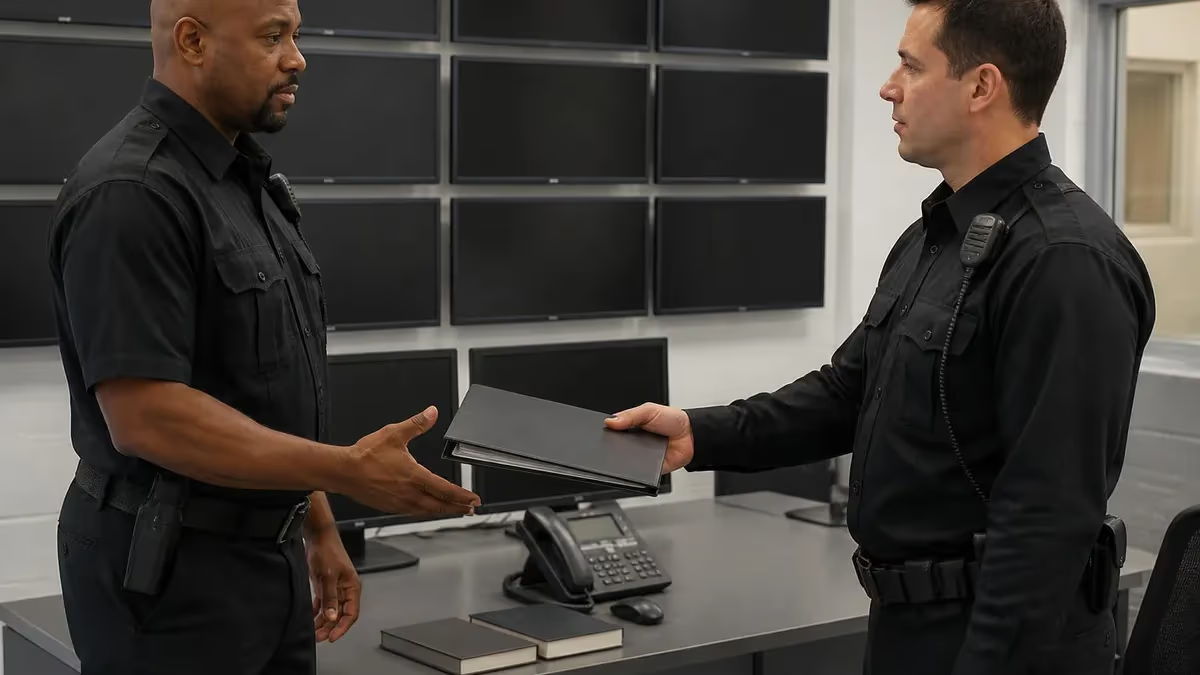
So you want to become a correctional officer. Maybe you've watched a few documentaries, maybe a cousin works at the county jail, or maybe the steady paycheck and pension caught your eye. Whatever the reason, before you fill out a single application you need to know exactly what each agency is looking for. The bar isn't impossibly high, but it's specific, and one overlooked detail can knock you out of the running for a year or more.
Correctional officer requirements vary by state, by federal versus county, and even by individual facility. New York City runs a different process than upstate. The Federal Bureau of Prisons (BOP) caps your starting age at 36. Texas will hire at 18 for state prisons but the county next door might want 21. That's why generic checklists from random sites get people in trouble — what works in Florida won't fly in NYC, and the BOP has its own world entirely.
This guide walks through every box you'll need to check: age, citizenship, education, criminal history, physical fitness, psychological evaluation, the polygraph in some states, and the academy training that follows. We'll cover the disqualifiers nobody talks about (yes, recent marijuana use still matters in many agencies), the NYC age range that catches applicants off-guard, and the realistic timeline from application to first day on the job. By the end you'll know whether to apply now, wait six months, or pick a different career path entirely.
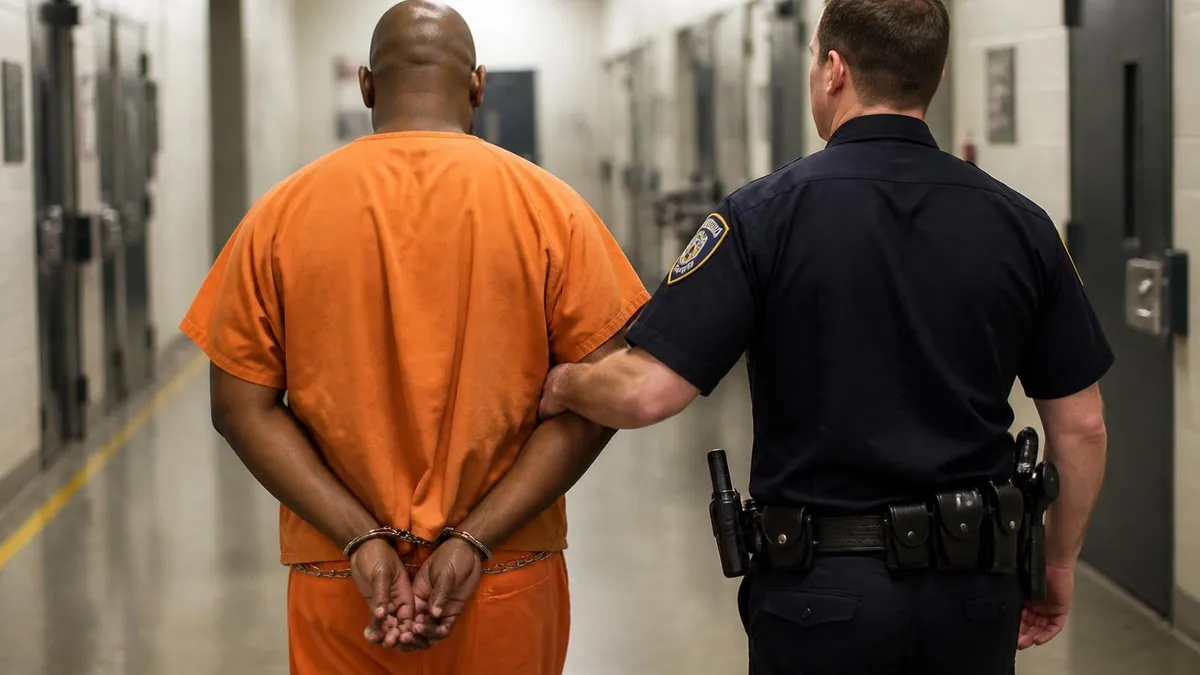
Let's get the basics out of the way. Most state corrections departments want you to be at least 18, though plenty bump that to 21 because handling adult inmates at age 18 raises liability eyebrows. The federal BOP sets a hard floor of 20 and a ceiling of 36 (with limited extensions for prior federal law enforcement service). NYC Department of Correction caps entry at 35 at the time of appointment, though you can sit the exam at 21.
Education-wise, a high school diploma or GED is the universal minimum. Some agencies want 30–60 college credits or two years of military service as a substitute, particularly the federal system. You don't need a criminal justice degree — a culinary arts diploma works as long as it's accredited. A small but growing number of agencies offer paid tuition reimbursement after you're hired, so you can finish that AA or BA on the department's dime while collecting a full paycheck.
Citizenship matters too. Almost every U.S. agency requires U.S. citizenship by the day of appointment. Permanent residents can apply in a handful of states (California allowed it for a while) but the trend is back toward citizens-only. If you're naturalized, bring your certificate — they'll ask.
Dual citizens can usually serve as long as their U.S. citizenship is established and they haven't actively used the foreign passport for travel that would raise security flags. Residency rules vary too: some agencies require you to live in the state, some in the county, and federal BOP only requires that you be willing to move anywhere they assign you.
The Three Pillars Every Agency Checks
Whether you target NYC, California, Texas, or the federal BOP, three things must be airtight: a clean criminal record (especially no domestic violence and no felonies), a high school diploma or GED, and U.S. citizenship at the time of appointment. Miss any one of these and the rest of your application doesn't matter. Build the foundation here before you stress over PAT scores or polygraph prep.
The criminal history piece is where most applicants quietly drop out. A felony conviction is almost always a permanent disqualifier. Misdemeanors get evaluated case by case, but anything involving violence, dishonesty, or domestic abuse will sink you. Federal Lautenberg Amendment rules mean one DV misdemeanor bars you from a firearm.
Drug history is the second silent killer. Agencies ask about use within the last three to five years. Marijuana, despite state legalization, still appears on federal checks and can disqualify you from BOP positions. Hard drug use (cocaine, meth, heroin) within ten years is usually an automatic no. Lying on a polygraph is worse than the use itself.
Beyond the legal stuff, agencies dig into your driving record, credit history, prior employment, and references. A pattern of bad debt suggests vulnerability to bribery. A string of fired-from-jobs raises stability questions. None of these alone disqualify you. Together they paint a picture investigators use to decide whether to greenlight or pass.
Four Screening Stages Every Applicant Faces
Criminal record check, credit history pull, employer and personal references, driving record abstract, and neighborhood canvass interviews. NYC runs the deepest investigation in the country, often visiting your home address and former workplaces over a 9 to 18 month window. Disclose everything up front.
Used in roughly half of state agencies and most federal hires. Examiners probe undisclosed drug use, theft from prior employers, undetected criminal activity, and gang or extremist group affiliation. Honesty beats clever evasion every time because the machine measures stress, not lies. Sleep well, drink water, breathe.
Vision (typically 20/40 corrected), color vision, audiometric hearing test, blood pressure, drug screen, ECG, and a full physical. Disqualifiers include uncontrolled diabetes, severe asthma, recent surgeries with incomplete healing, color blindness in many agencies, and certain heart conditions noted on the EKG.
MMPI-2 or CPI written test plus a 60 to 90 minute interview with a department-appointed psychologist. The exam screens for emotional stability, anger control, comfort with authority structures, integrity, and absence of authoritarian extremes. Consistency across hundreds of questions matters more than any single answer.
Physical fitness is non-negotiable. You'll face a Physical Abilities Test (PAT) that simulates the job: dragging a dummy, climbing stairs in gear, running short sprints, and sometimes a 1.5-mile run. NYC's PAT includes a stair climb wearing a 20-pound vest plus a dummy drag. Federal BOP uses the BOP Pre-Employment Physical Abilities Test (PAT) which is timed and graded on a pass/fail basis.
Most agencies don't want bodybuilders — they want functional fitness. Can you run, climb, lift, restrain, and recover quickly? If you can do a few pull-ups, run a sub-15-minute 1.5 mile, and pick up 75 pounds without throwing your back out, you're in the zone. The PAT washes out roughly 15–25% of candidates, so train for it the way you'd train for a 5K: months in advance, not the week before.
One detail trips up otherwise-fit applicants: vision and hearing. Most departments accept 20/40 corrected vision (glasses or contacts fine), but uncorrected vision worse than 20/100 can disqualify you, and color blindness is a hard no in many places because officers must accurately read color-coded uniforms and security tags. Hearing must pass a standard audiometric test — if you've spent years around loud machinery, get checked before the official exam. Both are correctable in theory, but the medical screen is a single shot and a failed pass means re-applying next cycle.

Requirements by Agency
Age 20-36 at appointment. High school diploma plus 3 years general experience OR a bachelor's degree. Must accept geographic assignment anywhere. Pay starts GL-5/GL-6. Training at FLETC Glynco, GA.
The psychological evaluation is the part nobody warns you about. It's usually a two-part process: a written test (MMPI-2 or similar — 500-plus true/false questions designed to spot deception and personality red flags) followed by a 60–90 minute sit-down with a department psychologist. They're looking for stability, emotional regulation, comfort with authority, and lack of grudge-holding tendencies.
You can't really cram for this. Trying to game the answers usually gets you flagged on consistency checks — the test asks the same thing six different ways. The best advice: sleep well the night before, answer honestly, don't overthink. If you've had therapy, depression, or anxiety in the past, disclose it. They check medical records anyway, and lying on the form is worse than the diagnosis.
The polygraph, used in roughly half of state agencies and most federal hires, is its own animal. Examiners cover four core areas: undisclosed criminal activity, drug use beyond what you admitted on the application, theft from prior employers, and gang or extremist affiliations. The machine doesn't actually detect lies — it measures stress responses.
Calm, honest applicants do fine. The trap is the so-called "comparison question" technique where examiners coax you into admitting small things you forgot, then use those admissions to gauge how you react to bigger questions. Tell the truth from the first question and the rest of the test is anticlimactic.
You can pass the written test and ace the PAT and still get knocked out by these: dishonorable discharge from the military, default on student loans, undisclosed prior employment, recent bankruptcy without explanation, tattoos with extremist imagery, social media posts showing drug use, and lying on the polygraph about something minor. Pull your own background report (annualcreditreport.com is free) and audit your social media before you apply.
Once you clear the written exam, PAT, background, polygraph (in some states), medical, and psych eval, you get a conditional offer. That triggers academy training — six to sixteen weeks depending on the agency. NYC's academy runs 16 weeks at the Training Academy on Rikers Island. Federal BOP's Federal Law Enforcement Training Center (FLETC) course in Glynco, Georgia runs three weeks following an introductory institution-based training.
The academy covers self-defense, firearms (where applicable), inmate management, report writing, emergency response, fire safety, CPR/AED, communication skills, and ethics. You'll be in uniform from day one, addressed as "officer-in-training," and graded on practical drills as well as written exams. Wash-out rates run 5–15%, mostly from injuries or academic failure rather than discipline issues.
After graduation comes the field training phase — usually 4–8 weeks paired with a senior officer inside the facility. You'll work every housing unit, every post, every shift, learning the actual rhythm of the job. Probation typically lasts a full year before you're considered a permanent member of the department.
Pay during the academy is full salary in most agencies, which is a nice change from the unpaid prep period beforehand. You'll also accumulate sick leave, vacation time, and pension credit from day one. Federal officers get health insurance the first day; many state programs have a 30 or 60 day waiting window. Plan your finances around that gap.
Documents to Gather Before You Apply
- ✓Birth certificate (original, not a copy)
- ✓Social Security card (original)
- ✓High school diploma or GED certificate
- ✓College transcripts (sealed, if applicable)
- ✓DD-214 if you served (member-4 copy)
- ✓Driver's license and full driving abstract from DMV
- ✓Selective Service registration confirmation (males)
- ✓Tax returns for the last three years
- ✓Three personal and three professional references with current contact info

New York City deserves its own paragraph because it runs on a unique cycle. The NYC Department of Correction posts the Correction Officer exam through the Department of Citywide Administrative Services (DCAS), usually once every two to four years. Applicants must be U.S. citizens by appointment, at least 21 years old, and not older than 35 at the appointment date (with credit allowed for military service). You need a high school diploma plus either two years of full-time work experience or 60 college credits.
The NYC process is famously long. Many candidates wait 18–24 months between filing and appointment because of the size of the list and the depth of the background investigation. NYC investigators visit your neighborhood, interview neighbors, and review every job you've held since high school. They take fingerprints, polygraph in some cycles, and require a full medical including hearing, vision, and a drug screen.
Correctional Officer Career Pros and Cons
- +Steady pay with annual raises and a real pension
- +Strong union representation in most states
- +Health, dental, and life insurance from day one
- +Promotion ladder to sergeant, lieutenant, and beyond
- +Federal early-retirement option at 20 years for BOP officers
- −Shift work including nights, weekends, and mandatory overtime
- −Emotionally taxing — high rates of PTSD and burnout in the field
- −Some physical risk despite training and protocols
- −Slow hiring process — can take 6-24 months from application to appointment
- −Background standards rule out applicants over minor old issues
Pros and Cons at a Glance
| Pros | Cons |
|---|---|
| Steady pay with annual raises and a real pension | Shift work including nights, weekends, and mandatory overtime |
| Strong union representation in most states | Emotionally taxing — high rates of PTSD and burnout in the field |
| Health, dental, and life insurance from day one | Some physical risk despite training and protocols |
| Promotion ladder to sergeant, lieutenant, and beyond | Background standards rule out applicants over minor old issues |
State prison systems sit between the county and the federal models. Texas Department of Criminal Justice will hire at 18 with no upper age limit. California Department of Corrections and Rehabilitation requires 21 and runs a 13-week academy. Florida sets the floor at 19 and runs a state-certified academy of 420 hours. Each state lists its requirements on its corrections agency website, and the salary, benefits, and union representation vary widely.
County jails — the holding facilities for pre-trial inmates and short sentences — often have lighter entry barriers because they hire faster. Many counties accept applications year-round, run shorter academies (often six weeks), and pay less. They're a common stepping stone: get hired by the county, work two years, then apply laterally to the state or federal level with experience that boosts your application.
Private corrections companies (CoreCivic, GEO Group) operate facilities under state and federal contracts. Their requirements mirror the contracting agency's standards, but pay and benefits typically run lower than public agencies. They're a faster way in but not always a long-term home.
Federal BOP is the gold standard for many in the field. Pay starts at the GL-5 or GL-6 grade (roughly $42,000–$50,000 depending on locality pay), with promotion potential to GS-9 and beyond, plus federal benefits, pension, and the option of early retirement at 20 years of service if you started before age 37. The catch is the age ceiling and the geographic flexibility — new BOP officers must accept assignment anywhere in the country.
BOP requires three years of "general experience" or a bachelor's degree, plus the same medical, psychological, and physical standards. The selection process can run a full year. Once hired, you're sent to FLETC for training, then assigned to a federal correctional institution, FCI, USP, or detention center for your first post.
Bottom line: correctional officer requirements aren't a checklist you memorize once. They're a moving target shaped by your state, your age, your background, and the specific agency you target. The smart move is to pick one agency, download their official applicant handbook, and work backward from their requirements. Get the physical training done six months before the PAT. Pull your own credit report and clean up old debts. Re-read every social media post you ever made and decide what stays.
If you can pass the background, hit 1.5-mile run targets, answer 500 personality questions honestly, and stay patient through a year of paperwork, you're going to make it. The job isn't easy — it's emotionally heavy, sometimes dangerous, and the schedules can be brutal — but for the right person it's a stable, pensioned career with brothers and sisters in arms who've got your back. Now go fill out the application.
One last word on timing. The corrections field has cycles like everything else. Right now (2026) many state agencies are short-staffed and hiring aggressively. NYC, California, and federal BOP all have active recruitment campaigns, signing bonuses in some regions, and waived residency requirements. If you're on the fence, this is a good window.
Lists from older exam cycles are still being worked through, but new exams open regularly — sign up for agency email alerts so you don't miss the filing window. A bookmarked checklist saved on your phone, with the official agency requirements page side by side, is the simplest planning tool you can build.
Money matters too. Starting pay varies wildly: Texas state hires might earn $40,000 with a fast path to $55,000; NYC officers start north of $48,000 and clear $90,000-plus with overtime within a few years; federal BOP scales from GL-5 (around $42,000) up through GS-13 supervisory pay (over $100,000). Add pension, health, dental, life insurance, paid leave, and the early-retirement option (typically 20-25 years with full benefits if you start young) and the lifetime compensation picture beats many private-sector jobs that pay similar starting salaries without the safety net.
Final tip: get to know a working officer before you apply. Most departments love when applicants do "ride-alongs" or tour the facility on a community-relations day. Seeing the job from the inside — the noise, the smells, the constant alert state — gives you a realistic gut-check. Some people walk away after one tour. Others walk out more determined than ever. Better to know now than six months into the academy. Talk to spouses and family of working officers too, because the schedule and the emotional weight of the work shape everyone in the household.
Correctional Officer Questions and Answers
About the Author

Educational Psychologist & Academic Test Preparation Expert
Columbia University Teachers CollegeDr. Lisa Patel holds a Doctorate in Education from Columbia University Teachers College and has spent 17 years researching standardized test design and academic assessment. She has developed preparation programs for SAT, ACT, GRE, LSAT, UCAT, and numerous professional licensing exams, helping students of all backgrounds achieve their target scores.
Join the Discussion
Connect with other students preparing for this exam. Share tips, ask questions, and get advice from people who have been there.
View discussion (9 replies)