
Collars and CO: What Happens When a Correctional Officer Is Arrested?
Marcy correctional officers charged, fired & prosecuted — what it means for the field. ✅ Learn causes, consequences & how to protect your CO career.

The phrase collars and CO has taken on new meaning in recent years as a wave of high-profile cases — including the widely covered marcy correctional officers charged scandal — has forced both the public and aspiring correctional professionals to confront a sobering reality: badges do not grant immunity. When officers who are sworn to uphold institutional order instead break the law, the consequences ripple through entire facilities, affecting thousands of incarcerated individuals, coworkers, and the communities those prisons serve. Understanding why these arrests happen is the first step toward preventing them.
Correctional work is uniquely high-stakes. Officers manage confined populations under chronic stress, with limited resources and, at many facilities, inadequate staffing ratios. This pressure cooker environment does not excuse criminal behavior, but it does help explain why misconduct rates in corrections can outpace those in other law enforcement sectors. Awareness content around this topic — sometimes labeled Tier 4 in editorial planning frameworks — exists precisely to shine a light on systemic factors before they escalate into headlines involving the correction officer arrested story cycle.
Arrest categories vary widely. The most common involve smuggling contraband — phones, drugs, and tobacco — into facilities in exchange for cash or favors from inmates or their families. Other cases involve excessive use of force, sexual misconduct, falsification of records, and bribery. Each offense type carries its own investigative pathway, prosecutorial strategy, and career consequence. A CO charged with a misdemeanor faces a very different trajectory than one indicted on federal civil rights violations.
Geography matters too. States like New York, California, and Florida have seen concentrated clusters of correctional officer arrests, in part because their prison populations and officer workforces are so large. The New York State Department of Corrections and Community Supervision — home to facilities like Marcy Correctional — has been a recurring focal point for federal investigations, union disputes, and reform advocacy. Regional culture, union contracts, and oversight mechanisms all shape how quickly misconduct surfaces and how severely it is punished.
For candidates currently studying for the correctional officer exam, this topic is more than a news digest — it is directly relevant to the ethics, policy, and professionalism content areas that appear on most state CO certification tests. Questions about use-of-force policy, inmate rights, reporting obligations, and the consequences of rule violations are standard fare on written and situational judgment sections. Knowing the real-world landscape makes those abstract test questions far more meaningful.
This article examines the full arc of what happens when a correctional officer is arrested: the common offense categories, the investigative process, the legal and career consequences, and the structural reforms advocates say could reduce misconduct in the first place. Whether you are a student preparing for your first CO job, a veteran officer brushing up on ethics guidelines, or a curious member of the public trying to understand the justice system, this guide offers a thorough, factual overview grounded in documented cases and policy research.
Throughout this piece, we will also connect the topic to your exam preparation, because understanding real-world ethics scenarios gives you a decisive edge on the situational judgment portions of the correctional officer certification exam. The cases are not just cautionary tales — they are living case studies in the principles of professional conduct, inmate rights, and institutional accountability that every CO is expected to master from day one on the job.
CO Misconduct & Arrests by the Numbers

Most Common Offense Categories When a CO Is Arrested
Introducing phones, drugs, tobacco, or weapons into a correctional facility is the single leading cause of CO arrest. Officers are often recruited by inmate networks or outside associates and paid in cash, narcotics, or sexual favors. Federal charges under 18 U.S.C. § 1791 can apply when the conduct crosses state lines.
Unjustified physical force against inmates — including beatings, improper restraints, or failure to intervene while another officer assaults a prisoner — can result in state assault charges and federal civil rights prosecution under 42 U.S.C. § 1983 or the Eighth Amendment deliberate-indifference standard.
Under the Prison Rape Elimination Act (PREA), any sexual contact between a CO and an inmate is per se nonconsensual and constitutes a crime. PREA prosecutions have increased significantly since 2012, and convictions frequently result in sex-offender registration requirements on top of imprisonment.
Filing false incident reports, altering logbooks, or lying to investigators is a separate chargeable offense — often added to underlying misconduct charges. In federal facilities, making false statements to federal investigators is a standalone felony under 18 U.S.C. § 1001, regardless of what the underlying act was.
Accepting money or gifts in exchange for preferential treatment — extra commissary access, unsupervised movement, or tipping inmates about shakedowns — constitutes bribery under both state and federal law. These cases often involve organized criminal networks that methodically target and compromise institutional staff.
When misconduct is suspected inside a correctional facility, the investigation typically begins internally. Most state departments have an Inspector General's office or an Office of Special Investigations tasked with handling allegations against staff. These units operate with a degree of independence from facility management, though critics argue that true independence requires external oversight — a structural gap that reformers in states like New York and California have long highlighted in the aftermath of high-profile cases where the marcy correctional officers charged narrative first gained national attention.
Internal investigators will review surveillance footage, pull electronic badge-access logs, and interview both staff and incarcerated witnesses. The challenge with inmate witnesses is credibility: defense attorneys routinely argue that inmates have incentive to cooperate with prosecutors in exchange for sentence reductions. Prosecutors counter that corroborating electronic evidence — cell phone records, financial transactions, text messages — typically anchors cases independently of inmate testimony. This dynamic plays out repeatedly in collars and CO-style prosecutions nationwide.
Federal involvement escalates the stakes considerably. The FBI and the Department of Justice's Civil Rights Division investigate cases involving potential civil rights violations, organized corruption rings, or conduct that crosses state lines. Federal grand jury subpoenas can compel documents and testimony that state investigators cannot easily access. Once a federal indictment is unsealed, the officer's career is effectively over even before a verdict is reached, because most state civil service laws permit termination upon indictment for certain felonies.
Union representation plays a major role in how investigations proceed at the facility level. Most correctional officers are members of powerful unions — the New York State Correction Officers and Police Benevolent Association (NYSCOPBA) is among the largest — that provide legal defense, negotiate administrative hearing outcomes, and sometimes challenge the termination process on procedural grounds. While unions perform a legitimate function in protecting due process rights, critics argue that collective bargaining agreements have historically made it too difficult to remove officers against whom misconduct has been substantiated.
The timeline from initial allegation to final resolution can stretch for years. Administrative investigations, criminal proceedings, civil lawsuits by victims, and union grievance arbitrations can run on parallel tracks simultaneously. An officer might be acquitted of criminal charges while still facing termination through a separate administrative process, or might be found liable in a civil suit even after a not-guilty verdict in criminal court, because the burden of proof differs. This complexity is one reason why legal advocacy organizations counsel correctional staff to retain private counsel immediately upon being notified of any investigation.
Whistleblower dynamics add another layer. Officers who witness misconduct and report it — rather than participating in it — face their own serious risks. Retaliation, ostracism, threatening behavior, and even false counter-allegations are documented patterns in the corrections environment. Federal and state whistleblower statutes offer some protection, but enforcement is inconsistent. The culture of silence — sometimes called the "blue wall" in policing contexts and its correctional equivalent — remains one of the most significant barriers to early detection and accountability inside facilities of every security level.
Digital evidence has transformed investigations over the past decade. Contraband smartphones, once nearly impossible to trace once inside a facility, can now be geo-located, and their communications can be legally intercepted under wiretap orders. Financial forensics tracking officer bank accounts for unexplained deposits have proven particularly effective in smuggling prosecutions. As investigative technology improves, the probability of detection for officers who cross ethical lines continues to rise — a deterrence factor that facility administrators increasingly communicate explicitly in ethics training sessions.
Legal Consequences for Correctional Officers: Time in CO Custody
Federal convictions for civil rights violations under color of law carry up to 10 years in prison per count, with life imprisonment or the death penalty available when the offense results in death. State criminal penalties vary widely — a misdemeanor contraband charge in one jurisdiction might be a felony in another. Convicted officers often serve their sentences in protective custody units away from the general population, given the obvious safety risks of incarcerating former corrections staff alongside people they once supervised.
Sentencing guidelines in federal court consider the officer's position of trust, the vulnerability of victims, and whether the conduct was isolated or part of an organized scheme. Officers who cooperate with investigators and testify against co-conspirators typically receive substantial sentencing reductions. Those who obstruct the investigation by destroying evidence, intimidating witnesses, or lying to grand juries face additional charges that can double their sentencing exposure. The justice system treats breach of official trust as a significant aggravating factor at sentencing.

Reporting Misconduct: Weighing the Decision for COs
- +Fulfilling legal and ethical obligation to uphold civil rights standards
- +Federal and state whistleblower statutes provide some legal protection
- +Early reporting can prevent further harm to incarcerated individuals
- +Cooperation with investigators may shield you from related charges
- +Maintaining personal integrity protects your long-term career viability
- +Documented reports create an administrative paper trail that protects you legally
- −Risk of retaliation, workplace ostracism, or threats from colleagues
- −Investigations can be stressful and prolonged, affecting mental health
- −Union solidarity norms sometimes create social pressure not to report
- −Whistleblower protections are inconsistently enforced across jurisdictions
- −Reporting can trigger a broader investigation that implicates bystanders
- −Career advancement opportunities may be informally blocked after reporting
Pros and Cons at a Glance
| Pros | Cons |
|---|---|
| Fulfilling legal and ethical obligation to uphold civil rights standards | Risk of retaliation, workplace ostracism, or threats from colleagues |
| Federal and state whistleblower statutes provide some legal protection | Investigations can be stressful and prolonged, affecting mental health |
| Early reporting can prevent further harm to incarcerated individuals | Union solidarity norms sometimes create social pressure not to report |
| Cooperation with investigators may shield you from related charges | Whistleblower protections are inconsistently enforced across jurisdictions |
| Maintaining personal integrity protects your long-term career viability | Reporting can trigger a broader investigation that implicates bystanders |
| Documented reports create an administrative paper trail that protects you legally | Career advancement opportunities may be informally blocked after reporting |
CO Ethics & Misconduct Prevention: What Every Officer Must Know
- ✓Review your department's code of ethics annually and keep a personal copy accessible at home.
- ✓Decline all gifts, favors, or offers from inmates and their family members regardless of perceived value.
- ✓Report any approach by an inmate, outside party, or colleague seeking improper favors immediately to a supervisor.
- ✓Document all unusual inmate behavior or suspicious interactions in writing with date and time stamps.
- ✓Never carry personal cell phones into restricted housing or high-security areas beyond what policy permits.
- ✓Understand your union contract's reporting obligations — they do not override legal duties to report crimes.
- ✓Familiarize yourself with your facility's PREA policy and mandatory reporting triggers before your first shift.
- ✓Consult your facility's employee assistance program (EAP) when experiencing financial stress that could create vulnerability.
- ✓Participate actively in ethics training sessions rather than treating them as mandatory box-checking exercises.
- ✓If you witness excessive force, intervene safely or report it — bystander liability is a real legal risk.
Ethics Questions Are Among the Most Heavily Weighted on CO Exams
Situational judgment and ethics scenarios consistently account for 20–30% of total score weight on state correctional officer written exams. Familiarity with real misconduct cases — the types of offenses that lead to arrest, the reporting chain for suspected violations, and the legal framework governing inmate rights — gives candidates a concrete mental model for answering abstract policy questions correctly and confidently under exam pressure.
Reform advocates and correctional policy researchers have identified several structural interventions with demonstrated effectiveness in reducing officer misconduct. The most consistently supported is external oversight — replacing internal-only investigative units with independent civilian oversight bodies that have real subpoena power and the authority to publish findings. States that have implemented robust external oversight mechanisms have seen measurable reductions in substantiated misconduct complaints over five-year tracking periods, though establishing causal attribution is methodologically complex given concurrent staffing and training changes.
Body-worn cameras, while more standard in street policing, are now being piloted in several state prison systems. Early results from pilot programs in facilities across the Southwest have shown reductions in use-of-force incidents in camera-equipped units compared to control units in the same facilities. Officers who know they are being recorded make different choices — a finding consistent with decades of deterrence research in other law enforcement contexts. Cost and privacy concerns have slowed broader adoption, but federal grant programs have helped offset implementation expenses for underfunded state systems.
Staffing adequacy is perhaps the most structurally significant factor. Research consistently finds that facilities operating below recommended officer-to-inmate ratios experience higher rates of misconduct, higher rates of inmate-on-inmate violence, and higher rates of officer injury. Chronic understaffing creates fatigue, desperation, and informal norm systems that can normalize boundary violations. The ivy city co model of community-centered corrections — a framework emphasizing restorative staffing ratios and officer wellness support — has gained traction in progressive correctional systems as an evidence-based approach to reducing institutional dysfunction.
Pay equity also matters. Research from states like Colorado — where glenwood springs co united states-area facilities have struggled with recruitment — shows that underpaying correctional officers relative to comparable law enforcement roles correlates with higher rates of staff turnover, lower average experience levels on the floor, and higher susceptibility to corruption. Officers who feel financially secure and professionally respected are less vulnerable to recruitment by criminal networks seeking to compromise facility integrity. Compensation reform is thus not just a labor issue but a public safety and corruption-prevention strategy.
Training reform is another pillar. Many state correctional academies still devote minimal curriculum time to ethics, boundaries, and corruption resistance compared to custody and control techniques. Reformers argue that scenario-based ethics training — using real anonymized case studies from prosecuted misconduct cases — is significantly more effective than lecture-based instruction at building the cognitive resistance to manipulation that officers need in high-pressure facility environments. Some departments have partnered with university criminology programs to develop and validate updated ethics curricula.
The duluth trading co-style emphasis on durable, practical workwear might seem far removed from corrections policy, but the analogy holds: what corrections systems need are durable, practical reforms built to withstand the daily wear of institutional pressure rather than superficial policy updates that look good on paper but fail at implementation. The reforms with the best track records share common characteristics — they are independently enforced, transparently reported, and tied to tangible accountability for administrators and officers alike.
The intersection of mental health support and misconduct prevention deserves particular attention. Studies of correctional officer populations find rates of PTSD, depression, and substance use disorder significantly above national averages. Officers experiencing untreated mental health crises are more likely to make poor decisions under pressure, more likely to use excessive force, and more likely to accept corrupt offers as a coping mechanism. Facilities that have invested seriously in confidential employee assistance programs and peer support networks have seen encouraging reductions in misconduct rates as a downstream benefit of addressing officer wellness holistically.
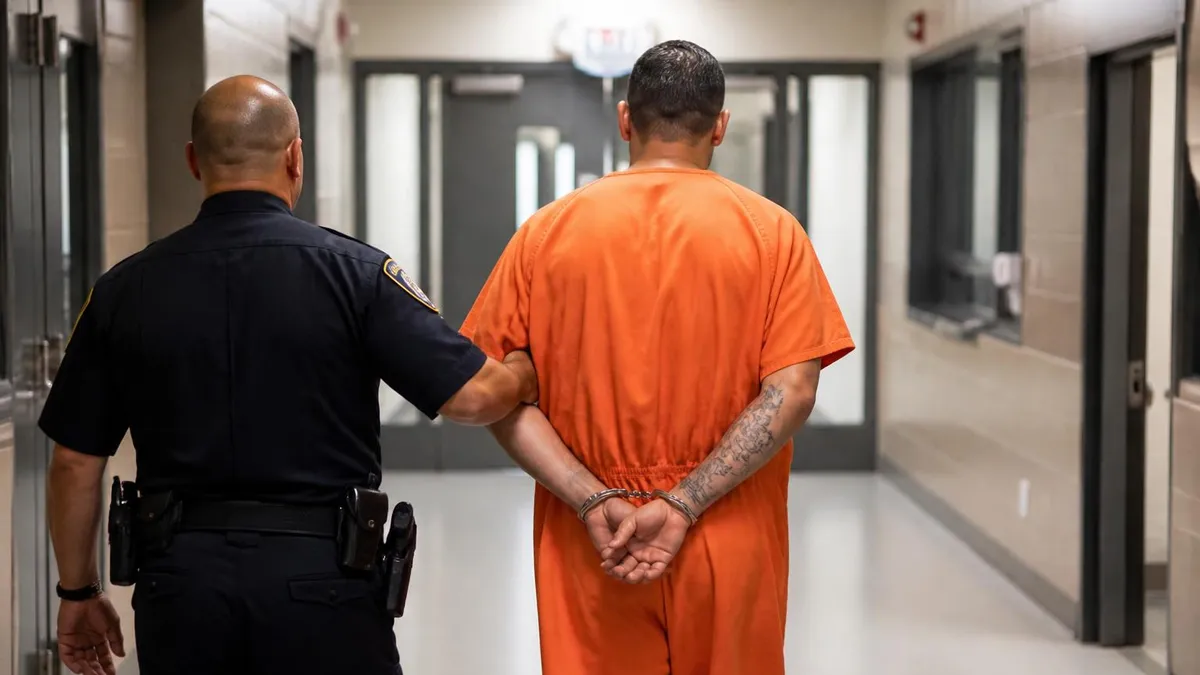
Any arrest on your record — even a charge that was later dismissed or expunged — can disqualify you from a CO position depending on state law and the agency's background investigation standards. Polygraph examinations specifically probe past ethical violations, including unreported witnessing of misconduct. Candidates who are not forthcoming during background investigations face disqualification for dishonesty, which is considered more disqualifying than many underlying offenses. Always consult legal counsel before disclosing complex history on a CO application.
For active correctional officers who want to keep their careers and their freedom on the right side of the law, the practical guidance is deceptively simple but genuinely difficult to execute in institutional environments that sometimes punish integrity: know the rules, follow them consistently, report violations, and document everything. The cases that have defined the collars and CO national conversation share a common pattern — officers who initially made small compromises that escalated under pressure from criminal networks or from peers who had already crossed the line.
Financial vulnerability is one of the primary vectors through which criminal networks approach correctional staff. Officers carrying significant personal debt, supporting large families on entry-level salaries, or struggling with gambling or substance use problems are disproportionately targeted. Recognizing this vulnerability and proactively accessing the financial counseling and EAP resources that most correctional departments offer — even if rarely publicized — can be genuinely protective. This is not a character judgment; it is an acknowledgment that predatory networks conduct sophisticated assessments of officer vulnerability before making approach.
The petlab co-style language of preventive health applies here: just as preventive care is far more effective than treating advanced disease, preventive ethics education and support infrastructure is far more effective than after-the-fact prosecution. Departments that invest in the front end of officer wellness, training, and supervision build institutional antibodies against the corruption that prosecutors spend enormous resources addressing after the fact. For individual officers, thinking preventively — anticipating and avoiding the situations where ethical lines might blur — is the most reliable career protection available.
Supervision quality is the single most predictive factor in individual officer outcomes. Officers who work under engaged, consistent supervisors who model ethical conduct, document performance accurately, and address boundary violations swiftly are far less likely to drift into misconduct than those working under absent or complicit supervision. If you find yourself in a unit where the supervisor routinely ignores or participates in boundary violations, the safest professional move is to document what you observe, consult union counsel about your reporting options, and — if necessary — request a transfer before you are implicated in something you did not initiate.
For exam candidates, the practical import of all this is clear. The corrections officer written exam and oral board interview will probe your ethical decision-making through scenario-based questions: What do you do if a fellow officer uses excessive force? What do you do if an inmate offers you money? What steps do you follow if you discover contraband you suspect was introduced by a colleague? The right answers to these questions are anchored in the legal and policy framework we have discussed throughout this article — not in what you might see modeled in a dysfunctional facility environment.
The oral board interview, in particular, rewards candidates who can articulate a clear personal ethics framework grounded in institutional policy and legal obligation rather than vague platitudes. Interviewers specifically probe for responses that acknowledge the difficulty of ethical decisions in the corrections environment — the peer pressure, the fatigue, the loyalty dynamics — while demonstrating that the candidate has a principled, policy-grounded compass that will hold under that pressure. Candidates who have studied real misconduct cases and can discuss them thoughtfully tend to perform notably better on these board questions.
Ultimately, the story of correctional officer arrests is not primarily a story about bad people who chose a profession they were always going to corrupt. It is more often a story about structural systems — inadequate staffing, poor oversight, insufficient support, and unaddressed vulnerability — that create conditions where ethical failures become more likely.
Fixing those systems is the work of legislators, administrators, and advocates. For the individual officer or candidate, the work is more personal: build your own ethical foundation on solid knowledge, maintain it under pressure, and seek help before a crisis makes the wrong choice feel like the only choice available.
Preparing for the correctional officer exam in the context of this material means treating ethics content not as a secondary topic but as a core competency. Most state CO written exams include a dedicated section on professional standards, inmate rights, reporting obligations, and use-of-force policy. These sections draw directly on the legal and institutional framework we have explored: PREA, civil rights statutes, chain-of-command reporting protocols, and the principles that distinguish lawful custody from constitutionally prohibited punishment.
When you encounter situational judgment questions on the exam, apply a consistent decision framework: identify what the policy says, identify what the law requires, identify who you are obligated to report to, and choose the answer that most fully satisfies all three. This eliminates most wrong answers, which are typically designed to appeal to instincts like loyalty, efficiency, or avoiding conflict rather than to policy and law. Correctional exam designers specifically construct distractors that mirror the rationalizations officers use when they choose misconduct — awareness of this design philosophy is itself exam prep.
The oral board component rewards preparation that most candidates underestimate. Many applicants rehearse answers to questions like "Why do you want to be a CO?" but fail to prepare for scenario questions like "A senior officer tells you not to document an incident — what do you do?" The correct answer has to include the specific reporting chain, the documentation obligation, and an acknowledgment of the risk of retaliation paired with a clear statement that the legal obligation overrides peer pressure. Rehearse these responses aloud, because articulating them under pressure is a skill that requires practice.
Physical and psychological preparation are inseparable from ethical preparation. Officers who are physically exhausted or psychologically depleted make worse decisions, are more susceptible to manipulation, and are less likely to have the cognitive bandwidth to work through ethical complexity in real time. If you are preparing for the physical fitness component of the CO exam — which typically involves push-ups, sit-ups, a timed run, and sometimes an obstacle course — know that the physical investment also pays dividends in the mental resilience that ethical conduct requires under institutional pressure.
Time management on the written exam is a practical concern worth addressing specifically. Most state CO exams allow between 90 minutes and 3 hours for 100–150 questions. Situational judgment sections often take longer per question because they require reasoning through multi-step scenarios rather than simple factual recall. Budget extra time for these questions, flag items you are uncertain about, and return to them after completing higher-confidence sections. Running out of time on ethics and judgment questions — the highest-value sections — is a common avoidable mistake.
Study resources matter enormously. Official state study guides, when available, are always the primary resource — they reflect the actual content framework the exam is built on. Practice tests, including the free resources available at PracticeTestGeeks, allow you to identify specific knowledge gaps before exam day rather than discovering them under timed pressure. Candidates who complete five or more full-length practice tests before their exam date consistently outperform those who study only from notes and outlines, because the test-taking skill itself — pacing, elimination, confidence calibration — is a learnable competency separate from content knowledge.
Finally, remember that the correctional officer career, undertaken with integrity, is a genuinely meaningful form of public service. Facilities that are well-staffed with ethical, professionally prepared officers have measurably better outcomes on every metric that matters: lower rates of inmate-on-inmate violence, lower rates of officer injury, higher rates of successful programming participation, and — ultimately — better public safety outcomes as individuals are released into communities.
The officers who build those facilities are not defined by the misconduct scandals. They are defined by the daily professional discipline to do a hard job correctly, and the commitment to accountability — for themselves and for each other.
CO Questions and Answers

Correctional Officer Ranks: Complete Guide to CO Hierarchy, Insignia & Promotion Paths 2026

Correctional Officer Physical Test: Complete Training Guide & Requirements 2026

Correctional Officer Jobs: Pay, Requirements & How to Apply

Colorado Correctional Officer — Corrections Career Guide 2026
Correctional Officer Practice Test PDF 2026
About the Author

Educational Psychologist & Academic Test Preparation Expert
Columbia University Teachers CollegeDr. Lisa Patel holds a Doctorate in Education from Columbia University Teachers College and has spent 17 years researching standardized test design and academic assessment. She has developed preparation programs for SAT, ACT, GRE, LSAT, UCAT, and numerous professional licensing exams, helping students of all backgrounds achieve their target scores.
Join the Discussion
Connect with other students preparing for this exam. Share tips, ask questions, and get advice from people who have been there.
View discussion (9 replies)