
Washington County Correctional Officer: Complete Career Overview & Duties Guide 2026 September
Washington county correctional officer career guide: duties, salary, hiring steps & exam prep. Everything you need to get hired in 2026 September. ✅

If you have ever searched the phrase collars and co while looking into law enforcement careers, you may have stumbled onto one of the most rewarding yet demanding paths in public safety: becoming a washington county correctional officer. Washington County jails and detention facilities across the United States — from Oregon and Maryland to Minnesota and Pennsylvania — employ thousands of correctional officers who are responsible for the safety, security, and daily management of incarcerated individuals. This guide covers everything you need to know before applying.
Correctional officers in Washington County facilities do far more than watch over cells. They enforce institutional rules, conduct inmate counts, supervise work assignments, respond to medical emergencies, de-escalate conflicts, write detailed incident reports, and coordinate with courts and social service agencies. The role demands a unique combination of physical fitness, emotional resilience, sharp situational awareness, and meticulous record-keeping skills. Every shift is different, and no two days look exactly the same inside a county detention center.
Washington County correctional facilities range from smaller county jails holding fewer than 200 inmates to larger regional detention centers processing thousands of bookings per year. Regardless of facility size, every correctional officer operates under a clear chain of command, follows state-mandated standards, and is accountable to both supervisors and the public. Understanding the structure and expectations before you apply puts you significantly ahead of other candidates who walk in unprepared.
Career stability is one of the biggest draws for people entering this field. While trendy retail brands like rifle paper co or food chains like sourdough and co experience the volatility of consumer markets, government correctional positions offer pension-backed employment, union protections in many jurisdictions, and near-guaranteed job security as long as performance standards are met. Washington County governments consistently budget for corrections staffing because incarceration is a statutory obligation, not a discretionary program.
Compensation for Washington County correctional officers varies by state and facility size, but the national median for all correctional officers sits near $49,000 annually, with experienced officers in higher cost-of-living counties earning $70,000 or more including overtime and shift differentials. Companies like duluth trading co market their gear to people who work hard outdoors, and correctional officers fit that same mold — physical, demanding, and deserving of solid pay. Many Washington County agencies also offer free uniforms, take-home vehicle programs for senior staff, and tuition reimbursement for criminal justice courses.
The hiring pipeline for a Washington County correctional officer position typically takes three to six months from application to academy graduation. Steps include a written entrance exam, physical agility test, background investigation, psychological evaluation, medical screening, and an oral board interview. Candidates who prepare systematically — especially for the written exam and physical standards — pass at significantly higher rates than those who apply without preparation. This guide walks you through each phase so you can plan your preparation with confidence.
Whether you are exploring this career for the first time or you are a veteran of private security looking to transition into a government role, the information in this article is designed to give you a realistic, detailed picture of what it takes to become a Washington County correctional officer in 2026. Read every section carefully, take the practice quizzes linked throughout, and use the checklists to track your readiness before you submit your application.
Washington County Correctional Officer by the Numbers
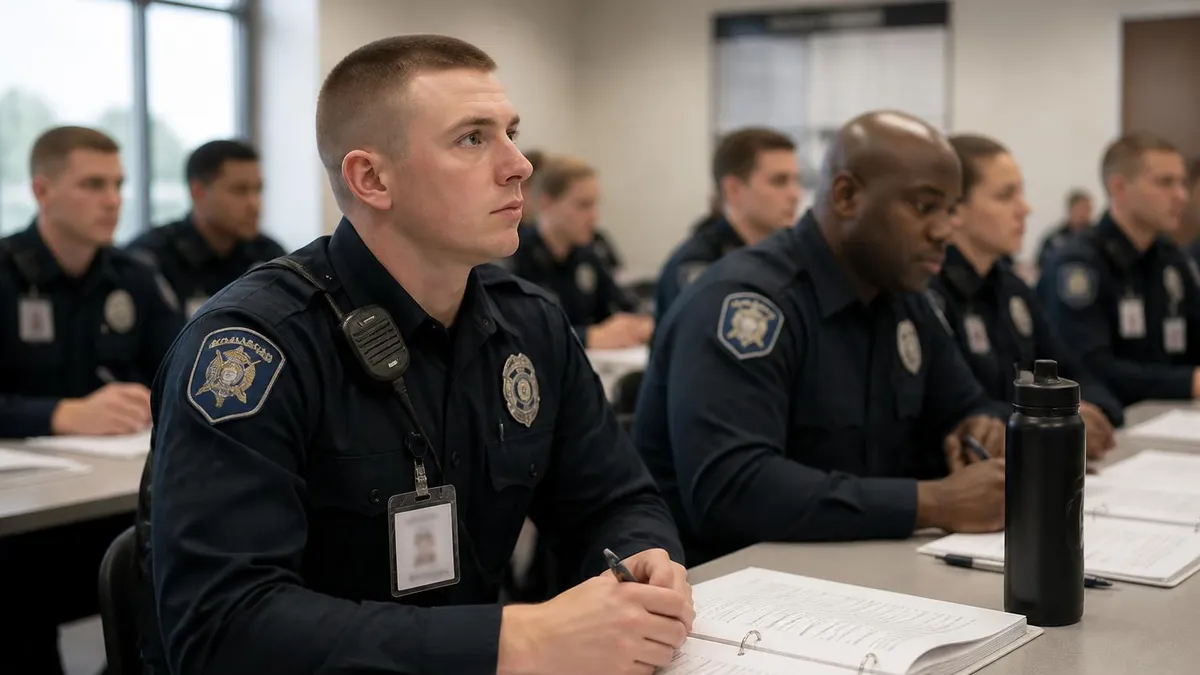
Minimum Requirements to Become a Washington County Correctional Officer
Applicants must be at least 18 years old (21 in some counties), hold U.S. citizenship or permanent legal residency, and possess a valid state driver's license. Some Washington County agencies set a maximum hiring age of 40 for pension-tier reasons.
A high school diploma or GED is the baseline requirement across all Washington County facilities. Many agencies now prefer applicants with some college coursework in criminal justice, psychology, or social work, and a two-year degree can accelerate promotion eligibility.
A clean criminal background is non-negotiable. Felony convictions permanently disqualify applicants. Misdemeanors, DUIs, and past drug use are reviewed case by case, with recency and seriousness weighted heavily during the investigative phase.
Applicants must pass a standardized physical agility test measuring cardiovascular endurance, upper-body strength, and functional mobility. Common benchmarks include a 1.5-mile run under 16 minutes, 25 push-ups, and 30 sit-ups within defined time windows.
Washington County agencies administer a written entrance exam covering reading comprehension, basic math, grammar, situational judgment, and report writing. Scores typically must meet a minimum cutoff of 70%, and higher scores improve placement on the hiring list.
Understanding the compensation structure for a Washington County correctional officer is essential before you commit to the career path. Base salaries for new officers generally start between $38,000 and $52,000 per year depending on which state your Washington County is located in. Oregon's Washington County (home to Hillsboro) offers competitive starting wages around $55,000 due to the higher cost of living in the Portland metro area, while Washington County, Tennessee or Washington County, Alabama may start officers closer to $38,000 to $42,000. These figures do not include overtime, which can add $5,000 to $20,000 to annual take-home pay.
Shift differentials represent a meaningful income boost for correctional officers who work evenings, nights, or weekends. Most Washington County facilities operate 24/7 on rotating shifts — commonly 8-hour or 12-hour blocks — and officers assigned to less desirable hours receive an additional 5% to 15% on top of base pay. Officers who volunteer for double shifts or holiday coverage can see their annual earnings climb substantially above what the posted salary suggests. For officers with families, the scheduling trade-offs are real but the financial rewards are tangible.
Benefits packages at Washington County correctional facilities frequently surpass what is available in the private sector. Health insurance coverage, often extending to spouses and dependents, is partially or fully employer-funded. Dental, vision, and life insurance are standard. Pension plans — defined benefit plans that guarantee monthly income in retirement — remain common in county corrections, unlike the 401(k)-only model now dominant in private employment. Officers who serve 20 to 25 years may retire with a pension equal to 50% to 75% of their final salary.
Paid leave accrual is generous by most standards. New hires typically earn 80 to 120 hours of vacation per year, scaling upward with seniority. Sick leave accrues separately. Washington County agencies often allow officers to bank unused sick leave toward early retirement or convert it to cash at separation. Holiday pay at time-and-a-half or double-time is common on federal holidays. Taken together, the total compensation package — wages plus benefits — often values 30% to 45% above the base salary figure alone.
Career growth potential is strong for dedicated officers. Starting as a line correctional officer, you can advance to corporal or senior officer within two to three years, then to sergeant after four to six years. Sergeant positions bring supervisory responsibilities, additional pay, and a meaningful change in daily duties. From sergeant, the path leads to lieutenant, captain, major, and ultimately chief of corrections or jail administrator. Each promotion typically requires a combination of time-in-grade, performance evaluations, and competitive testing.
Lateral transfers are another avenue for career development. Washington County correctional officers who demonstrate leadership and communication skills are often recruited into court security, work-release program management, classification and intake, or community corrections (probation and parole). Some officers use their corrections experience as a springboard into law enforcement patrol roles, federal corrections with the Bureau of Prisons, or criminal justice teaching positions. The skills built inside a county jail — crisis negotiation, report writing, legal compliance, and human management — transfer broadly across public safety careers.
Tuition reimbursement and professional development stipends are available at many Washington County facilities. Officers pursuing an associate or bachelor's degree in criminal justice, public administration, or behavioral science can often have a significant portion of tuition covered by the county. Certifications in crisis intervention training (CIT), mental health first aid, and use-of-force instructor programs add both value and pay bumps. Staying current with professional development is the single most reliable way to accelerate your timeline from entry-level officer to supervisory rank.
Daily Duties: Life on the Job as a Washington County Correctional Officer
The morning shift at a Washington County facility typically runs from 6:00 AM to 2:00 PM or 7:00 AM to 3:00 PM. Officers begin with a shift briefing where outgoing staff relay any incidents, inmate housing changes, or special instructions from administration. Officers then conduct a formal count of all inmates — a process required every two to four hours — and document results in the facility log. Meal service, medication rounds, court transports, and attorney visits all concentrate in the morning hours, keeping officers constantly active and alert.
Morning shift officers also process new bookings alongside intake staff, conduct cell searches for contraband, and supervise recreation periods. Physical plant inspections — checking locks, cameras, intercoms, and fixtures for tampering — are completed at the start of each shift. Officers write detailed logs of any unusual behavior, rule violations, or inmate requests submitted through the grievance system. The pace is demanding, but experienced officers develop efficient routines that keep operations running smoothly even when staffing is short.

Is a Washington County Correctional Officer Career Right for You?
- +Strong job security with government-backed employment and consistent budget funding
- +Defined-benefit pension plans unavailable in most private-sector jobs
- +Overtime and shift differential pay can significantly boost annual earnings
- +Clear promotion pathway from officer to sergeant, lieutenant, and beyond
- +Comprehensive health, dental, and vision benefits often covering dependents
- +Transferable skills in crisis management, report writing, and legal compliance open doors across public safety
- −Rotating shift schedules including nights, weekends, and holidays affect work-life balance
- −High stress environment with exposure to trauma, violence, and human suffering
- −Mandatory overtime is common when staffing shortages occur, reducing predictability
- −Physical and psychological toll can lead to burnout if officers neglect self-care
- −Public perception challenges and limited recognition compared to other law enforcement roles
- −Exposure to infectious diseases and bloodborne pathogens requires consistent safety discipline
Washington County Correctional Officer Application Checklist
- ✓Verify you meet the minimum age, education, and citizenship requirements for your specific Washington County agency.
- ✓Obtain a certified copy of your birth certificate, Social Security card, and any military discharge papers (DD-214).
- ✓Pull your driving record and credit report to identify any issues before the background investigator does.
- ✓Begin a structured physical fitness program targeting the 1.5-mile run, push-ups, and sit-ups at least 8 weeks before the PAT date.
- ✓Register for and complete a CO written exam prep course or take at least 5 full-length practice tests before your scheduled exam date.
- ✓Compile a complete 10-year work history with accurate dates, supervisor names, and contact information for the background packet.
- ✓Prepare a list of five personal and professional references who can speak to your character, reliability, and judgment.
- ✓Write a personal statement explaining your motivation for corrections work and review it with a mentor or career counselor.
- ✓Schedule a medical examination including vision and hearing tests well ahead of the agency's required appointment window.
- ✓Research the specific Washington County facility's policies, recent news, and mission statement before your oral board interview.
Background Checks Are Deep — Prepare Early
Washington County background investigators routinely interview former employers, neighbors, college roommates, and social media contacts going back 10 years. Candidates who self-disclose issues honestly and proactively — rather than waiting for investigators to discover them — are viewed significantly more favorably. Transparency, not perfection, is what most investigators are evaluating.
The academy training phase of becoming a Washington County correctional officer is where candidates transition from civilian to professional. Academy programs range from 8 weeks for smaller county facilities with limited budgets to 16 weeks for larger regional training programs affiliated with state corrections departments. Regardless of length, all academies follow state-mandated POST (Peace Officer Standards and Training) or correctional officer certification curricula that cover legal authority, use of force, inmate rights, report writing, emergency response, and facility security protocols.
Legal training at the academy focuses on constitutional law as it applies to incarceration — the Eighth Amendment prohibition on cruel and unusual punishment, the Fourteenth Amendment due process rights of pretrial detainees, and federal civil rights statutes under 42 U.S.C. Section 1983. Officers learn what actions expose them and their county to civil liability and how to document incidents in a way that protects both the institution and individual employees. Understanding the legal framework is not optional; it is foundational to every decision an officer makes on the floor.
Use-of-force training at Washington County academies follows a graduated continuum: officer presence, verbal commands, soft empty-hand control, hard empty-hand control, intermediate weapons (OC spray, baton), and deadly force. Recruits practice defensive tactics, restraint techniques, and handcuffing skills until the movements become muscle memory. Scenario-based training — role-played situations with actors playing agitated or aggressive inmates — is used to build decision-making speed under stress. Written tests on use-of-force policy typically require a passing score of 80% or higher.
Emergency response modules cover fire evacuation procedures, hostage situations, riot control, medical emergencies including overdose response, and mass casualty incidents. Recruits learn how to coordinate with external agencies — fire, EMS, law enforcement patrol — while maintaining internal security during a crisis. Communication skills, specifically the ability to relay accurate information over radio under pressure, are drilled repeatedly. Officers who freeze or provide garbled radio transmissions during emergencies create cascading problems; academies work hard to prevent those habits from forming.
Mental health and de-escalation training has expanded significantly in Washington County programs over the past decade. With a large percentage of incarcerated individuals experiencing serious mental illness, officers are now trained in crisis intervention team (CIT) techniques adapted for correctional settings. Recruits learn to recognize symptoms of psychosis, depression, mania, and personality disorders, and to adjust their communication approach accordingly. The goal is to resolve as many situations as possible through dialogue rather than force, which protects both inmates and officers from injury.
Report writing instruction is one of the most intensive components of any Washington County correctional officer academy. Every incident — from a minor rule violation to a major use-of-force event — must be documented accurately, completely, and in plain language. Officers learn to answer the five Ws (who, what, when, where, why) in every report, avoid opinion language, and write in a way that will hold up in court months or years later. Poor report writing is one of the leading causes of supervisory discipline and civil liability claims against county correctional agencies.
Upon graduation, Washington County recruits enter a field training officer (FTO) program that pairs them with experienced officers for an additional 4 to 12 weeks of supervised on-the-job training. During FTO, new officers are evaluated on their ability to apply academy knowledge in real situations, manage their post independently, and communicate professionally with both inmates and staff. Successful completion of FTO results in solo post assignment and the beginning of a career that, for motivated officers, can span 25 or more years.
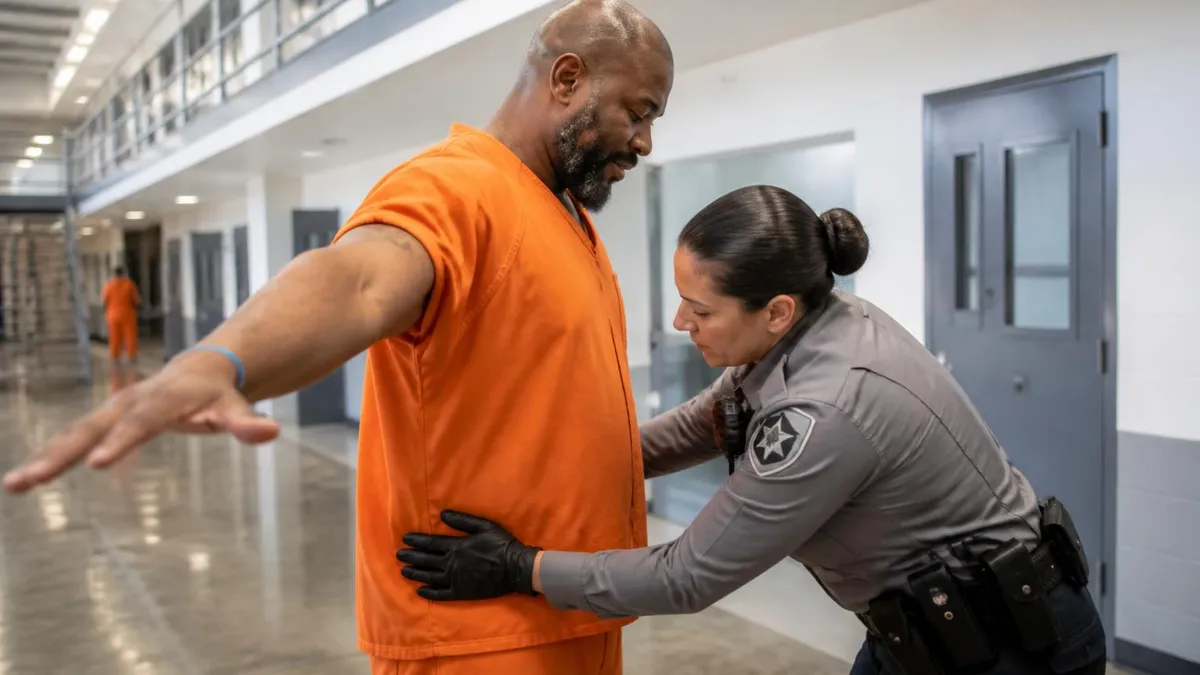
Approximately 10% to 20% of recruits who begin Washington County correctional officer academies do not finish them. Common reasons for dismissal include unexcused absences, failure to pass defensive tactics or written exams, integrity violations, and inability to meet professional conduct standards. Arrive prepared, rested, and ready to perform from day one — academies are not remedial programs.
Advancement within a Washington County correctional facility follows a structured promotion system that rewards seniority, performance, and competitive testing. Most agencies use a rank structure similar to military organizations: Correctional Officer, Senior Officer or Corporal, Sergeant, Lieutenant, Captain, Major, and Chief of Corrections or Jail Administrator. Each rank comes with increased responsibility, expanded authority, and a corresponding pay increase typically ranging from 8% to 15% above the previous grade.
The path to sergeant — the first supervisory rank — usually requires a minimum of three to five years of service, a clean disciplinary record, satisfactory or better performance evaluations, and a passing score on a competitive written and oral promotional exam. Some Washington County agencies also require completion of a supervisory leadership course or a specified number of college credits before an officer is eligible to test. Competition for sergeant positions can be intense, particularly in larger facilities where many officers may test for a limited number of openings.
Officers who aspire to lieutenant and above generally need a combination of demonstrated leadership, advanced education, and specialized experience. A bachelor's degree in criminal justice, public administration, or a related field is commonly required or strongly preferred for lieutenant and higher. Assignments to specialized units — classification, internal affairs, programs, or training — are viewed favorably when promotion boards evaluate candidates. Building a diverse resume within the facility is as important as raw seniority when competing for upper-level ranks.
Washington County agencies also offer lateral career tracks that do not follow the traditional rank promotion structure. Classification officers manage housing assignments, program eligibility, and security risk assessments for the inmate population — a role that requires strong analytical skills and knowledge of state classification standards. Court security officers escort defendants to hearings, manage courtroom security, and interface daily with judges, attorneys, and court staff. Work-release program coordinators supervise inmates who leave the facility for employment during the day, managing both security and reentry support simultaneously.
For officers interested in the broader concept of collars and co — the intersection of corrections culture, professional identity, and career community — mentorship programs within Washington County facilities are invaluable. Connecting with experienced officers who have navigated the promotion process, weathered difficult incidents, and built sustainable careers provides guidance that no textbook can replicate. Many facilities have formal mentorship programs; where they do not exist, proactively seeking informal mentorship from respected supervisors is one of the smartest career investments a new officer can make.
Professional associations such as the American Jail Association (AJA) and the American Correctional Association (ACA) offer networking, certification programs, and annual conferences that connect Washington County correctional professionals with colleagues from across the country. Membership in these organizations signals professionalism and commitment to the field, and their certification programs — Certified Jail Manager (CJM), for instance — carry real weight on promotion applications. The corrections field rewards those who invest in their own development beyond what the employer mandates.
Retirement planning is an early and ongoing conversation for savvy Washington County correctional officers. Most county pension systems calculate benefits based on years of service multiplied by a percentage factor applied to an average of final salary years.
Understanding the formula, the vesting schedule, and the rules around sick leave conversion early in your career allows you to make strategic decisions — about overtime, part-time secondary employment, and pension contribution levels — that significantly affect your financial picture at retirement. Officers who start thinking about retirement on day one are far better positioned at year twenty-five than those who engage with the topic too late.
Preparing effectively for the Washington County correctional officer written exam requires a structured, multi-week study plan rather than last-minute cramming. The written exam typically tests reading comprehension using law enforcement and corrections-themed passages, basic arithmetic and data interpretation, grammar and sentence structure for report-writing scenarios, and situational judgment questions that present realistic on-the-job dilemmas. Candidates who score in the top quartile are placed highest on the hiring list and are the first contacted when positions open.
Reading comprehension sections require you to read dense paragraphs — often excerpts from policy manuals, legal statutes, or incident reports — and answer questions about the material without referring back to the text. The skill being tested is your ability to absorb, retain, and analyze written information quickly. Practice this by reading corrections-related articles, BJS statistical reports, and county facility policies, then summarizing the key points from memory. Timed practice under test conditions is far more effective than passive reading.
Mathematics sections on Washington County CO exams are not advanced algebra — they are practical calculations relevant to corrections work. Expect questions on calculating inmate counts, computing shift overlap percentages, interpreting statistical tables about facility populations, and basic budgeting math such as cost per day per inmate. A strong foundation in fractions, percentages, ratios, and basic data interpretation is sufficient. Use a four-function calculator during practice to simulate the tools you may or may not have available on test day, depending on the agency's rules.
Situational judgment questions are where many candidates lose points they should not lose. These questions present a scenario — an inmate making an unusual request, a colleague behaving improperly, a supervisor giving an unclear order — and ask you to select the best course of action from four or five options. The correct answer almost always reflects the principles of following the chain of command, prioritizing safety, documenting everything, and treating all parties with professional respect. Studying the code of ethics for correctional officers and reviewing agency mission statements sharpens your instincts for these questions.
Grammar and writing questions test whether you can construct clear, accurate sentences in a report-writing context. Washington County agencies invest heavily in report writing because poorly written incident reports create legal liability, undermine prosecutions, and complicate internal investigations. Study subject-verb agreement, proper use of active versus passive voice (active is almost always preferred in reports), and how to eliminate ambiguous pronoun references. Practice writing short incident summaries from hypothetical scenarios and ask someone else to evaluate them for clarity.
Time management during the written exam is a skill that must be deliberately practiced. Most Washington County CO exams allow 90 minutes to 3 hours for 80 to 150 questions. Candidates who rush through easy questions to spend extra time on hard ones often make careless errors in sections they know well. The optimal strategy is to work at a steady pace, skip questions that stump you on first pass, and return to them with remaining time rather than getting stuck and losing momentum.
Practice testing is the single most evidence-supported method for improving exam performance. Research on test preparation consistently shows that students who take multiple full-length practice tests under timed conditions outperform those who study the same material passively. PracticeTestGeeks.com offers targeted CO practice tests that mirror the format and difficulty level of real Washington County written exams. Completing five or more full-length practice tests before your actual exam date is a realistic and achievable preparation standard that produces measurable score improvements.
CO Questions and Answers

Correctional Officer Ranks: Complete Guide to CO Hierarchy, Insignia & Promotion Paths 2026

Correctional Officer Physical Test: Complete Training Guide & Requirements 2026
Colorado Correctional Officer — Corrections Career Guide 2026
Correctional Officer Practice Test PDF 2026

Virginia Corrections Officer Killed in an Inmate Attack at Prison: What Every CO Must Know
About the Author

Educational Psychologist & Academic Test Preparation Expert
Columbia University Teachers CollegeDr. Lisa Patel holds a Doctorate in Education from Columbia University Teachers College and has spent 17 years researching standardized test design and academic assessment. She has developed preparation programs for SAT, ACT, GRE, LSAT, UCAT, and numerous professional licensing exams, helping students of all backgrounds achieve their target scores.
Join the Discussion
Connect with other students preparing for this exam. Share tips, ask questions, and get advice from people who have been there.
View discussion (9 replies)