
Baltimore County Correctional Officer: Career Overview, Duties & How to Get Hired
Baltimore county correctional officer duties, salary, hiring steps & exam prep. Everything you need to launch your CO career in Baltimore County. 🏆

A career as a baltimore county correctional officer is one of the most demanding yet rewarding public-safety roles in Maryland. Officers working inside the Baltimore County Department of Corrections oversee the safety of inmates, staff, and visitors every single day. The work requires equal parts physical fitness, psychological resilience, and sharp communication skills — qualities that cannot be faked when tensions run high on a housing unit at 2 a.m. If you are researching this path, you are already asking the right questions about what it truly takes to succeed.
The Baltimore County detention system houses pretrial detainees as well as sentenced inmates serving shorter terms. Officers rotate through assignments that include intake processing, housing-unit supervision, perimeter patrol, transport, and court holding. No two shifts are identical, and the ability to read a situation quickly separates effective officers from those who struggle. Recruiters look for candidates who demonstrate calm judgment under stress, not just the ability to pass a written test or a physical agility course.
Salaries for correctional officers in Baltimore County compare favorably with neighboring jurisdictions. Entry-level officers typically start in the low-to-mid $50,000 range, with step increases pushing experienced officers well past $70,000 before overtime is factored in. Shift-differential pay, uniform allowances, and a defined-benefit pension make the total compensation package competitive with private-sector roles that demand far fewer personal risks. For candidates who value long-term financial stability, the benefits package alone is worth serious consideration.
The hiring pipeline in Baltimore County follows a structured sequence: an online application, a written examination, a physical fitness assessment, a thorough background investigation, a polygraph, a psychological evaluation, and a medical examination. Each stage is eliminatory, meaning a stumble at any point ends your candidacy for that cycle. Understanding what each phase demands — and preparing specifically for it — is the difference between candidates who advance and those who reapply year after year without success.
Academic preparation matters more than many candidates realize. The written exam tests reading comprehension, basic mathematics, report-writing aptitude, and situational judgment. Officers who score in the top tier of the written exam often receive preferential placement in academy classes, which directly affects seniority, shift preference, and eventual promotional opportunity. Investing time in structured practice before test day is not optional for competitive candidates — it is the foundation of a strong application.
This guide covers every stage of the Baltimore County CO hiring process, from eligibility requirements through academy training, first-year duties, and long-term career advancement. Whether you are a first-time applicant or a lateral transfer from another correctional system, the sections below will give you a clear picture of what to expect and how to prepare. Thousands of officers across Maryland have used targeted study resources to sharpen their scores — you can do the same.
Baltimore County CO Career by the Numbers
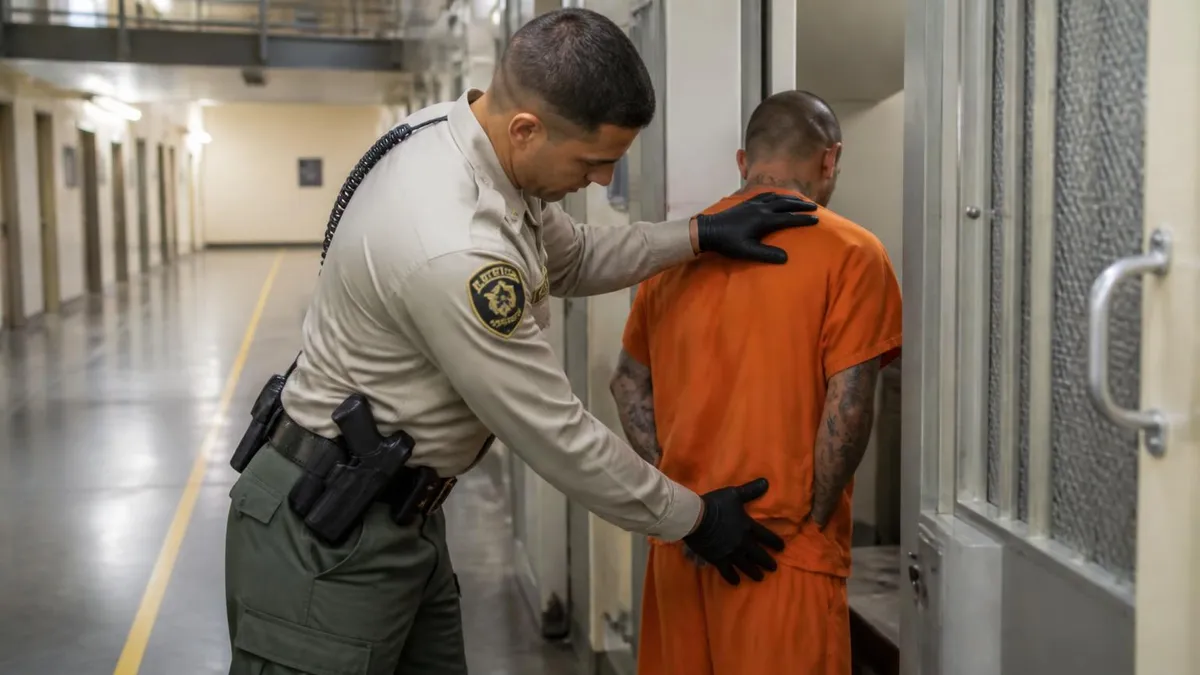
Eligibility Requirements to Become a Baltimore County CO
Applicants must be at least 21 years old by the time of appointment. A high school diploma or GED is the minimum academic requirement. Some positions or promotional tracks prefer or require college credits in criminal justice, psychology, or a related field.
Candidates must be U.S. citizens or permanent residents eligible for citizenship. While Baltimore County does not mandate county residency for all CO positions, residing within a reasonable commute distance is strongly preferred and may affect appointment priority.
Felony convictions and most misdemeanor convictions involving moral turpitude are disqualifying. Juvenile adjudications, domestic violence charges, and drug-related offenses receive intense scrutiny. Candidates should disclose all prior contacts with law enforcement honestly and completely.
Candidates must pass a physical agility test covering push-ups, sit-ups, a 1.5-mile run, and an obstacle course simulating real-facility scenarios. A licensed physician then conducts a full medical examination to verify cardiovascular and musculoskeletal fitness for duty.
A licensed psychologist administers standardized personality and cognitive assessments. The evaluation screens for impulse-control issues, excessive aggression, dishonesty, and stress-tolerance deficits. Candidates who prepare for this stage by reviewing what evaluators look for typically perform more authentically.
Once an applicant clears all pre-employment screens, they receive a conditional offer and a report date for the Baltimore County Correctional Officer Basic Training Academy. The academy is a six-month, primarily residential program that covers legal authority, use-of-force law, defensive tactics, first aid and CPR, report writing, crisis intervention, and inmate supervision techniques. Recruits are graded on written examinations, practical skills demonstrations, and physical fitness benchmarks throughout the program. Failing any critical milestone can result in termination of employment before graduation.
Defensive tactics training is among the most physically demanding components of the academy. Recruits learn approved control holds, restraint application, and de-escalation sequences that courts require officers to attempt before escalating force. Instructors emphasize that most confrontations are resolved through verbal communication alone — tone, body language, and precise language choices defuse far more situations than any physical technique. New recruits who arrive with martial arts or military backgrounds often find the formal academy techniques different from what they already know, requiring genuine retraining of muscle memory.
Report writing receives far more attention in the Baltimore County academy than many recruits expect. Every use of force, inmate altercation, contraband discovery, and medical emergency must be documented in precise, chronological, factual language. Reports become evidence in criminal proceedings, civil litigation, and internal investigations. Officers who write vague, disorganized, or inaccurate reports create legal exposure for themselves and the county. Academy instructors review drafts with the same critical eye a prosecutor would bring, so recruits leave the program with genuine competence in this essential skill.
Upon graduating from the academy, new officers serve a twelve-month probationary period in their assigned facility. During probation, supervisors conduct regular performance evaluations covering inmate management, teamwork, policy compliance, and report quality. Probationary officers can be released from employment without the full due-process protections that apply to permanent staff. Most new officers are assigned to rotating shift work immediately — meaning days, evenings, and overnight shifts cycle on a predictable schedule that changes monthly or quarterly depending on seniority bids.
First-year duties typically include housing-unit patrol, inmate count, meal and program escorts, contraband searches, intake processing assistance, and court transport. Each of these assignments builds a different skill set. Housing-unit patrol develops awareness of group dynamics and early warning signs of conflict. Intake processing sharpens procedural precision and de-escalation ability. Court transport demands strict adherence to security protocols in an unpredictable external environment where the risks are distinctly different from those inside the facility walls.
Mentorship from experienced officers is one of the most valuable resources a new Baltimore County CO can access. Senior officers who have worked specific housing units for years understand the unwritten dynamics — which inmates are influential, which grievances are genuine versus manipulative, which situations tend to escalate on certain days of the week. Building positive relationships with these colleagues accelerates professional development far faster than any formal training program alone. New officers who approach veteran staff with genuine curiosity and respect gain access to institutional knowledge that takes years to accumulate independently.
Salary, Benefits & Shift Options for Baltimore County COs
Baltimore County correctional officers enter at a base salary of approximately $54,000 to $58,000 annually, depending on prior law-enforcement or military experience. Annual step increases of 2–4 percent move officers through a structured pay scale, with officers reaching the top of the standard pay grade — around $75,000 to $80,000 — after roughly ten to twelve years of continuous service. Shift differentials add 5–10 percent for evening and overnight assignments, meaningfully boosting take-home pay for officers who voluntarily or mandatorily work less desirable shifts.
Overtime opportunities are substantial in Baltimore County, particularly when staffing shortfalls require mandatory holdovers. Officers frequently report earning an additional $10,000 to $20,000 per year in overtime, pushing total compensation well above the base salary figures. However, relying on overtime as a financial strategy carries health and burnout risks that experienced officers are quick to warn against. The county has implemented some voluntary overtime incentives — including premium-pay multipliers for specific critical shifts — to reduce the frequency of mandatory holdovers that are hardest on officers with family obligations.

Is a Baltimore County CO Career Right for You?
- +Competitive base salary with structured annual step increases reaching $75K+
- +Defined-benefit pension allowing retirement after 25 years of service
- +Comprehensive health, dental, and vision coverage for officers and dependents
- +Stable public-sector employment with strong union representation and job security
- +Clear promotional ladder from officer to corporal, sergeant, lieutenant, and above
- +Access to specialized units including K-9, emergency response team, and classification
- −Rotating shift work disrupts sleep cycles, family routines, and social life
- −Mandatory overtime and holdovers are common due to chronic staffing shortfalls
- −Constant exposure to high-stress, confrontational environments increases burnout risk
- −Thorough background investigation eliminates candidates with minor past infractions
- −Physical demands of the job increase injury risk compared to office-based careers
- −New officers endure 12-month probationary period with limited employment protections
Pros and Cons at a Glance
| Pros | Cons |
|---|---|
| Comprehensive health, dental, and vision coverage for officers and dependents | Rotating shift work disrupts sleep cycles, family routines, and social life |
| Stable public-sector employment with strong union representation and job security | Mandatory overtime and holdovers are common due to chronic staffing shortfalls |
| Clear promotional ladder from officer to corporal, sergeant, lieutenant, and above | Constant exposure to high-stress, confrontational environments increases burnout risk |
Baltimore County CO Application Checklist
- ✓Create an online account on the Baltimore County Government careers portal and submit a complete application with accurate employment history.
- ✓Gather all required documents: birth certificate, Social Security card, high school diploma or GED, and any college transcripts.
- ✓Prepare for the written exam by completing timed practice tests covering reading comprehension, math, and situational judgment.
- ✓Begin a structured physical fitness program at least 90 days before your agility test date targeting push-ups, sit-ups, and 1.5-mile run pace.
- ✓Compile a thorough personal history disclosure covering all prior addresses, employers, references, and contacts with law enforcement.
- ✓Request character reference letters from non-family contacts who can speak to your integrity, reliability, and judgment under pressure.
- ✓Schedule and pass a pre-employment drug screening — remain substance-free throughout the entire hiring process.
- ✓Prepare honest, consistent answers for the polygraph examination covering your personal history disclosure and background questionnaire.
- ✓Schedule a pre-exam physical with your personal physician to identify any medical conditions that could affect the county medical exam.
- ✓Research Baltimore County facility policies, the Maryland Code of Corrections, and the Bill of Rights for Detained Persons before your oral board interview.
Written Exam Score Directly Affects Academy Class Placement
Candidates who score in the top quartile of the Baltimore County CO written examination receive preferential placement in academy classes, which determines seniority date and influences first-assignment selection. A difference of just five to ten points on the written exam can mean waiting an additional six to twelve months for the next academy class. Structured practice using timed, exam-format questions is the single highest-return investment you can make before test day.
Career advancement within the Baltimore County correctional system follows a well-defined rank structure. Officers who demonstrate consistent performance, leadership potential, and clean disciplinary records become eligible for promotional examination after completing the minimum time-in-grade requirement — typically two to three years at each rank. The promotional process involves a written examination, a practical assessment, and an oral board interview conducted by senior administrators. Candidates who prepare systematically for each component advance; those who rely solely on seniority often stagnate at officer rank for a decade or more.
The rank of corporal represents the first supervisory step and typically involves responsibility for a housing unit during a specific shift, serving as the direct point of contact between line officers and the sergeant. Corporals mentor newer officers, draft initial incident reports, and coordinate responses to minor disturbances. The pay differential from officer to corporal is meaningful — typically 8 to 12 percent — and the leadership experience gained at this rank is essential preparation for the sergeant's examination that follows.
Sergeants carry broader supervisory authority, overseeing multiple housing units or specialized assignments across an entire shift. They conduct performance evaluations, investigate minor policy violations, approve use-of-force reports, and serve as the primary management representative during evening and overnight hours when lieutenants may not be present. Sergeant positions are highly competitive, and candidates frequently enroll in college-level criminal justice or public administration courses to strengthen their promotional examination scores and demonstrate commitment to the profession.
Above sergeant, the ranks of lieutenant, captain, and major offer increasingly strategic and administrative roles. Lieutenants manage entire shift operations across a facility, while captains oversee multiple sections or specialized bureaus such as classification, programs, or security operations. Major-rank administrators typically report directly to the facility warden or the director of corrections and are involved in policy development, budget management, and interagency coordination. Reaching these senior ranks generally requires a bachelor's degree and, increasingly, a master's degree in public administration or a related field.
Lateral specialization is another form of career development available to Baltimore County COs. Officers can apply for assignment to the emergency response team, K-9 unit, classification division, or training bureau. Each of these tracks requires a competitive selection process and specialized training, but they provide distinct professional identities, schedule advantages, and additional pay incentives. Officers in training roles, for example, earn supplemental pay for hours spent instructing academy recruits and in-service students while maintaining their base-salary seniority-step progression.
Tuition assistance is available through Baltimore County for officers pursuing college degrees. The county reimburses a significant portion of tuition for accredited programs in criminal justice, public administration, psychology, and related disciplines. Officers who take advantage of this benefit while working full-time often complete associate or bachelor's degrees within four to six years, dramatically improving their promotional prospects. The combination of real-world experience and academic credentials is widely recognized by promotional boards as the strongest predictor of effective supervisory performance in a correctional environment.
Networking within professional organizations such as the American Jail Association and the Maryland Correctional Administrators Association also accelerates career development. These organizations offer training conferences, leadership seminars, and peer-learning opportunities that are difficult to replicate inside a single facility. Officers who engage with these networks often learn about best practices, emerging technologies, and policy changes well before they reach their home jurisdiction, giving them a genuine professional edge when promotional opportunities arise.

Baltimore County investigators conduct exhaustive background checks including social media audits, financial records review, interviews with former employers, neighbors, and personal references, and verification of every address listed for the past ten years. Omissions discovered after hire can result in immediate termination for dishonesty — a more serious career-ending outcome than the underlying issue itself. Disclose everything accurately; let the investigators evaluate it, not you.
Preparing for the Baltimore County correctional officer written examination requires a deliberate, structured approach. The exam typically covers four core competency areas: reading comprehension, basic mathematical reasoning, report-writing aptitude, and situational judgment scenarios drawn from realistic correctional settings. Each section is timed independently, and the pacing demands that candidates practice extensively under exam conditions before test day. Passive reading of study guides is far less effective than active practice with timed, scored question sets that simulate the actual pressure of the testing environment.
Reading comprehension questions present passages drawn from correctional policy documents, legal statutes, or incident reports and then ask candidates to identify main ideas, draw inferences, or locate specific details. Officers who struggle with this section often find that the challenge is less about vocabulary and more about precision — reading every word carefully rather than skimming for a general impression. Daily practice with structured reading passages in the weeks before the exam measurably improves accuracy and speed on this component.
Mathematical reasoning questions cover basic arithmetic, percentages, ratios, and data interpretation from simple tables or charts. These questions model the types of calculations officers perform on duty — computing inmate-to-officer ratios, interpreting population statistics, or calculating schedule coverage. Candidates who have been out of school for several years often find this section more challenging than expected. A targeted review of foundational math concepts three to four weeks before the exam is usually sufficient to bring scores into the competitive range.
Situational judgment questions are the section that most directly measures an applicant's potential effectiveness as an officer. Each question presents a realistic scenario — an inmate making a threatening statement, a colleague appearing to violate policy, a medical emergency with unclear protocols — and asks the candidate to select the most appropriate response from four options. These questions have no single obviously correct answer; instead, they require understanding of correctional values including safety, chain of command, documentation, and proportionate response. Studying the principles behind correctional decision-making, rather than memorizing specific answers, is the most effective preparation strategy for this section.
The oral board interview, which comes after the written examination for candidates who advance, evaluates communication skills, situational reasoning, and personal integrity under direct questioning. Panel members typically include senior correctional administrators and occasionally a human-resources representative. Common questions ask candidates to describe a time they handled a conflict, explain why they want to work in corrections specifically, or walk through how they would respond to a specific scenario. Candidates who practice their answers aloud — not just mentally — perform significantly better because articulation under mild stress is a skill that requires rehearsal.
Physical preparation deserves as much systematic attention as cognitive preparation. The Baltimore County physical agility test benchmarks — including minimum push-up and sit-up counts in sixty seconds and a 1.5-mile run completed within a specified time — are not trivially easy for candidates who have been sedentary. Beginning a structured fitness program twelve to sixteen weeks before the test date, with progressive overload in both strength and cardiovascular components, ensures candidates arrive at the test in genuine peak condition rather than scraping by on a minimum threshold that leaves no margin for test-day nerves or environmental conditions.
Managing stress is not a soft-skills afterthought for correctional officers — it is a core professional competency that directly affects performance, longevity, and physical health. Research consistently shows that correctional officers experience elevated rates of cardiovascular disease, sleep disorders, substance-use problems, and post-traumatic stress compared to the general working population. Baltimore County has invested in employee assistance programs and peer-support networks specifically because the department understands that a mentally healthy workforce is a functionally safer workforce. Officers who ignore stress management early in their careers often pay steep physical and relational costs by their tenth year on the job.
Sleep hygiene is among the most practical and most neglected tools available to shift workers. Rotating between day, evening, and overnight shifts disrupts circadian rhythms in ways that accumulate over time. Officers who develop deliberate sleep routines — blackout curtains, consistent pre-sleep rituals, scheduled nap windows before overnight shifts — report meaningfully better mood, reaction time, and situational awareness on duty. Departments have begun recognizing sleep deprivation as a safety issue, not merely a personal problem, and supervisors in some facilities now track officer fatigue levels as part of operational risk assessment.
Physical exercise serves dual purposes for correctional officers: it maintains the fitness required to perform physical interventions when necessary, and it is among the most evidence-backed interventions for managing occupational stress. Officers who exercise consistently — even three to four times per week at moderate intensity — report lower anxiety, better sleep, and stronger emotional regulation in confrontational situations. The on-site fitness facilities available at many correctional facilities make pre-shift or post-shift workouts logistically feasible even for officers with busy family schedules outside of work.
Building a strong social support network among colleagues is a protective factor that experienced officers consistently identify as critical to long-term career sustainability. The unique nature of correctional work — the dark humor, the institutional knowledge, the shared experience of de-escalating dangerous situations — means that family and friends outside the profession often cannot fully understand what officers process on duty.
Peer-support programs pair officers who have experienced traumatic incidents with trained colleagues who provide confidential, non-judgmental support. Participating in these programs, whether as a recipient or as a peer supporter, strengthens the fabric of a facility's culture in ways that administrative policies alone cannot achieve.
Financial planning is another dimension of long-term career wellness that new officers often underestimate. The temptation to rely on overtime pay as a permanent income supplement creates a dependency that ties officers to excessive work hours indefinitely.
Officers who instead build modest emergency savings early in their careers, maximize contributions to supplemental retirement accounts, and live within their base-salary means gain the financial flexibility to decline excessive overtime as their families grow and their bodies age. Financial stress is a documented contributor to on-the-job distraction and poor decision-making — getting ahead of it early pays dividends that extend well beyond a bank account balance.
Finally, maintaining a professional identity that extends beyond the facility walls supports long-term career satisfaction. Officers who pursue continuing education, volunteer in community programs, participate in professional associations, or develop skills and hobbies unrelated to corrections report higher overall job satisfaction and lower rates of burnout than those whose entire social and intellectual life revolves around the job. Baltimore County actively encourages officers to represent the department positively in the community, and officers who do so consistently tend to earn the respect of supervisors and peers that translates into better assignments, promotional support, and a genuinely rewarding career arc.
CO Questions and Answers

Correctional Officer Ranks: Complete Guide to CO Hierarchy, Insignia & Promotion Paths 2026

Correctional Officer Physical Test: Complete Training Guide & Requirements 2026
Correction Officer: Career Guide, Duties, Salary & How to Apply
Colorado Correctional Officer — Corrections Career Guide 2026
Correctional Officer Practice Test PDF 2026
About the Author

Educational Psychologist & Academic Test Preparation Expert
Columbia University Teachers CollegeDr. Lisa Patel holds a Doctorate in Education from Columbia University Teachers College and has spent 17 years researching standardized test design and academic assessment. She has developed preparation programs for SAT, ACT, GRE, LSAT, UCAT, and numerous professional licensing exams, helping students of all backgrounds achieve their target scores.
Join the Discussion
Connect with other students preparing for this exam. Share tips, ask questions, and get advice from people who have been there.
View discussion (9 replies)