
What Is CNG Fuel? A Complete Guide to Compressed Natural Gas 2026 September
What is CNG fuel? Learn how compressed natural gas works, 📗 costs, benefits, safety, vehicle compatibility, and why fleets are switching to CNG.
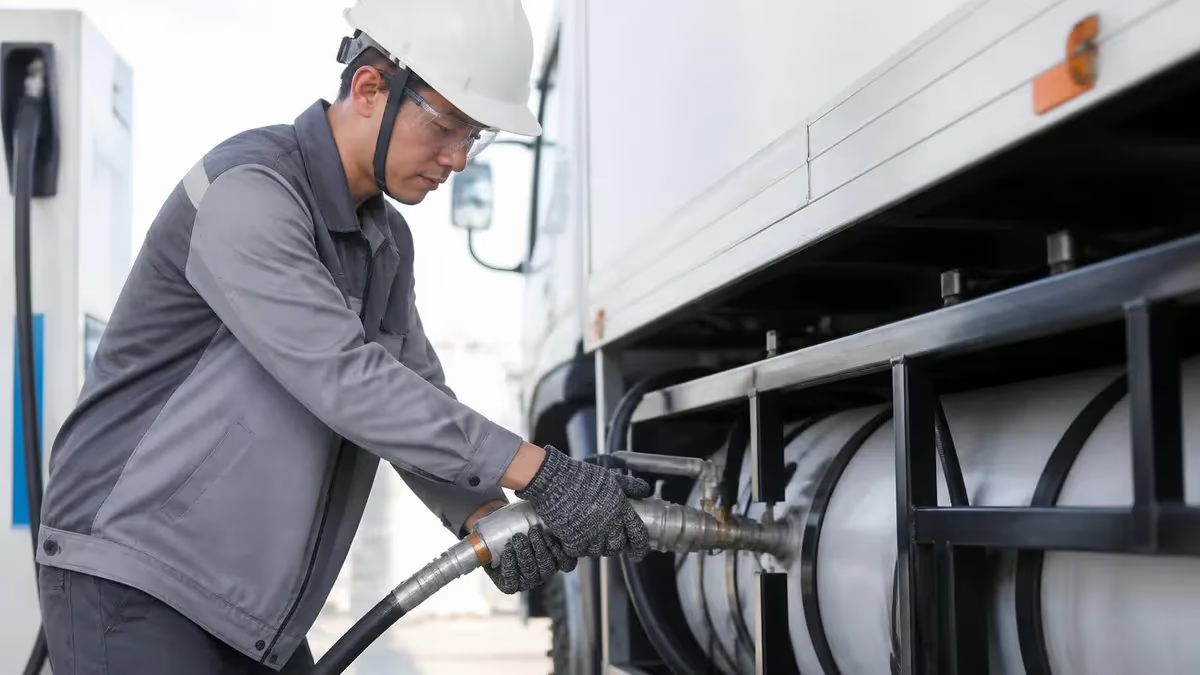
If you have ever pulled up behind a city bus, a refuse truck, or a fleet delivery van and wondered why it sounded quieter or smelled different, you may have already encountered the answer to a common question: what is cng fuel? Compressed natural gas, abbreviated CNG, is a clean-burning alternative motor fuel made primarily of methane that has been compressed to less than one percent of its volume at standard atmospheric pressure. It powers everything from sedans to semi-trucks across the United States today.
At its core, CNG is the same natural gas that heats millions of American homes and cooks dinner on gas ranges every night. The difference is that fuel-grade CNG is purified, dried, and then squeezed into high-pressure storage tanks at roughly 3,600 pounds per square inch. That compression allows enough energy to fit inside a vehicle tank to deliver meaningful driving range, typically 200 to 300 miles per fill, depending on vehicle size, tank capacity, and driving conditions on the road.
The fuel itself is colorless, odorless in its raw state, and lighter than air. Suppliers add a faint sulfur-based odorant called mercaptan so that any leak is immediately detectable by smell, the same safety practice used for residential gas lines. Because methane disperses upward rapidly when released, CNG behaves very differently from gasoline or diesel in an accident scenario, a fact that surprises drivers learning about the fuel for the first time and exploring vehicle options.
CNG has been used as a transportation fuel in the United States since the 1980s, but adoption accelerated dramatically after 2008 when domestic shale gas production drove down wholesale prices. Today, more than 175,000 natural gas vehicles operate on American roads, and over 1,600 public and private CNG fueling stations stretch from coast to coast. Fleet operators, transit agencies, school districts, and increasingly private consumers have embraced the fuel for its cost stability and lower emissions profile compared to petroleum.
The federal Department of Energy classifies CNG as an alternative fuel under the Energy Policy Act, which means vehicles running on it qualify for various tax incentives, rebates, and clean-air credits. Many states layer their own incentives on top, including high-occupancy vehicle lane access, reduced registration fees, and grants for fueling infrastructure. These policies reflect a recognition that domestically produced natural gas reduces dependence on imported oil while cutting tailpipe pollution significantly. What is CNG in regulatory terms is therefore both an energy policy tool and a practical fuel.
Understanding CNG matters whether you drive a personal vehicle, manage a fleet, study for a commercial driver endorsement, or simply want to know what powers the bus your child rides to school. The fuel sits at the intersection of energy economics, environmental policy, and everyday transportation. This guide walks through how CNG is produced, stored, dispensed, and burned, what vehicles use it, what it costs, and what safety considerations apply to drivers, technicians, and the general public.
By the end, you will understand not only the technical definition of CNG but also the practical realities of operating a CNG-powered vehicle in 2026. We cover everything from compression ratios and tank certifications to driver training requirements and the quirks of cold-weather fueling. Whether your interest is purely curiosity or you are weighing a CNG conversion for a delivery fleet, the information here gives you a solid working foundation to make informed decisions confidently.
CNG Fuel by the Numbers
How CNG Is Produced and Stored
Natural gas is extracted from underground reservoirs, then processed to remove water, sulfur compounds, and heavier hydrocarbons. The result is pipeline-quality methane that meets fuel-grade purity specifications before reaching compressor stations.
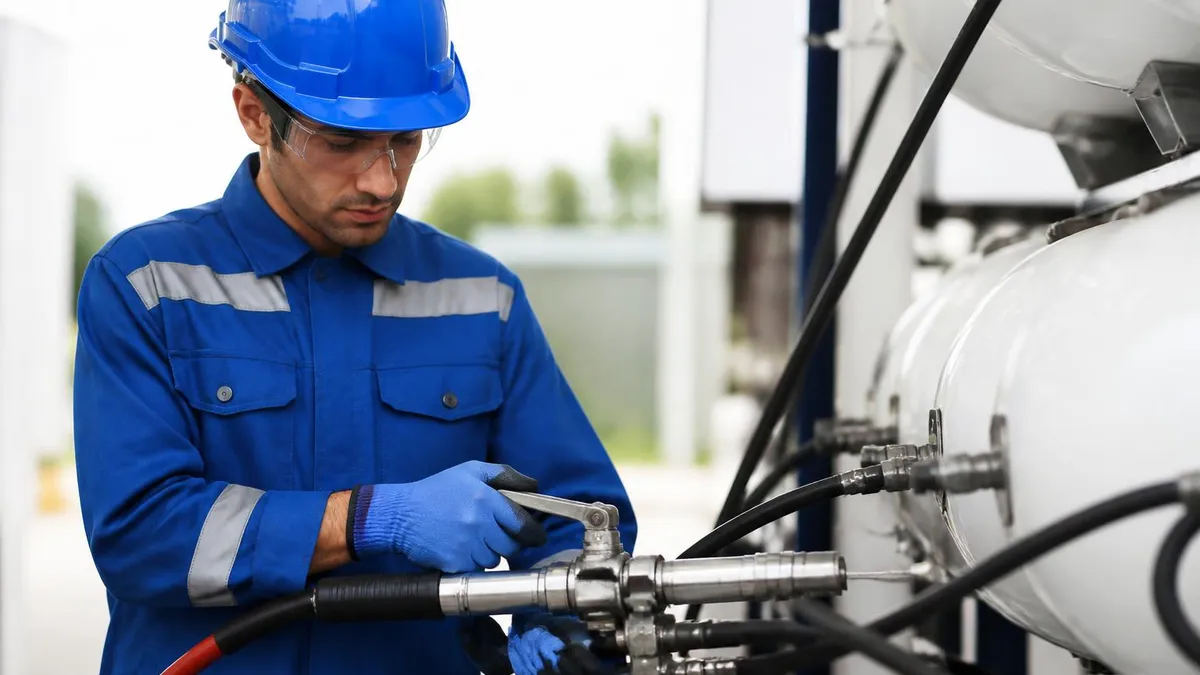
At the fueling station, multi-stage compressors squeeze the gas to roughly 3,600 PSI. Compression reduces volume by more than 99 percent, allowing useful driving range to fit inside vehicle-mounted cylinders.
CNG is stored in DOT-certified Type 1 through Type 4 cylinders made of steel, aluminum-composite, or all-composite construction. Each tank carries a certification date and 15 to 25 year service life stamped on it.
Drivers connect a sealed nozzle, which locks onto the receptacle and delivers fuel through pressure equalization. Fast-fill takes 5 to 10 minutes; time-fill home or depot stations refuel overnight.
Inside the engine, regulators step pressure down from tank levels to combustion-ready PSI. Spark-ignited engines burn the methane-air mixture cleanly, producing mostly carbon dioxide and water vapor as exhaust.
A CNG vehicle looks almost identical to a conventional car or truck from the outside, but the powertrain has been engineered or modified to handle gaseous fuel instead of liquid. The most visible difference is usually the fueling receptacle, often located near the standard fuel door or under the hood, designed to accept a specialized high-pressure nozzle. Underneath the vehicle or in the trunk area, one or more cylindrical tanks store the compressed methane that feeds the engine through a series of regulators on demand.
When a driver turns the key, fuel flows from the tank through a manual shutoff valve and then through a high-pressure regulator that drops the pressure from tank levels down to roughly 100 to 125 PSI. A second-stage regulator then reduces it further to near-atmospheric pressure before the gas mixes with air in the intake manifold. Modern factory-built CNG engines use electronic fuel injection calibrated specifically for methane, which has a higher octane rating than gasoline, typically around 130. CNG car designs vary by manufacturer.
Three main vehicle configurations exist on the road today. Dedicated CNG vehicles run exclusively on natural gas and have no gasoline tank, maximizing efficiency and reducing weight from redundant systems. Bi-fuel vehicles carry both a CNG tank and a gasoline tank, allowing the driver to switch fuels with a dashboard button, which is useful in regions with limited fueling infrastructure. Dual-fuel vehicles, common in heavy-duty trucks, burn a blend of diesel and natural gas simultaneously, using diesel as the ignition source.
Engine performance with CNG is comparable to gasoline in most respects, though some drivers report a slight reduction in peak horsepower of around five to ten percent due to the gaseous fuel displacing some intake air volume. Acceleration, cruising speed, and towing capacity remain within normal expectations for the vehicle class. Cold-weather starting is actually improved with CNG because methane vaporizes instantly and does not require the rich fuel mixture that cold gasoline engines need to fire reliably in subfreezing temperatures.
Fuel economy is typically expressed in gasoline gallon equivalents, abbreviated GGE, since CNG is sold by mass or energy content rather than liquid volume. One GGE contains the same energy as a gallon of gasoline, roughly 5.66 pounds of CNG at standard pressure. A CNG sedan that achieves 28 miles per gallon on gasoline will deliver approximately 28 miles per GGE on natural gas, giving operators a clean apples-to-apples comparison when calculating cost per mile across mixed fleets.
Range varies significantly by vehicle and tank configuration. A factory CNG Honda Civic GX, for example, offered about 200 miles between fills, while transit buses with multiple roof-mounted tanks can travel 400 miles or more. Heavy-duty trucks designed for long-haul routes increasingly use LNG, the liquefied cousin of CNG, to pack more energy into the same tank footprint. For most urban and regional applications, however, CNG range easily covers daily duty cycles without requiring midday refueling stops.
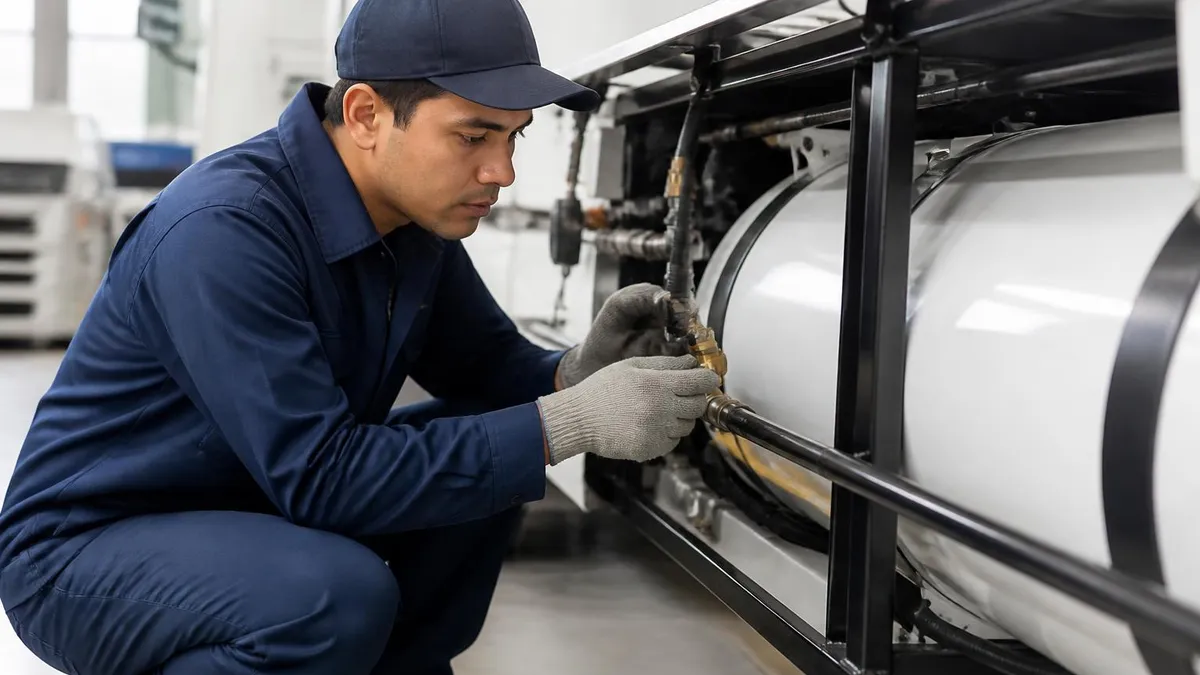
Maintenance schedules for CNG vehicles closely resemble those of gasoline vehicles, with a few additions. Spark plugs may last longer because methane burns cleaner and leaves fewer carbon deposits. Engine oil also stays cleaner for longer intervals, since combustion byproducts contaminate the oil less aggressively. However, the high-pressure fuel system requires periodic inspection of tanks, valves, hoses, and the receptacle by trained technicians, with formal cylinder requalification at intervals defined by federal regulation.
CNG Practice Test Questions
Prepare for the CNG - Compressed Natural Gas exam with our free practice test modules. Each quiz covers key topics to help you pass on your first try.
CNG Environmental and Economic Benefits
CNG Exam Questions covering CNG Environmental and Economic Benefits. Master CNG Test concepts for certification prep.
CNG Fleet Management and Driver Operations
Free CNG Practice Test featuring CNG Fleet Management and Driver Operations. Improve your CNG Exam score with mock test prep.
CNG - Compressed Natural Gas CNG Propertie...
CNG Mock Exam on - Compressed Natural Gas CNG Properties and Safety. CNG Study Guide questions to pass on your first try.
CNG - Compressed Natural Gas Codes, Standa...
CNG Test Prep for - Compressed Natural Gas Codes, Standards, and Compliance. Practice CNG Quiz questions and boost your score.
CNG - Compressed Natural Gas Cylinder Insp...
CNG Questions and Answers on - Compressed Natural Gas Cylinder Inspection and Regulations. Free CNG practice for exam readiness.
CNG - Compressed Natural Gas Emergency Pro...
CNG Mock Test covering - Compressed Natural Gas Emergency Procedures and Response. Online CNG Test practice with instant feedback.
CNG - Compressed Natural Gas Facility and ...
Free CNG Quiz on - Compressed Natural Gas Facility and Ventilation Requirements. CNG Exam prep questions with detailed explanations.
CNG - Compressed Natural Gas Fueling Stati...
CNG Practice Questions for - Compressed Natural Gas Fueling Station Operations. Build confidence for your CNG certification exam.
CNG - Compressed Natural Gas Fuel System C...
CNG Test Online for - Compressed Natural Gas Fuel System Components. Free practice with instant results and feedback.
CNG - Compressed Natural Gas Maintenance a...
CNG Study Material on - Compressed Natural Gas Maintenance and Troubleshooting. Prepare effectively with real exam-style questions.
CNG - Compressed Natural Gas System Diagno...
Free CNG Test covering - Compressed Natural Gas System Diagnostics and Repair. Practice and track your CNG exam readiness.
CNG - Compressed Natural Gas Vehicle Conve...
CNG Exam Questions covering - Compressed Natural Gas Vehicle Conversion and Installation. Master CNG Test concepts for certification prep.
CNG vs Gasoline vs Diesel: Key Differences
CNG burns cleaner than petroleum fuels, producing roughly 30 percent less carbon dioxide than gasoline and significantly less particulate matter than diesel. The fuel is domestically abundant, with the United States holding some of the world's largest natural gas reserves, which stabilizes prices and reduces import dependence on foreign sources of energy supply.
The trade-offs include limited fueling infrastructure outside major metro areas, higher upfront vehicle costs of $5,000 to $10,000 over comparable gasoline models, and reduced trunk or cargo space because of cylinder placement. For high-mileage fleets, however, the lower per-mile fuel cost typically recovers the premium within two to four years of normal operation easily.
Should You Switch to CNG? Pros and Cons
- +Lower fuel cost per gasoline gallon equivalent, often 30 to 50 percent cheaper than gasoline
- +Reduced greenhouse gas emissions, around 30 percent less CO2 than gasoline
- +Domestically produced fuel reduces dependence on imported petroleum
- +Cleaner engine combustion extends oil change and spark plug intervals
- +Federal and state tax incentives lower purchase and conversion costs
- +Quieter engine operation reduces noise pollution in urban routes
- +Stable long-term pricing less affected by global oil market shocks
- −Limited fueling infrastructure outside major metropolitan areas
- −Higher upfront vehicle cost of $5,000 to $10,000 over gasoline equivalents
- −Cylinder placement reduces trunk or cargo space in some models
- −Fewer factory-built passenger CNG models available in dealerships today
- −Tanks require periodic recertification by trained inspectors
- −Lower energy density means more frequent fueling stops on long trips
- −Specialized maintenance technicians not available at every repair shop
Daily CNG Driver Checklist
- ✓Inspect fuel cylinders visually for dents, scratches, corrosion, or impact damage
- ✓Verify the cylinder certification date stamped on each tank is current
- ✓Check fuel gauge and calculate range against the planned route distance
- ✓Test the methane leak detector in the cab to confirm sensor function
- ✓Smell for mercaptan odor near the engine bay and tank compartment
- ✓Inspect the fueling receptacle for cracks, debris, or O-ring damage
- ✓Confirm the manual shutoff valve operates smoothly without binding
- ✓Review the vehicle decal showing tank pressure and gas type
- ✓Carry the operator manual and emergency contact list in the cab
- ✓Document any defects on the daily vehicle inspection report immediately
Never exceed the rated fill pressure
Every CNG cylinder is stamped with a service pressure of either 3,000 or 3,600 PSI. Overfilling beyond that rating can compromise cylinder integrity and trigger the pressure relief device. Always confirm that the dispenser is set to match your vehicle's rated pressure before fueling, especially when refueling at unfamiliar stations.
Safety is one of the most studied and most misunderstood aspects of CNG as a motor fuel. The high pressure inside vehicle tanks naturally raises questions, but decades of operational data show that CNG vehicles are statistically as safe or safer than gasoline vehicles in collision and fire scenarios. The reason comes down to chemistry and engineering: methane is lighter than air, has a narrow flammability range, and requires a much higher ignition temperature than gasoline vapor to combust without external assistance.
CNG cylinders are designed and tested far beyond ordinary service conditions. Federal Motor Vehicle Safety Standard 304 requires every tank to survive bonfire tests, drop tests, gunfire penetration tests, and pressure cycling tests before earning certification. Pressure relief devices vent gas safely upward if a tank is exposed to fire, preventing catastrophic rupture. In a serious crash, the manual shutoff valve and electronic solenoid both close, isolating the tank from the engine and downstream fuel lines almost instantly to minimize risk.
Leak detection is built into well-designed CNG vehicles through a combination of methane sensors in the cab and engine bay, the mercaptan odorant added at the utility level, and visual indicators on regulators and connections. Drivers are trained to recognize the distinctive sulfur smell and to evacuate the area, shut off the manual valve if safely accessible, and contact emergency services. Because methane disperses upward rapidly outdoors, a leaking CNG vehicle in open air poses far less fire risk than a gasoline leak that pools beneath the vehicle.
Maintenance safety requires that all work on the high-pressure fuel system be performed by technicians trained and certified to handle CNG. This is not the place for shade-tree mechanics. Even simple tasks like replacing a fuel filter involve depressurizing lines properly, venting residual gas in a controlled manner, and verifying torque specifications on fittings rated for thousands of PSI. The Compressed Gas Association and CSA Group publish detailed standards that shops must follow to maintain certification status.
Cylinder inspection is the single most important safety procedure unique to CNG vehicles. Federal regulations require visual inspection at least every three years or after any incident that could damage the tank, such as a collision, fire, or chemical exposure. Inspectors look for cuts, gouges, abrasions, heat damage, and corrosion that could weaken the composite or steel wall. Damaged tanks are removed from service permanently and replaced rather than repaired in any way to ensure safety.
Fire department response to CNG incidents has evolved significantly as the fleet has grown. Modern training emphasizes letting CNG burn off in a controlled manner rather than attempting to extinguish it, since the pressure relief device is designed to vent gas safely. First responders identify CNG vehicles by the diamond-shaped CNG decal required on every vehicle and by the visible cylinder placement. Drivers should know the location of decals on their own vehicle to assist responders quickly. Refer to our CNG vehicle maintenance guide for inspection details.
Statistically, the National Fire Protection Association and Department of Energy track fire and explosion incidents involving natural gas vehicles. The rates are extremely low, lower in fact than gasoline vehicles per mile driven, and the vast majority of incidents involve fueling errors or improperly maintained equipment rather than tank failures. Public perception sometimes lags the data, but transit agencies and school districts running thousands of CNG buses for decades provide compelling real-world evidence of the fuel's operational safety record.
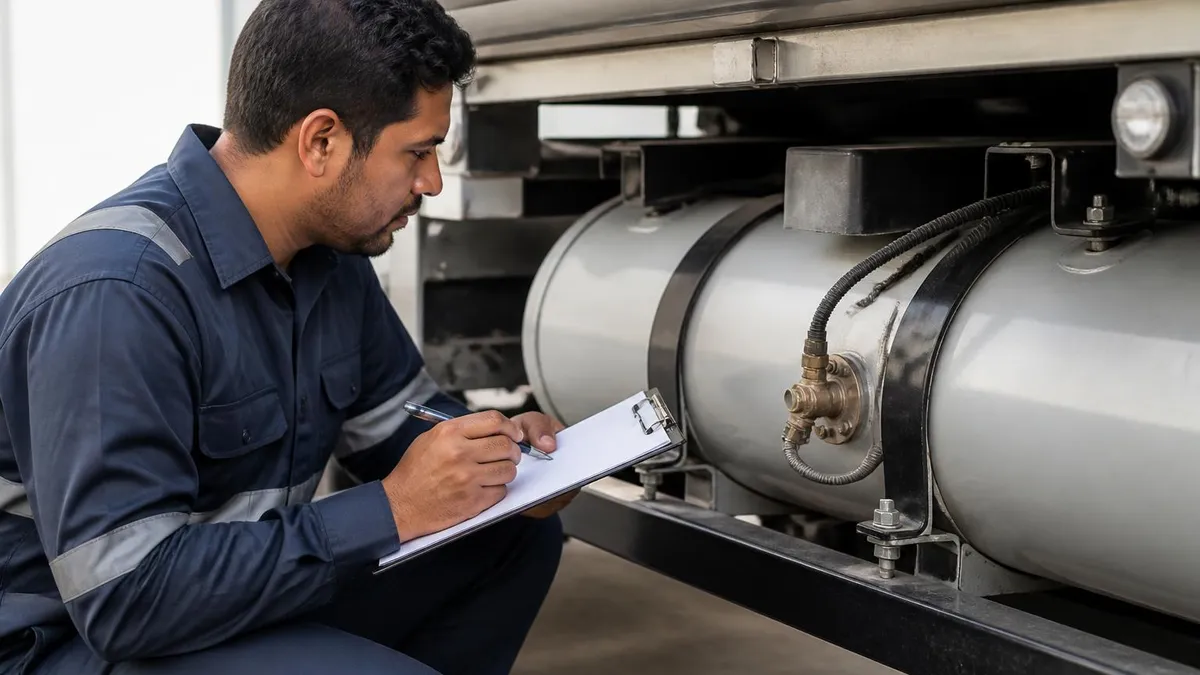
Federal law requires CNG cylinder visual inspection every 36 months or 36,000 miles, whichever comes first, and after any collision or fire. Operating a vehicle with an expired or damaged cylinder is illegal and dangerous. Tanks reaching the end of their stamped service life (typically 15 to 25 years) must be removed from service permanently.
The economics of CNG drive most fleet adoption decisions in the United States today. On a gasoline gallon equivalent basis, CNG typically sells for $1.80 to $2.50 at public stations, compared to gasoline prices that have ranged from $3.00 to $5.00 in recent years. For a fleet vehicle driving 30,000 miles annually at 20 miles per gallon, the fuel cost savings alone can reach $1,500 to $3,000 per year, multiplied across an entire fleet of dozens or hundreds of vehicles each year.
Upfront costs are the primary economic obstacle for most operators. A factory-built CNG vehicle typically costs $5,000 to $10,000 more than an equivalent gasoline model due to the specialized tanks, regulators, and certified installation work. Aftermarket conversions add a similar premium and must be performed by a certified upfitter using EPA-approved kits to remain emissions compliant. For light-duty fleets, payback periods generally run two to four years depending on annual mileage and local fuel price spread.
Federal tax incentives have come and gone over the years, with the Alternative Fuel Tax Credit historically providing fifty cents per gasoline gallon equivalent to fleet operators. State programs add additional layers, including grants for vehicle purchases, infrastructure development funds, reduced registration fees, and HOV lane access in states like California, Arizona, and Utah. Operators should check the Department of Energy's Alternative Fuels Data Center for current program details before committing capital to any conversion project.
Infrastructure costs are the elephant in the room for fleets without nearby public stations. A time-fill depot station for a small fleet of ten vehicles might cost $50,000 to $150,000 installed, depending on local gas supply pressure and electrical requirements. A fast-fill public station costs $1 million to $3 million or more. Many fleets address this by partnering with utility companies, third-party station developers, or municipal facilities that share infrastructure across multiple users to spread capital costs effectively.
Operating costs beyond fuel tend to favor CNG. Engine oil intervals stretch longer because methane burns cleaner, spark plug life increases, and exhaust aftertreatment is simpler than diesel equivalents. Mechanic labor rates are similar to gasoline work for routine service, though specialized fuel system work commands a premium. Insurance rates are generally comparable to conventional vehicles, though some carriers require disclosure of the fuel type and may request copies of cylinder certification documents at policy issuance for underwriting.
Resale value is improving as the CNG used market matures. Early CNG vehicles suffered from limited buyer awareness, but commercial fleet buyers now actively seek used CNG trucks and vans, especially in markets with strong infrastructure. Vehicle history reports increasingly document cylinder certification dates, which significantly affect resale pricing. A CNG van with a recently inspected tank holds value far better than one approaching the end of its certification cycle and requiring imminent costly recertification or expensive cylinder replacement work. The CNG stations network continues to expand.
Looking forward, renewable natural gas, or RNG, is changing the economics again. RNG is methane captured from landfills, dairy farms, and wastewater treatment plants, then cleaned to pipeline quality and injected into the same distribution network as conventional natural gas. Fleets using RNG can claim deep carbon reductions, sometimes reaching carbon-negative emissions on a lifecycle basis when methane that would have escaped to the atmosphere is captured and combusted instead. This is reshaping the fuel's environmental story significantly today.
If you are considering CNG for your own vehicle or fleet, start with an honest assessment of your duty cycle and fueling access. CNG works best for vehicles that operate on predictable routes within reasonable distance of a fueling station, return to a central depot at the end of the day, and accumulate enough annual mileage to recover the upfront cost premium quickly. Delivery vans, school buses, taxis, and refuse trucks fit this profile almost perfectly, which is why they dominate the current CNG fleet in the United States.
Personal vehicle owners face a tougher analysis because factory CNG passenger cars are no longer widely available in the new car market. The Honda Civic Natural Gas, once the most popular consumer CNG sedan, was discontinued in 2015, leaving used vehicles and aftermarket conversions as the main options. If you live in a metro area with strong CNG infrastructure such as Los Angeles, Phoenix, Salt Lake City, or Oklahoma City, the used market offers reasonable choices at attractive purchase prices today.
Training matters more than many new CNG drivers expect. Fueling procedures differ from gasoline pumping, requiring drivers to ground the vehicle, attach the nozzle correctly, monitor pressure during fill, and verify a complete seal before disconnecting. Most fleet operators require formal training before drivers handle CNG-fueled vehicles, and many public stations require a brief orientation for first-time users. Take advantage of these programs to build confidence and avoid common mistakes like incomplete fills or stuck nozzles during cold weather operations.
For commercial drivers studying for hazmat or tanker endorsements, CNG knowledge increasingly appears on practice exams and regulatory materials. Topics commonly tested include cylinder identification, pressure ratings, leak detection procedures, emergency shutoff locations, and the unique hazards of high-pressure gaseous fuel handling. Practice tests are an excellent way to consolidate this knowledge before taking the actual exam at your state licensing office and demonstrating proficiency to the examiner conducting the road test.
Maintenance partnerships are critical for any CNG vehicle owner. Identify a certified CNG service shop in your area before you buy, not after. Verify that the shop holds current CSA America or equivalent certification for high-pressure fuel system work, employs technicians trained on your specific vehicle make, and has access to OEM parts including replacement regulators, valves, and receptacle components. Routine maintenance at a non-certified shop can void warranties and create safety hazards over time that compromise operational reliability.
Cold weather operation deserves special attention in northern climates. CNG itself performs well in cold temperatures because methane vaporizes instantly, but cng fueling stations and vehicle regulators can struggle below zero Fahrenheit if not designed for harsh conditions. Fleet operators in cold regions specify heated dispensers, insulated tank compartments, and battery warmers to ensure reliable morning starts and full fills during winter shifts. Drivers should allow extra time for refueling when temperatures drop sharply and always check fill completeness.
Finally, stay informed about evolving policy and technology. The transition toward renewable natural gas, hydrogen blending, and electric vehicle competition is reshaping the alternative fuel landscape rapidly. Industry groups like NGVAmerica, the Department of Energy's Clean Cities program, and state-level fleet associations publish regular updates on regulations, incentives, and best practices. Subscribing to one or two reliable newsletters keeps you ahead of changes that could affect your vehicle choice, operating costs, or compliance obligations in years ahead.
CNG Questions and Answers

What Is CNG? A Plain-English Guide to Compressed Natural Gas
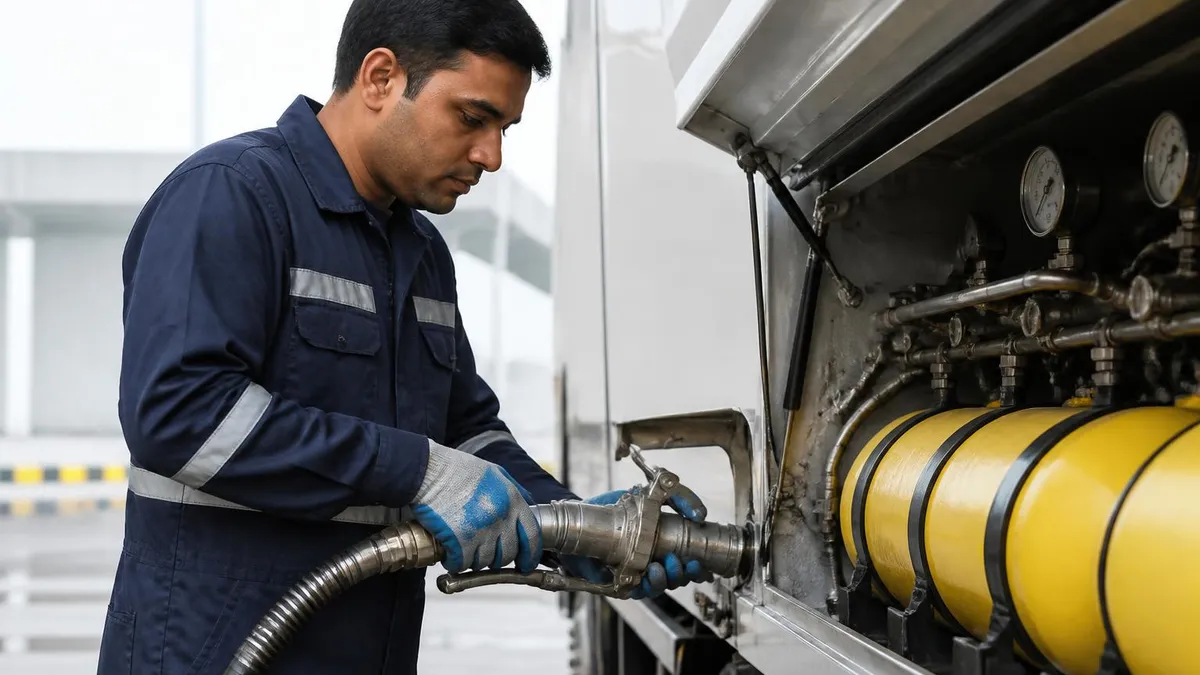
CNG Car: How Compressed Natural Gas Vehicles Work, Benefits, Costs, Available Models, and Safety

CNG Stations: How to Find, Use & What to Expect
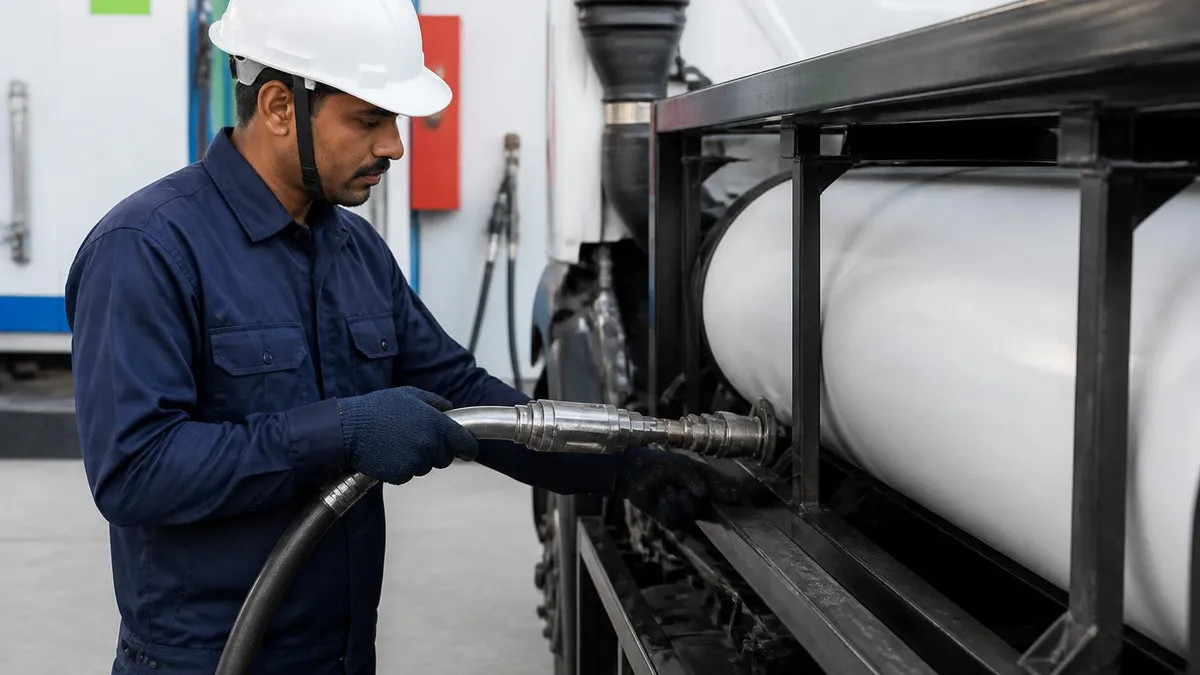
CNG Vehicle Maintenance: Complete Guide to Fuel System Care, Leak Detection, and Receptacle Replacement
CNG Practice Test Video Answers
About the Author

Educational Psychologist & Academic Test Preparation Expert
Columbia University Teachers CollegeDr. Lisa Patel holds a Doctorate in Education from Columbia University Teachers College and has spent 17 years researching standardized test design and academic assessment. She has developed preparation programs for SAT, ACT, GRE, LSAT, UCAT, and numerous professional licensing exams, helping students of all backgrounds achieve their target scores.
Join the Discussion
Connect with other students preparing for this exam. Share tips, ask questions, and get advice from people who have been there.
View discussion (8 replies)