
CNG Stations: How to Find, Use & What to Expect 2026 October
🎯 Complete CNG stations guide: how to find stations near you, pricing, refueling process, station types, and considerations for natural gas vehicles.

CNG stations — Compressed Natural Gas fueling stations — supply natural gas as fuel for vehicles equipped to use it. While CNG vehicles represent a small fraction of the U.S. vehicle fleet compared to gasoline and diesel, they're significant in commercial fleets including delivery vehicles, transit buses, refuse trucks, and corporate fleets where centralized fueling makes economic sense.
CNG provides cleaner emissions than gasoline or diesel, often lower fuel costs per energy unit, and supports domestic energy independence. Understanding CNG stations — where they are, how to use them, and what to expect — helps drivers and fleet operators of natural gas vehicles operate effectively.
The U.S. has approximately 800-1,500 public CNG stations depending on how counted, plus a much larger number of private and fleet-only stations. The geographic distribution is uneven — California has the largest concentration of public stations, with significant networks in other states with strong natural gas vehicle (NGV) adoption like Texas, Utah, Oklahoma, and Pennsylvania. Other states have sparse station networks that limit practical CNG vehicle use to specific corridors and metropolitan areas. Before purchasing or leasing a CNG vehicle, mapping your typical driving range against available station networks helps assess whether CNG fueling is practical for your needs.
CNG stations come in two main types: fast-fill and time-fill. Fast-fill stations work like gasoline stations — you fill up in 5-10 minutes and drive away. They're publicly accessible and convenient for transient or occasional CNG vehicles. Time-fill stations slowly fill vehicles over several hours (typically overnight). They're common in fleet operations where vehicles return to base each evening. The slower fill rate uses cheaper compression equipment and produces more efficient compression. Understanding which type your vehicle and use case need shapes which stations work for you.
This guide covers CNG stations comprehensively: how to find stations, types and operations, pricing structures, what to expect during refueling, considerations for vehicle owners, and the broader context of CNG as transportation fuel. Whether you're an existing CNG vehicle owner or considering whether CNG could work for your fleet or personal driving, you'll find practical information here.
For drivers transitioning from gasoline to CNG vehicles, several practical adjustments take some getting used to. The fueling experience differs from gasoline both in time (similar for fast-fill, much longer for time-fill) and procedure (high-pressure connection technique). Range planning becomes more critical due to sparser station networks. Cold weather behavior may need accommodation. None of these are insurmountable, but they require active attention compared to gasoline driving where infrastructure is plentiful and operations highly familiar. Most CNG drivers adapt within a few weeks of regular operation.
U.S. public stations: ~800-1,500 stations (varies by counting method)
Station types: Fast-fill (5-10 min) and time-fill (overnight)
Pricing: Typically expressed as per gasoline gallon equivalent (GGE)
Cost: Often $1.50-$2.50 per GGE — typically lower than gasoline per energy unit
Major networks: Clean Energy Fuels, Trillium, AmeriGas in U.S.
Finding CNG stations requires using specific tools because they're not commonly listed on standard navigation apps. The U.S. Department of Energy's Alternative Fuels Data Center (afdc.energy.gov) maintains a comprehensive station locator at afdc.energy.gov/stations. Search by location, fuel type (CNG), and access type (public, private, etc.). Mobile apps like CNGNow and AltFuelLocator provide similar functionality with mobile-optimized interfaces. Many CNG vehicles include factory navigation that shows CNG stations along your route. For trip planning, identifying stations along your route before departing prevents being stranded with low fuel.
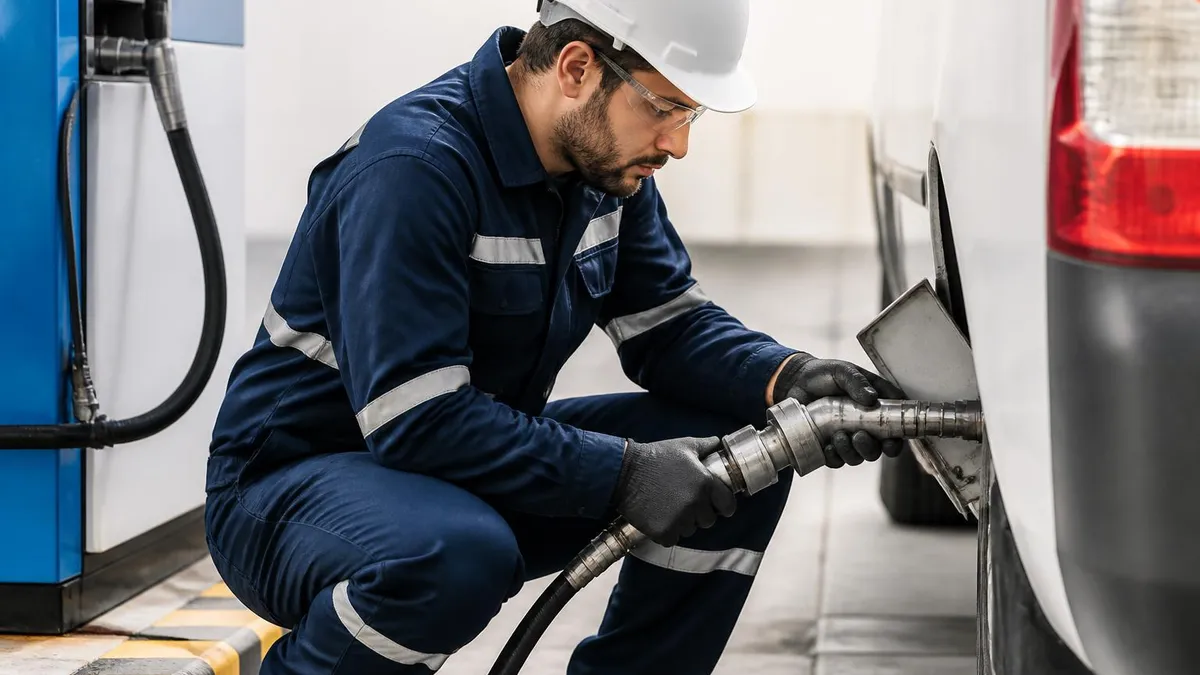
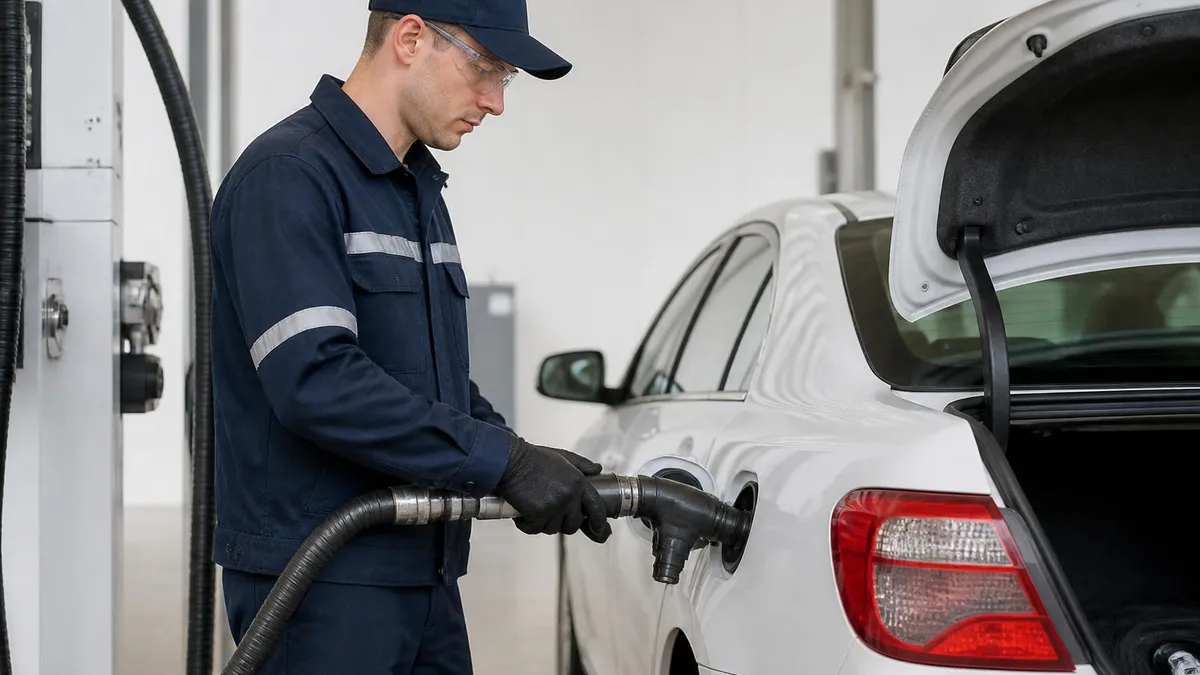
Public CNG stations typically operate similar to gasoline stations — pay at the pump with credit/debit cards, follow on-screen instructions, fill up, and drive away. The dispenser process is somewhat different from gasoline because of the high pressure involved (CNG is typically dispensed at 3,000 or 3,600 psi). Specific connection procedures vary by dispenser model. Most stations have user instructions visible at the dispenser. First-time users should read instructions carefully or watch tutorial videos before attempting unfamiliar stations to avoid mistakes that could trigger safety systems or damage equipment.
Pricing at CNG stations is typically expressed as price per gasoline gallon equivalent (GGE). One GGE represents the energy content equivalent to one gallon of gasoline — useful for comparing CNG prices to gasoline prices when shopping for fuel cost competitiveness. CNG GGE prices typically run $1.50-$2.50 in most markets, often substantially below gasoline prices per energy unit. The actual savings depend on your specific vehicle's efficiency comparison between gasoline and CNG operation, plus tax differences in your state. For commercial fleets with high mileage, the cumulative savings can be substantial.
The typical fast-fill experience involves: pulling up to the dispenser, reading instructions, paying via card or fleet card, attaching the high-pressure connection following station-specific procedures, dispensing the fuel (5-10 minutes for typical fill from low to full), disconnecting, and driving away. Each station has slightly different procedures based on equipment models. Major networks like Clean Energy and Trillium have somewhat standardized customer experience across their stations, though specific dispenser models still vary. Staying calm and following posted instructions produces successful refueling.
Time-fill stations work differently. Vehicles park at dispensers overnight (or for extended periods). Slow compression fills the vehicle over many hours. Time-fill stations are typically located at fleet maintenance facilities — buses, refuse trucks, delivery vehicles, taxis return to base each evening and connect to time-fill dispensers. The economics work for fleet operations because lower-cost compressors with smaller capacity can fill many vehicles overnight, and operations can predictably accommodate the longer fill time. The practice test resources cover the operational and safety knowledge relevant for CNG vehicle operators.
For policy advocates promoting natural gas vehicles, the case rests on environmental benefits, energy independence, and cost competitiveness. Each of these can be argued from various perspectives — environmentalists may favor electric or other alternatives over CNG for personal transportation; energy independence advocates note CNG uses domestic resources; cost competitiveness varies by application and time period. Engaging thoughtfully with the various perspectives produces more credible advocacy than simplistic arguments that ignore the genuine tradeoffs in the alternative fuel transportation landscape.
CNG Station Types and Use Cases
Public stations with high-pressure compressors enabling fills in 5-10 minutes. Open to any CNG-equipped vehicle. Located along highways, in metropolitan areas, near commercial corridors. Higher equipment costs but enable transient use. Typical pricing $1.80-$2.50 per GGE.
Slower compression filling vehicles overnight. Common at fleet bases (transit, refuse, delivery). Lower compressor costs, more efficient compression. Not accessible to public — vehicles fuel at their home base. Used extensively by transit agencies, school districts, refuse companies, and delivery fleets.
Some larger stations offer both fast-fill capability and overnight time-fill positions. Fleet operators use overnight time-fill while occasional public users use fast-fill during the day. Provides flexibility for varied use cases. Common at major transit and fleet operation hubs.
Stations owned and operated by individual companies for their own fleet use. Often time-fill stations at company facilities. Not generally available to public. Some companies allow other businesses' vehicles to fuel for fee under shared-use agreements. Significant cost savings for high-mileage fleets justifying their own stations.
For CNG vehicle owners managing their fueling experience, several practical considerations apply. Range planning matters more than for gasoline vehicles because station networks are sparse in many areas. CNG vehicles typically have shorter range than gasoline equivalents (250-400 miles depending on tank size and vehicle efficiency). Knowing where stations are along your routes — and having backup plans if your primary station is closed or out of service — prevents stranding situations. Some bi-fuel CNG/gasoline vehicles can run on either fuel, providing flexibility when CNG isn't conveniently available.
Cold weather operation considerations affect CNG vehicles. Natural gas pressure decreases significantly at very cold temperatures, which can affect both fueling and vehicle range. Stations in cold climates have heating systems on dispensers to maintain operability, but extreme cold can still cause issues. Vehicles parked outdoors in very cold conditions may have reduced range until warmed up. Operators in cold climates plan accordingly — covered parking when possible, awareness that range will be reduced on the coldest days, and patience with longer fill times that cold weather can produce.
Maintenance considerations for CNG vehicles differ somewhat from gasoline vehicles. CNG fuel is cleaner-burning, which reduces certain types of engine wear (deposits, oil contamination) compared to gasoline. Spark plug life is often longer. Oil change intervals may be extended. However, CNG-specific components (high-pressure tanks, fuel system valves, regulators) require specific maintenance that gasoline vehicles don't. Tank inspection at specified intervals is required by federal regulation (typically every 3 years and more thorough inspections every 12-15 years). The CNG meaning and broader context resources cover the technical aspects of CNG vehicle operation.
For commercial fleet operators considering CNG, economic analysis requires comparing total cost of ownership across alternatives. CNG vehicles typically have higher purchase price than equivalent gasoline/diesel vehicles ($10,000-$30,000 premium for medium-duty trucks, larger premiums for heavy-duty). Fueling infrastructure costs (private station installation $500,000-$2,000,000+) add to fleet investment. Lower fuel costs per energy unit and reduced certain maintenance costs offset upfront investment over years of operation. Federal and state tax incentives sometimes substantially reduce net costs. The breakeven typically occurs at high annual mileage — fleet vehicles driving 50,000+ miles per year often produce positive economics; lower-mileage applications may not.
Environmental benefits of CNG include lower greenhouse gas emissions than gasoline (typically 13-21% lower lifecycle CO2 equivalent), substantially lower particulate matter than diesel, and lower nitrogen oxides than older diesel engines. The exact environmental comparison depends on the source of the natural gas (conventional vs. renewable natural gas from biogas) and the specific vehicle being compared against. Renewable natural gas (RNG) produced from organic waste can be carbon-neutral or even carbon-negative on a lifecycle basis, providing significant environmental advantages over fossil fuels. Many transit agencies adopt CNG specifically for these environmental benefits alongside cost considerations.

CNG Vehicle Considerations
Personal CNG vehicles for individual drivers:
- Available models: Limited — Honda Civic GX (discontinued 2015), some converted vehicles
- Range: 200-400 miles typically — shorter than gasoline equivalents
- Tank refueling: Public fast-fill stations, 5-10 minutes
- Cost considerations: Premium for new (when available); used market shrinking
- Best for: Drivers in areas with strong CNG station networks and primarily local/regional driving
For trip planning across regions with sparse CNG networks, careful preparation matters. Verify each planned fueling station is operational before departure — call ahead or check station status if possible. Have backup plans for stations that may be unavailable. Consider vehicle range carefully against distances between stations. For long-distance travel, time-fill at endpoints with public fast-fill along the route may work; pure fast-fill route planning requires denser station networks. Bi-fuel vehicles handle range issues more gracefully because they can switch to gasoline when CNG isn't conveniently available.
Safety considerations around CNG include both fueling operations and vehicle operation. CNG is dispensed at very high pressure (3,000-3,600 psi); proper connection technique prevents leaks and ensures safe transfer. Vehicle CNG tanks are extensively tested and certified to industry standards — federally regulated inspection requirements (NGV2 standards) ensure ongoing safety. CNG itself is lighter than air, which means leaks tend to dissipate upward rather than pooling like gasoline vapor. Industry safety records for CNG vehicles are strong, comparable to or better than gasoline vehicles in most safety metrics.
Insurance considerations for CNG vehicles are generally similar to gasoline vehicles, though some insurers want documentation of compliance with inspection requirements. Comprehensive and collision coverage works the same. Some specialty insurers cater to alternative fuel vehicle owners with policies designed around their specific characteristics. For fleet operations, commercial vehicle insurance accommodates CNG fleet vehicles routinely. Discussing your specific situation with your insurance agent before purchasing a CNG vehicle clarifies coverage and any special requirements.
Looking forward, CNG faces both opportunities and challenges in transportation. Renewable natural gas (RNG) from biogas sources has grown substantially, providing environmentally cleaner CNG that competes well with electric vehicles on lifecycle environmental metrics. Growing fleet adoption for refuse trucks, transit buses, and regional freight continues to support infrastructure development. However, electric vehicle adoption is rapidly accelerating in light-duty segments, reducing the relevance of CNG for personal transportation. Heavy-duty trucking remains a competitive area — battery technology hasn't yet provided full alternatives to diesel for long-haul applications, and CNG/RNG offers a near-term lower-emissions alternative.
For drivers and fleet operators considering CNG, current strategic considerations include: matching vehicle type to use case (heavy-duty fleets often work well; personal vehicles less compelling now); evaluating local infrastructure carefully against your driving patterns; considering RNG availability for environmental strategy; tracking electric vehicle alternatives that may be more viable than CNG in some applications; understanding incentive programs that affect economics; and planning for likely 10-15 year asset life. The technology and market landscape continues evolving — decisions should consider both current state and probable future trajectories rather than just current snapshots.
CNG stations occasionally experience equipment problems that take dispensers out of service for hours or days. Compared to gasoline, the smaller station network means losing one nearby station can significantly affect route planning. Before relying on a specific station for long trip refueling, call ahead to verify operational status when possible. Some station networks have status APIs accessible through mobile apps. Building backup plans into your route planning prevents stranding situations that pure on-the-fly navigation can produce when sparse infrastructure has unexpected issues.
For technicians working with CNG vehicles and infrastructure, specific certifications and training apply. ASE Master Medium/Heavy Duty Truck Technician with alternative fuel endorsement is one credential. NGVAmerica offers specific NGV training programs. CNG fueling station operators typically require specialized training through equipment manufacturers (Clean Energy, Trillium, others). The combination of automotive technical knowledge plus CNG-specific training opens niche but well-paid technical career paths in the alternative fuel sector.
For CDL drivers operating CNG-powered commercial vehicles, the basic CDL applies — no specific endorsement is required for CNG operation specifically. However, training on the specific vehicle's CNG systems, refueling procedures, and emergency response is essential. Most fleet employers provide this training as part of vehicle-specific orientation. Drivers transferring between gasoline/diesel and CNG operations need to learn the specific differences but don't face additional licensing requirements.
For state and local government considering CNG as part of climate or air quality strategies, the considerations involve infrastructure investment, fleet conversion, and policy framework. Many cities have adopted CNG (sometimes RNG) for transit buses, refuse trucks, and other municipal fleets — producing meaningful emissions reductions while leveraging existing natural gas distribution infrastructure. The economics work better for high-mileage fleet applications than for personal vehicles. Policy considerations include incentive design, infrastructure investment, and coordination with utility companies that supply natural gas.
For citizens and consumers wanting to understand CNG's role in the broader transportation transition, several considerations matter. CNG is cleaner than gasoline/diesel but still a fossil fuel — significant carbon emissions from combustion remain. Renewable natural gas from biogas can be much cleaner on lifecycle basis.
Electric vehicles powered by clean electricity ultimately offer the cleanest path for many applications, though battery production has its own environmental costs. Different vehicle types and use cases call for different solutions; CNG fits well in some applications and poorly in others. Engaging thoughtfully with these tradeoffs supports better personal and policy decisions than reflexively favoring or opposing any single technology.
The CNG ecosystem will continue evolving as the broader transportation transition unfolds. Some applications that currently use CNG may shift toward electric vehicles. Some may shift toward hydrogen fuel cells. Some may continue with CNG/RNG as the most practical near-term option. Following the developments through industry publications and your specific use case's economics helps make informed decisions over time. The fundamental commitment to cleaner transportation than legacy fossil fuels continues motivating these alternatives even as specific technologies compete for various applications.
CNG Station Quick Facts
CNG vs. Gasoline/Diesel: Considerations
- +Lower fuel cost per energy unit than gasoline (often $1-2 less per GGE)
- +Cleaner emissions — significantly lower particulates and CO2
- +Domestic energy source — supports U.S. energy independence
- +Quieter operation than diesel — neighborhood-friendly for refuse and delivery vehicles
- +Renewable natural gas (RNG) options for substantially lower lifecycle emissions
- −Sparse station network outside major metropolitan areas
- −Higher upfront vehicle cost ($10,000-$30,000+ premium for medium-duty trucks)
- −Shorter range than gasoline equivalents — affects long-distance travel
- −Cold weather can reduce range and complicate refueling
- −Electric vehicles increasingly competing in light-duty applications
Pros and Cons at a Glance
| Pros | Cons |
|---|---|
| Domestic energy source — supports U.S. energy independence | Sparse station network outside major metropolitan areas |
| Quieter operation than diesel — neighborhood-friendly for refuse and delivery vehicles | Shorter range than gasoline equivalents — affects long-distance travel |
| Renewable natural gas (RNG) options for substantially lower lifecycle emissions | Cold weather can reduce range and complicate refueling |
Sample Compressed Natural Gas Practice Questions
Try these questions from our free Compressed Natural Gas practice tests. The correct answer and an explanation follow each question.
A vehicle is being converted to a bi-fuel CNG system. After the hardware installation, the Engine Control Unit (ECU) must be calibrated. What is the primary goal of adjusting fuel trims during the CNG calibration process?
- A. To maximize engine horsepower on CNG.
- B. To ensure the vehicle's diagnostic trouble codes are suppressed.
- C. To match the long-term and short-term fuel trims on CNG as closely as possible to the values when running on gasoline.
- D. To decrease the fuel rail pressure to its lowest possible setting for efficiency.
Answer: C. To match the long-term and short-term fuel trims on CNG as closely as possible to the values when running on gasoline.
The primary goal of CNG calibration is to make the engine run as efficiently and cleanly on CNG as it does on gasoline. The ECU uses short-term (STFT) and long-term (LTFT) fuel trims to adjust the air-fuel ratio. A proper calibration ensures that the fuel trims while operating on CNG are very close to the baseline gasoline trims, indicating the engine is operating within its designed parameters and not running too rich or too lean.
What does a persistently illuminated 'Check Fuel' or 'Fuel System' warning light on a CNG vehicle most commonly indicate?
- A. The cylinders are above maximum fill pressure
- B. A fault detected by the ECM in the CNG fuel delivery circuit
- C. Normal operation during the first 100 miles after fueling
- D. The PRD has activated and vented the system
Answer: B. A fault detected by the ECM in the CNG fuel delivery circuit
The ECM continuously monitors CNG system sensors; a persistent warning light indicates a stored fault code that requires diagnostic scan tool retrieval.
What is the most common cause of premature fuel filter clogging in a CNG system?
- A. Overfilling cylinders above rated pressure
- B. Moisture and compressor oil carryover from low-quality fill stations
- C. High ambient temperature during fueling
- D. Running the engine below operating temperature
Answer: B. Moisture and compressor oil carryover from low-quality fill stations
Poor-quality CNG from stations with inadequate drying can carry moisture and compressor oil that rapidly clog downstream fuel filters.
When a CNG cylinder reaches the manufacturer's specified service life limit, what is the only compliant action?
- A. Perform a hydrostatic test and recertify the cylinder for an additional 5 years
- B. Reduce the maximum fill pressure to 80% of the rated service pressure
- C. Permanently remove the cylinder from service and replace it with a new cylinder
- D. Have a licensed engineer assess the cylinder and approve an extension in writing
Answer: C. Permanently remove the cylinder from service and replace it with a new cylinder
Once the service life limit is reached, the cylinder must be replaced—no hydrostatic test, engineering assessment, or pressure reduction can legally extend its service life.
CNG Station Questions and Answers
About the Author

Educational Psychologist & Academic Test Preparation Expert
Columbia University Teachers CollegeDr. Lisa Patel holds a Doctorate in Education from Columbia University Teachers College and has spent 17 years researching standardized test design and academic assessment. She has developed preparation programs for SAT, ACT, GRE, LSAT, UCAT, and numerous professional licensing exams, helping students of all backgrounds achieve their target scores.
Join the Discussion
Connect with other students preparing for this exam. Share tips, ask questions, and get advice from people who have been there.
View discussion (8 replies)