
CNG Truck: How Compressed Natural Gas Trucks Work, Costs, Benefits, and Fleet Operations
A complete guide to the CNG truck: ❓ how compressed natural gas trucks work, fuel costs, emissions benefits, refueling, maintenance, and fleet operations.

A cng truck runs on compressed natural gas instead of diesel or gasoline, storing methane in high-pressure cylinders at roughly 3,000 to 3,600 psi. Across the United States, fleets ranging from refuse haulers to regional delivery operations have adopted natural gas vehicles to cut fuel spending and reduce tailpipe emissions. If you are new to the technology, it helps to first understand what a cng truck actually is and why so many municipalities and private carriers now park them in their yards every night.
The appeal starts with economics. Natural gas in the U.S. has historically traded well below diesel on an energy-equivalent basis, and that price gap can translate into thousands of dollars in annual savings per truck for high-mileage operations. A garbage truck that idles and accelerates constantly through a neighborhood route burns enormous quantities of fuel, so even a modest per-gallon-equivalent discount compounds into a meaningful return. For fleets that run predictable, route-based duty cycles, the math frequently favors natural gas over a vehicle's service life.
Emissions are the second major driver. Compared with older diesel engines, a modern natural gas truck produces dramatically lower nitrogen oxide and particulate matter, two pollutants that contribute to smog and respiratory problems in dense urban corridors. Some near-zero natural gas engines certified in California push NOx down to levels that rival electric trucks on a well-to-wheels basis when paired with renewable natural gas. That regulatory advantage matters enormously in regions with aggressive air-quality mandates and incentive programs.
Of course, a cng truck is not a drop-in replacement for diesel in every scenario. The fuel is less energy-dense by volume, which means the storage tanks are larger and heavier, and the truck's range between fills is typically shorter. Refueling infrastructure is concentrated rather than ubiquitous, so operators usually build or contract a fueling station near their depot. These trade-offs shape which applications make sense and which are better served by other powertrains today.
Understanding the full picture requires looking beyond the sticker price. The upfront cost of a natural gas truck runs higher than a comparable diesel because of the specialized fuel system, yet grants, tax credits, and the lower cost per mile can close that gap. Maintenance routines differ too, with periodic cylinder inspections and fuel-system checks that diesel mechanics may need training to perform. The total cost of ownership, not the purchase price alone, determines whether the switch pays off.
This guide walks through how these trucks work, what they cost to buy and operate, the environmental and economic benefits, refueling and range realities, maintenance requirements, and the day-to-day fleet operations that keep them rolling. Whether you are a fleet manager evaluating a pilot program, a driver about to climb into your first natural gas cab, or a student preparing for a CNG certification exam, you will find the practical details you need to make confident decisions.
CNG Trucks by the Numbers
How a CNG Truck Works
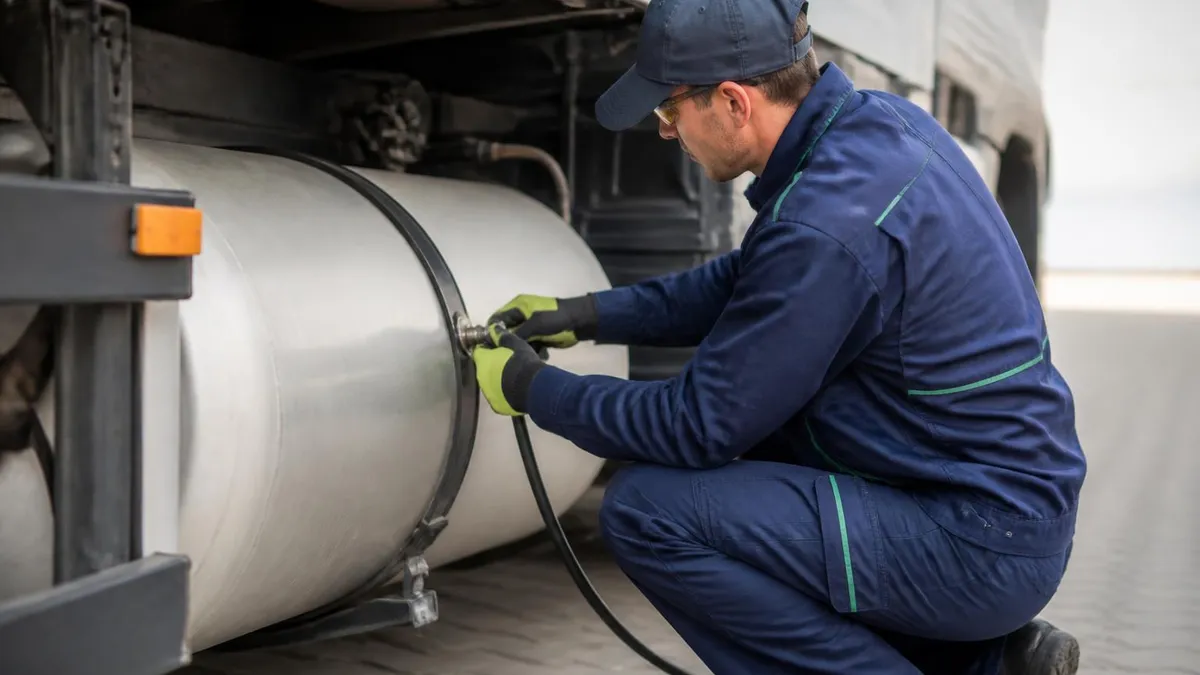
Methane is compressed to about 3,000–3,600 psi and held in Type 3 or Type 4 cylinders mounted on the frame, roof, or behind the cab. Cylinders carry expiration dates and require periodic visual inspection.
A regulator steps the gas down from tank pressure to the low pressure the engine needs. A coalescing filter removes oil and moisture before the gas reaches the fuel rail and injectors.
Most CNG trucks use a spark-ignited engine, similar in principle to gasoline, burning gaseous methane rather than liquid diesel. Dedicated engines run only on natural gas for the cleanest results.
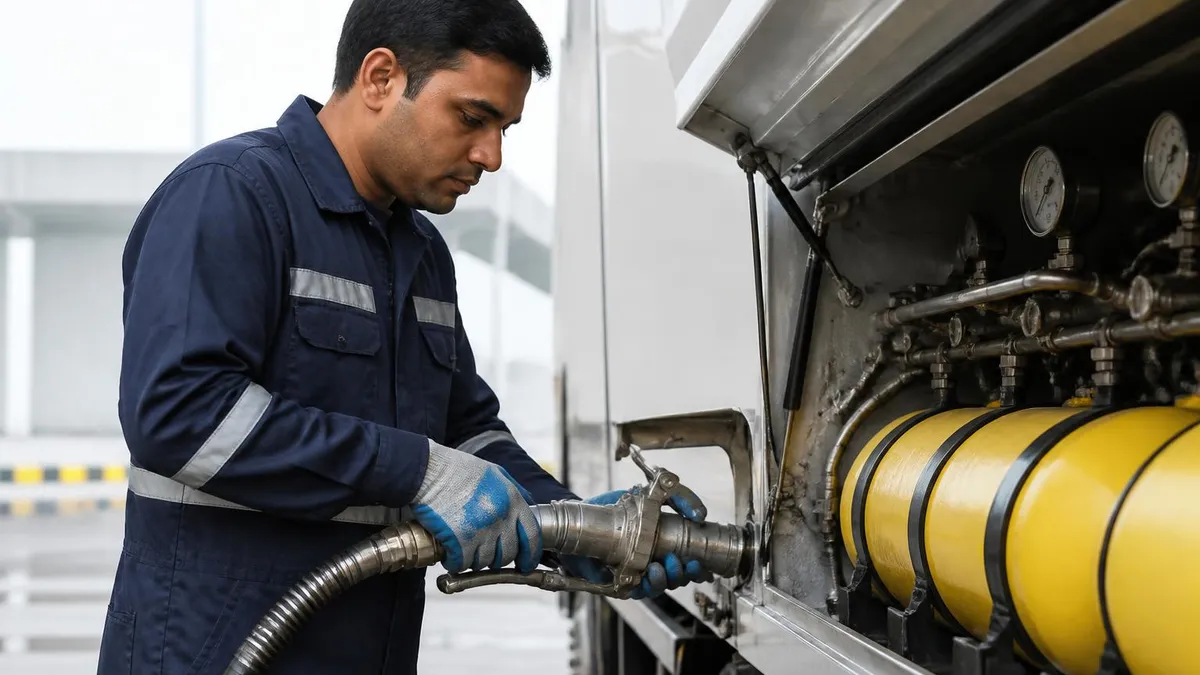
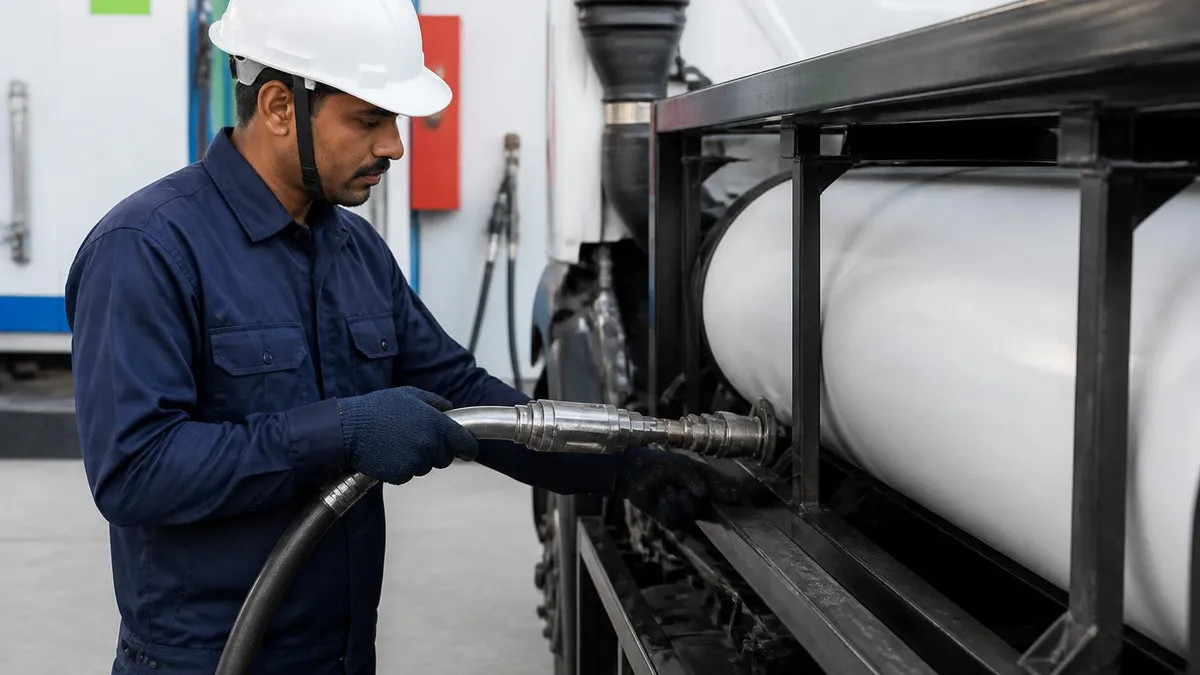
A standardized NGV1 receptacle lets the truck connect to fast-fill or time-fill stations. Fast-fill mimics a diesel pump experience; time-fill slowly tops off trucks overnight at the depot.
The economics of a cng truck hinge on three variables: the fuel-price spread, annual mileage, and the upfront cost premium. A natural gas truck typically costs $30,000 to $50,000 more than its diesel twin, driven almost entirely by the pressurized fuel system. That sounds steep, but high-mileage vehicles recover the difference through cheaper fuel. The break-even point arrives faster as miles climb, which is why refuse trucks, transit buses, and regional haulers see the strongest returns while occasional-use vehicles do not.
Fuel savings are measured per gasoline gallon equivalent, or GGE, the amount of natural gas containing the same energy as one gallon of gasoline. When natural gas sells for the equivalent of $1.50 to $2.50 per GGE while diesel sits at $3.50 to $4.50, every fill widens the gap. A truck covering 30,000 miles a year at 5 miles per GGE consumes roughly 6,000 GGE annually, so a $1.50 spread alone returns about $9,000 each year before factoring in any incentives.
Incentives sweeten the deal considerably. Federal alternative fuel credits, state grant programs, and air-district funding can offset a large share of the purchase premium and the cost of building a fueling station. California's Carl Moyer and HVIP programs, Texas grants, and similar initiatives in other states routinely cover tens of thousands of dollars per truck. Stacking these incentives with utility rebates for compression equipment can shrink the payback window from several years down to two or fewer in favorable markets.
Infrastructure is the hidden line item many newcomers underestimate. A private fast-fill station with compression, storage, and dispensers can cost several hundred thousand dollars, while a simpler time-fill setup for overnight fueling runs less. Fleets that lack scale often contract with a third-party station or a fuel provider who finances the equipment in exchange for a long-term supply agreement. Spreading station costs across enough trucks is essential to making the overall investment pencil out.
Resale and residual value deserve attention as well. The secondary market for used natural gas trucks is thinner than for diesel, which can depress trade-in values, though demand has grown as more buyers seek low-emission equipment. Cylinder age matters here: tanks carry a service life of 15 to 20 years, and a truck approaching that limit needs cylinder replacement to remain road-legal, an expense that weighs on resale pricing for older units in particular.
Maintenance costs land roughly comparable to diesel over the long run, but the distribution differs. Natural gas engines avoid diesel-specific systems like diesel particulate filters and selective catalytic reduction, eliminating some recurring expenses. In exchange, they add spark plugs, ignition components, and mandatory cylinder inspections. Properly maintained, the two powertrains reach similar lifetime maintenance budgets, with the fuel savings remaining the dominant factor in the total cost of ownership equation for most operators.
For students and fleet managers studying the financial side, it pays to understand how a cng gas supply chain prices fuel, because contract terms, demand charges, and compression electricity all influence the real cost per GGE you ultimately pay at your own depot.
CNG Truck Refueling and Range
Fast-fill stations deliver gas at high pressure in roughly the same time it takes to pump diesel, usually five to ten minutes for a heavy truck. They rely on banks of high-pressure storage that buffer the compressor, so a driver can pull in, connect the NGV1 nozzle, and top off without waiting for compression in real time. This makes fast-fill the natural choice for fleets with unpredictable schedules or trucks that cannot afford long dwell time.
The trade-off is heat. Compressing gas quickly raises its temperature, and warm gas is less dense, so a fast fill may not pack the cylinders to their full rated capacity. Stations compensate with temperature-compensated dispensers that overshoot slightly to account for cooling, but drivers should expect marginally less range from a hot fast-fill than from a cool overnight top-off at the depot.
Is a CNG Truck Worth It? Pros and Cons
- +Lower fuel cost per mile when natural gas is cheaper than diesel
- +Dramatically reduced NOx and particulate emissions versus older diesel
- +Eligible for federal, state, and air-district incentives and grants
- +Quieter operation, valued for early-morning urban and refuse routes
- +Domestic fuel supply reduces exposure to global oil price swings
- +Renewable natural gas option can push lifecycle carbon near zero
- −Higher upfront purchase price than a comparable diesel truck
- −Shorter range and bulkier, heavier on-board fuel storage
- −Refueling infrastructure is concentrated, not yet ubiquitous
- −Depot fueling station can require significant capital investment
- −Thinner used-truck resale market than established diesel
- −Cylinders carry expiration dates and mandatory periodic inspections
CNG Truck Fleet Readiness Checklist
- ✓Confirm routes return to base daily for reliable depot fueling.
- ✓Calculate the fuel-price spread between local CNG and diesel.
- ✓Estimate annual mileage to project realistic payback timing.
- ✓Identify federal, state, and air-district incentives you qualify for.
- ✓Decide between fast-fill and time-fill based on dwell time.
- ✓Budget for compression, storage, and dispenser infrastructure.
- ✓Verify maintenance facility ventilation and methane detectors.
- ✓Train technicians on cylinder inspection and fuel-system service.
- ✓Schedule driver training on safe fueling and leak response.
- ✓Plan cylinder inspection intervals and end-of-life replacement.
Total cost of ownership beats sticker price
The purchase premium on a natural gas truck scares off buyers who stop at the sticker. But high-mileage, route-based fleets recover that premium through cheaper fuel and incentives, often within two to three years. Always model the full lifecycle, not the upfront cost alone.
Maintenance and safety form the backbone of any successful natural gas fleet, and they begin with the fuel cylinders. Unlike a diesel tank, a CNG cylinder is a pressure vessel governed by federal standards, carrying a manufacture date and an expiration typically 15 to 20 years out. Technicians must perform documented visual inspections at set intervals, looking for impact damage, abrasion, corrosion, and heat exposure. A cylinder that fails inspection is condemned and replaced; it cannot simply be repaired and returned to service.
Leak detection is the next pillar. Natural gas is lighter than air, so it rises and disperses rather than pooling like gasoline vapor, but a leak in an enclosed maintenance bay still demands respect. Shops servicing these trucks install methane detectors near the ceiling and maintain ventilation systems that exhaust any accumulation. Drivers and technicians learn to recognize the odorant added to the gas and to follow strict shutdown and evacuation procedures the moment a leak is suspected anywhere on the vehicle.
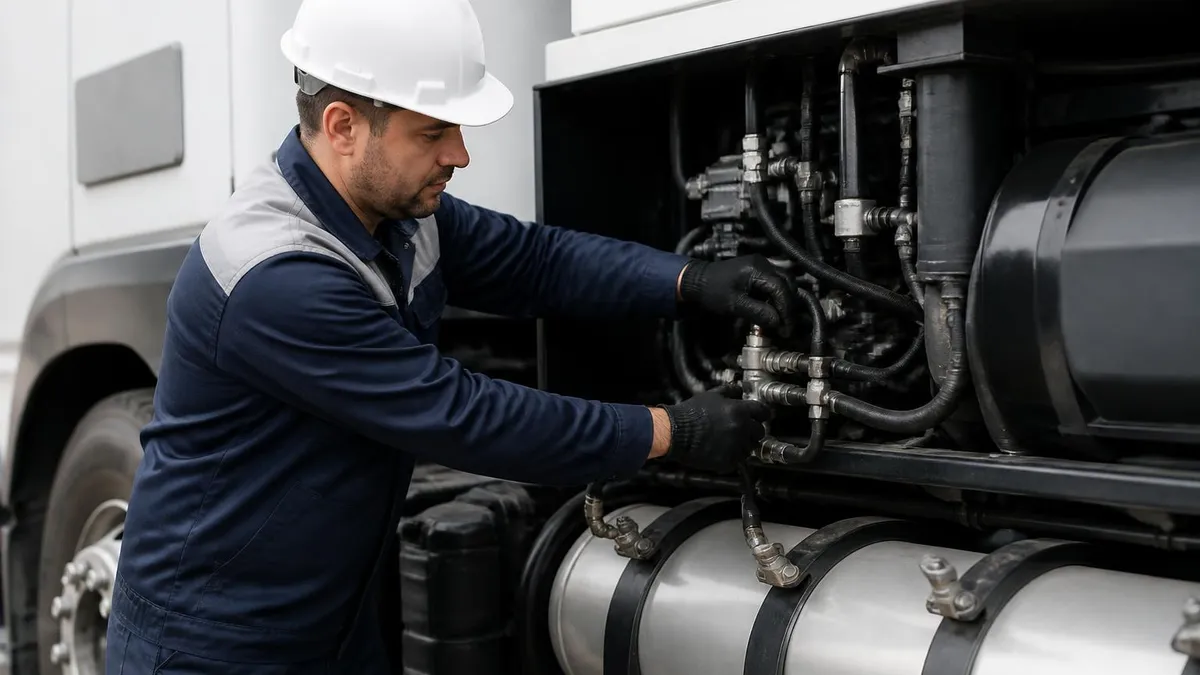
The fuel system between the tank and the engine needs routine attention too. The high-pressure regulator, coalescing filter, and fuel injectors all wear, and a clogged filter or aging regulator can degrade performance and fuel economy. Many fleets schedule fuel-system service on a mileage-based cadence, replacing filters and inspecting fittings for the tiny weeps that betray a developing leak. Catching these early prevents both safety hazards and the gradual range loss that frustrates drivers over time.
Engine maintenance shifts the focus toward spark ignition. Natural gas engines use spark plugs and ignition coils that diesel engines lack, and these components require periodic replacement. The cleaner-burning fuel produces less soot, so oil stays cleaner longer and some fleets extend drain intervals, but the ignition system introduces its own service rhythm. Following the manufacturer's schedule for plugs, coils, and valve adjustments keeps the engine running smoothly and preserves the emissions advantage that justified the purchase.
For a deeper treatment of these routines, a dedicated resource on cng truck maintenance covers fuel-system care, leak detection, and receptacle replacement in greater detail. The receptacle in particular wears with every fueling connection and must be replaced before it leaks or fails to seal, a small but critical maintenance item that keeps daily fueling fast and safe for everyone at the depot.
Safety training extends to the drivers, not just the shop. Operators learn the correct sequence for connecting and disconnecting the fueling nozzle, how to bleed residual pressure safely, and what to do if a fitting frosts over or hisses. They also learn that the trucks are remarkably safe in collisions because the cylinders are built to withstand far greater forces than the rest of the vehicle, a reassuring fact backed by crash testing and decades of fleet experience on American roads.
Documentation ties everything together. Regulators and insurers expect detailed records of cylinder inspections, leak tests, and fuel-system service. Fleets that maintain meticulous logs not only stay compliant but also build the maintenance history that supports resale value and demonstrates due diligence should an incident ever occur. Good recordkeeping is as much a part of CNG operations as turning a wrench in the shop.
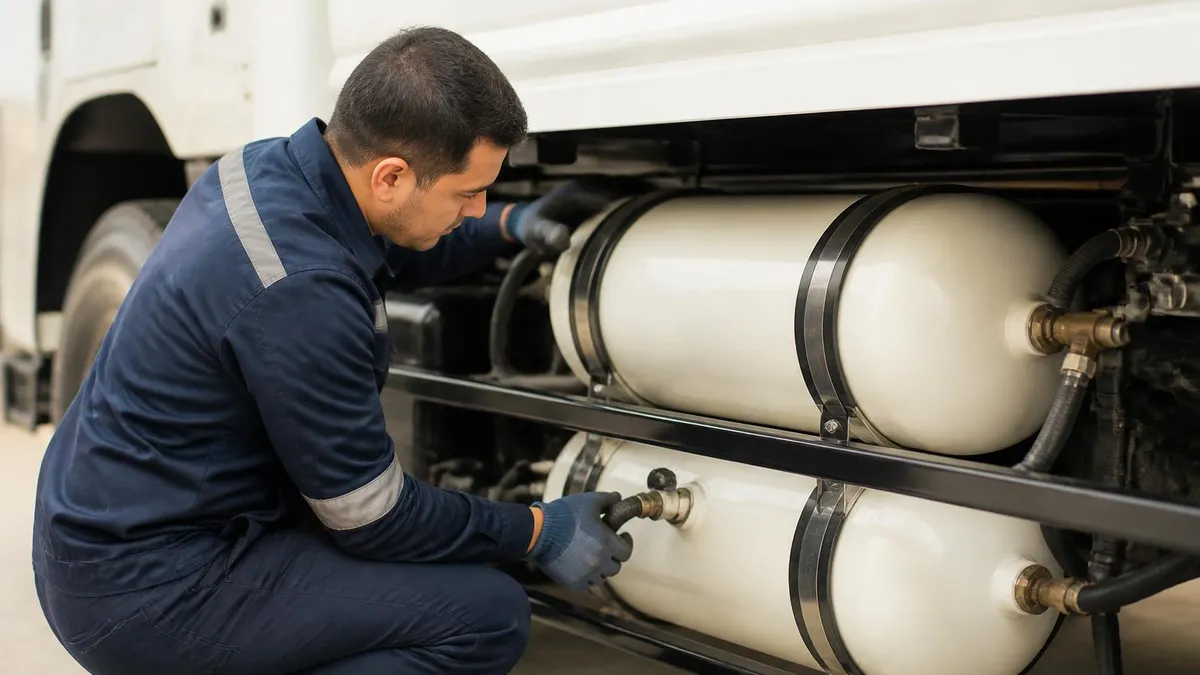
Every CNG cylinder carries a manufacture date and a legal service life, usually 15 to 20 years. Once a cylinder expires, the truck cannot legally operate until the tank is replaced. Fleets must track these dates per vehicle and budget for replacement well before the deadline arrives.
The environmental case for the cng truck rests on real, measurable reductions in the pollutants that harm public health. Older diesel engines emit nitrogen oxides and fine particulate matter that contribute to smog, asthma, and cardiovascular disease, especially in the dense urban neighborhoods where refuse and delivery trucks operate. A modern near-zero natural gas engine can cut NOx by roughly ninety percent compared with legacy diesel, a difference that air-quality regulators in places like Southern California prize highly.
Greenhouse gas performance depends heavily on the fuel source. Conventional fossil natural gas offers a modest reduction in carbon dioxide versus diesel because methane contains less carbon per unit of energy. The bigger climate win comes from renewable natural gas, captured from landfills, dairies, and wastewater plants. Burning RNG in a truck displaces fossil fuel while preventing methane that would otherwise escape to the atmosphere, producing a lifecycle carbon footprint that can approach or even fall below zero on a well-to-wheels basis.
Methane leakage is the honest counterpoint that responsible operators address head-on. Methane is a potent greenhouse gas, so leaks anywhere along the supply chain erode the climate benefit. The industry has invested in tighter fittings, better detection, and improved fueling hardware to minimize fugitive emissions, and well-run fleets monitor their stations and trucks closely. Understanding this trade-off helps buyers evaluate suppliers and choose RNG sources with verified, low-leakage credentials before signing a long-term contract.
Noise reduction is an underappreciated benefit. Natural gas engines run noticeably quieter than diesel, which matters enormously for refuse trucks grinding through residential streets before dawn and for transit buses threading busy downtowns. Quieter operation reduces community complaints and can even extend the hours a fleet is permitted to operate, an operational advantage that translates into scheduling flexibility and improved quality of life for the neighborhoods these vehicles serve every single day.
The economic and environmental benefits reinforce each other, which is why so many public agencies lead adoption. A city that converts its garbage trucks to natural gas cuts fuel spending, reduces neighborhood air pollution, quiets early-morning routes, and demonstrates visible climate leadership all at once. These overlapping wins explain why municipal fleets, which answer to taxpayers and air boards alike, have been among the earliest and most enthusiastic adopters of the technology across the country.
Energy security rounds out the picture. Natural gas is produced domestically in abundance, insulating fleets from the geopolitical shocks that periodically spike global oil prices. A fleet manager who locks in a multi-year natural gas supply contract gains budget predictability that diesel rarely offers. For drivers curious about the broader vehicle landscape, the same principles that make a cng car attractive to commuters scale up directly to the heavy-duty trucks that move goods and services through American cities.
Whether you are preparing for a CNG certification exam or onboarding your first natural gas trucks, a few practical habits separate smooth operations from frustrating ones. Start every shift with a walk-around that includes the fuel cylinders and fittings, scanning for damage, frost, or the telltale odor of escaping gas. Drivers who internalize this routine catch small problems before they become breakdowns or safety incidents, and they build the situational awareness that defines a competent natural gas operator on any route.
Master the fueling procedure until it becomes second nature. Connecting and disconnecting the NGV1 nozzle, bleeding residual pressure, and confirming a complete fill all follow a precise sequence designed for safety. Rushing these steps is how fittings get damaged and receptacles wear out prematurely. Take the extra thirty seconds to do it correctly, and both the equipment and your fuel economy will reward the discipline over thousands of fills across a truck's working life.
Plan routes around your true range, not the optimistic brochure figure. Remember that a hot fast-fill packs fewer GGE than a cool overnight time-fill, and that aggressive stop-and-go driving drinks fuel faster than steady cruising. Build a comfortable reserve into every route, know where compatible public stations sit along your corridors, and never let a truck roll out near empty assuming it can make it back on fumes the way a diesel sometimes can.
For exam preparation specifically, focus your study on the topics that examiners emphasize: cylinder inspection intervals, leak detection procedures, the difference between fast-fill and time-fill, emissions advantages, and the economics of total cost of ownership. These themes recur because they reflect the real competencies a CNG technician or fleet operator needs. Working through practice questions repeatedly cements the numbers and procedures far better than passive reading ever will.
Keep meticulous records, because documentation protects you on every front. Log each cylinder inspection, leak test, and fuel-system service with dates and findings. These records satisfy regulators, support insurance claims, preserve resale value, and prove due diligence if anything ever goes wrong. Fleets that treat recordkeeping as a core operational discipline, rather than an afterthought, consistently run safer, more compliant, and more cost-effective natural gas programs over the long haul.
Finally, lean on the community and the data. Natural gas fleet operators share a wealth of practical knowledge through industry associations, fuel suppliers, and training programs. Benchmark your fuel economy and downtime against peers, learn from their hard-won lessons, and stay current as near-zero engines, renewable natural gas, and improved fueling hardware continue to advance. The technology keeps maturing, and operators who stay engaged capture more of its benefits while sidestepping the pitfalls that catch the unprepared.
CNG Questions and Answers

What Is CNG? A Plain-English Guide to Compressed Natural Gas
CNG Car: How Compressed Natural Gas Vehicles Work, Benefits, Costs, Available Models, and Safety
CNG Vehicle Maintenance: Complete Guide to Fuel System Care, Leak Detection, and Receptacle Replacement
CNG Practice Test Video Answers

CNG Gas: What It Is, How It Works, and Why Vehicles Use It
About the Author

Educational Psychologist & Academic Test Preparation Expert
Columbia University Teachers CollegeDr. Lisa Patel holds a Doctorate in Education from Columbia University Teachers College and has spent 17 years researching standardized test design and academic assessment. She has developed preparation programs for SAT, ACT, GRE, LSAT, UCAT, and numerous professional licensing exams, helping students of all backgrounds achieve their target scores.
Join the Discussion
Connect with other students preparing for this exam. Share tips, ask questions, and get advice from people who have been there.
View discussion (8 replies)