
CNG Vehicle Maintenance: Complete Guide to Fuel System Care, Leak Detection, and Receptacle Replacement
Complete CNG vehicle maintenance guide covering cng fill receptacle leak replacement, 🔎 inspections, and fuel system care for safe, reliable operation.
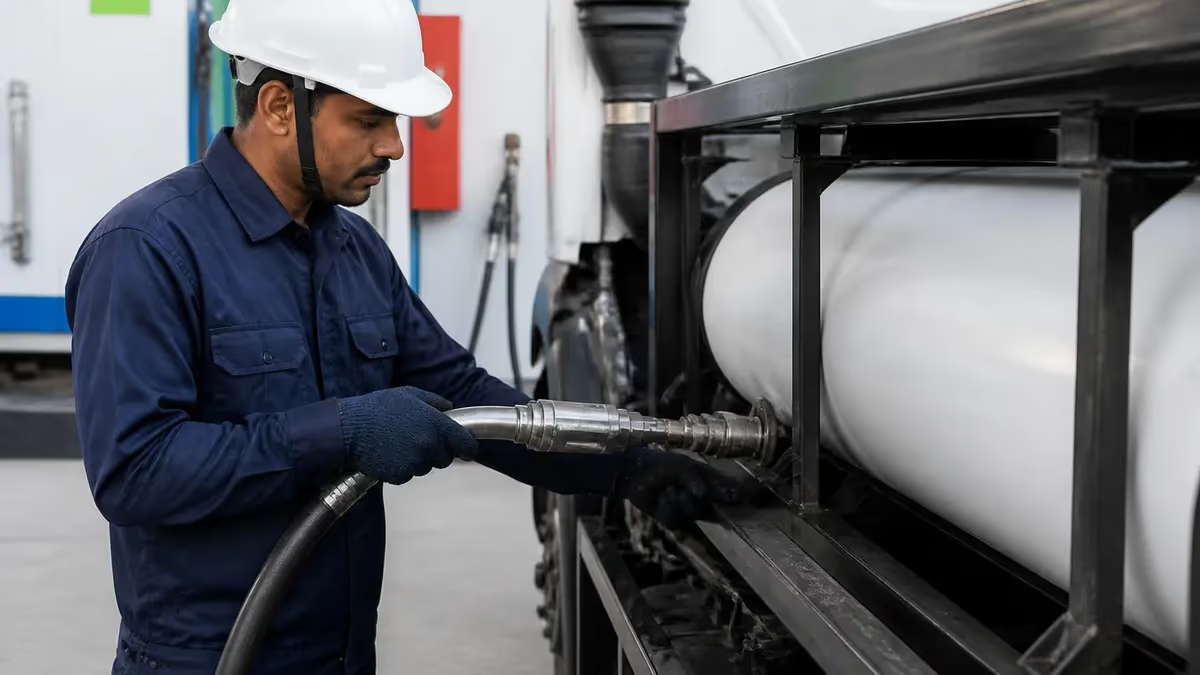
Maintaining a compressed natural gas vehicle requires a different mindset than caring for a gasoline or diesel truck, and nowhere is that clearer than during a cng fill receptacle leak replacement. The receptacle is the small high-pressure fitting on the side of the vehicle that connects to a station nozzle, and when its internal o-rings or check valve start to weep gas, you are looking at a safety-critical repair that demands trained hands, the right torque values, and a leak-tested seal before the truck returns to service. Treat it casually and you risk fires, failed inspections, or worse.
That receptacle is only one of dozens of parts inside a CNG fuel system that need scheduled attention. Cylinders, brackets, vent lines, pressure regulators, fuel rails, and the high-pressure tubing between them all live under pressures up to 3,600 psi. Each one has a defined service interval published by the original equipment manufacturer, and skipping intervals does not just shorten the life of the system, it can void warranty coverage and create liability if a leak event ever occurs in the field.
Fleet owners who run CNG well treat maintenance as a discipline rather than a chore. They train their technicians to NGV2 and CSA standards, they stock the correct receptacle rebuild kits, they keep a methane sniffer in every bay, and they document every visual inspection with photographs and torque readings. The result is a fleet that runs longer between failures, passes DOT inspections cleanly, and operates with the kind of safety record that keeps insurance premiums affordable and drivers confident.
This guide walks through every layer of CNG vehicle care, from daily walk-around checks a driver performs in two minutes to the three-year cylinder inspection that pulls a vehicle out of service for a full day. We will cover what fails most often, what those failures look like to a technician, and how to plan budgets and shop space around the realities of compressed natural gas. If you are new to CNG, our overview of What Is CNG? A Plain-English Guide to Compressed Natural Gas is a helpful primer.
The receptacle leak topic deserves special attention because it is the single most common roadside complaint reported by CNG drivers. A receptacle that hisses at the pump, fails to seat fully, or shows frost during a fill is broadcasting a problem that will only worsen. We will explain why these symptoms appear, how to diagnose them safely, and how a competent shop performs a full replacement using factory-specified parts and tooling.
You will also find guidance on certifications, recordkeeping, and the regulatory framework that governs CNG repairs in the United States. Federal Motor Vehicle Safety Standard 304, NFPA 52, and CSA HGV 4.10 all touch CNG maintenance in different ways, and a shop that understands these standards delivers safer work than one that improvises. By the end of this guide you should be able to evaluate any CNG service provider, build a realistic maintenance budget, and recognize the warning signs that mean a vehicle should not leave the yard.
Whether you operate a single bi-fuel pickup or manage a refuse fleet of two hundred CNG class-eight trucks, the principles are the same. Plan ahead, document everything, train your people, and never let a small leak become a big incident. The pages that follow distill years of fleet experience into checklists and practical steps you can act on this week.
CNG Maintenance by the Numbers

CNG Maintenance Schedule
Daily Walk-Around
Monthly Visual Inspection
Annual Leak Test
Three-Year Cylinder Inspection
Component Replacement Intervals
End of Service Life
A cng fill receptacle leak replacement begins long before any tools come out. The technician first confirms the vehicle is parked outside, away from ignition sources, with the engine off and the manual shutoff valve at the cylinder closed. The fuel system is then depressurized through the engine until the gauge reads zero, and a calibrated methane sniffer is used to verify there is no residual gas in the engine bay or near the receptacle. Only after these steps does disassembly start.
The receptacle itself is typically a NGV1 profile fitting threaded into a bulkhead bracket near the fuel door. Behind it sits a check valve, a small filter screen, and a series of o-rings that seal against the station nozzle each time the vehicle is fueled. Repeated coupling and uncoupling, dust ingestion, frozen condensate, and ordinary aging cause those o-rings to take a set, develop nicks, or harden until they no longer seal. The check valve can also stick partially open after debris contamination.
Symptoms a driver reports usually include audible hissing during or after a fill, frost or ice forming around the fitting, the station nozzle failing to lock, or a methane alarm in an enclosed garage. Any of these warrants pulling the vehicle from service immediately. A leak that sounds small at the pump can release significant quantities of fuel given the 3,600 psi behind it, and ignition risk grows with every minute the gas escapes.
Replacement parts must match the original specification exactly. Receptacle assemblies are sold as complete units or as rebuild kits containing new o-rings, a check valve cartridge, and a filter screen. The kit option saves money but is only appropriate when the receptacle body itself is undamaged. Any sign of cracked metal, deformed threads, or impact damage means the entire assembly must be replaced rather than rebuilt.
Torque values matter enormously in this work. The receptacle nut typically requires a specific value in foot-pounds set by the OEM, often between 30 and 50 depending on thread size and seal type. Under-torque produces an immediate leak, and over-torque can crack the bracket or distort the sealing surface. A calibrated torque wrench is mandatory, not optional, and the calibration certificate should be current and on file.
After installation, the system is repressurized in stages. First a low-pressure leak check at 100 psi with soap solution, then a stepped increase to 600 psi, 1,800 psi, and finally full operating pressure. At each stage the technician sprays leak-detection fluid on every disturbed joint and watches for bubbles. A methane sniffer follows up at all pressure stages. Only when every inspection passes is the vehicle returned to service with the repair documented. For stations and fueling background see our guide to CNG Stations: How to Find, Use & What to Expect.
Documentation closes the job. The vehicle file should record the date, technician name, certification number, parts installed with batch or lot numbers, torque applied, and the methane sniffer reading at completion. Most fleets retain these records for the life of the vehicle. If an incident ever occurs, this paper trail is what proves the work was performed correctly and to standard.
CNG Practice Test Questions
Prepare for the CNG - Compressed Natural Gas exam with our free practice test modules. Each quiz covers key topics to help you pass on your first try.
CNG Environmental and Economic Benefits
CNG Exam Questions covering CNG Environmental and Economic Benefits. Master CNG Test concepts for certification prep.
CNG Fleet Management and Driver Operations
Free CNG Practice Test featuring CNG Fleet Management and Driver Operations. Improve your CNG Exam score with mock test prep.
CNG - Compressed Natural Gas CNG Propertie...
CNG Mock Exam on - Compressed Natural Gas CNG Properties and Safety. CNG Study Guide questions to pass on your first try.
CNG - Compressed Natural Gas Codes, Standa...
CNG Test Prep for - Compressed Natural Gas Codes, Standards, and Compliance. Practice CNG Quiz questions and boost your score.
CNG - Compressed Natural Gas Cylinder Insp...
CNG Questions and Answers on - Compressed Natural Gas Cylinder Inspection and Regulations. Free CNG practice for exam readiness.
CNG - Compressed Natural Gas Emergency Pro...
CNG Mock Test covering - Compressed Natural Gas Emergency Procedures and Response. Online CNG Test practice with instant feedback.
CNG - Compressed Natural Gas Facility and ...
Free CNG Quiz on - Compressed Natural Gas Facility and Ventilation Requirements. CNG Exam prep questions with detailed explanations.
CNG - Compressed Natural Gas Fueling Stati...
CNG Practice Questions for - Compressed Natural Gas Fueling Station Operations. Build confidence for your CNG certification exam.
CNG - Compressed Natural Gas Fuel System C...
CNG Test Online for - Compressed Natural Gas Fuel System Components. Free practice with instant results and feedback.
CNG - Compressed Natural Gas Maintenance a...
CNG Study Material on - Compressed Natural Gas Maintenance and Troubleshooting. Prepare effectively with real exam-style questions.
CNG - Compressed Natural Gas System Diagno...
Free CNG Test covering - Compressed Natural Gas System Diagnostics and Repair. Practice and track your CNG exam readiness.
CNG - Compressed Natural Gas Vehicle Conve...
CNG Exam Questions covering - Compressed Natural Gas Vehicle Conversion and Installation. Master CNG Test concepts for certification prep.
CNG Fuel System Components
CNG cylinders come in four types ranging from all-steel Type 1 to fully wrapped composite Type 4. Each is rated for a working pressure, typically 3,000 or 3,600 psi, and stamped with manufacture date, serial number, and inspection requirements. Cylinders must be inspected every three years or after any accident, fire, or major service event. Brackets, isolators, and shielding all support the cylinder and must be inspected alongside it.
Pressure Relief Devices, or PRDs, are sacrificial safety valves attached to each cylinder. They release the entire tank contents through a vent line if temperature rises beyond a safe threshold, preventing rupture. PRDs are typically replaced when the cylinder is replaced and must never be tampered with. A damaged or contaminated PRD is grounds for immediate vehicle removal from service until the tank assembly is fully evaluated by a certified inspector.

In-House CNG Maintenance vs. Outsourcing
- +Faster turnaround for routine inspections and minor repairs without scheduling external shop time.
- +Lower per-vehicle long-run cost once technicians are trained and tooling is purchased.
- +Direct control over documentation, parts sourcing, and quality verification standards.
- +Technicians develop deep familiarity with your specific fleet configuration and history.
- +Easier coordination of cylinder inspections with regular service intervals to minimize downtime.
- +Ability to respond to roadside leak calls without waiting for an external vendor to dispatch.
- −Significant upfront investment in methane-rated bay ventilation, sniffers, and torque tooling.
- −Required CSA and NGV technician certifications take months of training and recurrent renewal.
- −Liability exposure if internal documentation lapses or a certified technician leaves the company.
- −Cylinder inspections require an Inspector certification beyond standard CNG technician training.
- −Low fleet counts may not justify the capital expense compared to per-job outsourcing.
- −Parts inventory management adds complexity, particularly for low-volume specialty receptacle kits.
Pros and Cons at a Glance
| Pros | Cons |
|---|---|
| Faster turnaround for routine inspections and minor repairs without scheduling external shop time. | Significant upfront investment in methane-rated bay ventilation, sniffers, and torque tooling. |
| Lower per-vehicle long-run cost once technicians are trained and tooling is purchased. | Required CSA and NGV technician certifications take months of training and recurrent renewal. |
| Direct control over documentation, parts sourcing, and quality verification standards. | Liability exposure if internal documentation lapses or a certified technician leaves the company. |
| Technicians develop deep familiarity with your specific fleet configuration and history. | Cylinder inspections require an Inspector certification beyond standard CNG technician training. |
| Easier coordination of cylinder inspections with regular service intervals to minimize downtime. | Low fleet counts may not justify the capital expense compared to per-job outsourcing. |
| Ability to respond to roadside leak calls without waiting for an external vendor to dispatch. | Parts inventory management adds complexity, particularly for low-volume specialty receptacle kits. |
Daily CNG Vehicle Inspection Checklist
- ✓Open the fuel door and verify the receptacle dust cap is present, clean, and undamaged.
- ✓Inspect the receptacle face for ice, frost, debris, or any visible damage to sealing surfaces.
- ✓Check the dashboard for fuel system warning lights, methane detector alarms, or cylinder pressure faults.
- ✓Listen for hissing or whistling sounds around the engine bay, undercarriage, and fuel door area.
- ✓Verify the last fill gauge reading matches what you would expect given recent driving distance.
- ✓Inspect visible high-pressure tubing for chafing, kinks, or wet spots indicating leakage.
- ✓Confirm cylinder shielding panels are secure and no fasteners are missing or loose.
- ✓Walk the vent line route looking for crushed, cut, or disconnected sections at clamp points.
- ✓Check that emergency shutoff valves at each cylinder are properly oriented and accessible.
- ✓Document any anomaly in the vehicle log and report to maintenance before departing the yard.
Never use household soap to leak-test CNG fittings.
Dish soap and similar household products contain chlorides and other chemicals that can attack stainless steel high-pressure tubing and cause stress corrosion cracking over time. Always use a commercial chloride-free leak detection fluid specifically labeled for compressed gas service, and rinse residue with clean water after the test is complete.
Cylinder inspections sit at the center of any CNG maintenance program because the cylinders are the highest-energy components on the vehicle and the most heavily regulated. Federal Motor Vehicle Safety Standard 304 requires that every CNG cylinder be inspected at intervals defined by the manufacturer or every three years, whichever comes first, and after any accident, fire, or event that could have damaged the tank. The inspector must hold a current certification from a recognized authority such as CSA or the Clean Vehicle Education Foundation.
The inspection is primarily visual and is documented with a written report kept onboard the vehicle. The inspector examines the entire exterior of each cylinder for abrasion, cuts, gouges, fire damage, chemical attack, impact damage, and improper repairs. Type 3 and Type 4 composite cylinders are particularly sensitive to abrasion through the outer protective layer because damage to the structural composite is what ultimately determines whether the tank can stay in service or must be condemned and removed.
A damaged cylinder is never repaired. The industry standard is clear that composite wrap is structural, not cosmetic, and any cut that penetrates the protective coating into the composite layer must be evaluated by the manufacturer. In practice, most cylinders with damage that exceeds Level 2 abrasion criteria are condemned. The cost of an unnecessary cylinder replacement is far lower than the cost of a tank rupture, and inspectors are trained to err on the side of removing questionable cylinders from service.
Cylinder brackets, isolators, and shielding receive equal attention during inspection. A perfectly sound cylinder mounted in a corroded bracket is a serious hazard because bracket failure during a collision can release the cylinder. Steel brackets in road-salt environments deteriorate quickly and should be inspected for section loss, weld integrity, and fastener condition. Isolation pads that prevent direct metal-to-metal contact between the cylinder and bracket should be replaced whenever they show compression set or chemical attack.
Vent lines from PRDs and regulator vents are another inspection focus. These lines must route outside the vehicle in such a way that any released gas dissipates safely without entering the cabin or pooling in the engine compartment. Routing changes after collision repair are a common finding, and inspectors verify that any modifications meet the original specification. Lines that have been kinked, cut, or improperly rerouted are corrected before the inspection passes.
The 20-year service life of a CNG cylinder is a hard ceiling. At the manufacture date plus 20 years, every cylinder is removed from service regardless of condition. There is no exception, no extension, and no inspection that can extend this limit. Fleets planning long-term CNG operations must build cylinder replacement into their capital budgets and schedule the work to align with other major vehicle maintenance to minimize downtime impact.
Recordkeeping for cylinder inspections is permanent. The inspection report must be filed with the vehicle history and retained for the life of the asset. If the vehicle is sold, the records transfer with it. Buyers of used CNG vehicles should always request and review the complete cylinder inspection history before purchase, and any gap in records is a meaningful red flag worth pricing into the negotiation or walking away from entirely.
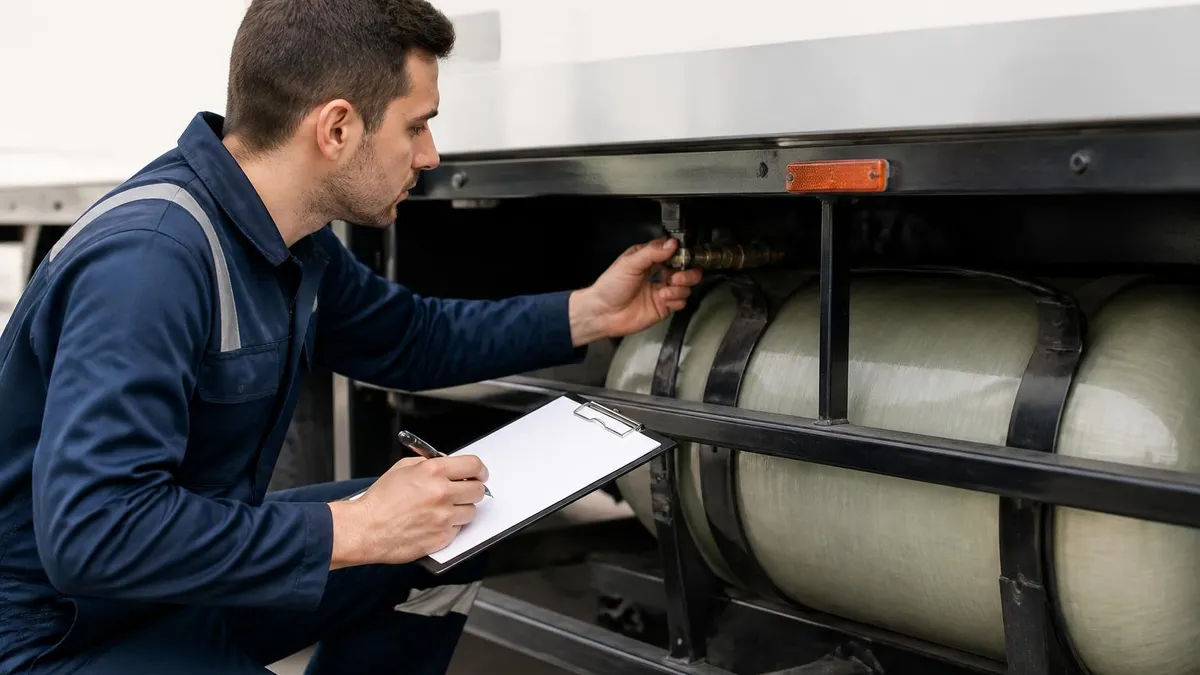
Every CNG cylinder carries a permanent manufacture date stamp and a defined service life, typically 20 years from manufacture. At the expiration date, the cylinder must be removed from service and decommissioned per manufacturer protocol regardless of mileage, pressure history, or visual condition. No inspection result can extend this limit, and operating an expired cylinder violates federal regulations and voids all insurance and liability coverage.
Budgeting for CNG maintenance requires honesty about the realities of pressure vessel work and certified labor. A small fleet of ten CNG vehicles can expect annual maintenance costs in the range of fifteen hundred to three thousand dollars per vehicle when all routine inspections, fluid changes, and component replacements are accounted for. This is somewhat higher than equivalent gasoline maintenance but lower than equivalent diesel maintenance when DEF, particulate filters, and emissions work are included. For background on the vehicles themselves, see our complete guide to CNG Vehicles: Complete Guide to Compressed Natural Gas Cars and Trucks.
The three-year cylinder inspection is the single largest scheduled expense for most fleets. A typical class-eight refuse truck with four cylinders may run five hundred to eight hundred dollars for the inspection alone, plus any remediation work the inspector identifies. Most fleets stage these inspections during scheduled downtime such as winter holiday weeks to minimize revenue impact, and they often schedule the inspection alongside other major service to amortize the cost of pulling the vehicle out of service.
Receptacle replacement runs from about two hundred dollars for a rebuild kit installation up to seven hundred dollars for a full assembly swap, depending on labor rates and vehicle complexity. Fleets that experience receptacle issues should track failure patterns by vehicle, by station, and by driver to identify root causes. Station nozzles in poor condition can damage receptacles, and some drivers handle the nozzle more gently than others. Both factors can be addressed once the data shows the pattern.
Pressure regulator service is another recurring cost, typically four hundred to nine hundred dollars depending on the specific unit and labor. Regulators are usually replaced rather than rebuilt because the internal seats and diaphragms wear together, and a partial rebuild rarely restores full performance. Fleets that run high mileage should plan for regulator replacement every three to five years and should keep at least one spare in stock for any common vehicle in the fleet.
Tooling costs are front-loaded but durable. A complete CNG service bay requires a calibrated torque wrench set with a current certificate, a methane sniffer that meets minimum sensitivity standards, leak detection fluid in commercial quantities, proper personal protective equipment, and the OEM service manuals for every vehicle type in the fleet. A reasonable budget for outfitting one bay is between three and seven thousand dollars excluding any building modifications such as gas detection or ventilation upgrades.
Training is the other major upfront cost. CSA or NGV technician certification typically costs between five hundred and two thousand dollars per technician depending on the course and includes both classroom and hands-on components. Recurrent training every three to five years keeps certifications current. Fleets that invest in training see lower per-job costs over time and develop the in-house expertise to catch problems before they become incidents. The payback period on training is usually under two years for fleets of more than five CNG vehicles.
Insurance and inspection compliance are often overlooked in maintenance budgets. Some commercial insurance carriers offer premium discounts for fleets that document a complete CNG maintenance program with certified technicians and current records. Conversely, lapses in cylinder inspection records or undocumented repairs can result in coverage denials after an incident. The cost of strong documentation is small compared to the value of clean insurance coverage when something does go wrong.
Practical maintenance habits separate fleets that operate CNG safely from those that experience repeated incidents. The most successful operators build a culture in which every driver feels responsible for the daily walk-around and every technician treats documentation as part of the job rather than an afterthought. This culture is built through consistent leadership, recurring training refreshers, and visible recognition when employees catch problems before they escalate into roadside events or near-miss reports.
Start every new driver with hands-on training at the fueling station. A driver who understands how the receptacle, nozzle, and station handshake actually work will recognize symptoms of a developing leak far sooner than one who has only watched a training video. Training should include how to recognize a partial coupling, what frost on the receptacle means, and exactly what to do if a fueling event triggers a methane alarm or audible hissing after the nozzle is removed. These skills cost almost nothing to teach and save substantial money in avoided repairs.
Stock the right parts in your inventory. Common consumables include receptacle dust caps, rebuild kits for your most common receptacle profiles, vent line clamps in standard sizes, and one complete regulator for each common vehicle configuration. Holding these parts in stock turns a multi-day breakdown into a same-day repair. Track usage and reorder points carefully because some CNG parts have long lead times and substituting non-rated parts is never acceptable for pressure-bearing components.
Track every fueling event by station and vehicle. Modern fleet management software can capture station ID, fill duration, ending pressure, and any error codes generated during the fill. Patterns in this data reveal stations with worn nozzles, vehicles with degrading receptacles, and drivers who could benefit from refresher training. Without this data, the same problems repeat indefinitely. With it, root causes become visible and addressable.
Build relationships with multiple qualified service providers. Even fleets with strong in-house capability benefit from a relationship with an external CNG specialist for cylinder inspections, complex repairs, and surge capacity. Vendors that specialize in CNG can also provide training, tooling guidance, and parts sourcing that smaller in-house shops cannot replicate. A backup vendor relationship also protects against single-point failures when an in-house technician leaves or a key piece of equipment fails. For deeper context on individual vehicles see our guide to the CNG Car: How Compressed Natural Gas Vehicles Work.
Schedule annual leak surveys as a non-negotiable line item on the maintenance calendar. A full system survey with a calibrated methane detector catches leaks too small to hear but large enough to fail an emissions audit or contribute to greenhouse gas reporting requirements. Many fleets schedule these surveys quarterly rather than annually because the survey itself is inexpensive and provides peace of mind that no slow leak is developing between major inspections.
Finally, never accept a partial repair. If a technician identifies a receptacle leak, the right answer is full replacement of the affected components, complete leak testing at all pressure stages, and a documented return to service. Shortcuts in CNG repair work create the conditions for incidents that harm people, damage equipment, and end careers. The discipline to do the work correctly every time is what defines a professional CNG operation and what keeps fleets running safely year after year.
Sample Compressed Natural Gas Practice Questions
Try these questions from our free Compressed Natural Gas practice tests. The correct answer and an explanation follow each question.
A CNG vehicle has been partially submerged in flood water, with the water level reaching the bottom of the fuel cylinders. After retrieving the vehicle, which of the following is a mandatory first step before attempting to start or service the fuel system?
- A. Start the engine briefly to see if it runs.
- B. Pressurize the system at the fueling station to check for water intrusion.
- C. Disconnect the battery and perform a detailed inspection of the entire fuel system.
- D. Drain the engine oil and check for water contamination.
Answer: C. Disconnect the battery and perform a detailed inspection of the entire fuel system.
After a vehicle has been submerged, especially in water that could contain contaminants, the first and most critical step is to ensure the vehicle is safe. This involves disconnecting the battery to prevent any electrical shorts or sparks. A thorough inspection of all fuel system components, including cylinders, valves, regulators, and electrical connections, must be performed by a qualified technician before any attempt is made to start the vehicle or pressurize the system. Water and debris can cause corrosion or damage that may not be immediately apparent.
A technician is installing a CNG fuel system on a vehicle. According to NFPA 52, what is the minimum required clearance between a CNG fuel line and the engine exhaust system?
- A. 1 inch (25 mm)
- B. 3 inches (75 mm)
- C. 6 inches (150 mm)
- D. 9 inches (225 mm)
Answer: C. 6 inches (150 mm)
NFPA 52, the Vehicular Gaseous Fuel Systems Code, mandates specific clearances to prevent heat from the exhaust system from damaging CNG fuel system components. A minimum clearance of 6 inches (150 mm) is required between any CNG fuel line and the exhaust system. If this clearance cannot be maintained, a suitable heat shield must be installed.
What does a persistently illuminated 'Check Fuel' or 'Fuel System' warning light on a CNG vehicle most commonly indicate?
- A. The cylinders are above maximum fill pressure
- B. A fault detected by the ECM in the CNG fuel delivery circuit
- C. Normal operation during the first 100 miles after fueling
- D. The PRD has activated and vented the system
Answer: B. A fault detected by the ECM in the CNG fuel delivery circuit
The ECM continuously monitors CNG system sensors; a persistent warning light indicates a stored fault code that requires diagnostic scan tool retrieval.
A vehicle is being converted to a bi-fuel CNG system. After the hardware installation, the Engine Control Unit (ECU) must be calibrated. What is the primary goal of adjusting fuel trims during the CNG calibration process?
- A. To maximize engine horsepower on CNG.
- B. To ensure the vehicle's diagnostic trouble codes are suppressed.
- C. To match the long-term and short-term fuel trims on CNG as closely as possible to the values when running on gasoline.
- D. To decrease the fuel rail pressure to its lowest possible setting for efficiency.
Answer: C. To match the long-term and short-term fuel trims on CNG as closely as possible to the values when running on gasoline.
The primary goal of CNG calibration is to make the engine run as efficiently and cleanly on CNG as it does on gasoline. The ECU uses short-term (STFT) and long-term (LTFT) fuel trims to adjust the air-fuel ratio. A proper calibration ensures that the fuel trims while operating on CNG are very close to the baseline gasoline trims, indicating the engine is operating within its designed parameters and not running too rich or too lean.
CNG Questions and Answers

What Is CNG? A Plain-English Guide to Compressed Natural Gas
CNG Practice Test Video Answers
CNG Stations: How to Find, Use & What to Expect
CNG Vehicles: Complete Guide to Compressed Natural Gas Cars and Trucks
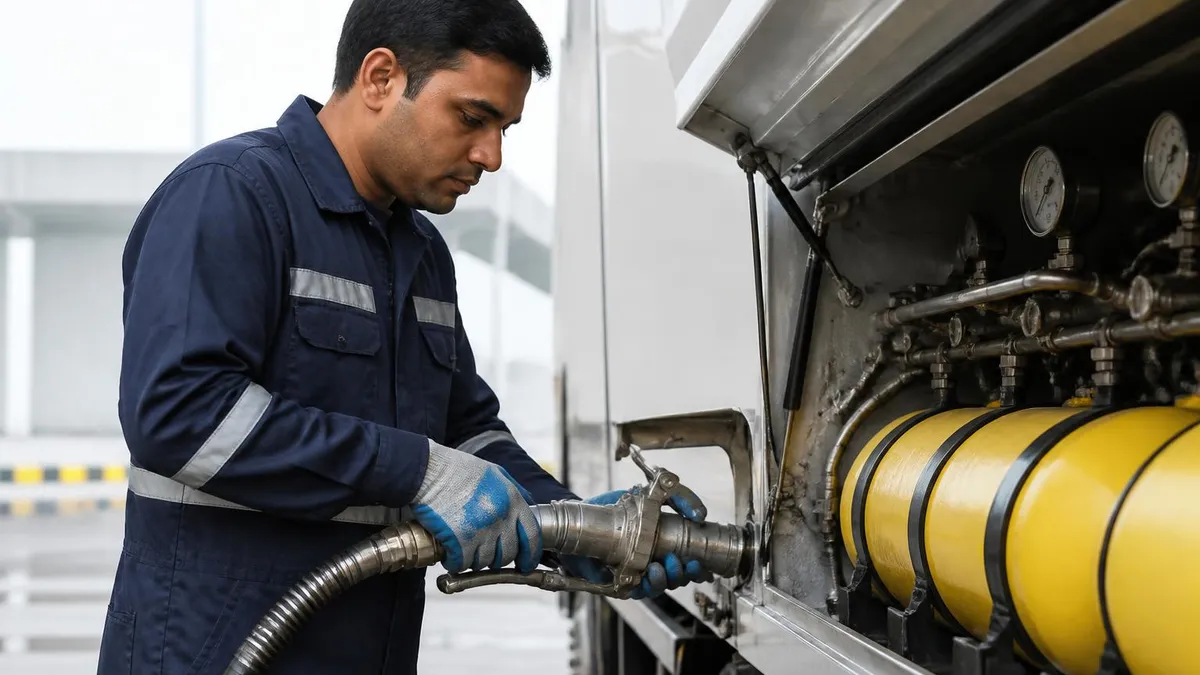
CNG Car: How Compressed Natural Gas Vehicles Work, Benefits, Costs, Available Models, and Safety
About the Author

Educational Psychologist & Academic Test Preparation Expert
Columbia University Teachers CollegeDr. Lisa Patel holds a Doctorate in Education from Columbia University Teachers College and has spent 17 years researching standardized test design and academic assessment. She has developed preparation programs for SAT, ACT, GRE, LSAT, UCAT, and numerous professional licensing exams, helping students of all backgrounds achieve their target scores.
Join the Discussion
Connect with other students preparing for this exam. Share tips, ask questions, and get advice from people who have been there.
View discussion (8 replies)