
Permanent CNG Compression Hubs: How They Work, What They Cost, and Why Fleets Rely on Them
Learn how permanent CNG compression hubs work, what they cost, and why US fleets depend on them. ✅ Real data, pros/cons, and expert tips.

Permanent CNG compression hubs are purpose-built, fixed-location facilities that compress natural gas from pipeline pressure — typically 0.25 to 1 pound per square inch gauge (psig) — up to 3,600 psig, the pressure needed to fuel compressed natural gas vehicles efficiently. Unlike temporary or mobile units, these hubs are engineered for continuous, high-volume throughput and are anchored by long-term infrastructure contracts, utility connections, and permanent building permits. For any fleet operator serious about reducing fuel costs and carbon emissions, understanding how permanent CNG compression hubs function is the critical first step.
The United States has seen rapid growth in permanent CNG infrastructure over the past decade. According to the U.S. Department of Energy's Alternative Fuels Station Locator, there are now more than 900 public CNG stations across the country, with hundreds of additional private fleet facilities operating behind the fence. The majority of these rely on permanent compression equipment because the economics simply work better at scale — capital costs are amortized over 15 to 25 years, and high-duty-cycle compressors deliver a lower cost per gasoline gallon equivalent (GGE) than any temporary alternative.
Fleet managers evaluating CNG infrastructure need to distinguish between time-fill and fast-fill configurations within permanent hubs. A time-fill system connects vehicles directly to the compressor overnight, gradually filling tanks at lower flow rates, which reduces equipment wear and lowers energy costs per GGE. A fast-fill system routes compressed gas through high-pressure storage cascades so drivers can refuel in three to five minutes — comparable to diesel refueling times. Many permanent hubs incorporate both configurations, giving fleets the scheduling flexibility they need for mixed vehicle types and operational patterns.
The site selection process for a permanent CNG compression hub involves several layers of analysis that go far beyond simply finding available land. Engineers must evaluate natural gas pipeline proximity and pressure consistency, electrical service capacity for compressor motors, local zoning and permitting requirements, soil conditions for below-grade equipment, prevailing wind patterns for gas dispersion planning, and projected vehicle traffic flow. Getting any one of these factors wrong can add hundreds of thousands of dollars in remediation costs or delay a project by 18 months or more.
Regulatory compliance is another dimension that separates permanent hubs from temporary installations. Permanent facilities must meet National Fire Protection Association (NFPA) 52 standards for vehicular gaseous fuel systems, satisfy Occupational Safety and Health Administration (OSHA) requirements for confined spaces and hazardous materials, comply with Environmental Protection Agency (EPA) regulations on fugitive methane emissions, and obtain approvals from state utility commissions where applicable. For fleets exploring permanent cng hubs for the first time, the regulatory landscape can feel overwhelming, but experienced EPC (engineering, procurement, construction) contractors typically manage this process end to end.
The financial case for investing in a permanent CNG compression hub has strengthened considerably as natural gas prices have remained structurally lower than diesel on a per-energy-unit basis. In 2024, the national average CNG price was approximately $2.50 per GGE compared to diesel at $3.80 to $4.20 per GGE, representing a fuel cost savings of 35 to 40 percent per mile for heavy-duty vehicles.
When a fleet operates 50 or more heavy-duty trucks, these savings can exceed $1 million per year and generate a return on investment within four to seven years even after accounting for the full capital cost of the compression hub.
This article covers everything US fleet operators, facility planners, and CNG industry professionals need to know about permanent compression hubs — from compressor technology and cascade storage design to regulatory compliance, total cost of ownership, and the operational best practices that separate high-performing hubs from underperforming ones. Whether you are evaluating your first CNG investment or optimizing an existing facility, the sections below provide the depth and specificity you need to make confident decisions.
Permanent CNG Compression Hubs by the Numbers

How a Permanent CNG Compression Hub Is Built and Commissioned
Feasibility and Site Assessment
Permitting and Utility Agreements
Civil and Mechanical Construction
Compressor Commissioning and Testing
Operator Training and Go-Live
The total cost of ownership for a permanent CNG compression hub varies significantly based on throughput capacity, dispenser configuration, and land costs, but most projects fall within a predictable range. A small fleet hub designed to fuel 20 to 50 vehicles per day typically costs between $800,000 and $1.5 million in capital expenditure, while a large public-access or multi-fleet hub handling 200 or more vehicles daily can run $3 million to $8 million or more. These figures include compressor equipment, cascade storage, dispensing equipment, civil construction, electrical work, and permitting but exclude land acquisition.
Compressor equipment represents the single largest capital line item, typically consuming 35 to 50 percent of total project cost. Reciprocating compressors dominate the market for permanent CNG hubs because they deliver high efficiency across a wide range of flow rates and are well-understood by maintenance technicians nationwide. A single reciprocating compressor unit capable of 100 standard cubic feet per minute (SCFM) — enough to support a fleet of 30 to 40 heavy-duty trucks on a time-fill schedule — costs approximately $150,000 to $250,000 for the compressor package alone, before installation costs.
Cascade storage systems are equally important to hub performance and represent another major capital investment. A typical cascade consists of three to five banks of high-pressure vessels, each bank holding gas at a different pressure level (low, medium, and high priority). When a vehicle connects to the dispenser, the system draws first from the low-priority bank, then progressively switches to higher-pressure banks as the vehicle tank approaches full pressure. This cascading approach maximizes the amount of gas extracted from storage before the compressor must restart, reducing both energy consumption and compressor wear cycles significantly.
Operating costs for permanent CNG compression hubs are dominated by electricity consumption, which accounts for 60 to 75 percent of ongoing fuel delivery costs. Natural gas compressors are energy-intensive: compressing one GGE of CNG typically consumes 0.4 to 0.7 kilowatt-hours of electricity. At a commercial electricity rate of $0.08 to $0.12 per kWh, this translates to $0.03 to $0.08 in electricity cost per GGE dispensed — a small but meaningful input that hub operators actively manage through demand response programs, off-peak compression scheduling, and variable-frequency drive (VFD) motor controls.
Maintenance costs for permanent compression equipment average $0.05 to $0.15 per GGE dispensed over the equipment lifecycle, assuming a proactive maintenance program. Key maintenance intervals include oil and filter changes every 500 to 1,000 operating hours, valve inspections and replacements every 2,000 to 4,000 hours, and complete overhauls of major components every 25,000 to 40,000 hours. Many hub operators contract with the original equipment manufacturer (OEM) for a full-service maintenance agreement that converts these variable maintenance costs into a predictable monthly fixed fee, which simplifies financial planning considerably.
Financing options for permanent CNG compression hubs have expanded substantially over the past decade. The US Department of Energy's Loan Programs Office, the USDA's Rural Energy for America Program (REAP), and numerous state-level clean transportation funds provide grants, loan guarantees, and low-interest financing specifically for CNG infrastructure. Additionally, several major CNG equipment vendors and fuel suppliers offer build-own-operate (BOO) or build-own-operate-transfer (BOOT) arrangements in which the vendor finances and operates the hub in exchange for a long-term fuel supply contract, allowing fleet operators to access CNG infrastructure without a large upfront capital outlay.
When evaluating the financial return of a permanent hub investment, fleet operators should use a discounted cash flow (DCF) model that accounts for projected fuel price differentials, throughput growth rates, maintenance cost escalation, and terminal value at the end of the equipment lifecycle. Most well-designed permanent CNG compression hubs achieve internal rates of return (IRR) of 15 to 25 percent for high-throughput fleet applications, making them among the most financially compelling clean transportation infrastructure investments available to US fleet operators today.
CNG Hub Configurations: Time-Fill, Fast-Fill, and Combination Systems
Time-fill systems connect vehicles directly to a low-flow compressor outlet, gradually filling CNG tanks over four to eight hours — typically overnight. Because the compressor runs at a steady, low-pressure differential, energy consumption per GGE is 15 to 25 percent lower than fast-fill systems. Time-fill is ideal for fleets with predictable overnight parking patterns, such as transit buses, refuse trucks, and school buses, where every vehicle returns to the depot each night.
The primary limitation of time-fill is inflexibility: vehicles must be parked and connected for the full fill duration. If a vehicle is needed for an unscheduled run mid-fill, it may leave with a partially filled tank. Hub designers address this by installing individual hose reels at each parking space so vehicles can disconnect and reconnect without disrupting other vehicles on the fill system. Modern time-fill controllers also allow operators to prioritize specific vehicles and monitor fill status remotely through a SCADA dashboard.

Permanent CNG Hubs vs. Temporary or Mobile CNG Solutions
- +Significantly lower cost per GGE at scale — permanent equipment amortizes capital over 15 to 25 years
- +Higher reliability and uptime — permanent hubs average 98 to 99 percent equipment availability
- +Greater fueling throughput capacity — permanent hubs can serve hundreds of vehicles per day
- +Utility-grade gas supply connections eliminate reliance on delivered LNG or portable CNG trailers
- +Eligible for federal and state clean transportation grants and tax incentives unavailable to temporary units
- +Full regulatory compliance provides long-term operating certainty and insurance advantages
- −High upfront capital cost — $800,000 to $8 million depending on throughput capacity
- −Long permitting and construction timeline — 6 to 18 months from feasibility to first fuel
- −Fixed location limits flexibility if fleet operations or depot locations change
- −Requires dedicated land or long-term site lease, adding ongoing real estate cost
- −Utility interconnection complexity can create unexpected delays and cost overruns
- −Decommissioning costs can be substantial if the facility becomes obsolete or fleet transitions to other fuels
Permanent CNG Hub Site Planning Checklist
- ✓Confirm natural gas pipeline proximity and minimum delivery pressure meets compressor inlet specifications.
- ✓Verify electrical service capacity supports compressor motor starting current and continuous load requirements.
- ✓Obtain preliminary zoning confirmation from the local authority having jurisdiction (AHJ) before purchasing land.
- ✓Commission a Phase I environmental site assessment to identify existing soil or groundwater contamination.
- ✓Calculate peak daily fueling demand in GGE and size compressor and storage capacity with 20 percent headroom.
- ✓Evaluate prevailing wind patterns and site drainage to support NFPA 52 gas dispersion requirements.
- ✓Identify all required permits including building, fire, utility interconnection, and environmental clearances.
- ✓Develop a project schedule with permitting milestones and utility lead times accounted for explicitly.
- ✓Evaluate financing options including DOE loan programs, REAP grants, and vendor BOO/BOOT arrangements.
- ✓Develop an operator training plan aligned with NFPA 52 and OSHA hazardous materials standards.
The Real Payback Driver Is Throughput, Not Equipment Cost
Fleet operators who focus solely on minimizing equipment purchase price often end up with undersized hubs that cannot serve peak demand — forcing drivers to wait and eroding the operational benefits of CNG. The most financially successful permanent CNG compression hubs are sized for projected demand 5 years out, not current demand, because adding compression capacity later costs 40 to 60 percent more per unit than including it in the original installation.
Regulatory compliance for permanent CNG compression hubs is governed by a layered framework of federal standards, state regulations, and local fire codes that hub developers must navigate simultaneously. The foundational document is NFPA 52, the Vehicular Gaseous Fuel Systems Code, which establishes minimum requirements for equipment design, installation clearances, pressure relief systems, gas detection, emergency shutoffs, and operator training. NFPA 52 is adopted by reference in most US states and by virtually all local fire marshals, making it the de facto national standard for CNG infrastructure.
At the federal level, the Pipeline and Hazardous Materials Safety Administration (PHMSA) regulates the natural gas distribution pipelines that feed CNG compression hubs. Any piping between the utility meter and the compression equipment is considered customer-owned and falls outside PHMSA jurisdiction, but the interconnection point itself — the meter set and pressure regulation equipment — must meet PHMSA standards. Hub developers working with distribution utilities must obtain a gas service agreement that specifies minimum delivery pressure, maximum flow rate, and odorization requirements, all of which affect compressor inlet design.
Environmental regulations add another compliance layer for permanent CNG hubs. The EPA's Subpart W regulations under 40 CFR Part 98 require facilities above certain methane emission thresholds to report annual fugitive emissions from compression equipment. While most single-fleet CNG hubs fall below the reporting threshold, large multi-fleet or public-access hubs with multiple compressors may need to implement a leak detection and repair (LDAR) program and submit annual greenhouse gas reports. Some states, including California, have adopted more stringent fugitive methane standards that apply at lower thresholds than federal rules.
Fire code compliance is enforced at the local level by the authority having jurisdiction — typically the local fire marshal or fire prevention bureau. NFPA 52 establishes minimum separation distances between CNG dispensing equipment and property lines, buildings, ignition sources, and vehicle traffic lanes. For example, CNG dispensers must be at least 5 feet from any building opening and 10 feet from any ignition source. Fast-fill cascade storage vessels have their own separation requirements based on vessel capacity. Site planners must submit detailed plot plans showing all clearance distances for fire marshal review before construction begins.
Electrical classification under NFPA 70 (the National Electrical Code) is another compliance requirement that affects hub design and cost. Areas within specified distances of CNG dispensers and compressor vents are classified as Division 1 or Division 2 hazardous locations, requiring explosion-proof or intrinsically safe electrical equipment throughout these zones. The cost premium for classified electrical installations can add $50,000 to $150,000 to a hub project depending on facility size and equipment density — a cost that first-time CNG hub developers frequently underestimate in early budget projections.
Worker safety compliance under OSHA standards is the final major regulatory dimension for permanent CNG hub operators. OSHA 29 CFR 1910.119, the Process Safety Management (PSM) standard, may apply to hubs with very large high-pressure storage inventories, though most fleet-scale CNG hubs fall below PSM thresholds. More commonly applicable are OSHA standards for confined space entry (29 CFR 1910.146), hazardous energy control (lockout/tagout, 29 CFR 1910.147), and respiratory protection (29 CFR 1910.134). Hub operators must develop written programs for each applicable standard and document annual employee training to maintain compliance during OSHA inspections.
The regulatory compliance burden, while substantial, has become significantly more manageable as the CNG industry has matured. National trade associations including NGVAmerica and the California Natural Gas Vehicle Coalition publish detailed compliance guidance documents, and dozens of engineering firms specialize in CNG hub permitting. For fleet operators developing their first permanent hub, engaging an experienced CNG engineering firm early in the process — ideally before selecting a site — is the single most effective risk mitigation strategy available.

Permitting for permanent CNG compression hubs routinely takes 90 to 180 days and can extend to 12 months or longer in jurisdictions with limited experience reviewing CNG projects. Fleet operators who schedule vehicle deliveries or fleet conversions without confirming permit approvals first risk receiving CNG vehicles months before the hub is ready to fuel them. Always obtain written permit timeline estimates from the AHJ before committing to fleet conversion schedules.
Optimizing the performance of an operating permanent CNG compression hub requires attention to both equipment management and operational processes. On the equipment side, the single highest-impact optimization available to most hub operators is implementing a compressor demand management strategy. Rather than allowing compressors to cycle on and off based solely on cascade pressure, advanced control systems can schedule compression during off-peak electricity rate periods, reducing electricity cost per GGE by 20 to 35 percent without any change in fueling capacity or vehicle availability.
Predictive maintenance programs represent another major performance optimization opportunity. Traditional CNG hub maintenance schedules are based on fixed operating hour intervals — change oil every 500 hours, inspect valves every 2,000 hours — regardless of actual equipment condition. Predictive maintenance programs use vibration sensors, oil analysis, thermal imaging, and acoustic monitoring to detect developing faults before they cause unplanned downtime. Hub operators who have implemented predictive maintenance programs typically report 30 to 50 percent reductions in unplanned downtime and 15 to 25 percent reductions in maintenance cost per GGE.
Gas quality monitoring is a performance optimization that many hub operators overlook until it causes a problem. Natural gas composition varies by season, supply source, and utility distribution system conditions. Variations in higher hydrocarbon content (ethane, propane, butane) affect the energy content per standard cubic foot and can impact vehicle engine calibration. Some permanent CNG hubs install online gas chromatographs that continuously monitor gas quality and alert operators to composition changes, protecting both hub equipment and vehicle engines from off-spec fuel conditions.
Throughput reporting and financial analytics are the management tools that distinguish high-performing hub operators from average ones. A well-instrumented permanent CNG hub should generate daily reports showing GGE dispensed by vehicle, by time period, and by dispenser position, along with electricity consumption, compressor runtime, and any fault conditions. Fleet managers who review these reports weekly can identify trends — a gradual increase in compressor starts per day may indicate a developing cascade storage leak, while a sudden drop in GGE per vehicle may indicate a vehicle fuel system issue — long before these trends become costly problems.
Driver behavior and fueling protocol compliance also materially affect hub performance. Drivers who disconnect vehicle fill nozzles before the dispenser has completed its pressure equalization sequence can leave significant amounts of gas in the hose, wasting fuel and creating a potential safety hazard. Drivers who park incorrectly on time-fill systems may kink hoses or create trip hazards. Investing in annual driver refresher training on correct fueling procedures typically costs less than $5,000 per 50-driver fleet and can recover that investment through fuel waste reduction within a single quarter.
Hub performance benchmarking against industry standards provides fleet operators with an objective measure of how well their facility is performing. The Clean Vehicle Education Foundation and the NGVAmerica Fleet Forum publish annual benchmarking data for CNG hub operators covering metrics including cost per GGE dispensed, compressor availability percentage, maintenance cost per GGE, and electricity cost per GGE. Operators who track these metrics and compare their performance to benchmarks consistently identify two to three improvement opportunities per year that would otherwise remain invisible in day-to-day operations.
For fleet operators considering their next permanent CNG compression hub — whether a second facility to serve a new depot or an expansion of an existing hub — the optimization lessons learned from the first installation should drive both design and operational decisions from day one. Specifying advanced control systems, predictive maintenance sensor packages, and online gas quality monitoring in the original equipment specification is far less expensive than retrofitting these capabilities later.
A well-optimized permanent CNG hub represents one of the most cost-effective clean transportation infrastructure investments available to US fleets, and operators who approach hub management with the same rigor they apply to fleet maintenance programs will consistently outperform industry benchmarks.
Building a successful permanent CNG compression hub is as much about project management discipline as it is about engineering expertise. The most common cause of cost overruns in CNG hub projects is scope creep — changes introduced after detailed design is complete that require rework of civil, mechanical, or electrical systems. Establishing a rigorous change control process before construction begins, with mandatory engineering review and written cost impact estimates for any proposed scope change, can prevent 70 to 80 percent of cost overruns based on industry project data.
Vendor selection for compression equipment deserves more diligence than many first-time hub developers apply. The CNG compressor market includes manufacturers with widely varying track records for equipment reliability, parts availability, and service responsiveness.
Before selecting a compressor vendor, fleet operators should contact at least five reference customers with similar throughput requirements and ask specifically about mean time between failures (MTBF), average parts delivery time, and responsiveness of field service technicians. A compressor that costs 15 percent less than the competition but has a 30 percent higher failure rate and two-week parts lead times will have a higher total cost of ownership despite its lower purchase price.
Construction contractor selection is equally important. CNG hub construction requires specialized skills in high-pressure piping, electrical classification work, and gas system commissioning that are not universal among general contractors. The best approach is to use a construction contractor with demonstrated CNG hub experience — ideally one who has built at least five similar facilities — and to require that key personnel including the piping foreman and electrical superintendent have specific CNG project experience. Requiring key personnel qualifications in the contract and verifying them before construction mobilization prevents the common problem of an experienced contractor substituting less-qualified personnel after award.
Community relations deserve attention during the permitting and construction phases of a permanent CNG hub project. While CNG is recognized as a safe fuel with an excellent safety record, community residents near a proposed hub site may have concerns about traffic, noise from compressor operations, or general unfamiliarity with natural gas compression. Proactive engagement — including public meetings, site tours for community leaders, and factual briefings for local elected officials — consistently reduces permitting opposition and can accelerate AHJ review timelines by demonstrating that the project has community support.
Technology integration is transforming permanent CNG hub operations. Modern hub management systems connect compressor controls, dispenser payment systems, vehicle identification readers, and fleet management software into a single integrated platform. Fleet operators can track fuel consumption by vehicle in real time, set fueling limits by vehicle or driver, receive automated alerts for equipment anomalies, and generate regulatory compliance reports automatically. The incremental cost of advanced hub management technology — typically $30,000 to $80,000 for a full-featured system — pays back within two years through administrative efficiency savings and fuel waste reduction for most mid-to-large fleet operations.
The future of permanent CNG compression hubs is increasingly intertwined with renewable natural gas (RNG), also known as biomethane. RNG is produced from organic waste sources including landfills, wastewater treatment plants, and agricultural digesters, and it is fully compatible with existing CNG compression and vehicle technology. Fleet operators who supply their permanent hubs with RNG rather than conventional fossil natural gas can achieve lifecycle carbon intensity scores that qualify for California's Low Carbon Fuel Standard (LCFS) credits and federal Renewable Fuel Standard (RFS) incentives, adding $1.50 to $3.00 per GGE in additional revenue that dramatically improves hub project economics.
Ultimately, permanent CNG compression hubs represent a long-term strategic commitment by fleet operators to a cleaner, lower-cost fuel pathway. The fleets that maximize value from these investments are those that treat the hub not as a passive piece of infrastructure but as an active operational asset — continuously monitoring performance, optimizing energy use, training drivers and maintenance staff, and staying current with regulatory developments.
With natural gas supply infrastructure well-established across the continental United States and CNG vehicle technology proven over decades of commercial service, permanent compression hubs offer one of the most mature and financially reliable pathways to meaningful fleet emissions reduction available to US operators today.
CNG Questions and Answers

What Is CNG Gas? A Complete Guide to Compressed Natural Gas for US Drivers and Fleets

CNG Jobs: Careers in the Compressed Natural Gas Industry

CNG Trucks for Sale: Complete Buyer's Guide to New and Used Compressed Natural Gas Vehicles

CNG Fuel Injectors: How They Work, Types, Maintenance, and What Every Fleet Owner Needs to Know
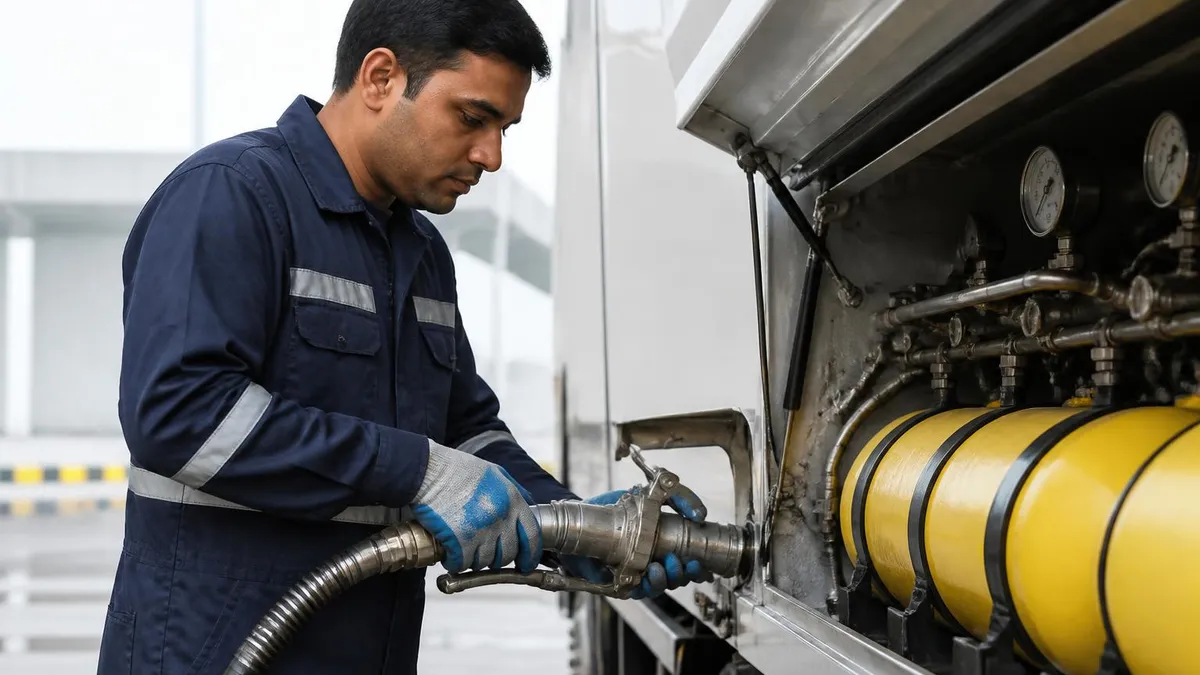
CNG Car: How Compressed Natural Gas Vehicles Work, Benefits, Costs, Available Models, and Safety
About the Author

Educational Psychologist & Academic Test Preparation Expert
Columbia University Teachers CollegeDr. Lisa Patel holds a Doctorate in Education from Columbia University Teachers College and has spent 17 years researching standardized test design and academic assessment. She has developed preparation programs for SAT, ACT, GRE, LSAT, UCAT, and numerous professional licensing exams, helping students of all backgrounds achieve their target scores.
Join the Discussion
Connect with other students preparing for this exam. Share tips, ask questions, and get advice from people who have been there.
View discussion (8 replies)