
What Does CNA Stand For? Certified Nursing Assistant Explained 2026
✏️ Pass your What Does CNA Stand For? Certified exam on the first attempt. Practice questions with detailed answer explanations, hints, and instant scoring.
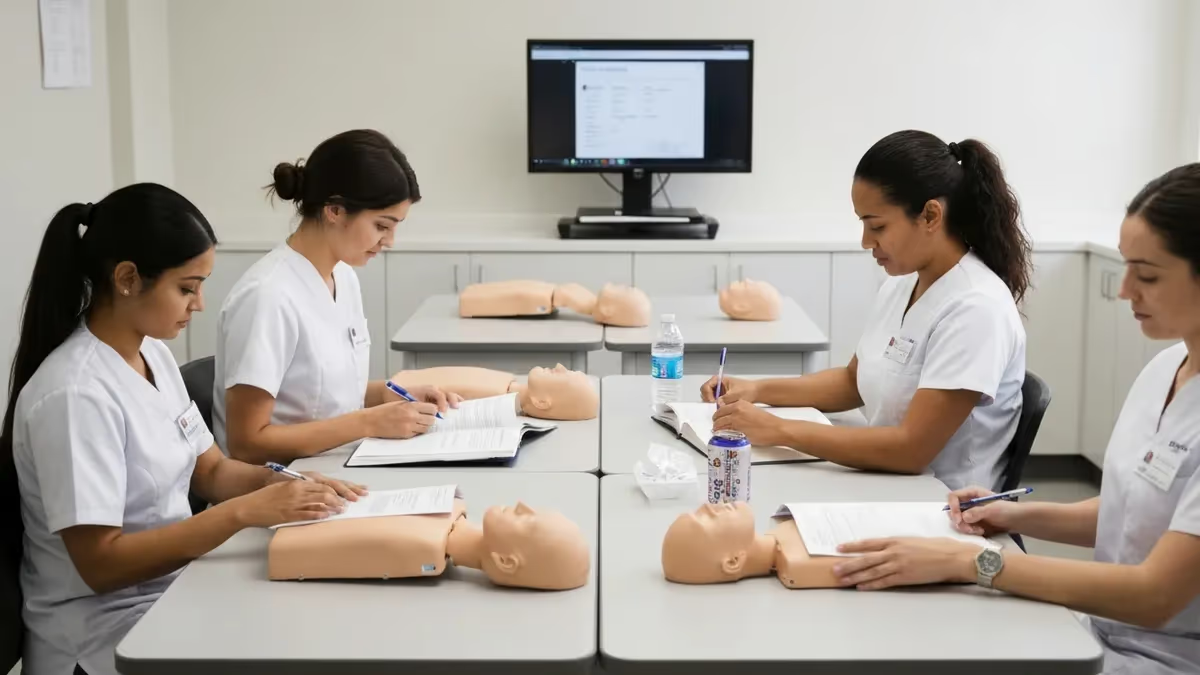
So what does CNA stand for? CNA stands for Certified Nursing Assistant -- a state-certified healthcare professional who provides direct patient care under the supervision of a Registered Nurse or Licensed Practical Nurse. It's one of the fastest entry points into healthcare, and over 1.4 million people currently hold this credential across the United States. If you've been searching for what does CNA stand for, you're about to get the full picture -- from certification requirements to salary expectations and career growth. Practice with the free CNA practice test on PracticeTestGeeks (3,000+ questions with answer explanations).
The CNA title isn't just a job description. It's a formal, state-regulated credential that appears on a nurse aide registry. That distinction matters. Unlike unlicensed assistive personnel or patient care assistants, CNAs complete a structured training program of 75 to 180 hours and pass a two-part competency exam. This standardization makes the credential portable across state lines through reciprocity agreements -- something informal titles can't offer.
You might also wonder what does CNA insurance stand for. That's a different animal entirely. CNA Financial Corporation is a major commercial insurance company headquartered in Chicago. Same acronym, completely different world. In healthcare conversations, CNA always means Certified Nursing Assistant. The Bureau of Labor Statistics reports a median annual salary of $38,200 for nursing assistants, with 4% projected job growth through 2032 -- roughly 73,000 new openings every year.
Free CNA Study Tools
Interactive CNA resources on PracticeTestGeeks, free to start:
- CNA practice test — 3,000+ questions with instant scoring and answer explanations
- CNA flashcards — review key terms and concepts card by card
- CNA study guide — topic-by-topic overview of what the exam covers
- CNA cheat sheet — one-page printable summary for last-minute review
CNA: upcoming dates and official changes
- Aug 1, 2026: Connecticut (Prometric) implements new exam pricing: $48 for written only, $48 for oral only, $125 for bundled written and clinical skills, effective August 1, 2026.[4]
- Jul 1, 2026: Idaho (Prometric) raises CNA exam fees to $34 each for written and oral exams, plus test site fees, effective July 1, 2026.[5]
- Passing score (written or oral): Set per state; no national percentage published.[1]
- Retake policy: Minimum 3 attempts required; aides must be told which areas they failed before each retake.[1]
- Validity: 2 years from issuance in most states.[2]
- Renewal: State-specific; typically 2-year cycles with continuing education requirements (12–24 hours per year) and paid-work requirements.[3]
All verified CNA facts and sources
Numbers in brackets link to the official sources listed under Sources & last verified. Dates that have passed are removed automatically.

What Does CNA Stand For in Medical Terms?
In medical settings, what does CNA stand for in medical terms boils down to one thing: a credentialed bedside caregiver. The Certified Nursing Assistant is the person who spends the most direct time with patients -- more than doctors, more than RNs, more than any other team member. They're the eyes and ears of the nursing floor. When a patient's condition changes, the CNA is often the first to notice and report it to the supervising nurse.
But what does CNA insurance stand for? Outside healthcare, CNA refers to CNA Financial Corporation, one of the largest commercial property and casualty insurance carriers in the country. Founded in 1897 and headquartered in Chicago, CNA Financial serves businesses rather than individuals. The acronym overlap causes frequent confusion -- especially in online searches -- but the two have zero connection. If someone in a hospital mentions CNA, they mean the nursing assistant, not the insurance company.
State-by-state, you'll encounter alternate titles for the same credential. Ohio calls them State Tested Nurse Aides (STNAs). Some states use Nurse Aide or Certified Nurse Aide. Don't let the naming variations confuse you. The training requirements, exam structure, and scope of practice remain consistent. Every CNA appears on a state nurse aide registry, and that registry listing is what employers verify before making a hire. It's what separates a CNA from someone with on-the-job training alone.
What Does CNA Stand For in Nursing?
What does CNA stand for? In nursing specifically, CNA identifies the foundational role in the nursing team hierarchy. Certified Nursing Assistants handle the hands-on patient care that keeps a unit running. Without CNAs, nurses would spend their entire shift on basic care tasks instead of assessments, medication administration, and care planning. It's a symbiotic relationship -- CNAs free up nurses to work at the top of their license.
What does CNA stand for in nursing from a career perspective? It's your starting line. Many RNs and LPNs began as CNAs. The bedside experience you gain -- reading patient cues, managing time across multiple patients, working under pressure -- can't be replicated in a classroom. Nursing school admissions committees know this. CNA experience on your application signals clinical readiness and genuine commitment to patient care.
The scope of practice for CNAs includes Activities of Daily Living (ADLs), vital sign monitoring, specimen collection, catheter care, range-of-motion exercises, and patient mobility assistance. You won't administer medications or perform assessments -- those fall under the LPN or RN scope. But everything else that keeps patients comfortable, clean, safe, and monitored? That's squarely CNA territory. Training programs run 75 to 180 hours depending on your state, and you can be working within 4 to 16 weeks of enrollment.
CNA vs Other Healthcare Roles
Education: CNA requires 75-180 hours of training (4-16 weeks). LPN requires a 12-18 month diploma program at an accredited nursing school.
Certification: CNAs pass a state competency exam. LPNs must pass the NCLEX-PN national licensing exam.
Scope: CNAs handle ADLs, vital signs, and specimen collection. LPNs administer medications, provide wound care, and monitor IVs.
Salary: CNA median is $38,200/year. LPN median is $59,730/year -- about 56% more.
Path Forward: Many CNAs use the role as a stepping stone to LPN licensure. CNA experience strengthens LPN program applications significantly.
What Does CNA Stand For in Insurance and Business?
What does CNA stand for insurance contexts? CNA Financial Corporation is a commercial insurance giant with over $10 billion in annual revenue. They specialize in property and casualty coverage for businesses -- think professional liability, workers' compensation, and commercial auto policies. The company trades on the NYSE under the ticker "CNA" and has been operating since 1897. When someone in a boardroom mentions CNA, they're almost certainly talking about insurance, not nursing.
What does CNA stand for medical contexts? It's exclusively Certified Nursing Assistant. The two meanings rarely overlap in practice, but they cause plenty of confusion in Google searches. If you're here reading this, you probably started with a healthcare question and may have stumbled across insurance results. Context is everything -- in a hospital hallway, CNA means one thing; in a corporate insurance meeting, it means something entirely different.
Beyond insurance and healthcare, CNA pops up in other industries too. In media, CNA can stand for Channel NewsAsia, a Singapore-based news network. In real estate, some firms use CNA as an internal designation for client needs assessments. And in education, CNA sometimes appears as an abbreviation for "Certified Network Administrator" in older IT certification references. But in the United States, the overwhelming majority of CNA searches relate to Certified Nursing Assistant -- and that's what this guide focuses on.
CNA in Other Contexts: Warranty, Text, and More
So what does CNA stand for beyond healthcare and insurance? Let's cover a few more. First, cna what does it stand for in warranty contexts? CNA National Warranty Corporation is a vehicle service contract provider -- they sell extended warranties for cars. If your dealership mentions CNA, they're talking about protection plans for your transmission and engine, not patient care. CNA National operates separately from CNA Financial Corporation, adding yet another layer of acronym confusion.
What does CNA warranty stand for specifically? CNA National Warranty Corporation provides mechanical breakdown coverage, GAP insurance, and vehicle service contracts through auto dealerships nationwide. They've been in business since 1983 and cover everything from powertrain failures to electrical system breakdowns. Again, completely unrelated to nursing -- but the shared acronym trips people up constantly.
In everyday communication, the abbreviation carries different weight depending on the platform. On social media and in casual messaging, CNA might simply refer to someone's job title as a Certified Nursing Assistant. Nursing students and working CNAs frequently use the acronym in study groups, Reddit threads, and TikTok content about healthcare careers. The context almost always makes the meaning clear -- but if you're searching online, you'll want to add "nursing" or "healthcare" to your query to filter out the insurance and warranty results.
Pros and Cons of Becoming a CNA
- +Fast entry into healthcare -- training takes just 4-16 weeks compared to years for other nursing roles
- +High demand with 4% projected job growth and approximately 73,000 annual openings through 2032
- +Portable credential that transfers across all 50 states through CNA reciprocity agreements
- +Clear advancement pathway to LPN, RN, and advanced practice nursing through bridge programs
- +Meaningful work providing direct patient care and making a tangible difference in people's lives
- +Low educational cost -- many employers offer free CNA training programs to new hires
- −Physically demanding work including lifting, transferring, and repositioning patients each shift
- −Emotional toll from caring for seriously ill or dying patients and managing family expectations
- −Lower salary compared to LPNs and RNs despite significant daily responsibility for patient welfare
- −Exposure to infectious diseases and bodily fluids requiring strict infection control protocols
- −Staffing shortages in many facilities mean higher patient-to-CNA ratios and heavier workloads
- −Limited scope of practice means you can't perform many clinical tasks without additional certification
Pros and Cons at a Glance
| Pros | Cons |
|---|---|
| Clear advancement pathway to LPN, RN, and advanced practice nursing through bridge programs | Physically demanding work including lifting, transferring, and repositioning patients each shift |
| Meaningful work providing direct patient care and making a tangible difference in people's lives | Emotional toll from caring for seriously ill or dying patients and managing family expectations |
| Low educational cost -- many employers offer free CNA training programs to new hires | Lower salary compared to LPNs and RNs despite significant daily responsibility for patient welfare |
What Does CNA Stand For in Nursing Practice?
What does CNA stand for nursing in terms of actual daily work? It means being the backbone of patient care. Every shift, you'll take vital signs, assist with bathing and grooming, help patients eat, reposition bed-bound individuals to prevent pressure ulcers, and document everything. The work is physical, fast-paced, and deeply personal. You're literally caring for people at their most vulnerable moments.
What does CNA stand for in healthcare from a staffing perspective? CNAs are the largest group in the nursing workforce, and facilities can't operate without them. Hospitals, nursing homes, assisted living centers, and home health agencies all depend on CNAs to deliver the hands-on care that keeps patients safe and comfortable. When staffing ratios drop, patient outcomes suffer -- which is why the 4% growth projection and 73,000 annual openings are so significant.
The clinical skills you'll master go well beyond basic caregiving. CNAs learn proper body mechanics for patient transfers, infection control procedures, catheter care, specimen collection, blood glucose monitoring, and range-of-motion exercises. You'll also develop soft skills that textbooks can't teach -- reading a patient's body language, calming someone who's frightened, and communicating observations clearly to your supervising nurse. These skills become your foundation whether you stay as a CNA or advance to LPN or RN.
CNA Certification Requirements Checklist
- ✓Complete a high school diploma or GED (required in all states)
- ✓Pass a criminal background check before enrolling in training
- ✓Enroll in a state-approved CNA training program (75-180 hours)
- ✓Complete required classroom instruction hours covering nursing fundamentals
- ✓Finish supervised clinical hours at an approved healthcare facility
- ✓Pass the written knowledge portion of the state competency exam
- ✓Pass the clinical skills demonstration with 3-5 randomly selected procedures
- ✓Get listed on your state's nurse aide registry after passing
- ✓Obtain CPR certification (required in most states)
- ✓Apply for CNA positions and begin your healthcare career
CNA in the Medical Field and Beyond
What does CNA stand for in the medical field at its core? It represents the entry point into a nursing career with real upward mobility. The Certified Nursing Assistant credential opens doors to LPN bridge programs, RN programs, and even advanced practice nursing -- all building on the bedside experience you gain from day one. Many of the best nurses in the country started as CNAs, and they'll tell you those early clinical hours shaped their entire approach to patient care.
Now, what does the abbreviation PWB stand for CNA students and professionals? PWB means Partial Weight Bearing -- a mobility status used in patient documentation. When a patient has a PWB order, it means they can place some weight on an injured or post-surgical limb, but not their full body weight. CNAs need to know this abbreviation because it directly affects how you assist with transfers and ambulation. Getting it wrong risks reinjury. Other common CNA abbreviations include ADLs (Activities of Daily Living), ROM (Range of Motion), and I&O (Intake and Output).
Understanding medical abbreviations is a significant part of CNA competency. During your training program, you'll learn dozens of shortened terms used in patient charts, care plans, and verbal nursing reports. Abbreviations like NPO (nothing by mouth), PRN (as needed), BRP (bathroom privileges), and VS (vital signs) appear daily in CNA work. Mastering these isn't just about passing the exam -- it's about communicating accurately with the rest of your healthcare team and providing safe care.
CNA in Text Messages, News, and Pop Culture
What does CNA stand for in text conversations? On social media and in messaging apps, CNA almost always refers to Certified Nursing Assistant. Nursing students use it constantly in study groups. Working CNAs share shift stories, exam tips, and career advice using the hashtag #CNA across TikTok, Instagram, and Reddit. If someone texts "I just passed my CNA," they mean the certification exam -- not an insurance policy.
What does CNA news stand for? In media contexts, CNA typically refers to Channel NewsAsia, a Singaporean English-language news channel operated by Mediacorp. CNA (the news network) covers Asian and international current affairs. It's widely watched across Southeast Asia and has a growing global digital audience. This is the third major meaning of CNA you'll encounter online -- healthcare, insurance, and now media. Add "nursing" to your search if you want healthcare-specific results.
The acronym also appears in military and government contexts, though less commonly. Some branches use CNA for Computer Network Attack in cybersecurity operations. The Center for Naval Analyses (CNA) is a federally funded research center that supports the U.S. Navy. And in Canadian politics, CNA once stood for the Canadian Nurses Association before they rebranded. The sheer number of meanings underscores why context matters when you see these three letters. For healthcare career seekers, CNA means one thing: your first step into nursing.
The CNA competency exam has two parts: a written test with 60-100 multiple-choice questions and a clinical skills demonstration where you perform 3-5 randomly selected procedures. Practice both sections using our free CNA practice tests to build confidence before exam day.
CNA in Business and Education Settings
What does CNA stand for in business? Beyond CNA Financial Corporation (the insurance company), CNA appears in business contexts as an abbreviation for Client Needs Assessment or Customer Needs Analysis. Sales teams and consultants use CNA frameworks to systematically evaluate what a client or customer requires before proposing solutions. It's a structured approach -- define the problem, identify constraints, evaluate options, recommend action. If you're in a business meeting and someone mentions running a CNA, they're talking about needs analysis, not nursing certifications.
What does CNA stand for in education? In academic settings, CNA most commonly refers to Certified Nursing Assistant training programs offered by community colleges, vocational schools, and healthcare facilities. Many high schools now offer CNA certification as part of their health sciences career pathway, letting students earn the credential before graduation. Some school districts partner with local nursing homes to provide the required clinical hours. It's one of the few healthcare credentials a 16 or 17-year-old can earn.
The educational pathway matters because it affects your career trajectory. Community college CNA programs often articulate credits toward LPN and ADN (Associate Degree in Nursing) programs at the same institution. This means your CNA coursework might count toward a nursing degree later. Some hospitals and nursing homes offer free CNA training to employees, eliminating the educational cost entirely. If you're weighing your options, look at programs that offer both the CNA credential and a clear path to higher nursing education at the same school.
CNA Practice Test Questions
Prepare for the CNA - Certified Nursing Assistant exam with our free practice test modules. Each quiz covers key topics to help you pass on your first try.
CNA Activities of Daily Living
CNA Exam Questions covering Activities of Daily Living. Master CNA Test concepts for certification prep.
CNA Aging Process
Free CNA Practice Test featuring Aging Process. Improve your CNA Exam score with mock test prep.
CNA Anatomy and Physiology Basics
CNA Mock Exam on Anatomy and Physiology Basics. CNA Study Guide questions to pass on your first try.
CNA Assisting with Daily Living
CNA Test Prep for Assisting with Daily Living. Practice CNA Quiz questions and boost your score.
CNA Assisting with Range of Motion Exercises
CNA Questions and Answers on Assisting with Range of Motion Exercises. Free CNA practice for exam readiness.
CNA Basic Human Anatomy and Age-Related Ch...
CNA Mock Test covering Basic Human Anatomy and Age-Related Changes. Online CNA Test practice with instant feedback.
CNA Basic Nursing Skills
Free CNA Quiz on Basic Nursing Skills. CNA Exam prep questions with detailed explanations.
CNA Basic Nursing Skills 10
CNA Practice Questions for Basic Nursing Skills 10. Build confidence for your CNA certification exam.
CNA Basic Nursing Skills 11
CNA Test Online for Basic Nursing Skills 11. Free practice with instant results and feedback.
CNA Basic Nursing Skills 1
CNA Study Material on Basic Nursing Skills 1. Prepare effectively with real exam-style questions.
CNA Basic Nursing Skills 12
Free CNA Test covering Basic Nursing Skills 12. Practice and track your CNA exam readiness.
CNA Basic Nursing Skills 13
CNA Exam Questions covering Basic Nursing Skills 13. Master CNA Test concepts for certification prep.
CNA Basic Nursing Skills 14
Free CNA Practice Test featuring Basic Nursing Skills 14. Improve your CNA Exam score with mock test prep.
CNA Basic Nursing Skills 15
CNA Mock Exam on Basic Nursing Skills 15. CNA Study Guide questions to pass on your first try.
CNA Basic Nursing Skills 16
CNA Test Prep for Basic Nursing Skills 16. Practice CNA Quiz questions and boost your score.
CNA Basic Nursing Skills 17
CNA Questions and Answers on Basic Nursing Skills 17. Free CNA practice for exam readiness.
CNA Basic Nursing Skills 18
CNA Mock Test covering Basic Nursing Skills 18. Online CNA Test practice with instant feedback.
CNA Basic Nursing Skills 19
Free CNA Quiz on Basic Nursing Skills 19. CNA Exam prep questions with detailed explanations.
CNA Basic Nursing Skills 20
CNA Practice Questions for Basic Nursing Skills 20. Build confidence for your CNA certification exam.
CNA Basic Nursing Skills 21
CNA Test Online for Basic Nursing Skills 21. Free practice with instant results and feedback.
CNA Basic Nursing Skills 2
CNA Study Material on Basic Nursing Skills 2. Prepare effectively with real exam-style questions.
CNA Basic Nursing Skills 3
Free CNA Test covering Basic Nursing Skills 3. Practice and track your CNA exam readiness.
CNA Basic Nursing Skills 4
CNA Exam Questions covering Basic Nursing Skills 4. Master CNA Test concepts for certification prep.
CNA Basic Nursing Skills 5
Free CNA Practice Test featuring Basic Nursing Skills 5. Improve your CNA Exam score with mock test prep.
CNA Basic Nursing Skills 6
CNA Mock Exam on Basic Nursing Skills 6. CNA Study Guide questions to pass on your first try.
CNA Basic Nursing Skills 7
CNA Test Prep for Basic Nursing Skills 7. Practice CNA Quiz questions and boost your score.
CNA Basic Nursing Skills 8
CNA Questions and Answers on Basic Nursing Skills 8. Free CNA practice for exam readiness.
CNA Basic Nursing Skills 9
CNA Mock Test covering Basic Nursing Skills 9. Online CNA Test practice with instant feedback.
CNA Basic Restorative Services
Free CNA Quiz on Basic Restorative Services. CNA Exam prep questions with detailed explanations.
CNA Basic Restorative Services 1
CNA Practice Questions for Basic Restorative Services 1. Build confidence for your CNA certification exam.
CNA Bathing and Dressing
CNA Test Online for Bathing and Dressing. Free practice with instant results and feedback.
CNA Body Mechanics
CNA Study Material on Body Mechanics. Prepare effectively with real exam-style questions.
CNA Career Advancement and Opportunities
Free CNA Test covering Career Advancement and Opportunities. Practice and track your CNA exam readiness.
CNA Career Opportunities and Benefits
CNA Exam Questions covering Career Opportunities and Benefits. Master CNA Test concepts for certification prep.
CNA Care for Residents with Cognitive Impa...
Free CNA Practice Test featuring Care for Residents with Cognitive Impairment. Improve your CNA Exam score with mock test prep.
CNA Care of Cognitively Impaired Residents
CNA Mock Exam on Care of Cognitively Impaired Residents. CNA Study Guide questions to pass on your first try.
CNA Care of Cognitively Impaired Residents 1
CNA Test Prep for Care of Cognitively Impaired Residents 1. Practice CNA Quiz questions and boost your score.
CNA Care Of Cognitively Impaired Residents 4
CNA Questions and Answers on Care Of Cognitively Impaired Residents 4. Free CNA practice for exam readiness.
CNA Common Medical Terms and Abbreviations
CNA Mock Test covering Common Medical Terms and Abbreviations. Online CNA Test practice with instant feedback.
CNA Communication and Interpersonal Skills
Free CNA Quiz on Communication and Interpersonal Skills. CNA Exam prep questions with detailed explanations.
CNA Communication and Interpersonal Skills 1
CNA Practice Questions for Communication and Interpersonal Skills 1. Build confidence for your CNA certification exam.
CNA Communication And Interpersonal Skills 4
CNA Test Online for Communication And Interpersonal Skills 4. Free practice with instant results and feedback.
CNA Eligibility and Qualifications
CNA Study Material on Eligibility and Qualifications. Prepare effectively with real exam-style questions.
CNA Emergency Procedure
Free CNA Test covering Emergency Procedure. Practice and track your CNA exam readiness.
CNA Ethics and Professionalism
CNA Exam Questions covering Ethics and Professionalism. Master CNA Test concepts for certification prep.
CNA Exam Structure and Content
Free CNA Practice Test featuring Exam Structure and Content. Improve your CNA Exam score with mock test prep.
CNA Feeding and Hydration
CNA Mock Exam on Feeding and Hydration. CNA Study Guide questions to pass on your first try.
CNA Infection Control
CNA Test Prep for Infection Control. Practice CNA Quiz questions and boost your score.
CNA Infection Control and Safety
CNA Questions and Answers on Infection Control and Safety. Free CNA practice for exam readiness.
CNA Isolation Precautions
CNA Mock Test covering Isolation Precautions. Online CNA Test practice with instant feedback.
CNA Legal & Ethical Behaviours
Free CNA Quiz on Legal & Ethical Behaviours. CNA Exam prep questions with detailed explanations.
CNA Legal & Ethical Behaviours 1
CNA Practice Questions for Legal & Ethical Behaviours 1. Build confidence for your CNA certification exam.
CNA Legal & Ethical Behaviours 4
CNA Test Online for Legal & Ethical Behaviours 4. Free practice with instant results and feedback.
CNA Mental Health and Social Services Needs
CNA Study Material on Mental Health and Social Services Needs. Prepare effectively with real exam-style questions.
CNA Mental Health and Social Services Needs 1
Free CNA Test covering Mental Health and Social Services Needs 1. Practice and track your CNA exam readiness.
CNA Mental Health And Social Services Needs 4
CNA Exam Questions covering Mental Health And Social Services Needs 4. Master CNA Test concepts for certification prep.
CNA Nutrition and Hydration Management
Free CNA Practice Test featuring Nutrition and Hydration Management. Improve your CNA Exam score with mock test prep.
CNA Patient Care Procedure
CNA Mock Exam on Patient Care Procedure. CNA Study Guide questions to pass on your first try.
CNA Personal Care Skills
CNA Test Prep for Personal Care Skills. Practice CNA Quiz questions and boost your score.
CNA Personal Care Skills 1
CNA Questions and Answers on Personal Care Skills 1. Free CNA practice for exam readiness.
CNA Personal Care Skills 4
CNA Mock Test covering Personal Care Skills 4. Online CNA Test practice with instant feedback.
CNA Personal Care Skills 5
Free CNA Quiz on Personal Care Skills 5. CNA Exam prep questions with detailed explanations.
CNA Personal Hygiene and Grooming
CNA Practice Questions for Personal Hygiene and Grooming. Build confidence for your CNA certification exam.
CNA Practice Test - Basic Nursing Skills #2
CNA Test Online for Practice Test - Basic Nursing Skills #2. Free practice with instant results and feedback.
CNA Practice Test - Basic Nursing Skills #2 1
CNA Study Material on Practice Test - Basic Nursing Skills #2 1. Prepare effectively with real exam-style questions.
CNA Preventing Patient Falls and Injuries
Free CNA Test covering Preventing Patient Falls and Injuries. Practice and track your CNA exam readiness.
CNA Promoting Resident Independence and Ch...
CNA Exam Questions covering Promoting Resident Independence and Choice. Master CNA Test concepts for certification prep.
CNA Proper Hand Hygiene and PPE Usage
Free CNA Practice Test featuring Proper Hand Hygiene and PPE Usage. Improve your CNA Exam score with mock test prep.
CNA Resident Rights and Communication
CNA Mock Exam on Resident Rights and Communication. CNA Study Guide questions to pass on your first try.
CNA Resident’s Rights
CNA Test Prep for Resident’s Rights. Practice CNA Quiz questions and boost your score.
CNA Resident's Rights 1
CNA Questions and Answers on Resident's Rights 1. Free CNA practice for exam readiness.
CNA Resident's Rights 4
CNA Mock Test covering Resident's Rights 4. Online CNA Test practice with instant feedback.
CNA Roles and Responsibilities
Free CNA Quiz on Roles and Responsibilities. CNA Exam prep questions with detailed explanations.
CNA Safety and Emergency Procedures
CNA Practice Questions for Safety and Emergency Procedures. Build confidence for your CNA certification exam.
CNA Safety and Emergency Procedures 1
CNA Test Online for Safety and Emergency Procedures 1. Free practice with instant results and feedback.
CNA Safety And Emergency Procedures 4
CNA Study Material on Safety And Emergency Procedures 4. Prepare effectively with real exam-style questions.
CNA Safety and Infection Control
Free CNA Test covering Safety and Infection Control. Practice and track your CNA exam readiness.
CNA Scope of Practice
CNA Exam Questions covering Scope of Practice. Master CNA Test concepts for certification prep.
CNA Skills and Competencies
Free CNA Practice Test featuring Skills and Competencies. Improve your CNA Exam score with mock test prep.
CNA Supporting Rehabilitation Activities
CNA Mock Exam on Supporting Rehabilitation Activities. CNA Study Guide questions to pass on your first try.
CNA The Nurse Aide's Role and Responsibili...
CNA Test Prep for The Nurse Aide's Role and Responsibilities. Practice CNA Quiz questions and boost your score.
CNA Time Management and Prioritization
CNA Questions and Answers on Time Management and Prioritization. Free CNA practice for exam readiness.
CNA Toileting and Elimination
CNA Mock Test covering Toileting and Elimination. Online CNA Test practice with instant feedback.
CNA Using Adaptive Devices
CNA Practice Questions for Using Adaptive Devices. Build confidence for your CNA certification exam.
CNA in Real Estate, Sales, and Specialized Fields
What does CNA stand for in real estate? In property and real estate contexts, CNA typically stands for Certified Negotiation Agent or Certified Negotiation Advisor -- a professional designation for real estate agents who've completed specialized negotiation training. The Real Estate Negotiation Institute offers this certification to help agents improve their deal-making skills. It's completely unrelated to healthcare, but real estate professionals use the CNA abbreviation on their business cards and marketing materials.
What does CNA stand for in sales? Similar to real estate, CNA in sales often refers to Customer Needs Analysis -- a structured process for understanding what a prospect actually needs before pitching a solution. Good salespeople don't lead with their product; they lead with questions. A proper CNA in sales means asking about pain points, budget constraints, decision timelines, and success metrics before recommending anything. Some sales training programs treat CNA methodology as a core competency.
The versatility of this three-letter acronym is honestly remarkable. From Certified Nursing Assistants in hospitals to CNA Financial Corporation in insurance boardrooms, from Channel NewsAsia broadcasting out of Singapore to Customer Needs Analysis in sales meetings -- the same three letters carry different weight depending on who's using them and where. For the millions of people working in or entering healthcare, though, CNA means one thing: a certified, credentialed, state-regulated nursing professional who provides direct patient care. That's the meaning that matters most, and it's the one that opens doors to a career helping others.
If you want more targeted practice, the free cna credential practice exams page covers the same material with additional questions and explanations.
If you want more targeted practice, the cna prometric practice test page covers the same material with additional questions and explanations.
If you want more targeted practice, the cna courses near me page covers the same material with additional questions and explanations.
If you want more targeted practice, the cna lookup page covers the same material with additional questions and explanations.
Sample CNA Practice Questions
Try these questions from our free CNA practice tests. The correct answer and an explanation follow each question.
How often must a certified nursing assistant re-register or renew their certification?
- A. Every 6 months
- B. Every 5 years
- C. Every 1–2 years, per state requirements
- D. Only once when first certified
Answer: C. Every 1–2 years, per state requirements
CNA certification renewal requirements vary by state but typically occur every one to two years. Renewal usually requires proof of continued employment as a nursing assistant and completion of required in-service training hours.
Patients may become aggressive and assault nursing assistants. If this occurs, you ought to ______.
- A. immediately leave the patient and call for security
- B. back away from the patient and talk to them in a calm voice.
- C. contact the family members to control the situation
- D. ask the nurse to call the doctor to get an order for restraints.
Answer: B. back away from the patient and talk to them in a calm voice.
When a patient becomes aggressive, the immediate priority is to ensure safety for both the patient and the caregiver. Backing away creates physical space, reducing the risk of injury, while speaking calmly can help de-escalate the situation. It's important to avoid confrontational actions and seek assistance from other staff or the nurse after ensuring immediate safety.
Negligence in nursing assistant practice occurs when:
- A. A CNA performs a task beyond their scope of practice intentionally to harm a resident
- B. A CNA fails to provide the standard of care, resulting in harm to a resident
- C. A CNA makes a correct clinical decision with an unforeseen outcome
- D. A CNA reports concerns about a resident to the charge nurse
Answer: B. A CNA fails to provide the standard of care, resulting in harm to a resident
Negligence is the failure to provide the expected standard of care that a competent CNA would provide, resulting in harm to the resident.
A nursing assistant closes the door, pulls curtains between beds, and covers the resident with a bath sheet when giving a bath. This is an example of maintaining a resident's
- A. choice.
- B. confidentiality.
- C. privacy.
- D. protection.
Answer: C. privacy.
Closing the door, pulling curtains between beds, and covering a resident with a bath sheet when giving a bath are all actions taken to protect the resident's privacy. These measures ensure that the resident's body is not unnecessarily exposed and that their personal space is respected, which is a fundamental right and promotes their dignity.
CNA Questions and Answers
Sources & last verified
- Centers for Medicare & Medicaid Services — passing score, retake policy (official source). “The State shall establish the passing standard for the written or oral examination and for the skills demonstration.” Verified Oct 14, 2026.
- archive.regulations.delaware.gov — validity (official source). “CNA certification shall be effective for 2 years following the date of issue and shall expire 2 years following such date” Verified Oct 14, 2026.
- cdph.ca.gov — renewal (official source). “Certificates are renewed every two years, and the required training is 48 hours of in-service training or continuing education” Verified Oct 14, 2026.
- prometric.com — other (official source). “Effective August 1, 2026, the following exam pricing will be implemented” Verified Oct 14, 2026.
- prometric.com — other (official source). “Effective July 1, 2026, the following exam pricing will be implemented: $34 written, $34 oral, plus test site fees” Verified Oct 14, 2026.
How we verify: editorial & fact-checking policy. Report an error: contact us.

Restorative CNA: Duties, Training, Salary & How to Get Started

CNA Hospital Jobs Near Me: How to Find, Apply & Get Hired in 2026

Goodwill CNA Program: Free Classes, Costs, and How to Enroll

Hospice CNA: Duties, Salary, Per Diem Work & How to Get Started

4-Week CNA Program: Online Options, State Programs & How to Enroll
How this page was made: written with AI tools. Exam facts are checked against the official sources listed below. Not reviewed by a subject-matter expert. Editorial policy
Sources & references
Exam facts on this page (fees, format, dates, passing scores) are checked against these official sources; the date is our last check. Editorial policy
- floridasnursing.gov — Eligibility, exam format · verified Oct 2026
- law.cornell.edu — Eligibility · verified Oct 2026
- law.cornell.edu — Test delivery · verified Oct 2026
- prometric.com — Exam information · verified Oct 2026