
CDL Refresher Courses, Renewal & Instructor Path 2026 September
CDL refresher course cost, state renewal cycles (PA & IL), ⏳ and instructor certification under TPID/ELDT. Plain-English continuing-ed guide.

Getting your commercial driver license was the hard part, but keeping it sharp is where most drivers stumble. CDL continuing education covers three very different paths, and confusing them costs people time, money, and sometimes their livelihood. A refresher course rebuilds skills after a layoff or a lapsed credential.
A renewal is the routine paperwork-and-medical-card cycle every state runs on a 4 to 8 year schedule. Instructor certification is a whole separate world where experienced drivers move into the classroom and the yard to train the next wave through the Third Party Instructor Disqualification (TPID) framework and FMCSA's Entry-Level Driver Training (ELDT) rules.
This guide walks through what each path actually involves, what it costs in 2026, and how the rules differ between high-volume CDL states like Pennsylvania and Illinois. If you searched for a cdl refresher course near me because your license expired during a long break, the answer is different from someone asking how to renew a cdl license that is still active.
And if you're a 10-year veteran thinking about teaching, the credential you need has almost nothing to do with the credential you already hold. Read the right section, skip the wrong one, and you'll save yourself a week of phone calls to the DMV.
The trucking industry treats continuing education as a quiet professional standard, not a formal requirement, so a lot of the smart moves are optional rather than mandated. Carriers don't always tell you that a refresher will reset your insurance rating, that an instructor credential transfers between most states with paperwork, or that letting an endorsement lapse means a fresh test rather than a fee. Those gaps are exactly what this article fills.
CDL Continuing Education at a Glance
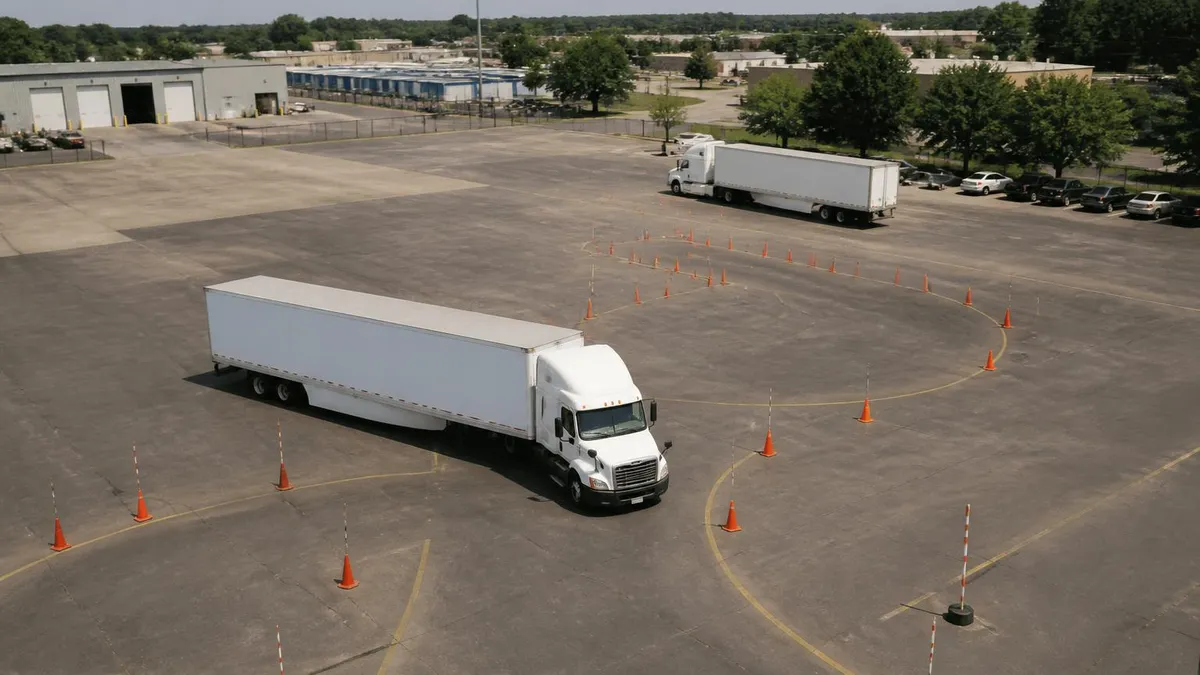
Refresher courses exist because skills decay fast in trucking. After six months off the road, most carriers won't put you in a truck without proof you've been retrained. The standard cdl refresher course runs 20 to 40 hours, splits between classroom theory and behind-the-wheel practice, and ends with a road test or skills evaluation.
Pricing in 2026 sits between $500 and $1,500 depending on the school, the state, and whether you need to redo the air brake endorsement check. Some community colleges run cdl refresher classes for under $400 if you already hold the license; private schools charge more but turn you around in a week.
The biggest question drivers ask is whether they need a full ELDT program or just a refresher. The rule is simple: if your CDL is still valid, you're allowed to take a refresher. If it expired and you have to retest from scratch, you fall back under ELDT and the school must be listed on the FMCSA Training Provider Registry. That distinction changes the cost by a factor of three, which is why the first call should always be to your state DMV to confirm your license status before booking a class.
Carrier-sponsored refreshers are worth a hard look too. Big fleets like Schneider, Werner, CRST, and Prime run their own programs and either subsidize or fully cover the cost in exchange for a contract commitment, usually 6 to 12 months of driving for that carrier after completion.
The trade is straightforward: you get free retraining and a guaranteed job, the carrier locks in a driver who already has a license and can be road-ready in days rather than months. Refresher curriculum at a carrier typically front-loads pre-trip inspection, backing maneuvers, and electronic logging device fluency because those are the three areas where returning drivers fail their first solo dispatch.
Refresher vs. Full Retraining
A cdl refresher course is for drivers whose license is still active or recently lapsed within the grace period. If your CDL has been expired beyond your state's reinstatement window (typically 1-2 years), you're starting over under ELDT rules, taking the full written and skills tests, and paying full tuition. Always pull your driving record before booking a class.
Renewing a cdl is mostly paperwork if you stay ahead of the calendar. Most states run a 4 to 8 year cycle and require a current DOT medical card on file, a clean self-certification, and a vision screening. Pennsylvania uses a 4-year cycle, sends a renewal notice about 60 days out, and lets you complete most steps at a PennDOT Driver License Center. Pa cdl renewal also requires you to update your self-certification category (non-excepted interstate, excepted intrastate, and so on) every time, which trips up drivers who switched from over-the-road to local routes.
Illinois cdl drivers license renewal works differently. Illinois cdl renewal requirements include a knowledge test for hazmat holders every renewal, a medical examiner's certificate verified through the National Registry, and an in-person visit to a Secretary of State facility. Illinois will not mail your CDL renewal; you must show up with documents.
The fee structure is also different from a regular driver license, and any endorsement you let lapse must be retested rather than simply re-checked on a form. Drivers who move between states inside the renewal window need to surrender the old license and apply for a transfer, not a renewal, which resets the clock.
Other states add their own wrinkles. Texas allows online renewal for most non-hazmat CDLs but blocks it if your photo on file is more than 12 years old. California enforces a stricter vision standard for CDL holders than for passenger drivers, so a vision change can stall a renewal that would otherwise be routine.
New York rolled CDL renewals into a 5-year cycle aligned with the federal medical certificate schedule, which means you may find yourself renewing earlier than you expected. Always read the renewal notice closely rather than assuming the rules match the last time you went through the process; states quietly tweak CDL administration almost every year.
Four CDL Continuing Education Paths
20-40 hour course for drivers who held a CDL recently but stepped away. Rebuilds pre-trip, backing, and on-road skills. $500-$1,500 typical.
4-8 year cycle by state. Medical card, vision screen, self-certification, and any endorsement retests. Mostly paperwork if you stay current.
Move from driver to trainer. Requires 2+ years CDL experience, state-approved instructor course, and TPID-compliant credentialing through your school.
Teach the FMCSA-mandated theory curriculum to new CDL students. Schools must be on the Training Provider Registry; instructors meet specific qualification criteria.
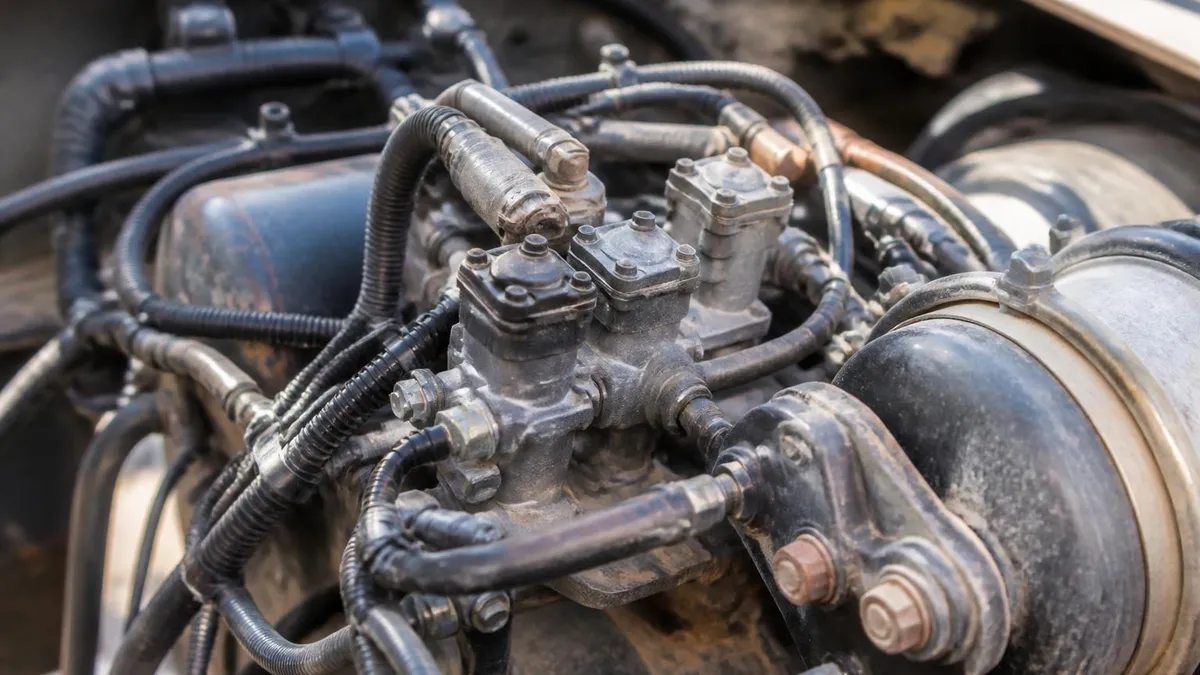
Cdl instructor certification is where experienced drivers turn knowledge into a second career. The federal floor under FMCSA requires that anyone teaching ELDT theory have either two years of CDL driving experience or two years as a commercial driving instructor, plus a current CDL of the class they teach. Behind-the-wheel instructors need the same baseline. On top of that, every state layers its own cdl instructor training program rules. Some require a 40 to 80 hour train-the-trainer course; others demand a written exam, a teach-back demonstration, and a background check.
The Third Party Instructor Disqualification (TPID) system is the spine of all this. TPID lets state-licensing agencies flag instructors who have administered tests improperly or whose students show abnormally high failure or fraud rates. Schools listed on the Training Provider Registry must keep TPID-clean instructors on staff, and a single disqualification can pull a school off the registry. That's why cdl instructor training programs spend so much time on test integrity, documentation, and proper use of the CDL Skills Test Examiner's manual, even more than they spend on driving technique.
Pay for CDL instructors sits between $22 and $45 per hour in 2026, with the higher end going to behind-the-wheel and range instructors in markets where driver shortages are pushing schools to compete. Theory instructors who only handle classroom work earn a bit less but get steadier hours. Many schools also offer per-test stipends for instructors who serve as third-party examiners.
The career trajectory is reasonable: experienced instructors often move into school management, curriculum development, or state-level examiner roles, and the credentials transfer across most states with a paperwork process rather than a fresh course. A retired over-the-road driver with a clean record can transition into part-time instruction within a few months if the local school has an opening, which makes this a popular soft-landing option for drivers winding down their road careers but not ready to fully retire.
Compare Refreshers, State Renewals, Instructor and ELDT Tracks
Refresher courses run 20-40 hours and cost $500-$1,500 in most markets. Community colleges sit at the low end; private CDL schools and carrier-sponsored programs sit higher but include placement help. A cdl refresher course cost can climb to $2,000 if you need hazmat or doubles/triples re-endorsement work. Most schools require a current medical card and a recent motor vehicle report before they'll book you. Expect 8-10 hours of classroom, 12-20 hours of yard and range, and 6-10 hours of road work. Searching for a cdl refresher course near me will turn up both standalone schools and adult-ed programs; check that the school is state-licensed before paying a deposit.
Whichever path you're on, the same handful of documents and decisions show up over and over. Drivers who stage these in advance breeze through their refresher, renewal, or instructor application. Drivers who don't end up making three trips to the DMV and paying extra fees. The checklist below covers the essentials that apply to nearly every continuing-education scenario, from a routine pa cdl renewal to enrolling in a cdl instructor training program in a new state.
One detail worth flagging up front: nearly every step on the checklist has a 30 to 60 day lead time if anything is out of date. Medical cards have to clear the National Registry, school enrollment paperwork has to be processed by the state, and instructor applications often need fingerprint background checks that take weeks. Front-load the slow steps, and the fast steps fall into place.
It's also worth thinking about how the checklist changes if you're an owner-operator versus a company driver. Company drivers usually have a safety department that catches medical card expirations and pings them with renewal reminders. Owner-operators don't have that safety net and are the most common group to discover their CDL has been quietly downgraded weeks earlier.
If you run under your own authority, set a calendar reminder 120 days, 60 days, and 30 days out from every credential expiration: medical card, CDL itself, hazmat endorsement, and TWIC if you hold one. Each operates on a different clock and missing any one of them can pull you off the road faster than the others.
The single most common reason CDLs get downgraded mid-cycle is an expired DOT medical examiner's certificate. States cross-check the National Registry monthly. If your card lapses, your CDL converts to a regular license automatically and you'll need to reinstate it before any refresher or renewal can proceed.
Print the list, work through it the week before you book any course or renewal appointment, and the rest of the process is mechanical. Schools and DMV staff are not allowed to chase missing paperwork for you, so showing up complete the first time is the single biggest time-saver in CDL continuing education. Keep a folder, paper or digital, with copies of every document you submit. State systems are slow to update and a paper trail of your own resolves most disputes in a single phone call.
Drivers who manage their own continuing-ed timeline rather than reacting to renewal notices almost never face the worst-case scenarios: forced retesting, insurance lapse, lost work weeks. Treat each cycle as a five-step process and the friction disappears.

CDL Continuing Education Checklist
- ✓Pull a current motor vehicle report (MVR) from your state of licensure to confirm CDL status, endorsement validity, and any pending suspensions before booking a refresher.
- ✓Verify your DOT medical examiner's certificate is current and uploaded to the National Registry; medical cards under 90 days from expiry will delay any renewal.
- ✓Update your self-certification category (non-excepted interstate, excepted intrastate, etc.) on every renewal; states will not assume your category carried over.
- ✓For refresher students: confirm the school is state-licensed and, if you're under ELDT, listed on the FMCSA Training Provider Registry before paying tuition.
- ✓Aspiring instructors: document at least 2 years of CDL driving or instructing experience and gather employer letters before applying to a cdl instructor training program.
- ✓Endorsement holders: check whether your state retests endorsements at renewal (Illinois retests hazmat every cycle) and budget study time and TSA fees accordingly.
- ✓Schedule renewals at least 30 days before expiration; most states block online renewal in the final two weeks and force in-person retesting if the date slips.
One question that comes up constantly in driver forums is whether to take a refresher or just restart the whole CDL process when a license has lapsed or skills feel rusty. The right answer depends on how long you've been out, how much you can spend, and whether a carrier is footing the bill. The trade-offs below are the ones experienced trainers cite most often when advising returning drivers, and they're worth weighing carefully because the wrong choice can cost an extra month off the road and several thousand dollars in tuition.
The single best filter is your insurance picture. Carriers and their insurers look at how recent your training is, not just how long you've held a CDL, so a refresher dated within the last 90 days often unlocks dispatches that a 20-year veteran without recent training can't get.
Refresher Course vs. Starting Over
- +Far cheaper than starting from scratch: $500-$1,500 vs. $4,000-$7,500 for a full CDL program.
- +Faster turnaround, typically 1-2 weeks versus 4-8 weeks for a full program.
- +Counts as recent training for carrier hiring purposes, satisfying most insurance requirements.
- +Keeps your original CDL number and issue history intact, which matters for safety scoring.
- +Lets you target specific weak areas (backing, air brakes, hours-of-service) without redoing everything.
- −Not available if your CDL has been expired beyond the state grace period (usually 1-2 years).
- −Won't satisfy ELDT requirements for first-time CDL applicants or class upgrades.
- −Lender and grant funding is harder to find compared with full ELDT-eligible programs.
- −Some carriers prefer or require full retraining for drivers out more than 3 years regardless of license status.
- −Skill gaps after long layoffs sometimes need more than 40 hours; a refresher may leave you under-prepared.
The questions below come up in every refresher class, every renewal line, and every instructor course intake interview. They're the ones that send drivers down the wrong path when they go unanswered, so it's worth running through them before you commit money or time to any continuing-education option. None of these have one-size-fits-all answers, but the general guidance here is correct in most states and for most drivers.
If a question below doesn't match your situation exactly, the right next step is almost always a call to your state DMV or Department of Motor Vehicles equivalent rather than a forum post or a generic guide. Trucking rules are heavily state-customized, and a 10-minute phone call beats a week of crowd-sourced advice.
One area where the FAQ below skims the surface deliberately is hazmat. Hazmat continuing education involves a TSA Threat Assessment, fingerprinting, the knowledge test on placards and emergency response, and a fee paid separately from the CDL renewal itself. The hazmat clock runs five years federally but states can shorten that window, and some carriers require their drivers to renew hazmat a year early to avoid lapse exposure on contracts.
If hazmat is part of your continuing-ed plan, treat it as a separate project with its own timeline rather than a tag-along to your CDL renewal. The same logic applies to school bus endorsement renewals, which require additional background checks in most states and align with school-year hiring cycles rather than the CDL renewal date. Plan endorsement renewals on a per-endorsement clock, document everything in writing, and you'll avoid the most common pitfall in CDL continuing education: a single overlooked deadline pulling the whole license offline.
CDL continuing education isn't one thing, it's three. A refresher rebuilds the truck-handling skills that get rusty during time off. A renewal is the periodic medical-and-paperwork checkup every state runs to keep records current. Instructor certification is a deliberate career pivot toward training, governed by TPID and ELDT rules that most drivers never touch. Each path has its own paperwork, its own price tag, and its own timeline, and the worst mistakes happen when drivers confuse them. Confirm your license status first, then pick the lane that matches where you actually are, not where you assume you should be.
If you're tightening up for a refresher or just want to keep your knowledge sharp between renewal cycles, working through practice questions in short, regular sessions does more for your retention than cramming the week before a course. Endorsements like hazmat, doubles/triples, and tanker decay especially fast because the rules change every couple of years. Build the habit now and the renewal cycle becomes a formality instead of a scramble, and a future jump into instructor work becomes a realistic option instead of a long shot.
One final principle: every state DMV and every FMCSA-registered school has a published list of requirements that takes maybe 15 minutes to read. Drivers who do that 15 minutes of reading before they spend any money on continuing education make better decisions than drivers who rely on word of mouth in the truck stop or a single phone call to a school's sales line.
Bookmark your state's CDL page, the FMCSA Training Provider Registry, and a reliable practice-question source. Those three tools cover most of the questions that come up over a 30-year driving career, from a first refresher after a layoff to the day you decide to step into a classroom and pass the trade to the next generation of drivers behind you.
CDL Questions and Answers
About the Author

Licensed Driving Instructor & DMV Test Specialist
Penn State UniversityRobert J. Williams graduated from Penn State University with a degree in Transportation Management and has spent 20 years as a certified driving instructor and DMV examiner consultant. He has personally coached thousands of applicants through written knowledge tests, skills assessments, and commercial driver licensing programs across more than 30 states.
Join the Discussion
Connect with other students preparing for this exam. Share tips, ask questions, and get advice from people who have been there.
View discussion (7 replies)