
CDL Prep Jeffrey Diaz Style: Your Complete Roadmap to a Commercial Driver's License
Master your CDL schedule, ace the Class A CDL exam, and land top truck driver jobs. Free practice tests + Jeffrey Diaz-style prep tips. 🎯

If you have been searching for a proven CDL prep strategy inspired by instructors like Jeffrey Diaz, you are in the right place. Your cdl schedule is the single most important planning tool you will build before ever sitting behind the wheel of a commercial vehicle. A realistic, week-by-week timeline that covers knowledge tests, skills evaluations, DOT physicals, and hands-on driving practice is what separates candidates who pass on the first attempt from those who cycle through retakes for months. Start by mapping every requirement to a calendar date, then work backward from your target test day.
The journey toward a class a cdl demands more preparation than most newcomers expect. You are not simply learning to drive a larger vehicle — you are mastering federal regulations, air-brake systems, combination vehicle coupling procedures, hazardous materials rules, and pre-trip inspection protocols that can span hundreds of memorization points.
Instructors in the CDL community who teach in the style of Jeffrey Diaz emphasize repetition, real-world scenario practice, and consistent use of a cdl practice test to measure readiness before paying for the actual state exam. That approach has helped thousands of truck driver candidates earn their licenses faster and cheaper.
One of the first logistical steps you will face is finding a dot physical near me, because no state will issue a commercial driver's license without a valid dot medical card on file. The DOT physical ensures that drivers meet vision, hearing, blood pressure, and neurological standards designed to protect public safety on highways. Many urgent-care clinics and occupational health centers are certified to administer these exams, and costs typically range from $75 to $150. Schedule yours early, because any disclosed medical condition may require additional documentation that delays your CDL application timeline by days or even weeks.
Understanding how much do truck drivers make is a legitimate motivator, and the numbers are genuinely compelling for 2026. According to the Bureau of Labor Statistics and industry surveys, the median annual wage for heavy and tractor-trailer truck drivers in the United States sits near $54,000, while experienced Class A operators hauling specialized freight, hazmat loads, or oversized cargo frequently earn $70,000 to $90,000 per year.
Owner-operators with their own authority can push past six figures. Signing bonuses at major carriers range from $5,000 to $15,000, making CDL jobs among the most financially accessible skilled-trade careers available without a four-year degree.
Finding cdl jobs near me is easier today than at any point in the past decade, because the freight industry is experiencing a sustained driver shortage that analysts estimate at over 60,000 unfilled positions nationally. Regional carriers, local delivery operations, tanker fleets, and flatbed companies are all competing for qualified drivers and raising starting pay to attract talent. Whether you want home-every-night local work or the higher pay that comes with over-the-road routes, the job market rewards anyone who completes their cdl prep thoroughly and earns a clean driving record from day one.
This article walks you through every phase of the CDL process using a structured, Jeffrey Diaz-inspired method: planning your schedule, passing the knowledge exam, surviving the skills test, getting your DOT medical card, and launching your truck driver career. We include free practice test links, a study schedule, a checklist of every document you need, and answers to the ten most common CDL questions searched online. Read from start to finish, or jump to the section most relevant to where you are in the process right now.
Whether you are starting from zero or retaking a test you previously failed, the strategies here are built around one principle: consistent daily preparation beats weekend cramming every single time. Commit to 90 minutes of study per day, use timed practice tests to simulate real exam pressure, and track your weak subjects in a notebook. Drivers who follow a disciplined cdl schedule and measure their progress weekly consistently outperform those who study without a plan. Let this guide be your roadmap to the license, the job, and the career you have been working toward.
CDL & Truck Driving Career by the Numbers

CDL License Classes: What You Need to Know Before You Start
Required for combination vehicles over 26,001 lbs where the towed unit exceeds 10,000 lbs. Covers tractor-trailers, tankers, and flatbeds. Offers the widest range of cdl jobs and highest earning potential of any commercial license class.
Covers single vehicles over 26,001 lbs or vehicles towing a unit under 10,000 lbs. Includes straight trucks, city buses, and large dump trucks. Requires less training time than Class A but limits the types of loads and routes available.
Applies to vehicles designed to transport 16 or more passengers or vehicles carrying placarded hazardous materials that do not meet Class A or B thresholds. Common for shuttle drivers, school bus operators, and certain utility workers.
All CDL applicants must pass a DOT physical and carry a valid dot medical card. Cards are issued for up to 24 months. Drivers with certain conditions may receive shorter certificates and must renew more frequently to maintain eligibility.
Add-on credentials like Hazmat (H), Tanker (N), Doubles/Triples (T), and Passenger (P) dramatically expand job eligibility and pay. Each endorsement requires a separate knowledge test and, for Hazmat, a federal background check through TSA.
Building an effective CDL study schedule starts with an honest assessment of how many hours per day you can realistically commit. Most CDL training programs recommend a minimum of 90 minutes of focused knowledge study daily, supplemented by hands-on practice whenever vehicle access is available. Spread your preparation across six to eight weeks if you are starting with no commercial driving experience, or compress to four weeks if you already work in transportation and understand basic vehicle systems. The key is consistency — irregular bursts of studying produce poor retention compared to steady daily sessions.
Week one of your cdl schedule should be dedicated entirely to the General Knowledge section of the CDL manual, which covers topics like vehicle inspection, basic vehicle control, shifting, backing, coupling and uncoupling, pre-trip inspections, and cargo handling. This section forms the foundation for every other CDL knowledge test, and understanding it deeply makes endorsement material easier to absorb later. Read each chapter once for comprehension, then immediately take a short cdl practice test on that chapter to identify gaps. Write down every question you miss and revisit that material within 24 hours while memory is fresh.
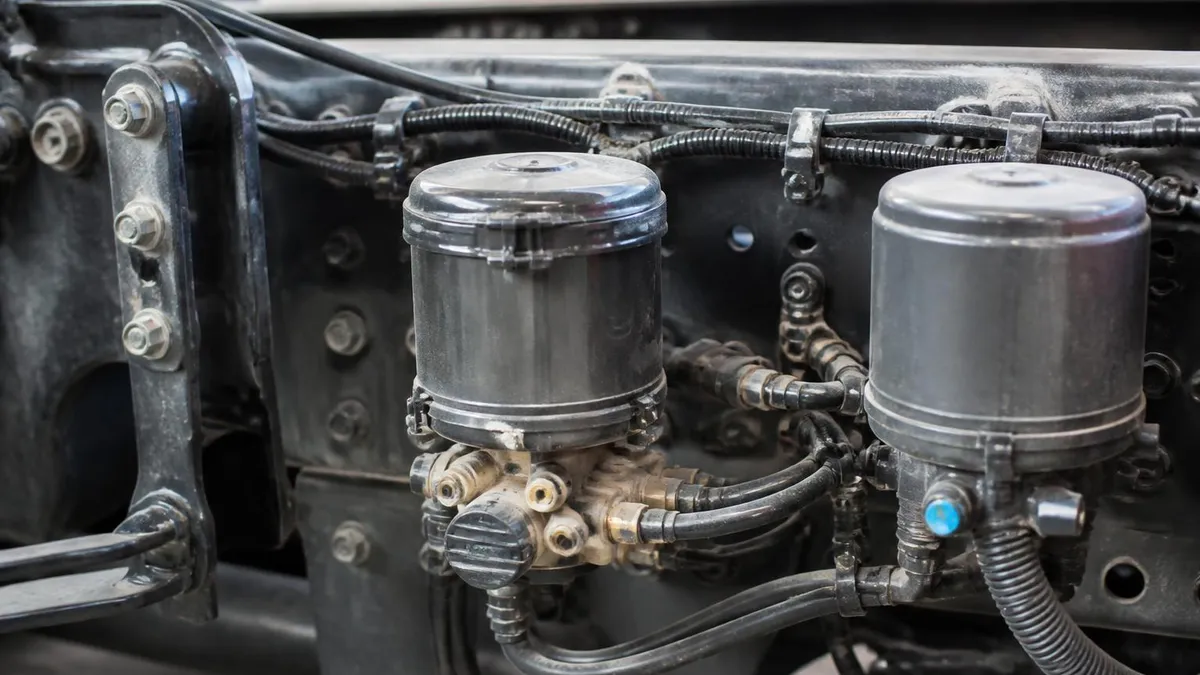
Week two should transition into Air Brakes, which is arguably the most technical and most commonly failed section of the CDL knowledge battery. Air brake systems operate on principles that are counterintuitive compared to hydraulic brakes in passenger vehicles, and the exam tests specific pressure thresholds, valve functions, and inspection procedures that require memorization.
Instructors in the Jeffrey Diaz tradition recommend drawing diagrams of the air brake system by hand, because the physical act of writing and sketching reinforces spatial memory. Understanding why each component exists, not just what it does, helps you answer scenario-based questions that cannot be solved by rote recall alone.
Weeks three and four should focus on combination vehicles, hazardous materials, and any endorsements relevant to the career path you have chosen. The combination vehicles section is mandatory for anyone pursuing a class a cdl, covering coupling and uncoupling procedures, turning limitations of long vehicles, and the specific inspection points unique to trailer connections. Hazmat, while optional, opens doors to some of the highest-paying cdl jobs in the industry and is worth the extra study investment if you plan to haul chemicals, fuel, or other regulated materials.
By week five, shift your preparation toward full-length simulated exams taken under timed conditions. Many testing platforms, including the free tests available on this site, replicate the exact question format and time pressure of the actual state CDL knowledge exam. Time yourself strictly, review every wrong answer immediately after each session, and track your percentage scores daily. Most state CDL offices require an 80 percent passing score, so your goal should be to consistently score 88 to 90 percent on practice tests before scheduling the real exam — that buffer protects you against test-day nerves and unfamiliar question phrasing.
Week six is your refinement phase. Retake tests in your weakest subject areas, focusing on accuracy rather than speed. If hazmat regulations or air brake pressure numbers continue to trip you up, create physical flashcards with exact figures on one side and the regulation context on the other.
Carry those cards during your commute, meal breaks, or any idle moment throughout the day. This distributed practice — spreading review across multiple small sessions rather than one long block — is one of the most evidence-backed learning techniques in cognitive science and has been championed by CDL prep instructors like Jeffrey Diaz for years.
The final two days before your scheduled knowledge test should be low-intensity review only. Take one practice test at your normal pace, confirm you are above your target score, then rest. Sleep deprivation measurably impairs memory retrieval and decision-making, which can cost you points on questions you actually know.
Arrive at the testing center at least 20 minutes early with your state ID, your dot medical card if required at the time of application, and your completed application forms. A calm, rested mind on test day is the product of the six weeks of work that preceded it — trust your preparation and execute.
CDL Practice Test Strategy by Subject Area
The General Knowledge exam covers vehicle inspection, basic controls, shifting gears, backing maneuvers, coupling procedures, pre-trip inspection steps, cargo securement, and federal transportation regulations. Most states administer 50 questions drawn from a larger pool, and you must answer at least 40 correctly to pass. The best approach is to read the state CDL manual in full, take a timed 50-question practice test, then drill only the questions you missed using a subject-specific flashcard deck until your accuracy in each topic area exceeds 90 percent consistently.
Many candidates underestimate the depth of cargo securement rules, which appear on the exam far more frequently than their chapter length would suggest. You need to know minimum tie-down requirements for loads of different lengths, the working load limit formula for cargo straps, and specific rules for hauling lumber, metal coils, and concrete pipe. These are not intuitive facts — they must be memorized from the federal motor carrier safety regulations that the CDL manual summarizes. Treat this section like you would a technical licensing exam, not a driving skills assessment, and your pass rate will reflect that disciplined approach.
Is Getting a Class A CDL Worth It in 2026?
- +Median salary of $64,000+ with experienced drivers earning $90,000 or more annually in specialized freight
- +Massive job market with over 60,000 unfilled CDL positions nationally and low risk of unemployment for qualified drivers
- +Relatively short training timeline of four to eight weeks compared to most skilled trade or professional certifications
- +Signing bonuses of $5,000 to $15,000 are common at major carriers competing for qualified Class A CDL holders
- +Endorsements like Hazmat and Tanker add earning potential without additional years of schooling or degree requirements
- +Strong job security driven by freight demand that cannot be fully replaced by automation in the near-term horizon
- −Initial CDL school costs range from $3,000 to $10,000, though many carriers offer sponsored training with a service commitment
- −Over-the-road routes mean extended time away from home, which strains family relationships and personal health routines
- −DOT regulations require regular drug and alcohol testing, plus random screenings that can affect employment without warning
- −Dot physical near me requirements must be maintained on an ongoing basis — drivers with certain health conditions face recurring certification challenges
- −Liability exposure is higher than in most careers; a single accident can result in litigation and affect your CDL driving record permanently
- −The learning curve during the first six months is steep, and new drivers often earn less while developing the experience carriers reward with better pay
Pros and Cons at a Glance
| Pros | Cons |
|---|---|
| Relatively short training timeline of four to eight weeks compared to most skilled trade or professional certifications | Over-the-road routes mean extended time away from home, which strains family relationships and personal health routines |
| Endorsements like Hazmat and Tanker add earning potential without additional years of schooling or degree requirements | DOT regulations require regular drug and alcohol testing, plus random screenings that can affect employment without warning |
| Strong job security driven by freight demand that cannot be fully replaced by automation in the near-term horizon | Dot physical near me requirements must be maintained on an ongoing basis — drivers with certain health conditions face recurring certification challenges |
CDL Prep Checklist: Every Step Before Your Test Day
- ✓Obtain a copy of your state's official CDL manual and read it cover to cover at least once before taking any practice tests.
- ✓Schedule and complete your DOT physical with a certified medical examiner to obtain your dot medical card before applying.
- ✓Visit your state DMV or motor vehicle office to confirm the application requirements, fees, and acceptable forms of identification.
- ✓Create a written cdl schedule that assigns specific study topics to each day across a six-to-eight-week preparation window.
- ✓Take a baseline full-length cdl practice test to identify your weakest subject areas before diving deep into any single topic.
- ✓Study the Air Brakes section using diagrams and by drawing the air brake circuit from memory to reinforce mechanical understanding.
- ✓Complete at least five timed, full-length practice tests in each required knowledge section and track your score trends daily.
- ✓Research cdl jobs near me in your target region to understand which endorsements local carriers value most before scheduling endorsement tests.
- ✓Gather all required documents — state ID, Social Security card, DOT medical card, driving record, and completed application forms.
- ✓Arrive at the testing center at least 20 minutes early, well-rested, and with every required document in hand to avoid delays or disqualification.
Consistent Daily Practice Outperforms Weekend Cramming by 40%
Research on skill acquisition consistently shows that distributing study sessions across multiple days produces significantly better retention than the same total hours crammed into a single session. CDL candidates who study 90 minutes daily for six weeks pass the knowledge exam at a measurably higher rate than those who binge-study the weekend before their scheduled test. Build the habit first — the knowledge follows naturally when your brain has time to consolidate what it learned each session overnight.
Understanding truck driver salary expectations is essential before you commit to CDL training, because the investment of time and money should be evaluated against realistic earning projections. Entry-level Class A truck drivers at major carriers typically start between $55,000 and $65,000 annually in 2026, reflecting the competitive labor market and signing incentives that companies use to attract new license holders. Drivers who complete their first year without accidents or violations and demonstrate reliability with load delivery times see pay increases that can push total compensation past $70,000 within 18 to 24 months of earning their license.
Regional and local cdl jobs near me tend to pay slightly less per mile than over-the-road positions but offer the home-daily lifestyle that many drivers prefer, particularly those with family obligations. Dedicated fleet contracts, where a driver serves a single shipper's distribution network, often pay a flat weekly rate ranging from $1,200 to $1,600 regardless of miles driven — providing income stability that appeals to drivers who value predictability over maximum earning potential. Tanker and hazmat drivers, by contrast, frequently earn premium rates of $0.58 to $0.72 per mile because of the specialized training and regulatory compliance their work requires.
Owner-operators who obtain their own Motor Carrier Authority and contract directly with shippers or freight brokers can earn gross revenues of $150,000 to $200,000 annually, though their net income after fuel, insurance, truck payments, maintenance, and permit costs typically lands between $80,000 and $120,000 depending on the lanes they run and how efficiently they manage their operating expenses.
Becoming an owner-operator usually requires at least two years of company driving experience to build the business relationships and regulatory knowledge needed to navigate the industry independently. Many successful owner-operators in the Jeffrey Diaz CDL prep tradition recommend spending the first three years as a company driver specifically to learn the business before investing in your own truck.
The how much do truck drivers make question has a satisfying answer for most who make the career transition thoughtfully. Beyond base wages, many carriers offer comprehensive health insurance, 401(k) matching, paid vacation after one year, performance bonuses tied to safety records, and fuel efficiency bonuses that reward smooth driving technique. These benefits add $8,000 to $15,000 of effective annual compensation on top of base pay, making the total compensation package competitive with many white-collar roles that require significantly more formal education and credential investment.
For Spanish-speaking candidates pursuing their licencia de conducir comercial, the CDL process is fully available in Spanish at most state DMV offices and online through official state CDL manual translations. Practice tests are widely available in Spanish, and many CDL schools across states with large Hispanic populations — including Texas, California, Florida, and Illinois — offer bilingual instruction.
The federal CDL knowledge test itself may be administered in Spanish at the examiner's discretion, and the skills test evaluation follows a standardized procedure that does not depend on English fluency. This accessibility has made the Class A CDL one of the most equitable high-earning pathways in the American economy for immigrant communities building financial stability.
cdl jobs span nearly every sector of the American economy, from construction material delivery and grocery distribution to auto transport, livestock hauling, and military logistics. The variety means that a driver who earns a Class A CDL with a hazmat and tanker endorsement can essentially choose their lifestyle — selecting routes, freight types, and home-time schedules to match personal priorities rather than adapting to one employer's rigid structure. This freedom, combined with the nationwide demand for qualified drivers, gives CDL holders a degree of labor market mobility that very few other skilled credentials provide at equivalent income levels.
When evaluating cdl jobs and salary offers, always compare the total compensation package rather than the cents-per-mile rate alone. A carrier offering $0.55 per mile but 3,000 miles per week pays a driver $85,800 annually at 52 weeks. A carrier offering $0.62 per mile but only 2,200 miles per week pays $70,928 — significantly less despite the higher rate.
Understanding how guaranteed miles, idle pay, stop pay, detention pay, and load-unload pay factor into your actual take-home check is a financial literacy skill that separates successful long-term truck drivers from those who frequently job-hop in frustration at income that never matches the advertised rate.
Your dot medical card must be valid at the time of your CDL skills test, not just at your knowledge test appointment. If your medical certificate expires between those two dates — which can happen if there is scheduling delay at the DMV — you will need to repeat the physical before the state will allow you to complete your license application. Schedule your DOT physical as close to your skills test date as possible, and always keep a renewal appointment on your calendar 60 days before expiration to avoid any lapse in your CDL eligibility status.
The CDL skills test consists of three components evaluated by a state-certified examiner: the pre-trip vehicle inspection, the basic vehicle controls test conducted in a closed driving range, and the on-road driving evaluation in real traffic conditions. Most states allow candidates to schedule these three components on the same day, though some jurisdictions require the pre-trip and basic controls to be passed before the road test can be attempted. Understanding the exact format your state uses is part of building a realistic cdl schedule, because failure at any stage stops the process and usually requires a waiting period before rescheduling.
The pre-trip inspection is the component that surprises the most first-time CDL candidates because it is intensely verbal — you are expected to walk the examiner around the entire vehicle while narrating what you are checking and why each item matters to safe operation. You must identify specific components by name, describe what defects you are looking for, and explain what action you would take if a defect were found.
Examiners are evaluating whether you genuinely understand the vehicle's safety systems, not just whether you can touch components in the correct order. Practice your narration aloud, not just in your head, and time yourself to ensure you can complete a thorough inspection within the allotted window your state sets.
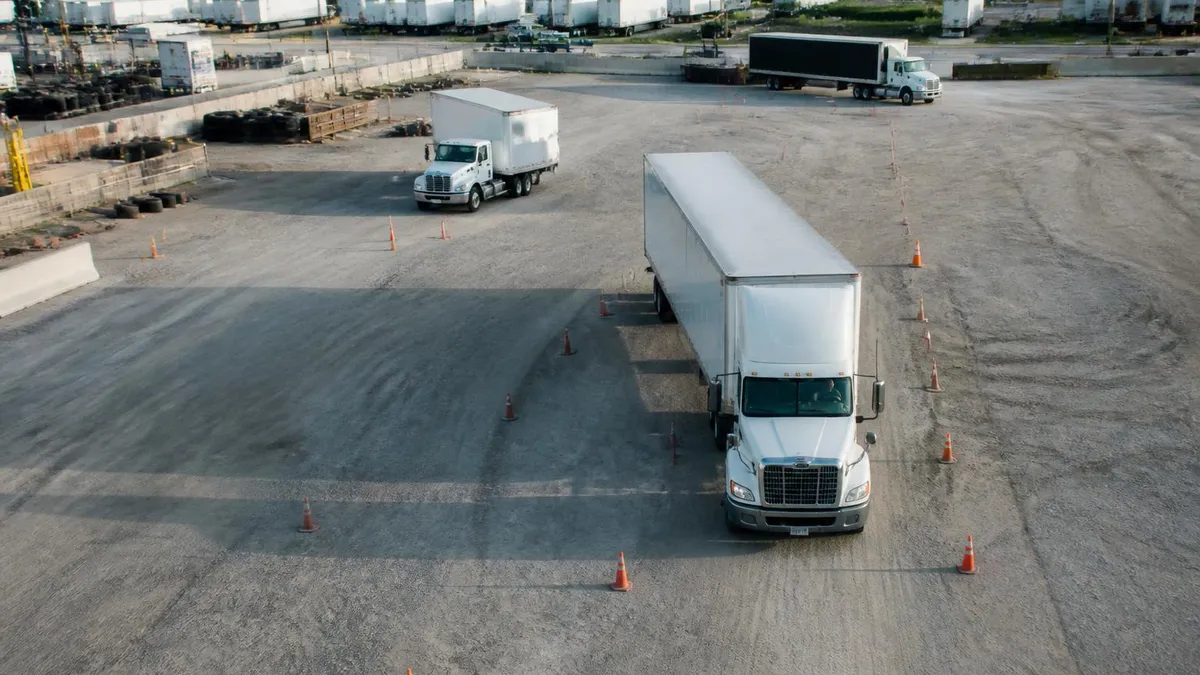
Basic vehicle controls testing covers straight-line backing, alley dock backing, parallel parking, and offset backing depending on your state's requirements. These maneuvers are evaluated in a closed course environment using cones that mark the boundaries of each exercise, and touching or knocking over cones results in point deductions that can accumulate to a failing score.
The secret to mastering backing maneuvers is understanding the counterintuitive physics of trailer movement — when you turn the steering wheel left while backing, the trailer moves right — and practicing slowly enough that corrections can be made before the trailer reaches a cone. Speed is never evaluated during basic controls; precision is everything.
The on-road driving evaluation tests your ability to operate the vehicle safely in real traffic, including merging onto highways, navigating intersections, making right and left turns in urban environments, and demonstrating proper lane positioning on curves and inclines. Examiners score you on mirror usage, signal timing, speed management, following distance, and how smoothly you shift gears.
Common automatic disqualifiers include railroad crossing violations, running red lights, failing to yield to pedestrians, and any action that requires the examiner to intervene using the vehicle's secondary controls for safety. Serious errors result in immediate failure regardless of how well the rest of the evaluation is proceeding.
After passing all three components of the skills test, most states issue a temporary CDL that serves as your valid license while the permanent plastic card is produced and mailed. This temporary document is legally equivalent to the full license and can be used to begin employment immediately — carriers routinely hire new graduates and begin the onboarding process with a temporary CDL in hand.
Keep your temporary license in a safe, accessible location and note the mailing address on file with the DMV, because the permanent card will be sent there and a returned card can create unnecessary paperwork and delay.
Continuing education after earning your CDL is what separates drivers who build 20-year careers from those who stagnate in entry-level positions. The CDL community has produced instructors and content creators in the Jeffrey Diaz tradition who post ongoing training videos covering advanced backing techniques, fuel efficiency strategies, electronic logging device compliance, and load securement best practices.
Staying current with federal motor carrier safety regulations — which update regularly — protects your license and keeps you ahead of roadside inspection violations that can result in out-of-service orders and damage to your safety record. Treat your CDL as a living credential that requires ongoing investment, not a one-time achievement that runs on autopilot.
Drivers who want to accelerate their career growth should consider obtaining the FMCSA-required Entry-Level Driver Training certificate from an approved provider, even if their state does not mandate it for their specific license class. This training documents your formal instruction and can serve as a differentiator when applying to carriers that prioritize safety and regulatory compliance.
Additionally, building a relationship with a mentor driver in your first year — someone who has navigated the industry for a decade or more — provides practical wisdom about freight markets, carrier reputation, and negotiating pay increases that no cdl practice test or study guide can replicate. Career capital in trucking is built through relationships as much as through credentials.
Test day strategy begins the evening before your scheduled exam. Lay out every document you need — state-issued photo ID, your dot medical card, the appointment confirmation number or letter, and any application fees in the required payment form — so that morning preparation is stress-free and checklist-simple. Eat a full meal the night before and a light, protein-rich breakfast on the morning of the test. Avoid heavy carbohydrates that cause mid-morning energy crashes, and limit caffeine to your normal daily amount so you are alert without being jittery during the knowledge test's 90-minute window.
When you sit down at the testing terminal, read every question completely before evaluating any answer choices. CDL knowledge questions frequently include qualifier words like "always," "never," "except," and "most importantly" that change the correct answer from what a quick skim might suggest.
If a question references a specific number — a PSI threshold, a weight limit, a distance requirement — trust your preparation and recall the figure deliberately rather than guessing. Flag questions you are uncertain about and return to them after completing all questions you can answer confidently; managing your time so that every question gets at least one focused attempt is more important than spending five minutes agonizing over one difficult item.
For candidates who feel test anxiety, CBT-style practice — taking timed tests in an environment that simulates the actual testing center — is the most effective desensitization technique available. If your local library, CDL school, or community college offers access to computer terminals in a quiet room, use them for your final week of practice tests rather than studying from your phone or home computer.
The physical act of sitting at a terminal with a keyboard and mouse, in a quiet institutional setting, trains your nervous system to associate that environment with calm, focused performance rather than anxiety. Small environmental details matter more than most candidates realize when performance is evaluated under pressure.
After passing your CDL knowledge tests, schedule your skills test immediately rather than waiting. The skills test has a longer lead time for appointments at most state DMV offices, and every week you delay is a week of momentum lost and knowledge that begins to fade without reinforcement.
Continue taking practice tests and reviewing regulations during the gap between your knowledge pass and your skills test appointment, so the material remains active in memory. Drivers who schedule their skills test quickly and continue studying in the interim perform noticeably better on the pre-trip narration than those who assume their knowledge test pass means they can coast for a few weeks.
Networking within the CDL community while you are still in training pays dividends that begin before you hold your first license in hand. Join online forums specific to the freight sector you plan to enter — flatbed, tanker, refrigerated, or local delivery — and read threads about which carriers treat drivers well, which lanes are most profitable, and what new drivers commonly regret not knowing during their first six months.
This intelligence is freely shared by experienced drivers who remember how disorienting the first year can be, and absorbing it during your preparation means you enter your first job with realistic expectations and smarter choices about which opportunities to accept and which to pass on.
The final practical tip for CDL prep is to approach every practice test as if it were the real exam. That means no pausing to look up answers mid-test, no skipping questions to return casually at the end, and no checking your score after every five questions to monitor progress. The value of a practice test comes entirely from the realism of the conditions under which you take it.
If you cheat the simulation, you are only cheating your preparation. Score 88 percent or higher on five consecutive full-length practice tests under real conditions, and you will walk into the testing center with the quiet confidence that comes from knowing — not hoping — that you are ready.
Earning your CDL is one of the most practical, high-return investments available to any American seeking to build financial stability through skilled labor. The combination of strong wages, growing demand, accessible training timelines, and genuine career mobility makes the class a cdl a credential worth every hour of preparation.
Whether you are inspired by the teaching style of instructors like Jeffrey Diaz or simply motivated by the freedom and income that a truck driver career provides, the path forward is clear: build your schedule, use every practice test available to you, get your DOT physical done early, and show up on test day prepared to succeed.
CDL Questions and Answers


About the Author

Licensed Driving Instructor & DMV Test Specialist
Penn State UniversityRobert J. Williams graduated from Penn State University with a degree in Transportation Management and has spent 20 years as a certified driving instructor and DMV examiner consultant. He has personally coached thousands of applicants through written knowledge tests, skills assessments, and commercial driver licensing programs across more than 30 states.
Join the Discussion
Connect with other students preparing for this exam. Share tips, ask questions, and get advice from people who have been there.
View discussion (7 replies)