
CDL Meaning: What Does Commercial Driver's License Mean? 2026 September
CDL meaning explained: 🗨️ Commercial Driver's License, federal definition, weight thresholds, classes A/B/C, endorsements, and restrictions in plain English.
Walk into any truck stop on I-80 and you'll hear the abbreviation tossed around like coffee orders. CDL this, CDL that. But what does CDL actually mean? Three letters, one federal credential, and a whole career path packed inside. The short answer: CDL stands for Commercial Driver's License. The longer answer involves a 1986 federal law, weight thresholds measured in pounds, and a tangle of endorsement codes that look more like algebra than driving credentials.
Here's the thing most people miss. A CDL isn't a single license you collect from your state DMV alongside your fishing permit. It's a federally standardized credential, administered by states under rules set by the Federal Motor Carrier Safety Administration (FMCSA). That distinction matters. A Class A CDL earned in Texas works in Maine, Oregon, and every state in between — same standards, same testing categories, same disqualification rules. The state issues the plastic; the feds write the rulebook.
So why all the confusion? Because the term has layers. The license itself. The class. The endorsements. The restrictions. The medical certificate that has to ride alongside it. Drivers, employers, students at trucking schools, and folks just curious about a career change all stumble on the same questions. What weight triggers the requirement? Are passenger vans included? Why did my buddy in Florida need a different test than I did in Pennsylvania? Straight answers below, with the federal definitions cited and the state quirks called out where they actually matter.

CDL by the Numbers
Before diving into the codes and classes, it helps to see what a CDL actually touches. The credential isn't just a piece of plastic. It governs a chunk of the U.S. economy, sets safety standards that affect every commuter on the highway, and gates entry to one of the most accessible blue-collar career paths still paying real money. The numbers below come from FMCSA reporting and Bureau of Labor Statistics data, and they explain why "CDL" gets thrown around so often in trucking circles.
Roughly 3.5 million Americans currently hold an active CDL. That's a workforce larger than the population of several U.S. states. They move about 70 percent of the nation's freight by tonnage, deliver groceries to your local supermarket, haul fuel to gas stations, and drive your kids to school. Pull the CDL workforce offline for 72 hours and shelves empty, planes don't fuel, and city transit grinds to a halt — which is why FMCSA treats licensing as a national safety priority rather than a state DMV formality.
Under 49 CFR 383: A Commercial Driver's License (CDL) is required to operate a Commercial Motor Vehicle (CMV) — defined as any vehicle with a GVWR of 26,001+ lbs, designed to transport 16 or more passengers including the driver, or used to transport hazardous materials in placarded quantities.
Standards are set by the FMCSA and administered by individual states. A CDL earned in one state is valid in all 50 for the class and endorsements it covers.
Now the legal definition. Under 49 CFR Part 383, a Commercial Driver's License is required to operate a Commercial Motor Vehicle (CMV) in interstate, intrastate, or foreign commerce. That's the FMCSA framing, and it kicks in when one of three thresholds gets crossed. Hit any single one and you're in CDL territory.
The vehicle doesn't have to be a big rig. A 16-passenger church van counts. A pickup hauling a heavy trailer can count. A tow truck with the wrong gross weight rating counts. The 26,001-pound number you'll see everywhere refers to Gross Vehicle Weight Rating, not actual loaded weight. GVWR is the manufacturer's stated max — it's stamped on a plate on the driver's door jamb.
If that plate says 26,001 or higher, the vehicle qualifies as a CMV regardless of what's loaded inside. Same logic for trailers: if the trailer's GVWR exceeds 10,000 pounds and the combined GVWR clears 26,001, you need a CDL to pull it commercially. The thresholds are designed to catch the vehicle class before the driver, which is why door-jamb stickers carry more legal weight than scale tickets in roadside inspections.
Worth noting: the "commerce" piece matters. A farmer running their own grain truck within state lines may qualify for a farm exemption that drops the CDL requirement entirely. A church running a 16-passenger van for unpaid volunteer trips may face different rules than a paid charter operator. The exemptions are narrow and state-specific, so always verify with your state DMV before relying on one.
Three Thresholds That Trigger a CDL
Single vehicle GVWR of 26,001 lbs or more, or combined GVWR over 26,001 with a trailer over 10,000 lbs. GVWR is the manufacturer's max stamped on the door-jamb plate, not the loaded weight.
Vehicle designed to transport 16 or more passengers including the driver, regardless of total weight. A 16-seat church van counts. A 15-passenger plus driver does too.
Carrying hazardous materials in quantities that require federal placarding under DOT rules. Triggers a Class C CDL minimum with the H or X endorsement.
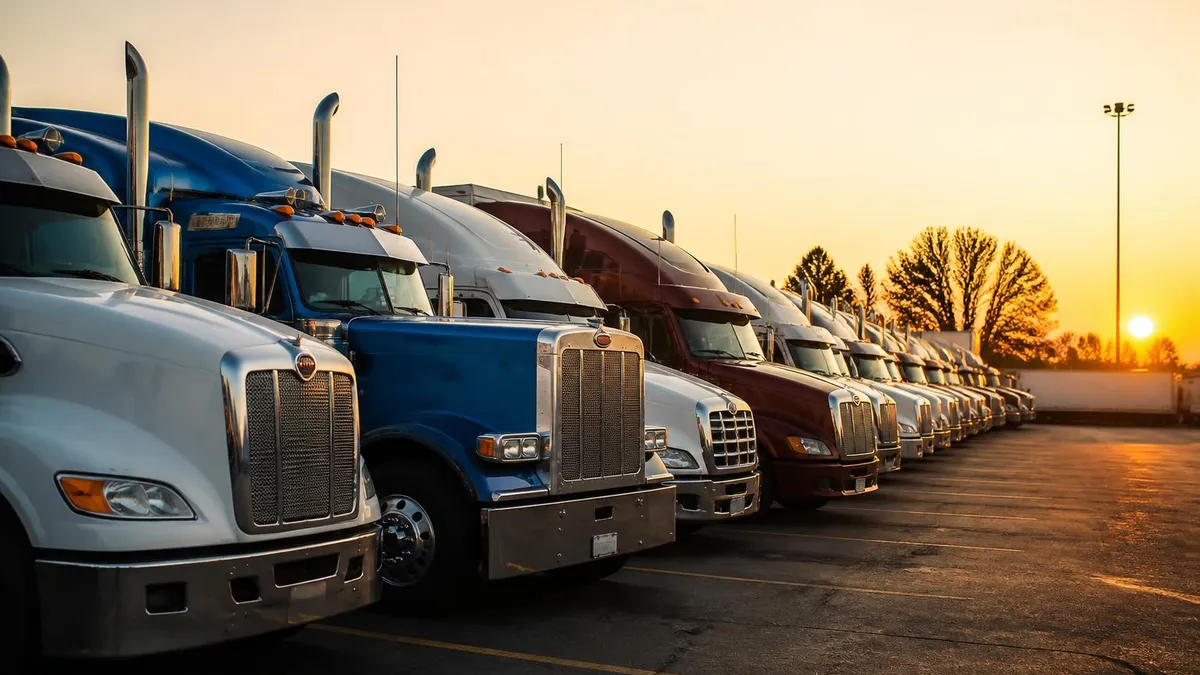
Three thresholds — vehicle weight, passenger count, or hazardous materials — define what makes a vehicle commercial under federal law. Cross any one of them and a CDL kicks in. Memorize these because every other rule flows from them.
Where did all this come from? The Commercial Motor Vehicle Safety Act of 1986 (CMVSA). Before 1986, each state set its own rules for who could drive a big truck. Some states required almost nothing — a regular license and a wave goodbye. Others had patchy testing. Drivers exploited the gaps by holding licenses in multiple states.
The 1986 act forced uniformity. States had to certify drivers against a single federal standard, share disqualification data through CDLIS, and limit each driver to one license from one state of residence. The CDL as we know it today rolled out in stages between 1989 and 1992. Amendments followed — the 1999 Motor Carrier Safety Improvement Act, the 2012 final rule on commercial learner permits, the 2022 ELDT training requirements.
CDL Endorsement Codes Explained
Hauling placarded hazardous materials. Requires TSA Threat Assessment background check (around $86.50), fingerprinting, and renewal every five years. Knowledge test covers loading procedures, placarding rules, and emergency response. Most-stolen endorsement to add for higher pay.
CDLs come in three classes. Class A, Class B, Class C. The class determines what you can drive, based on GVWR thresholds plus combination weight rules. Endorsements stack on top of the class — letters added to the back of the license that unlock specific cargo types or vehicle configurations. Restrictions work the opposite direction. They remove privileges based on how you tested or what medical limitations apply.
Each endorsement carries its own knowledge test, and some demand additional skills tests or federal background checks. You can stack endorsements freely: a tanker driver hauling hazardous liquids needs both N and H, often combined as the X endorsement to save a test fee. Hazmat alone can bump pay by 10 to 15 percent at most carriers, and tanker drivers often clear higher per-mile rates than dry van haulers because of the surge dynamics they have to manage.
The H endorsement specifically requires a TSA Threat Assessment — fingerprints, watchlist check, criminal history review — which is why getting the H takes weeks longer than other endorsement tests. Around $86.50 in TSA fees, plus state license fees on top. Drivers renew the endorsement every five years and the background check repeats each time. Plan ahead if you're targeting hazmat work; the timeline can derail an otherwise tight job start date.
Driving a vehicle that exceeds your license class or endorsements isn't a paperwork issue — it's a violation under 49 CFR 383.23 that triggers fines, license suspension, and a permanent record in CDLIS visible to every future employer.
Class A is the heavy-haul tier. Combination vehicles — tractor and trailer — with a combined GVWR of 26,001 pounds or more, provided the trailer GVWR exceeds 10,000 pounds. Long-haul over-the-road trucking lives in Class A. Tankers, flatbeds, reefers, and most household-name carriers (Schneider, Werner, Knight-Swift) hire Class A drivers almost exclusively for cross-country freight. The Class A pays the most in raw mileage but demands the most time on the road, often weeks at a stretch.
Class B handles single vehicles at or above 26,001 pounds GVWR, or that single vehicle towing a trailer at 10,000 pounds GVWR or less. Think dump trucks, garbage trucks, straight box trucks for local delivery, and most city transit and school buses. Class B drivers usually stay regional — home every night, decent benefits, less highway windshield time. Trade some pay for predictable hours; that's the Class B bargain.
Class C is the smaller-but-special category. The vehicle doesn't meet Class A or B weight thresholds, but it either carries 16 or more passengers (driver included) or hauls hazardous materials in quantities requiring placards. A 15-passenger van bumped to 16 seats? Class C. A small box truck moving placarded chemicals? Class C. The Class C tier is where airport shuttles, hotel vans, and church buses live alongside specialty hazmat couriers.
Important wrinkle: a Class A license lets you operate Class B and Class C vehicles. A Class B license lets you operate Class C vehicles. The reverse doesn't apply. That's why most career drivers chase the Class A even if their first job is regional — the license is portable downward but not upward, so locking in the higher class early opens doors later without retesting.
Who Needs a CDL? (Quick Checklist)
- ✓Operating a single vehicle with GVWR of 26,001 pounds or more
- ✓Driving a combination vehicle with combined GVWR over 26,001 pounds and a trailer over 10,000 pounds GVWR
- ✓Transporting 16 or more passengers including the driver, regardless of vehicle weight
- ✓Hauling hazardous materials in quantities requiring federal placarding
- ✓Operating any of the above in interstate, intrastate, or foreign commerce
- ✓Maintaining a current DOT medical examiner's certificate alongside the license
- ✓Holding only one CDL from one state of residence as required by federal law
Restrictions flip the script. Where endorsements unlock capability, restriction codes remove it. They show up on the license when the driver tested in a vehicle missing a feature, has a medical condition that limits operation, or chose to skip a portion of the testing. The state DMV stamps the restriction onto the license and it stays unless the driver retests or submits new documentation. Skipping ahead because you don't think a restriction applies to you is risky — the codes get checked at every roadside inspection.
Going through them quickly. E means no manual transmission. L flags no full air brake systems. M restricts Class A drivers to Class B and C passenger or school bus vehicles only. K is intrastate-only, usually because the driver doesn't meet federal interstate medical standards. N restricts Class A holders to Class B passenger or school bus.
O blocks tractor-trailer operation for Class A — driver tested without a fifth-wheel connection. V denotes a medical variance or exemption is on file with FMCSA. Z signals no full air brake equipped CMV, similar to L but specifically for newer license issuances. Z and L overlap in some states and are sometimes used interchangeably in casual driver talk, though they're technically distinct codes you'll see logged differently in CDLIS records.
Getting any restriction lifted means retesting in a vehicle with the feature you tested without, plus paying the state's retesting fee. The E restriction (no manual) is the most common lift because so many drivers test in automatics now — manual transmission rigs are getting rarer at the carrier level, but flatbed and specialty hauling still favors them. Schedule a skills test in a 10-speed or 13-speed manual at your state DMV, pass, and the restriction comes off your next license issue.
CDL Holder vs Commercial Driver
- +Holds the legal credential to operate a CMV when needed
- +Not subject to active hours-of-service logging
- +No DOT random drug testing pool unless employed in a safety-sensitive role
- +Renewal cycle of 4 to 8 years depending on state
- +Medical certificate required to keep license active and current
- −Subject to FMCSA hours-of-service rules (11/14/60-70 limits) when on duty
- −Mandatory enrollment in DOT random drug and alcohol testing program
- −ELD (Electronic Logging Device) records required on most CMVs
- −Pre-employment, post-accident, and reasonable-suspicion testing apply
- −Higher insurance scrutiny via PSP and CDLIS reports visible to employers
Pros and Cons at a Glance
| Pros | Cons |
|---|---|
| Holds the legal credential to operate a CMV when needed | Mandatory enrollment in DOT random drug and alcohol testing program |
| Not subject to active hours-of-service logging | ELD (Electronic Logging Device) records required on most CMVs |
| No DOT random drug testing pool unless employed in a safety-sensitive role | Pre-employment, post-accident, and reasonable-suspicion testing apply |
| Medical certificate required to keep license active and current | Higher insurance scrutiny via PSP and CDLIS reports visible to employers |
Now one of the trickiest terminology distinctions in the industry: CDL holder versus commercial driver. They sound interchangeable but they aren't. A CDL holder is anyone with a valid Commercial Driver's License, regardless of employment status. The grandfather who got his Class A in 1978 to help his son move once and still renews every five years? CDL holder. Not a commercial driver until he's behind the wheel of a CMV for hire.
A commercial driver, in regulatory and employer language, is someone actually operating a CMV for hire or as part of their job. The terms overlap but they aren't synonyms. The differences explain why insurance, drug testing requirements, and hours-of-service rules apply differently depending on the driver's actual activity, not just what's printed on the license. Mixing up the two categories on a job application is a fast way to fail a pre-employment screen.
There's also the PSP (Pre-Employment Screening Program) angle. FMCSA maintains a database of every roadside inspection and crash involving a CMV in the prior five years, indexed by driver. Employers pull PSP reports before hiring. A pattern of out-of-service violations, even minor ones, can disqualify a driver from a job they're otherwise perfectly licensed for. The license is the gate, but the PSP record decides whether you walk through it.
One more layer worth understanding: state vs federal CDL authority. The license itself is issued by the state where the driver claims residency. But the standards behind it — what's on the test, what disqualifies a driver, how long suspensions last for serious violations — those come from FMCSA. States can add requirements on top.
California has additional restrictions for in-state agricultural drivers. Texas runs its own farm-vehicle exemptions. New York requires extra scrutiny on certain medical conditions. These state-layer rules don't replace federal standards, they stack on top. A Class A CDL is valid in all 50 states, but the path to earning it varies, the renewal fees vary, and the local quirks vary too.
The 2022 Entry-Level Driver Training (ELDT) rule changed the on-ramp. Before February 7, 2022, anyone could walk into a state DMV, pass the tests in a borrowed truck, and earn a CDL. After that date, new applicants for a Class A or B CDL, or anyone seeking an upgrade or first-time H/P/S endorsement, must complete training from a provider listed on the FMCSA Training Provider Registry.
The medical certificate is easy to overlook but operating a CMV without a current DOT medical examiner's certificate is treated the same as driving without a license. Federal medical standards (49 CFR 391.41) cover vision, hearing, blood pressure, diabetes management, and a long list of conditions. Most drivers get a two-year card; some get one year or shorter if a condition needs monitoring.
Next step? Pick a class, check your state's CDL manual, find a TPR-listed training provider if you're going for Class A or B, and start running practice tests. The acronym only stays abstract until you sit down for the General Knowledge exam and realize the manual covers more ground than expected.
Practice tests are the fastest way to find the gaps. Wrong answers teach more than right ones, and the topics you trip on early in prep are usually the same ones state DMV examiners hit hardest on test day. Build a habit of reviewing every miss before moving on to the next quiz section. Stack those reviews over a few weeks and the General Knowledge test starts to feel less like a wall and more like a checklist.
CDL Questions and Answers
About the Author

Licensed Driving Instructor & DMV Test Specialist
Penn State UniversityRobert J. Williams graduated from Penn State University with a degree in Transportation Management and has spent 20 years as a certified driving instructor and DMV examiner consultant. He has personally coached thousands of applicants through written knowledge tests, skills assessments, and commercial driver licensing programs across more than 30 states.
Join the Discussion
Connect with other students preparing for this exam. Share tips, ask questions, and get advice from people who have been there.
View discussion (7 replies)