
What Is CCMA Certification? Complete Guide to the Certified Clinical Medical Assistant
🧠 Learn what CCMA certification is, eligibility requirements, exam format, salary potential, and how to pass the NHA CCMA exam on your first attempt.

Understanding what is CCMA certification is the first step toward launching a rewarding career in clinical healthcare. The Certified Clinical Medical Assistant credential, awarded by the National Healthcareer Association (NHA), validates that a medical assistant has the knowledge and hands-on competency to work safely and effectively in ambulatory care settings, physician offices, urgent care clinics, and specialty practices across the United States. Earning this credential signals to employers that you meet a nationally recognized standard of excellence.
The CCMA credential stands apart from other medical assistant certifications because of its emphasis on both clinical and administrative duties. Candidates must demonstrate proficiency in patient intake, vital signs measurement, electrocardiography, phlebotomy fundamentals, infection control, medical terminology, and basic pharmacology. The exam is rigorous, drawing on real-world scenarios that reflect the daily responsibilities of a practicing medical assistant, so preparation requires dedicated study and consistent practice with exam-style questions.
One question new candidates often ask is about ccma meaning — what each letter represents and why those letters matter for your career. CCMA stands for Certified Clinical Medical Assistant, and each word in that title carries weight: "Certified" indicates third-party verification of your skills, "Clinical" distinguishes the credential from purely administrative roles, and "Medical Assistant" defines the broad scope of patient-care support you are qualified to deliver under the supervision of licensed practitioners.
The NHA administers the CCMA exam at hundreds of testing centers across the country and also offers remote proctored online testing for greater convenience. The exam consists of 150 scored questions plus 20 pretest questions that do not count toward your score, and candidates have three hours to complete the full assessment. Questions span domains including clinical patient care, patient intake, clinical procedures, medication administration, and administrative functions, mirroring the breadth of responsibilities a modern medical assistant holds.
Pursuing CCMA certification opens doors that are closed to uncredentialed job seekers. Many hospitals, multispecialty group practices, and federally qualified health centers now require or strongly prefer candidates who hold a recognized national certification. Employers understand that a CCMA-credentialed employee required less onboarding time, makes fewer critical errors, and is more likely to stay current through continuing education — all factors that protect patients and reduce operational costs for the practice.
Preparing for the CCMA exam requires a strategic approach. Most successful candidates spend eight to twelve weeks studying, using a combination of textbooks, NHA study materials, and timed practice tests that simulate real exam conditions. Building test-taking stamina is just as important as mastering content; candidates who regularly work through full-length practice sets consistently report feeling more confident and less anxious on exam day than those who only review notes passively.
This guide covers everything you need to know about the CCMA certification: eligibility requirements, exam format, domain breakdown, salary expectations, costs, and a proven study plan. Whether you are a recent graduate of a medical assisting program or an experienced healthcare worker seeking formal recognition of your skills, you will find actionable guidance to help you earn your credential and advance your career with confidence.
CCMA Certification by the Numbers

CCMA Exam Format & Domain Breakdown
| Section | Questions | Time | Weight | Notes |
|---|---|---|---|---|
| Patient Care Coordination & Education | 18 | — | 12% | Health coaching, referrals, care team communication |
| Clinical Patient Care | 53 | — | 35% | Vitals, EKG, phlebotomy, specimen collection |
| Patient Intake & Documentation | 23 | — | 15% | Medical history, HIPAA, EHR charting |
| Medication Administration | 20 | — | 13% | Dosage calculations, routes, pharmacology basics |
| Administrative Duties | 18 | — | 12% | Scheduling, billing codes, insurance verification |
| Foundational Knowledge & Basic Science | 18 | — | 13% | Anatomy, medical terminology, infection control |
| Total | 170 | 3 hours | 100% |
To sit for the CCMA exam, candidates must meet one of three eligibility pathways established by the NHA. The first pathway is completion of a medical assisting program at an accredited institution — either a certificate, diploma, or associate degree program. The program must be accredited by an organization recognized by the Department of Education, such as CAAHEP or ABHES. Most traditional campus-based and online medical assisting programs of nine to twenty-four months satisfy this requirement, and your school can confirm accreditation status on request.
The second eligibility pathway is relevant work experience. Candidates who have not attended a formal training program may qualify if they can document at least one year of full-time employment — or the part-time equivalent — as a medical assistant within the past three years. This pathway benefits healthcare workers who have learned on the job, career changers who transitioned into medical assisting informally, and military medical personnel whose training did not follow a civilian academic track. NHA requires official documentation of employment, so gather your records early.
A third pathway exists for students currently enrolled in an accredited medical assisting program. NHA allows candidates to test up to ninety days before their program graduation date, meaning you can earn your credential before you even collect your diploma. This is an excellent strategic advantage because it allows new graduates to enter the job market already credentialed, which is a significant differentiator during competitive hiring seasons and accelerates time-to-employment substantially.
Once eligibility is confirmed, candidates create an NHA account, select a testing format — in-person at a PSI testing center or online with remote proctoring — and pay the exam fee. NHA members pay $149 while non-members pay $179. The application is straightforward, but NHA does review supporting documentation for work-experience applicants, so allow extra time if you are applying under pathway two. Exam authorizations are typically valid for ninety days, giving you a firm but manageable window to schedule and complete your test.
If you are looking for a comprehensive resource to structure your preparation, the nha ccma practice test hub offers full-length mock exams organized by domain, making it easy to identify your weakest areas before exam day. Targeted practice — focusing extra time on low-scoring domains rather than reviewing areas you already know well — consistently produces the highest score gains in the shortest preparation period.
Candidates who fail the initial attempt may retest after a fourteen-day waiting period. NHA allows up to three attempts within the original eligibility window before requiring candidates to re-apply and pay the exam fee again. Test anxiety and inadequate preparation are the two most common reasons for first-attempt failures, both of which are addressable with structured study and timed practice under realistic conditions. Understanding your personal weaknesses and targeting them aggressively is the most efficient path to a passing score.
International applicants and candidates with disabilities are also accommodated by NHA. Foreign-trained medical assistants may apply under the work-experience pathway, and the NHA's Special Accommodations form allows candidates with documented disabilities to request extended time, separate testing rooms, screen readers, or other supports. Submitting accommodation requests well in advance — at least thirty days before your intended test date — ensures processing is complete before you schedule your exam.
CCMA Study Strategies That Actually Work
The first four weeks of CCMA exam preparation should focus on building a solid foundation in anatomy, medical terminology, and the basic sciences. Work through one body system per week — cardiovascular, respiratory, musculoskeletal, and digestive — using NHA's official study guide combined with flashcards for terminology. Spend at least ninety minutes per study session and take brief domain-specific quizzes at the end of each week to lock in retention and identify vocabulary gaps early before they compound into larger knowledge holes later in your preparation timeline.
During this foundational phase, also begin reviewing infection control principles, standard precautions, and OSHA bloodborne pathogen standards. These topics appear on virtually every CCMA exam and are high-value because the questions are often straightforward if you know the protocols cold. Create a reference sheet summarizing PPE selection rules, hand hygiene moments, and sharps disposal procedures. Review it daily. Candidates who build strong infection control knowledge in weeks one through four consistently answer five to eight additional questions correctly on the actual exam compared to those who treat this domain as an afterthought.

Is CCMA Certification Worth It? Pros and Cons
- +Nationally recognized by thousands of employers across all fifty states
- +Demonstrates verified clinical and administrative competency to hiring managers
- +Typically associated with higher starting salaries compared to uncredentialed MAs
- +Required or strongly preferred by major health systems, urgent care chains, and specialty practices
- +Builds professional credibility and opens pathways to advancement into supervisory roles
- +Exam preparation itself deepens clinical knowledge, making you safer and more effective on the job
- −Exam fee of $149–$179 plus study materials can total $300 or more out of pocket
- −Requires consistent study commitment of 8–12 weeks for most candidates
- −Must renew every two years with 14 continuing education credits, adding ongoing time and cost
- −Some employers accept any accredited MA certification, reducing the exclusive advantage in certain markets
- −Work-experience pathway documentation requirements can create delays for some applicants
- −Exam anxiety or unfamiliarity with computerized testing can affect first-attempt performance
CCMA Exam Day Preparation Checklist
- ✓Confirm your testing appointment date, time, and location (or remote login link) at least 48 hours in advance.
- ✓Bring two valid forms of government-issued photo ID matching your NHA registration name exactly.
- ✓Arrive at the testing center at least 30 minutes early to complete check-in procedures without stress.
- ✓Review the NHA's list of prohibited items — no personal notes, phones, or study materials are allowed in the testing room.
- ✓Eat a balanced meal within two hours of your exam and stay hydrated to maintain focus throughout the three-hour window.
- ✓Get a full night of sleep (7–8 hours) the night before — avoid last-minute cramming after 10 p.m.
- ✓Wear comfortable, layered clothing since testing center temperatures can vary significantly.
- ✓Use the on-screen flagging feature to mark uncertain questions and return to them after completing the rest of the exam.
- ✓Pace yourself to spend no more than 72 seconds on average per question across the full 170-question exam.
- ✓If testing remotely, test your webcam, microphone, and internet connection the day before to prevent last-minute technical issues.

Scaled Scoring Means Every Domain Matters
The CCMA exam uses a scaled scoring system with a passing threshold of 390 on a 200–500 scale. Because questions are weighted across six domains, performing poorly in Clinical Patient Care (35% of the exam) has a disproportionate impact on your total score. Candidates who score 90%+ on administrative questions but only 60% on clinical content routinely fail — so never neglect your weakest domain, even if it is less comfortable to study.
One of the most compelling reasons to pursue CCMA certification is its direct impact on earning potential. According to the U.S. Bureau of Labor Statistics, medical assistants earned a median annual wage of approximately $42,000 in recent years, but credentialed medical assistants — particularly those holding the CCMA — consistently earn above that median. When reviewing current ccma salary data, you will find that the national average for CCMA-credentialed professionals typically ranges between $38,000 and $54,000 per year depending on geography, specialty setting, and years of experience.
Geographic location plays the largest single role in CCMA compensation. Medical assistants in high cost-of-living states such as California, Washington, Massachusetts, and Alaska earn significantly more than the national median. In major metropolitan areas like San Francisco, Seattle, and Boston, experienced CCMA-credentialed professionals frequently earn $55,000 to $65,000 annually. Conversely, in rural Midwest and Southern states, salaries may fall closer to $35,000 to $42,000, though the lower cost of living in those regions often offsets the wage gap in terms of real purchasing power.
The clinical setting where you work also substantially affects your CCMA salary. Medical assistants employed in outpatient specialty practices — particularly dermatology, cardiology, orthopedics, and plastic surgery — tend to earn more than those in general family medicine or internal medicine clinics. Surgical specialty practices often pay a premium because the procedural complexity requires more advanced clinical skills, and the CCMA credential signals preparedness for that higher-stakes environment. Urgent care chains, which experience high patient volume and value efficient staff who can work across multiple clinical competencies simultaneously, also tend to pay competitively.
Beyond base salary, CCMA certification creates opportunities for career advancement that translate into long-term earnings growth. Credentialed medical assistants are frequently the first considered for lead MA, office coordinator, or clinical supervisor positions. These roles typically offer salaries twenty to forty percent higher than front-line MA positions and may include benefits such as profit sharing, performance bonuses, and employer-sponsored continuing education. The investment of time and money in earning the CCMA pays compound returns across a career, not just an immediate wage increase at first hire.
The job market for medical assistants broadly — and credentialed ones specifically — is exceptionally strong. The Bureau of Labor Statistics projects employment growth of fourteen percent for medical assistants through 2032, a rate classified as "much faster than average" for all occupations. This growth is driven by the aging Baby Boomer population, the expansion of outpatient care as health systems shift volume away from expensive hospital settings, and the growing complexity of chronic disease management that increases demand for skilled clinical support staff in ambulatory environments.
Credentialing also provides a degree of career portability that informal training cannot. Because the CCMA is a nationally standardized credential, it is recognized by employers across all fifty states. If you relocate for personal reasons or seek employment in a new city, your credential travels with you and carries the same weight it did in your previous location. This portability is a meaningful advantage in a mobile society and gives CCMA-credentialed professionals the freedom to pursue opportunities in new markets without needing to reestablish their professional standing from scratch.
Finally, the CCMA credential serves as a foundation for further professional growth. Many CCMA holders go on to pursue additional certifications in specialized areas such as phlebotomy (CPT), EKG interpretation (CET), or pharmacy technology (CPhT), using the foundational knowledge gained during CCMA preparation as a springboard. Others use the credential as a stepping stone toward LPN or RN programs, where prior clinical experience and demonstrated academic commitment give them a competitive edge in selective nursing school admissions processes.
Your NHA exam authorization is valid for only 90 days from the date of approval. If you do not schedule and complete your exam within that window, your authorization expires and you must reapply and pay the fee again. Students testing under the early-graduation pathway must sit for the exam within 90 days of their anticipated graduation date — if your graduation is delayed, notify NHA immediately to avoid losing your authorization period.
Maintaining your CCMA certification requires renewing every two years and completing fourteen continuing education credits during each renewal cycle. The NHA's renewal process is designed to ensure that credentialed professionals stay current with evolving clinical guidelines, regulatory changes, and emerging best practices in medical assisting. Renewal credits can be earned through a wide variety of approved activities, making the requirement manageable even for busy working professionals who cannot take extended time away from their jobs for formal coursework.
Approved continuing education sources include NHA's own online CE modules, live and virtual workshops from professional associations such as the American Association of Medical Assistants (AAMA) or the American Medical Technologists (AMT), employer-sponsored in-service training programs, community college continuing education courses in healthcare topics, and professional conference attendance. Some states and employers sponsor CE costs as part of their investment in staff development, so check with your HR department before paying out of pocket for renewal credits.
The renewal fee for the CCMA credential is $99 for NHA members and $129 for non-members. Factoring in the cost of CE credits, most CCMA holders spend between $150 and $250 every two years to maintain active certification status — a modest investment relative to the salary premium and employment advantages the credential provides. NHA sends renewal reminders via email starting ninety days before your expiration date, so keeping your contact information current in your NHA account is essential to avoid accidental lapses.
If your CCMA certification lapses — either because you missed the renewal deadline or did not complete the required CE hours — NHA provides a reinstatement pathway. Lapsed credentials within one year of expiration can typically be reinstated by completing the outstanding CE requirements and paying a reinstatement fee. Credentials lapsed for more than one year require retesting, which means preparing for and passing the full CCMA exam again. Avoiding lapse is far less costly in time and money than reinstatement or retesting, so set calendar reminders well in advance.
For candidates who want to explore NHA's full suite of study resources before purchasing the official study guide, the nha ccma exam prep hub offers a structured overview of all available preparation tools, including the NHA's online practice exam, flashcard sets, and textbook recommendations. Comparing resource options before committing your study budget ensures you invest in materials that match your learning style and target your specific weak domains rather than reviewing content you already know well.
Professional organizations also offer value beyond CE credit. Joining the AAMA or a state-level medical assisting association connects you with a network of peers, provides access to job boards and mentorship programs, and keeps you informed about legislative and regulatory changes affecting medical assistants in your state. Some states are actively pursuing mandatory credentialing legislation that would require all practicing medical assistants to hold a recognized national certification — membership in a professional association positions you to participate in those policy conversations and advocate for standards that protect patients and elevate the profession.
Looking forward, the trajectory of the medical assisting profession strongly favors those who invest early in formal credentialing and ongoing education. As electronic health records become universal, telehealth expands the scope of outpatient care, and value-based payment models place greater emphasis on care coordination and patient education, the skills assessed by the CCMA exam will only become more central to day-to-day clinical practice. Earning and maintaining your CCMA credential is not just a career move — it is a commitment to the highest standard of patient care.
Practical preparation tips can make the difference between a confident pass and a frustrating near-miss on the CCMA exam. The single most effective habit successful candidates develop is active recall practice rather than passive review. Instead of re-reading notes or highlighting textbook pages, close the book and write down everything you remember about a topic from memory. This retrieval practice forces your brain to strengthen the neural pathways associated with that knowledge, making it far more accessible under the pressure of a timed exam environment.
Spacing your study sessions strategically also dramatically improves long-term retention compared to marathon cramming. Research in cognitive science consistently shows that studying a topic for forty-five minutes four days in a row produces stronger memory consolidation than studying the same topic for three hours in a single session. Build a study calendar that revisits each major domain at increasing intervals — daily in week one, every other day in week two, then twice weekly through the final preparation phase — to leverage the spacing effect and minimize forgetting before exam day.
Practice tests are your most valuable diagnostic tool, but only if you use them analytically. After completing each practice set, categorize every wrong answer by domain and by error type: did you misread the question, did you not know the content, or did you know the content but second-guessed the correct answer? Tracking these error types reveals actionable patterns. Misreading errors improve with slow, deliberate question reading. Content gaps improve with targeted review. Second-guessing errors — often the most frustrating — improve by trusting your first instinct unless you identify a specific factual reason to change your answer.
Forming or joining a study group can accelerate preparation, particularly for candidates who learn well through discussion and teaching. Explaining a concept to another person — the order of draw for phlebotomy, the mechanism of action of a common drug class, or the steps for performing a twelve-lead EKG — solidifies your own understanding far more effectively than reading about it alone. Peer accountability also helps maintain consistent study habits through the inevitable motivation dips that occur in any long preparation process.
Managing test anxiety is a skill that deserves explicit practice, not just acknowledgment. Anxiety during the real exam causes candidates to rush through questions, second-guess correct answers, and misread instructions — all of which depress scores independently of actual knowledge level. The most effective anxiety management strategies for standardized testing include controlled breathing exercises practiced before and during the exam, positive self-talk scripts rehearsed in the weeks before test day, and deliberate exposure to timed testing conditions throughout your preparation so that the exam format itself feels familiar rather than threatening.
On exam day, use your time allocation strategically. With 170 questions and 180 minutes, you have an average of approximately 63 seconds per question. Flag and skip any question that requires more than 90 seconds of thought — these are almost always the questions where you lack the specific knowledge to reason your way to certainty, and spending extra time on them comes at the direct expense of easier questions later in the test. Return to flagged questions after completing the rest of the exam, when time pressure has decreased and a fresh perspective sometimes unlocks the correct answer.
Finally, celebrate the milestone of earning your CCMA credential when you pass. The certification is a genuine achievement that required months of dedicated preparation and demonstrates real professional competency. Update your resume, LinkedIn profile, and any professional directory listings immediately after passing to maximize the visibility of your new credential to potential employers. Notify current supervisors and colleagues as well — credentialed status often triggers salary reviews at existing employers who have a stated preference for certified staff, sometimes resulting in a raise without requiring a job change.
CCMA Questions and Answers

What Does CCMA Stand For? Certified Clinical Medical Assistant Explained

Certified Clinical Medical Assistant: Complete Training Guide
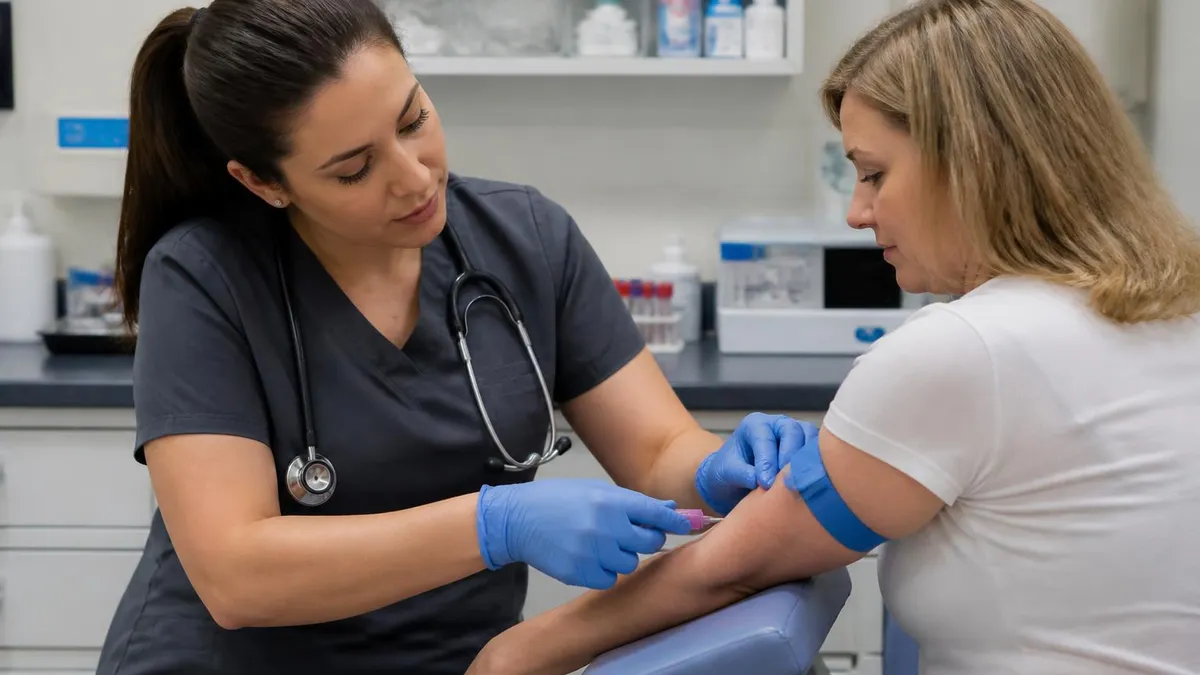
CCMA Study Guide: Complete Prep Hub for the NHA Certification Exam

CCMA Exam Prep 2026 — NHA Study Guide & Practice Tips
NHA CCMA Exam Questions PDF 2026: Free Certified Clinical Medical Assistant Practice
About the Author

Educational Psychologist & Academic Test Preparation Expert
Columbia University Teachers CollegeDr. Lisa Patel holds a Doctorate in Education from Columbia University Teachers College and has spent 17 years researching standardized test design and academic assessment. She has developed preparation programs for SAT, ACT, GRE, LSAT, UCAT, and numerous professional licensing exams, helping students of all backgrounds achieve their target scores.
Join the Discussion
Connect with other students preparing for this exam. Share tips, ask questions, and get advice from people who have been there.
View discussion (9 replies)