
NHA CCMA Practice Exam 2026 September: Free Certified Clinical Medical Assistant Test Prep
✏️ Ace the NHA CCMA practice exam with free practice tests. Cover all domains, review real questions, and build confidence for your CCMA certification.

The NHA CCMA practice exam is the single most effective tool you can use to prepare for the National Healthcareer Association's Certified Clinical Medical Assistant certification test. Whether you are sitting for the exam for the first time or retaking it after a previous attempt, structured practice under realistic conditions accelerates your readiness faster than passive reading alone. This page gives you free, domain-aligned practice tests built around the actual NHA blueprint so every question you answer here maps directly to content you will see on exam day.
If you are searching for a NHA CCMA practice test free, start with the free questions on this page: every answer comes with an explanation, and the study notes below cover the CCMA exam topics in order.
Understanding ccma meaning is the first step in your journey. CCMA stands for Certified Clinical Medical Assistant, a nationally recognized credential awarded by the NHA that validates your competency across administrative, clinical, and patient-care duties in outpatient and ambulatory settings. Earning this credential demonstrates to employers that you meet a consistent, tested standard — and it opens doors to higher-paying roles across physicians' offices, urgent care clinics, and specialty practices.
The NHA CCMA exam covers six major content domains: patient care and education, medical law and ethics, clinical procedures, pharmacology, diagnostic testing, and administrative duties. Each domain carries a specific percentage weight in the final score, which means your study time should be proportionally allocated. Many candidates underestimate the administrative and medical-law sections, spending nearly all of their preparation on clinical procedures, only to fall short on the scored items that cover scheduling, insurance, and HIPAA compliance.
Practice testing works because it forces active recall, a learning mechanism proven by cognitive science to encode information more deeply than re-reading notes or watching videos. When you take a full-length practice exam, you engage with the material in the same retrieval format the actual test demands. You also learn your weak domains early enough to correct them, rather than discovering gaps on exam day. Research consistently shows that candidates who complete three or more full practice exams before certification testing pass at significantly higher rates than those who rely on review materials alone.
The quizzes on this page are organized by domain so you can target specific areas or take a mixed-format session that simulates the real 200-question exam experience. Each question includes a detailed explanation of the correct answer, making every practice session a learning event rather than just a score check. You will find questions on anatomy and physiology, patient intake, vital signs, medication administration, EKG interpretation basics, infection control, and much more — all aligned to the current NHA CCMA content outline.
Timing matters just as much as content knowledge. The NHA CCMA exam gives you 3 hours to answer 200 questions, which works out to roughly 54 seconds per question. Many candidates who know the material still struggle because they are not practiced at that pace. By using timed practice sessions consistently during your preparation, you train both your knowledge and your test-taking endurance, so you arrive on exam day with a mental cadence that keeps you from running short on time in the final stretch.
This guide covers everything you need: exam format details, domain breakdowns, study strategies, a sample prep schedule, and a full set of free practice quizzes. Bookmark this page and return to it regularly throughout your prep period. Every additional practice session compounds your readiness, and the data from each attempt helps you prioritize exactly where to focus next. Let's get started building the knowledge and confidence you need to pass the CCMA certification exam on your first attempt.
NHA CCMA Certification by the Numbers

CCMA Exam Format & Blueprint
| Section | Questions | Time | Weight | Notes |
|---|---|---|---|---|
| Patient Care & Education | 40 | ~36 min | 20% | Includes patient communication and health coaching |
| Clinical Procedures | 50 | ~45 min | 25% | Injections, EKG, specimen collection |
| Diagnostic Testing | 30 | ~27 min | 15% | Lab values, urinalysis, point-of-care |
| Pharmacology | 30 | ~27 min | 15% | Drug classes, routes, dosage calculations |
| Medical Law & Ethics | 20 | ~18 min | 10% | HIPAA, consent, scope of practice |
| Administrative Duties | 30 | ~27 min | 15% | Scheduling, billing, EHR, insurance |
| Total | 200 | 3 hours | 100% |
The CCMA certification exam is designed to assess the full scope of a medical assistant's daily responsibilities, which is why its content spans both clinical and administrative domains. Understanding the weight of each section helps you allocate your study hours intelligently. Clinical Procedures represents the largest single domain at 25 percent of your score, covering injection techniques, electrocardiogram lead placement, phlebotomy procedures, and basic wound care. If your background is primarily administrative, you will want to spend extra time here working through hands-on clinical scenarios in your practice sessions.
Patient Care and Education accounts for 20 percent of the exam and often surprises candidates who overlook communication-focused questions. This domain tests your ability to explain procedures to patients, assess patient understanding using teach-back methods, address health literacy barriers, and document patient education in the medical record. Questions in this domain frequently involve scenarios where you must choose the most therapeutically appropriate response to a patient's concern, making strong reading comprehension and empathetic reasoning just as important as clinical knowledge.
The Pharmacology domain at 15 percent tests drug classifications, common medication names (both brand and generic), routes of administration, dosage calculations, and the five rights of medication administration. Expect calculation questions requiring unit conversions — for example, converting from milligrams per kilogram to a total dose for a pediatric patient. These questions reward candidates who practice the math regularly, not just those who have memorized drug names. A strong pharmacology review should include at least 50 dedicated practice questions before exam day.
Diagnostic Testing covers laboratory procedures, reference ranges for common panels such as a complete blood count and comprehensive metabolic panel, urinalysis interpretation, point-of-care glucose and strep testing, and proper specimen handling and chain-of-custody documentation. Many students underestimate how specific these questions can be — the exam may ask you to identify the correct tube color for a specific blood draw, or what a specific urinalysis finding indicates about a patient's kidney function. Reviewing the NHA's official resource guide for normal lab values is highly recommended for this section.
Medical Law and Ethics, though smaller at 10 percent, contains questions that are non-negotiable from a patient safety and legal compliance standpoint. HIPAA regulations, informed consent requirements, advance directives, mandatory reporting obligations, and scope-of-practice boundaries are all tested here. Candidates who have worked in healthcare settings often feel confident in this domain, but the exam tests nuance — for instance, distinguishing between what information can be shared with a patient's spouse versus a patient's designated healthcare proxy requires precision, not just general awareness of privacy rules.
The Administrative Duties domain covers electronic health record navigation, appointment scheduling logic, insurance pre-authorization workflows, ICD-10 and CPT coding basics, and front-desk communication. Knowing ccma salary potential motivates many candidates to invest in exam prep, and the administrative domain is often where working medical assistants already have substantial real-world experience. However, the NHA frames questions in standardized, protocol-driven terms rather than the informal shortcuts used in real offices, so even experienced candidates benefit from reviewing the textbook definitions of these procedures rather than relying solely on institutional memory.
The scoring system for the NHA CCMA exam uses a scaled score with a passing threshold of 390 out of 500. The exam includes 30 pretest questions that are not scored, but you will not know which ones they are — treat every question as if it counts. This means even if you feel you have missed several questions, you may still pass because some of those were pretest items. Understanding this structure prevents panic during the exam if a question feels unusually difficult or unfamiliar, and it reinforces why consistent pacing matters: every question deserves the same focused attention.
CCMA Practice Test Strategies by Domain
Clinical procedure questions reward hands-on understanding, so your practice strategy should go beyond memorization. For each procedure — phlebotomy, injections, EKG lead placement, wound care — create a mental flowchart of the steps in correct order. The NHA frequently tests whether candidates know what to do FIRST or NEXT in a clinical scenario, not just whether they can identify the correct piece of equipment. Practice questions that present mid-procedure complications, such as a patient feeling faint during a blood draw, are especially common and require you to sequence safety responses correctly.
For diagnostic testing questions, build a reference card of the most commonly tested laboratory values, including normal ranges for hemoglobin, hematocrit, white blood cell count, and fasting glucose. Review tube colors and their additives — lavender for EDTA, red for serum, light blue for coagulation studies — since tube selection questions appear reliably on the exam. Practice reading urinalysis results and identifying abnormal findings such as elevated protein, glucose, or nitrites. Spending 20 to 30 minutes daily on clinical practice questions across both the procedures and diagnostic domains will produce measurable score gains within two weeks.

Is the NHA CCMA Certification Worth It?
- +Nationally recognized credential accepted by employers across all 50 states
- +Increases starting salary by an average of $4,000–$7,000 compared to non-certified peers
- +Covers both clinical and administrative skills, making you a more versatile hire
- +NHA provides free study resources and an official practice exam with your application
- +Credential is valid for two years with straightforward continuing education renewal
- +Opens doors to specialty settings including cardiology, orthopedics, and dermatology
- −Exam fee is $155 for NHA members, which may be a barrier for recent graduates
- −200-question, 3-hour exam format is mentally exhausting without adequate preparation
- −First-time pass rate is approximately 54%, meaning nearly half of candidates need a retake
- −Renewal requires 10 continuing education units every two years, adding ongoing time and cost
- −The credential does not replace state-specific licensure where required (e.g., phlebotomy)
- −Study materials from third-party providers vary widely in quality and NHA alignment
CCMA Exam Day Prep Checklist
- ✓Complete at least three full-length 200-question practice exams under timed conditions before exam day.
- ✓Review your weakest domain scores and target those sections with focused practice quizzes.
- ✓Memorize normal lab value reference ranges for CBC, CMP, and urinalysis panels.
- ✓Practice at least 20 dosage calculation problems using dimensional analysis in the final week.
- ✓Confirm your testing center location, parking, and check-in time at least 48 hours in advance.
- ✓Bring two valid forms of ID — one must be government-issued with a photo and signature.
- ✓Avoid scheduling the exam during high-stress personal or professional periods if possible.
- ✓Get a full night of sleep for at least two nights before your exam date.
- ✓Eat a protein-rich meal before the exam to sustain mental focus for the full three hours.
- ✓Arrive 15–20 minutes early to complete check-in without rushing into the testing room.

Pace Yourself to Finish Strong
The NHA CCMA exam allows 3 hours for 200 questions, giving you approximately 54 seconds per question. Candidates who have not practiced timed sessions often spend 2–3 minutes on difficult questions early in the exam, then rush through the final 40 questions. Consistent timed practice builds the internal clock you need to keep a steady pace from question 1 to question 200.
One of the most compelling reasons candidates pursue what is a ccma credential is the substantial career and financial upside it provides. The CCMA certification signals to employers that you have met a verified national standard, which is a meaningful differentiator in a competitive healthcare job market. Certified medical assistants consistently earn more than their non-certified counterparts, and the credential directly expands the range of settings where you are qualified to work, from primary care to urgent care, from pediatrics to geriatrics, and from solo practitioner offices to large hospital-affiliated ambulatory clinics.
Nationally, the average annual salary for a CCMA in 2025 sits around $38,000 to $45,000 for entry-level positions, with experienced professionals in high-cost-of-living states or specialty settings earning $55,000 to $68,000 or more. States like California, Washington, New York, and Massachusetts consistently report median CCMA salaries above the national average, reflecting both cost-of-living premiums and higher baseline demand. Metropolitan areas with dense healthcare systems — Los Angeles, New York City, Seattle, Chicago — tend to offer the highest absolute salaries, while smaller markets may compensate with lower housing costs and faster career advancement opportunities.
Beyond base salary, certified medical assistants often qualify for employer-sponsored benefits packages that are not extended to temporary or uncredentialed staff. These benefits include health insurance, paid time off, continuing education reimbursement, and retirement plan contributions. The value of these benefits can add $10,000 to $15,000 per year to your total compensation, making the true financial difference between certified and uncertified roles even larger than the base salary gap suggests. When you factor in multi-year career trajectory, a CCMA credential often results in $50,000 or more in cumulative additional earnings over a ten-year career span.
The career pathway for CCMAs is also broader than many candidates initially realize. After two to three years of clinical experience, many CCMAs advance into specialized medical assistant roles — cardiology MAs, orthopedic MAs, or surgical technologist-adjacent positions — that command premium salaries. Others transition into healthcare administration, utilization review, or patient care coordinator roles that leverage their combined clinical and administrative training. Some go on to earn additional certifications in phlebotomy, EKG interpretation, or medical coding, stacking credentials that make them uniquely valuable in integrated care settings.
Employer demand for CCMAs is projected to remain strong through 2030 and beyond, driven by population aging, expansion of outpatient care settings, and the shift away from inpatient hospital care toward ambulatory and primary care delivery models. The Bureau of Labor Statistics projects 14 percent job growth for medical assistants through 2032, a rate more than twice as fast as the average for all occupations. This means that the job market you enter after earning your CCMA credential is one of the most favorable in the entire healthcare sector, offering both immediate employment opportunities and long-term career stability.
Geographic mobility is another underappreciated benefit of national certification. Because the NHA CCMA is a nationally portable credential, you are not limited to the state where you trained or currently work. This matters enormously for candidates who anticipate moving — whether for family, personal preference, or career opportunity — and want assurance that their credential will be recognized by a new employer in a different state without the need for re-examination or re-certification. For military spouses and others who move frequently, national portability is a practical, tangible advantage that state-level certifications simply cannot provide.
The two-year renewal cycle for the CCMA credential requires 10 continuing education units and a renewal fee, keeping certified professionals current with evolving clinical standards and regulatory requirements. Many employers cover the cost of CE coursework as part of professional development benefits, particularly for full-time staff. NHA-approved CE providers offer online modules in specialized topics — telehealth medical assisting, advanced phlebotomy, electronic health record systems — that allow CCMAs to deepen their expertise while satisfying renewal requirements, creating a built-in mechanism for ongoing professional growth throughout a career.
To sit for the NHA CCMA exam, you must have completed an accredited medical assisting program within the past five years, OR have at least one year of full-time work experience as a medical assistant within the past three years. Applications that do not meet these requirements will be denied, and the exam fee is non-refundable. Verify your eligibility carefully on the NHA website before submitting payment.
Passing the nha ccma exam on your first attempt is an achievable goal with the right preparation strategy, but it requires more than simply reading a textbook from cover to cover. The most successful candidates combine multiple study modalities: they read, they practice, they review explanations, and they simulate the real exam experience regularly throughout their prep period. Research on certification exam preparation consistently shows that spaced repetition — reviewing material at increasing intervals over time — produces far better long-term retention than cramming in the final days before the exam.
A realistic preparation timeline for most candidates is eight to twelve weeks, depending on your prior clinical experience and current knowledge base. Candidates with recent medical assistant program training may need only six to eight weeks of dedicated review, while those with a longer gap since their training or with primarily administrative work experience may need the full twelve weeks to build confidence across all six domains.
The key is to begin with a diagnostic practice test that reveals your current baseline, then build a study schedule that front-loads your weakest domains while maintaining your strong areas through periodic review sessions.
The NHA provides an official online practice exam for purchase through its candidate portal, and many test prep providers offer additional full-length simulated exams. Taking at least one official NHA practice exam is strongly recommended because it uses the same question format, stem structure, and distractor design as the real exam, which helps you recognize question patterns and avoid common misreads. Many candidates find that the official practice exam is slightly harder than the actual test, which has a confidence-building effect when the real exam seems familiar and manageable by comparison.
Group study can be highly effective for CCMA preparation, particularly for clinical procedure content where talking through step-by-step processes with peers reinforces correct sequencing. Study groups work best when members come prepared — having reviewed the relevant chapter or completed a practice quiz before the session — so that discussion time is spent on synthesis and clarification rather than first-time exposure. If you cannot find a local study group, online medical assistant forums and social media communities offer active communities of NHA candidates who share practice questions, study tips, and exam-day experiences.
Flashcards remain one of the most efficient tools for building the vocabulary and factual recall the exam requires. Key terms to cover include medical terminology roots and suffixes, drug classifications and their common uses, normal laboratory reference ranges, anatomical position and directional terms, and the abbreviations used in clinical documentation. Digital flashcard platforms allow you to review on your phone during commutes, waiting rooms, and breaks, accumulating significant additional study time without requiring a dedicated block of desk time. Aim for at least 15 to 20 minutes of flashcard review daily throughout your preparation period.
Mock exams should be treated as dress rehearsals, not casual assessments. Set a timer, sit at a desk, remove distractions, and work through all 200 questions without pausing. When you are done, score your exam by domain and record each score in a tracking log. Over multiple practice exams, you will see which domains are improving and which need continued attention. This data-driven approach prevents the common mistake of practicing only in comfortable areas, which inflates confidence without addressing the gaps that actually threaten your passing score.
In the final week before your exam, reduce the volume of new material and focus on reinforcing what you already know. Avoid introducing new topics or resources that could introduce confusion or anxiety. Light daily review of your weakest domain, a few targeted practice questions, and mental preparation for the testing-day logistics will serve you far better than a marathon study session the night before.
Trust the preparation you have done, arrive rested and focused, and apply the pacing discipline you developed through your timed practice sessions. The work you put in during your eight to twelve weeks of structured preparation is what carries you through exam day.
Anatomy and physiology knowledge forms the scientific backbone of the CCMA exam, underpinning questions across virtually every domain from clinical procedures to pharmacology to diagnostic testing. You do not need the depth of knowledge required for nursing boards, but you do need to understand how major body systems function, how they interact, and how common disease processes disrupt normal physiology. The cardiovascular, respiratory, digestive, urinary, endocrine, musculoskeletal, and nervous systems are all testable, with the cardiovascular and respiratory systems receiving the heaviest representation in clinical procedure and diagnostic testing questions.
For cardiovascular content specifically, understand the conduction pathway of the heart — SA node to AV node to bundle of His to Purkinje fibers — because EKG interpretation basics build directly on this foundation. Know the difference between normal sinus rhythm and the most common arrhythmias that a medical assistant would identify during routine EKG monitoring, including atrial fibrillation, sinus bradycardia, and sinus tachycardia. You are not expected to provide a clinical diagnosis from an EKG tracing, but you should be able to identify an abnormal rhythm and know the correct reporting protocol when one is detected.
The urinary system receives significant attention in the diagnostic testing domain because urinalysis is one of the most common point-of-care tests performed in outpatient settings. Know the anatomy of the kidney and nephron, the normal composition of urine, and the clinical significance of abnormal findings: protein indicates possible kidney disease or preeclampsia in pregnancy; glucose suggests uncontrolled diabetes; nitrites and leukocyte esterase indicate bacterial infection; blood may indicate trauma, kidney stones, or urinary tract infection. Being able to read a urinalysis dipstick result and identify the likely clinical implications is a concrete, testable skill that appears regularly on the exam.
Musculoskeletal anatomy is tested in the context of injection technique — specifically, identifying the correct injection sites for intramuscular, subcutaneous, and intradermal routes. For IM injections, the deltoid, vastus lateralis, and ventrogluteal sites are the primary targets, each with specific anatomical landmarks for safe placement. For subcutaneous injections, the abdomen, outer arm, and thigh are the most common sites. The exam may present an illustration of a patient and ask you to identify the safest injection site given specific patient characteristics such as age, body habitus, or injection volume, requiring you to apply anatomical knowledge in a clinical decision-making context.
The endocrine system is tested primarily in the context of diabetes management and thyroid disorders, which are among the most prevalent chronic conditions managed in outpatient settings. Understand insulin types — rapid-acting, short-acting, intermediate, and long-acting — and their peak action profiles, since medication administration questions frequently involve insulin. Know the symptoms of hypoglycemia and hyperglycemia and the appropriate first-response actions for each, since these are common clinical scenario questions. Thyroid function testing, including TSH, T3, and T4 interpretation, also appears in the diagnostic testing domain.
Infection control knowledge is embedded throughout the exam rather than confined to a single domain. Standard precautions, transmission-based precautions (contact, droplet, and airborne), hand hygiene protocols, personal protective equipment selection, and sharps disposal procedures are all testable in the context of clinical scenarios. The exam frequently presents a situation and asks which type of PPE is required — for example, caring for a patient with active tuberculosis requires an N-95 respirator, not just a standard surgical mask — and getting these distinctions right requires precise, not approximate, knowledge of infection control standards as defined by the CDC and OSHA.
Medical terminology mastery pays dividends across every section of the CCMA exam because questions are written in clinical language. If you encounter an unfamiliar term on the exam, your ability to decode it from roots, prefixes, and suffixes can help you arrive at the correct answer even without prior exposure to that specific word.
Common roots to know include cardio (heart), nephro (kidney), hepato (liver), gastro (stomach), neuro (nerve), and osteo (bone). Common prefixes include brady (slow), tachy (fast), hyper (above normal), hypo (below normal), and poly (many). These building blocks turn the medical vocabulary of the exam from an obstacle into a decodable system that rewards prepared candidates.
CCMA Questions and Answers

What Does CCMA Stand For? Certified Clinical Medical Assistant Explained

CCMA Study Guide: Complete Prep Hub for the NHA Certification Exam
NHA CCMA Exam Questions PDF 2026: Free Certified Clinical Medical Assistant Practice
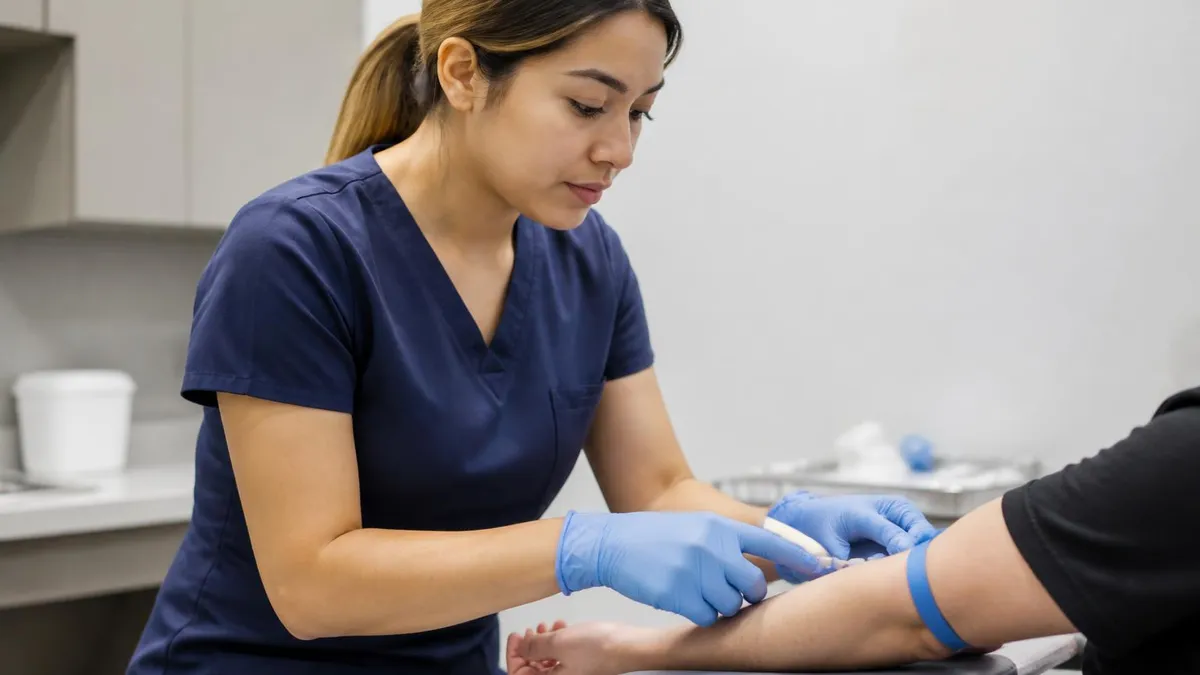
CCMA Jobs in 2026: Career Paths, Salary, and How to Land Your First Role

CCMA Job Opportunities: Where Certified Clinical Medical Assistants Work, Earn, and Advance in 2026
About the Author

Educational Psychologist & Academic Test Preparation Expert
Columbia University Teachers CollegeDr. Lisa Patel holds a Doctorate in Education from Columbia University Teachers College and has spent 17 years researching standardized test design and academic assessment. She has developed preparation programs for SAT, ACT, GRE, LSAT, UCAT, and numerous professional licensing exams, helping students of all backgrounds achieve their target scores.
Join the Discussion
Connect with other students preparing for this exam. Share tips, ask questions, and get advice from people who have been there.
View discussion (9 replies)