
What Is CCMA — Complete Guide (2026 September)
💡 CCMA stands for Certified Clinical Medical Assistant (NHA). Learn what CCMA means in medical terms, how to get certified, salary, and how it differs

CCMA stands for Certified Clinical Medical Assistant — a nationally recognized credential issued by the National Healthcareer Association (NHA). If you've ever wondered what CCMA means in medical terms, the short answer is this: it identifies a trained healthcare professional who works alongside physicians and nurses to deliver direct patient care in clinical settings.
The ccma credential has grown into one of the most sought-after entry-level certifications in healthcare. Why? Because medical offices, urgent care centers, and outpatient clinics need clinical support staff who can hit the ground running — taking vitals, prepping exam rooms, drawing blood, and keeping patient flow moving. That's exactly what a CCMA does.
So what does CCMA stand for in medical terms, exactly? The full form breaks down like this: CC = Certified Clinical, MA = Medical Assistant. Unlike a general medical assistant who might have no formal credentials, a CCMA has passed a rigorous NHA exam and demonstrated competency across both clinical and foundational healthcare knowledge areas. That distinction matters more than it might seem — employers who list "CCMA required" are specifically screening out uncredentialed applicants.
The CCMA definition in the medical field matters because it's the credential employers specifically look for when hiring front-line clinical staff. When a job posting says "CCMA preferred" or "NHA certification required," they're asking for this exact designation. It signals that you've completed an accredited education program and passed a 200-question standardized exam — not just that you've worked in a clinic for a few months.
Understanding the CCMA abbreviation also helps you navigate the crowded landscape of medical assistant credentials. You'll see CMA (Certified Medical Assistant) from AAMA, RMA (Registered Medical Assistant) from AMT, and CCMA from NHA. Each has its own certifying body, exam format, and employer recognition. CCMA's full form through NHA tends to be especially popular among community college and vocational school graduates — but it's widely accepted by employers nationwide across all practice settings.
A quick note on the NHA: founded in 1989, the National Healthcareer Association is one of the largest healthcare certification bodies in the United States. They issue credentials across multiple allied health disciplines — not just CCMA. Their certification programs are accredited by the National Commission for Certifying Agencies (NCCA), which is the same accreditation standard used by AAMA for the CMA credential. That shared accreditation standard is one reason CCMA certification meaning carries real weight with employers — it's not a lesser-known credential from a fly-by-night organization.
The CCMA medical credential is also distinct from a simple "medical assistant certificate" from a training program. Completing a program means you were trained. Earning CCMA certification means you were tested. Employers understand that difference — which is why certified candidates consistently command higher starting salaries and get more interview callbacks than uncertified applicants with similar experience.
This guide covers everything you need to know: the full CCMA definition, what CCMAs actually do on the job, how to earn the certification step by step, what you'll earn, and whether it's worth your time and investment. Whether you're researching a career change or just trying to understand what a CCMA is in the medical field, you're in the right place. Let's break it all down.
- Full name: Certified Clinical Medical Assistant
- Issuing body: National Healthcareer Association (NHA)
- Exam: 200 questions, 3 hours
- Passing score: approximately 390 out of 500
- Credential validity: 2 years (then renewal required)
- Typical training length: 9–12 months
Understanding the CCMA Credential
CCMA is the NHA's clinical medical assistant credential — the full form is Certified Clinical Medical Assistant. It's earned by passing a standardized exam after completing an accredited program.
- Full form: Certified Clinical Medical Assistant
- Issuer: National Healthcareer Association (NHA)
- Abbreviation: CCMA
- Credential type: National certification
Employers across outpatient healthcare specifically request this credential. You'll find CCMA-required postings in clinics, physician offices, urgent care, and specialty practices.
- Primary employers: Clinics, physician offices, urgent care
- Specialty settings: Dermatology, pediatrics, cardiology
- Required by: Most NHA-partnership employers
- Target candidate: Entry-level clinical support staff
Both credentials certify medical assistants, but they come from different organizations. CMA is from AAMA and requires graduation from a CAAHEP or ABHES-accredited program. CCMA from NHA is more broadly accessible.
- CCMA issuer: NHA (National Healthcareer Association)
- CMA issuer: AAMA (American Association of Medical Assistants)
- CMA program req: CAAHEP or ABHES-accredited only
- CCMA program req: NHA-approved program (broader scope)
RMA (Registered Medical Assistant) comes from AMT — the American Medical Technologists organization. It's another valid credential but less commonly required by employers than either CMA or CCMA.
- RMA issuer: AMT (American Medical Technologists)
- CCMA issuer: NHA
- Employer demand: CCMA generally higher demand
- Exam format: Both ~3 hours, multiple choice

CCMA Duties and Daily Responsibilities in the Medical Field
Once you understand the CCMA meaning medical employers care about, the next question is: what does a CCMA actually do all day? The role blends direct patient care with clinical support tasks — and the mix varies considerably depending on where you work and what kind of practice you're in.
In a typical outpatient clinic or physician's office, your shift starts before the first patient walks in. You're pulling up charts, setting up exam rooms, checking that supplies are stocked and equipment is calibrated. When patients arrive, you handle intake: verifying their demographic information, reviewing medications and allergies, and documenting the reason for their visit. Then come the vitals — blood pressure, pulse, temperature, respiratory rate, oxygen saturation. You document everything in the electronic health record, and you do it accurately, because physicians make clinical decisions based on your numbers.
Clinical duties go deeper than vital signs, though. CCMAs are trained to perform 12-lead electrocardiograms (EKGs), collect blood samples via phlebotomy, process urine specimens, administer oral and injectable medications (including immunizations under physician supervision), apply dressings, remove sutures, and assist during minor surgical procedures. In many states, CCMAs can also perform basic point-of-care lab tests — rapid strep, flu swabs, glucose checks. The scope varies by state law and employer policy, but the clinical breadth is real.
Patient education is another piece of the CCMA role that often gets overlooked in job descriptions. When a physician orders a follow-up test, prescribes a new medication, or gives discharge instructions after a procedure, it's frequently the medical assistant who translates that clinical language into terms the patient can actually understand. You're answering questions, explaining what to expect, and making sure the patient leaves the office knowing what they need to do next. That's not a small thing — poor patient education leads to missed follow-ups, medication errors, and readmissions.
The certified clinical medical assistant role also carries administrative responsibilities in many settings — especially smaller practices where staff wear multiple hats. Scheduling appointments, calling in prescriptions, handling referrals, processing prior authorizations, managing supply inventory for exam rooms. It's not glamorous work, but it keeps the practice running smoothly and directly affects patient care quality.
Specialty settings add their own dimensions to the role. In dermatology, you might assist with biopsies, cryotherapy, and laser procedures. In pediatrics, you're administering vaccines while also managing anxious children and nervous parents. In cardiology, EKG interpretation and Holter monitor setup become central skills. In oncology, you might support IV prep and monitor patients during infusion visits. The variety built into the CCMA exam content map reflects this — because employers hire CCMAs knowing they may need to support multiple service lines across a large practice.
One thing that surprises many new CCMAs: the emotional labor involved. Healthcare is a high-stress environment. Patients are scared, in pain, or confused. You'll encounter people having some of the worst days of their lives. The clinical skills bring you into the room; your communication and composure are what make you effective once you're there.
Across all of these settings, what defines a strong CCMA isn't just technical proficiency — it's reliability. Physicians and nurses count on medical assistants to keep the clinical workflow moving. When your documentation is accurate, your vitals are precise, your room prep is thorough, and your patient communication is clear, you become the kind of clinical team member that practices genuinely depend on.
What CCMAs Do on the Job
- Record vital signs (BP, temperature, pulse, O2 saturation)
- Perform phlebotomy and blood draws
- Administer injections and immunizations
- Perform 12-lead EKGs
- Collect and process urine, swab, and specimen samples
- Assist with minor surgical procedures and wound care
- Apply and remove dressings
- Perform basic point-of-care lab tests
- Prepare and position patients for exams
- Document all clinical findings in EHR
How to Become a CCMA: Education, Exam, and Certification Process
Getting your CCMA certification is more straightforward than many healthcare credentials — but it still requires a real commitment of time, effort, and focused preparation. Here's how the path works from start to credential in hand.
Step 1: Complete an NHA-approved medical assisting program. These programs are offered at community colleges, vocational schools, and career training centers across the country. Most run 9 to 12 months — though some accelerated programs can be completed in as few as six months, while associate degree programs run two years.
The program must cover both clinical and administrative competencies to qualify you for the NHA exam. When evaluating programs, look specifically for those that mention NHA exam preparation in their curriculum or have an established record of CCMA pass rates. Not all medical assisting programs are equal — some focus heavily on administrative tasks and underweight the clinical training the CCMA exam tests.
Program costs range widely. Community colleges typically charge $1,500 to $5,000 for the full program. Private vocational schools and career colleges often run $8,000 to $15,000 — and while they may offer faster timelines and more flexible scheduling, the credential you earn is the same. The CCMA certification online path has expanded significantly in recent years, with hybrid and fully remote programs now available from accredited providers. If you're balancing a job or family obligations, this is worth researching seriously.
Step 2: Complete your clinical practicum hours. During your program, you'll complete hands-on clinical training in an actual healthcare setting under supervision. These hours are non-negotiable — the NHA requires documentation of your clinical training before they'll clear you to sit for the exam. Your school arranges these rotations, typically at affiliated clinics, physician offices, or hospital outpatient departments. Take these hours seriously. The skills you develop during practicum — drawing blood efficiently, performing EKGs accurately, positioning patients correctly — are skills you'll use every day on the job.
Step 3: Register with NHA and schedule your exam. Once your program is complete (or within 60 days of completion, in some cases), you register at nhanow.com, submit your program completion documentation, and pay the exam fee (~$155). You'll then select a testing date at a PSI testing center near you, or opt for remote proctored testing from home if that's available in your area.
The CCMA certification exam consists of 200 multiple-choice questions with a 3-hour time limit. Content areas include anatomy and physiology, medical terminology, infection control protocols, clinical procedures, phlebotomy, EKG, patient communication, pharmacology basics, and medical law and ethics. You need approximately 390 out of 500 points to pass — though NHA uses a scaled scoring system, so that number reflects a calibrated standard rather than a simple raw percentage. Results are typically available immediately after you complete the exam.
If you don't pass on the first attempt, you can retake the exam — each retake requires a new fee. Most candidates pass within two attempts when they've prepared thoroughly with practice exams and content review. The CCMA exam breakdown guide covers the content domains in detail, weighted by how many questions come from each area, which is the most efficient way to focus your study time.
Experience pathway: The NHA also recognizes a work-experience route for those who haven't completed a formal program. If you have at least one year of full-time, supervised medical assisting experience within the last three years, you may qualify to sit for the exam without formal program completion. Verify current eligibility requirements directly with NHA, as this pathway has specific documentation requirements and isn't available at all testing sites.

CCMA Exam Eligibility Checklist
- ✓Completed an NHA-approved medical assisting program (or have 1 year verified experience)
- ✓Documented clinical practicum hours (required for program graduates)
- ✓Program completion certificate or transcript ready to submit
- ✓Registered for an NHA account at nhanow.com
- ✓Exam fee paid ($155 standard registration)
- ✓Government-issued photo ID prepared for testing day
- ✓Testing location or remote proctor setup confirmed
- ✓Exam date scheduled at a PSI testing center or online
CCMA Salary and Career Outlook
Let's talk numbers — because understanding what a CCMA earns is a big part of deciding whether this credential is the right move for your situation.
Nationally, CCMAs earn between $36,000 and $46,000 per year on average, with the median sitting around $40,000 to $42,000. That works out to roughly $17–$22 per hour, depending on your location, experience level, and employer type. Entry-level positions in smaller markets tend to start at the lower end; experienced CCMAs in specialty practices or high-cost-of-living metropolitan areas can push well above $46,000 without needing additional credentials.
Geography is probably the single biggest salary variable. California, Washington, Massachusetts, Connecticut, and New York consistently pay medical assistants well above the national average — sometimes 20–30% higher. In the San Francisco Bay Area or Seattle metro, CCMAs in specialty practices routinely earn $52,000 to $58,000.
In rural Midwest or Southeast markets, the same credential and experience level might top out around $37,000 to $40,000. This isn't unique to medical assisting — it reflects regional healthcare labor markets more broadly. For a current breakdown by state and metropolitan area, the CCMA salary guide pulls data from BLS occupational surveys and live job posting aggregators.
Employer type also matters. Large hospital systems and academic medical centers tend to offer stronger benefits packages — health insurance, retirement matching, tuition assistance — even if the base salary isn't dramatically higher than a smaller clinic. Private specialty practices in dermatology, cardiology, and plastic surgery often pay above-average base rates because patient volume and revenue per visit are higher. Urgent care chains offer consistent hours and predictable schedules, which has real value even when the hourly rate is modest.
The job market for medical assistants is genuinely strong right now. The Bureau of Labor Statistics projects 14–16% employment growth for medical assistants through 2032 — substantially faster than the average for all occupations. The drivers are structural: an aging population that needs more medical care, expanded insurance coverage, and an ongoing shift from inpatient to outpatient settings where medical assistants — not nurses — handle the bulk of clinical support work. These trends aren't going to reverse. If anything, demand is still building.
Where can your CCMA career go from here? More directions than you might expect. Many CCMAs advance into medical office management after three to five years of experience — moving from clinical work into supervisory or administrative leadership roles, often without returning to school. Others use the credential as a deliberate stepping stone: earning their associate's degree or bachelor's while working as a CCMA, then transitioning into nursing, healthcare administration, respiratory therapy, or even physician assistant programs. Having clinical experience documented on a transcript and a credential that verifies your competency makes those graduate program applications more competitive.
Specialty skill development also creates real salary upside within the CCMA role itself. A CCMA who becomes highly proficient in phlebotomy, develops strong EKG interpretation skills, or builds experience in surgical assist duties can command 10–20% higher pay compared to general medical assisting. Document your specialty skills. List them explicitly on your resume. Employers in cardiology, oncology, orthopedics, and surgical practices pay premiums for CCMAs who bring clinical depth beyond the baseline credential.
Looking for where the opportunities are? The certified clinical medical assistant jobs guide breaks down where to search effectively, what distinguishes strong candidates in competitive markets, and how to position your certification, experience, and specialty skills for the highest-earning opportunities in your area. The credential opens the door — what you do with it determines how far you go.
Path to CCMA Certification
Enroll in an NHA-Approved Program
Complete Clinical Practicum Hours
Register with NHA
Schedule and Pass the CCMA Exam
Receive Your CCMA Credential
Renew Every 2 Years

CCMA Cost Breakdown
CCMA at a Glance
CCMA vs CMA — Which Path Is Right for You?
- +Broader program eligibility — more schools qualify
- +Widely accepted by employers across all 50 states
- +Strong employer partnerships through NHA network
- +Online and hybrid program options more common
- +Exam available via remote proctor (no travel required)
- +Work-experience pathway available for non-graduates
- +CE renewal portal integrated with NHA membership
- −CMA (AAMA) has higher prestige in some clinical environments
- −AAMA credential more recognized in academic medical centers
- −CMA requires CAAHEP/ABHES-accredited program — stronger standardization
- −Some hospital systems specifically require CMA over CCMA
- −CMA has longer credential history — AAMA founded 1956
- −Some RN bridge programs give preference to CMA holders
- −Some physician-owned practices may specifically list CMA preference
CCMA Questions and Answers

CCMA Certification 2026 — NHA Certified Clinical Medical Assistant Guide
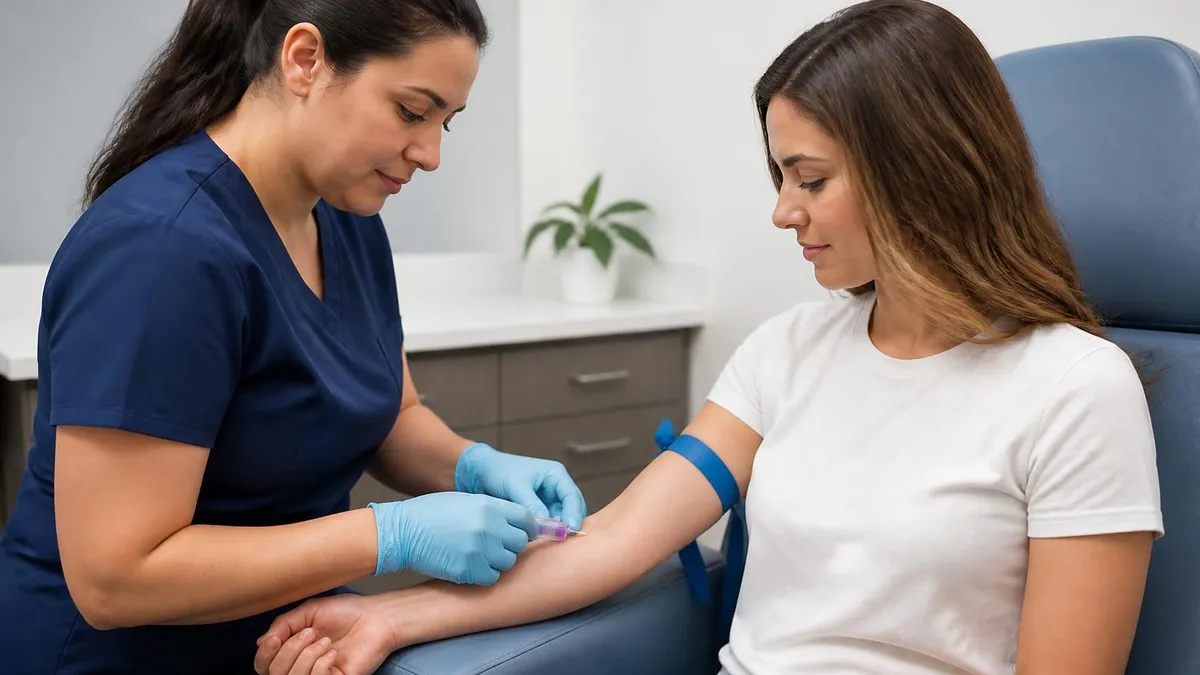
CCMA Salary in 2026: How Much Certified Clinical Medical Assistants Really Earn
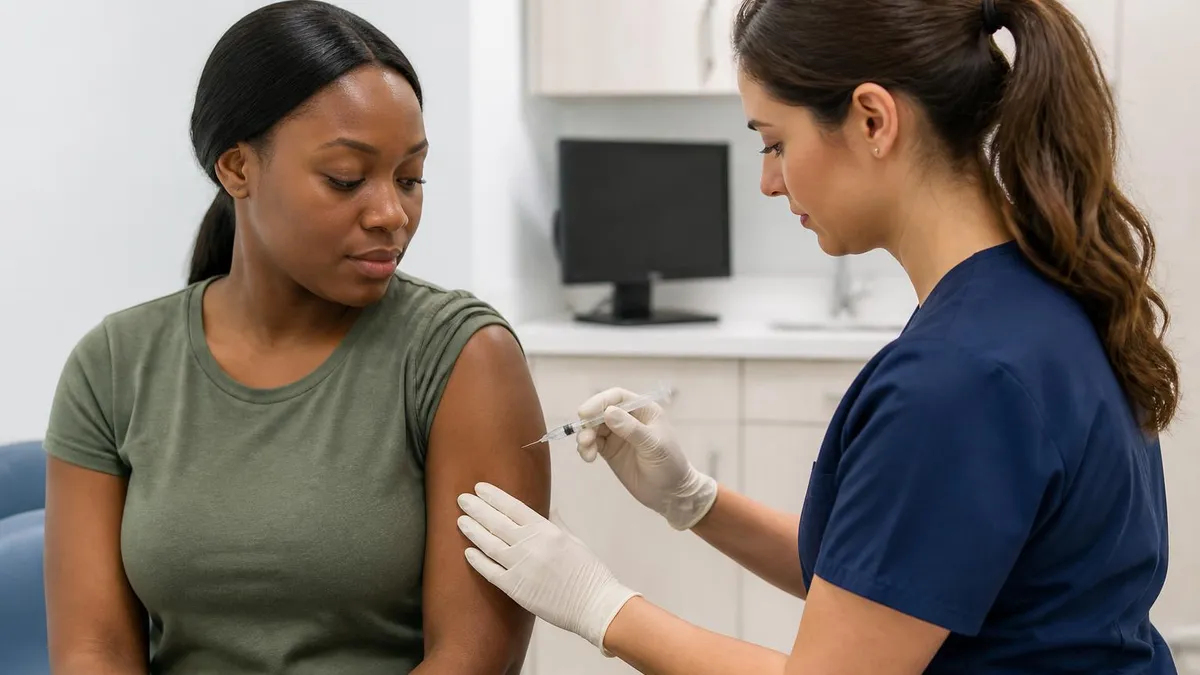
CCMA Exam: Complete 2026 Guide to the NHA Certified Clinical Medical Assistant Test
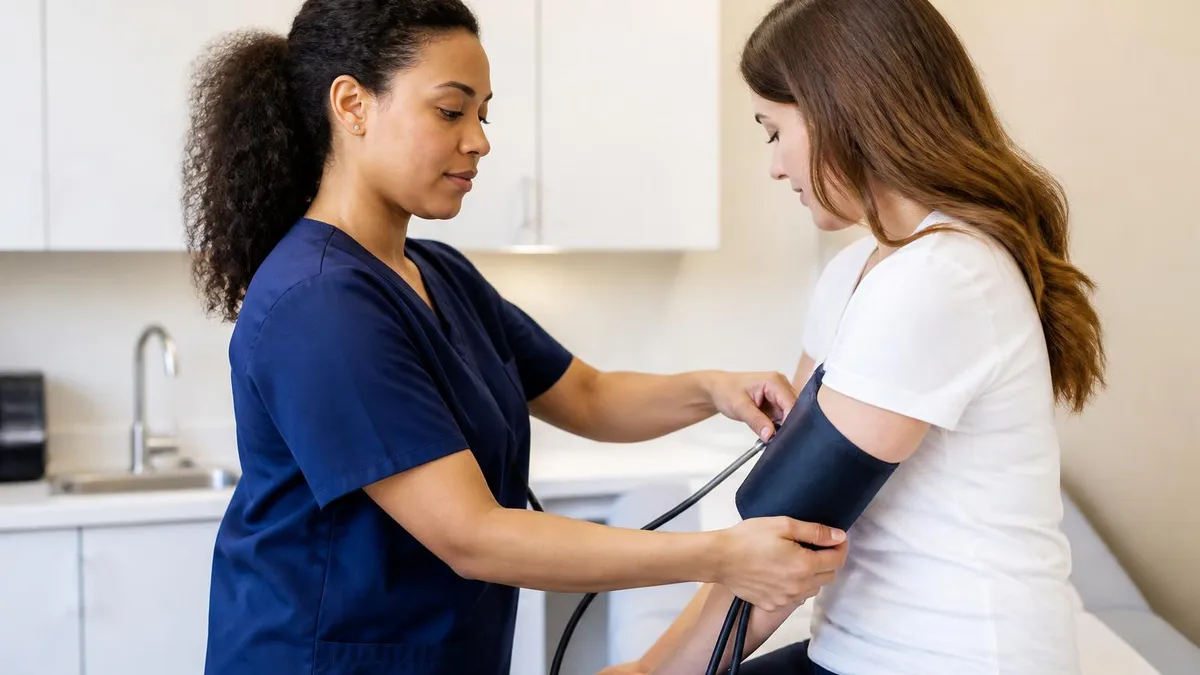
CCMA Passing Score: What You Need to Pass the NHA Certified Clinical Medical Assistant Exam in 2026
About the Author

Educational Psychologist & Academic Test Preparation Expert
Columbia University Teachers CollegeDr. Lisa Patel holds a Doctorate in Education from Columbia University Teachers College and has spent 17 years researching standardized test design and academic assessment. She has developed preparation programs for SAT, ACT, GRE, LSAT, UCAT, and numerous professional licensing exams, helping students of all backgrounds achieve their target scores.
Join the Discussion
Connect with other students preparing for this exam. Share tips, ask questions, and get advice from people who have been there.
View discussion (8 replies)