
CCMA Classes: Complete Training Guide for Aspiring Certified Clinical Medical Assistants
Everything you need to know about CCMA classes, training programs, costs, and certification requirements. Start your medical assistant career today! 🏆

If you are researching CCMA classes, you are already taking the first step toward one of the most in-demand healthcare careers in the United States. The Certified Clinical Medical Assistant (CCMA) credential, awarded by the National Healthcareer Association (NHA), is recognized by employers at clinics, hospitals, and physician offices across all 50 states. Whether you are a career changer, a recent high school graduate, or a working adult looking to upskill, the right training program can get you exam-ready in as little as four to nine months.
Understanding ccma meaning before enrolling is important — CCMA stands for Certified Clinical Medical Assistant, a credential that validates your competency in patient care, clinical procedures, and administrative tasks. The NHA exam covers everything from anatomy and physiology to EKG monitoring, phlebotomy basics, and medical law. Choosing the right CCMA classes means finding a program that balances these domains comprehensively so you are not caught off guard on exam day.
There are several types of CCMA training programs available today. Community colleges offer accredited diploma and associate degree tracks that may take 9 to 24 months to complete. Vocational and trade schools provide accelerated certificate programs often finished in four to six months. Online programs have surged in popularity, especially post-pandemic, with platforms and schools offering hybrid models that combine self-paced coursework with in-person clinical externships. Each format has distinct advantages depending on your schedule, budget, and prior healthcare experience.
When evaluating CCMA classes, curriculum depth matters enormously. A quality program will cover at minimum: anatomy and physiology, medical terminology, clinical procedures (injections, EKG, phlebotomy), patient intake and vital signs, administrative duties such as scheduling and billing basics, infection control, and HIPAA compliance. Programs that shortcut these areas leave students underprepared for the NHA's 180-question exam. Look for programs explicitly aligned with the NHA CCMA exam blueprint to ensure full content coverage.
Cost is a practical concern for most students. Community college CCMA programs range from $3,000 to $8,000 in total tuition, while private vocational schools can run from $5,000 to $15,000. Online programs are often the most affordable option, with some reputable providers offering complete training for $1,500 to $4,000. Financial aid, employer tuition reimbursement, and workforce development grants are commonly available, especially for students enrolling in accredited programs. Always verify accreditation through CAAHEP or ABHES before committing tuition dollars.
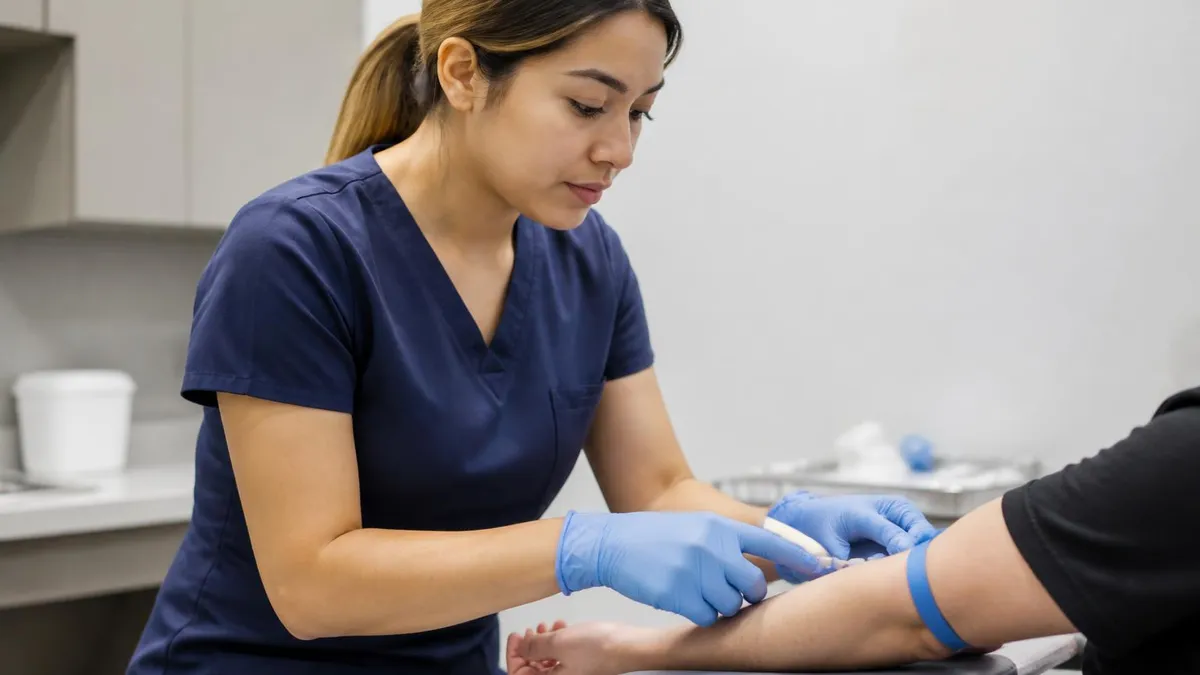
Clinical externship hours are a non-negotiable component of CCMA training. The NHA does not require a specific externship hour count to sit for the exam, but most accrediting bodies and employers expect students to complete 160 to 200 hours of hands-on clinical practice. These hours are where you transform textbook knowledge into real-world competence — drawing blood, assisting with procedures, recording vitals, and interacting with actual patients. A program that skips or minimizes externship hours is a red flag, regardless of how impressive the online coursework looks.
The investment you make in quality CCMA classes pays off quickly. According to Bureau of Labor Statistics data and NHA salary surveys, the average CCMA salary ranges from $38,000 to $42,000 annually at entry level, with experienced professionals in high-cost metro areas earning $55,000 or more. Demand for medical assistants is projected to grow 14% through 2032, significantly faster than average for all occupations. Starting your training now positions you to enter a stable, growing field with strong career advancement potential into specialties, supervisory roles, or further clinical certifications.
CCMA Classes & Certification by the Numbers

Types of CCMA Training Programs
Accredited diploma or associate degree tracks lasting 9 to 24 months. Often the most affordable option with financial aid available. CAAHEP or ABHES accreditation common. Strong clinical externship placement support included in most programs.
Accelerated certificate programs completed in 4 to 6 months. Higher tuition than community college but faster entry to the workforce. Many schools have dedicated career placement staff and employer partnerships for externship placement.
Self-paced coursework online combined with in-person clinical externships locally. Most affordable format at $1,500–$4,000. Ideal for working adults or those in rural areas. Requires strong self-discipline and reliable internet access to succeed.
Some hospital systems and large clinics offer on-the-job CCMA training programs, paying your salary while you learn. Competitive to enter but zero tuition cost. Usually includes a commitment to remain with the employer for 1 to 2 years post-certification.
Choosing the right CCMA classes requires more than simply picking the cheapest or fastest option. Accreditation is the single most important factor to evaluate first. Programs accredited by the Commission on Accreditation of Allied Health Education Programs (CAAHEP) or the Accrediting Bureau of Health Education Schools (ABHES) have met rigorous standards for curriculum quality, faculty credentials, and student outcomes. Many employers specifically require applicants to have graduated from a CAAHEP- or ABHES-accredited program, and some states are moving toward making accreditation a legal prerequisite for clinical practice.
Curriculum alignment with the NHA CCMA exam blueprint is the second critical factor. The NHA publishes a detailed content outline specifying the domains and sub-competencies tested on the exam. Top-quality CCMA classes are explicitly designed around this blueprint, ensuring students encounter every testable concept before exam day. Ask potential schools for their curriculum map and cross-reference it against the NHA content outline. If a school cannot produce this documentation, treat it as a warning sign that their program may leave significant gaps in your preparation.
The quality and quantity of clinical externship hours distinguishes excellent CCMA programs from mediocre ones. While the NHA does not mandate a specific externship hour minimum to sit for the exam, most accrediting bodies require 160 to 200 supervised clinical hours. More importantly, where you do your externship matters. Programs with established relationships with multi-specialty clinics, hospitals, and urgent care centers expose students to a broader range of procedures and patient populations than programs placing students only in single-physician offices. Ask admissions staff specifically where recent graduates completed their externships.
If you want to understand what is a ccma at a deeper level before enrolling, take time to research the daily scope of practice for certified clinical medical assistants. CCMAs in clinical settings perform venipuncture, administer injections, perform EKGs, assist with minor surgical procedures, conduct patient intake interviews, record vital signs, and manage examination room setup and sterilization. CCMAs in administrative roles schedule appointments, verify insurance, process referrals, and maintain electronic health records. A strong CCMA class will prepare you competently for both domains rather than over-emphasizing one at the expense of the other.
Instructor credentials and faculty-to-student ratios directly impact learning quality in hands-on healthcare programs. Look for programs where instructors hold active clinical certifications (CCMA, CMA, RMA, or RN credentials) in addition to teaching experience. Smaller class sizes in the clinical lab component — ideally no more than 15 students per instructor — ensure each student gets adequate hands-on practice time with equipment like EKG machines, phlebotomy supplies, and simulation mannequins. Overcrowded clinical labs are a common complaint at for-profit trade schools, so seek out student reviews that specifically address this issue.
Pass rates on the NHA CCMA exam are a telling performance indicator for any training program. Reputable schools track and publish their first-attempt pass rates, which typically range from 70% to 90% at high-quality programs. The national average NHA CCMA first-attempt pass rate hovers around 54%, meaning many students take the exam more than once. Programs with above-average pass rates have typically built strong exam preparation components into their curriculum — including NHA practice tests, timed mock exams, and focused review of commonly missed content areas like pharmacology and clinical procedures.
Finally, consider graduate outcomes beyond the exam itself. What percentage of graduates secure employment within 90 days of certification? Do graduates typically start at or above the median CCMA salary for your region? Does the school offer career placement services, resume review, or connections to local healthcare employers? Schools that are genuinely invested in student success track these metrics and share them transparently with prospective students. If a school deflects these questions or cannot provide data, that absence of accountability is itself meaningful information to factor into your decision.
NHA CCMA Certification Requirements Explained
To sit for the NHA CCMA exam, candidates must meet one of three eligibility pathways. The first and most common is completing a CCMA training program from an accredited institution within the past five years. The second pathway requires at least one year of full-time work experience (or equivalent part-time hours) as a medical assistant within the past three years. The third pathway accepts completion of military training in a medical assistant occupational specialty, making the credential accessible to transitioning veterans with relevant clinical backgrounds.
The NHA also requires all candidates to hold a current, valid government-issued photo ID and to agree to the NHA's Code of Ethics and Conduct before registering for the exam. Background check requirements vary by state and employer, but the NHA itself does not conduct criminal background checks as part of the credentialing process. International candidates educated outside the United States must submit credential evaluation documentation from a recognized foreign credential evaluation service before NHA will accept their application for the CCMA exam.

CCMA Classes: Community College vs. Vocational School
- +Community colleges offer CAAHEP-accredited programs at significantly lower tuition than private trade schools
- +Financial aid, Pell Grants, and federal student loans widely available at community colleges
- +Associate degree tracks at community colleges provide more comprehensive healthcare education and easier credit transfer
- +Vocational schools offer faster completion timelines of 4 to 6 months versus 9 to 24 months
- +Private vocational programs often have stronger local employer partnerships for externship and job placement
- +Hybrid and online programs from both school types allow working adults to train without leaving their jobs
- −Vocational school tuition can reach $15,000 or more with limited financial aid options
- −Some private trade schools lack CAAHEP or ABHES accreditation, risking employer rejection of your credential
- −Community college programs require longer time commitment that may not suit career changers needing quick employment
- −Online-only programs require significant self-motivation and may provide less exam prep support than in-person options
- −Externship placement quality varies widely and is difficult to evaluate until you are already enrolled
- −Employer-sponsored programs require multi-year employment commitments that limit early career flexibility
CCMA Class Preparation Checklist
- ✓Verify your chosen program is accredited by CAAHEP or ABHES before enrolling.
- ✓Request the school's curriculum map and compare it against the NHA CCMA exam content outline.
- ✓Confirm the program includes at least 160 hours of supervised clinical externship.
- ✓Ask for the school's NHA CCMA first-attempt pass rate for the most recent graduating cohort.
- ✓Apply for FAFSA financial aid if enrolling at a community college or accredited vocational school.
- ✓Purchase or borrow the NHA CCMA Exam Prep book before classes begin so you can preview exam content.
- ✓Set up a weekly study schedule before the first day of class to establish productive learning habits early.
- ✓Join an NHA CCMA study group online or in person to stay motivated and fill knowledge gaps faster.
- ✓Complete NHA CCMA practice tests after each major content module rather than waiting until the end of the program.
- ✓Submit your NHA exam application as soon as you meet eligibility requirements to lock in your preferred test date.
Practice Tests Are the Single Highest-ROI Study Activity
NHA research and third-party exam prep studies consistently show that students who complete 8 or more full-length practice exams before their test date outperform those who only review notes and textbooks. Active recall through practice testing — not passive re-reading — is how the brain encodes clinical knowledge for long-term retention. Schedule at least one full timed practice exam per week during the final four weeks before your NHA CCMA test date.
One of the most compelling reasons to pursue CCMA certification is the salary and career trajectory it unlocks. According to the Bureau of Labor Statistics Occupational Employment and Wage Statistics program, medical assistants earned a median annual wage of $42,000 nationally in 2023. However, NHA-certified CCMAs consistently earn above that median — NHA's own graduate outcomes surveys show CCMA holders earning an average of $44,000 to $47,000 at entry level, with those in specialty practices or high-cost-of-living metros earning $55,000 to $64,000 within three to five years of initial certification.
Geographic variation in CCMA salaries is significant and should inform where you look for work after certification. States like California, Washington, Massachusetts, and New York offer the highest average wages for certified medical assistants, with metropolitan areas in these states commonly posting salaries in the $52,000 to $68,000 range for experienced CCMAs. Southern and Midwestern states typically start lower — $36,000 to $42,000 — but cost-of-living differences mean purchasing power may be comparable. Rural areas within any state typically pay less than urban markets but often have stronger job security due to limited supply of credentialed candidates.
Specialty practice settings materially impact CCMA compensation. CCMAs working in specialty clinics such as cardiology, oncology, orthopedics, or dermatology typically earn 8% to 15% more than those in general family practice or internal medicine offices. This premium reflects the specialized procedural skills and clinical knowledge required. If you complete your CCMA classes and gain initial experience in primary care, strategically transitioning to a specialty practice within two to three years is one of the most reliable ways to accelerate your earnings without returning to school for an additional credential.
Career advancement pathways for CCMAs extend well beyond the bedside. Many experienced CCMAs transition into medical office management, clinical supervisory roles, healthcare administration, or further education as registered nurses, physician assistants, or healthcare administrators. The CCMA credential also stacks well with specialty certifications — becoming a certified phlebotomy technician (CPT), certified EKG technician (CET), or medical billing and coding specialist (CBCS) alongside your CCMA designation can differentiate you in competitive job markets and justify higher compensation requests during salary negotiations.
The employment outlook for CCMAs is exceptionally strong by any metric. The BLS projects medical assistant employment to grow by 14% between 2022 and 2032, adding approximately 103,100 new jobs nationally. This growth is driven by an aging U.S. population requiring more chronic disease management, the expansion of outpatient care facilities, and the ongoing shift of care from high-cost hospital settings to lower-cost clinic environments where CCMAs perform a broader range of tasks. The COVID-19 pandemic also highlighted the essential role of clinical staff in mass vaccination, testing, and triage operations — further cementing demand for credentialed medical assistants.
Job stability is another underappreciated benefit of the CCMA credential. Unlike many healthcare roles, medical assistant positions are distributed broadly across nearly every clinical setting — physician offices, urgent care centers, federally qualified health centers, specialty clinics, telehealth companies, schools, and correctional facilities all employ certified medical assistants. This breadth of employer types provides meaningful insulation against economic downturns. During the 2020 economic disruption, healthcare employment recovered faster than virtually any other sector, and medical assistants were among the first clinical staff recalled as clinics reopened.
For students weighing CCMA against competing credentials like CMA (AAMA) or RMA (AMT), the NHA CCMA has several practical advantages. It is the most widely recognized medical assistant certification in terms of employer brand awareness, and the NHA's exam registration process is straightforward and accessible. The exam fee of $155 for NHA members is competitive, and the NHA offers robust study resources through their online learning portal. Graduates who earn their CCMA through a quality training program consistently report that the credential opened doors that uncertified medical assistant experience alone would not have unlocked.

Not every school advertising CCMA classes is accredited by CAAHEP or ABHES. Enrolling in a non-accredited program may disqualify you from NHA exam eligibility under certain pathways and may prevent employer reimbursement of your tuition. Always verify accreditation status directly on the CAAHEP.org or ABHES.org websites before paying any enrollment deposit — do not rely solely on the school's own marketing materials.
Once you have completed your CCMA classes and are approaching exam day, a structured final preparation strategy makes a measurable difference in first-attempt pass rates. The NHA recommends beginning dedicated exam preparation at least eight weeks before your scheduled test date, with the intensity increasing in the final two to four weeks. Students who treat exam prep as an afterthought — cramming for a week or two after months of casual studying — consistently underperform compared to those who integrate practice testing and active review throughout their training program.
Taking a ccma practice exam under timed, test-like conditions is the most effective preparation tool available. The NHA's own practice assessments and third-party prep platforms offer full-length 180-question simulations that mirror the actual exam's content distribution, question style, and difficulty level.
The goal of these timed simulations is not simply to check whether you know the answers — it is to identify specific content domains where your accuracy falls below 75% so you can redirect study time to those gaps before the real exam. Students who only study topics they already know well waste valuable prep time and leave correctable weaknesses unaddressed.
Content review should be domain-weighted rather than evenly distributed. Because Clinical Patient Care accounts for 38% of the scored exam, invest proportionally more study time in clinical procedures, medication administration routes and calculations, specimen collection techniques, EKG lead placement, and infection control protocols. Many students over-prepare the Administrative Assisting domain (17% of the exam) because it feels more familiar from daily life experience, while under-preparing clinical content that requires more deliberate memorization and practice. A weighted study plan corrects this common imbalance before it costs you points on the real exam.
Anatomy and physiology is a content area that surprises many CCMA candidates who underestimate its exam weight. Body systems knowledge — cardiovascular, respiratory, digestive, endocrine, musculoskeletal, and urinary — underpins clinical procedure questions throughout the exam. A candidate who cannot name the layers of the skin may miss venipuncture-adjacent questions; a candidate who does not understand cardiac conduction cannot accurately interpret basic EKG strips. Use the quiz tiles throughout this article to specifically target anatomy content, as it is one of the highest-leverage areas for score improvement with focused practice.
Test-taking strategy matters on a 180-question multiple-choice exam. The NHA CCMA uses scenario-based questions that present a brief patient situation and ask you to select the most appropriate action or best answer. These questions require you to apply knowledge rather than simply recall facts, which is why rote memorization of textbook content is insufficient preparation.
Practice answering scenario questions by reading all four answer choices before selecting, eliminating clearly wrong answers first, and applying the principle of doing what is safest for the patient in ambiguous situations. This approach raises scores for candidates who know the material but struggle with question interpretation.
Managing test anxiety is a real and underappreciated component of exam preparation. Many CCMA candidates report that anxiety — not lack of knowledge — is their primary obstacle on exam day.
Strategies that consistently help include: completing multiple full-length timed practice exams so the real exam format feels familiar and non-threatening; getting adequate sleep for at least three nights before the exam rather than pulling all-night study sessions; arriving at the testing center early to allow time to settle in without rushing; and using controlled breathing techniques during the exam when you encounter a question cluster that feels unfamiliar or difficult. Physical preparation is as important as intellectual preparation.
Finally, use your CCMA ccma test preparation period as an opportunity to start building your professional network. Connect with classmates who are preparing alongside you — study partnerships and group quizzing sessions are among the most effective peer learning formats. Reach out via LinkedIn to recently certified CCMAs in your area and ask for informational interviews about their first job search experience. Join the NHA's student community and professional forums where certified members share exam tips, clinical insights, and job leads. The relationships you build during your training period often directly translate into job referrals after you pass the exam.
After passing the NHA CCMA exam and receiving your certification, the first 90 days in a clinical role are critical for establishing your professional reputation. New CCMAs who arrive on day one knowing their equipment, procedures, and documentation systems require minimal ramp-up time and quickly earn the trust of supervising physicians and experienced clinical staff. The best way to prepare for this transition is to stay actively engaged with clinical content even in the weeks between passing your exam and starting your first position — do not let skills atrophy during the job search period.
Phlebotomy is consistently identified by employers as the skill new CCMAs most need to develop beyond what training programs provide. Drawing blood looks straightforward in a classroom setting with cooperative patient simulators, but real-world venipuncture on anxious patients with rolling veins, low blood pressure, or needle phobia requires repetition and calm confidence that only comes from practice. If your externship did not provide abundant phlebotomy experience, consider supplementing with a short phlebotomy technician course or volunteering for blood draw assignments during your first months of employment to build speed and consistency.
EKG interpretation is another area where new CCMAs frequently identify skill gaps after entering the workforce. Most CCMA classes cover EKG lead placement and basic rhythm identification, but the pace of clinical environments — where you may need to acquire an EKG and flag a potentially abnormal rhythm within minutes — demands a level of automaticity that requires deliberate practice beyond initial training. Online EKG interpretation modules and practice strip libraries are freely available and are an excellent way to sharpen this skill between training completion and your first day on the job.
Professional development should begin immediately after certification, not years later. Subscribe to publications like the AAMA's CMA Today or the NHA's professional newsletters to stay current with regulatory changes, new clinical guidelines, and emerging scope-of-practice developments that affect medical assistants.
Many experienced CCMAs report that colleagues who invest in their professional development from the start of their careers advance faster, earn more, and experience greater job satisfaction than those who coast on initial certification without continued growth. The healthcare field evolves rapidly — committing to lifelong learning from day one positions you ahead of peers who treat certification as a destination rather than a starting point.
Building a clinical specialty over time dramatically improves long-term career outcomes for CCMAs. After two to three years of general clinical experience, many CCMAs discover that they have a strong aptitude or interest in a specific medical specialty — cardiology, pediatrics, oncology, dermatology, or orthopedics. Pursuing additional training or certification in a specialty area, combined with networking within that specialty community, creates a career trajectory that eventually commands salaries 20% to 35% above the general CCMA median. Specialty CCMAs also tend to report higher job satisfaction because the work is more intellectually engaging and the patient population is more defined.
If you are considering teaching or mentoring as part of your long-term CCMA career path, note that most CCMA training programs welcome experienced certified professionals as adjunct clinical instructors, lab supervisors, or externship site coordinators. Teaching reinforces your own knowledge, keeps you connected to evolving curriculum, and provides an additional income stream. Many community college and vocational school programs actively recruit recently certified CCMAs with a year or two of clinical experience for part-time instructional roles — a way to give back to the profession while continuing to develop professionally.
The CCMA credential is ultimately a foundation, not a ceiling. Healthcare offers some of the most diverse and accessible pathways for upward mobility of any industry. CCMAs who wish to advance their education can pursue bridge programs to become licensed practical nurses (LPNs) or registered nurses (RNs), apply for physician assistant programs (which accept some clinical experience in lieu of formal pre-med coursework), or transition into healthcare administration and management.
The clinical experience and credential you earn as a CCMA are recognized and valued across these diverse pathways — making your initial investment in CCMA classes one of the most leverageable career decisions you can make in allied healthcare.
CCMA Questions and Answers

What Does CCMA Stand For? Certified Clinical Medical Assistant Explained

CCMA Certification Online: Complete Guide to Earning Your Certified Clinical Medical Assistant Credential in 2026

NHA CCMA Practice Exam 2026: Free Certified Clinical Medical Assistant Test Prep
NHA CCMA Exam Questions PDF 2026: Free Certified Clinical Medical Assistant Practice
CCMA Jobs in 2026: Career Paths, Salary, and How to Land Your First Role
About the Author

Educational Psychologist & Academic Test Preparation Expert
Columbia University Teachers CollegeDr. Lisa Patel holds a Doctorate in Education from Columbia University Teachers College and has spent 17 years researching standardized test design and academic assessment. She has developed preparation programs for SAT, ACT, GRE, LSAT, UCAT, and numerous professional licensing exams, helping students of all backgrounds achieve their target scores.
Join the Discussion
Connect with other students preparing for this exam. Share tips, ask questions, and get advice from people who have been there.
View discussion (9 replies)