
CCMA Training: Complete Guide to Becoming a Certified Clinical Medical Assistant
Complete CCMA training guide covering program requirements, costs, exam prep, and salary. Start your certified clinical medical assistant career today. 🏆

CCMA training is the essential first step toward earning one of the most sought-after entry-level credentials in healthcare. The Certified Clinical Medical Assistant (CCMA) designation, awarded by the National Healthcareer Association (NHA), validates your ability to perform clinical and administrative duties in outpatient and ambulatory care settings. Whether you are a recent high school graduate, a career changer, or a healthcare worker looking to formalize your skills, understanding the training pathway puts you in the best possible position to succeed and launch a stable, rewarding medical career.
The term what is a ccma comes up constantly among prospective students, and the short answer is that a CCMA is a cross-trained professional who bridges the gap between clinical care and administrative workflow. In a busy physician's office or urgent care clinic, a CCMA might take patient vitals in the morning, assist with minor procedures in the afternoon, and handle insurance verification before the day ends. That versatility is exactly what employers are looking for, which is why demand for trained CCMAs continues to outpace supply in most U.S. markets.
Most accredited CCMA training programs run between six months and one year, depending on whether you choose a certificate program at a community college, a vocational school, or an online platform. Programs generally include classroom instruction in anatomy, medical terminology, and pharmacology, followed by hands-on labs covering phlebotomy, EKG interpretation, and clinical procedures. A supervised externship of at least 160 hours rounds out the curriculum, giving you real-world experience before you ever sit for the NHA certification exam.
Choosing the right training program matters more than many students initially realize. Accreditation status, externship placement rates, CCMA exam pass rates, and total cost vary widely across schools. Nationally accredited programs — particularly those holding CAAHEP or ABHES accreditation — carry the most weight with employers and are required by some states for licensure purposes. Before enrolling, you should verify that graduates are eligible to sit for the NHA CCMA examination and that the school provides career placement support upon graduation.
The NHA CCMA exam itself consists of 150 scored questions plus 30 pretest questions, covering nine content domains ranging from patient care coordination to medical law and ethics. Candidates have three hours to complete the test, and the passing score is typically set at 390 on a scaled range up to 500. Most training programs align their curricula directly with these domains, so strong attendance and active engagement with course material give you a significant head start when exam day arrives.
Financial considerations are a major factor for most prospective students. CCMA training program costs range from roughly $1,200 for an accelerated online certificate to more than $15,000 at a private career school that includes equipment and supplies. Federal financial aid, employer tuition assistance, and NHA scholarship opportunities can all help offset those expenses. Many students find that the credential pays for itself quickly — the average CCMA salary in the United States sits around $40,000 to $45,000 per year, with experienced professionals in high-demand markets earning considerably more.
Consistent, structured study before the NHA exam is what separates candidates who pass on the first attempt from those who need to retest. Beyond reviewing your program coursework, taking a ccma practice exam under timed, test-like conditions is one of the most effective preparation strategies available. Practice exams reveal knowledge gaps, build time-management skills, and reduce the anxiety that comes with a high-stakes credentialing test. The sections below walk you through every major aspect of CCMA training so you can plan your path with confidence.
CCMA Training & Certification by the Numbers

CCMA Training Program Structure
- ▸Learn root words, prefixes, and suffixes used in clinical settings
- ▸Review the healthcare team hierarchy and scope of practice
- ▸Complete introductory anatomy and body systems overview
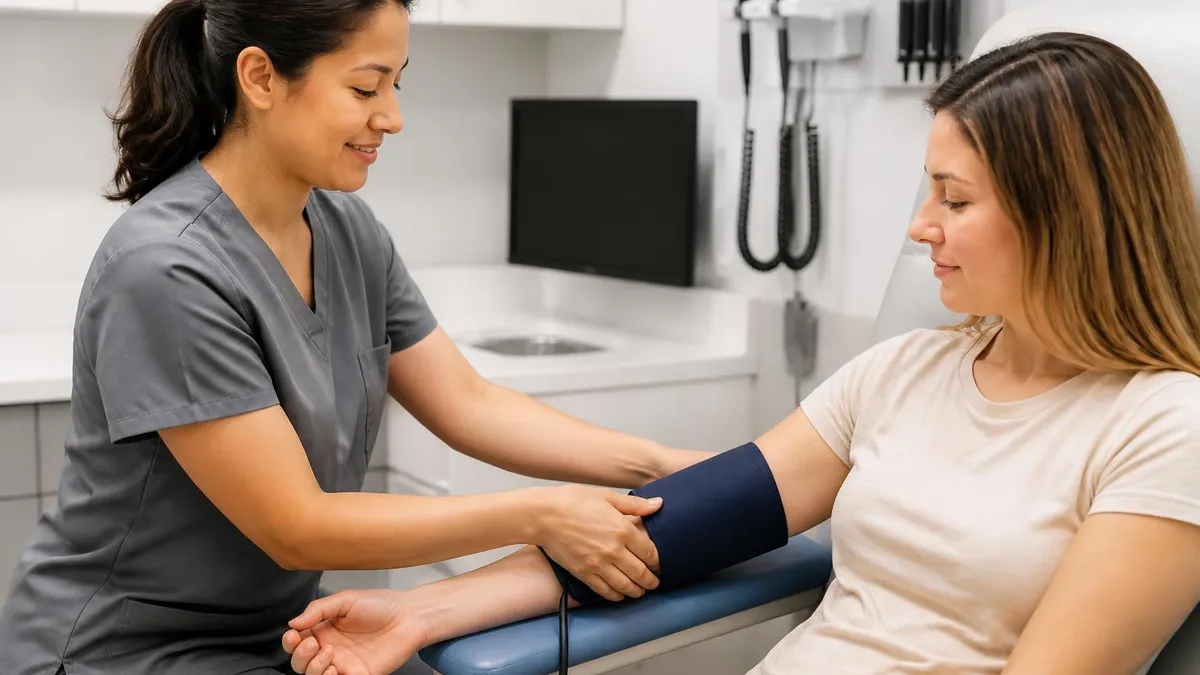
- ▸Practice blood pressure, pulse, temperature, and respiration measurement
- ▸Learn patient intake documentation and triage protocols
- ▸Study EHR (Electronic Health Record) data entry procedures
- ▸Master venipuncture and capillary puncture techniques in lab
- ▸Learn 12-lead EKG placement and artifact identification
- ▸Practice specimen handling, labeling, and transport protocols
- ▸Study HIPAA regulations and patient confidentiality requirements
- ▸Learn medical billing basics, ICD-10 coding overview, and insurance terminology
- ▸Practice appointment scheduling and medical records management
- ▸Complete supervised externship hours in a live clinical setting
- ▸Take full-length CCMA practice tests under timed conditions
- ▸Review weak domains identified in practice test performance reports
Selecting the right CCMA training program is one of the most important decisions you will make on the path to certification, and there are far more options today than there were even five years ago. Community colleges, vocational schools, hospital-based training programs, and accredited online platforms all offer pathways to the CCMA credential, and each format comes with distinct advantages. Community colleges typically offer the lowest tuition rates and the added benefit of federal financial aid eligibility, while private career schools often boast smaller class sizes and more aggressive externship placement networks.
Accreditation is the single most important quality signal when evaluating any CCMA program. Programs accredited by the Commission on Accreditation of Allied Health Education Programs (CAAHEP) or the Accrediting Bureau of Health Education Schools (ABHES) meet rigorous national standards for curriculum, faculty qualifications, and student outcomes. Graduating from a CAAHEP- or ABHES-accredited program is not just a quality marker — it is a legal eligibility requirement in some states, and many hospital systems will only hire CCMAs who trained at accredited institutions. Always confirm accreditation status directly on the NHA or CAAHEP websites before submitting an enrollment deposit.
Online CCMA training programs deserve special attention because they have expanded dramatically in accessibility without sacrificing rigor. Reputable online programs deliver the didactic components — anatomy, pharmacology, medical law, administrative procedures — through interactive video lectures, digital labs, and virtual case simulations. The clinical component still requires in-person participation, either through a partnering externship site arranged by the school or a self-arranged placement at an approved clinic or physician's office. If you choose an online program, confirm upfront how the school assists with externship placement in your specific geographic area.
Program length varies considerably based on format and intensity. Full-time students at a vocational school can often complete all coursework and externship hours in as little as six months. Part-time students balancing jobs or family obligations may take twelve to eighteen months to finish the same material. Hybrid programs that blend online lectures with in-person lab sessions on weekends have become especially popular among working adults because they allow scheduling flexibility without sacrificing hands-on skill development in areas like phlebotomy and EKG interpretation.
Cost transparency is another critical factor. Some programs advertise a base tuition that does not include textbooks, uniforms, lab supplies, NHA exam vouchers, or background check fees. When comparing programs, always request an itemized total cost of attendance rather than a headline tuition number. The difference between a $4,000 program that includes exam prep materials and a voucher versus a $3,200 program that does not may favor the higher-priced option on a true cost basis. Many employers also offer tuition reimbursement for CCMA training, so check with your current employer before assuming you must self-fund the entire cost.
One often-overlooked selection criterion is the program's first-time CCMA exam pass rate. Schools that invest in quality instruction and exam preparation typically publish this metric prominently. A first-attempt pass rate above 80 percent is considered strong; rates below 65 percent should prompt additional questions about curriculum alignment with the NHA exam blueprint. Asking a school directly for its most recent pass rate data is entirely appropriate, and reputable programs will share the information without hesitation.
If you want to understand how the ccma test connects to the curriculum you will study, reviewing the official NHA CCMA exam blueprint before you even enroll can help you ask smarter questions during school visits and make a more informed program choice. The blueprint maps directly onto the content domains covered in any quality training program, and knowing those domains in advance helps you recognize which programs cover the material comprehensively versus superficially.
What You Learn in CCMA Training
The clinical skills component of CCMA training covers everything a medical assistant needs to support patient care directly. Students learn to measure and document vital signs — blood pressure, pulse, temperature, respiratory rate, and oxygen saturation — with precision. They practice venipuncture and capillary puncture for laboratory specimen collection, master 12-lead EKG electrode placement, and study proper wound care, sterilization techniques, and injection administration. Most programs dedicate at least 40 percent of lab hours to these hands-on clinical procedures because they constitute a significant share of the NHA CCMA exam's scored content.
Beyond the procedures themselves, clinical skills training teaches the reasoning behind each technique. Understanding why a tourniquet should not remain on a patient's arm for more than 60 seconds, or why EKG lead placement must follow standardized anatomical landmarks, builds the critical thinking that lets a CCMA catch errors before they affect patient safety. Training programs increasingly use simulation manikins and virtual labs to give students unlimited repetition in a zero-risk environment before their first live patient contact during externship.

Is CCMA Certification Worth the Training Investment?
- +Relatively short training timeline — most programs complete in 6 to 12 months
- +Strong job market demand with healthcare employment growing faster than average nationwide
- +Versatile credential recognized across outpatient clinics, urgent care centers, and specialty offices
- +Clear career ladder — CCMA credential opens doors to higher certifications like CMA or RMA
- +NHA offers continuing education and recertification support throughout your career
- +Competitive starting salary with significant upward mobility in high-demand metro markets
- −Clinical externship requirement means some training cannot be completed entirely online
- −Credential must be renewed every two years through continuing education or re-examination
- −Program quality varies widely — low-accreditation schools may not be recognized by top employers
- −Physical demands of the job include long periods of standing and patient handling
- −Starting salaries in rural or lower-cost-of-living areas may be below national averages
- −Scope of practice limitations mean CCMAs cannot perform certain procedures without direct supervision
CCMA Certification Exam Checklist
- ✓Enroll in a CAAHEP- or ABHES-accredited CCMA training program before scheduling your exam
- ✓Complete all required externship hours (minimum 160 supervised clinical hours) at an approved site
- ✓Register for the NHA CCMA exam at least four weeks before your target test date
- ✓Download and study the official NHA CCMA exam content outline from the NHA website
- ✓Take at least five full-length timed CCMA practice tests to identify your weak content domains
- ✓Review your anatomy, physiology, and medical terminology notes at least once per week
- ✓Schedule a dedicated two-hour review session for pharmacology drug classifications and math calculations
- ✓Confirm your testing center location, parking, and check-in procedures at least 48 hours in advance
- ✓Prepare your government-issued photo ID and any required testing authorization documents
- ✓Plan a light review session the night before the exam — avoid cramming new material within 24 hours
- ✓Arrive at the testing center at least 30 minutes early to complete check-in without time pressure

First-Attempt Pass Rates Are Highest Among Students Who Practice Consistently
Data from NHA-affiliated programs consistently shows that candidates who complete at least five full-length timed practice exams before their test date pass at significantly higher rates than those who rely only on classroom review. Spacing your practice tests across two to three weeks — rather than doing them all in the final week — gives your brain time to consolidate information and strengthens long-term recall for exam day.
Understanding the CCMA salary landscape is an important part of evaluating whether the training investment aligns with your financial goals. According to data from the Bureau of Labor Statistics and multiple salary aggregators, the median annual wage for medical assistants in the United States was approximately $40,700 as of 2024. However, CCMAs who hold an active NHA certification typically earn above that median, with national averages for certified professionals frequently reported in the $42,000 to $48,000 range depending on specialization, employer type, and geographic location.
Geographic variation in CCMA salary is substantial. Certified clinical medical assistants working in states like California, Washington, Alaska, and Massachusetts consistently report higher earnings — sometimes exceeding $55,000 annually — largely due to higher costs of living and more robust healthcare systems that compete aggressively for qualified talent.
In contrast, CCMAs in rural areas of the South and Midwest may start closer to $33,000 to $36,000 per year, though those figures often come with a lower cost of living and a more manageable commute than dense urban markets. Before choosing your training location, research local employer demand and typical starting rates in the specific metro area where you plan to work.
Specialization is one of the fastest ways to increase your earnings as a CCMA. Medical assistants who cross-train in phlebotomy, EKG interpretation, or medical coding can command premium wages because those skills reduce the number of specialists a practice needs to employ. Cardiology offices, oncology clinics, and dermatology practices frequently pay higher-than-average wages because their procedures require more technical competence than a general internal medicine office. If salary growth is a priority, ask your training program whether elective modules or dual-credential pathways are available in your area of interest.
Employer type also drives significant salary variation. Hospital outpatient departments and large health system–affiliated clinics typically offer the highest base salaries, comprehensive benefits packages, and formal annual raise structures. Independent physician practices may offer lower base pay but greater flexibility, faster advancement to a lead or supervisory role, and in some cases performance bonuses tied to patient volume or quality metrics. Urgent care chains have emerged as strong employers for entry-level CCMAs because their high patient volumes provide rapid skill development and their corporate structures often include tuition reimbursement for continuing education.
Career advancement from the CCMA credential follows several established pathways. Many CCMAs go on to earn additional NHA credentials — such as the Certified Patient Care Technician/Assistant (CPCT/A) or the Certified Electronic Health Records Specialist (CEHRS) — without returning to school full-time. Others use the CCMA as a stepping stone toward an associate degree in nursing (ADN), a licensed practical nurse (LPN) certificate, or eventually a registered nurse (RN) license. The clinical foundation built during CCMA training translates directly into these advanced programs, and many nursing schools offer accelerated pathways or credit transfer agreements for certified medical assistants.
The CCMA certification is also a differentiator during job searches in competitive markets. Employers reviewing resumes for front-office or multi-rooming positions routinely screen for certification status as a proxy for both competence and professional commitment. Hiring managers at large multi-specialty practices report that certified candidates move through the interview process faster and receive offers at higher starting rates than equally experienced but uncertified candidates. In markets where the supply of trained candidates outpaces demand, certification can be the single factor that determines whether you receive a callback at all.
Long-term job security is another compelling argument for investing in CCMA training. The Bureau of Labor Statistics projects employment of medical assistants to grow 14 percent between 2023 and 2033 — nearly three times faster than the average for all occupations.
This growth is driven by an aging U.S. population that requires more outpatient care, a shift from inpatient to ambulatory settings that increases demand for cross-trained clinical staff, and the expansion of retail health clinics and telehealth support roles that rely heavily on medical assistants. Understanding ccma vs cma distinctions can help you choose the credential pathway that best positions you for the specific career trajectory you want to pursue.
The NHA CCMA credential must be renewed every two years through a combination of continuing education units (CEUs) and a renewal fee. Failure to renew before your expiration date results in credential lapse, which may affect your employment status and requires a reactivation process. Set a calendar reminder six months before your expiration date so you have adequate time to complete the required CEUs without rushing.
Passing the NHA CCMA exam requires more than simply attending class and completing your externship — it demands a deliberate, structured approach to exam preparation that begins well before your test date. The most successful candidates treat exam prep as a parallel track to their coursework rather than an afterthought they address in the final week before the test.
Starting your structured review in the final four to six weeks of your training program gives you enough time to identify knowledge gaps, address them methodically, and build the kind of confident familiarity with question formats that dramatically reduces test anxiety on exam day.
The NHA CCMA exam is organized into nine content domains with specific percentage weights that tell you exactly where to focus your study time. Patient care coordination and education carries the highest weight at approximately 27 percent, followed by clinical patient care at 26 percent. Administrative assisting, billing, coding, general procedures, and other domains make up the remaining content. Aligning your study schedule to these weights — spending more time on high-percentage domains and less on lower-weighted areas — is a simple strategy that pays significant dividends in overall score improvement.
Practice testing under realistic conditions is widely recognized as the single most effective exam preparation strategy available to CCMA candidates. The psychological literature on test-taking consistently shows that retrieval practice — actually recalling information in a test format rather than passively re-reading notes — produces stronger long-term retention and better performance on high-stakes exams. When you sit down with a full-length practice test, resist the temptation to look up answers as you go. Complete the entire test first, then review your answers in depth, paying particular attention to the questions you answered incorrectly or guessed on.
Time management during the actual NHA CCMA exam is a skill that requires deliberate practice. With 180 questions to complete in three hours, you have an average of one minute per question. Most test-takers find that straightforward recall questions take 20 to 30 seconds, while scenario-based clinical reasoning questions can take 90 seconds or more. The practical implication is that you need to move through easy questions quickly to bank time for harder ones — and you need to practice this pacing pattern during your mock exams rather than discovering it for the first time during the live test.
Study groups are underutilized by many CCMA candidates but offer concrete benefits when organized effectively. Explaining a concept to a classmate forces you to articulate your understanding clearly, which reveals gaps you didn't know you had. Discussing clinical scenarios from different perspectives can surface reasoning approaches that never occurred to you individually. The key is to keep study groups focused and time-limited — a 90-minute session with a clear agenda and a commitment to covering specific content domains produces far better outcomes than an open-ended session that drifts into chatting about externship stories.
Flashcards remain a highly effective tool for the memorization-heavy portions of the CCMA exam — drug classifications, anatomical landmarks, normal vital sign ranges, and ICD-10 coding conventions all lend themselves to flashcard review.
Digital flashcard platforms like Anki use spaced repetition algorithms to automatically schedule your reviews at optimal intervals for long-term retention, which means you spend more time on cards you don't know and less time on cards you already know well. Building a solid flashcard deck during your training program and reviewing it consistently over twelve to sixteen weeks is one of the highest-return study investments you can make.
On exam day, your physical and mental state matters as much as your preparation. Adequate sleep in the 48 hours before your test has been shown to improve cognitive performance measurably more than additional study time. Eat a balanced meal before your exam, arrive early, and bring a government-issued photo ID along with your testing authorization documentation.
If your testing center allows breaks between sections, use them to breathe, hydrate, and reset mentally rather than reviewing notes. Your preparation is complete — the exam is your opportunity to demonstrate what you already know. Taking a ccma practice exam in the days before your test date is one of the best final preparation steps you can take to arrive feeling ready and confident.
Building strong practical habits during your CCMA training will serve you long after you pass the NHA exam and begin working in a clinical setting. The transition from student to working professional is smoother for candidates who treat their externship as a genuine job rather than a box to check. Show up on time, dress professionally, ask thoughtful questions, and volunteer for procedures whenever your supervising provider allows. Externship supervisors frequently become professional references — and sometimes employers — so the impression you make during those hours carries real career weight.
Documentation precision is a habit that must be established early and maintained rigorously throughout your career as a CCMA. Healthcare providers rely on accurate charting to make clinical decisions, and errors in documentation — whether a transposed vital sign value, an incorrect medication dose, or a missing allergy notation — can lead to patient harm. During training, develop the practice of double-checking every entry before saving it in the EHR, reading physician orders back aloud when taking verbal instructions, and flagging any discrepancy to your supervising provider immediately rather than making an independent judgment call.
Infection control is another area where training-era habits have life-or-death consequences in the real world. The fundamentals — proper hand hygiene technique, donning and doffing personal protective equipment (PPE) in the correct sequence, proper sharps disposal, and adherence to standard precautions — are simple in theory but require consistent practice to execute correctly under the time pressure of a busy clinic. Your training program's simulation labs are specifically designed to build these habits through repetition so that they become automatic by the time you see your first live patient.
Professional communication skills are increasingly emphasized in CCMA training programs because patient satisfaction scores — which directly affect a clinic's reimbursement under value-based care models — are heavily influenced by how staff members communicate. Patients who feel rushed, dismissed, or confused are more likely to disengage from their care plans and less likely to return to the practice. CCMAs who can explain procedures clearly, listen actively to patient concerns, and communicate empathically are genuinely more valuable employees than equally skilled but less communicative peers.
Staying current with continuing education after you earn your CCMA credential is not just a renewal requirement — it is a career development strategy. The healthcare landscape shifts rapidly, with new EHR platforms, updated clinical protocols, revised billing codes, and emerging diagnostic technologies appearing every year. CCMAs who seek out continuing education in areas of genuine interest — telehealth workflows, value-based care models, advanced phlebotomy techniques, or medical coding — position themselves as adaptable professionals who grow with the industry rather than simply maintaining the status quo.
Networking within the healthcare community during and after training opens doors that job boards alone cannot. Professional organizations like the American Association of Medical Assistants (AAMA) and the NHA's professional network host regional events, online forums, and mentorship programs that connect CCMA students with experienced practitioners who can offer guidance, referrals, and perspective on career decisions. Joining a professional association as a student member is typically inexpensive and provides access to resources — including discounted continuing education and job boards — that pay for themselves quickly after you enter the workforce.
The CCMA credential is the foundation, not the ceiling, of your healthcare career. Thousands of professionals who started as certified clinical medical assistants have gone on to become registered nurses, physician assistants, healthcare administrators, and clinical educators. The combination of practical clinical skills, administrative competency, and patient interaction experience that CCMA training provides is an extraordinarily versatile foundation for a long, rewarding career in one of the most stable and growing sectors of the U.S. economy. Start strong, prepare thoroughly, and take full advantage of every resource your training program and the NHA ecosystem have to offer.
CCMA Questions and Answers

What Does CCMA Stand For? Certified Clinical Medical Assistant Explained

NHA CCMA Practice Exam 2026: Free Certified Clinical Medical Assistant Test Prep

CCMA Classes: Complete Training Guide for Aspiring Certified Clinical Medical Assistants
NHA CCMA Study Guide: Complete Prep Plan for the Clinical Medical Assistant Exam

CCMA Certification Online: Complete Guide to Earning Your Certified Clinical Medical Assistant Credential in 2026
About the Author

Educational Psychologist & Academic Test Preparation Expert
Columbia University Teachers CollegeDr. Lisa Patel holds a Doctorate in Education from Columbia University Teachers College and has spent 17 years researching standardized test design and academic assessment. She has developed preparation programs for SAT, ACT, GRE, LSAT, UCAT, and numerous professional licensing exams, helping students of all backgrounds achieve their target scores.
Join the Discussion
Connect with other students preparing for this exam. Share tips, ask questions, and get advice from people who have been there.
View discussion (9 replies)