
Definition of Cadet: Meaning, History, and What It Takes to Become One
What is a cadet? 🎓 Explore the full definition, history, ranks, programs, and how cadet training shapes military and aviation careers in the US.

The definition cadet carries is both simple and profound: a cadet is a young person who is in training to become an officer in the military, police, or a similarly structured organization. The term comes from the French word cadet, meaning "younger son" or "junior," which historically described younger siblings who pursued military careers since they could not inherit family estates. Today the word covers a broad spectrum of programs — from high school JROTC units to elite military academy students at West Point — all sharing a common thread of disciplined preparation for leadership roles.
Most Americans first encounter the word through popular culture. The film cadet kelly, the 2002 Disney Channel movie starring Hilary Duff, introduced millions of young viewers to the world of military academies and the structured life cadets lead. While the film exaggerates certain elements for comedic effect, it accurately captures the blend of rigorous physical training, academic study, and team cohesion that defines the cadet experience. That cultural touchstone has helped keep the word alive in everyday American vocabulary for over two decades.
Beyond the military context, the word cadet appears in surprising places. Cub Cadet, one of America's most recognized outdoor power equipment brands, takes its name from the cadet concept — suggesting reliability, precision, and a structured approach to performance. Whether you are searching for a cub cadet riding mower for your lawn or looking into JROTC enrollment for a teenager, the word cadet connects ideas of youth development, disciplined craft, and systematic training that transcends any single industry.
Understanding what a cadet actually is matters practically as well as culturally. Families exploring options for their teens, students preparing for military academy applications, and adults curious about aviation cadet pathways all need a clear definition. The word is used differently across the Army, Navy, Air Force, Civil Air Patrol, and law enforcement contexts, and those distinctions carry real consequences for eligibility, benefits, and career trajectories that follow graduation.
The cadet experience is also a formal rite of passage in many professions. Airline cadet programs, for instance, take candidates with little to no flight experience and transform them into commercial pilots through structured training pipelines. Police cadet programs in cities like New York and Los Angeles recruit young people before they reach the minimum age for sworn officer status, giving them a head start in law enforcement careers. In each case the core definition holds: a cadet is a trainee on a structured path toward a professional credential or commission.
This article unpacks every dimension of the word — its etymology, its modern uses across the military and civilian worlds, the formal structures that govern cadet life, and what the training actually demands of participants. Whether you encountered the term through a Hilary Duff movie, a Cub Cadet parts catalog, or a military academy brochure, you will leave with a thorough, authoritative understanding of what being a cadet truly means in the United States today.
Cadet Programs by the Numbers

Types of Cadet Programs at a Glance
Students enrolled at institutions like West Point, the Air Force Academy, or the Merchant Marine Academy. They receive a full scholarship in exchange for a service commitment upon graduation and are considered officers-in-training from day one.
Junior and Senior Reserve Officer Training Corps cadets train at high schools and colleges respectively. JROTC develops leadership in teens; ROTC offers scholarship pathways and commissions officers into the active-duty military upon college graduation.
The Civil Air Patrol's cadet program enrolls youth ages 12–20 in aerospace education, leadership training, and emergency services. CAP cadets earn ranks, scholarships, and flight time, and many transition directly into Air Force ROTC or Academy programs.
Municipal police departments recruit cadets — often aged 17–20 — before they qualify for sworn officer positions. Cadets perform non-enforcement duties, attend academy coursework, and gain experience that accelerates their eventual appointment as full officers.
Structured multi-year flight training pipelines that take cadets from zero hours to a commercial pilot certificate and type rating. Programs like SkyWest LIFT and ATP CTP are designed to feed regional and major carriers facing ongoing pilot shortages.
The etymology of the word cadet stretches back to seventeenth-century France. The French term cadet derives from the Gascon dialect word capdet, itself from the Latin caput, meaning "head" or "chief." In practice it was applied to the younger sons of noble families who, unable to inherit the family title or estate under primogeniture laws, volunteered for military service as junior officers or officer-trainees. The word entered English around 1610 and gradually shifted from a purely class-based term into its modern, meritocratic sense.
During the eighteenth and nineteenth centuries, European armies formalized the cadet concept by establishing dedicated institutions. The Royal Military College at Sandhurst in England, founded in 1801, and the École Spéciale Militaire de Saint-Cyr in France, founded in 1802, set the template that American military educators closely studied. When Congress authorized the United States Military Academy at West Point in 1802, the word cadet was formally adopted to describe its students — a term that has been used continuously for over two centuries and remains the official designation today.
In the American context, the definition expanded considerably during the twentieth century. The Civilian Pilot Training Program of 1938–1944 produced over 400,000 civilian and military pilots by training cadets at college campuses across the country, fueling both commercial aviation growth and the Allied air campaign in World War II. That program cemented the use of cadet in aviation contexts and laid the groundwork for the airline cadet programs that exist today. If you explore a cadet portfolio of ranks and titles from that era, you will find dozens of distinct designations reflecting the enormous scale of wartime training.
Post-war, the GI Bill and the expansion of ROTC programs democratized the cadet experience. No longer confined to the children of elites or those who could afford private military academies, the cadet pathway opened to any qualifying American student. High schools began hosting JROTC units in the 1960s, giving teenagers in communities across the country access to structured leadership training that had previously required boarding-school tuition or a congressional nomination to a service academy.
The Civil Air Patrol, chartered by Congress in 1941 as an auxiliary of the United States Air Force, played a parallel role in expanding access. CAP's cadet program specifically targets youth who may not have the grades or finances for a service academy but who have a passion for aviation and leadership. Today it is the single largest cadet program in the United States measured by the diversity of its membership, operating in every state and US territory and serving tens of thousands of young people annually.
Law enforcement cadets represent yet another branch of the definitional tree. Major police departments began formalizing cadet programs in the 1960s as a way to build a pipeline of young, community-embedded recruits. Cities like Los Angeles, Chicago, and Houston run cadet programs that combine high school coursework with ride-alongs, physical training, and administrative duties — creating officers who already understand department culture before they ever pin on a badge.
Understanding this rich history clarifies why the word cadet can feel simultaneously familiar and ambiguous. It is not a single job title but a structural role — trainee on a path toward a defined professional credential — and that role has been adapted and institutionalized across dozens of fields over four centuries of use in the English-speaking world.
Cadet Kelly, Cub Cadet, and the Word in Popular Culture
Released in 2002, Cadet Kelly became one of Disney Channel's highest-rated original movies, introducing the character of Kelly Collins — a free-spirited girl thrust into the rigid world of a military boarding school. The film accurately depicts aspects of cadet life including uniform inspections, drill competitions, physical training standards, and the hierarchical relationship between upperclassmen and new recruits. While the storyline is comedic and the academy fictional, consultants ensured that terminology, rank structures, and training sequences reflected real cadet protocols used at schools like Valley Forge Military Academy.
The film's cultural impact extended well beyond its premiere audience. Searches for cadet kelly and film cadet kelly remain among the highest-volume queries related to the word cadet, indicating that millions of Americans use the movie as their primary reference point for understanding what cadet life looks like. Educators and military youth program recruiters have reported using clips from the movie as conversation starters when talking to prospective JROTC students — an unexpected but effective recruitment tool that demonstrates how entertainment can shape perceptions of formal institutions.

Pros and Cons of Joining a Cadet Program
- +Structured leadership development that employers and colleges recognize and value highly
- +Access to scholarships, stipends, and tuition assistance not available to non-cadet students
- +Early exposure to professional environments — military, aviation, law enforcement — before committing fully
- +Strong peer networks and mentorship from experienced officers and alumni
- +Physical fitness standards built into the program produce measurable health benefits
- +Clear career pathway with defined milestones and achievable promotion benchmarks
- −Time commitment is significant — weekly drills, weekend events, and summer training reduce free time
- −Service obligations follow commissioning, which can last four to eight years depending on the branch
- −Physical standards can be challenging for some candidates and failure to meet them can delay or end participation
- −Hierarchical culture requires deference to rank that some individuals find difficult to navigate
- −Geographic relocation is common both during training and after commissioning, affecting personal relationships
- −Early career salary in military or regional aviation may be lower than civilian peers in other fields
Pros and Cons at a Glance
| Pros | Cons |
|---|---|
| Structured leadership development that employers and colleges recognize and value highly | Time commitment is significant — weekly drills, weekend events, and summer training reduce free time |
| Access to scholarships, stipends, and tuition assistance not available to non-cadet students | Service obligations follow commissioning, which can last four to eight years depending on the branch |
| Early exposure to professional environments — military, aviation, law enforcement — before committing fully | Physical standards can be challenging for some candidates and failure to meet them can delay or end participation |
| Strong peer networks and mentorship from experienced officers and alumni | Hierarchical culture requires deference to rank that some individuals find difficult to navigate |
| Physical fitness standards built into the program produce measurable health benefits | Geographic relocation is common both during training and after commissioning, affecting personal relationships |
| Clear career pathway with defined milestones and achievable promotion benchmarks | Early career salary in military or regional aviation may be lower than civilian peers in other fields |
How to Qualify as a Cadet: 10 Key Requirements
- ✓Confirm age eligibility — most programs require applicants to be between 14 and 24 years old depending on the program type
- ✓Obtain a qualifying physical exam that meets branch-specific medical standards (vision, hearing, cardiovascular fitness)
- ✓Achieve minimum GPA requirements — typically 2.5 or higher for JROTC and 3.0+ for service academy appointments
- ✓Pass a standardized entrance exam such as the ASVAB for military programs or a cognitive aptitude test for police cadet units
- ✓Secure a congressional nomination if applying to a federal service academy like West Point or the Naval Academy
- ✓Complete a physical fitness test benchmarked to the program's standards — push-ups, sit-ups, and a timed 1.5-mile run
- ✓Submit letters of recommendation from teachers, coaches, or community leaders who can speak to your character
- ✓Pass a background investigation and drug screening, both of which are standard across military and law enforcement cadet programs
- ✓Attend an orientation or interview with program staff to demonstrate commitment and suitability for the cadet lifestyle
- ✓Review and sign a program agreement or service commitment document outlining the obligations you accept upon enrollment
A Cadet Is Not Yet an Officer — and Not an Enlisted Soldier
Many people confuse cadets with enlisted personnel or junior officers. Cadets occupy a unique in-between status: they are training to become officers but hold no command authority over enlisted troops while still in training. Upon graduation and commissioning, a cadet becomes a Second Lieutenant or Ensign — the lowest officer grade — and for the first time holds authority over enlisted personnel. This distinction matters enormously for pay, protocol, and the expectations placed on candidates throughout their training period.
Daily life as a cadet bears little resemblance to a conventional school or job experience. At military academies like West Point or the Air Force Academy, cadet life is governed by a comprehensive schedule that begins before sunrise and rarely ends before 10 p.m. Physical training — runs, obstacle courses, strength conditioning — occupies the early morning hours. Academic classes run through the day across demanding subjects including engineering, military history, leadership theory, and foreign languages. Afternoons are reserved for athletic competitions, with every cadet required to participate in either intercollegiate or intramural sports throughout the four-year program.
The fourth-class year, commonly called plebe year at West Point or doolie year at the Air Force Academy, is deliberately designed to challenge cadets to their breaking point. New cadets are restricted from many privileges that upperclassmen enjoy, required to memorize vast amounts of institutional knowledge, and held to an extremely high standard of personal conduct and appearance. The purpose is not hazing but stress inoculation — preparing future officers for the pressure of combat decision-making by normalizing high-stakes performance under conditions of sleep deprivation, physical exhaustion, and time pressure.
JROTC cadets in high schools experience a considerably less intense version of cadet life, but the structural elements are the same. They wear uniforms on designated days, learn drill movements and parade formations, study military history and leadership principles, and take on progressively more responsibility as they advance in rank. The most senior JROTC cadets — typically battalion commanders holding the rank of Cadet Colonel — manage training schedules, mentor younger cadets, and represent their unit at regional competitions and community events.
Civil Air Patrol cadets follow an eight-phase program called the Cadet Program that takes approximately five years to complete from the first achievement to the highest award, the General Carl A. Spaatz Award. Each achievement phase requires a combination of leadership tests, physical fitness benchmarks, drill assessments, and aerospace education modules. CAP cadets who reach the top three achievements earn the equivalent of a senior enlisted grade when they enter the Air Force and may receive consideration for officer training programs that bypass some standard requirements.
For cub cadet zero turn enthusiasts who stumble across cadet content while researching outdoor equipment, the parallel precision and structured reliability of a well-engineered zero-turn mower is not a coincidence — Cub Cadet's brand DNA has always been rooted in the same values of systematic performance and disciplined engineering that define military cadet programs. The brand name is a genuine tribute to that tradition, and the machines themselves — whether a riding mower or a zero-turn — are built to the kind of exacting specifications that a cadet would recognize and respect.
Police cadet programs offer a distinct but equally structured daily experience. In a typical municipal program, cadets report to the police academy for instruction several days per week while completing their high school diploma or college coursework on other days.
They ride along with patrol officers, assist at community events, staff front desks at precincts, and undergo physical fitness training designed to meet the officer fitness standards they will face at full academy enrollment. The cadet designation signals that they are trusted agents of the department — not sworn officers, but professional representatives of the institution — and they are held accountable to that standard in both appearance and conduct.
Airline cadet programs structure their training around flight hours and certificate milestones rather than academic semesters, but the cadet concept remains central. Candidates progress through clearly defined stages — private pilot certificate, instrument rating, commercial certificate, multi-engine rating, and finally ATP — under the supervision of certified flight instructors assigned to the program.
Each stage has a defined timeline, a minimum competency standard, and a formal check ride conducted by an FAA examiner. Cadets who fall behind the training pace may be placed on remediation plans, and those who cannot meet standards within the defined window may be counseled out of the program — echoing the rigorous up-or-out philosophy of military cadet systems.

Applications to West Point, the Naval Academy, the Air Force Academy, and the Merchant Marine Academy typically open in the spring of junior year and close by January of senior year — well before most college application deadlines. Congressional nomination requests, which are required for most service academy appointments, must be submitted even earlier, often by October of junior year. Missing these windows means waiting an additional full year to apply, so students interested in the cadet pathway should begin the process no later than tenth grade.
The outcomes of completing a cadet program vary significantly by type but share a common characteristic: cadets graduate with credentials and experience that meaningfully accelerate their careers compared to peers who pursued conventional routes.
Military academy graduates receive a Bachelor of Science degree, a commission as a Second Lieutenant or Ensign, and an officer designation in their branch — outcomes that would take a Reserve Officer Training Corps cadet four years of college plus officer candidate school to replicate, and that would require an enlisted servicemember an average of eight to twelve years to approach through battlefield commissions or warrant officer pathways.
ROTC graduates, while not academy cadets in the strictest sense, also benefit substantially from the cadet structure. Scholarship ROTC cadets receive full or partial tuition coverage, a monthly stipend during their final two years, and a commission upon graduation. Non-scholarship cadets who complete the program also receive commissions and are eligible for many of the same assignment opportunities as academy graduates, though certain elite assignments — special operations, certain intelligence roles — show a historical preference for academy alumni in competitive selection boards.
Civil Air Patrol cadets who earn the Spaatz Award, the program's highest honor, are entitled to enlist in the Air Force at the grade of E-3 rather than E-1 — a concrete, tangible benefit that saves approximately 18 months of time in reaching the pay grades and assignment options available at E-3. More importantly, Spaatz recipients demonstrate the kind of sustained commitment and achievement that scholarship committees, ROTC programs, and service academy admissions boards find highly compelling. Every year a meaningful percentage of Civil Air Patrol's top cadet graduates go on to earn service academy appointments or ROTC scholarships.
Law enforcement cadets who complete their programs and age into sworn officer eligibility enter the full academy with significant advantages. They already know department culture, have relationships with field training officers, understand the physical demands, and have demonstrated sustained commitment to a career in public safety. Many departments explicitly give cadets priority consideration in the hiring process, effectively treating the cadet program as a multi-year audition. In competitive departments — major cities where thousands apply for a small number of openings — cadet experience can be the decisive factor.
Airline cadet graduates face one of the most straightforward career pathways available in any professional field. Upon completing the cadet pipeline and earning their ATP certificate, graduates are typically placed directly into a first officer seat at the regional airline sponsoring the program. From there, seniority systems govern upgrade timelines to Captain, and most regional captains with strong records eventually move to mainline carriers through established flow-through agreements.
A cadet who enters an airline program at age 19 could realistically hold a mainline Captain seat before age 35 — a career trajectory that a self-funded pilot starting from zero hours at the same age would struggle to match. If you want to explore what a structured cub cadet riding mower comparison looks like in terms of commitment and return on investment, the aviation cadet pipeline offers one of the clearest examples of structured training delivering outsized long-term career returns.
The common thread across all these outcomes is the power of structured commitment. Cadet programs are not shortcuts or easy paths — they demand significant time, discipline, and sacrifice from participants. But they deliver something that unstructured self-directed career development rarely can: a clear sequence of milestones, institutional support at each stage, and a recognized credential at the finish line that opens doors which would otherwise remain closed to candidates without equivalent structured experience.
For families considering cadet programs for teens, the ROI calculation is compelling. Students who complete four years of JROTC graduate with demonstrated leadership experience, physical fitness, a record of sustained commitment, and often scholarship eligibility that reduces college costs. Even if the student never pursues a military career, those attributes translate directly into college admissions advantages, early career job offers, and the kind of interpersonal and organizational skills that employers across every industry consistently rank as their highest-priority hiring criteria.
Preparing for any formal cadet program — or for a test like the CADET exam that assesses knowledge relevant to military training programs — requires a strategic approach to study that mirrors the discipline the programs themselves demand. Casual preparation rarely produces competitive results. The candidates who earn service academy appointments, airline cadet slots, or top scores on military aptitude tests are almost universally those who began preparing systematically, practiced under realistic test conditions, and iterated on their weaknesses rather than simply reviewing their existing strengths.
For the CADET exam specifically, mathematics and problem-solving are among the highest-weighted domains. The exam tests algebraic reasoning, geometric problem-solving, data interpretation, and multi-step quantitative analysis — skills that require active practice, not passive review. Students who spend their study sessions reading math textbooks without working through problem sets consistently underperform students who spend the same number of hours solving practice problems, reviewing their errors, and re-testing on the same question types until they consistently reach mastery.
Military history and customs is the other major CADET exam domain, and it rewards candidates who approach it with genuine curiosity rather than rote memorization. Understanding why certain military customs developed — why officers are saluted, how the rank structure evolved, what historical battles shaped modern doctrine — creates a web of connected knowledge that is far more durable under exam pressure than a list of isolated facts. Candidates who study military history as a coherent narrative consistently outperform those who try to memorize individual dates and names without context.
Physical preparation, while not measured by the written CADET exam, is inseparable from overall cadet program success. Candidates who arrive at cadet training with a strong aerobic base, functional upper body strength, and solid core stability adapt to the physical demands far more quickly than those who have to build fitness from scratch while simultaneously managing academic and social challenges. Beginning a structured fitness program at least three months before cadet training starts — not three weeks — provides enough time to build genuine conditioning rather than superficial readiness.
Time management is perhaps the most underrated skill for prospective cadets. The ability to balance competing demands — academic study, physical training, drill practice, extracurricular obligations, and personal life — is tested immediately upon entry into any cadet program. Students who develop strong time management habits before they arrive are dramatically less likely to experience the overwhelming stress that causes many otherwise qualified candidates to struggle in their first year. Using structured planning tools, setting weekly priorities, and protecting study blocks from interruption are habits worth building months before the first day of training.
Mental resilience training is an increasingly recognized component of cadet preparation. Programs like JROTC, West Point, and even airline cadet pipelines now incorporate explicit mental performance coaching that teaches candidates to manage anxiety, recover from failure, maintain focus under pressure, and maintain perspective during extended periods of high demand. Practicing mindfulness, visualization, and controlled breathing — even briefly, as part of a daily routine — produces measurable improvements in performance under the kinds of stress that cadet programs routinely generate.
Finally, seek out mentors who have completed the specific cadet pathway you are pursuing. A West Point graduate, a Spaatz Award recipient, or a graduate of an airline cadet program can provide context and guidance that no textbook or website can replicate. They know which parts of the preparation matter most, which common mistakes to avoid, and how to frame the experience in a way that makes the demands feel purposeful rather than arbitrary. Mentorship may be the single highest-use investment a prospective cadet can make before beginning their formal training journey.
CADET Questions and Answers

Sea Cadet Program: Complete Guide to the US Naval Sea Cadets

Air Force CADET Chapel: History, Architecture & Visitor Guide 2026
CADET Programs Explained: From CADET Kelly to JROTC, ROTC, and the CADET Test
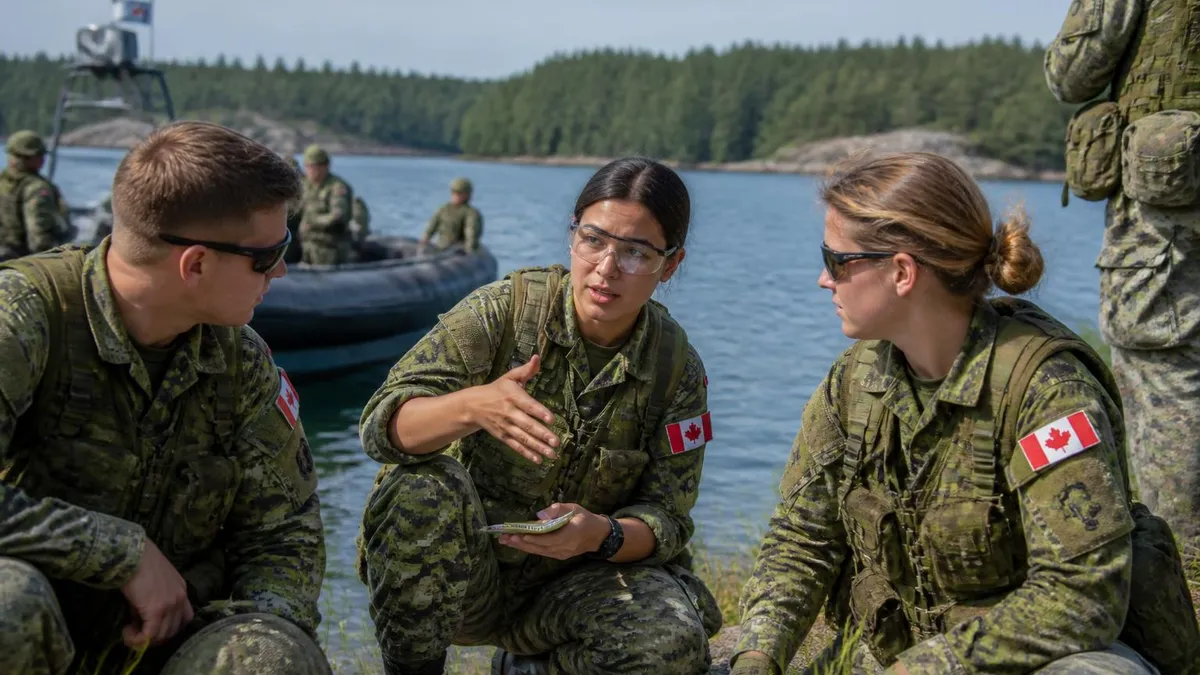
CADET Ranks Explained: CAP, JROTC, West Point and Canada

SkyWest CADET Program: Complete Guide to Pilot Pathway, Requirements & Training
About the Author

Educational Psychologist & Academic Test Preparation Expert
Columbia University Teachers CollegeDr. Lisa Patel holds a Doctorate in Education from Columbia University Teachers College and has spent 17 years researching standardized test design and academic assessment. She has developed preparation programs for SAT, ACT, GRE, LSAT, UCAT, and numerous professional licensing exams, helping students of all backgrounds achieve their target scores.
Join the Discussion
Connect with other students preparing for this exam. Share tips, ask questions, and get advice from people who have been there.
View discussion (9 replies)