
Army CADET Force Explained: US Equivalents, Programs, and CADET Test Prep
✏️ Army cadet force explained for US families: how it compares to JROTC, Civil Air Patrol, and Sea Cadets, plus free CADET practice test prep and study tips.
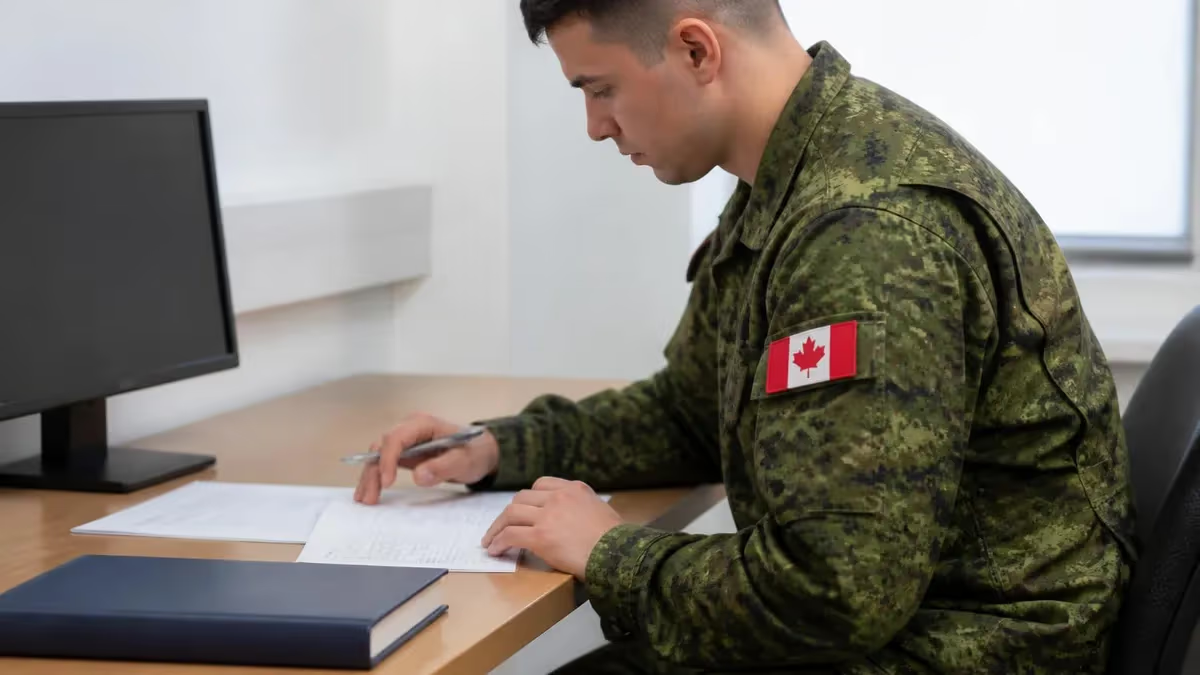
The army cadet force is one of the most widely searched cadet topics for American families researching military youth programs, and it often sits alongside pop-culture touchstones like the film film cadet kelly and practical home interests like cub cadet zero turn equipment. While the original term comes from the United Kingdom's voluntary youth organization, US readers usually use the phrase as a gateway when comparing JROTC, Civil Air Patrol, Sea Cadets, and police cadet pathways for teenagers who want structure and adventure.
If you searched for the army cadet force expecting a single American program, the honest answer is that there isn't an exact one-to-one match in the United States. Instead, the country distributes the same mission across several organizations. The Army Junior Reserve Officers' Training Corps handles school-based leadership training, Civil Air Patrol covers aviation and emergency services, and the US Naval Sea Cadet Corps mirrors the maritime side. Together they replicate what a single national cadet force does abroad for young people.
Understanding this distinction matters because eligibility rules, costs, and time commitments differ sharply between programs. A high school JROTC unit is free and meets during the school day, whereas Civil Air Patrol charges modest annual dues and meets in the evenings. Police cadet programs run through local departments and focus on community service and law enforcement careers. Knowing which lane fits your teen saves months of confusion and helps you set realistic expectations from the very first inquiry call you make.
For students who want to advance within any of these organizations, aptitude testing frequently enters the conversation. The CADET examination measures mathematics, problem solving, and knowledge of military history and customs. Strong scores can unlock leadership billets, scholarships, academy nominations, and competitive summer encampments. That is why so many families who begin by researching the army cadet force end up searching for practice questions, study schedules, and downloadable review material to give their student a measurable and lasting edge.
This article walks you through every layer in plain language. We will compare the British army cadet force with its American cousins, break down eligibility and costs, explain the CADET test format, and lay out a realistic preparation plan. You will also find free practice quizzes, a detailed FAQ, and links to related guides covering ranks, the corps of cadets, and sea cadet enrollment so you can keep researching without ever losing momentum or direction.
Whether your goal is a college scholarship, a future commission, or simply a disciplined and rewarding after-school activity, the information here gives you a clear starting map. We have deliberately avoided jargon and assumptions, because most parents arrive at this topic with more questions than answers. By the end you should know exactly which program to contact, what the entry requirements are, and how to prepare for the assessment that decides advancement for ambitious cadets.
Cadet Programs by the Numbers

Programs and U.S. Equivalents
School-based leadership program in over 1,700 U.S. high schools. Free to join, meets during class time, and emphasizes citizenship, drill, and academic achievement rather than military recruitment of any kind.
The official Air Force auxiliary with a robust cadet program focused on aviation, aerospace education, and emergency services. Members can earn orientation flights and pursue real search-and-rescue training experience.
Maritime-focused youth program for ages 10 to 18 that mirrors Navy and Coast Guard training, including hands-on seamanship, leadership academies, and summer training aboard real vessels at sea.
Run by local police departments, these programs introduce teens to law enforcement careers through ride-alongs, community service, physical fitness, and exposure to academy-style discipline and structure.
Eligibility for cadet programs in the United States is more flexible than many parents expect, but each organization sets its own floor. Army JROTC generally requires enrollment in a participating high school and a minimum age of about 14, though some middle-school leadership programs start earlier. Civil Air Patrol accepts cadets from age 12, and the US Naval Sea Cadet Corps welcomes young people beginning at 10 through the League Cadet tier before they transition into the senior program at 13.
Citizenship and residency rules also vary. Most programs accept lawful permanent residents and citizens alike, but specific scholarship or commissioning pathways may impose stricter requirements later. Academic standing matters too: JROTC instructors expect cadets to maintain passing grades, and persistent failure can jeopardize participation. None of these programs require prior military experience, and there is no obligation to enlist afterward, which surprises families who assume cadet enrollment is a binding commitment to future armed service.
The enrollment process itself is refreshingly straightforward. For JROTC, students simply register for the course through their school counselor during normal scheduling. Civil Air Patrol and Sea Cadets require an online application, a small fee, a parent or guardian signature, and attendance at an orientation or open house. Police cadet programs typically involve an interview and a background screening, reflecting the sensitive nature of the law enforcement environment your teenager will be stepping into.
Physical requirements are modest at entry but grow as cadets advance. Expect basic fitness assessments, uniform inspections, and attendance standards. Programs like Civil Air Patrol and Sea Cadets layer in additional medical screening before activities such as orientation flights or shipboard training. Parents should budget time for these onboarding steps, because a missing immunization record or unsigned consent form is the single most common reason a motivated applicant gets delayed at the very starting line.
Cost is often the deciding factor for families. JROTC is essentially free because the school district and the Department of Defense share funding, with uniforms issued at no charge. Civil Air Patrol and Sea Cadets charge annual membership dues, plus optional costs for encampments, activity uniforms, and travel. Many readers researching the cadet portfolio approach discover that scholarships and unit fundraising substantially offset these expenses for committed and active participants.
Time commitment rounds out the picture. JROTC happens during the school day with occasional after-hours drill meets and competitions. Civil Air Patrol and Sea Cadets typically meet weekly in the evenings or on weekends, with intensive multi-day encampments during summer break. Police cadet schedules depend on the host department but usually involve regular weekend or evening sessions. Matching this rhythm to your family's calendar prevents burnout and keeps your cadet engaged for the long haul ahead.
Cadet Culture: From Cadet Kelly to Real Programs
Many families first encounter cadet life through media rather than a recruiter. The Disney movie cadet kelly introduced a generation of viewers to the idea of a military boarding school, complete with drill teams and rigid hierarchy. While the film dramatizes and softens the reality, it captures a real truth: cadet programs blend discipline with camaraderie and steady personal growth that genuinely transforms many of the participants who stick with it.
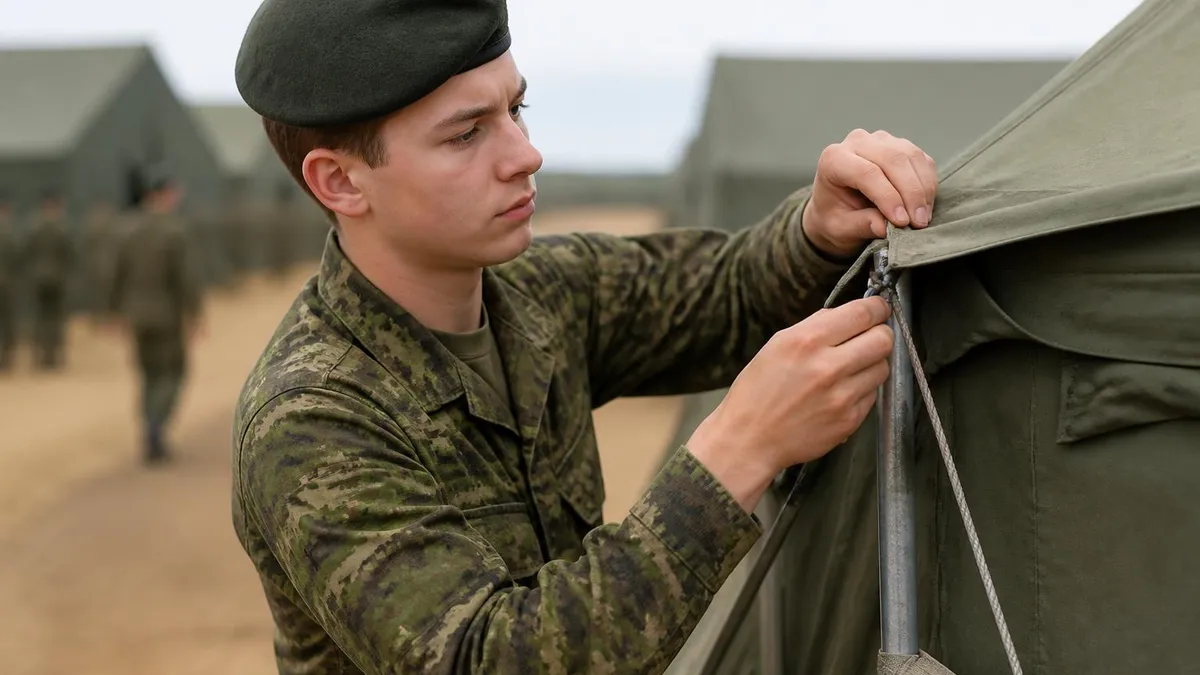
It is worth separating Hollywood from the ground floor. Real cadet programs rarely involve dramatic rivalries or last-minute competition victories. Instead they offer steady, incremental development through community service, academic support, leadership billets, and mentorship from caring adults. If a movie sparked your teenager's curiosity, treat it as a doorway rather than a documentary and channel that enthusiasm toward a local unit visit this week.
Is a Cadet Program Right for Your Teen?
- +Builds genuine leadership skills and self-discipline that transfer to school and work
- +JROTC is free and fits inside the normal school schedule
- +No obligation to join the military after participating
- +Opens doors to scholarships, academy nominations, and summer encampments
- +Creates a strong peer community with positive adult mentorship
- +Develops physical fitness, time management, and public-speaking confidence
- −Civil Air Patrol and Sea Cadets charge annual dues and activity fees
- −Evening and weekend meetings can strain a busy family calendar
- −Uniform standards and attendance rules are strict and consistently enforced
- −Advancement often requires passing aptitude tests like the CADET exam
- −Programs vary widely in quality depending on local leadership
- −Physical and academic standards rise steadily as cadets move up in rank
Cadet Enrollment Checklist
- ✓Decide which program fits: JROTC, Civil Air Patrol, Sea Cadets, or police cadets
- ✓Confirm your teen meets the minimum age and grade requirements
- ✓Contact the local unit, school counselor, or department recruiter
- ✓Attend an orientation or open house before committing
- ✓Gather identification, immunization records, and proof of residency
- ✓Complete the online application and parent consent forms
- ✓Budget for annual dues, uniforms, and activity fees if applicable
- ✓Schedule any required background screening or physical assessment
- ✓Mark weekly meeting times and summer encampment dates on your calendar
- ✓Begin CADET test preparation early to qualify for advancement
Start test prep before your teen needs it
Cadets who begin practicing math and military history months before an advancement board consistently outperform those who cram. Even fifteen minutes of practice questions a few times a week compounds into a measurable scoring advantage that unlocks leadership billets and scholarships.
The CADET test is the assessment that most often determines how far a cadet can advance, and understanding its structure removes much of the anxiety surrounding it. The exam centers on two pillars: mathematics with problem solving, and military history with customs and courtesies. The mathematics portion blends arithmetic, basic algebra, ratios, percentages, and multi-step word problems, all designed to measure reasoning under time pressure rather than memorized formulas or advanced calculus that few teenagers have actually studied.
The history and customs section tests knowledge that any serious cadet absorbs through participation. Expect questions on rank structures, the chain of command, flag etiquette, the meaning of key traditions, foundational dates, and the proper way to render courtesies. Much of this material appears naturally in weekly training, so attentive cadets often find this section more familiar than the math, provided they review their handbook and pay attention during ceremonies and inspections held throughout the year.
Timing and pacing matter enormously. Most cadets lose points not because a question is impossible but because they spend too long on a single hard item and run out of time for easier ones at the end. The smartest strategy is to move quickly through questions you know, flag the difficult ones, and circle back. Practicing under a timer replicates this pressure and trains the instinct to keep moving rather than freeze on one stubborn problem.
Calculator policy and question format vary by program, so confirm the rules with your unit before test day. Many CADET-style assessments are multiple choice with four options, which means educated elimination is a powerful tool. If you can rule out two obviously wrong answers, your odds on a guess jump dramatically. Teaching cadets to eliminate aggressively rather than agonize over every detail is one of the highest-value test-taking habits a mentor can pass along.
Scoring expectations differ between organizations, but a consistent theme emerges: incremental improvement is achievable and rewarded. Few cadets ace the exam on a first attempt, and most programs allow retakes after a waiting period. This means the test should be viewed as a skill to be developed rather than a fixed measure of intelligence. With deliberate practice, the typical cadet can raise a borderline score into a competitive one within a single semester of focused effort.
Finally, treat the CADET test as a window into the broader expectations of leadership. The math measures composure and logic under stress, while the history section measures respect for tradition and attention to detail. Both qualities matter far beyond any single exam. Cadets who internalize this connection tend to approach preparation with purpose, and that mindset, more than any single study trick, is what separates cadets who advance from those who stall in place.

Most cadet programs hold advancement boards and testing windows only a few times per year. Missing a window can delay promotion by an entire semester. Confirm the exact dates with your unit and register early to secure a seat.
Advancement is where cadet programs deliver their most tangible rewards, and the CADET test is frequently the gatekeeper. As cadets climb through the ranks, they gain real responsibility: leading squads, planning events, mentoring younger members, and representing their unit at competitions. Each promotion typically requires a combination of time in grade, demonstrated leadership, physical fitness benchmarks, and a passing aptitude score, which is why test preparation cannot be treated as an afterthought once a cadet sets ambitious goals for themselves.
Scholarships represent the most financially significant payoff. JROTC participation can strengthen applications for ROTC college scholarships worth tens of thousands of dollars, and outstanding cadets may earn nominations toward service academy admission. Civil Air Patrol offers flight scholarships and aerospace awards, while Sea Cadets who excel can access maritime academy pathways. Families who arrive after researching the cub cadet riding mower keyword sometimes stumble onto these opportunities by accident, then realize the long-term value dwarfs the modest annual dues.
Summer encampments and special activities are another major draw. These multi-day or multi-week experiences immerse cadets in leadership labs, field exercises, orientation flights, or shipboard training, often at little to no cost beyond travel. Slots are competitive, and selection frequently considers test scores and leadership evaluations. A cadet who has prepared diligently positions themselves not just for promotion but for these standout experiences that genuinely shape a young person's confidence and college resume.
Leadership billets within a unit carry their own prestige and growth. A cadet commander, first sergeant, or flight leader learns to delegate, communicate, and make decisions under pressure, all skills that colleges and employers prize. These positions are usually awarded through a competitive board process that weighs the same factors as promotion: knowledge, fitness, character, and demonstrated initiative. Strong test performance signals readiness and discipline to the adult staff who are making these important selections.
It is worth emphasizing that advancement is cumulative and self-reinforcing. A cadet who promotes early gains access to leadership training, which improves their next board evaluation, which unlocks higher billets and better scholarship odds. This virtuous cycle starts with the fundamentals: consistent attendance, a positive attitude, physical readiness, and steady test preparation. The cadets who understand this flywheel early tend to finish their programs with the most impressive records and the widest range of opportunities.
For parents, the practical takeaway is to support the long game. Celebrate small promotions, help your cadet maintain a study rhythm, and stay engaged with the unit's calendar. The teenager who joins simply to try something new often discovers, two or three years in, that the program opened doors to college funding and a career direction they never anticipated. That quiet transformation is the real reward hiding behind the army cadet force search term that brought you here.
With the big picture in place, here are the practical preparation tips that consistently move the needle for cadets approaching their first or next CADET assessment. Start by building a realistic study schedule rather than relying on motivation alone. Three short sessions of twenty to thirty minutes each week beat a single marathon cram session, because spaced repetition cements knowledge far more durably. Block the time on a shared family calendar so it becomes a routine rather than a negotiation every single afternoon.
Prioritize your weakest area first. Most cadets feel more confident with history and customs because that material surfaces during weekly meetings, which means the mathematics section often deserves the larger share of practice time. Diagnose honestly by taking a timed practice test early, then direct your effort toward the question types that cost you the most points. Targeted practice on ratios, percentages, and multi-step word problems usually produces the fastest score gains for the typical cadet.
Simulate test conditions whenever possible. Sit at a quiet table, set a timer, and resist the urge to check answers mid-test. This builds the pacing instinct that separates strong scores from frustrating ones. After each practice run, review every missed question and write a one-sentence note explaining why you got it wrong. That error log becomes your personalized study guide and prevents you from repeating the same avoidable mistakes on the exam that actually counts toward advancement.
Lean on free resources before paying for anything. The practice quizzes linked throughout this guide cover both the math and the history and customs domains, and they are designed to mirror the real exam's style. Downloadable review material lets a cadet study on a phone during a bus ride or a lull at school. Consistency with free tools almost always outperforms sporadic use of expensive prep courses for cadets at this early stage of their journey.
Take care of the fundamentals on test day. A good night's sleep, a real breakfast, and arriving early to settle nerves do more for performance than any last-minute cramming. Bring approved materials, confirm whether a calculator is allowed, and read each question fully before answering. Many missed points come from rushing past a single word like not or except that quietly flips the meaning of an otherwise simple multiple-choice question entirely.
Finally, keep the experience in perspective and stay positive. The CADET test is a checkpoint, not a verdict on your worth as a cadet or a person. Most programs allow retakes, and steady improvement is both expected and rewarded. Celebrate progress, learn from setbacks, and remember that the discipline you build preparing for this exam is exactly the discipline that defines a successful cadet. Approach test day with calm confidence and the preparation will speak for itself in your results.
For families still deciding between programs, the smartest next step is a single phone call or unit visit. Seeing cadets drill, talking with the adult staff, and watching a meeting in person answers more questions than any website can. Pair that visit with a few practice quizzes to gauge your teen's starting point, and you will have everything you need to commit with confidence and set realistic, motivating goals from the very first day.
CADET Questions and Answers



About the Author

Educational Psychologist & Academic Test Preparation Expert
Columbia University Teachers CollegeDr. Lisa Patel holds a Doctorate in Education from Columbia University Teachers College and has spent 17 years researching standardized test design and academic assessment. She has developed preparation programs for SAT, ACT, GRE, LSAT, UCAT, and numerous professional licensing exams, helping students of all backgrounds achieve their target scores.
Join the Discussion
Connect with other students preparing for this exam. Share tips, ask questions, and get advice from people who have been there.
View discussion (9 replies)