
Royal Canadian Sea Cadet Corps: Complete Guide to Canada's Premier Youth Naval Program
Discover the Royal Canadian Sea Cadet Corps — history, training, ranks & benefits. 🎓 Everything parents and recruits need to know.

The royal canadian sea cadet corps stands as one of Canada's most respected and longest-running youth development programs, offering young Canadians between the ages of 12 and 18 an extraordinary opportunity to develop leadership, discipline, and a lifelong connection to the sea.
Whether you first heard about cadet programs through the beloved cadet kelly film or through a family member's service, the Sea Cadets represent something genuinely meaningful — a structured, values-driven experience that shapes character at a formative age. The program operates under the authority of the Department of National Defence and is delivered through a partnership with the Navy League of Canada, making it unique among youth organizations in its dual civilian-military structure.
Across Canada, more than 400 Royal Canadian Sea Cadet corps operate in communities from Victoria, British Columbia, to St. John's, Newfoundland. Each corps is designated by a number and a ship name — for example, RCSCC Acadia or RCSCC Iroquois — reflecting the naval heritage at the heart of the program.
Cadets, commonly called "sea cadets," wear a naval-style uniform, participate in weekly training parades, and compete for prestigious summer training opportunities at locations across the country. The program is entirely free to join, with the government and the Navy League covering the costs of uniforms, training materials, and summer courses.
Parents exploring youth programs for their children often wonder how the Sea Cadets differ from other cadet organizations in Canada. The country maintains three arms of the cadet program: the Royal Canadian Army Cadets, the Royal Canadian Air Cadets, and the Royal Canadian Sea Cadets. While all three programs share a common framework of youth development, citizenship, and physical fitness, the Sea Cadets place special emphasis on seamanship, navigation, sailing, rowing, and marine environmental awareness. Cadets who show aptitude and commitment can earn their coxswain qualifications, learn to pilot small craft, and even qualify for international sailing competitions and exchanges.
The cultural footprint of cadet programs in North America has been amplified by popular media. Films like the fictional Cadet Kelly — starring Hilary Duff — introduced millions of viewers to the discipline and camaraderie of cadet life, even if the story itself was set in a military school rather than an official government program.
That film, and others in its genre, sparked genuine curiosity about what it means to be a cadet — and for many families, that curiosity became a real-world enrollment. The spirit of challenge, belonging, and personal growth captured on screen is very much alive in the Royal Canadian Sea Cadet Corps.
From a practical standpoint, the Sea Cadets program asks very little of families in terms of financial commitment. There are no tuition fees, no equipment purchase requirements, and no mandatory fundraising quotas. The only real investment is time: cadets typically attend one parade night per week during the training year, plus optional weekend activities, community events, and the summer training program. That accessibility makes the program one of the most equitable youth development opportunities in the country, welcoming young people from all socioeconomic backgrounds equally.
Academic-minded families will be pleased to know that the Sea Cadets program also reinforces classroom learning in tangible ways. Cadets study celestial navigation, meteorology, marine biology, and communications — subjects that connect directly to STEM curricula. Leadership opportunities come early: a cadet who joins at 12 can be leading a team of peers by 15 and commanding a division by 17. Those experiences carry real weight on university applications, scholarship submissions, and future military officer selection boards. The Royal Canadian Sea Cadets may be a youth program, but the skills it builds are adult-caliber.
This comprehensive guide will walk you through everything you need to know about the Royal Canadian Sea Cadet Corps — from joining requirements and rank progression to summer training opportunities, the unique benefits the program offers, and how it compares to other cadet and youth leadership programs across North America. Whether you are a prospective recruit, a curious parent, or someone researching cadet programs for academic or professional purposes, this article has the detail and depth you need to make an informed decision.
Royal Canadian Sea Cadets by the Numbers

Sea Cadet Training: Core Program Pillars
Cadets learn knot-tying, chart reading, compass use, and small-boat handling. By senior levels, they study celestial navigation and electronic chart systems used on real naval vessels, building skills directly applicable to civilian maritime careers.
Sea Cadets receive hands-on training in dinghy sailing, offshore racing, and traditional rowing. Many corps maintain fleets of Whitehall gigs and Optimist dinghies. Cadets can qualify as coxswains and compete in regional and national regattas.
Leadership training begins on day one. Cadets learn drill, public speaking, team management, and community service. Senior cadets mentor junior members, plan events, and take on divisional responsibilities that mirror real-world management challenges.
The program includes structured physical training aligned with Canadian fitness standards. Cadets participate in swimming, cross-country running, obstacle courses, and team sports. Fitness assessments track progress and encourage healthy, active lifestyles year-round.
Many corps maintain cadet bands performing at parades, community events, and provincial competitions. Cadets can learn brass, woodwind, and percussion instruments at no cost, with instruction provided by qualified music officers and civilian instructors.
The rank structure of the Royal Canadian Sea Cadet Corps mirrors the traditions of the Royal Canadian Navy while being adapted for a youth training context. Cadets begin their journey as Ordinary Cadets — the entry-level rank — and progress through a structured hierarchy that includes Leading Seaman, Able Seaman, Leading Cadet, Petty Officer Second Class, Petty Officer First Class, Chief Petty Officer Second Class, and finally Chief Petty Officer First Class.
Each promotion requires the completion of specific training objectives, the demonstration of leadership qualities, and approval from the commanding officer of the corps. Understanding this progression is key to setting long-term goals within the program.
Promotion in the Sea Cadets is not automatic or purely time-based. Cadets must complete mandatory training levels — Level One through Level Five — each of which covers progressively more advanced topics in seamanship, leadership, citizenship, and physical fitness. A cadet who completes Level One training earns their Ordinary Cadet rank, while reaching Level Five qualifies them for senior petty officer positions. The highest-ranking cadet in a corps is typically the Cadet Commanding Officer, a prestigious role that involves representing the entire corps at ceremonial events and serving as the primary cadet liaison to the commanding officer.
Summer training plays a crucial role in accelerating rank advancement. Cadets who attend nationally run summer training centres — located at bases across Canada — can complete advanced qualification courses not available at the local corps level. These courses include advanced seamanship, sail training, power boating, marine engineering, and even aviation introductory training for cadets interested in a cross-program experience. Completing a summer course at a national training centre can significantly compress the timeline to senior ranks, making summer attendance one of the most strategically important decisions a cadet can make.
The role of cub cadet parts of the program — that is, the specialist qualifications and optional badges a cadet can earn — should not be overlooked. In addition to mandatory training levels, cadets can pursue proficiency badges in areas like swimming, first aid, rifle marksmanship (using air rifles in a controlled sport setting), and music. These specialist qualifications add depth to a cadet's record and can tip the balance when summer course placement decisions are made by regional cadet organizations. Cadets with strong badge records and consistent attendance are strongly preferred for competitive national-level opportunities.
Parents often ask about the time commitment required for genuine advancement. A cadet who attends all weekly parades (typically one evening per week from September through May or June), participates in optional weekend activities, and attends at least one summer training session per year can realistically reach petty officer ranks within three to four years. Cadets who maximize their engagement — taking on leadership roles, attending multiple summer courses, and serving on corps committees — can reach senior ranks and be recommended for officer training even before they age out of the program at 18.
One of the most distinctive features of the Sea Cadets rank system is its emphasis on practical demonstration rather than written examinations alone. While cadets do study training manuals and complete written assessments, the core evaluation method is direct observation. Officers and senior non-commissioned officers (NCOs) watch cadets perform tasks — commanding a squad, running a seamanship evolution, briefing a team — and assess their competence in real time. This approach produces confident, capable leaders who are comfortable performing under observation, a skill that serves them throughout their academic and professional lives.
The transition from the Sea Cadets program into adult life is smoothed by formal recognition mechanisms. Cadets who complete the highest training levels receive the Cadet Medal of Excellence and the Star of Excellence, awards that are recognized by post-secondary institutions and employers across Canada. Some universities grant credit toward physical education or leadership electives for documented cadet service.
Provincial scholarship programs specifically target cadet graduates. And for those considering military careers, time in the Sea Cadets program — particularly at senior ranks — is formally acknowledged in the Canadian Armed Forces recruiting process as evidence of relevant background and commitment.
Lady Cadet Course & Gender Inclusion in the Sea Cadets
The lady cadet course has been an important part of the Sea Cadets' commitment to full inclusion since women were formally integrated into the program decades ago. Today, female cadets participate equally in all aspects of training, hold every rank available in the corps, and regularly outperform their peers in academic and leadership assessments. The program has no gender-specific training tracks — all cadets complete identical requirements regardless of sex.
Special leadership development initiatives for female cadets exist at the regional and national level, including mentorship panels, networking events with female naval officers, and peer leadership seminars. These programs address the unique challenges young women sometimes face in uniformed organizations and actively cultivate the next generation of female leaders in Canada's maritime sector. Many graduates have gone on to officer careers in the Royal Canadian Navy, Coast Guard, and Merchant Marine.
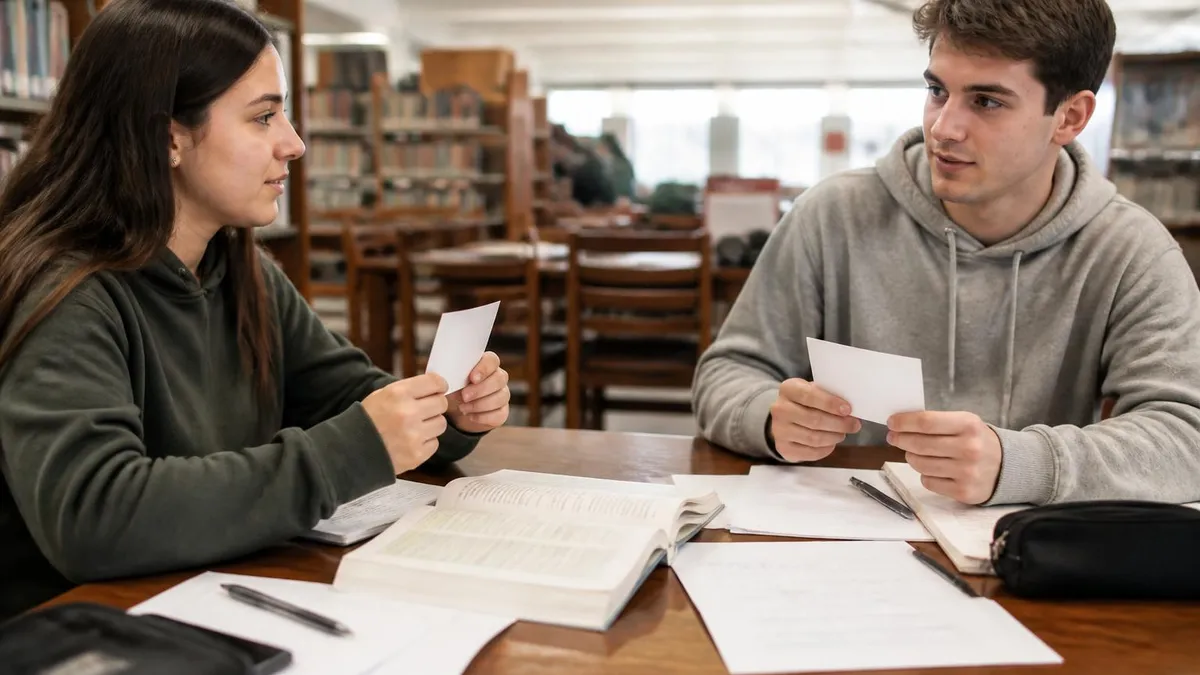
Royal Canadian Sea Cadets: Advantages and Challenges
- +Completely free to join — uniforms, training, and equipment are provided at no cost to families
- +Develops real leadership skills through progressive responsibility and hands-on command experience
- +Summer training programs offer nationally recognized qualifications in sailing, navigation, and seamanship
- +Builds a strong peer network of motivated, disciplined young Canadians from coast to coast
- +Recognized by universities and employers as evidence of leadership and sustained commitment
- +Accelerated pathway into the Canadian Armed Forces for cadets who choose a military career
- −Weekly time commitment (parade nights plus optional activities) can conflict with school and extracurricular schedules
- −Competitive summer course placements are limited — not every applicant secures their first-choice program
- −The structured, hierarchical environment may feel restrictive to cadets who prefer informal group settings
- −Advancement pace depends heavily on local corps culture and the quality of available officers
- −Geographic access is unequal — rural communities may not have a nearby corps within reasonable commuting distance
- −Aging out at 18 requires a formal transition plan; without it, some cadets struggle to maintain momentum
Pros and Cons at a Glance
| Pros | Cons |
|---|---|
| Completely free to join — uniforms, training, and equipment are provided at no cost to families | Weekly time commitment (parade nights plus optional activities) can conflict with school and extracurricular schedules |
| Develops real leadership skills through progressive responsibility and hands-on command experience | Competitive summer course placements are limited — not every applicant secures their first-choice program |
| Summer training programs offer nationally recognized qualifications in sailing, navigation, and seamanship | The structured, hierarchical environment may feel restrictive to cadets who prefer informal group settings |
| Builds a strong peer network of motivated, disciplined young Canadians from coast to coast | Advancement pace depends heavily on local corps culture and the quality of available officers |
| Recognized by universities and employers as evidence of leadership and sustained commitment | Geographic access is unequal — rural communities may not have a nearby corps within reasonable commuting distance |
How to Join the Royal Canadian Sea Cadets: Complete Checklist
- ✓Confirm you meet the age requirement: applicants must be between 12 and 18 years old at the time of enrollment.
- ✓Locate your nearest Royal Canadian Sea Cadet corps using the official Navy League of Canada corps finder tool online.
- ✓Contact the corps directly by phone or email to ask about their next recruitment night or open house date.
- ✓Attend an introductory parade night to observe training and speak with current cadets, officers, and other parents.
- ✓Complete the enrollment application form, which requires parental or guardian consent for applicants under 18.
- ✓Provide a copy of your birth certificate or other government-issued proof of age to the corps administration officer.
- ✓Submit a completed medical information form disclosing any conditions that may affect participation in physical training.
- ✓Attend the official enrollment ceremony where you will take the cadet oath and be formally welcomed into the corps.
- ✓Receive your uniform kit and introductory training materials from the corps supply officer at no cost.
- ✓Begin Level One training, focusing on basic seamanship, drill, citizenship, and physical fitness fundamentals.
Summer Training Is a Major advantage
Cadets who attend at least one nationally run summer training program advance approximately twice as fast in rank as those who do not. Summer courses also produce specialist qualifications — like a sailing coxswain certificate or a navigation officer qualification — that are simply unavailable at the local corps level. Applying early and maintaining strong attendance records dramatically improves your chances of earning a competitive placement.
The benefits of completing the Royal Canadian Sea Cadet Corps program extend far beyond the cadet years themselves. Graduates consistently report that the program gave them their first real experience of responsibility, their first leadership role, and their first sense of belonging to something larger than themselves. These are not abstract benefits — they translate directly into measurable outcomes. Cadet graduates are statistically more likely to complete post-secondary education, more likely to hold leadership roles in their careers, and more likely to participate in community volunteer work than matched peers who did not participate in cadet programs.
For young Canadians considering a military career, the Sea Cadets program is an unparalleled head start. Officers in the Royal Canadian Navy have frequently noted that cadet graduates who arrive at Royal Military College or through the Regular Officer Training Plan already possess fundamental military knowledge — drill, rank structures, naval terminology, and small-unit leadership — that their non-cadet peers spend their first year acquiring. This head start is not just symbolic; it allows former cadets to focus energy on higher-order academic and tactical development from day one of their military education.
The non-military career pathways opened by Sea Cadet participation are equally compelling. The maritime industry — including commercial shipping, offshore energy, coast guard services, and recreational boating — actively recruits individuals with documented seamanship training. A cadet who reaches senior levels of the program with sailing qualifications, navigation certificates, and a coxswain endorsement arrives at maritime college or a transport Canada licensing program with a genuine portfolio of practical experience. In an industry where sea time is the currency of advancement, Sea Cadet experience has real monetary value.
Community leadership is another benefit that cannot be overstated. Sea Cadets are visible in their communities — they parade at Remembrance Day ceremonies, crew tall ships at maritime festivals, assist with waterfront safety operations, and represent Canada at international youth exchanges. This visibility builds public speaking confidence, civic pride, and a sense of obligation to the broader community that stays with graduates for life. Many of Canada's most prominent community leaders, elected officials, and civil servants began their public service journey in a cadet uniform.
The physical fitness dimension of the program also produces lasting benefits. Young people who participate in structured physical training during their formative years develop habits — regular exercise, nutritional awareness, sleep discipline — that reduce their lifetime risk of chronic disease. The Sea Cadets program's emphasis on swimming in particular has direct safety implications: cadets who achieve national swimming standards are safer around water throughout their lives, and many go on to become certified lifeguards, swim instructors, or water safety advocates in their communities.
International opportunities available through the Sea Cadets are among the most exciting benefits the program offers. Canada participates in bilateral exchange programs with the United Kingdom, Australia, New Zealand, and other Commonwealth nations, sending top-performing cadets abroad for multi-week training exchanges. Cadets have sailed on Royal Navy vessels, trained at Australian naval bases, and competed in international regattas under the Canadian flag. These experiences produce young Canadians with global perspectives, cross-cultural communication skills, and the kind of formative travel memories that shape worldviews in profound and lasting ways.
Financial awards and scholarships available exclusively to cadet graduates represent a concrete economic benefit that families should factor into their decision-making. The Navy League of Canada administers multiple national scholarship programs. Provincial branches of the Navy League fund regional awards. The Canadian Armed Forces offer specific recruiting incentives to cadet graduates. And many private foundations — particularly those connected to the maritime industry — reserve scholarship dollars specifically for young people who have demonstrated commitment through the cadet program. The return on investment of the cadet years, measured in scholarship dollars alone, can be substantial.

Cadets must leave the program when they turn 18. To ensure a smooth transition, plan ahead: explore officer cadet positions (you can return as a volunteer officer at 18 if you meet qualifications), research cadet alumni networks, and use your final year to complete as many certifications and leadership roles as possible. The final year of cadet service is often the most valuable — don't coast through it.
Preparing for the CADET test — the standardized assessment used in some cadet program selection and academic contexts — is a priority for cadets who want to maximize their opportunities within and beyond the Sea Cadets program. The test covers mathematics and problem solving, verbal reasoning, military history and customs, and general knowledge relevant to Canadian cadet training.
While the Royal Canadian Sea Cadet Corps program itself does not administer the CADET test directly, cadets who pursue military officer training, aviation qualifications, or competitive scholarship applications may encounter versions of this assessment. Strong performance requires deliberate preparation, not just general intelligence or good grades.
Mathematics is consistently the section that challenges cadets most. The problem-solving questions are designed to assess logical reasoning and quantitative aptitude rather than rote calculation. Cadets should practice working through multi-step word problems under timed conditions, since the test environment is deliberately pressured. Resources like cub cadet mowers related practice sets available on this site offer the kind of structured, level-appropriate problem sets that build both skill and test-taking confidence over time. Consistent daily practice — even fifteen to twenty minutes — compounds dramatically over a six to eight week preparation window.
Military history and customs is a section where Sea Cadets have a natural advantage. The program's training curriculum covers Canadian naval history, rank structures, ceremonial traditions, and the evolution of cadet organizations from their origins in the nineteenth century through to the modern day.
Cadets who pay attention during classroom instruction, read their training manuals thoroughly, and engage with the historical content in their promotion courses will find the military history section of the CADET test highly familiar. Supplementing corps training with independent reading — particularly about the Battle of the Atlantic, the role of the Royal Canadian Navy in both World Wars, and the history of the Navy League — rounds out this knowledge base effectively.
Verbal reasoning is another key component of the CADET test. This section assesses reading comprehension, vocabulary, and the ability to draw logical inferences from written passages. Cadets who read widely — newspapers, non-fiction books, naval history texts, and policy documents — consistently outperform peers who rely solely on screen-based content consumption. Officers frequently recommend that cadets in their final year before competitive selection spend at least thirty minutes per day reading substantive non-fiction as part of their preparation regimen. The habit of careful, active reading is both a test preparation strategy and a life skill.
Practice tests are among the most effective preparation tools available. Research consistently demonstrates that retrieval practice — recalling information from memory rather than simply re-reading it — produces stronger, more durable learning than passive review. Taking full-length practice tests under timed, exam-like conditions builds the stamina, pacing discipline, and emotional regulation that real test performance requires.
Cadets who take multiple practice tests and carefully analyze their wrong answers — understanding not just what the correct answer was, but why their initial reasoning failed — make the fastest improvement gains. PracticeTestGeeks offers structured CADET practice materials specifically designed to support this kind of deliberate preparation.
Test anxiety is a real obstacle for many high-achieving cadets who perform well in training but struggle under formal assessment conditions. The solution is not to avoid pressure but to gradually habituate to it. Taking practice tests in realistic conditions — timing yourself strictly, sitting at a desk without distractions, resisting the urge to look up answers mid-test — trains the nervous system to stay calm under pressure.
Cadets who have been evaluated by officers during practical demonstrations have already developed some baseline resilience to performance pressure; channeling that same mental discipline into the written test context is a learnable skill.
Finally, cadets should approach CADET test preparation as a team effort within their corps. Study groups, peer quizzing, and friendly competition on practice scores all improve motivation and retention. Corps officers who have themselves navigated similar assessments on the path to their commissions are often willing to offer guidance, share resources, and provide encouragement during preparation periods. The Sea Cadet program's culture of mutual support — the understanding that the corps rises or falls together — applies just as powerfully to academic and test preparation as it does to seamanship evolutions on the water.
Practical preparation for a successful Sea Cadet experience begins before you ever attend your first parade night. Researching your local corps — its training schedule, its specializations, its track record at regional competitions, and the qualifications of its officers — gives you a meaningful head start. Not all corps are identical: some have strong sailing programs, others emphasize band or rifle sport, and others are known for producing large numbers of summer course graduates. Understanding a corps' culture before you join helps you set realistic expectations and identify the right questions to ask during your first visit.
Physical fitness preparation prior to enrollment is a smart investment. The Sea Cadets program is not boot camp — it is welcoming of all fitness levels — but cadets who arrive with a baseline of cardiovascular fitness and swimming ability integrate more smoothly and advance more quickly in the early training levels. If you or your child is not a confident swimmer, enrolling in community swimming lessons before joining is one of the highest-impact steps you can take. Swimming ability is a safety prerequisite for certain waterborne activities and a competitive advantage when summer course placement decisions are made.
Developing good organizational habits ahead of enrollment pays dividends throughout the cadet years. The program requires cadets to maintain their uniform to specific inspection standards, track their training progress across multiple levels and subjects, and meet deadlines for course applications and scholarship submissions. Young people who have practiced basic self-management — keeping a planner, maintaining a clean and organized workspace, meeting personal commitments consistently — adapt more easily to the corps environment and earn the trust of their officers more quickly. These habits, established in the cadet years, serve as the foundation of professional effectiveness in adulthood.
Networking within the cadet community is an underutilized strategy. Regional cadet organizations hold annual competitions, ceremonial events, and training days where cadets from different corps interact. These events are not just opportunities to compete — they are relationship-building opportunities. The Sea Cadet who takes the time to introduce themselves to cadets from other corps, to speak respectfully with officers from other units, and to represent their corps positively in cross-community settings builds a reputation that travels. Canada's maritime community is smaller and more interconnected than it appears, and the relationships formed in the cadet program often persist for decades.
Documentation and record-keeping discipline should begin on day one. Every certificate earned, every course completed, every leadership position held, and every community service hour logged should be recorded immediately and stored in a safe, accessible format. The cadet who arrives at a scholarship application deadline with a complete, organized portfolio has a decisive advantage over the cadet who must reconstruct their record from memory or track down paperwork from years past. Digital backups of all certificates and formal documents are strongly recommended, since paper records can be lost or damaged over a multi-year program.
Parental involvement in the Sea Cadets program, calibrated appropriately, significantly enhances the cadet experience. Parents who volunteer with the supporting Navy League civilian committee — helping with fundraising, event logistics, administration, and advocacy — strengthen the corps and model community engagement for their children. Corps that have active, engaged parent communities consistently outperform those that do not in terms of available resources, training quality, and retention rates. At the same time, the most effective parent involvement allows cadets to own their experience: attending events, asking their own questions, and solving their own problems with adult support available but not dominant.
Finally, approaching the Sea Cadet program with a long-term mindset — thinking not just about the current training year but about the full arc of the cadet experience through age 18 — unlocks the program's deepest benefits. The cadets who look back on their Sea Cadet years as genuinely significant are almost always the ones who committed fully: showing up consistently, taking on challenges that scared them, mentoring younger cadets, and using every opportunity the program offered.
The Royal Canadian Sea Cadet Corps has given thousands of Canadians their first taste of excellence and their first proof that they are capable of more than they imagined. That proof is the program's most enduring gift.
Sample CADET - Canadian Armed Forces Aptitude Test Practice Questions
Try these questions from our free CADET - Canadian Armed Forces Aptitude Test practice tests. The correct answer and an explanation follow each question.
What type of anchor is most commonly used on small Canadian naval and coast guard vessels?
- A. Mushroom anchor
- B. Danforth (fluke) anchor
- C. Grapnel anchor
- D. Sea anchor
Answer: B. Danforth (fluke) anchor
The Danforth or fluke anchor is widely used on small vessels due to its excellent holding power and compact storage.
The sleeve insignia of a Petty Officer First Class in the Royal Canadian Navy includes which distinguishing feature compared to a Petty Officer Second Class?
- A. An additional anchor above the crossed anchors badge
- B. A single gold chevron instead of two
- C. A crown above a single anchor
- D. Three gold chevrons with no anchor
Answer: A. An additional anchor above the crossed anchors badge
PO1 insignia features crossed anchors with an additional anchor above them, distinguishing it from the PO2 badge.
What is the approximate cruising altitude limit below which an aircraft does NOT require supplemental oxygen for the pilot in Canada?
- A. 8,000 feet
- B. 10,000 feet
- C. 12,500 feet
- D. 18,000 feet
Answer: C. 12,500 feet
Canadian aviation regulations require supplemental oxygen for the pilot if flying above 12,500 feet MSL for more than 30 minutes.
What does 'Remembrance Day' on November 11 commemorate in Canada?
- A. The armistice ending World War I and all Canadians who served in war
- B. The founding of the Canadian Army
- C. Canada's first military engagement in the Boer War
- D. The liberation of the Netherlands in WWII
Answer: A. The armistice ending World War I and all Canadians who served in war
Remembrance Day marks the armistice of November 11, 1918, ending WWI, and honours all Canadians who have served and died in military service.
Take the full CADET - Canadian Armed Forces Aptitude Test practice test
CADET Questions and Answers
Air Force CADET Chapel: History, Architecture & Visitor Guide 2026

Cadet Wings Program: Complete Guide to Earning Your Wings as a Military Cadet
CADET Programs Explained: From CADET Kelly to JROTC, ROTC, and the CADET Test

Sea Cadet Program: Complete Guide to the US Naval Sea Cadets

What Is a Cadet? Complete Guide to Cadet Programs, Training & the CADET Test
About the Author

Educational Psychologist & Academic Test Preparation Expert
Columbia University Teachers CollegeDr. Lisa Patel holds a Doctorate in Education from Columbia University Teachers College and has spent 17 years researching standardized test design and academic assessment. She has developed preparation programs for SAT, ACT, GRE, LSAT, UCAT, and numerous professional licensing exams, helping students of all backgrounds achieve their target scores.
Join the Discussion
Connect with other students preparing for this exam. Share tips, ask questions, and get advice from people who have been there.
View discussion (9 replies)