
What Are Cadets? Meaning, Programs, and the CADET Test Explained 2026 October
⏳ Discover the meaning of cadets — from Cadet Kelly to real military programs, ROTC, service academies, and the CADET test. Full 2026 October guide.

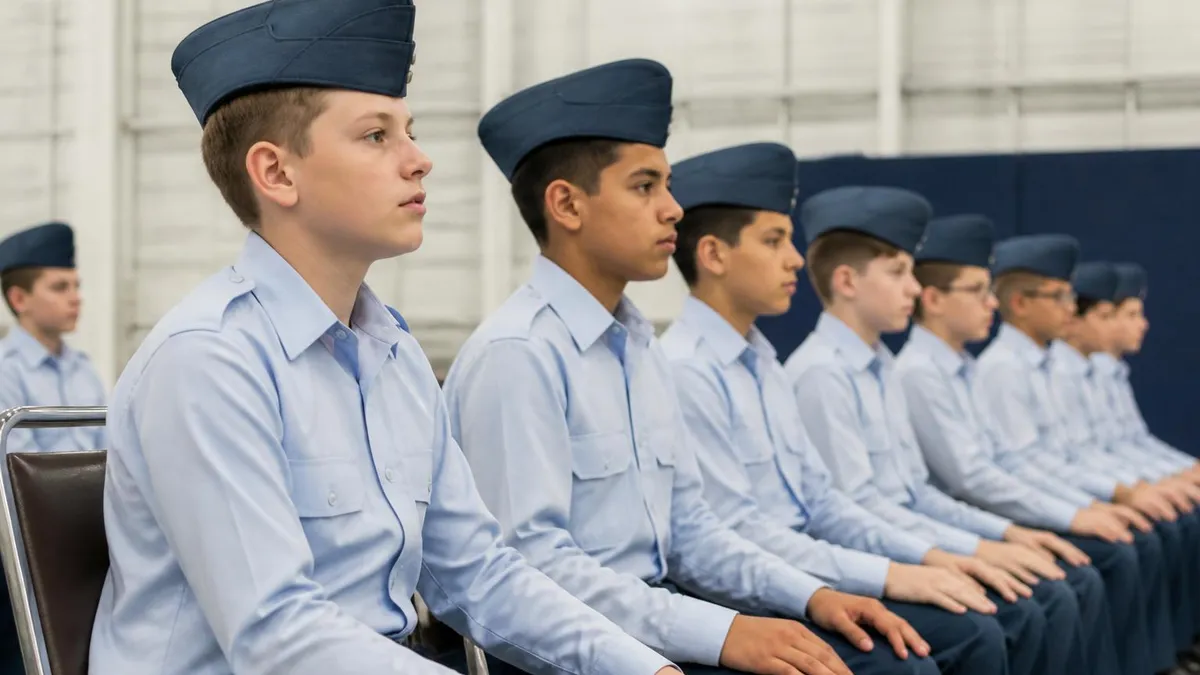
The meaning of cadets stretches far beyond the popular Disney movie that introduced many Americans to the word. A cadet is a student or trainee enrolled in a structured military, paramilitary, or service-oriented education program, learning leadership, discipline, and technical skills before earning a commission or graduating into a uniformed career. The term carries weight in places like West Point, the Air Force Academy, ROTC units, civilian Sea Cadets chapters, and even police academies across the United States.
When most pop-culture fans hear the word, they immediately picture the 2002 Disney Channel film starring Hilary Duff, where a rebellious teenager learns the value of structure at a military school. While film cadet kelly is a fun cultural touchpoint, the real world of cadets is dramatically more complex, involving rigorous academics, physical training standards, ethical codes, and lifelong networks of service members who shape national defense and civic life.
This guide breaks down every angle of the topic. We will explore the historical roots of cadet programs, the modern paths a young American can take, the costs and benefits of joining, and the standardized testing many candidates face on the road to acceptance. Whether you are a parent researching options for a high-schooler, a college student weighing ROTC scholarships, or simply curious about what your neighbor in uniform actually does on weekends, you will find concrete answers here.
Cadets are not soldiers — yet. They occupy a unique educational tier between civilian life and active military service, which is why the experience attracts ambitious students seeking accelerated leadership development. The cadet system in the United States traces its lineage to the founding of West Point in 1802, when President Thomas Jefferson signed legislation creating the United States Military Academy to professionalize the officer corps and reduce reliance on European military expertise.
Today the cadet ecosystem includes federal service academies, senior military colleges, Junior ROTC programs in over 3,400 high schools, Civil Air Patrol squadrons, Naval Sea Cadet Corps units, and dozens of state-sponsored youth challenge programs. Each pathway has unique entry requirements, time commitments, and career outcomes, but they share a common DNA: structured mentorship, uniform standards, and a moral framework rooted in honor and selfless service.
Beyond the military lane, the word "cadet" also appears in civilian contexts. Police cadets train for law enforcement careers, fire cadets prepare for firefighting, and even some airlines run cadet pilot programs that fast-track young aviators into commercial cockpits. The unifying thread is preparation — a deliberate, supervised runway between adolescence and a high-stakes professional role.
By the end of this article you will understand exactly who cadets are, how the programs work, what the famous Cadet Kelly film got right and wrong, and how the CADET standardized test fits into modern selection processes. You will leave with a clear sense of whether this path suits you or your family.
Cadets in the United States by the Numbers

Major Cadet Pathways in America
West Point, Annapolis, Air Force Academy, Coast Guard Academy, and Merchant Marine Academy offer free tuition, room, and board in exchange for a multi-year service commitment after graduation.
VMI, The Citadel, Norwich, Texas A&M, Virginia Tech, and North Georgia blend traditional college academics with mandatory cadet corps membership, uniforms, and military training.
Reserve Officer Training Corps units at over 1,700 colleges produce most active-duty officers, offering scholarships in return for service while students earn any major they choose.
High-school program teaching leadership, citizenship, and discipline. Participation does not require future military service but offers scholarship pipelines and college prep.
Civil Air Patrol, Naval Sea Cadets, Young Marines, and police cadet programs provide structured youth development outside the federal military commissioning track.
Comparing service academies to ROTC is one of the most common questions families ask. Both paths produce commissioned officers in the United States military, but the experiences differ in atmosphere, cost structure, daily life, and competitive intensity. Understanding these differences helps prospective cadets choose the path that genuinely matches their personality and goals rather than the one that simply sounds most prestigious.
Federal service academies like the United States Military Academy at West Point, the Naval Academy at Annapolis, and the Air Force Academy in Colorado Springs are full-immersion environments. Cadets and midshipmen live on campus year-round, follow strict daily schedules, wear uniforms to class, and operate under a 24/7 chain of command. Education is fully funded, including a monthly stipend, but acceptance rates hover near 9–11% and require a congressional nomination in addition to academic excellence.
ROTC at a traditional university is far more flexible. Students attend a normal college, choose any major, live in regular dorms or apartments, and participate in cadet activities a few mornings each week plus a weekend lab and a summer training session. Scholarship recipients receive tuition, fees, books, and a stipend, but the social experience closely mirrors typical undergraduate life. This appeals to students who want military service without sacrificing the broader campus culture.
Senior military colleges like Texas A&M deserve special mention because they blend both worlds. Students join the cub cadet riding mower — wait, that anchor is unrelated, so let's stay on topic — and live in cadet barracks while attending a major research university. Graduates can commission into any branch, including the Marine Corps, and the alumni networks are legendary for opening career doors in business, government, and engineering.
Cost analysis matters too. A service academy education is valued at roughly $416,000 over four years and is completely free if you complete your service commitment. A full ROTC scholarship covers tuition up to about $180,000 plus monthly stipends. Senior military colleges offer hybrid scholarships, sometimes combined with state grants, that can substantially reduce family contributions while still providing the cadet corps experience.
Quality of life differs sharply. Academy cadets enjoy world-class facilities, intercollegiate athletics at Division I level, and tight friendships forged through shared adversity, but they also accept restrictions on travel, dating, and personal freedom. ROTC students keep most civilian freedoms but must balance military obligations with the typical undergraduate workload, which can be challenging during exam weeks or competitive ranger challenges.
Post-graduation outcomes converge more than people realize. Whether you commission from West Point or a state-school ROTC battalion, your branch assignment, promotion timeline, and base pay are identical. Long-term, networking from any commissioning source can be powerful, though academy graduates often dominate the senior ranks of the active force.

CADET Practice Test Questions
Prepare for the CADET - Canadian Armed Forces Aptitude Test exam with our free practice test modules. Each quiz covers key topics to help you pass on your first try.
CADET Mathematics and Problem Solving
CADET Exam Questions covering Mathematics and Problem Solving. Master CADET Test concepts for certification prep.
CADET Military History and Customs
Free CADET Practice Test featuring Military History and Customs. Improve your CADET Exam score with mock test prep.
CADET Navigation and Map Reading
CADET Mock Exam on Navigation and Map Reading. CADET Study Guide questions to pass on your first try.
CADET Spatial Reasoning and Visualization
CADET Test Prep for Spatial Reasoning and Visualization. Practice CADET Quiz questions and boost your score.
CADET Petty Officer First Class
CADET Mock Test covering Petty Officer First Class. Online CADET Test practice with instant feedback.
CADET Police Officer
CADET Practice Questions for Police Officer. Build confidence for your CADET certification exam.
Cadet Kelly and the Pop Culture Picture of Cadets
The 2002 Disney Channel original movie introduced an entire generation to military school culture through the eyes of Kelly Collins, a quirky teenager who reluctantly enrolls at George Washington Military Academy after her mother remarries. The cadet kelly film blends typical Disney comedy with surprisingly accurate uniform inspections, formation drills, and color guard competitions that drove a temporary spike in real military school applications.
What the film captures well is the emotional arc of a civilian teenager learning to value structure, teamwork, and earned respect. What it dramatizes is the speed of transformation — real cadets adapt over months and years, not montage minutes. Still, the movie remains a cultural reference point that parents and recruiters happily use to start conversations about discipline-based education.
Becoming a Cadet: Advantages and Trade-Offs
- +Tuition, room, board, and stipend often fully covered
- +Guaranteed career path after graduation
- +Lifelong professional network and alumni mentorship
- +Leadership credentials respected by Fortune 500 recruiters
- +Physical fitness becomes a permanent lifestyle habit
- +Travel opportunities including overseas training and study
- +Develops time management and grit under pressure
- −Multi-year active-duty service commitment after graduation
- −Limited personal freedom during the cadet years
- −Mandatory haircuts, uniforms, and grooming standards
- −Rigorous physical fitness tests every semester
- −Possible deployment to combat zones after commissioning
- −Less typical college social life with parties and Greek systems
- −High academic workload combined with military duties
Pros and Cons at a Glance
| Pros | Cons |
|---|---|
| Tuition, room, board, and stipend often fully covered | Multi-year active-duty service commitment after graduation |
| Guaranteed career path after graduation | Limited personal freedom during the cadet years |
| Lifelong professional network and alumni mentorship | Mandatory haircuts, uniforms, and grooming standards |
| Physical fitness becomes a permanent lifestyle habit | Rigorous physical fitness tests every semester |
| Travel opportunities including overseas training and study | Possible deployment to combat zones after commissioning |
| Develops time management and grit under pressure | Less typical college social life with parties and Greek systems |

Cadet Eligibility and Application Checklist
- ✓Confirm United States citizenship or eligible permanent-resident status
- ✓Verify minimum age of 17 by the program's reporting date
- ✓Schedule SAT or ACT testing early in your junior year
- ✓Build a balanced extracurricular résumé with leadership roles
- ✓Maintain at least a 3.5 GPA in core academic subjects
- ✓Train for the Candidate Fitness Assessment well in advance
- ✓Request congressional nominations by the late-fall deadline
- ✓Secure strong letters of recommendation from teachers and coaches
- ✓Pass the Department of Defense medical examination (DoDMERB)
- ✓Submit each application package before the published cutoff
- ✓Prepare for the CADET Mathematics and Problem Solving evaluation
- ✓Practice the structured interview and personal statement essay
Start preparing eighteen months early
The single biggest predictor of cadet acceptance is starting the process by the spring of junior year. Congressional nominations, fitness benchmarks, medical exams, and standardized testing run on overlapping timelines, and a late start almost always forces students to apply in a less competitive position than their academic record deserves.
The CADET test is a standardized assessment used by several preparatory programs and senior military colleges to evaluate applicants on quantitative reasoning, military history, and problem-solving aptitude. Although it is less famous than the SAT, ACT, or ASVAB, scoring well on CADET sections can strengthen an application package by demonstrating the analytical mindset officers need in the field and at the academic blackboard alike.
The math portion mirrors what you would find on a strong college-prep exam. Expect algebra word problems, ratio and proportion questions, geometry involving triangles and circles, basic trigonometry, and a healthy dose of data interpretation from tables and charts. The questions reward speed plus accuracy, so candidates who practice timed sets of mixed-topic problems usually outperform peers who only review concepts passively.
The military history and customs portion tests your knowledge of major American conflicts, foundational figures like Washington and Eisenhower, branch traditions, rank insignia, and the rituals of military courtesy. Many candidates underestimate this section because they assume general knowledge will suffice. The reality is that the questions probe specific dates, doctrine, and ceremonial protocol that require targeted study, especially for civilian applicants without family military background.
Building a study plan around CADET typically spans eight to twelve weeks. Week one is diagnostic — take a full timed practice exam to identify which topics need the most attention. Weeks two through eight rotate through math review, history flashcards, and weekly mixed-section quizzes. Weeks nine and ten layer in two full-length practice tests under realistic conditions, while the final weeks focus on reviewing wrong answers and refining pacing strategy.
Pacing is where most candidates lose points. The math section averages roughly one minute per question, which feels generous until you encounter a multi-step problem that demands diagram sketching. Train yourself to recognize the questions worth attacking immediately versus those worth flagging and returning to. A disciplined approach typically lifts raw scores by 15–25% compared with attempting every problem in order.
The history section rewards a different strategy: rapid recall. Build a deck of 250–300 flashcards covering major battles, treaties, presidents, branch founders, and ceremonial customs. Review the deck daily for three weeks, and you will notice that questions that once felt arcane become almost automatic. Consistency beats intensity here — twenty focused minutes a day outperforms two-hour weekend cramming sessions every time.
Finally, treat the CADET as one piece of a larger portfolio. Selection boards weigh test scores, GPA, fitness, extracurriculars, recommendations, and interviews together. A strong test score paired with a thin résumé rarely wins, while solid scores combined with documented leadership, athletic accomplishments, and a clear personal narrative regularly result in offers from competitive programs and full scholarship packages.
Federal service academies and most senior military colleges enforce hard application deadlines that fall between November 1 and January 31 of senior year. Late submissions are typically rejected without review, even for outstanding candidates. Mark every deadline in three places — your phone, a paper calendar, and a shared family document.
Life after the cadet years opens onto multiple rewarding paths, and understanding the post-commissioning landscape helps you weigh whether the multi-year service commitment is right for you. Most active-duty graduates spend their first five to eight years leading platoons, flying aircraft, navigating ships, or running technical teams before deciding whether to continue toward the senior officer ranks or transition into civilian careers.
For those who stay in uniform, promotion to captain or lieutenant typically occurs around the four-year mark, with major or lieutenant commander around year ten. Each rank brings broader responsibility, advanced schooling, and often joint assignments across services or with allied nations. The senior officer career arc culminates in colonel, captain (Navy), and ultimately general or admiral roles for the small slice who reach the top.
Civilian transitions are equally impressive. Cadets who complete their service commitments routinely move into Fortune 500 leadership tracks, government civilian careers, defense contracting, or graduate programs at Harvard, Stanford, Wharton, and MIT. The combination of operational leadership experience and a respected commissioning credential makes former cadets attractive hires at firms ranging from McKinsey and Goldman Sachs to Lockheed Martin and SpaceX.
If you build a strong cadet portfolio during your training years — saving project artifacts, fitness records, after-action reports, and leadership evaluations — you set yourself up for stronger graduate school applications and civilian interviews later. Many alumni regret not documenting their accomplishments while still in uniform, so start the habit early and keep digital backups of every commendation, certificate, and major project deliverable.
Entrepreneurial paths are also common. The discipline, risk tolerance, and team-building instincts forged during cadet years translate naturally into startup founding, small-business ownership, and franchise operation. Veteran-focused capital networks, mentor programs, and federal contracting set-asides give cadet alumni unique advantages in the entrepreneurial ecosystem that civilian peers often lack.
Family life is another dimension worth considering. Military careers involve frequent moves, sometimes overseas, that can be enriching but also taxing on spouses and children. Many cadet alumni manage this beautifully and describe their families as closer because of shared adventures, but candid conversations with current officers — not just glossy recruiting materials — will give you a realistic preview of how the lifestyle might suit your future household.
The cadet experience does not end at graduation. Alumni associations stay active for life, offering networking events, scholarship opportunities for children, mentorship for the next generation of applicants, and reunions that span continents. The relationships formed during four years of shared challenge become a lifelong asset that pays dividends in every career chapter.
Practical preparation for cadet life starts long before move-in day. The candidates who thrive during plebe summer, knob year, or the first ROTC orientation tend to share a few habits: they arrive in genuine physical condition, they have already memorized basic military knowledge, and they have practiced living independently from their parents in small but meaningful ways. These habits compound, and small early wins translate into confidence under sustained pressure.
Physical readiness is non-negotiable. Build a training plan that includes distance running three days a week, calisthenics every weekday, and one long ruck march per week with progressively heavier loads. Target a sub-seven-minute mile pace, fifty push-ups in two minutes, and seventy sit-ups in two minutes before reporting. These numbers comfortably exceed minimum standards and create a buffer against the inevitable initial-week soreness that derails undertrained reportees.
Mental readiness matters just as much. Cadets are constantly tested on their ability to absorb information, follow precise instructions, and remain composed under raised voices. Practice this at home by memorizing long passages, taking timed quizzes, and rehearsing under intentional stress — for example, reciting facts while doing push-ups. Strange as it sounds, these drills mirror the cognitive load you will face during inspections and oral examinations.
Logistical preparation often gets neglected. Each program publishes a packing list of approved civilian clothing, toiletries, and personal items. Follow the list exactly, do not bring contraband, and clearly label everything with your name and identification number. Establish a financial routine before reporting too — a basic checking account, a debit card, and an automatic savings transfer that builds an emergency fund during your cadet years.
Family communication plans deserve attention. During initial training periods, phone contact is heavily restricted. Set expectations with parents and friends about the limited communication window, agree on a weekly letter-writing cadence, and exchange addresses with at least three loved ones who commit to writing regularly. Mail call is a morale lifeline, and cadets who receive letters routinely outperform peers who feel cut off from civilian support.
Academic preparation pays dividends within the first month. Brush up on calculus, chemistry, and English composition before reporting because the academic year starts fast and accelerates. Cadets who arrive comfortable with derivatives, stoichiometry, and basic essay structure spend less time scrambling on the fundamentals and more time mastering the advanced material that distinguishes the top half of each class from the rest.
Finally, build a personal mission statement before you ever put on the uniform. Write one paragraph describing why you are pursuing this path, what kind of officer you intend to become, and how you will treat the people who eventually report to you. Tape it inside your locker. On hard days — and there will be many — that paragraph anchors you to a purpose larger than the immediate frustration of the moment.
Sample CADET - Canadian Armed Forces Aptitude Test Practice Questions
Try these questions from our free CADET - Canadian Armed Forces Aptitude Test practice tests. The correct answer and an explanation follow each question.
What expression has the same meaning as the word underlined in the sentence below? The incident resulted in a laceration on the victim's arm.
- A. folded
- B. pulverized
- C. cut
- D. broken
Answer: C. cut
A 'laceration' is medically defined as a deep cut or tear in skin or flesh. Among the given options, 'cut' is the most accurate and direct synonym for a laceration. The other options describe different types of damage or actions.
What is the meaning of the word 'HIERARCHY'?
- A. A system of equal ranks
- B. A system of ranks ordered by authority
- C. A democratic voting process
- D. A type of military formation
Answer: B. A system of ranks ordered by authority
Hierarchy refers to a system in which people or groups are ranked one above another according to status or authority.
Choose the answer on the answer sheet that most closely matches the meaning of the capitalized and highlighted word in the sentence15. The most ESSENTIAL evidence concerned motive.
- A. powerful
- B. explanatory
- C. insulting
- D. important
Answer: D. important
The word 'essential' means absolutely necessary or important. In the context of evidence, 'essential' evidence is crucial or vital. Therefore, 'important' is the closest synonym, conveying the critical nature of the evidence concerning motive.
Choose the answer on the answer sheet that most closely matches the meaning of the sentence's capitalized and highlighted word. The magistrate determined that the witness was QUALIFIED.
- A. compromised
- B. complex
- C. compelled
- D. capable
Answer: D. capable
The word 'qualified' means having the necessary skills, training, or experience to do something. 'Capable' means having the ability or quality necessary to do something. Therefore, 'capable' is the closest synonym, indicating the witness possessed the necessary attributes to provide testimony.
Take the full CADET - Canadian Armed Forces Aptitude Test practice test
CADET Questions and Answers



About the Author

Educational Psychologist & Academic Test Preparation Expert
Columbia University Teachers CollegeDr. Lisa Patel holds a Doctorate in Education from Columbia University Teachers College and has spent 17 years researching standardized test design and academic assessment. She has developed preparation programs for SAT, ACT, GRE, LSAT, UCAT, and numerous professional licensing exams, helping students of all backgrounds achieve their target scores.
Join the Discussion
Connect with other students preparing for this exam. Share tips, ask questions, and get advice from people who have been there.
View discussion (9 replies)