
Military Cadet Rank Explained: Is Cadet the Lowest Rank in the Military?
Is cadet the lowest rank? Learn military cadet rank structure, cadet kelly facts, and how cadet programs work. 🎯 Full guide for US cadets.

If you have ever watched the film Cadet Kelly or researched military training programs, you have probably wondered: is cadet the lowest rank in the military? The answer is nuanced. In formal US military branch structures — Army, Navy, Air Force, Marine Corps, and Coast Guard — the official enlisted entry-level rank is actually Private (E-1) or Seaman Recruit, not cadet.
However, within military academies like West Point, Annapolis, and the Air Force Academy, "cadet" is the designated title for officer candidates and sits at the very bottom of the officer training hierarchy. Understanding where cadet falls in the broader military rank system is essential for anyone exploring service opportunities, preparing for the CADET exam, or simply curious after watching popular culture depictions of military life.
The word "cadet" itself comes from the French word meaning "younger son" or "junior," historically referring to younger sons of noble families who entered military service because they could not inherit the family estate. Over centuries, the term evolved to describe any trainee undergoing officer preparation.
Today in the United States, a cadet is specifically a student enrolled in a military academy or an ROTC program who is working toward a commissioned officer's rank upon graduation. They are not yet officers, but they are being groomed to become lieutenants and ensigns — the lowest commissioned officer grades. Think of the cub cadet riding mower of the officer corps: powerful potential waiting to be fully operational.
In the Army and Air Force Reserve Officers' Training Corps (ROTC), cadets are ranked internally among themselves with designations like Cadet Private, Cadet Corporal, Cadet Sergeant, and so on. These internal rankings mirror enlisted grades but carry the word "cadet" in front to indicate they are training titles, not official US military grades.
A Cadet Colonel in ROTC, for example, commands a cadet battalion but holds no authority over actual commissioned officers or non-commissioned officers in the regular force. This distinction often confuses people who see a cadet with elaborate insignia and assume they outrank a regular enlisted soldier — they do not.
For those pursuing careers through programs like JROTC (Junior Reserve Officers' Training Corps), the rank question becomes even more layered. JROTC cadets in high school hold titles that look like military ranks but carry zero authority within the actual armed forces. A JROTC Cadet Lieutenant Colonel is a high-school student — talented and disciplined, but legally and organizationally separate from the Department of Defense's chain of command.
These internal hierarchies serve an important pedagogical purpose: they teach leadership, responsibility, and military customs in a structured environment that mirrors real service. They are not, however, equivalent to being a Private First Class or a Lance Corporal in the operational military.
The cultural fascination with cadet rank is partly driven by popular media. The cadet kelly film — a 2002 Disney Channel movie starring Hilary Duff — brought drill teams, military discipline, and cadet hierarchies into mainstream American living rooms. While the film is lighthearted and takes creative liberties, it accurately captures the social dynamics and rank-conscious culture inside a military academy. Cadets in the film compete for recognition, earn privileges through performance, and learn that rank must be earned through demonstrated competence rather than simply assumed. That core message resonates with how real cadet programs operate across the country.
Understanding cadet rank also matters practically if you are preparing for a CADET aptitude examination or scholarship application. Many civilian scholarship programs, including the Service Academy nominations process through congressional offices, require applicants to demonstrate awareness of military structure. Knowing that a cadet is an officer trainee — not an enlisted service member — and understanding how the rank of cadet relates to the O-1 (Second Lieutenant or Ensign) they will become upon commissioning gives applicants a competitive edge in interviews and application essays. It signals genuine commitment and informed interest rather than superficial enthusiasm.
Finally, it is worth noting that "cadet" also appears in completely non-military contexts. Cub Cadet is a well-known brand of outdoor power equipment — makers of cub cadet zero turn mowers and lawn tractors — that borrowed the name to evoke precision, reliability, and a spirit of industrious service. Similarly, a "cadet portfolio" in some educational systems refers to a student's collected work demonstrating competency. These diverse uses of the word underscore how broadly the concept of a disciplined, developing learner has permeated American culture far beyond the parade ground and the academy quad.
Military Cadet Rank by the Numbers

Cadet Rank Structure Across US Military Branches
At West Point (Army) and the Air Force Academy, all students hold the title of Cadet. Internally they progress from Cadet Fourth Class (freshman) to Cadet First Class (senior), earning greater privileges and leadership responsibilities each year.
The Naval Academy and Coast Guard Academy use the title Midshipman rather than Cadet. Midshipmen are ranked 4th Class through 1st Class, paralleling the cadet system but carrying naval traditions rooted in seafaring history going back centuries.
College ROTC cadets hold internal ranks from MS-I (first year) through MS-IV (senior year). Advanced course cadets in MS-III and MS-IV receive stipends and take on leadership roles preparing them to serve as commissioned officers after graduation.
Junior ROTC cadets attend high school programs operated by all five military branches. They earn cadet ranks — from Cadet Private to Cadet Colonel — that exist only within the JROTC unit and carry no authority in the operational armed forces.
Civil Air Patrol (CAP), an official auxiliary of the US Air Force, runs a cadet program for youth ages 12-20. CAP cadets earn 16 achievement levels from Cadet Airman Basic through Cadet Colonel, each requiring testing, leadership, and fitness milestones.
Understanding how cadets progress through training requires looking at the internal rank systems that each program has developed over decades of institutional refinement. At the United States Military Academy at West Point, every incoming student — called a Plebe during their first summer — enters as a Cadet Fourth Class. This is unambiguously the lowest position within the academy's hierarchy.
Plebes undergo Beast Barracks, an intensive six-week introduction to military discipline, physical fitness, and the customs of the Long Gray Line. Only upon completing this phase and the academic year do they advance to Third Class status, earning slightly more freedom and beginning to take on limited leadership roles within their cadet company.
The progression from Fourth Class to First Class Cadet is a carefully designed developmental arc. Third Class Cadets, known as Yearlings, begin studying tactics and military science in earnest. They serve as followers, learning to receive and execute orders before they are trusted to give them.
Second Class Cadets, called Cows in West Point's distinctive vernacular, take on squad-level leadership positions and begin mentoring the incoming Plebes. By senior year, First Class Cadets — Firsties — command companies and battalions within the Corps of Cadets, running formations, evaluating subordinate performance, and acting in many respects like junior officers, even though they technically remain cadets until graduation day.
In ROTC programs at civilian universities, the progression follows a similar logic but is structured around academic semesters rather than a residential academy calendar. First and second-year ROTC students are in the basic course, which is often open to any student without obligation. They learn fundamental skills: land navigation, first aid, drill and ceremony, military customs and courtesies.
Third and fourth-year students who have contracted with the Army or Air Force enter the advanced course, receiving a monthly stipend and committing to serve as officers after graduation. These contracted cadets hold leadership billets within the ROTC battalion, commanding platoons and companies of their peers during field training exercises.
A critical milestone in Army ROTC is the Leader Development and Assessment Course (LDAC), held at Joint Base Lewis-McChord in Washington State. All MS-III cadets must complete this grueling summer camp — it is perhaps the single most important evaluation in a cadet's pre-commissioning career. Cadre observe every cadet's leadership performance under realistic field conditions, generating ratings that directly affect whether a cadet is commissioned, what branch they receive, and whether they earn scholarships. Poor performance at LDAC can delay or derail a commissioning timeline entirely.
The cub cadet zero turn metaphor holds here too: a cadet at the start of training is all potential, needing calibration and practice before becoming fully effective. The structured rank progression — from new cadet to cadet officer — is precisely that calibration process. Every step requires demonstrated competence before advancement, and the system is designed to identify both exceptional leaders and those who need additional development before taking charge of soldiers or airmen whose lives may depend on their decisions.
Physical fitness standards evolve alongside rank in every cadet program. A Plebe must pass the Army Physical Fitness Test at a minimum threshold just to survive Beast Barracks. By First Class year, the same cadet should be exceeding those minimums significantly, modeling the standard they will hold their future soldiers to. The Air Force Academy's Fitness Assessment, the Naval Academy's Physical Readiness Tests, and JROTC's fitness requirements all follow similar escalating expectations. Cadets who cannot meet advancing physical standards face academic review boards and potential removal from the program.
Leadership evaluations in cadet programs are rigorous and multidimensional. At most academies and ROTC programs, cadets receive formal performance reports from both senior cadets and active-duty officer cadre. These reports assess tactical proficiency, character, team-building skills, and performance under stress. Unlike the civilian world, where a student might skate by on grade point average alone, cadet programs explicitly evaluate the whole person: academic performance, physical fitness, military bearing, and demonstrated leadership. This comprehensive evaluation model reflects the reality that commissioned officers must excel across all of these dimensions simultaneously.
Cadet Programs: ROTC, JROTC & Service Academies
The five US federal service academies — West Point, Annapolis, Colorado Springs (Air Force), New London (Coast Guard), and Kings Point (Merchant Marine) — represent the most selective cadet training environments in the country. Admission rates hover below 10-12% annually, and nominees must secure a congressional appointment in addition to meeting rigorous academic and fitness standards. Cadets at these institutions receive a full scholarship in exchange for a service commitment of at least five years of active duty following graduation and commissioning as a Second Lieutenant or Ensign.
Life inside a service academy is intensely structured. Cadets follow a daily schedule dictated by reveille, mandatory formations, class periods, mandatory athletic participation, military training, and study periods. Every aspect of a cadet's environment — from room cleanliness to haircut standards to how they walk down the hallway — is evaluated and enforced by an honor code and a system of cadet discipline. This immersive environment is intentional: the academies believe that officers must develop self-discipline as a deeply ingrained reflex, not merely a skill they apply when convenient.

Pros and Cons of Pursuing a Cadet Path to Military Service
- +Full tuition scholarship at service academies covers four years of undergraduate education
- +Structured leadership development from day one builds skills civilian colleges rarely teach
- +Guaranteed commissioned officer career upon graduation and commissioning
- +Access to elite military networks, mentors, and career opportunities unavailable elsewhere
- +Physical fitness culture produces lifelong health habits and disciplined routines
- +ROTC allows cadets to attend a civilian university while still earning a commission
- −Service academies require a minimum five-year active duty commitment after graduation
- −Cadet life involves significant loss of personal freedom, privacy, and schedule flexibility
- −Admission to top academies is extraordinarily competitive with low acceptance rates
- −Cadet rank carries no official military authority outside the training environment
- −Physical and academic washout rates mean not all cadets successfully complete programs
- −ROTC scholarship obligations can feel limiting if career priorities shift during college
Pros and Cons at a Glance
| Pros | Cons |
|---|---|
| Full tuition scholarship at service academies covers four years of undergraduate education | Service academies require a minimum five-year active duty commitment after graduation |
| Structured leadership development from day one builds skills civilian colleges rarely teach | Cadet life involves significant loss of personal freedom, privacy, and schedule flexibility |
| Guaranteed commissioned officer career upon graduation and commissioning | Admission to top academies is extraordinarily competitive with low acceptance rates |
| Access to elite military networks, mentors, and career opportunities unavailable elsewhere | Cadet rank carries no official military authority outside the training environment |
| Physical fitness culture produces lifelong health habits and disciplined routines | Physical and academic washout rates mean not all cadets successfully complete programs |
| ROTC allows cadets to attend a civilian university while still earning a commission | ROTC scholarship obligations can feel limiting if career priorities shift during college |
Cadet Preparation Checklist: Before You Apply or Enlist
- ✓Research all five service academies and identify which branch's mission aligns with your goals.
- ✓Contact your US congressional representative's office to learn the nomination process and deadlines.
- ✓Begin preparing for the SAT or ACT at least 18 months before your application target date.
- ✓Establish a consistent physical fitness routine targeting the Army or Navy PFT standards now.
- ✓Join a JROTC unit or Civil Air Patrol program to gain early exposure to military structure.
- ✓Shadow an active-duty officer or ROTC cadet to understand daily expectations firsthand.
- ✓Complete the CADET aptitude practice tests to identify your strongest and weakest subject areas.
- ✓Secure two to three letters of recommendation from teachers, coaches, or community leaders.
- ✓Research ROTC scholarship deadlines at your target universities — most open in October of junior year.
- ✓Prepare a leadership portfolio documenting extracurricular roles, community service, and achievements.
Cadet Is a Training Title, Not an Official Military Pay Grade
A cadet at West Point, the Air Force Academy, or an ROTC program holds a training title recognized within that program — but has no official pay grade in the US military's enlisted (E) or officer (O) scale. The moment a cadet graduates and takes the officer's oath, they instantly become an O-1 (Second Lieutenant or Ensign) with full military authority. Every cadet rank earned during training is preparation for that single significant moment of commissioning.
Popular culture has done more to shape American perceptions of cadet life than perhaps any textbook or recruiting brochure. The 2002 Disney Channel film Cadet Kelly, starring Hilary Duff as a free-spirited teenager reluctantly enrolled in a military academy, introduced millions of young viewers to the world of drill teams, inspection-ready dorm rooms, and the rigid social hierarchies of cadet life.
While the film is clearly a family comedy that prioritizes entertainment over documentary accuracy, several of its core elements reflect genuine features of military academy culture. The emphasis on rank-consciousness, the social pressure to conform, the significant effect of discipline on character, and the development of unlikely friendships across competitive rivalries all resonate with real cadet experiences.
What the cadet kelly film captures particularly well is the adjustment process that virtually every new cadet goes through. Young people who have been high achievers in high school — class officers, star athletes, honor roll students — often struggle initially with the leveling effect of cadet entry programs. Everyone starts at the bottom.
A new cadet who was the most accomplished student in their hometown suddenly finds themselves unable to tie their boots fast enough, struggling to memorize required knowledge under time pressure, and being corrected publicly by cadets who were teenagers themselves a year ago. This experience, uncomfortable as it is, serves a deliberate purpose: it teaches humility, resilience, and the understanding that past success does not entitle anyone to current authority.
The military customs depicted in cadet films and television shows also reflect real institutional traditions that date back centuries. Reporting procedures, the proper way to address superior cadets, the meaning of walking on specific sides of pathways on academy grounds, and the elaborate honor codes that govern cadet life are not arbitrary rules. Each custom has a historical origin and a pedagogical purpose.
The practice of addressing upper-class cadets as "sir" or "ma'am," for example, trains new cadets to default to respect in ambiguous situations — a habit that serves officers well when interacting with senior enlisted personnel whose experience vastly exceeds their own despite the formal hierarchy placing the lieutenant above the sergeant.
Military history is inseparable from cadet culture, and both the film cadet kelly depiction and real academy curricula reflect this. Cadets at service academies study the campaigns of Napoleon, the logistics of D-Day, the leadership failures that contributed to Vietnam, and the tactical innovations of Desert Storm.
They visit battlefields, interview veterans, and write analytical papers connecting historical military decisions to enduring principles of leadership and strategy. This historical immersion is not nostalgia — it is professional development. Officers who do not understand what has been tried before, and why some approaches succeeded while others failed catastrophically, are less capable of making sound decisions under the pressure of combat or crisis.
The cub cadet brand's use of the word "cadet" in its product line — from cub cadet parts and zero-turn mowers to riding tractors and snow blowers — offers an interesting cultural footnote. The brand, founded in 1961 as an offshoot of International Harvester, chose the name to evoke compact power, precision engineering, and reliable service.
These are exactly the qualities the military means to develop in its cadets: young people who have not yet reached their full potential but who are being prepared to deliver powerful, precise, reliable performance when the moment demands it. The parallel is apt, even if accidental.
Cadet portfolios in educational contexts serve a related symbolic function. When a student compiles a cadet portfolio — a curated record of academic achievement, leadership experience, physical accomplishment, and personal reflection — they are performing an act of self-assessment that mirrors the comprehensive evaluations service academy cadets undergo quarterly.
The portfolio forces the student to identify what they have learned, where they have grown, and where gaps remain. This metacognitive practice is one reason that cadet programs, both military and educational, tend to produce graduates who are unusually self-aware about their strengths and development needs compared to peers who have not undergone similar structured reflection.
It is also worth addressing a question that comes up frequently in discussions of military rank: can a cadet outrank an enlisted soldier in the operational force? The answer, legally and operationally, is no — with important nuances. Service academy cadets and ROTC cadets have no command authority over active-duty enlisted personnel. However, upon commissioning, a brand new Second Lieutenant technically outranks every enlisted member regardless of the enlisted soldier's experience.
This is a source of ongoing tension in military culture, and experienced non-commissioned officers often joke (or not-so-jokingly note) that they teach new lieutenants how the Army actually operates. That dynamic, built into the rank system by design, is part of how institutional knowledge transfers from generation to generation within the military profession.

Most congressional offices open their service academy nomination applications in the spring of an applicant's junior year of high school — sometimes as early as April — with deadlines typically falling in October or November. Missing these windows by even a few days can disqualify an otherwise outstanding candidate for an entire application cycle. Contact your representative's and both senators' offices at least 18 months before your intended entry date to confirm their specific timelines and requirements.
Preparing for the CADET aptitude examination requires a clear understanding of what the test measures and how its structure differs from standard academic assessments like the SAT or ACT. The CADET exam — used by several Canadian and international cadet programs as well as referenced in some US contexts — is primarily designed to assess cognitive potential rather than accumulated academic knowledge.
It tests verbal reasoning, numerical reasoning, abstract pattern recognition, and spatial awareness. Students who have excelled in traditional school settings may be surprised to find that vocabulary-heavy reading passages and algebra problems feel different on the CADET than they do on classroom tests, because the CADET is specifically designed to measure how quickly and accurately a candidate can process novel problems under timed conditions.
The mathematics sections of the CADET examination draw on foundational skills: arithmetic operations, percentage calculations, ratios and proportions, basic algebra, and elementary geometry. What distinguishes CADET math problems from standard school math is the emphasis on speed and mental calculation. Candidates who have relied heavily on calculators throughout their academic careers often find the CADET's timed no-calculator format uncomfortable at first.
Regular practice with mental arithmetic, estimation strategies, and systematic elimination of answer choices significantly improves performance. The practice tests available at PracticeTestGeeks cover these core skills with questions that mirror the style, difficulty level, and time pressure of the actual examination.
Verbal reasoning on the CADET requires candidates to identify relationships between words, complete analogies, understand logical propositions, and draw inferences from short passages. The vocabulary tested tends toward precise, functional language rather than obscure literary terms. Candidates should focus on building familiarity with words commonly used in technical, military, and administrative contexts. Reading news articles, military history texts, and policy documents — rather than fiction — is a more targeted preparation strategy for this section of the exam than general recreational reading alone, though broad reading of any kind helps build the background knowledge that supports inference and comprehension tasks.
Abstract reasoning questions present sequences of shapes, patterns, or matrices and ask candidates to identify the underlying rule and select the next item in the sequence. These questions are designed to be culturally and educationally neutral — they do not reward specific prior knowledge but instead test raw cognitive flexibility and pattern recognition.
Candidates can prepare for this section by working through practice matrices, identifying what dimensions change between items (shape, size, number, orientation, shading), and developing a systematic approach to eliminating distractor answer choices. The key insight is that every abstract reasoning question has a definable rule — the challenge is finding it efficiently under time pressure.
Spatial reasoning, which appears in some CADET format variants, asks candidates to mentally rotate shapes, fold flat patterns into three-dimensional objects, or identify what a shape looks like from a different angle. This type of thinking is particularly relevant for careers in engineering, aviation, navigation, and logistics — all fields heavily represented in military officer corps. Candidates who struggle with spatial tasks benefit most from consistent practice with physical manipulatives: paper folding, model building, and working through dedicated spatial reasoning workbooks before the exam date.
Study scheduling for the CADET exam should begin at least eight to twelve weeks before the test date. A structured schedule that dedicates specific sessions to each content area — rotating through mathematics, verbal reasoning, and abstract reasoning rather than drilling one area exclusively — produces more balanced preparation than cramming a single subject.
Weekly full-length timed practice tests help candidates build the mental stamina required to maintain accuracy through a multi-section examination. After each practice test, the most important preparation activity is not immediately attempting more questions but carefully reviewing every incorrect answer to understand precisely where the reasoning broke down.
Beyond the content of the exam itself, test-day logistics deserve serious attention. Arriving early, knowing what identification to bring, understanding the format of the testing environment, and having established pre-test routines for nutrition and rest all contribute meaningfully to performance. Military aptitude testing environments tend to be formal and strictly timed — quite different from the casual atmosphere of some school-administered standardized tests.
Candidates who have practiced under realistic timed conditions and are accustomed to the format will perform more consistently than those who have studied content in isolation but have not simulated the actual testing experience. For a comprehensive look at how flying training builds on foundational cadet preparation, review the cub cadet zero turn pathway overview and related program guides on this site.
Building a comprehensive CADET exam preparation strategy means going beyond just answering practice questions. The most effective candidates treat preparation as a systematic process with defined goals, regular self-assessment checkpoints, and honest acknowledgment of weak areas. Start by taking a diagnostic practice test under full timed conditions — no pausing, no checking answers mid-section.
Score the diagnostic honestly and categorize every error: was it a knowledge gap, a careless mistake, a timing failure, or a reasoning error? Each error category requires a different remediation strategy, and conflating them leads to preparation that feels busy but does not target the actual sources of lost points.
Knowledge gaps require targeted content review. If your diagnostic reveals that percentage problems consistently trip you up, spend focused sessions working through percentage concepts from first principles rather than just doing more mixed practice problems. If verbal analogies are your weakness, build vocabulary systematically using spaced repetition flashcards rather than hoping exposure alone will close the gap before test day. The CADET exam rewards precision and speed simultaneously, so any content area where you cannot reliably produce correct answers quickly will cost you disproportionately under timed conditions compared to how it might affect you on an untimed classroom test.
Timing strategies deserve explicit practice. Many CADET candidates know the correct approach to a problem but run out of time before completing all questions. Effective timing strategy begins with knowing approximately how many seconds per question your target section allows.
In a section with 30 questions and 20 minutes, for example, you have roughly 40 seconds per question — not enough time to get stuck and work through a multi-step analysis for every item. Developing a skip-and-return habit, where you mark questions that are taking too long and move forward rather than digging in stubbornly, preserves time for easier questions you might otherwise never reach.
Mental preparation is as important as content preparation, particularly for candidates who experience test anxiety. The formal environment of military aptitude testing, combined with the high stakes of the result for academy applications or scholarship qualification, can generate significant anxiety that impairs performance even among well-prepared candidates. Visualization techniques — mentally rehearsing the testing experience, imagining moving calmly through each section, and practicing deliberate breathing exercises to manage stress responses — have demonstrated effectiveness in applied sports and performance psychology research and translate directly to high-stakes testing contexts.
Peer study groups can supplement individual preparation effectively when structured correctly. A group that simply quizzes each other without systematic review devolves into social time with minimal preparation value. However, a group that assigns members to explain solution strategies to each other — where explaining why an answer is correct is required, not just what the answer is — produces genuine learning for both the explainer and the listeners.
Teaching a concept forces explicit articulation of reasoning that passive practice never achieves. CADET candidates who can explain their solution strategies clearly tend to have a more durable understanding that holds up under examination pressure.
The days immediately before the CADET examination should not include intensive new content learning. Research on cognitive performance consistently shows that trying to cram new material in the 48 hours before a high-stakes test increases anxiety and interferes with the consolidation of material learned earlier in the preparation window.
Instead, those final days are best used for light review of core formulas and key vocabulary, confirming test logistics, ensuring adequate sleep, and maintaining the physical routines — exercise, nutrition, hydration — that support optimal cognitive performance. A candidate who arrives at the testing center rested, physically prepared, and confident in their preparation is in a better position than one who stayed up until 3 AM reviewing abstract reasoning matrices.
After the examination, regardless of outcome, take time to reflect on what the preparation process taught you about your own cognitive patterns, work habits, and resilience. These meta-skills — understanding how you learn, where you tend to lose focus, how you respond to pressure — are precisely the qualities that military cadet programs are designed to develop.
Whether the CADET exam is a gateway to a specific scholarship, a program qualification requirement, or simply a challenge you set for yourself, the preparation process builds discipline and self-knowledge that serves you far beyond a single test result. That, ultimately, is the spirit at the heart of every cadet program: the development of capable, self-aware, resilient people prepared to lead.
CADET Questions and Answers

Air Force CADET Chapel: History, Architecture & Visitor Guide 2026

Cadet Wings Program: Complete Guide to Earning Your Wings as a Military Cadet
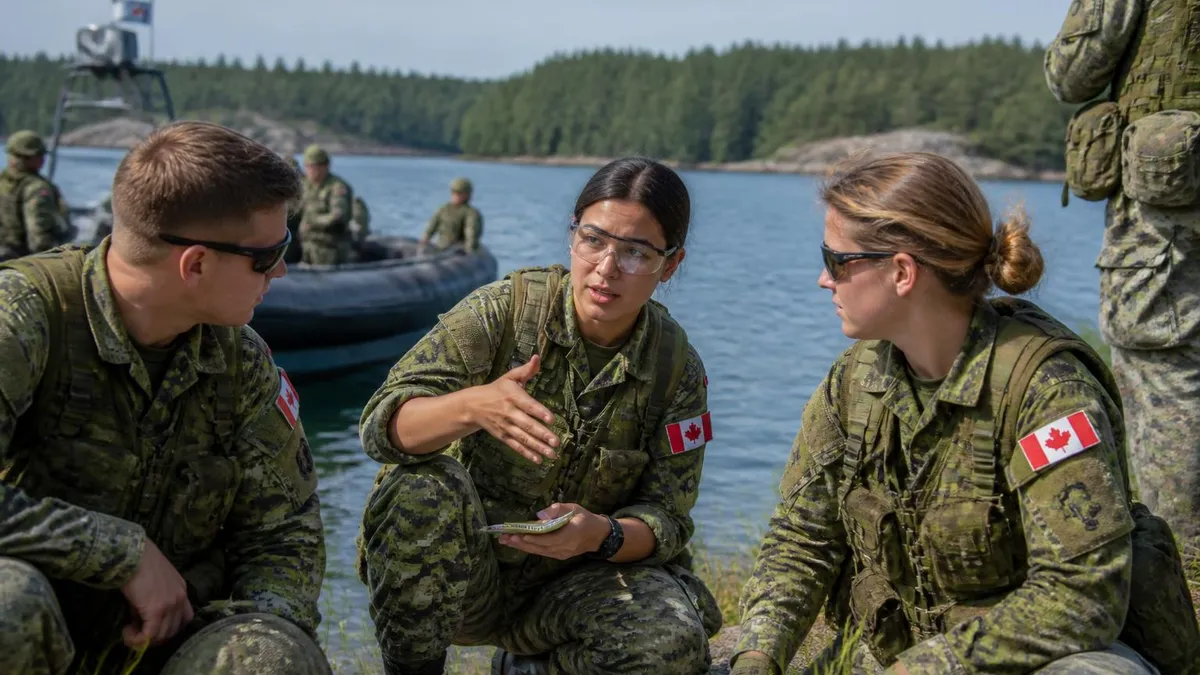
CADET Programs Explained: From CADET Kelly to JROTC, ROTC, and the CADET Test

Sea Cadet Program: Complete Guide to the US Naval Sea Cadets

Cadets Canada: Complete Guide to the Canadian Cadet Organizations Program
About the Author

Educational Psychologist & Academic Test Preparation Expert
Columbia University Teachers CollegeDr. Lisa Patel holds a Doctorate in Education from Columbia University Teachers College and has spent 17 years researching standardized test design and academic assessment. She has developed preparation programs for SAT, ACT, GRE, LSAT, UCAT, and numerous professional licensing exams, helping students of all backgrounds achieve their target scores.
Join the Discussion
Connect with other students preparing for this exam. Share tips, ask questions, and get advice from people who have been there.
View discussion (9 replies)