
CADET Portal Guide: Navigating the CADET System, Tests, and Resources
🗨️ Explore the cadet portal, CADET test prep, cadet portfolio tips, and resources for aspiring military cadets. Complete 2026 September guide.

The cadet portal is the central digital hub that connects aspiring military cadets with the resources, schedules, records, and assessment tools they need to succeed throughout their training journey. Whether you are a first-year JROTC participant or an advanced ROTC cadet preparing for commissioning, understanding how to navigate the cadet portal effectively can make a significant difference in your academic and military performance. This guide walks you through every aspect of the portal and the broader cadet experience in 2026.
Many people encounter the word "cadet" in very different contexts. Pop culture fans may remember the hit Disney Channel movie film cadet kelly starring Hilary Duff, which introduced millions of young viewers to military academy life in a lighthearted way. On the other end of the spectrum, serious students preparing for the CADET aptitude test need structured resources, practice materials, and a clear understanding of what the assessment measures and how it affects their program placement or scholarship eligibility.
Beyond the entertainment world and formal testing, the term "cadet" encompasses a broad community — from JROTC students in high school hallways to West Point plebes drilling on iconic parade grounds. The cadet portal serves all of these communities by centralizing communication between unit administrators, instructors, and students. Commanders can post training schedules, push academic requirements, track physical fitness results, and monitor cadet progression all from a single interface, reducing administrative friction significantly.
For cadets themselves, the portal provides access to grade records, counseling forms, promotion tracking, physical fitness test scores, and important deadlines like scholarship application windows. Missing one of those deadlines can set a cadet back an entire academic cycle, which is why portal literacy is treated as an essential skill rather than an optional convenience. Cadets who log in regularly and maintain current documentation consistently outperform peers who treat the portal as an afterthought.
The CADET test — formally a placement and aptitude evaluation used in several military youth programs — is another area where the portal plays a pivotal role. Results from official and practice assessments are often uploaded directly to a cadet's portal profile, giving instructors real-time insight into each student's strengths and gaps. This data-driven approach allows for targeted tutoring, resource allocation, and even early identification of cadets who may qualify for advanced leadership tracks or competitive scholarship programs.
Preparation resources accessible through or alongside the cadet portal include digital study guides, video tutorials, practice tests aligned with real exam content, and peer mentorship matching. Many programs have integrated third-party study platforms directly into the portal experience, meaning cadets can move seamlessly from reviewing their counseling form to completing a timed mathematics drill without switching between multiple logins or browser tabs. That integration is one of the most underrated benefits of modern portal design.
This article covers the full scope of the cadet portal ecosystem: what it is, how to use it, what the CADET test measures, how to build a strong cadet portfolio, and how consistent practice with quality test prep materials translates into real results. Whether you are brand new to the cadet world or a seasoned unit administrator, the sections below will give you the clarity and action steps you need to make the most of every tool available to you in 2026.
CADET Portal & Test by the Numbers

Core Sections of the Cadet Portal
Your central profile stores academic grades, physical fitness test scores, counseling records, and promotion history. Keeping this section current ensures instructors and boards see an accurate picture of your cadet performance at every evaluation.
Unit leaders post all upcoming training events, field exercises, mandatory formations, and deadlines here. Cadets receive automatic notifications so no critical event slips through the cracks during a busy academic semester.
Official CADET aptitude scores, practice test results, and academic evaluation data integrate directly into this module, giving both cadets and instructors real-time performance tracking across every tested subject area.
This section tracks open scholarship windows, required documents, essay deadlines, and letter-of-recommendation requests. Missing a scholarship application due to a missed portal notification can cost cadets a full year of funding.
Linked study guides, cadet handbooks, regulation documents, and approved third-party practice platforms live here. Many units now embed direct links to CADET practice tests for easy one-click access during study sessions.
Building a strong cadet portfolio is one of the most impactful steps any cadet can take to distinguish themselves within their program and during competitive board evaluations. A cadet portfolio is more than a folder of certificates — it is a curated, organized record of your leadership development, physical accomplishments, community service contributions, academic achievements, and professional goals. Think of it as a living document that tells the story of who you are as a developing officer and citizen.
The strongest cadet portfolios follow a consistent structure that mirrors what promotion boards and scholarship committees actually review. The front section typically includes a current photograph in proper uniform, a one-page personal statement or leadership philosophy, and a clean copy of your most recent evaluation report. These three items are read first in nearly every competitive review process, which means errors or outdated information in this section can create a poor first impression that the rest of your portfolio must overcome.
Behind the introduction, most cadets organize their portfolio into four major tabs: academic achievement, leadership experience, physical fitness, and community service. Each tab should contain documentation rather than assertions. Instead of simply listing "improved unit morale," include a dated memorandum from your unit commander describing what you did, when you did it, and what outcome resulted. Boards respond to specific evidence and quantified impact, not vague claims about qualities you believe you possess.
Academic documentation in a cadet portfolio should include official transcripts, any academic awards or honor roll recognitions, and CADET test score reports. If you scored particularly well in a specific domain — mathematics, military history, or leadership principles — include that score prominently. Many ROTC scholarship boards specifically weight CADET test performance, making high scores one of the fastest ways to differentiate yourself from peers who have similar GPAs and extracurricular records but weaker aptitude documentation.
Physical fitness documentation has become increasingly standardized with the Army Combat Fitness Test replacing the older APFT framework. Include your most recent scored ACFT result sheet, noting any events where you exceeded minimum standards by a meaningful margin. Cadets in JROTC programs should include their unit's annual physical fitness assessment records. If you have improved your score significantly over one or two testing cycles, present both the baseline and the current score side by side — improvement demonstrates discipline and trainability, which military evaluators value highly.
Leadership experience documentation is where many cadets either shine or fall short. Rather than listing every position you have held, focus on the two or three experiences where you made the most measurable impact. Describe the problem you were given, the approach you took, the resources you used, and the outcome you achieved. Use the STAR format — Situation, Task, Action, Result — both in your written narrative and when you are asked to discuss portfolio items during oral boards or scholarship interviews.
Finally, community service entries should connect your cadet identity to your role as a community member and future leader. Boards are not simply counting hours — they want to see whether your service reflects intentional leadership or just attendance. Include a brief description of what need existed in your community, why you chose to address it through that particular activity, and what changed because of your participation. Cadets who frame service in leadership terms rather than humanitarian resume-building terms consistently receive higher scores from evaluation panels.
CADET Test Subject Areas Explained
The mathematics section of the CADET test evaluates a candidate's ability to apply arithmetic, algebra, geometry, and data interpretation skills under timed conditions. Questions range from straightforward computation to multi-step word problems that require translating a real-world military scenario into an equation and solving it accurately. Cadets who struggle with this section typically spend too much time on individual problems rather than moving strategically through the test and returning to difficult items at the end.
Effective preparation for the math section involves daily timed drills rather than passive review of formulas. Practice tests that mirror the actual CADET format help cadets build the pacing instincts needed to finish every section without rushing. Focus especially on ratio and proportion problems, which appear frequently, as well as basic probability questions and reading data from tables and charts. Consistent practice over six to eight weeks produces significantly better results than cramming in the final days before the test date.

CADET Portal: Benefits and Limitations
- +Centralizes all cadet records, scores, and documentation in one accessible location
- +Sends automated deadline reminders for scholarships, evaluations, and training events
- +Enables instructors to provide real-time feedback on academic and physical performance
- +Integrates directly with CADET practice test platforms for seamless study access
- +Streamlines promotion board documentation with standardized digital templates
- +Reduces paper-based administrative burden for both cadets and unit staff
- −Portal access can be lost during system outages at critical application deadlines
- −Login credentials are not always reset efficiently when cadets transfer between units
- −Mobile interface on some portal versions lacks full functionality of the desktop version
- −Not all JROTC programs are integrated into the same portal ecosystem as ROTC units
- −Data entry errors by administrators can take days to correct through official channels
- −Some cadets rely too heavily on portal notifications and miss responsibilities they should track independently
Pros and Cons at a Glance
| Pros | Cons |
|---|---|
| Centralizes all cadet records, scores, and documentation in one accessible location | Portal access can be lost during system outages at critical application deadlines |
| Sends automated deadline reminders for scholarships, evaluations, and training events | Login credentials are not always reset efficiently when cadets transfer between units |
| Enables instructors to provide real-time feedback on academic and physical performance | Mobile interface on some portal versions lacks full functionality of the desktop version |
| Integrates directly with CADET practice test platforms for seamless study access | Not all JROTC programs are integrated into the same portal ecosystem as ROTC units |
| Streamlines promotion board documentation with standardized digital templates | Data entry errors by administrators can take days to correct through official channels |
| Reduces paper-based administrative burden for both cadets and unit staff | Some cadets rely too heavily on portal notifications and miss responsibilities they should track independently |
CADET Test Readiness Checklist
- ✓Log into the cadet portal and confirm your test registration date and testing location at least two weeks in advance.
- ✓Download the official CADET study guide from the portal's resource library and review the tested domains.
- ✓Complete at least three full-length timed practice tests to build pacing and reduce test-day anxiety.
- ✓Review your weakest subject area using targeted practice questions and flashcards for at least 30 minutes daily.
- ✓Confirm that your cadet portfolio is current and includes your most recent GPA, fitness scores, and leadership documentation.
- ✓Verify that your government-issued photo ID matches the name on your portal registration to avoid check-in delays.
- ✓Prepare a test-day kit: pencils, an approved calculator (if permitted), water, and a light snack for the break period.
- ✓Review military history key dates and customs of the service in the 48 hours before your test date.
- ✓Sleep at least 7-8 hours the night before the test — fatigue is one of the most common causes of underperformance.
- ✓Arrive at the testing location 20 minutes early to complete administrative check-in without rushing.
Consistent Practice Outperforms Last-Minute Cramming Every Time
Research consistently shows that distributed practice — studying a little each day over several weeks — produces retention rates up to 40% higher than massed study sessions crammed into the final days before a test. Cadets who log into practice platforms through the cadet portal for 30-45 minutes daily over six to eight weeks see dramatically higher score improvements than those who attempt to cover all material in a single intense weekend sprint.
Performing well on the CADET test requires more than subject knowledge — it demands a clear strategy for managing your time, energy, and attention across multiple sections over a three-hour testing window. The cadets who consistently score in the top percentiles are not necessarily the most academically gifted; they are the ones who understand how the test is structured, what question types appear most frequently, and how to allocate their limited time to maximize their total score rather than trying to answer every question perfectly.
One of the most effective strategies is to begin each section with a rapid triage pass. Read every question once and mark the ones you can answer immediately with high confidence. Answer those first, then go back and spend more time on the questions that required more thought.
This approach ensures you never run out of time on easy questions because you spent too long wrestling with a difficult one early in the section. It also helps manage test anxiety — building momentum with correct answers early creates a psychological rhythm that sustains focus through the harder middle section of each content domain.
For the mathematics section specifically, practice unit cancellation and estimation as speed tools. Many CADET math questions can be solved without full calculation if you understand the magnitude of the expected answer. Eliminate answer choices that are obviously too large or too small, then use quick estimation to identify the most plausible remaining option. This triage-then-calculate approach can save two to three minutes per section, which adds up to ten or more minutes across the full test — enough time to revisit several uncertain answers.
The military history and customs section rewards breadth over depth. Unlike a college history course that expects you to analyze primary sources in depth, the CADET test covers a wide range of eras, conflicts, traditions, and regulations at a moderate depth. A cadet who knows something about every major conflict from the War of Independence through Operation Iraqi Freedom, understands the basic customs of courtesy for each service branch, and has memorized the key milestones in ROTC and JROTC program history will consistently outperform a cadet who knows the Civil War in exhaustive detail but has gaps elsewhere.
Leadership and decision-making questions require a different kind of preparation. These questions are designed to test how you think, not just what you know. When reviewing official Army leadership doctrine in FM 6-22, do not memorize definitions — practice applying principles to hypothetical situations. Ask yourself: what would a competent leader do in this situation, and why? What would a poor leader do, and what would the consequence be? Building this decision-tree thinking habit before test day means you can work through unfamiliar scenarios on the actual test using the same mental framework you practiced in preparation.
Pacing during the leadership section is particularly important because these questions tend to be longer — the scenario setup alone can be 80-100 words before the actual question appears. Train yourself to skim the question stem before reading the full scenario so you know exactly what you are looking for as you read. This top-down reading habit reduces the time you spend re-reading scenarios and allows you to identify the relevant detail on first pass rather than having to search back through a long paragraph for a single piece of information.
Finally, the days immediately before the test should be dedicated to light review and recovery rather than intense studying. If your preparation over the preceding weeks has been consistent and structured, your brain needs consolidation time, not more input. Use the final 48 hours to review any flashcards covering your weakest areas, complete one final timed practice set to confirm your pacing strategies are locked in, and prioritize sleep and hydration. Cadets who arrive well-rested with confidence built from weeks of structured preparation consistently outperform those who arrive exhausted from a last-minute marathon study session.

ROTC scholarship application windows are strict — programs such as the Army ROTC Four-Year Scholarship typically open in early fall and close before winter break, with no exceptions for missed portal notifications. Cadets who do not log into their cadet portal at least once per week during the academic year routinely miss these windows. Set a recurring calendar reminder tied to your portal login to ensure you never discover a missed deadline after it has already passed.
The cadet ecosystem extends far beyond any single test or portal — it encompasses a rich network of programs, pathways, and opportunities that can shape a young person's academic and professional trajectory for decades. Understanding what those programs look like, how they connect, and what each one requires is essential knowledge for any cadet, parent, or instructor trying to make informed decisions about next steps after initial enrollment. The cub cadet zero turn of choices available within the cadet world can feel overwhelming, but with the right map, every pathway becomes navigable.
JROTC programs operate at the high school level across all four major service branches — Army, Navy/Marine, Air Force, and Space Force — and serve as the foundational entry point for most cadets. These programs are not pre-enlistment contracts; participation does not obligate a student to military service. What JROTC does provide is structured leadership development, physical fitness accountability, academic motivation support, community service opportunities, and early exposure to military customs and culture. Many students report that JROTC was the single most influential program in their high school years, regardless of whether they pursued military careers afterward.
ROTC programs at the college level represent the next rung of the ladder and are where the CADET test becomes most consequential for scholarship and placement decisions. Army ROTC operates at over 1,100 colleges and universities; Air Force ROTC covers more than 150 host institutions with hundreds of additional crosstown affiliates. Cadets in these programs balance standard academic coursework with military science classes, leadership laboratories, physical training, and summer training requirements like the Leader Development and Assessment Course for Army cadets.
Service academies — West Point, the Naval Academy, the Air Force Academy, and the Coast Guard Academy — represent a separate but parallel pathway for cadets who want the most immersive military education experience available. Admission to these institutions is extraordinarily competitive, involving congressional nominations for most applicants along with academic, physical, and medical evaluations. Cadets who have excelled in JROTC programs and who have strong CADET test scores are better positioned for academy applications than peers without structured cadet experience.
Beyond the formal program ladder, the cadet world includes programs like Civil Air Patrol, which operates the Air Force's official JROTC-equivalent program and also runs independent cadet programs for students from middle school through age 21. Sea Cadets, administered by the Navy League, provide maritime and naval training for youth in a structured cadet format. These programs sit outside the traditional JROTC/ROTC pathway but feed into it — many college ROTC scholarship recipients began their cadet journey in one of these auxiliary programs years before entering high school.
For cadets considering the warrant officer or enlisted paths rather than commissioning through ROTC or academy programs, the cadet portal still plays a role in organizing documentation and tracking preparatory coursework. Many Military Occupational Specialty pipelines value demonstrated cadet experience as evidence of adaptability, discipline, and exposure to military culture. In competitive MOS selections, a well-documented cadet record — accessible through the portal — can distinguish an applicant whose test scores and background are otherwise similar to dozens of competing candidates.
Whatever pathway a cadet chooses, the common thread running through every successful trajectory is consistent engagement with available resources, timely documentation of accomplishments through the portal, and deliberate preparation for assessments like the CADET test that create tangible, measurable evidence of capability. The program landscape will continue evolving, but the fundamentals — show up prepared, document your achievements, and invest in deliberate practice — will never go out of style in any cadet program at any level.
Practical preparation for the CADET test comes down to three disciplines: structured study, realistic simulation, and honest self-assessment. Cadets who follow all three consistently over an eight-week period enter test day with confidence grounded in demonstrated performance rather than wishful thinking. The goal is not to feel ready — it is to have evidence from your own practice history that you are ready, which is a meaningfully different psychological state when you sit down at the testing center.
Structured study means following a schedule rather than studying when the mood strikes. Divide the tested content into weekly blocks: week one focuses on arithmetic and algebra; week two on geometry and data interpretation; week three on military history from 1776 to 1900; week four on military history from 1900 to present; week five on customs, courtesies, and regulations; week six on leadership principles and FM 6-22 application; weeks seven and eight on full-length mixed practice tests and targeted review of your identified weak areas. This structure ensures comprehensive coverage without leaving any domain under-prepared.
Realistic simulation means practicing under conditions that match the actual test as closely as possible. This includes timed sessions, no external resources, a quiet room, and a full-length test rather than isolated question sets. Many cadets practice individual questions casually but never experience the fatigue and concentration demands of a three-hour block until test day itself — and then they are surprised by how differently they perform compared to their casual practice sessions. Simulate the test experience completely at least twice before the real event.
Honest self-assessment means reviewing every practice test in detail, not just noting your score. For every question you answered incorrectly — and for every question you answered correctly but were uncertain about — identify exactly why you got it wrong or were unsure. Was it a knowledge gap? A misread question stem? A timing pressure decision? Each error type requires a different correction strategy, and grouping them correctly prevents you from repeating the same mistakes across multiple practice sessions without actually fixing the underlying issue.
The cadet portal supports self-assessment by storing your historical practice test scores in a trackable format. Over time, your score history creates a performance curve that reveals whether your preparation is producing consistent improvement, plateauing, or declining. A plateau is not a reason to panic — it usually indicates a need to shift preparation strategy rather than increase volume. If you have been doing the same type of practice for three weeks and your score is not moving, introduce a new drill format, change your study environment, or find a peer study partner to introduce fresh accountability.
Peer study and mentorship are underutilized resources in most cadet programs. Many cadets who have already taken the CADET test are willing to share their experience with first-timers, particularly within the same unit or program. Seek out second- or third-year cadets who scored well and ask them specifically what they would do differently if they were preparing from scratch. Their insight is often more practically useful than any official study guide because it comes from lived experience with the exact test format, administrative environment, and timing pressure you will face.
Finally, remember that the CADET test is one data point in a broader evaluation of your potential as a leader and service member. A single test score does not define your cadet career. What defines your career is the pattern of behavior visible across your portal records over months and years — your consistency, your improvement trajectory, your leadership choices, your willingness to take on difficult responsibilities, and your commitment to the values that military service demands. Prepare rigorously for the test, but keep it in proper perspective: it is a gateway, not a destination.
CADET Questions and Answers

Air Force Cadet Chapel: History, Architecture & Visitor Guide 2026

Cadet Command Regulations: Understanding Pamphlet 145-4 and ROTC Standards for 2026
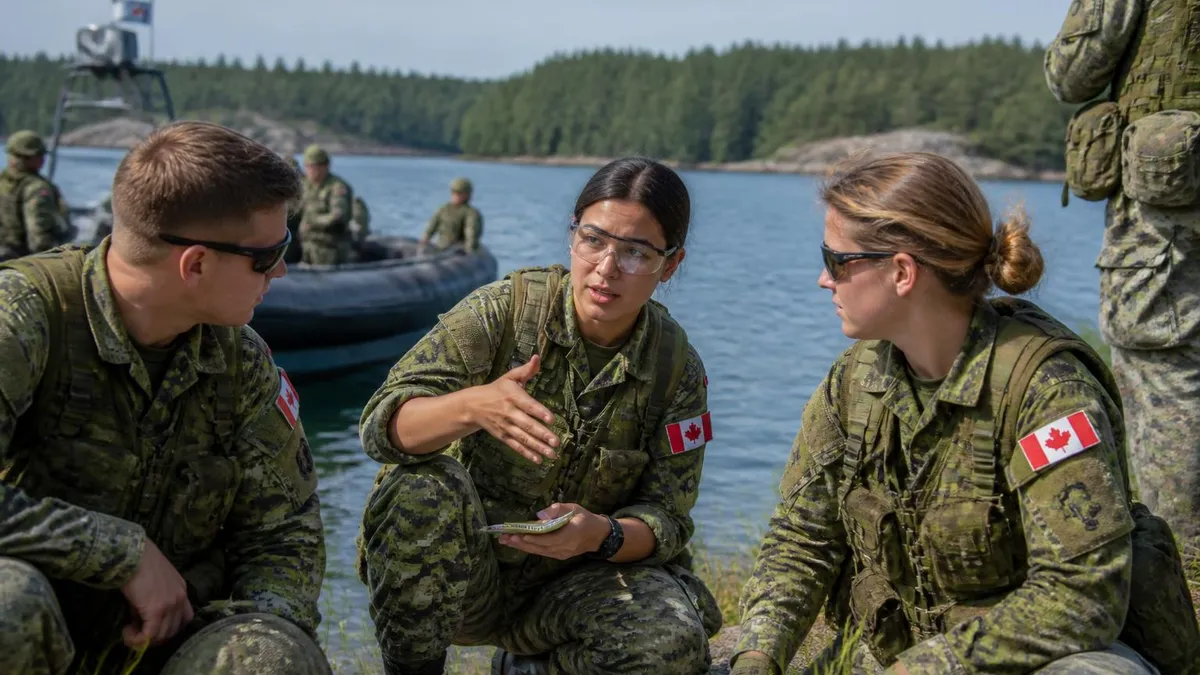
Cadet Programs Explained: From Cadet Kelly to JROTC, ROTC, and the CADET Test

Air Cadet Uniform Guide — Complete Guide (2026)
Army Cadet Force Explained: US Equivalents, Programs, and CADET Test Prep
About the Author

Educational Psychologist & Academic Test Preparation Expert
Columbia University Teachers CollegeDr. Lisa Patel holds a Doctorate in Education from Columbia University Teachers College and has spent 17 years researching standardized test design and academic assessment. She has developed preparation programs for SAT, ACT, GRE, LSAT, UCAT, and numerous professional licensing exams, helping students of all backgrounds achieve their target scores.
Join the Discussion
Connect with other students preparing for this exam. Share tips, ask questions, and get advice from people who have been there.
View discussion (9 replies)