
Indianapolis BMV: Locations, Services, and How to Pass Your Test
Complete Indianapolis BMV guide covering branch locations, hours, services, appointments, license requirements, and how to prepare for the BMV knowledge exam.
What the Indianapolis BMV Provides
The Indianapolis BMV is the local presence of the Indiana Bureau of Motor Vehicles operating multiple branch locations throughout Marion County and the surrounding Indianapolis metropolitan area. Branches handle driver licensing, vehicle registration, title transfers, identification cards, and various administrative services that Indiana residents need throughout the year. Most services require in-person visits with proper documentation though many can now be completed online through the official myBMV portal.
Indianapolis residents have access to one of the densest BMV branch networks in Indiana with locations distributed across north, south, east, and west sides of the metropolitan area. Branch density allows residents to choose convenient locations close to home or work rather than traveling to a single central office. Each branch handles the same core services with similar wait times during peak periods which include late afternoon weekdays and Saturdays.
The Indianapolis BMV operates under the same Indiana statutes and procedures as branches across the state, but local conditions including traffic patterns, demographic mix, and demand fluctuations affect daily operations. Knowing which branches typically have shorter waits, which services require appointments, and which documentation prevents delays significantly improves the BMV experience for Indianapolis residents handling routine motor vehicle business.
Indiana operates the BMV under state government oversight with central administration in Indianapolis directing operations across all ninety-two counties. Marion County branches receive the most volume in the state because Indianapolis is the largest metropolitan area in Indiana. Staffing levels at Indianapolis branches reflect this volume with multiple service windows, dedicated road test examiners, and specialized staff handling more complex commercial license and titling transactions.
The Indiana BMV modernization initiatives over the past decade have expanded online services substantially. Where in-person visits were once required for nearly all transactions, residents now complete most routine services online through the myBMV portal. The shift reduces branch traffic and improves wait times for transactions that still require in-person handling such as initial license applications and exam testing.
Indianapolis BMV Quick Facts
Indianapolis has over a dozen BMV branches across Marion County. Most services can be completed online through myBMV. In-person services typically require thirty to sixty minutes including wait time. Knowledge exam for drivers permit requires passing fifty multiple choice questions with thirty-eight correct minimum.
Online services through myBMV handle most routine transactions including license renewal, registration renewal, address changes, and plate orders. In-person visits remain required only for initial applications, exam testing, road tests, and certain specialized transactions.
Indianapolis BMV Branch Locations
Major Indianapolis BMV branch locations include the downtown branch on East 38th Street, the north side branch at Greenwood Park Mall, the east side branch on Pendleton Pike, the west side branch on Crawfordsville Road, and the south side branch on Madison Avenue. Suburban branches in Fishers, Carmel, Greenwood, Plainfield, and Speedway also serve residents in those communities while remaining within the broader Indianapolis service area.
Branch hours vary slightly by location but most operate Monday through Friday from eight thirty in the morning until five in the afternoon and Saturday from eight thirty until twelve thirty in the afternoon. Some branches extend hours one weeknight per week until seven in the evening to accommodate working residents. Holiday closures follow the Indiana state holiday schedule which includes most federal holidays plus state-specific dates.
Wait times vary significantly by branch and time of day. Monday mornings and lunch hour periods on weekdays tend to be busiest. Tuesday through Thursday mid-mornings and mid-afternoons typically have shorter waits. Saturday mornings see heavy volume across all branches. Some branches now publish real-time wait time estimates through the myBMV portal which helps residents choose less crowded locations or visit times.
Specific branch addresses and exact hours change periodically as the BMV optimizes its branch network for current population centers. Verifying current branch information through the official BMV website at in.gov/bmv before visiting prevents wasted trips to closed locations or branches with reduced hours due to staffing changes. Most major branches operate consistently but some satellite locations have variable hours throughout the year.
Disability accommodations at Indianapolis BMV branches include accessible parking, wheelchair access throughout service areas, sign language interpreters available with advance request, and assistance with documentation completion for residents who need help. Calling the branch ahead of visit to arrange specific accommodations ensures smooth service experiences for residents with disabilities or limited mobility.

Common Indianapolis BMV Services
New license applications, renewals, replacements, address changes, and license restrictions. Most renewals can now be completed online with photo updates required every other renewal cycle. Specific fees and requirements within this category may vary based on individual circumstances or vehicle classifications.
New vehicle registration, annual renewal, title transfers, plate replacement, and personalized plate orders. Online renewal saves significant time compared to in-person visits. Specific fees and requirements within this category may vary based on individual circumstances or vehicle classifications.
State-issued ID cards for non-drivers including REAL ID compliant identification needed for domestic flights and federal facility access starting in 2025. Specific fees and requirements within this category may vary based on individual circumstances or vehicle classifications.
Written knowledge exams for new drivers permit including the standard fifty-question multiple choice test on Indiana traffic laws and road signs. Specific fees and requirements within this category may vary based on individual circumstances or vehicle classifications.
Online vs In-Person Services
The myBMV online portal at mybmv.com handles most routine services including driver license renewal, vehicle registration renewal, address changes, plate orders, and several other transactions without requiring in-person visits. Creating an account requires an existing license or identification number plus personal verification information. Online transactions typically complete within minutes saving the hour or more that in-person visits typically require.
Services requiring in-person visits include initial driver license applications, knowledge exam testing, road skills testing, license restoration after suspension, certain commercial license transactions, and any service requiring photo capture or fingerprinting. New residents from other states must visit in person to surrender out-of-state credentials and complete Indiana documentation requirements during license transfer.
Appointment scheduling for in-person services exists for some transactions but is not required for most services. Walk-in service operates at all branches during normal business hours. For services that allow appointments such as knowledge exam testing at certain branches, scheduling ahead reduces wait times substantially. The myBMV portal provides appointment scheduling for available services along with current branch wait time information.
Mobile app access through the myBMV mobile application complements the web portal for residents who prefer phone-based interaction with BMV services. The app supports most services available on the web portal with optimized interfaces for smaller screens. Notifications through the app alert users about upcoming renewal deadlines, registration expiration dates, and other time-sensitive BMV events that residents need to act on within specific windows.
Customer service phone support handles questions and certain transactions that cannot be completed through the web portal. The main BMV customer service number connects to representatives who can answer policy questions, explain documentation requirements, and assist with portal account issues. Call volumes peak during morning and lunch periods making mid-afternoon calls typically faster to connect.
Indiana License Stages
Available at age fifteen for residents enrolled in driver education or at age sixteen for those not enrolled. Requires passing the knowledge exam, vision screening, and submitting parental consent if under eighteen. The permit allows supervised driving with a licensed adult age twenty-one or older in the front passenger seat.
Specific requirements within each license stage may update from time to time as Indiana law evolves. Confirming current rules through the official BMV website before relying on memory of past requirements prevents missed deadlines or invalid documentation.
What to Bring to the Indianapolis BMV
Required documents for first-time driver license applications include certified birth certificate or valid passport for proof of identity, Social Security card for proof of Social Security number, and two documents proving Indiana residency such as utility bills, bank statements, or rental agreements dated within sixty days. Federal REAL ID compliant licenses require all these documents plus additional verification for full federal acceptance.
Vehicle registration requires the vehicle title or title application, current odometer reading, proof of Indiana auto insurance, and a Marion County excise tax receipt for new registrations. Vehicle inspection certificates from licensed inspection stations are required for vehicles previously registered in other states or for certain commercial vehicles. Bringing all documents on the first visit prevents return trips for missing items.
License renewal requires the current license, vision screening which most branches perform on-site, and payment for the renewal fee. Address changes require any document showing the new address plus the existing license being modified. Online renewal eliminates these requirements when eligible through the myBMV portal which accepts electronic payment for most service fees.
Document acceptance rules differ between standard and REAL ID compliant license applications. Standard licenses accept somewhat broader proof of identity options while REAL ID compliant credentials require specific federally-approved documentation. Confirming which type of license is needed before gathering documents prevents bringing inadequate items for the specific application type the resident plans to obtain at the visit.
Photocopies are generally not accepted at the BMV for identification purposes. Original documents must be presented for verification and copying by branch staff. Lost or unavailable original documents may require obtaining replacement copies from the issuing agencies before BMV transactions can proceed. Birth certificate copies typically require ordering through the county or state vital records office which can take several weeks for delivery.

Starting May 2025, federal REAL ID compliant driver licenses or alternative identification will be required for domestic air travel and entry to many federal facilities. Standard Indiana licenses already meet REAL ID standards if the document shows a star marking in the upper right corner. Licenses without the star marking require upgrade before federal use becomes restricted in 2025.
Documents needed for REAL ID upgrades include proof of identity, Social Security number, and two proofs of residency. Renewals or upgrades can be scheduled at any Indianapolis branch with advance notice through the myBMV scheduling system.
The Indiana Knowledge Exam
The Indiana driver knowledge exam contains fifty multiple choice questions drawn from the Indiana Driver Manual published by the BMV. Candidates must answer at least thirty-eight questions correctly to pass, equivalent to seventy-six percent. The exam is administered on touchscreen computers at most BMV branches and takes most candidates twenty to thirty minutes to complete. Results display immediately upon submission.
Question topics include Indiana traffic laws, road signs and signals, safe driving practices, alcohol and drug laws, school bus rules, railroad crossings, emergency vehicle procedures, and license point system. Approximately twenty-five percent of questions focus specifically on road signs and signal recognition, requiring familiarity with the shapes and colors that indicate sign meanings even when text is obscured by weather or distance.
Failed exams require a twenty-four hour wait before retaking. There is no statewide limit on attempts though some branches charge a small fee for retesting. Most failures stem from inadequate preparation rather than test anxiety. Reading the official Indiana Driver Manual cover to cover and completing practice tests until consistent scores above eighty-five percent indicates readiness for the actual exam.
Practice exam resources beyond the official Indiana Driver Manual include online practice question banks from third-party providers that mirror the actual exam format. Most successful first-attempt candidates complete fifty to one hundred practice questions before taking the official exam. Online practice tests provide immediate feedback and explanations for incorrect answers helping candidates identify weak knowledge areas for additional review.
Exam language options at Indianapolis BMV branches include English and Spanish for the knowledge test, accommodating the diverse demographic mix of the Indianapolis metropolitan area. Sign language interpretation can be arranged with advance request for deaf or hard-of-hearing candidates. Reading assistance through audio narration is available for candidates with reading difficulties documented through medical or educational sources.
Indianapolis BMV Visit Checklist
- ✓Verify what documents are required for your specific transaction through the myBMV portal
- ✓Check current wait times at nearby branches to choose the least busy location for your visit
- ✓Bring photo identification plus all supporting documents required for the transaction type
- ✓Bring payment via cash, check, debit card, or credit card depending on branch acceptance policies
- ✓Arrive thirty minutes before peak periods to minimize wait times during the in-person visit
- ✓Confirm whether your service requires an appointment or accepts walk-in customers during business hours
- ✓Plan for vision screening if renewing or applying for a new driver license at the branch location
- ✓Plan for vision screening if applying for any driver license credential at the in-person visit
- ✓Confirm specific transaction details with branch staff before getting in line for service
Vehicle Registration in Indianapolis
Indiana vehicle registration combines state registration fees with Marion County excise tax based on vehicle make, model, year, and weight class. Total registration costs typically run one hundred fifty to four hundred dollars annually for standard passenger vehicles depending on these factors. Hybrid and electric vehicles pay additional supplemental fees that offset reduced fuel tax revenue from these vehicles compared to traditional internal combustion engines.
Plate options include standard Indiana plates, specialty plates supporting various causes, personalized plates with custom letter and number combinations, and antique vehicle plates for qualifying older cars. Specialty and personalized plates carry additional annual fees ranging from fifteen to forty dollars beyond standard registration. Antique vehicle plates have reduced fees but restrict vehicle use to limited purposes.
Title transfers when buying or selling vehicles must be completed at the BMV within thirty-one days of the transaction to avoid penalty fees. Required documentation includes the original signed title, bill of sale showing purchase price, current odometer reading, proof of Indiana insurance, and the registration fee plus excise tax. Vehicles purchased from licensed dealers often have title work completed by the dealer rather than requiring direct BMV interaction by the buyer.
Insurance requirements for vehicle registration include minimum liability coverage of twenty-five thousand dollars for bodily injury to one person, fifty thousand dollars for injuries to two or more people in the same incident, and twenty-five thousand dollars for property damage. Higher coverage levels protect drivers better but the state minimums represent the legal floor required for legal vehicle operation in Indiana.
Out-of-state vehicle transfers when new residents move to Indianapolis require additional steps beyond standard registration. The vehicle must be inspected at a licensed inspection station to verify the vehicle identification number matches title documentation. Out-of-state license plates must be surrendered or returned to the originating state. Indiana plates are then issued upon completion of registration and excise tax payment for the new resident vehicle.
Common Indianapolis BMV Mistakes
The most common reason for unsuccessful BMV visits is missing or incorrect documentation. Showing up without proper proof of identity, residency, or Social Security number forces a return trip with the missing items. Reading the specific documentation requirements for the planned transaction before visiting prevents this frustration. Branches cannot accept photocopies or expired documents for most identification purposes regardless of how recently they expired.
Insurance verification issues affect vehicle registration transactions when policies have lapsed or been canceled recently. Indiana requires continuous insurance coverage on registered vehicles. Bringing current insurance card and being prepared to verify policy details with the insurance company by phone if necessary prevents delays. Lapsed coverage triggers fines and registration suspension that complicate routine transactions significantly.
Inadequate exam preparation leads to failed knowledge tests on first attempts. Many candidates rely on common-sense interpretation of traffic rules rather than studying the Indiana Driver Manual specifically. Indiana law includes specific requirements about following distance, speed limits in various zones, and right-of-way rules that may differ from intuitive expectations. Studying the actual manual produces dramatically better first-attempt pass rates.
Branch-specific procedures sometimes differ in minor ways even though all branches follow the same Indiana BMV policies. Some branches process certain transactions only on specific days. Some branches limit road test scheduling to particular examiners with limited availability. Asking about branch-specific quirks before planning a visit ensures the chosen branch can actually handle the planned transaction without sending residents to alternative locations mid-visit.
Service complaints can be filed through the official BMV customer service channels for residents who experience problems with branch staff or transaction handling. The complaint process includes formal investigation and response from BMV management. Documenting specific transaction details including date, branch, staff member name if known, and specific issue helps complaint resolution proceed efficiently when problems require escalation beyond branch-level resolution.
Indianapolis BMV By the Numbers
Tips for Faster Service
Complete eligible transactions online through mybmv.com to avoid in-person visits entirely. License renewal, registration renewal, and address changes all work online for most residents. Specific fees and requirements within this category may vary based on individual circumstances or vehicle classifications.
Visit branches on Tuesday through Thursday mid-morning or mid-afternoon to avoid the Monday and Friday peak periods. Saturday mornings see heaviest volume across all branches. Specific fees and requirements within this category may vary based on individual circumstances or vehicle classifications.
Use the wait time feature on myBMV to compare current waits across nearby branches before deciding where to visit. Branch density allows choosing less busy locations. Specific fees and requirements within this category may vary based on individual circumstances or vehicle classifications.
Gather all required documents before visiting. Many returned visits result from missing documentation that the BMV cannot waive regardless of the requestor circumstances. Specific fees and requirements within this category may vary based on individual circumstances or vehicle classifications.
Driving Test Requirements
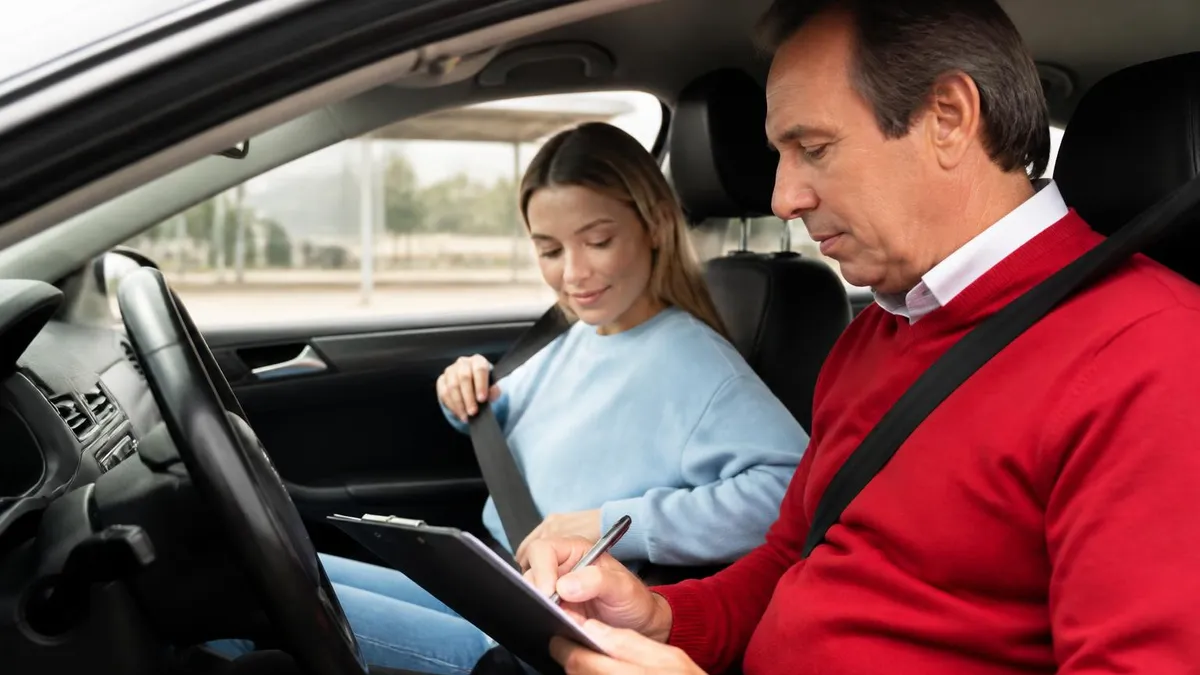
The road skills test required for full driver license consists of demonstrated driving skills with a BMV examiner observing from the passenger seat. The test covers basic vehicle operation, traffic law compliance, defensive driving awareness, and proper response to various traffic situations. Most tests run twenty to thirty minutes and cover residential streets, traffic signals, and basic highway driving as conditions permit.
Common test failures involve uncontrolled stops, failure to check mirrors before lane changes, improper lane positioning, incomplete observation at intersections, and inadequate following distance behind other vehicles. Candidates who fail must wait at least one day before retesting and many candidates take the test two or three times before passing successfully. Practicing with experienced drivers in varied conditions builds the skills examiners evaluate.
Test scheduling for road skills tests requires appointments at most Indianapolis branches due to limited examiner availability. The myBMV portal allows scheduling road skills tests typically one to four weeks in advance depending on branch demand. Some commercial driving schools offer combined training and test preparation packages that include road test administration at their own facilities under BMV partnership programs.
Vehicle requirements for the road skills test include current registration, current insurance card, valid plates, working seatbelts, functional headlights and turn signals, and adequate brakes. The vehicle must belong to the candidate or someone who has authorized the use for testing purposes. Rental cars typically cannot be used for road tests. Most candidates use family vehicles or vehicles provided by driving schools that offer training package services.
Test scoring uses a checklist of specific behaviors that examiners verify the candidate performs correctly. Each error category produces specific point deductions and candidates must complete the test with enough remaining points to pass. Major errors such as causing an accident, dangerous operation, or violations of traffic law result in automatic failure regardless of other performance during the test session itself.
In-Person vs Online BMV Services
- + —
- + —
- + —
- + —
- + —
- − —
- − —
- − —
- − —
- − —
BMV Questions and Answers
About the Author
Attorney & Bar Exam Preparation Specialist
Yale Law SchoolJames R. Hargrove is a practicing attorney and legal educator with a Juris Doctor from Yale Law School and an LLM in Constitutional Law. With over a decade of experience coaching bar exam candidates across multiple jurisdictions, he specializes in MBE strategy, state-specific essay preparation, and multistate performance test techniques.