
BLS Renewal Near Me: Find Local Classes, Renew Fast, and Pass Your AHA Recertification
Find BLS renewal near me classes, AHA recertification options, and study tips. 🟢 Renew fast, save money, and pass with confidence in 2026 September.
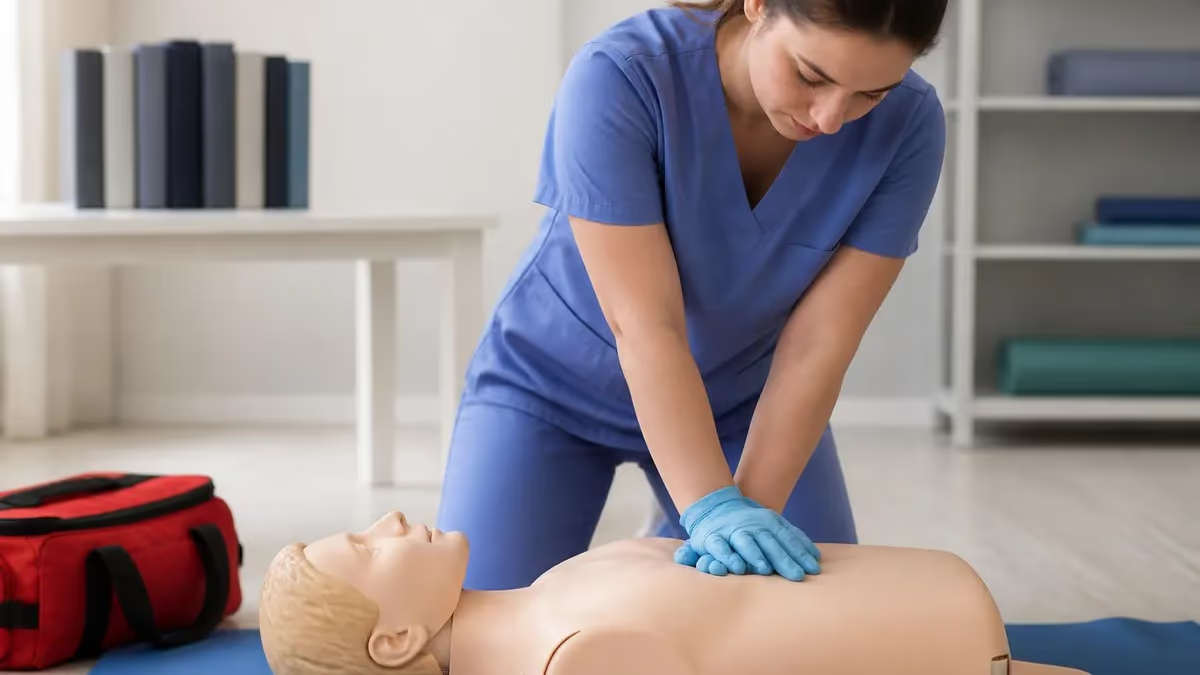
Searching for BLS renewal near me usually means one thing: your provider card is about to expire, your employer needs proof of current certification, and you have a narrow window to get back into compliance before your next shift. The good news is that renewing a Basic Life Support credential in 2026 is faster, cheaper, and more flexible than ever — provided you pick the right course format, the right training center, and a study plan that matches your schedule. This guide walks you through every option in plain English.
So what is a bls certification, exactly? It is a two-year credential issued by the American Heart Association (AHA), American Red Cross, or another nationally recognized provider that verifies you can perform high-quality CPR, use an AED, relieve choking, and work as part of a resuscitation team. Hospitals, dental offices, EMS agencies, dialysis centers, and most allied-health employers require it. Renewal exists because skills decay quickly — research shows CPR competency degrades within three to six months without practice.
If you are wondering whether is bls the same as cpr, the short answer is no, but they overlap heavily. BLS includes lay-rescuer CPR plus healthcare-provider skills like two-rescuer ventilation with a bag-mask, pulse checks, team dynamics, and pediatric resuscitation. A standard "CPR/AED for the workplace" card will not satisfy a hospital credentialing office. When you search for a renewal class, make sure the course title says "BLS Provider" or "BLS for Healthcare Providers" — not "Heartsaver CPR."
Local options fall into three buckets: in-person classes at hospitals and community training centers, blended courses where you finish the cognitive portion online and complete a hands-on skills check nearby, and full HeartCode courses that pair online learning with a 30-minute manikin session. Most working clinicians choose the blended path because it cuts classroom time in half while still producing the same AHA eCard. Prices typically range from $55 to $110 depending on your zip code and provider.
The renewal itself is shorter than the initial certification. Instead of a six-to-eight-hour first-time course, renewals run roughly three to four hours and skip much of the introductory anatomy and lay-rescuer content. You still complete a written exam (usually 25 questions) and pass a hands-on megacode-style skills test with a certified instructor. Once you finish, your new card is valid for two years from the end of your birth month, depending on the issuing organization's policy.
This article covers everything you need to confidently book a class, prepare in a single weekend, walk in, pass, and walk out with a new eCard the same day. We will compare AHA vs. Red Cross, online vs. in-person, costs and timelines, and include free practice tools so you can self-assess before paying for a seat.
BLS Renewal by the Numbers

Renewal Class Formats Near You
Traditional 3-4 hour session at a hospital, fire department, or community training center. Best for tactile learners who want full instructor feedback. Includes lecture, video, manikin practice, and the skills test in one sitting.
Complete the cognitive portion at home in about two hours through HeartCode BLS or Red Cross Simulation Learning, then book a 30-minute hands-on skills check at a local AHA training site. Most popular format in 2026.
An instructor travels to your facility to recertify 6-20 staff at once. Common for dental practices, surgery centers, and skilled nursing facilities. Per-person cost drops to $40-$60 when booked in bulk.
Saturday and Sunday morning slots dedicated to renewals only. Great for shift workers who cannot attend weekday classes. Pre-payment usually required, and seats fill 2-3 weeks in advance in major cities.
When you compare local renewal options, two issuers dominate the US market: the American Heart Association and the basic life support exam american heart association versus the American Red Cross. Both are nationally accepted, both meet Joint Commission and OSHA requirements, and both issue digital cards that employers can verify online. The differences are subtle but matter when your hospital credentialing office has strict rules about which logo appears on your card.
The AHA BLS Provider course is the gold standard in hospital settings. Roughly 80% of US acute care facilities require the AHA card specifically, partly because AHA writes the science the world's resuscitation guidelines are built on. AHA training centers are everywhere — fire departments, community colleges, EMS academies — and the HeartCode online portion is well-designed. Renewals typically run $70-$95 and include a free two-year digital eCard accessible through the AHA Atlas portal.
American Red Cross BLS is gaining ground, especially among dental practices, outpatient clinics, and some hospital systems on the West Coast. Red Cross renewals are often slightly cheaper ($55-$80), use a Simulation Learning platform with adaptive questions, and the card is recognized by every state nursing board. Some employers, however, still specify AHA only, so always confirm with your manager before booking. The skills checklist is nearly identical, but the manikin software (RQI vs. Voice Assisted Manikin) varies.
Cost is rarely the deciding factor — convenience usually is. Searching Google Maps for "BLS renewal" with your zip code typically returns 10-30 results within 25 miles in any US metro. Look for three signals of quality: a verified "AHA Training Center" or "Red Cross Authorized Provider" badge, Google reviews above 4.5 stars, and clear pricing on the website. Avoid sites that promise a 100% pass guarantee with no skills check — those issue cards that fail employer verification.
The blended option is worth a closer look. HeartCode BLS costs about $35 for the online portion, which you finish in two evenings. You then schedule a skills-only session at a local site for another $35-$55. Total cost ($70-$90) is roughly the same as a full in-person class, but you save two hours of classroom time and can study at your own pace. This is the route most working RNs, paramedics, and respiratory therapists choose for their second and third renewals.
If you live in a rural area, your options narrow. Many small hospitals contract with a regional training center that visits monthly, or they sponsor in-house instructors who teach during shift overlap. Ask your education department or unit manager — internal classes are often free and scheduled around your work calendar. If nothing is available locally, a blended course with a skills-check trip to the nearest city is usually faster than waiting six weeks for the next in-person session.
One last consideration: timing. Cards lapse on the last day of the issue month two years out. AHA gives you a 30-day grace period during which you can still renew without retaking the full initial course. Miss that window and you must complete the longer initial BLS Provider course, costing more time and roughly $20-$40 extra. Set a calendar reminder 90 days before expiration so you can shop classes, not scramble.

BLS Practice Test Questions
Prepare for the BLS - Basic Life Support exam with our free practice test modules. Each quiz covers key topics to help you pass on your first try.
BLS High-Quality CPR & Provider Skills
BLS Exam Questions covering BLS High-Quality CPR & Provider Skills. Master BLS Test concepts for certification prep.
BLS Special Situations & Scenarios
Free BLS Practice Test featuring BLS Special Situations & Scenarios. Improve your BLS Exam score with mock test prep.
BLS Adult, Child & Infant Resuscitation
BLS Mock Exam on Adult, Child & Infant Resuscitation. BLS Study Guide questions to pass on your first try.
BLS Airway Management & Ventilation
BLS Test Prep for Airway Management & Ventilation. Practice BLS Quiz questions and boost your score.
BLS Automated External Defibrillator (AED)...
BLS Questions and Answers on Automated External Defibrillator (AED) Use. Free BLS practice for exam readiness.
BLS Certification: Cardiac Arrest
BLS Mock Test covering Certification: Cardiac Arrest. Online BLS Test practice with instant feedback.
BLS Certification: Choking
Free BLS Quiz on Certification: Choking. BLS Exam prep questions with detailed explanations.
BLS Certification: Respiratory Arrest
BLS Practice Questions for Certification: Respiratory Arrest. Build confidence for your BLS certification exam.
BLS Chain of Survival
BLS Test Online for Chain of Survival. Free practice with instant results and feedback.
BLS CPR Techniques & Procedures
BLS Study Material on CPR Techniques & Procedures. Prepare effectively with real exam-style questions.
BLS Legal & Ethical Considerations
Free BLS Test covering Legal & Ethical Considerations. Practice and track your BLS exam readiness.
BLS Post-Resuscitation Care
BLS Exam Questions covering Post-Resuscitation Care. Master BLS Test concepts for certification prep.
What the AHA Basic Life Support Exam Tests
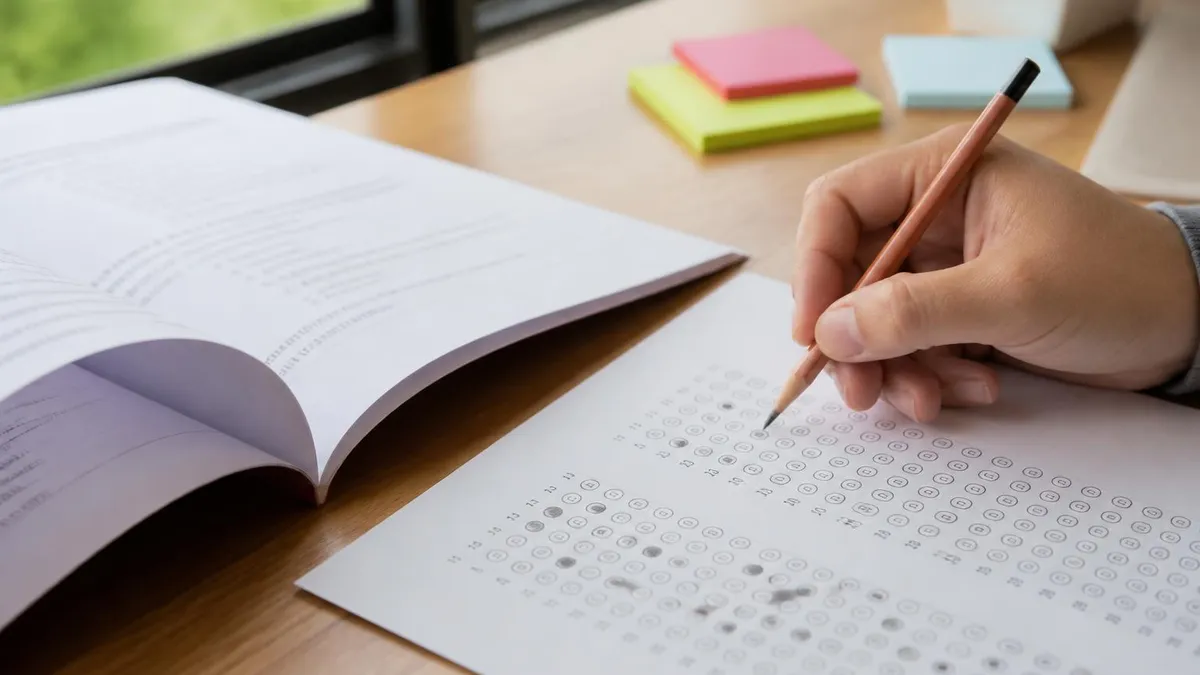
The written portion of the aha basic life support exam contains 25 multiple-choice questions, and you need a score of 84% (21 correct) or higher to pass. Questions cover one-rescuer and two-rescuer adult, child, and infant CPR; AED operation; opioid-associated emergencies; choking relief; and high-performance team dynamics. The test is open at the end of class and you have unlimited time, but most candidates finish in 20-30 minutes.
Expect heavy emphasis on compression rate (100-120/min), depth (at least 2 inches for adults, 1.5 inches for infants), full chest recoil, minimizing interruptions to less than 10 seconds, and a 30:2 compression-to-ventilation ratio for single-rescuer adult CPR. Pediatric ratios shift to 15:2 with two healthcare providers. If you miss the cognitive exam, you may retake it once the same day after a brief remediation with the instructor.
In-Person vs Blended Renewal: Which Is Better?
- +Blended saves 2-3 hours of classroom time
- +HeartCode online portion is self-paced, pause anytime
- +Skills-only sessions are often available evenings and weekends
- +Lower total cost when bundled at the same training center
- +Same AHA eCard issued at the end of either format
- +Practice tests built into the online module reinforce learning
- +Cards download instantly to the AHA Atlas app
- −Blended requires reliable broadband and a quiet study space
- −No instructor present during the online cognitive portion
- −Skills-only sessions sometimes book out 2-3 weeks ahead
- −Less hands-on manikin time before the test
- −Requires self-discipline to finish online work before the deadline
- −Refunds may be partial if you skip the in-person portion
- −Some employers still require a traditional classroom course
Before You Book a Basic Life Support Renewal Class
- ✓Confirm your current BLS card expiration date and the AHA 30-day grace window
- ✓Ask your employer whether they require AHA, Red Cross, or accept either
- ✓Verify the training site is listed on the official AHA or Red Cross locator
- ✓Read recent Google reviews and look for instructor names mentioned positively
- ✓Confirm the course title is "BLS Provider" not "Heartsaver CPR"
- ✓Check the price includes the eCard fee — some sites add $5-$15 at checkout
- ✓Block 4 hours on your calendar for in-person or 3 hours for blended skills check
- ✓Download the AHA BLS Provider Manual eBook or borrow a paper copy
- ✓Complete the HeartCode online portion at least 48 hours before your skills test
- ✓Wear comfortable clothes and closed-toe shoes — you will be on the floor
Download your AHA digital card within 24 hours of passing
Your instructor uploads your completion to the AHA Atlas system within one business day. Log in at atlas.heart.org, claim your eCard, and download both the PDF and the QR code. Send a copy to your employer's credentialing office immediately. Cards that sit unclaimed for 30 days can get stuck in administrative limbo, delaying your next shift assignment.
Cost is the second-biggest factor (after location) in choosing a renewal class. National pricing for a basic life support renewal class in 2026 averages $75 in-person and $70 blended, but you will see real spread depending on your region. Manhattan and San Francisco run $95-$120. The Midwest and Southeast generally land between $55 and $80. Rural training centers sometimes charge $45 because instructors volunteer through fire departments and EMS districts that subsidize seats for community members.
Many employers reimburse renewal fees, but you have to ask. Hospitals, dental practices, surgery centers, dialysis units, and home health agencies frequently include continuing-education stipends in employment contracts. Submit your receipt and a copy of your new eCard to HR with a brief expense report and most employers process it within two pay cycles. If your facility runs internal classes through staff development, the renewal is usually free — check the education department's monthly calendar before paying out of pocket.
Watch for hidden add-ons. The course price should include the eCard, manikin time, and instructor fees. Some training centers list a low headline price ($45) then add $20 for the eCard and $10 for a paper supplement at checkout. Reputable AHA Training Centers list one all-in price on their booking page. Red flags include sites that charge extra for the skills test, sell "premium" cards, or pressure you to buy a hardcopy provider manual you can borrow free from your employer.
Group discounts are real and meaningful. If you can rally five or more coworkers, most local training centers will send an instructor to your facility for $40-$60 per person — a 25-40% savings versus public classes. Common scenarios include dental offices renewing the whole team at once, ambulatory surgery centers timing renewals before a Joint Commission survey, and skilled nursing facilities coordinating quarterly group sessions. Your charge nurse or office manager usually has the authority to book this directly.
Healthcare students get the best deals. Nursing, paramedic, dental hygiene, respiratory therapy, and PA programs typically negotiate bulk rates with regional training centers that bring the per-student cost to $30-$45. Your program coordinator can tell you which dates and locations qualify. If you are between programs or recently graduated, alumni associations sometimes preserve the discount for a year. It never hurts to ask the training center if a student rate applies — about 30% will honor it informally.
Finally, beware the "free online BLS card" trap. Several websites offer a one-hour multiple-choice quiz and email a printable card for $40-$80 with no skills check. These cards are not AHA or Red Cross issued and will fail any hospital credentialing audit. State nursing boards, Medicare survey teams, and Joint Commission inspectors all check the issuing organization. Spend the extra $20-$30 on a real renewal class and avoid the career-ending paperwork mess of presenting an invalid card.
AHA allows a 30-day grace period after your card expires, during which you can still take the shorter renewal course. Beyond 30 days, you must complete the full initial BLS Provider course — typically 2-3 hours longer and $20-$40 more expensive. Worse, many hospitals will pull you from the schedule until you produce a valid card, which can mean missed shifts and lost income. Renew 30-60 days early whenever possible.
Passing your renewal on the first attempt comes down to preparation, not raw intelligence. Most candidates who fail do so because they relied on muscle memory from two years ago rather than reviewing the current guidelines. The 2020 AHA guidelines update introduced subtle but tested changes: compression rate ceiling of 120 (not just a 100 floor), opioid emergency algorithm, and clarified pulse-check timing. The 2025 update added refinements to pregnancy resuscitation and pediatric ventilation rates.
Start by reading the AHA BLS Provider Manual (or its eBook equivalent) cover to cover the week before class. The manual is 80 pages with generous illustrations and you can finish it in 90 minutes. Focus extra attention on the high-performance team chapter, the AED chapter, and the special-situations appendix. The Red Cross provider manual covers the same content with slightly different terminology. Whichever issuer you chose, use that organization's manual — small wording differences appear on the test.
Next, take at least three full practice tests. Free online quizzes simulate the format closely and reveal exactly where your knowledge has decayed. Most candidates discover gaps around infant CPR, pediatric ratios, and team dynamics — areas they rarely encounter in daily clinical work. If you score below 80% on practice tests, slow down and review before booking your class. If you consistently score above 90%, you are ready and confidence-building reps are the only thing left.
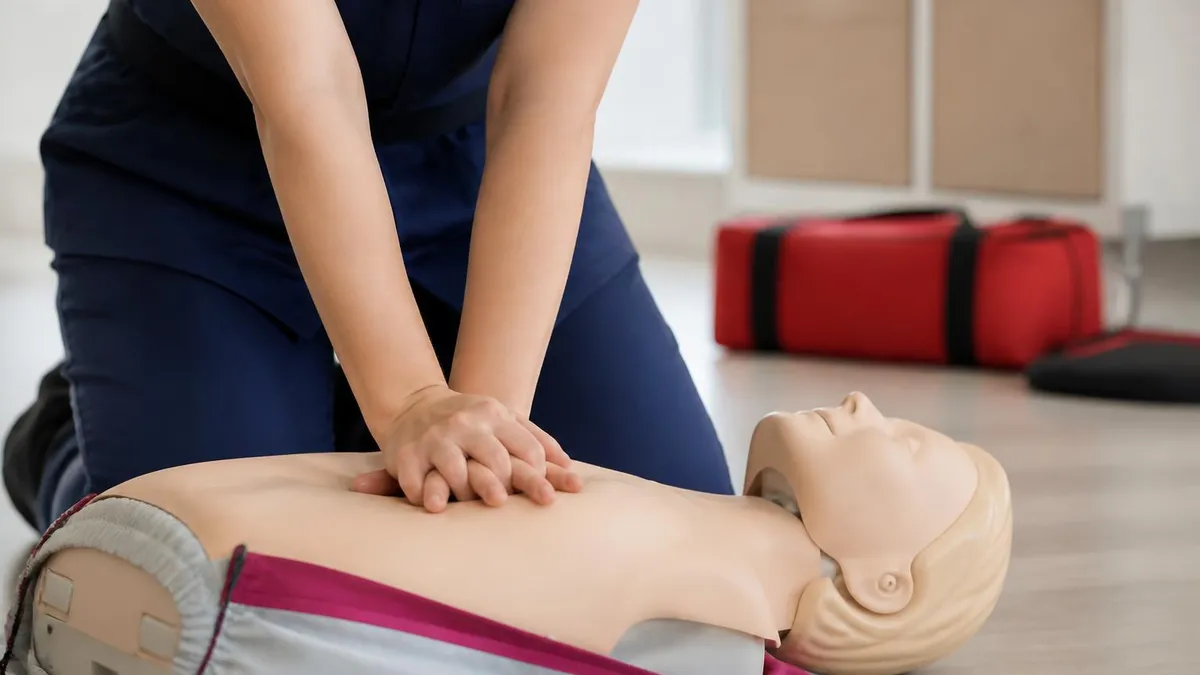
Practice compressions on something at home. A firm pillow on the floor, a couch cushion, or even a yoga block works. Set a metronome app to 110 beats per minute and do two-minute compression cycles. The goal is not perfect form (impossible without a manikin) but building cardiovascular endurance so the skills test does not exhaust you. A poorly conditioned candidate slows after 90 seconds and the feedback manikin catches it instantly. Even three sessions of practice compressions in the week before class makes a measurable difference.
On the day of class, arrive 15 minutes early, hydrated, fed, and with a copy of your existing BLS card. Bring a pen, a snack, and water — most sites do not provide them. If your class is blended, bring the certificate of completion from the HeartCode online portion (printed and emailed). Without it, instructors cannot let you start the skills check. Wear scrubs or athletic clothes; jeans restrict the kneeling and lunging movements the skills test requires.
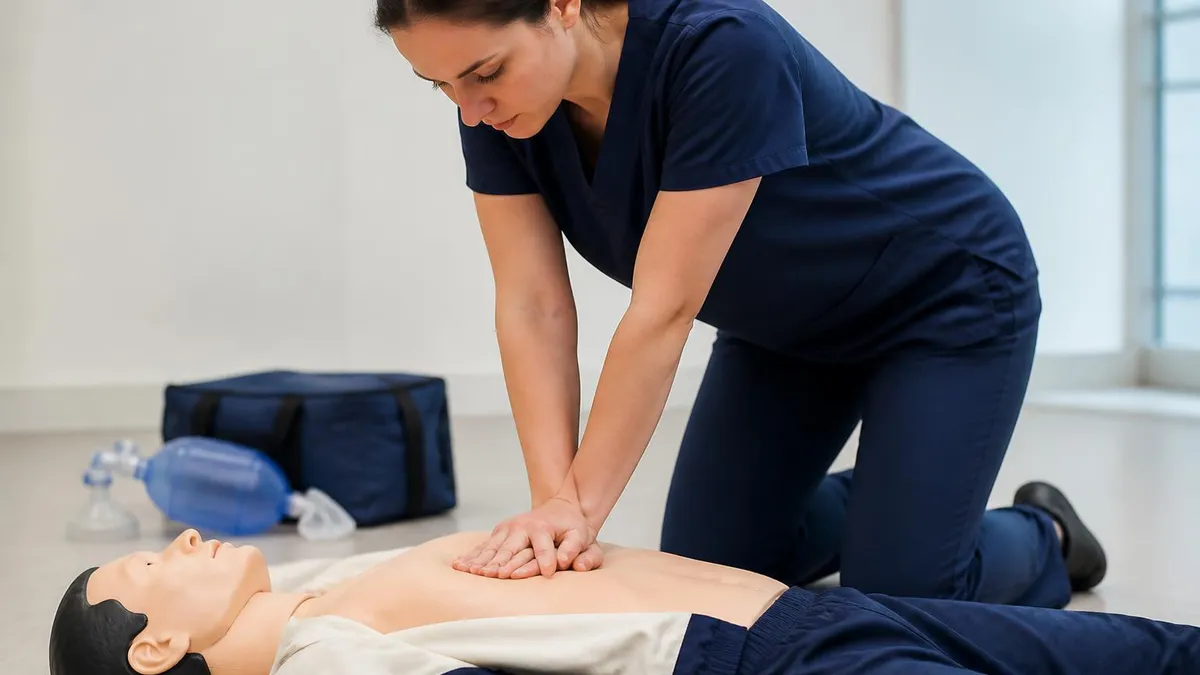
During the skills test itself, narrate your actions. Saying "scene is safe, checking responsiveness, no breathing, calling 911, getting AED" out loud reminds you of each critical action and gives the instructor clear evidence you completed it. Switch compressors every two minutes without prompting. If the manikin feedback shows shallow compressions, push harder immediately — you have time to correct mid-cycle. Most failures come from skipping a single critical action, not from poor technique overall.
Finally, do not panic if you have to remediate one station. About 16% of candidates remediate something — usually infant CPR or the team dynamics conversation — and almost all of them pass on the same-day retest. Instructors want you to succeed and will coach you through the gap. Stay calm, listen to the feedback, and try again. A renewed BLS card lasts two years and signals to every employer, patient, and family member you encounter that you are ready when seconds count.
Beyond the mechanics of booking and passing, there are practical workflow tips that separate clinicians who breeze through renewal every two years from those who scramble at the last minute. Start by treating BLS renewal as a recurring calendar event, not a one-time task. The moment you receive your new eCard, create three calendar reminders: 90 days before expiration (shop classes), 60 days before (book a seat), and 30 days before (final study push). This system has near-zero failure rate and removes the stress of late renewal.
If you work in a healthcare system with multiple credentialing requirements — BLS, ACLS, PALS, NRP — stagger them across the calendar rather than letting them stack. Many clinicians schedule BLS in their birth month and ACLS six months later. Stacked renewals mean a single bad week (illness, family emergency, scheduling glitch) can knock out multiple certifications simultaneously. Spreading them reduces risk and lets you focus on one body of content at a time.
Keep digital and physical copies of every card you have ever earned. Cloud storage (Google Drive, iCloud, Dropbox) ensures you can retrieve a card on demand for a new employer, a locum assignment, or a state license application. Some clinicians keep a single PDF binder with their current BLS, ACLS, PALS, state license, DEA registration, and immunization records. When a new job needs documentation in 24 hours, you are ready.
Pay attention to where your card is issued. The training center listed on your card may matter if you ever need an instructor to verify it or replace a lost copy. If you move out of state, you do not need to retake BLS — your card is valid nationwide until expiration — but your next renewal will need to happen at a training center in your new region. Keep your AHA Atlas or Red Cross account information current with a personal email rather than a work one you may lose access to after changing jobs.
Consider becoming a BLS instructor yourself. After two to three renewal cycles, many clinicians realize they enjoy teaching. Instructor courses cost $300-$500 and require a current BLS card, a one-day instructor essentials course, and a monitored teach. Instructors earn $25-$75 per student taught and renew their own card free. For a charge nurse or experienced paramedic, instructing brings in $5,000-$15,000 of side income per year while reinforcing your own skills.
One last pragmatic tip: photograph your eCard the moment you receive it and text it to yourself. Phone-accessible cards have saved countless clinicians from being sent home on their first day at a new job, locum gig, or travel assignment. Credentialing offices sometimes lose paperwork and a phone screenshot showing the QR code is usually accepted on the spot. Combined with the AHA Atlas app, you should never be more than 30 seconds away from proving your certification status to anyone who asks.
Renewing BLS is one of the most predictable rituals in healthcare. Done right, it takes a single Saturday morning every two years and quietly underpins your entire clinical career. Done poorly, it becomes a stressful scramble of expired cards, blocked shifts, and last-minute fees. The system rewards planners — and after reading this guide, you have everything you need to plan with confidence.
BLS Questions and Answers
About the Author

Registered Nurse & Healthcare Educator
Johns Hopkins University School of NursingDr. Sarah Mitchell is a board-certified registered nurse with over 15 years of clinical and academic experience. She completed her PhD in Nursing Science at Johns Hopkins University and has taught NCLEX preparation and clinical skills courses for nursing students across the United States. Her research focuses on evidence-based exam preparation strategies for healthcare certification candidates.
Join the Discussion
Connect with other students preparing for this exam. Share tips, ask questions, and get advice from people who have been there.
View discussion (8 replies)