
Bartending License Online: How to Get Certified in 2026 September
Earn your bartending license online in 2026 September. Learn requirements, costs, exam format, and state rules to get certified fast and start working behind the bar. 🏆

Earning a bartending license online has become the fastest, most affordable way to break into the hospitality industry without committing to weeks of in-person classroom training. In 2026, the majority of states accept an online alcohol-server certification as proof that you understand responsible beverage service, age verification, and intoxication management. This guide walks you through exactly what an online license is, who issues it, what the exam covers, and how to choose a program that employers will actually recognize when you apply for your first bar job.
First, an important clarification that trips up almost every new bartender: most U.S. states do not issue a single document literally called a bartending license. Instead, what people mean by the phrase is a Responsible Beverage Service (RBS) or alcohol-server certification, sometimes paired with a state-issued permit. States like California, Washington, and Utah mandate this training, while others leave it to individual counties or employers. Knowing which document your state requires is the single biggest factor in not wasting money on the wrong course.
Online certification programs typically run between two and four hours and end with a multiple-choice exam covering liquor liability, dram shop law, and safe-service protocols. The convenience is real: you can complete the entire course from your phone, pause and resume, and download a printable certificate the same day you pass. For aspiring bartenders juggling a current job, this flexibility is the deciding reason they choose the online route over a physical bartending school that charges ten times as much for the same legal outcome.
That said, an online certificate is not a substitute for hands-on mixology skill. It legally authorizes you to serve alcohol, but it will not teach you how to free-pour, build a Manhattan, or run a busy service well. Many candidates pair their certification with self-study, practice drinks at home, and the right bartending license online gear to rehearse technique before their first shift. Think of the license as your entry ticket and your actual craft as what keeps you employed.
Cost is another major draw. A reputable online alcohol-server course usually costs between $10 and $40, compared with $300 to $700 for a traditional bartending academy. Because the certification is the legally required piece in regulated states, spending hundreds on an unaccredited school for a diploma no employer asks for is one of the most common rookie mistakes. We will show you how to verify that a provider is approved by your state alcohol control board before you pay a single cent.
Throughout this guide you will also find free practice tests covering bar law, liquor regulations, and inventory cost control. These mirror the question style of real certification exams and help you walk in confident. Whether you are eighteen and applying for your first server job or a career-changer eyeing a side hustle, by the end of this article you will know precisely how to get your bartending license online, what it costs, and how to make sure it counts where you plan to work.
Bartending License Online by the Numbers

How Getting a Bartending License Online Works
Confirm the course is approved by your state alcohol control board. An unapproved certificate is legally worthless even if cheaper, so verification is step one before you enroll or pay any fees at all.
Work through modules on liquor liability, intoxication signs, ID checking, and dram shop law. Most platforms let you pause and resume across two to four hours of video and reading at your own pace.
Answer a multiple-choice test, usually 20 to 40 questions requiring 70 to 80 percent to pass. Unlimited or generous retakes are standard, so a first-attempt failure rarely costs extra money.
Upon passing, instantly download a printable PDF certificate with your name, date, and verification ID. Keep both digital and printed copies to show employers and, where required, register with the state.
State rules are where most confusion about a bartending license online begins, because there is no single federal standard. The United States delegates alcohol regulation to each state Alcoholic Beverage Control (ABC) agency, and those agencies make wildly different choices. Some require every server to be certified before their first shift, some require it within a grace period after hire, and some leave the decision entirely to counties, cities, or even individual employers. Your very first task is identifying which of these three buckets your state falls into.
California is the clearest example of a mandatory-state model. Under the RBS Training Act, every alcohol server and their manager must complete state-approved training and pass an exam through the ABC online portal within sixty days of hire. Washington, Oregon, Utah, and several others operate similar mandatory programs with their own approved provider lists. In these states, choosing a course not on the official list means your certificate will not register, and you cannot legally pour. Always cross-check the provider against the ABC website first.
Then there are local-control states like Texas and Florida. Texas does not require its TABC certification by state law, yet the overwhelming majority of employers demand it because completing it shields the business from certain liability under the Safe Harbor provision. Florida has no statewide mandate at all, but many counties and individual bars require proof of responsible-vendor training. In practice, getting certified anyway makes you far more hirable, so the optional label is genuinely misleading for serious job seekers.
Age is the other universal gate. Federal guidance sets twenty-one as the drinking age, but the minimum age to serve or bartend varies. Many states allow eighteen-year-olds to serve beer and wine in a restaurant, while bartending spirits behind a bar may require nineteen, twenty, or twenty-one depending on the venue type. An online course will not override your state minimum serving age, so confirm you meet it before enrolling. State-specific guides such as our Wisconsin operator's license breakdown show how granular these rules get.
Reciprocity is worth understanding if you plan to move or work across state lines. A few states honor certifications earned elsewhere, but most do not, and a California RBS certificate carries no weight in Texas. If you relocate, budget time and a small fee to recertify under your new state system. Likewise, certifications expire, typically every two to three years, after which you must retake the course. Treat the expiration date on your certificate as a recurring calendar reminder rather than a one-time formality.
Finally, remember that some jurisdictions distinguish between a server certification and a separate bartending or manager permit. A handful of cities require bartenders to register with the local police or health department and carry a physical permit card on shift. The online course satisfies the training requirement, but you may still owe a separate registration fee to the municipality. Reading your local ABC and city ordinance pages for thirty minutes before enrolling prevents the frustrating discovery that you completed the wrong document on your first day.
What the Bartending License Online Exam Covers
The largest section tests responsible beverage service: recognizing the visible signs of intoxication, understanding standard drink equivalents, and pacing service to prevent over-serving. You will face scenario questions asking what to do when a guest slurs speech, becomes aggressive, or attempts to buy drinks for someone clearly impaired. The correct answer almost always involves slowing or stopping service and offering food, water, or transportation home.
Expect questions on how alcohol affects the body over time, why blood alcohol concentration keeps rising after the last drink, and why coffee does not sober anyone up. These items reinforce that servers are gatekeepers, not bartenders racing to maximize every tab. Memorizing the physiological basics and the legal duty to cut off a guest will carry you through most of this portion of any state exam.
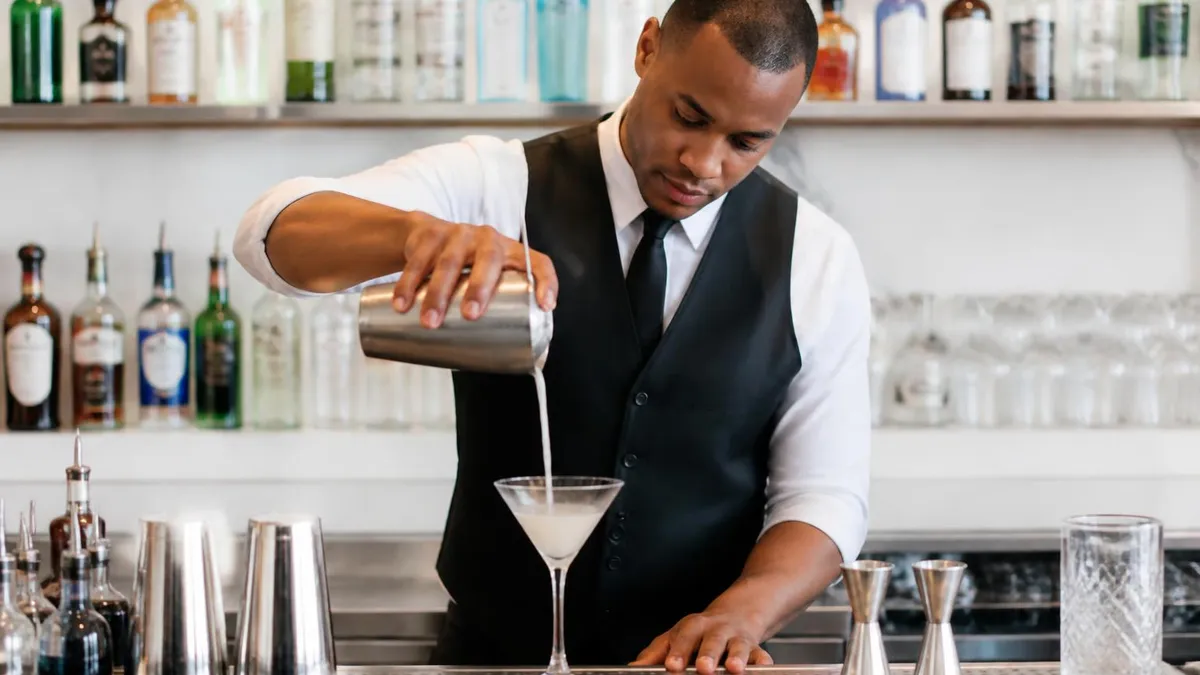
Online vs. In-Person Bartending Certification: Which Is Better?
- +Costs a fraction of in-person schools, often under $40
- +Self-paced; complete in a single afternoon from your phone
- +Same-day printable certificate accepted by most employers
- +Generous or unlimited exam retakes reduce test pressure
- +Approved providers register directly with state ABC portals
- +No commute, scheduling conflicts, or fixed class dates
- −Teaches legal compliance, not hands-on mixology skill
- −Some employers still prefer or require in-person hours
- −Unapproved online courses waste money and aren't valid
- −No live instructor to answer nuanced state questions
- −Certificate expires every two to three years
- −Won't substitute for a separate local permit if required
Bartending License Online Enrollment Checklist
- ✓Confirm your state requires RBS or alcohol-server certification.
- ✓Verify you meet your state's minimum serving age.
- ✓Find your state ABC agency's approved provider list.
- ✓Compare two or three approved courses on price and reviews.
- ✓Check that the certificate registers with the state portal.
- ✓Enroll and set aside two to four uninterrupted hours.
- ✓Take notes on intoxication signs and dram shop law.
- ✓Complete all modules before attempting the final exam.
- ✓Score at least 70 to 80 percent to pass the test.
- ✓Download and print your certificate plus the verification ID.
- ✓Register with your city or county if a local permit applies.
- ✓Calendar the expiration date to recertify on time.
Always check the state approved-provider list first
The single most expensive mistake new bartenders make is paying for an attractive-looking online course that their state ABC agency does not recognize. Spend ten minutes on your state's official alcohol-control website confirming the provider is listed before you enter your card. A $20 approved course beats a $200 unapproved one every time.
Once your certificate is in hand, the next challenge is turning it into an actual paycheck. A bartending license online proves you understand responsible service, but hiring managers know it does not prove you can work a Friday-night rush. Your job application strategy should lead with the certification to clear the legal hurdle, then quickly pivot to demonstrating practical skill and reliability. Position the certificate as the baseline that lets the manager hire you without legal worry, and frame everything else as the reason to choose you specifically.
Start by listing the certification prominently on your resume near the top, including the issuing provider, the date earned, and the verification ID. Hiring managers in regulated states scan for this immediately because it removes a compliance burden from their side. Pair it with any food-handler card you hold, since many venues serve food and value a candidate who satisfies both requirements at once. A single line like State-Approved RBS Certified, valid through 2028 signals that you did your homework before applying.
Skills matter just as much as the paper. Even entry-level bar-back and server roles benefit from knowing the classic cocktail spec sheet, standard pours, and basic glassware. Spend your pre-interview weeks rehearsing common drinks and the rhythm of building a round efficiently. Resources on bartending license online tools help you practice at home with the same shakers, jiggers, and strainers you will use on the job, so your hands already know the motions before your trial shift begins.
Networking outperforms cold applications in hospitality. Visit bars during slow afternoon hours, ask to speak with a manager, and hand over a printed resume with your certificate attached. Showing up in person demonstrates the exact confidence and people skills the role demands. Many bartenders land their first gig not through job boards but by being the friendly, certified candidate who walked in prepared while the manager happened to be short-staffed for the upcoming weekend.
Be ready for the trial shift, sometimes called a stage. Managers frequently invite promising candidates to work a few hours so they can watch you move, communicate, and handle pressure. Arrive early, wear clean nonslip shoes, ask where things live, and stay calm when tickets pile up. Your certification got you in the door, but how you carry yourself during those first three hours decides whether you are offered a regular schedule or politely thanked and sent home.
Finally, think beyond a single bar. A recognized certification opens doors to catering companies, hotels, stadiums, festivals, and private events that all need legally compliant servers. Some bartenders parlay their license into a flexible portfolio of gig work that pays well during peak event seasons. Keeping your certificate current and your skills sharp turns one credential into a durable, location-flexible income stream rather than a one-time hurdle you clear once and then promptly forget about.
Most state alcohol-server certifications expire every two to three years. Serving alcohol on an expired certificate can expose you and your employer to fines and liability. Set a calendar reminder ninety days before your expiration date so you can recertify online without any gap in your eligibility to work.
Avoiding the common pitfalls of getting a bartending license online saves money, time, and the embarrassment of showing up unqualified on day one. The mistakes below trip up thousands of new bartenders every year, and nearly all of them are preventable with a little upfront research. Treat this section as a pre-flight checklist that protects your investment and ensures the credential you earn is the one your employer and your state actually accept when you start applying for real shifts.
The biggest error, already mentioned but worth repeating, is buying an unapproved course. Slick marketing and low prices lure beginners into programs that issue impressive-looking certificates with no legal standing. In a mandatory state, an unapproved certificate will not register with the ABC portal, and your employer cannot put you on the schedule. Verify the provider against the official state list every single time, even if a friend recommended the course, because approval lists change and your state may differ from theirs entirely.
A second mistake is confusing a bartending school diploma with a legal certification. Expensive academies sell multi-week mixology programs and hand out diplomas, but no employer is legally required to recognize them. These programs can teach genuine skill, which has value, but if your goal is simply to be allowed to serve, the inexpensive RBS certification is the document the law requires. Do not pay hundreds for a diploma when a $25 certificate is what actually gets you hired behind the bar.
Third, many candidates ignore local permit requirements. Some cities and counties layer their own registration on top of the state training, requiring bartenders to file paperwork or carry a permit card. Completing the online course satisfies the training portion, but skipping the local registration can still get you cited. A quick search for your city plus the words bartender permit, or a call to the local clerk, reveals whether an extra step applies before your first shift.
Fourth, do not underestimate the exam. Although pass rates are high and retakes are usually free, walking in unprepared wastes time and dents your confidence. The scenario questions about cutting off intoxicated guests and spotting fake IDs require judgment, not just memorization. Working through free practice tests on bar law and liquor regulations beforehand means you recognize the question patterns and answer quickly, finishing the exam with margin to spare rather than second-guessing every item.
Fifth, never let your certificate lapse or assume it transfers across states. Bartenders who move and keep serving on an out-of-state certificate are often unknowingly noncompliant. Each relocation means checking the new state rules and recertifying if required. Building the habit of treating your certification like a driver's license, something with an expiration date and clear jurisdiction limits, keeps you legally protected and continuously employable no matter where your hospitality career takes you next.
With the strategy and pitfalls covered, here are the practical preparation tips that separate confident, certified bartenders from those who scrape by. These habits cost nothing extra and dramatically improve both your exam performance and your readiness for that first nerve-racking shift behind the bar. Treat your certification as the starting line of skill-building rather than the finish, and you will outpace peers who stopped learning the moment they downloaded their PDF certificate and called it done.
Begin by taking multiple free practice tests before the real exam. The questions on responsible service, dram shop law, and ID verification follow predictable patterns, and exposure to those patterns is the fastest way to internalize the correct judgment calls. Aim to score consistently above ninety percent on practice sets, not just the seventy required to pass. That cushion ensures a stray tricky question on exam day does not derail you, and the repetition cements the legal reasoning you will actually use on the floor.
While studying the law, simultaneously build real skill at home. Buy or borrow a basic kit and practice the foundational pours, the shake-versus-stir distinction, and a short list of cocktails every bar expects: Margarita, Old Fashioned, Martini, Mojito, and a few highballs. Our guide to shot bartending techniques covers the speed and showmanship that impress managers during a trial shift far more than any certificate alone ever could.
Master the standard drink and free-pour count early. Counting one-one-thousand, two-one-thousand to measure a one-and-a-half-ounce pour is a skill you can rehearse with water and a jigger until it is automatic. Accurate pours connect directly to the cost-control topics on certification exams, because over-pouring destroys a bar's margins. Practicing pour discipline at home prepares you for both the test questions and the real expectation that you will protect the house's bottom line on every drink you make.
Develop your guest-reading instincts deliberately. The exam tests whether you can spot intoxication and refuse service gracefully, and so will every real shift. Practice the language of a polite refusal out loud: offering water, suggesting food, or arranging a ride without escalating. Bartenders who can defuse a tense cut-off without a scene are invaluable, and rehearsing these phrases now means you will not freeze the first time a regular has clearly had too much to drink.
Finally, keep a small reference of your state's specific rules saved on your phone. Hours of sale, acceptable IDs, and the minimum serving age vary, and a quick glance settles any on-shift doubt. Combine that reference with a current certificate, sharp pour technique, and rehearsed people skills, and you walk into your first bar job as a genuinely prepared professional rather than someone simply holding a license. That preparation is what turns a certificate into a lasting, rewarding hospitality career you can be proud of.
Bartender Bartender Questions and Answers
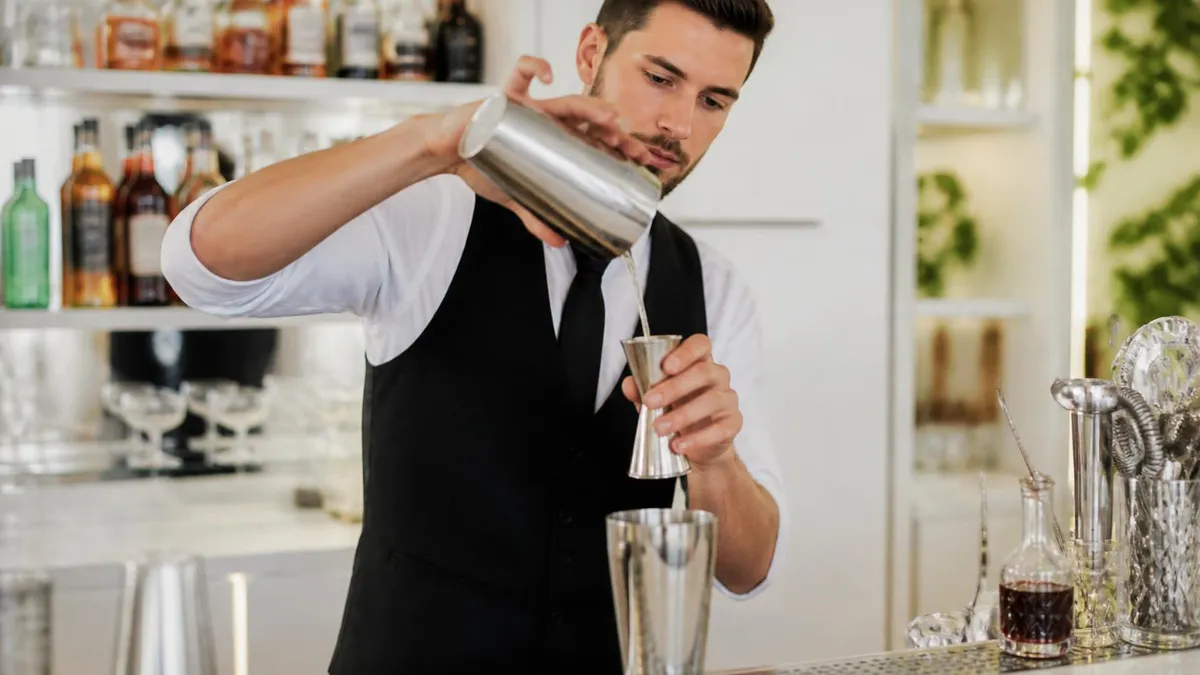
Bartending Kit: The Complete Tool Guide for Certification Prep
Wisconsin Bartending License: Operator's License Guide 2026

Shot Bartending Techniques: The Complete Guide to Speed, Style, and Service Behind the Bar

Bartending License Florida: Complete Certification & Permit Guide for 2026

Mobile Bartending: How to Start, License, and Grow Your Business
About the Author

Executive Chef & Culinary Arts Certification Educator
Culinary Institute of AmericaChef Marco Bellini is a Certified Executive Chef and graduate of the Culinary Institute of America with over 20 years of professional kitchen experience in Michelin-recognized restaurants. He teaches culinary arts certification, food safety, and hospitality exam preparation, having guided thousands of culinary students through their ServSafe, ProStart, and professional chef certifications.
Join the Discussion
Connect with other students preparing for this exam. Share tips, ask questions, and get advice from people who have been there.
View discussion (7 replies)