
Notary Public State Rules: What Every Notary Must Know in 2026 October
What is a notary public? Learn Texas rules, stamp requirements, how to become certified & find free notary services near you. ✅ Full 2026 October guide.

Understanding what is a notary public is essential for anyone dealing with legal documents, property transactions, or official government paperwork in the United States. A notary public is a state-commissioned official authorized to witness the signing of important documents, administer oaths, and verify the identity of signers to help prevent fraud. If you are studying notary public texas rules specifically, you will find that Texas follows a structured set of requirements that govern everything from application eligibility to the proper use of your official notary public stamp.
Each state in the U.S. maintains its own rules about who can become a notary, how long a commission lasts, and what acts a notary may legally perform. Texas, for example, grants commissions for four-year terms, requires a $10,000 surety bond, and mandates that notaries use an official seal on most notarial acts. Understanding these state-specific rules is not just academic knowledge — it is the foundation of every legitimate notarial act you will ever perform, and it is heavily tested on the notary public exam.
Many people confuse the American notary public with the notario publico found in Latin American legal systems. In Mexico and most Spanish-speaking countries, a notario publico is a highly trained attorney with broad legal authority to draft contracts and certify transactions. In the United States, a notary public is a ministerial officer — meaning they follow prescribed procedures but do not give legal advice. This distinction is critical, especially in communities where Spanish-speaking clients may expect more services than a U.S. notary is legally permitted to provide.
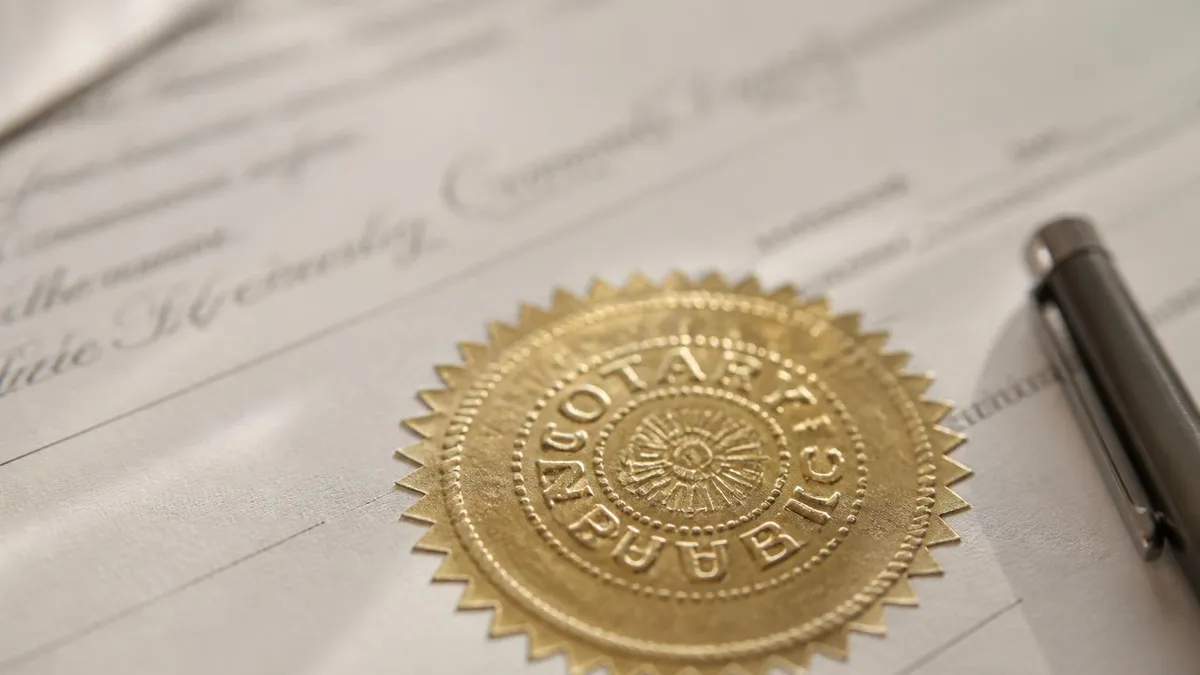
The notary public seal and notary public stamp are two terms that are sometimes used interchangeably, but they can refer to slightly different tools depending on the state. The seal is the official impression that validates a notarial certificate, while the stamp is the inked device most commonly used to create that impression. Texas law requires that the seal include the notary's name, the words "Notary Public, State of Texas," the notary's commission expiration date, and their commission number. Using an improper or expired seal can invalidate an entire document.
Free notary services are more widely available than most people realize. Banks such as Bank of America and Chase commonly provide notary services to account holders at no charge. Many public libraries also offer free or low-cost notarization.
If you have searched for "free public notary near me" or "free notary public near me," you likely found a mix of bank branches, credit unions, libraries, and UPS Store locations. Knowing where to direct clients who need affordable services is part of being a well-rounded, professional notary. You can also explore options for a chase bank notary public at your local branch.
Becoming a notary public is a realistic career goal for a wide range of professionals, including administrative assistants, real estate agents, loan officers, and small business owners. The process varies by state but generally involves submitting an application, paying a fee, purchasing a surety bond, and in some states passing an examination. Once commissioned, many notaries build a side income by charging per-signature fees, traveling to clients as mobile notaries, or specializing in high-demand niches like loan signings. The barriers to entry are relatively low compared to most licensed professions.
This comprehensive guide covers notary public state rules from eligibility and application through stamp requirements, exam preparation, and where to find free notary services. Whether you are preparing for your state's notary exam, considering a career change, or simply trying to understand what a notary can and cannot do, the sections below will walk you through everything you need to know in plain, practical language backed by current 2026 state regulations.
Notary Public by the Numbers
How to Become a Notary Public: Step-by-Step Process
Meet Basic Eligibility Requirements
Complete Required Training or Education
Pass the Notary Public Exam (If Required)
Purchase Your Surety Bond and Submit Application
Order Your Official Notary Stamp and Supplies
Begin Notarizing and Maintain Your Commission
The notary public stamp and notary public seal are among the most legally significant tools in a notary's kit. Every state specifies precisely what information must appear on the seal, and failing to comply can render a document legally defective. In Texas, the seal must display the notary's full legal name exactly as it appears on their commission, the phrase "Notary Public, State of Texas," the commission expiration date, and the commission number assigned by the Secretary of State. Seals that omit any of these elements are not valid under Texas law.
Most modern notaries use an inked rubber stamp rather than an embossed metal seal, though both remain legally acceptable in Texas. The inked stamp produces a cleaner impression on photocopies and scanned documents, which is especially important in today's digital-heavy environment where documents are often transmitted electronically after in-person notarization. Many lenders and title companies now require that the stamp impression be dark, clear, and fully legible — faded or smudged impressions can cause a document to be rejected entirely, forcing a costly re-signing appointment.
When a notary's commission expires or is revoked, they are legally required to destroy or surrender their official seal in most states. Continuing to use an expired seal is considered official misconduct and can result in civil liability, criminal charges, or permanent disqualification from ever holding a notary commission again. Texas notaries who are renewing their commission should obtain a new stamp reflecting their new commission expiration date before performing any notarial acts under the renewed commission, even if the old stamp looks similar.
Journal requirements vary significantly by state. California notaries must maintain a bound sequential journal of all notarial acts and are required to record the signer's thumbprint for certain real property documents. Texas does not legally mandate a journal, but the Texas Secretary of State strongly recommends keeping one as a best practice and liability shield. If a notarized document is ever challenged in court, a well-maintained journal is often the notary's best defense against allegations of improper conduct or fraud.
Electronic notarization and remote online notarization (RON) have introduced a new set of stamp and seal considerations. In RON transactions, the notary applies a digital certificate and an electronic seal to the document rather than a physical stamp. Texas was one of the first states to authorize RON, and the rules governing electronic seals are spelled out in the Texas Government Code.
The electronic seal must contain the same information as a physical seal and must be attached in a tamper-evident manner using an approved technology platform. Exploring notary public jobs in the remote notarization space is one of the fastest-growing opportunities in the field today.
Proper care of your physical notary stamp is also part of professional responsibility. Stamps should be stored in a secure location where unauthorized individuals cannot access them. If a stamp is lost or stolen, the notary must notify the Secretary of State immediately in most states and may be required to file a police report. A stolen notary stamp can be used to commit document fraud, and a notary who fails to report a lost stamp may be held partially liable for fraudulent documents created with it. Always treat your stamp as a professional tool with significant legal weight.
Finally, notaries should be aware of embosser seal requirements for certain document types. While most routine notarizations use only the inked stamp, some legal documents — particularly those going to foreign countries — may require an Apostille, which often demands both the notary's inked stamp and an embossed seal from the certifying authority. Understanding which documents require which type of impression, and knowing how to assist clients in obtaining an Apostille through the Secretary of State, is a mark of a highly professional and knowledgeable notary.
Notary Public State Rules: Texas, California & New York Compared
Texas notary commissions last four years and are issued through the Secretary of State's office. Applicants must be 18 or older, a legal Texas resident, and must purchase a $10,000 surety bond. The application fee is $21, and applicants must complete a background check. Texas does not require pre-commission training or a written exam, but it does require that all notarial acts use an official inked seal that includes the notary's name, commission number, and expiration date.
Texas notaries may perform acknowledgments, jurats, oaths, affirmations, and certified copies of non-vital records. Remote online notarization has been permitted in Texas since January 2018, making it a leader among states in digital notarization technology. Notary fees in Texas are capped at $6 per notarial act for in-person services. Notaries who violate their duties can face commission revocation, civil lawsuits, and in cases of knowing fraud, criminal prosecution under state law.
Pros and Cons of Becoming a Notary Public
- +Low cost to get started — most states require less than $150 in total fees and supplies
- +Flexible schedule — mobile notaries set their own hours and choose their clients
- +Strong demand for loan signing agents in the real estate and mortgage industry
- +Valuable credential that enhances resumes for legal, financial, and administrative roles
- +Remote online notarization opens nationwide client opportunities from a home office
- +Renewable commission means you can build a long-term, ongoing side or primary income
- −Income varies widely — general notaries often earn far less than loan signing specialists
- −State rules differ dramatically, requiring careful research if you move or work across state lines
- −Liability exposure if you make errors, notarize a document improperly, or fail to verify identity
- −Stamp and journal requirements create ongoing administrative responsibilities and recordkeeping burdens
- −Some states impose fee caps so low that notarization alone is rarely profitable without volume
- −Complaints or misconduct findings can result in permanent commission revocation and legal liability
Notary Public Exam Prep Checklist: Everything You Need Before Test Day
- ✓Study your state's notary statutes in full — especially the sections governing acknowledgments, jurats, and oaths
- ✓Memorize the required elements of a valid notary seal, including name, commission number, and expiration date
- ✓Practice identifying acceptable forms of signer identification under your state's laws
- ✓Review the difference between an acknowledgment and a jurat — this distinction appears on nearly every exam
- ✓Learn which notarial acts require the signer to be physically present versus those authorized remotely
- ✓Study journal entry requirements, including what must be recorded for each notarial act in your state
- ✓Understand prohibited acts — notarizing documents in which you have a financial interest is illegal in all states
- ✓Review your state's fee schedule so you can answer questions about maximum allowable charges accurately
- ✓Take at least three full-length practice exams under timed conditions before scheduling your actual test
- ✓Review the handling procedures for a lost, stolen, or damaged notary stamp and the required notification steps
The Acknowledgment vs. Jurat Distinction Is Tested on Every Exam
In an acknowledgment, the signer confirms they signed the document willingly — but they do not have to sign in front of the notary. In a jurat, the signer must both sign the document AND swear or affirm to its truthfulness in the notary's presence. Confusing these two acts is the single most common reason candidates fail notary exams nationwide, so mastering this distinction is non-negotiable.
Notary public jobs span a remarkably wide range of industries and settings, making this credential one of the most versatile in the professional world. At its most basic level, a staff notary working in a bank, law firm, or corporate office provides notarial services to clients or colleagues as part of their regular job duties. Many employers specifically advertise for candidates who hold a notary commission, and the credential can meaningfully increase your starting salary or hourly rate in administrative and legal support roles across the country.
Loan signing agents represent the most lucrative niche within the notary field. A loan signing agent is a specially trained notary who oversees the signing of mortgage loan documents at closings. Each signing appointment typically takes 60 to 90 minutes and pays between $75 and $200 depending on the complexity of the transaction and the local market.
Experienced loan signing agents who work with multiple title companies and signing services can earn $60,000 to $100,000 or more annually, particularly in high-cost-of-living markets like California, New York, and Texas. The key is building a reliable network of title company and escrow contacts who send repeat business.
Mobile notaries offer another flexible career model. Rather than waiting for clients to come to them, mobile notaries travel to hospitals, homes, office buildings, and correctional facilities to notarize documents wherever the client is located. Travel fees are typically charged in addition to per-signature fees, and mobile notaries in busy urban markets can complete four to eight appointments per day. This model works especially well for notaries who want to control their schedule, work independently, and serve clients who cannot travel due to age, disability, or incarceration.
Remote online notarization (RON) has opened a genuinely national marketplace for commissioned notaries. A Texas-commissioned notary authorized for RON, for example, can legally notarize documents for signers located anywhere in the world, as long as the notarization is governed by Texas law. RON platforms like Notarize, DocVerify, and Pavaso connect notaries with signers via audio-video technology and handle the electronic record-keeping requirements automatically.
The per-transaction fees on RON platforms are often lower than in-person rates, but volume can be much higher since there is no travel time between appointments. Exploring how to become a notary public in california via the remote notarization route is a growing pathway for tech-forward notaries.
Bilingual notaries who speak Spanish are in exceptionally high demand in states with large Spanish-speaking populations, including Texas, California, Florida, and Arizona. However, notaries must be extremely careful about the distinction between the U.S. notary public and the notario publico concept familiar to many Latin American immigrants. Federal law prohibits non-attorney notaries from calling themselves notarios or implying they can provide immigration legal advice. Advertising yourself as a notario publico if you are not a licensed attorney is illegal in many states and can result in criminal charges for unauthorized practice of law.
The notary public exam is a gateway credential for many of these career paths. Passing the exam demonstrates that you understand your state's laws, can apply them correctly under real-world conditions, and are prepared to accept the legal responsibilities that come with the commission. Many aspiring loan signing agents complete the Loan Signing System or National Notary Association training programs in addition to state exam prep, which gives them both the legal knowledge and the practical skills needed to handle complex mortgage documents confidently from day one.
For professionals considering the notary field as a primary career rather than a side gig, the combination of a notary commission, loan signing agent certification, and a strong local network can produce a genuinely sustainable income. The startup costs are typically under $500, including the surety bond, stamp, journal, and any required training courses. Most notaries recoup those costs within the first month of active business, making this one of the most accessible professional credentials available to working adults in any state.

In many states, non-attorney notaries who advertise using the Spanish term "notario publico" or imply they can provide immigration assistance face criminal charges for unauthorized practice of law. Texas, California, and Florida all have specific statutes prohibiting this practice. Always clarify your role clearly, display required disclaimers in Spanish, and refer clients to a licensed immigration attorney for any legal advice beyond witnessing signatures.
Finding free notary public services near you is easier than most people expect, and knowing where to look can save clients significant time and money. Banks are the most commonly known source of free notary services. Bank of America, Wells Fargo, Chase, and most regional banks and credit unions provide free notarizations to account holders during normal banking hours.
You do not need to be a premium account holder — most banks offer this as a standard customer service benefit. Call ahead to confirm that a commissioned notary will be available at your specific branch before making the trip, as not every branch maintains a notary on staff at all times.
Public libraries are an increasingly popular destination for free notary services, particularly in urban and suburban areas. Many library systems have commissioned staff members or host periodic notary clinics in partnership with local bar associations or legal aid organizations.
The availability varies significantly by library system, so check your local library's website or call the reference desk to ask about their notary schedule. Some libraries offer walk-in notary hours on specific days of the week, while others require appointments booked through their online reservation system. For a comprehensive directory, see resources listed under public notary near me free options by state.
UPS Store locations offer notary services at most of their franchised locations, typically charging a modest per-signature fee rather than providing free service. However, the UPS Store's extended hours — including evenings and weekends — make it a convenient option when bank branches are closed. AAA offices also frequently provide free notary services to AAA members, a benefit that many long-time members overlook entirely. If you are a AAA member, call your local office to confirm notary availability before scheduling time-sensitive document signings.
Employers often have a commissioned notary on staff, particularly in industries such as banking, insurance, law, healthcare, and real estate. If you need a document notarized, asking your HR department or office manager whether a company notary is available can save you an outside trip entirely. Many employees are unaware of this benefit and pay out-of-pocket for notary services when a free option is sitting in the next cubicle. Some larger organizations specifically commission multiple employees as notaries to ensure coverage across departments and shift schedules.
Online notary directories maintained by the National Notary Association (NNA) and 123notary.com allow users to search for commissioned notaries by zip code, specialty, and availability. These directories are particularly useful for finding mobile notaries who will travel to a home or hospital, or for locating RON-authorized notaries who can complete the entire process via video call without requiring in-person attendance. Most directory listings include the notary's fee schedule, languages spoken, and areas of specialty such as loan signings or estate documents.
For documents that must be used internationally, standard notarization is typically only the first step. Most foreign countries require an Apostille — a certification issued by the Secretary of State that authenticates the notary's commission and signature for international use. The Apostille process adds time and cost to the document preparation timeline, so clients should plan several weeks in advance when dealing with international legal matters. The notary's role is to correctly perform the underlying notarial act; the Apostille is then obtained separately from the state office.
Emergency notary situations — such as a hospitalized patient needing to sign a power of attorney — require a notary who understands the legal capacity requirements that apply to ill or incapacitated signers. A signer must have sufficient mental capacity at the moment of notarization to understand what they are signing. Notaries who are uncomfortable assessing capacity in a medical setting should decline the assignment and refer the client to a notary with healthcare experience, or recommend that an attorney be involved to protect all parties from a future legal challenge to the document's validity.
Preparing effectively for the notary public exam requires more than reading your state's statutes once. The most successful candidates treat exam preparation as a structured study project, dedicating consistent time each week to reviewing laws, practicing questions, and testing their understanding with scenario-based problems. Research consistently shows that candidates who take at least five practice exams before test day score significantly higher than those who rely on reading alone, because the exam tests application of rules — not just memorization of statutes.
Start your preparation by downloading the official notary handbook or candidate guide published by your state's Secretary of State or Department of State office. These guides outline exactly what topics will be covered on the exam and often include sample questions. For Texas, the Secretary of State publishes a comprehensive notary public information guide that covers every aspect of the law from appointment and qualification through prohibited acts and penalties. Reading this document from cover to cover — not just skimming — is the single most important thing a candidate can do in the early stages of preparation.
Focus particular attention on the acts that notaries are most commonly tested on: acknowledgments, jurats, oaths, affirmations, and copy certifications. Know not only what each act is, but also when each is legally required, who can request one, and what the notary must verify before completing the act. For example, a jurat requires the signer to take an oath or affirmation in person before the notary, while an acknowledgment only requires that the signer appear before the notary and confirm their signature. Mixing these up on an exam — or in practice — can have serious legal consequences.
Identity verification is another heavily tested topic. Notaries must know which forms of identification are acceptable under state law, how to spot altered or fraudulent IDs, and what to do when a signer cannot produce satisfactory identification. Most states accept a current state-issued driver's license, a U.S. passport, or a military ID as primary identification. Some states also allow credible identifying witnesses — individuals personally known to the notary or who can vouch for the signer's identity under oath — as an alternative when traditional ID is unavailable.
Practice exam questions are your most powerful study tool. Quality practice questions expose you to the specific phrasing and scenario types that appear on real exams, help you identify gaps in your knowledge, and build the timed test-taking confidence you need on exam day. The free practice quizzes available at PracticeTestGeeks.com cover every major topic area of the notary public exam, from basic duties and stamp requirements through ethics, fraud prevention, and credential verification. Working through these quizzes multiple times — until you can answer each question correctly without hesitation — is the clearest path to a passing score.
Time management during the exam is also a skill that requires practice. Most state notary exams allot approximately 90 minutes for 30 to 50 questions, which seems generous until candidates encounter multi-part scenario questions that require careful reading and analysis. Practice taking full-length timed exams at least two weeks before your test date, so you can identify which topic areas are slowing you down and give yourself time to address those weaknesses before the real exam. Do not spend more than two minutes on any single question — flag it, move on, and return at the end if time permits.
After passing your exam and receiving your commission, the learning does not stop. Notary laws evolve regularly, and keeping your knowledge current is both a professional obligation and a liability management strategy. Subscribe to updates from your state's Secretary of State, join the National Notary Association for ongoing education resources, and consider renewing your knowledge with a refresher course each time your commission comes up for renewal.
The most respected and financially successful notaries in any market are those who treat their commission not as a one-time credential but as a living professional practice that they continuously invest in and refine.
Notary Public Questions and Answers

Public Library Notary: Where to Find Free Notary Services Near You

Notary Public Training: Complete 2026 Guide to Requirements, Certification & Exam Prep

Remote Notary Public: The Complete Guide to Online Notarization in 2026

How to Become a Notary Public: Complete State-by-State Training Guide

NC Notary Public Course: Complete Training Guide for North Carolina
About the Author

Notary Public Law Expert & State Notary Exam Specialist
Georgetown University Law CenterAttorney Sarah Williams is a licensed attorney and National Notary Association (NNA) certified notary with a Juris Doctor from Georgetown University Law Center. She has 13 years of experience in notarial law, document authentication, and real estate closings. Sarah coaches candidates through state notary public examinations, notary signing agent certification, and loan signing agent training programs.