
Bartender Responsibilities: The Complete Guide to What Bartenders Do Every Shift
Learn every bartender responsibility — 📚 from drink prep to compliance. Master what employers expect and ace your certification exam.
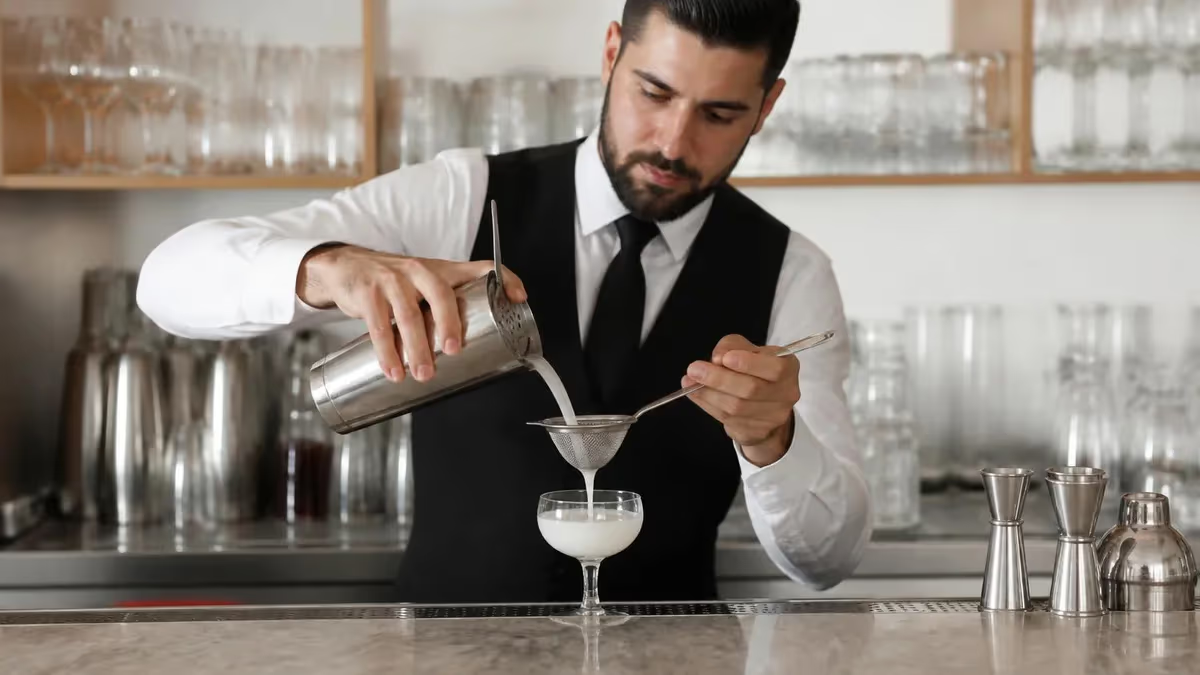
Understanding bartender responsibilities is the foundation of any successful career behind the bar. Whether you are preparing for your first shift, studying for a bartender certification exam, or simply trying to understand what separates an average bartender from an exceptional one, knowing the full scope of the job matters enormously. Bartending is far more than pouring drinks — it encompasses customer service, legal compliance, inventory management, safety protocols, and financial accountability all at once.
The modern bartender operates as the front-line representative of the establishment. Every guest who walks up to the bar forms their impression of the entire venue based largely on their interaction with the bartender. This means that communication skills, professionalism, and speed must all operate at a high level simultaneously. A slow bar leads to frustrated guests, lost sales, and poor tips. A fast but unfriendly bar drives customers away just as quickly.
From a legal standpoint, bartenders carry significant personal and professional liability. In most U.S. states, bartenders can be held responsible under dram shop laws if they serve alcohol to a visibly intoxicated person who later causes harm. This means every bartender must understand the legal framework governing alcohol service in their state, including blood alcohol content thresholds, cut-off procedures, and how to document refusals of service to protect both themselves and their employer.
Inventory control is another core responsibility that many new bartenders underestimate. Bars operate on thin profit margins, and even small discrepancies in pour sizes or stockroom counts can translate into thousands of dollars of lost revenue over a year. Bartenders are expected to measure accurately, monitor their well and back bar stock, flag low inventory to management, and avoid waste. Understanding cost-per-drink calculations helps bartenders appreciate why these habits matter so much to the business.
Beyond the technical skills, bartenders must manage a dynamic and often unpredictable social environment. Handling a rowdy group at one end of the bar while providing attentive service to a first-date couple at the other requires genuine multitasking ability and emotional intelligence. Recognizing when a guest has had too much, de-escalating tense situations, and knowing when to involve management or security are all skills that define professional bartenders.
Cleanliness and sanitation round out the core competency set. Health departments inspect bars regularly, and a single failed inspection can result in fines, temporary closure, or loss of liquor license. Bartenders are responsible for maintaining clean glassware, sanitized surfaces, proper ice handling, and organized cooler storage throughout their shift — not just at the end of the night. Consistent sanitation habits protect guests and protect the bar's operating license.
This guide breaks down every major responsibility a bartender carries, explains why each one matters for certification exams, and provides actionable advice for mastering each area. Whether you are brand new to the industry or preparing to move into a senior or lead bartender role, the sections below will give you a clear, comprehensive picture of what professional bartending really involves.
Bartending by the Numbers
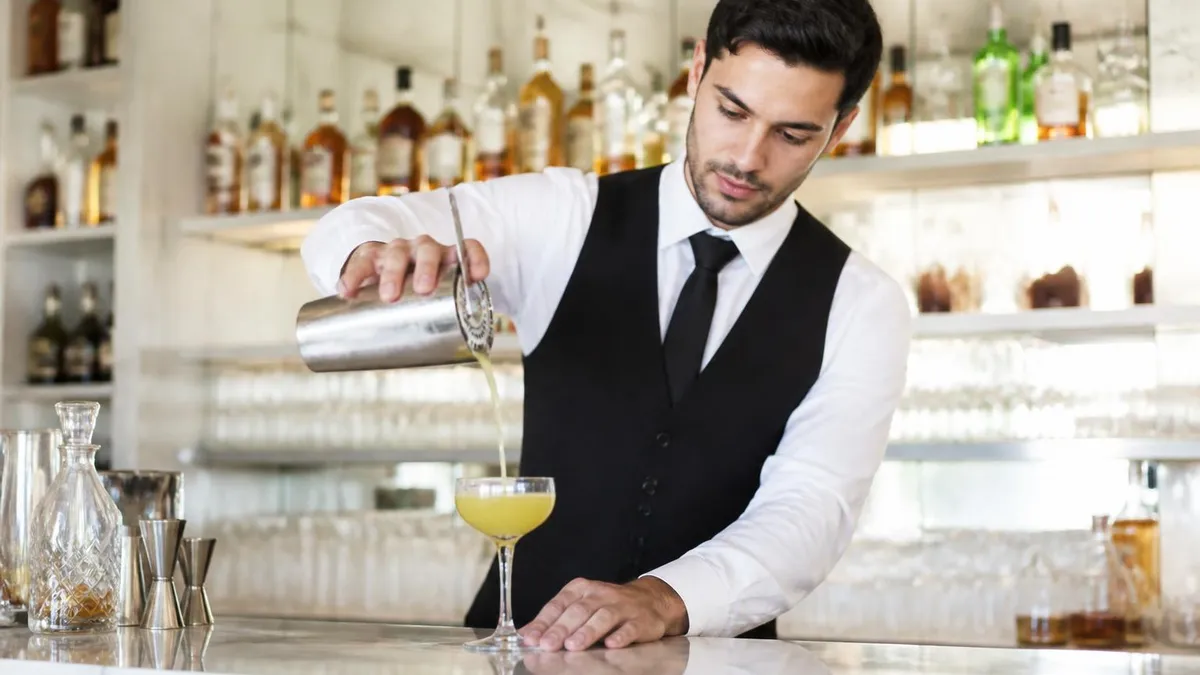
Core Daily Duties of a Professional Bartender
Arriving before service begins to stock the well, cut garnishes, fill ice bins, check CO2 levels on draft lines, verify POS functionality, and ensure all glassware is clean, polished, and properly staged for the shift ahead.
Crafting cocktails, pouring wine and beer, and building non-alcoholic drinks to exact recipe specifications while maintaining consistent pour sizes, presentation standards, and speed of service appropriate to the venue's style.
Greeting guests promptly, reading their preferences, making recommendations, managing wait times with communication, and creating a positive atmosphere that encourages repeat visits and higher average check totals.
Processing payments accurately, making correct change, running credit cards, applying discounts or comps per policy, and balancing the drawer at the end of each shift with zero or minimal variance.
Draining and cleaning blenders and shakers, wiping down all surfaces, labeling and dating opened bottles, restocking for the next shift, completing waste logs, and securing the liquor storage area per venue protocol.
Drink preparation is the most visible of all bartender responsibilities, and mastering it requires understanding far more than just memorizing recipes. Professional bartenders distinguish themselves through consistency — the ability to produce the same cocktail to the same standard whether it is the first drink of the night or the fiftieth. This means measuring carefully even when experienced enough to eyeball, tasting periodically, and adjusting for seasonal variations in ingredient quality such as citrus that runs more tart in winter.
The four primary mixing methods — stir, shake, build, and blend — each serve a distinct purpose and produce different textures and temperatures. A Martini is stirred because shaking would over-dilute the spirit and create unwanted aeration. A Daiquiri is shaken because the citrus and sugar require vigorous chilling and emulsification. A Mojito is built in the glass to preserve carbonation. Understanding why a technique is used — not just how — separates a trained bartender from someone who simply follows instructions.
Glassware selection communicates professionalism and affects the guest experience directly. Serving a cocktail in the wrong glass changes how the guest perceives aroma, temperature retention, and visual presentation. A coupe versus a Nick and Nora glass signals different levels of craft attention. Serving a draft beer in a warm glass immediately undermines the quality of the product regardless of how well it was poured. These details matter in competitive markets where guests have many choices.
Garnishes are not decorative afterthoughts — they are functional flavor elements and visual cues that signal drink identity. A lemon twist expressed over a cocktail releases citrus oils that change the aroma profile. A salt rim on a Margarita affects every sip. A Maraschino cherry on an Old Fashioned signals a specific regional style. Knowing the purpose of each garnish and executing it with precision is part of delivering a complete drink, not a finishing touch bolted on at the end.
Speed of service is a key performance metric that guests rarely articulate but always feel. A bartender who takes four minutes to make a simple well drink during a busy Saturday rush creates a bottleneck that ripples through the entire service experience. Developing efficient movements — organizing the workspace so ice, spirits, and tools are within arm's reach, building multiple drinks simultaneously, and minimizing backtracking — is a learnable skill that improves dramatically with deliberate practice.
Non-alcoholic beverages deserve the same level of attention and skill as cocktails. Mocktails, sodas, and specialty non-alcoholic offerings are an increasingly large portion of bar revenue as more guests choose to drink less or not at all. Bartenders who can recommend and prepare compelling non-alcoholic options earn more tips and serve more guests effectively. Dismissing mocktails as an afterthought signals a lack of professionalism that modern guests notice.
Recipe standardization documentation is something many bartenders overlook until they work in a high-volume environment. Being able to reproduce a house cocktail exactly — including which brand of spirit, which specific bitters, how many dashes, which size cube — is essential when multiple bartenders work the same bar. Contributing to recipe documentation and training newer staff on standards is a responsibility that comes with experience, and it is a visible way to demonstrate leadership potential to management.
Bartender Practice Test Questions
Prepare for the Bartender Certification exam with our free practice test modules. Each quiz covers key topics to help you pass on your first try.
Bartender Certification Bar Inventory and ...
Bartender Exam Questions covering Certification Bar Inventory and Cost Control. Master Bartender Test concepts for certification prep.
Bartender Certification Bar Law and Liquor...
Free Bartender Practice Test featuring Certification Bar Law and Liquor Regulations. Improve your Bartender Exam score with mock test prep.
Bartender Certification Bar Sanitation and...
Bartender Mock Exam on Certification Bar Sanitation and Safety. Bartender Study Guide questions to pass on your first try.
Bartender Certification Bar Setup and Orga...
Bartender Test Prep for Certification Bar Setup and Organization. Practice Bartender Quiz questions and boost your score.
Bartender Certification Bar Tools and Glas...
Bartender Questions and Answers on Certification Bar Tools and Glassware. Free Bartender practice for exam readiness.
Bartender Certification Basic
Bartender Mock Test covering Certification Basic. Online Bartender Test practice with instant feedback.
Bartender Certification Cocktail Recipes a...
Free Bartender Quiz on Certification Cocktail Recipes and Techniques. Bartender Exam prep questions with detailed explanations.
Bartender Certification Customer Service a...
Bartender Practice Questions for Certification Customer Service and Sales. Build confidence for your Bartender certification exam.
Bartender Certification Customer Service S...
Bartender Test Online for Certification Customer Service Skills. Free practice with instant results and feedback.
Bartender Certification Mixology Fundamentals
Bartender Study Material on Certification Mixology Fundamentals. Prepare effectively with real exam-style questions.
Bartender Certification Responsible Alcoho...
Free Bartender Test covering Certification Responsible Alcohol Service. Practice and track your Bartender exam readiness.
Bartender Certification Spirits, Beer, and...
Bartender Exam Questions covering Certification Spirits, Beer, and Wine. Master Bartender Test concepts for certification prep.
Bartender Certification Spirits, Liqueurs,...
Free Bartender Practice Test featuring Certification Spirits, Liqueurs, and Cocktails. Improve your Bartender Exam score with mock test prep.
Bartender Responsible Alcohol Service
Bartender Mock Exam on Responsible Alcohol Service. Bartender Study Guide questions to pass on your first try.
Bartender Spirits, Liqueurs, and Cocktails
Bartender Test Prep for Spirits, Liqueurs, and Cocktails. Practice Bartender Quiz questions and boost your score.
Bartender Bar Sanitation and Safety
Bartender Questions and Answers on Bar Sanitation and Safety. Free Bartender practice for exam readiness.
Bartender Bar Setup and Organization
Bartender Mock Test covering Bar Setup and Organization. Online Bartender Test practice with instant feedback.
Bartender Bar Tools and Glassware
Free Bartender Quiz on Bar Tools and Glassware. Bartender Exam prep questions with detailed explanations.
Bartender Basic
Bartender Practice Questions for Basic. Build confidence for your Bartender certification exam.
Bartender Cocktail Recipes and Techniques
Bartender Test Online for Cocktail Recipes and Techniques. Free practice with instant results and feedback.
Bartender Customer Service and Sales
Bartender Study Material on Customer Service and Sales. Prepare effectively with real exam-style questions.
Bartender Customer Service Skills
Free Bartender Test covering Customer Service Skills. Practice and track your Bartender exam readiness.
Legal Compliance and Alcohol Service Responsibilities
Dram shop liability laws exist in 49 U.S. states and hold bartenders and establishments legally responsible for harm caused by guests who were served alcohol while visibly intoxicated. In practice, this means a bartender who continues serving a guest who is slurring speech, stumbling, or behaving aggressively can face personal civil liability if that guest later causes a car accident or injures someone. Documentation of refusals and incident reports is your strongest legal protection.
Understanding your state's specific dram shop statute is part of professional competency, not optional knowledge. Some states cap damages; others impose joint and several liability on both the server and the employer. TIPS, ServSafe Alcohol, and similar training programs teach servers how to recognize intoxication signs, conduct standardized field sobriety assessments at the bar level, and follow refusal procedures that create a defensible record. Certification in one of these programs reduces liability risk and is increasingly required by major employers.

Is Bartending the Right Career Path for You?
- +High earning potential through tips in busy venues, often exceeding base wage significantly
- +Flexible scheduling options including nights and weekends for those who prefer non-traditional hours
- +Strong social environment with constant guest and team interaction that suits extroverted personalities
- +Clear skill progression from barback to bartender to lead bartender or bar manager
- +Portable career — bartending skills transfer across cities, states, and venue types worldwide
- +Immediate cash income from tips rather than waiting for biweekly payroll cycles
- −Late-night and weekend hours make it difficult to maintain conventional social schedules
- −Physical demands include standing for 8–10 hours, heavy lifting, and working in noisy environments
- −Income volatility — slow seasons, bad weather, and economic downturns directly reduce tip income
- −Legal liability under dram shop laws creates personal financial and criminal exposure
- −High stress during peak hours with multiple simultaneous demands from guests and management
- −Exposure to difficult or intoxicated guests requires constant emotional regulation and conflict management
Pros and Cons at a Glance
| Pros | Cons |
|---|---|
| High earning potential through tips in busy venues, often exceeding base wage significantly | Late-night and weekend hours make it difficult to maintain conventional social schedules |
| Flexible scheduling options including nights and weekends for those who prefer non-traditional hours | Income volatility — slow seasons, bad weather, and economic downturns directly reduce tip income |
| Strong social environment with constant guest and team interaction that suits extroverted personalities | Legal liability under dram shop laws creates personal financial and criminal exposure |
| Clear skill progression from barback to bartender to lead bartender or bar manager | High stress during peak hours with multiple simultaneous demands from guests and management |
| Portable career — bartending skills transfer across cities, states, and venue types worldwide | Exposure to difficult or intoxicated guests requires constant emotional regulation and conflict management |
Shift Readiness Checklist for Every Bartender
- ✓Verify all beer taps are pouring correctly and CO2 tanks have adequate pressure before service begins.
- ✓Stock the well with par-level spirits, ensuring correct brands are in correct positions for speed.
- ✓Fill all ice bins to capacity and confirm backup ice supply is accessible from behind the bar.
- ✓Cut and prep all standard garnishes — citrus wedges, lemon twists, maraschino cherries, and olives.
- ✓Polish all glassware and inspect for chips or cracks before placing on display or in service wells.
- ✓Test the POS system, confirm your server ID works, and verify happy hour pricing is programmed correctly.
- ✓Review the daily specials board and taste-test any featured cocktails to confidently describe them to guests.
- ✓Check the wine list for 86'd bottles and notify management of any near-empty stock requiring reorder.
- ✓Confirm cash drawer bank count matches opening balance and document the amount before service begins.
- ✓Review any carry-over notes from the previous shift regarding problem guests, maintenance issues, or inventory alerts.
Pour Cost Is the Number Bartenders Get Tested On Most
Certification exams consistently test pour cost percentage because it is the single most controllable profit variable behind the bar. The formula is simple: Cost of Goods Sold divided by Revenue, multiplied by 100. Industry standard pour cost runs 18–24% for spirits and 25–30% for beer and wine. Bartenders who understand this metric — and who consistently measure their pours — are demonstrably more valuable to employers than those who do not.
Inventory management and cost control are areas where bartenders can directly impact a bar's profitability, and they are tested heavily on certification exams for exactly that reason. The economics of a bar operation are straightforward on paper: buy product at wholesale, sell it retail, and keep the difference after labor and overhead. In practice, every ounce of over-pouring, every bottle left open too long, and every unrecorded comp erodes that margin until the bar struggles to remain viable.
Par levels are the cornerstone of effective inventory management. A par level represents the standard quantity of each product that should be on hand at the start of each service period. Establishing accurate pars requires analyzing sales data — typically a rolling 30-day average — and building in a safety buffer for high-demand periods. Bartenders who understand par levels can conduct their own pre-shift stock count and identify shortages early enough to pull product from storage before service begins rather than scrambling mid-rush.
Variance analysis compares what the bar theoretically should have used based on sales data against what was actually used based on physical inventory counts. A significant positive variance — meaning more product was used than sold — signals over-pouring, theft, breakage, or unrecorded comps. Most venues conduct weekly physical inventory counts and compare against POS data to generate variance reports. Bartenders are often held accountable for their individual variance numbers, making pour accuracy a performance metric with direct career implications.
The FIFO method — First In, First Out — is a fundamental inventory principle that applies directly behind the bar. When restocking coolers or the back bar, new product goes behind existing stock so that older bottles are used first. This prevents product from expiring or going stale, reduces waste, and ensures consistency since opened bottles of the same product can vary slightly in character as they oxidize. FIFO is standard practice in food service and is tested on food handler certifications as well as bartender certifications.
Waste and spillage logs document product that was prepared but could not be sold — a dropped bottle, a spilled cocktail, a returned drink that the guest disliked, or a comp given to a regular. These logs serve two purposes: they provide an honest account that explains some variance without triggering a theft investigation, and they reveal patterns that management can address through training or procedural changes. A bartender who consistently documents their waste demonstrates accountability and professionalism that management notices.
Ordering and receiving are responsibilities that senior bartenders and bar managers handle, but entry-level bartenders benefit from understanding the process. Purchase orders are typically generated weekly based on par level analysis, and deliveries must be verified against the invoice — counting bottles, checking for damaged product, verifying that the correct brands were shipped. Short deliveries or substitutions that are not caught at receiving can create phantom inventory discrepancies that are difficult to trace later in the accounting cycle.
Technology now plays a major role in bar inventory management. Modern bars use software systems that integrate with the POS to generate theoretical usage reports automatically. Some high-volume venues use digital pour meters on speed pourers that transmit real-time data. Familiarity with these systems is increasingly expected of professional bartenders, especially those seeking management tracks. Understanding how the technology works — even if the manual counting skills remain primary — signals readiness for advancement beyond the bar floor.
Bartenders in the United States can be personally named in civil lawsuits under dram shop statutes even when they were following the employer's instructions or were not aware of the state's specific laws. Courts have consistently held that alcohol server training — and the legal obligations that come with it — is part of the professional duty of care expected of anyone licensed to serve alcohol. Obtaining a recognized certification like TIPS or ServSafe Alcohol is the most reliable way to demonstrate that you met this standard of care.
Career advancement in bartending is less random than it appears from the outside. Bartenders who move into lead positions, bar manager roles, or even venue ownership tend to share a set of deliberate habits: they document their performance, they seek feedback from management, they pursue certification proactively, and they treat every shift as both a service opportunity and a learning environment. Understanding the full scope of bartender responsibilities is the starting point for that trajectory, not the endpoint.
Certification examinations test knowledge across several domains that align directly with day-to-day bartender responsibilities. The major certification bodies in the U.S. cover alcohol law and regulations, responsible service practices, beverage product knowledge, bar operations and cost control, and sanitation standards. Studying for certification is not just about passing a test — the content maps directly to what employers interview for and what inspectors look for during compliance checks. Certification signals seriousness about the craft and the profession.
Mentorship accelerates growth in ways that self-directed study cannot fully replicate. Working alongside an experienced bartender who can provide real-time feedback on technique, guest interaction, and workflow efficiency compresses the learning curve significantly. Many bartenders credit a single mentor relationship with the breakthrough that moved them from competent to exceptional. If your venue does not have a formal mentorship structure, identifying the most skilled bartender on staff and asking to work adjacent shifts is a practical alternative.
Cross-training in adjacent roles builds the contextual knowledge that distinguishes bar managers from career bartenders. Understanding how the kitchen operates, how the floor team manages table pacing, how the host manages wait lists, and how the GM tracks financial performance all give the bartender a richer picture of the business. This context makes a bartender a better collaborator, a more effective problem-solver during service crises, and a more credible candidate when management positions open up.
Building a professional network within the hospitality industry opens doors that individual skill alone cannot. Bartending competitions, industry trade events, local bar industry association meetings, and supplier education tastings all provide opportunities to meet experienced practitioners from different venues and markets. Many bartenders learn about job openings, special training programs, and emerging products through their professional networks before those opportunities are publicly posted.
Social media presence has become a legitimate career development tool for bartenders in craft cocktail culture. Documenting original cocktail creations, participating in online bartending communities, and engaging with spirits brands can lead to brand ambassador opportunities, guest bartending shifts, and competition invitations that raise professional profile significantly. Even a modest Instagram presence focused on drink craft demonstrates passion and initiative that employers value when evaluating candidates for higher-visibility roles.
Financial literacy is the often-overlooked skill that separates bartenders who build long-term stability from those who struggle despite high earnings. Tip income is irregular, tax obligations are complex, and the hospitality industry has seasonal volatility that can dramatically affect take-home pay. Bartenders who track their income, save during high-earning periods, understand their tip reporting obligations, and build emergency funds are better positioned to weather slow seasons and make strategic career decisions without financial pressure forcing their hand.
Practical preparation for a bartender certification exam requires a structured approach that mirrors how the exam is actually constructed. Most certification exams are weighted by domain, meaning some topic areas contribute more questions than others. Responsible alcohol service and bar law typically represent the largest share of questions because the liability implications are highest. Inventory and cost control usually follow as the second-largest domain. Beverage knowledge and sanitation round out the remaining question pool.
Active recall is more effective than passive review for certification preparation. Rather than re-reading notes or watching videos, quiz yourself with practice questions that force you to retrieve information from memory. The cognitive effort of recalling an answer — even when you get it wrong — strengthens memory encoding more than simply reading the correct answer. This is why practice tests are the single most evidence-backed study tool available, and using the full range of practice quizzes across all exam domains is the optimal preparation strategy.
Timed practice sessions simulate exam conditions and help identify pacing problems before the real test. Many candidates find that they run out of time not because they lack knowledge but because they spend too long on difficult questions early in the exam. Practicing with a timer trains you to flag uncertain questions, move on, and return rather than grinding through a single item while the clock runs. This pacing discipline is a learnable skill that makes a measurable difference in final scores.
Domain mapping — identifying which topics you score weakest on across multiple practice sets — allows you to concentrate remaining study time where it will produce the most improvement. A candidate who scores 90% on beverage knowledge but 60% on bar law should spend the week before the exam almost exclusively on liquor regulations, dram shop liability, and responsible service protocols rather than reviewing cocktail recipes they already know. This targeted approach is more efficient than evenly distributed review across all domains.
Study groups with other certification candidates provide accountability, expose you to questions you might not have thought to ask, and make the preparation process more sustainable. Explaining a concept to another person is one of the highest-level learning activities available — it forces you to organize knowledge coherently, identify gaps in your own understanding, and practice the kind of verbal articulation that may come up during a practical or oral examination component at some certification programs.
Rest and recovery before the exam are as important as the final study sessions. Research consistently shows that sleep deprivation impairs memory retrieval significantly — meaning a well-rested candidate who studied for three weeks will outperform an exhausted candidate who pulled an all-nighter with equivalent knowledge. Schedule your final intensive study session two days before the exam, do a light review the day before, and prioritize a full night of sleep the night before the test.
After passing certification, the most important next step is applying the knowledge immediately and consistently. Certification demonstrates minimum competency; the gap between certification and mastery is filled by deliberate practice on the job. Set personal standards for pour accuracy, check compliance, and guest interaction quality, and hold yourself to those standards every shift regardless of how busy or slow service becomes. The bartenders who build strong reputations in their markets are the ones for whom professional standards are habits, not rules enforced by external oversight.
Bartender Bartender Questions and Answers
Bartending School Near Me: How to Find the Best Local Program in 2026
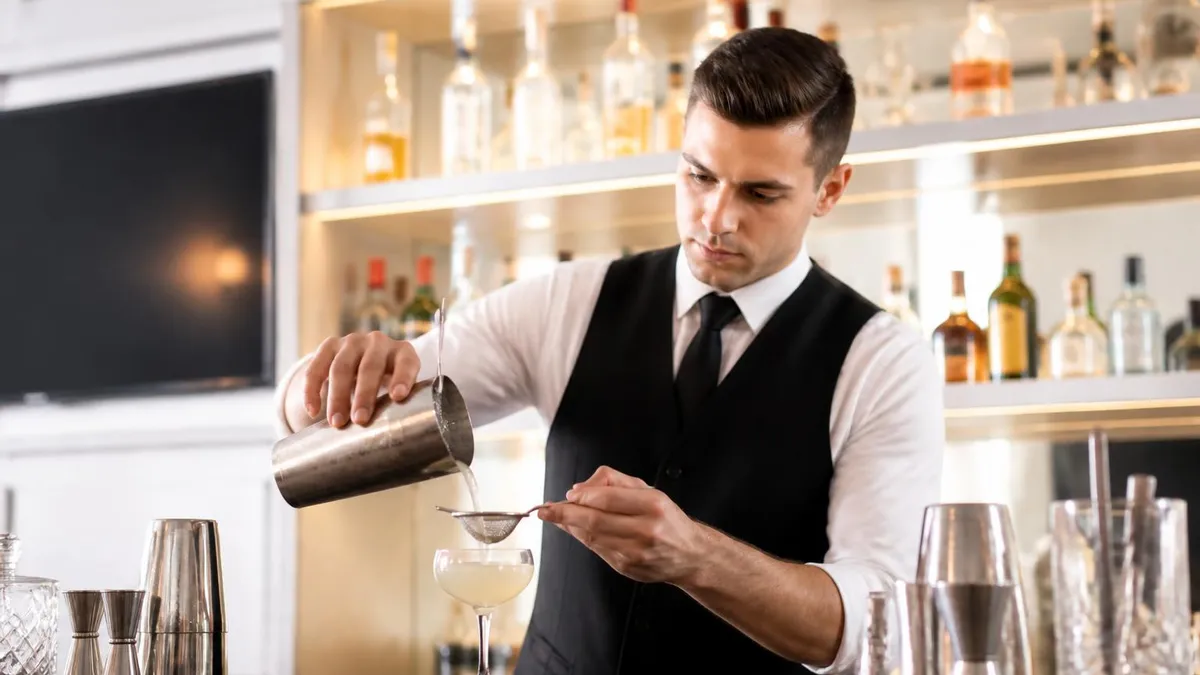
Bartender Interview Questions: 50+ Real Questions With Sample Answers for 2026
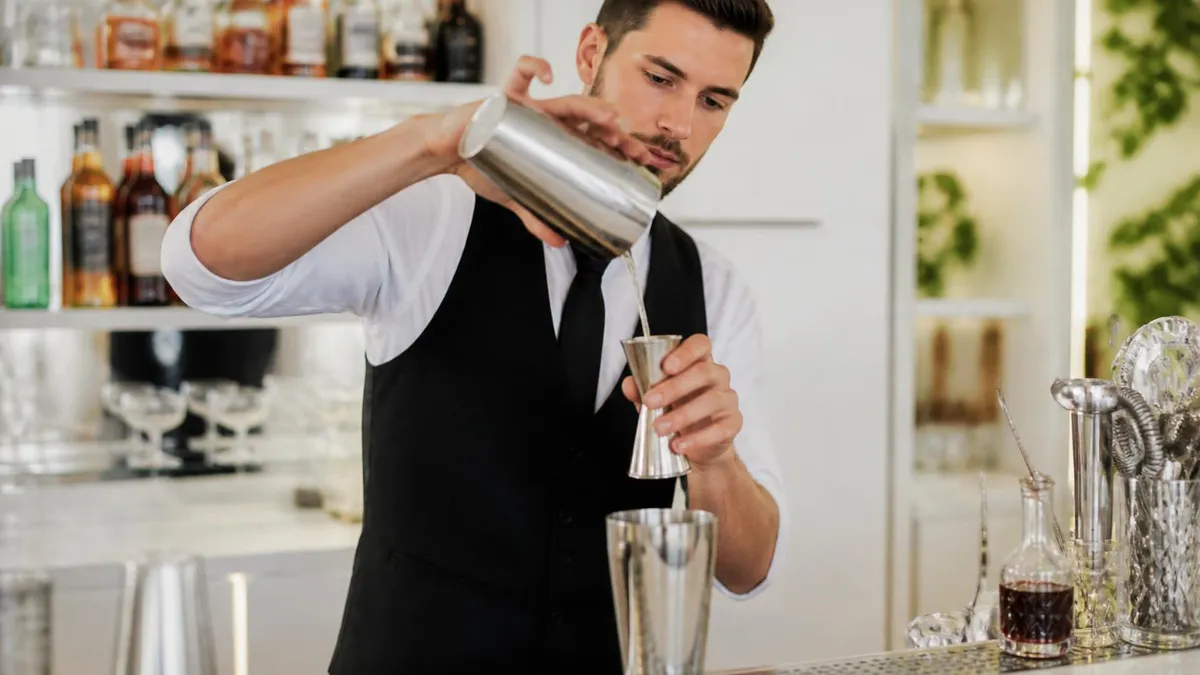
Bartending Kit: The Complete Tool Guide for Certification Prep
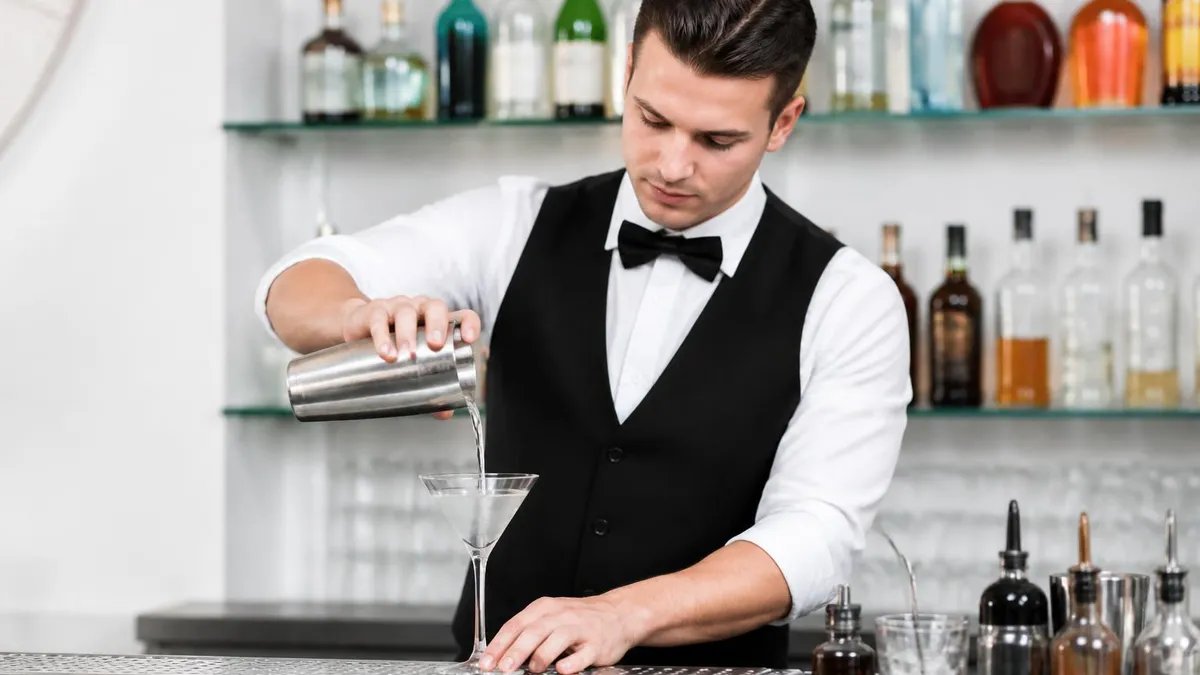
Wisconsin Bartending License: Operator's License Guide 2026
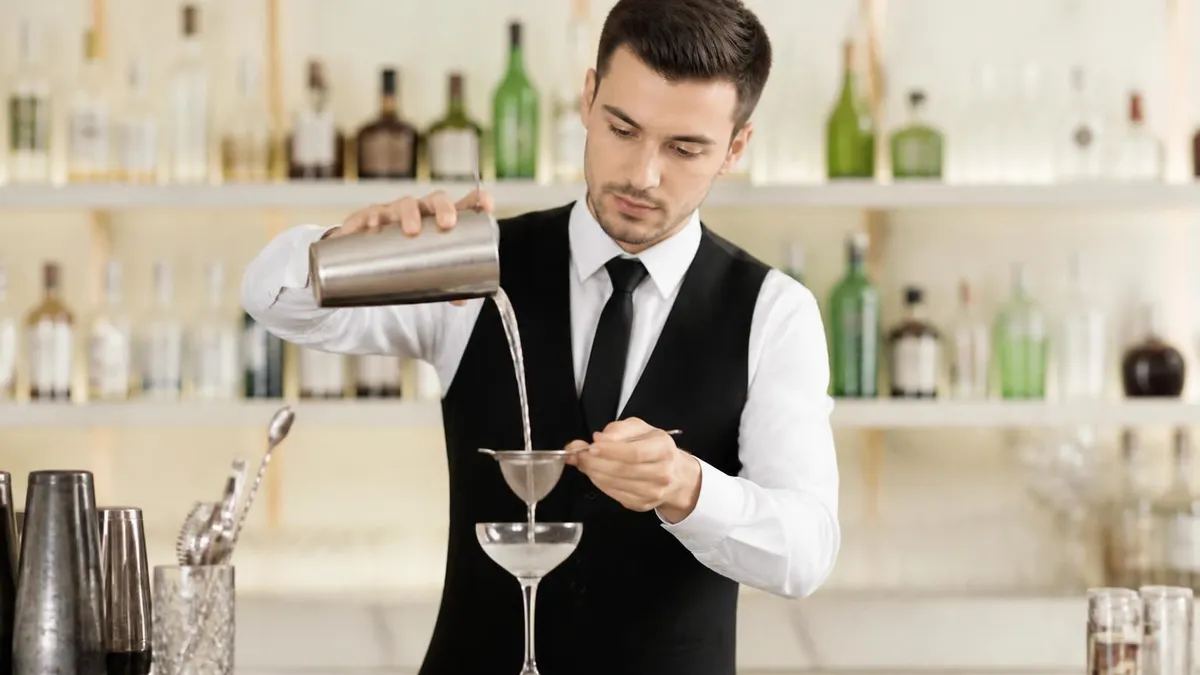
Shot Bartending Techniques: The Complete Guide to Speed, Style, and Service Behind the Bar
About the Author
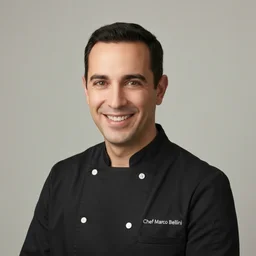
Executive Chef & Culinary Arts Certification Educator
Culinary Institute of AmericaChef Marco Bellini is a Certified Executive Chef and graduate of the Culinary Institute of America with over 20 years of professional kitchen experience in Michelin-recognized restaurants. He teaches culinary arts certification, food safety, and hospitality exam preparation, having guided thousands of culinary students through their ServSafe, ProStart, and professional chef certifications.
Join the Discussion
Connect with other students preparing for this exam. Share tips, ask questions, and get advice from people who have been there.
View discussion (7 replies)