
ACLS Exam Questions: What Additional Questions Help You Determine Next Steps (Study Guide & Cheat Sheet)
🎯 ACLS what additional questions help you determine next steps? Master the key exam questions, algorithms, renewal options and free practice tests.
If you have ever searched for acls what additional questions help you determine next steps, you already understand the heart of the exam. ACLS is not a memorization contest about drug doses alone. It is a decision-making course where every scenario stalls at the same moment: the monitor shows something, the patient looks a certain way, and you must ask the right question before choosing a pathway. This guide organizes those questions the way a smart driver uses the ultimate California DMV cheat sheet.
Think about how a California DMV cheat sheet works. It does not reproduce the entire driver handbook; it condenses right-of-way rules, sign shapes, and fine amounts into the facts that decide test questions. An ACLS cheat sheet should do the same. Instead of memorizing fifty algorithm boxes, you learn a handful of repeatable questions: Is there a pulse? Is the patient stable or unstable? What is the rhythm? What reversible cause might be driving this? Those four questions unlock most exam items.
Exam writers love branching scenarios. A stem might describe a 62-year-old with chest discomfort, a heart rate of 38, and a blood pressure of 78/40. The correct answer depends entirely on which clarifying question you ask first. Is the bradycardia causing the hypotension? Yes, so atropine 1 mg IV is the initial treatment, with transcutaneous pacing or a dopamine or epinephrine infusion ready if atropine fails. Without the stability question, every option looks plausible and guessing becomes tempting.
Logistics matter too. Candidates constantly ask can you renew acls online, and the honest answer is that the cognitive portion can often be completed online, while most employers and the American Heart Association still require a hands-on skills check. We cover that distinction in detail later, along with the guideline updates that shape which questions appear on current versions of the test, so you do not study outdated algorithms.
This hub article is built for both first-time students and clinicians preparing for renewal. You will find an exam-style breakdown of the questions that determine next steps, a comparison of renewal formats, a practical checklist, and links to free practice tests on rhythm recognition and pharmacology. Work through the sections in order, or jump to the part you need using the contents panel. Either way, finish by answering timed practice questions so the logic becomes automatic under pressure.
A word on scope. ACLS builds on high-quality BLS, so compressions at 100 to 120 per minute, a depth of at least 2 inches, full chest recoil, and minimal interruptions remain the foundation. Every advanced decision rests on that base. If your compressions are poor, no drug or shock will compensate. Expect several exam questions that test whether you prioritize CPR quality, early defibrillation, and team communication ahead of airway management or medication choices.
Finally, a note on mindset. Passing ACLS typically requires a score of at least 84 percent on the written exam at AHA courses, plus a successful megacode demonstration. That is very achievable with structured preparation. Treat each practice question as a mini case: identify the question you need answered, find the clue in the stem, and then choose the intervention. Over a few weeks that habit replaces guesswork with a reliable process you can also use at the bedside.
ACLS Exam Essentials by the Numbers
The Key Questions That Determine Your Next Step
Check responsiveness, breathing, and a pulse for no more than 10 seconds. No pulse means start CPR and attach a monitor or defibrillator. A pulse sends you down the bradycardia, tachycardia, or post-arrest pathway instead of the cardiac arrest algorithm.
Look for hypotension, altered mental status, signs of shock, ischemic chest discomfort, or acute heart failure. Unstable patients with a pulse need immediate treatment, such as atropine, pacing, or synchronized cardioversion, rather than extended diagnostic workups.
Identify whether the rhythm is shockable (ventricular fibrillation or pulseless ventricular tachycardia) or nonshockable (asystole or PEA). Then classify rates as slow or fast, and QRS width as narrow or wide, because each category has a different treatment.
Run through the Hs and Ts: hypovolemia, hypoxia, hydrogen ion, hypo- or hyperkalemia, hypothermia, tension pneumothorax, tamponade, toxins, and thrombosis. Finding and fixing the cause is often the only way to get a patient back.
Reassess after every intervention. Waveform capnography, blood pressure, rhythm change, and pulse checks tell you whether to repeat a shock, change drugs, or move to post-cardiac arrest care. Exam stems often hinge on this reassessment step.
ACLS Exam Questions in the Cardiac Arrest Algorithm
The cardiac arrest algorithm splits on one question: is the rhythm shockable? Ventricular fibrillation and pulseless ventricular tachycardia get a shock as soon as a defibrillator is available, followed immediately by two minutes of CPR. Asystole and pulseless electrical activity do not get shocked; they get CPR, epinephrine as soon as feasible, and a hunt for reversible causes. Many exam distractors offer a shock for asystole, so train yourself to confirm the rhythm first.
After the first shock, the next questions concern access and medications. Have you established IV or IO access? Epinephrine 1 mg is given every 3 to 5 minutes, and for shockable rhythms it is typically timed after the second shock. If VF or pVT persists after a third shock, amiodarone 300 mg is the first dose, followed by 150 mg if needed. Lidocaine at 1 to 1.5 mg/kg is an accepted alternative on the exam.
Many candidates also search for an acls renewal online reddit thread before an exam, hoping for a shortcut. The most useful advice in those threads is consistent: learn the algorithm logic rather than memorizing screenshots. When a stem says the patient converted to an organized rhythm, your next question is always whether a pulse is present, because organized electrical activity without a pulse is PEA and returns you to the nonshockable pathway.
Airway questions appear regularly. Is a advanced airway required right now, or can bag-mask ventilation maintain oxygenation while compressions continue? The guidelines support either a supraglottic airway or an endotracheal tube, and the decision should not interrupt compressions for long. Once an advanced airway is in place, you deliver one breath every 6 seconds, about 10 breaths per minute, with continuous compressions. Expect at least one question testing that ventilation rate.
Waveform capnography is another favorite. If end-tidal CO2 stays below 10 mmHg during CPR, your next step is to improve compression quality, because low values suggest inadequate perfusion. An abrupt, sustained rise to around 35 to 40 mmHg or higher suggests return of spontaneous circulation. When a scenario shows that jump, the correct next step is to check a pulse and rhythm, not to continue compressions blindly for another full cycle.
Team dynamics also generate questions. Who is the team leader, and what does closed-loop communication look like? The leader assigns roles, the team member repeats the order back, and the leader confirms it. Compressors should rotate about every two minutes, or sooner if fatigue sets in. If a question describes a rescuer who stops compressions for more than 10 seconds to discuss a plan, the best answer is to resume CPR immediately and minimize pauses.
Finally, know when to move on. If a patient achieves ROSC, the question shifts from resuscitation to stabilization. Is oxygen saturation between 92 and 98 percent? Is systolic blood pressure at least 90 mmHg? Is a 12-lead ECG obtained promptly to look for STEMI? These post-arrest priorities are tested heavily, and they follow the same pattern: ask what is wrong now, correct it, and reassess before choosing the next intervention.
Can ACLS Be Renewed Online? Three Renewal Formats Compared
The blended format is the most popular answer to the question of whether ACLS can be renewed online. With American Heart ACLS renewal online options such as HeartCode ACLS, you complete the cognitive portion, including simulated cases and the written exam, on your own schedule. This usually takes three to five hours for experienced clinicians, and the system adapts to your answers so that mistakes lead to targeted review.
After the online section, you attend a short in-person skills session with an AHA instructor. You demonstrate high-quality CPR, airway management, and a megacode scenario, usually in under an hour. The card issued afterward is a genuine AHA eCard valid for two years. Hospitals, clinics, and licensing boards almost universally accept this path because it includes the hands-on verification that regulators expect.
Is Blended Online ACLS Renewal Worth It?
- +Study the cognitive material anytime, including after night shifts
- +Skills session is short, often under one hour
- +Adaptive cases focus on the questions you miss most often
- +Cards are genuine AHA eCards accepted by most hospitals
- +Often cheaper than a full classroom course when combined
- +Instant retakes of practice cases build real decision-making skill
- −Self-discipline is required to finish the online modules
- −You still must schedule an in-person skills check
- −Skills session availability is limited in smaller towns
- −Less peer discussion than a traditional classroom setting
- −Technology problems can interrupt the online portion
- −Total cost can climb once the skills fee is added
Renew ACLS BLS Online: Pre-Exam Checklist
- ✓Confirm your employer accepts your chosen card type in writing.
- ✓Check your current card's expiration date and renewal window.
- ✓Verify the provider is an authorized AHA training site.
- ✓Review the current adult cardiac arrest algorithm from memory.
- ✓Memorize epinephrine, amiodarone, and adenosine doses and intervals.
- ✓Practice reading rhythm strips until identification takes seconds.
- ✓Rehearse the Hs and Ts out loud with a study partner.
- ✓Book your hands-on skills session before starting the online modules.
- ✓Take at least two timed practice tests before the real exam.
- ✓Bring a photo ID and your old card to the skills session.
Say the question before you pick the answer
Before reading the answer choices, state the missing question in your head: pulse or no pulse, stable or unstable, narrow or wide, shockable or not. Candidates who do this consistently avoid distractor drugs and wrong energy levels, and it mirrors exactly what examiners listen for during the megacode.
Rhythms, Rates and the Questions That Decide Treatment
Bradycardia scenarios revolve around one decisive question: is the slow rate causing symptoms? A heart rate of 45 in an asymptomatic athlete needs observation. A rate of 38 with confusion, hypotension, or chest pain is unstable bradycardia. The first-line drug is atropine 1 mg IV, repeated every 3 to 5 minutes up to 3 mg. If that fails, move to transcutaneous pacing, or start a dopamine infusion at 5 to 20 mcg/kg/min or an epinephrine infusion at 2 to 10 mcg/min.
Remember that atropine is less likely to work in high-degree blocks such as Mobitz type II or third-degree AV block with a wide QRS. Exam questions often describe that situation to see whether you jump straight to pacing instead of repeating atropine. The extra clarifying question here is the QRS width and block type. If the block is infranodal, the AV node is not the problem, so a drug that blocks vagal tone will not help.
Tachycardia with a pulse follows a different logic. First ask whether the patient is stable. If the patient shows hypotension, altered mental status, shock signs, ischemic chest pain, or acute heart failure, and the tachycardia is causing those signs, perform synchronized cardioversion. Sedate if time allows. Starting energy depends on rhythm: 50 to 100 joules for a narrow regular rhythm, 120 to 200 joules biphasic for atrial fibrillation, and 100 joules for a regular wide-complex tachycardia.
For stable patients, the next questions are QRS width and regularity. A narrow, regular rhythm is probably supraventricular tachycardia, so try vagal maneuvers and then adenosine 6 mg rapid IV push, followed by 12 mg if needed. A wide, regular, monomorphic rhythm may be treated with adenosine only if it is regular and monomorphic, otherwise consider procainamide, amiodarone 150 mg over 10 minutes, or sotalol, and consult an expert when available.
Irregular narrow-complex tachycardias, such as atrial fibrillation with rapid ventricular response, call for rate control with a beta-blocker or calcium channel blocker, provided the patient has no heart failure or accessory pathway. Exam writers sneak in details like a wide irregular rhythm suggesting pre-excited atrial fibrillation, where AV nodal blockers can be dangerous. The clarifying question is whether the QRS is wide and irregular; if yes, avoid adenosine, diltiazem, and beta-blockers, and call for expert help.
Acute coronary syndrome questions ask what to do within the first ten minutes. Obtain a 12-lead ECG, give aspirin 160 to 325 mg chewed unless allergic, and decide between nitroglycerin and morphine based on blood pressure and right ventricular involvement. If ST elevation is present, the next question is whether primary PCI is available within the recommended timeframe. These are the same questions you would ask at the bedside, which is why exam writers use them.
Post-cardiac arrest care closes the loop. Ask whether the patient follows commands, because comatose survivors usually need targeted temperature management. Ask about oxygenation and ventilation, aiming for saturation of 92 to 98 percent and normal carbon dioxide levels. Ask about hemodynamics, targeting systolic pressure of at least 90 mmHg or a mean arterial pressure of at least 65 mmHg. Finally, ask what caused the arrest, because treating that cause prevents the next one.
AHA guidelines are updated periodically, and old study materials may show superseded steps or drug timing. Always confirm that your textbook, practice tests, and provider course match the current guideline edition before test day, and ask your instructor which version your card will reference.
ACLS Renewal Questions: Online Options, Costs and Acceptance
Beyond clinical questions, certification itself raises practical ones. The most common is can acls be renewed online when your card is about to expire. The accurate answer is yes for the learning portion and no for the skills portion if you want an AHA card. Most employers will not accept a card that lacks a documented hands-on assessment, so plan for both components rather than hoping a fully online shortcut will pass inspection.
Location also affects availability and price. A nurse searching for ACLS renewal online in Chicago will find many authorized training centers offering short blended skills sessions, often evenings and weekends. Candidates looking for ACLS and BLS renewal online in Sacramento see similar options, frequently bundled so one visit covers both skills checks. Bundling can save an hour of commuting and often trims 20 to 40 dollars compared with booking each course separately.
Cost comparisons should include everything, not only the advertised price. The online module for American Heart ACLS renewal online typically runs around 150 to 200 dollars, and the in-person skills session adds another 50 to 100 dollars depending on the site. A traditional renewal class commonly costs between 150 and 250 dollars. Some employers reimburse the fee or host free classes, so ask your education department before paying out of pocket.
Timing matters as much as price. AHA cards are valid for two years and expire at the end of the month listed, and there is generally no grace period. If your card has expired, some instructors will still allow a renewal course, while others require the longer initial provider class. Do not assume leniency. Schedule your renewal at least six to eight weeks before expiration so a cancelled session does not leave you uncertified.
Documentation is the step people forget. After completing the course, you receive an eCard by email, which you must claim and save as a PDF. Upload it to your employer's credentialing system promptly and keep a copy for your state licensing board. If a card is not issued within the promised timeframe, contact the training center immediately, since they can reissue it or correct a spelling error before the audit.
Watch for scams and misleading advertising. Phrases such as instant card, 100 percent online, or accepted everywhere should raise a red flag. Real AHA training centers list an instructor name and training center ID, and you can verify cards through the AHA's eCard check. If an advertisement does not mention the skills session or says it is optional, assume the card will not satisfy a hospital audit and look for a different provider.
Finally, remember that renewal courses assume you already know the material, which is why they feel faster than the initial class. You will still face a written exam and a megacode. Treat the renewal as an opportunity to relearn the questions behind each decision. A clinician who can explain why the next step is correct will pass quickly, while someone who merely recalls pictures of the algorithm may struggle when the scenario changes slightly.
Practical Study Tips and Final Prep Advice
Start with a one-page cheat sheet in the spirit of the California DMV cheat sheet that drivers use before their test. Write the cardiac arrest algorithm, bradycardia and tachycardia branches, drug doses, shock energies, and the Hs and Ts on a single page. The act of condensing the material is itself studying. Review the sheet for ten minutes each morning, and cover it while reciting the steps from memory to identify weak spots.
Use spaced repetition for pharmacology. Epinephrine 1 mg every 3 to 5 minutes, amiodarone 300 mg then 150 mg, adenosine 6 mg then 12 mg, atropine 1 mg up to 3 mg, and lidocaine 1 to 1.5 mg/kg are easy to confuse under stress. Flash cards that ask for the indication first and the dose second force you to link each drug to the clinical question rather than memorizing numbers in isolation.
Practice rhythm strips daily, even if only five at a time. Start with the big categories: sinus rhythm, atrial fibrillation, flutter, supraventricular tachycardia, ventricular tachycardia, ventricular fibrillation, asystole, and the three AV blocks. For each strip, say rate, regularity, P waves, PR interval, and QRS width out loud. Within two weeks most learners can identify rhythms in under ten seconds, which leaves time to think about the next intervention.
Join peer discussions, but filter the advice. Searching for an acls renewal reddit thread can reveal what test-day scenarios felt like, how long the skills session lasted, and which instructors are fair. Treat that information as anecdotal. Never trust a forum post over your training center's written policy, and never share exam content that could violate your course agreement. The goal is to learn the logic, not to collect leaked answers.
Simulate the megacode with a partner. One person plays the team leader and verbalizes each question: check pulse, identify rhythm, shock or not, give drug, reassess. The other plays rescuer and gives feedback. Record yourself if possible. Common errors include forgetting to resume compressions immediately after a shock, failing to name the Hs and Ts, and not stating the rationale for choosing cardioversion over medication. Fix these before the instructor sees them.
On the day of the exam, sleep well and eat something. Read each question completely, including the final sentence, because details such as no pulse, unstable, or wide-complex often decide the answer. Eliminate options that violate the basic sequence: CPR first, shock when shockable, drugs after access, and reversible causes throughout. If you are unsure, choose the answer that minimizes interruptions to compressions and treats the most immediate threat to life.
After you pass, do not file the material away. Review your cheat sheet monthly, join a mock code at work, and take a free practice test every few weeks. Skills decay within six months for many clinicians, so deliberate refreshers protect both your patients and your next renewal. When your card approaches expiration, you will already know which questions to ask, and the course will simply confirm what you do every day.
ACLS Questions and Answers

2025 ACLS Changes: Complete Guide to Updated Guidelines, Algorithms & Certification Requirements
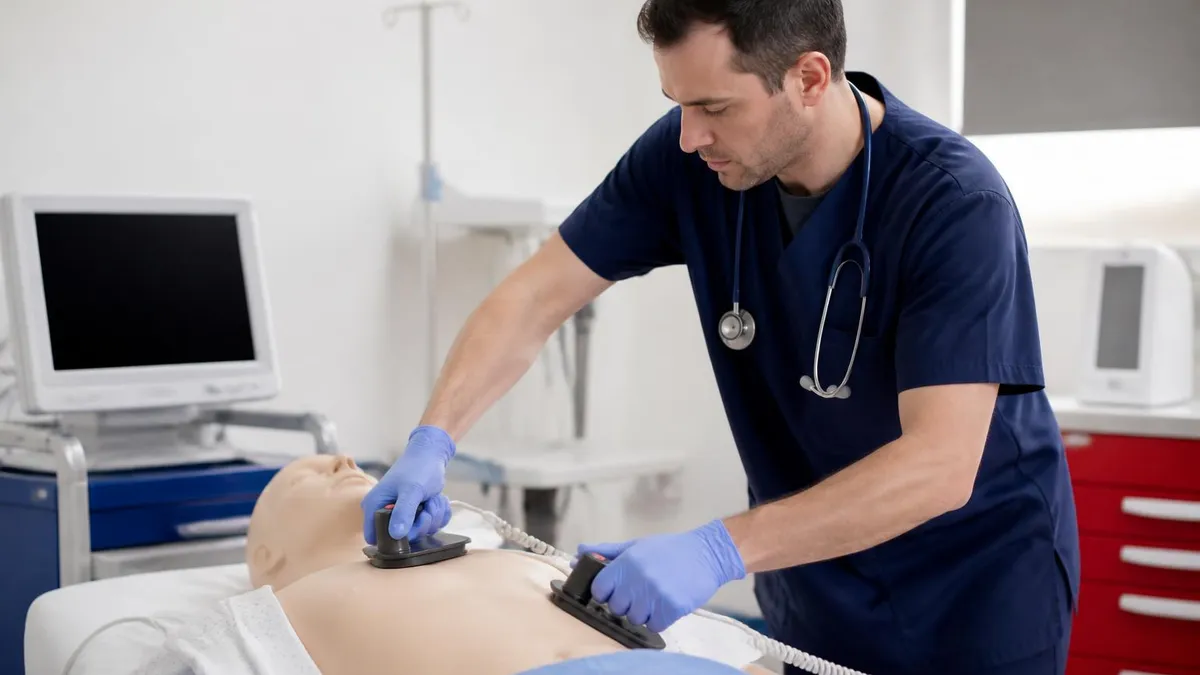
ACLS Recertification Online: Complete 2026 Guide to Renewing Your Card Fast, Affordably & Without the Classroom

ACLS Stroke Algorithm: Complete Study Guide for Certification Prep
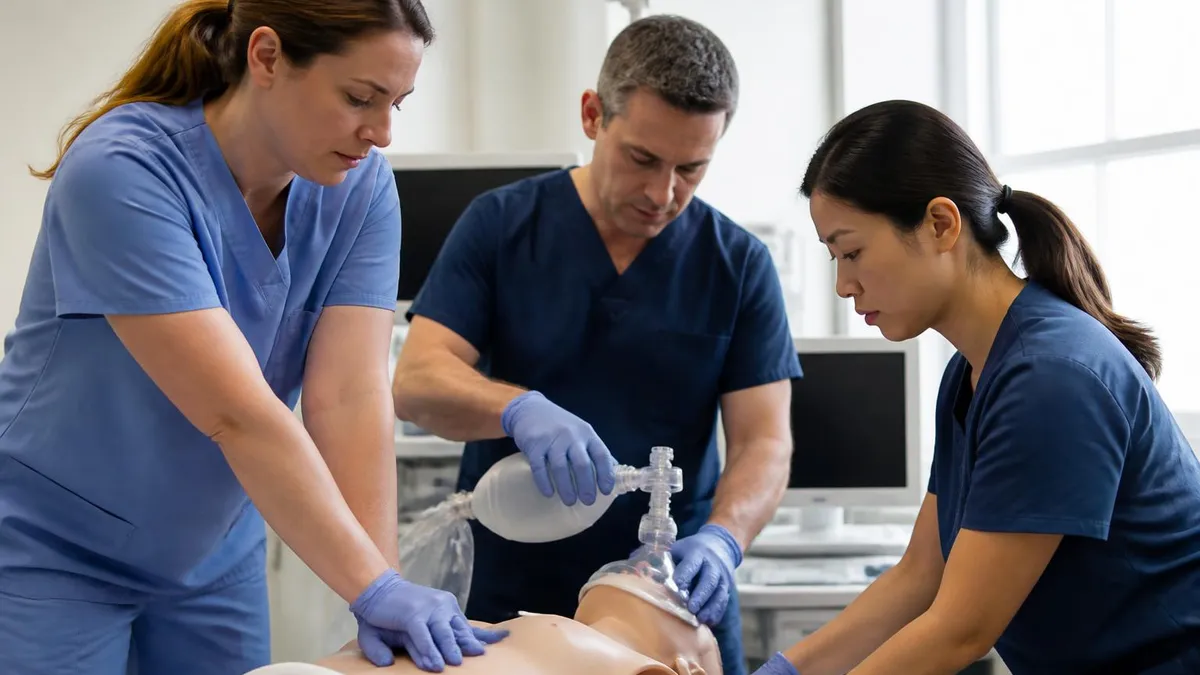
ACLS Renewal Near Me: Find Local Recertification Classes, Costs & Online Options in 2026
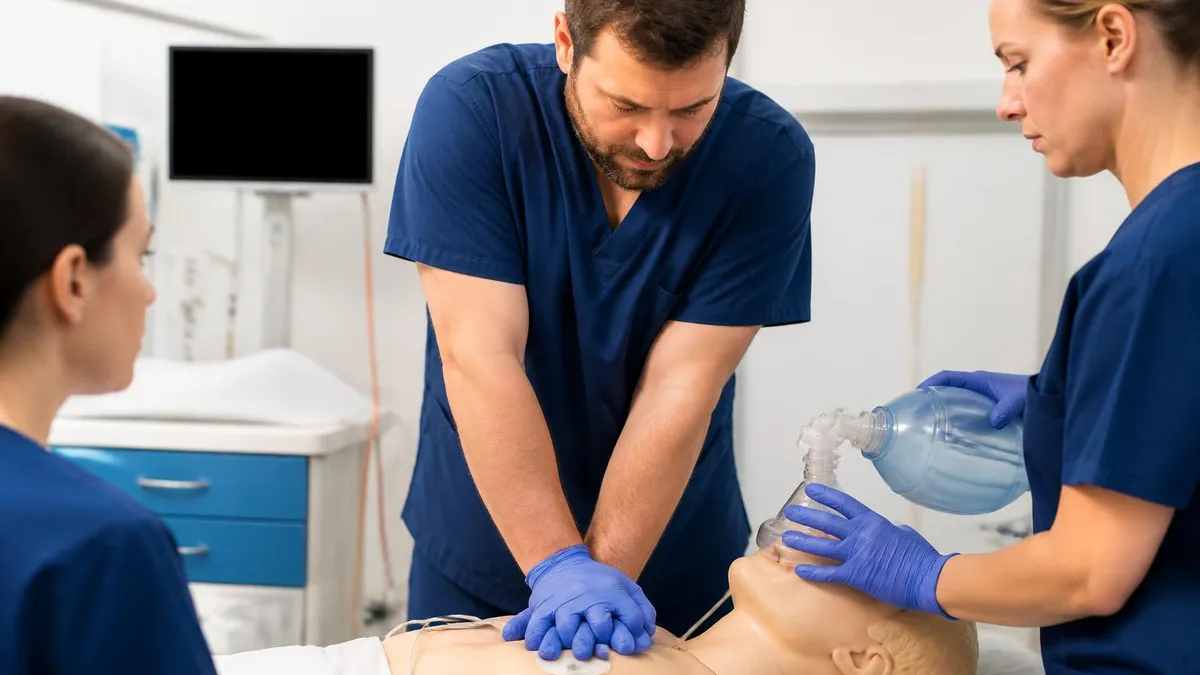
ACLS Training Online: Complete 2026 Guide to Courses, Costs, Certification & Hospital Acceptance
How this page was made: written with AI tools and published by Nathan Beja, founder of Practice Test Geeks, who is responsible for its content. Exam facts are checked against the official sources listed below. Not reviewed by a subject-matter expert. Editorial policy
Sources & references
Exam facts on this page (fees, format, dates, passing scores) are checked against these official sources; the date is our last check. Editorial policy
- cpr.heart.org — Test delivery, renewal, eligibility, score validity · verified Oct 2026
- heart.org — Passing score · verified Oct 2026