
Burn Wound Care: Complete Guide to Assessment, Dressings, and Healing in 2026 October
Master burn wound care with our complete guide to assessment, dressing selection, infection prevention, and evidence-based healing protocols for 2026 October. 🎓
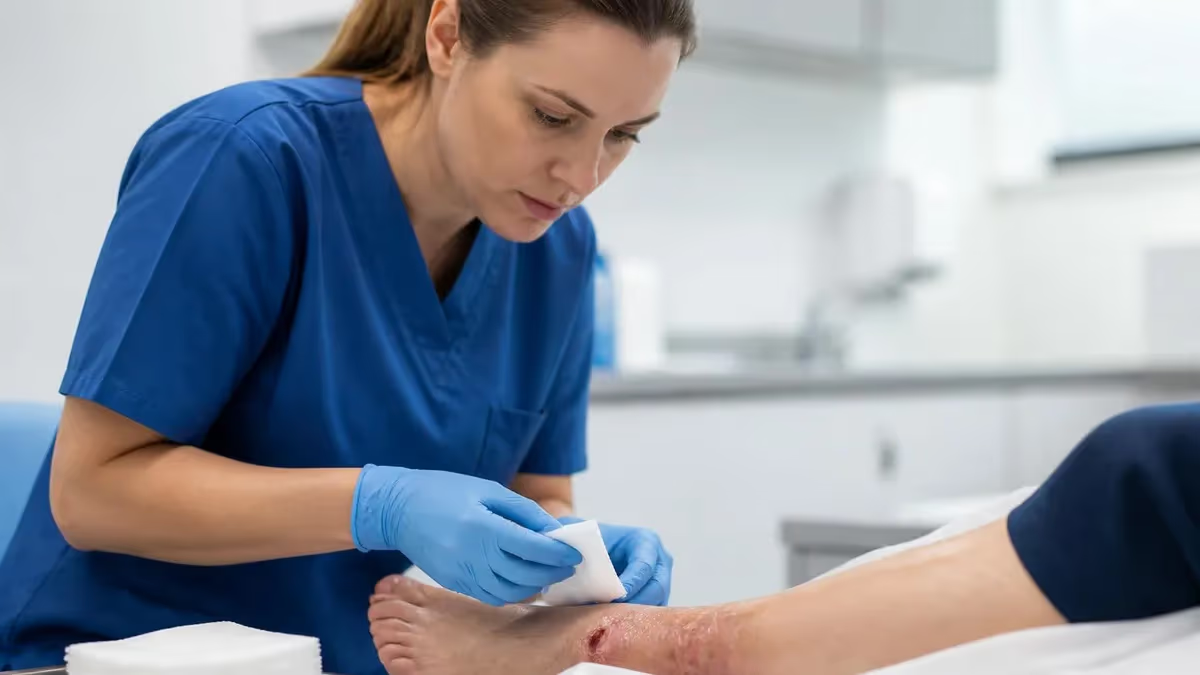
Burn wound care is one of the most demanding specialties in modern nursing, requiring precise assessment, evidence-based dressing selection, and an in-depth understanding of skin physiology under thermal, chemical, electrical, or radiation injury. Whether you encounter a small superficial scald in an outpatient clinic or a major full-thickness burn in a regional burn center, the principles of burn wound care remain anchored in three priorities: protecting viable tissue, controlling infection risk, and supporting the body's natural healing cascade. Mastering these fundamentals is essential for any clinician pursuing certification.
The American Burn Association estimates that nearly 450,000 burn injuries receive medical treatment annually in the United States, with thermal injuries accounting for approximately 86 percent of all admissions. Of these patients, roughly 40,000 require hospitalization, and about 30,000 of those are treated at specialized burn centers. Effective wound care wound care protocols, combined with rapid stabilization and multidisciplinary support, have dropped the overall mortality rate from major burns by more than half over the past three decades.
Burn classification has shifted away from old first, second, and third-degree language toward depth-based terminology: superficial, superficial partial-thickness, deep partial-thickness, and full-thickness. This change matters because dressing selection, debridement decisions, pain management strategies, and grafting timelines all hinge on accurate depth assessment. A misclassified burn can lead to undertreatment, hypertrophic scarring, contracture, or in severe cases, sepsis and multi-organ dysfunction syndrome.
For students preparing for the Wound Care Certification examination, burn-related questions appear across multiple content domains, including assessment, intervention, infection control, and reconstructive planning. You will need to recognize Lund-Browder versus Rule of Nines body surface area estimation methods, calculate Parkland formula fluid resuscitation, identify when escharotomy is indicated, and select appropriate antimicrobial and moisture-retentive dressings for each phase of healing.
This comprehensive guide walks through every aspect of burn wound care, from initial triage and the first 24-hour resuscitation window through long-term scar management, pressure garment fitting, and psychosocial rehabilitation. We integrate the latest 2024-2026 clinical guidelines from the American Burn Association, the Wound, Ostomy and Continence Nurses Society, and the International Society for Burn Injuries to ensure every protocol you read reflects current best practice.
You will also find embedded practice questions, downloadable assessment templates, and links to free certification quizzes designed to reinforce the high-yield concepts most likely to appear on board examinations. By the end of this article, you should feel confident assessing burn depth, calculating fluid needs, selecting dressings, recognizing complications, and counseling patients and families on recovery expectations.
Whether you are a bedside RN, an LPN expanding your scope, a nurse practitioner specializing in dermatology or plastics, or a certified wound specialist seeking recertification credits, this guide delivers practical, exam-aligned content you can apply in your next shift and on test day. Let's begin with the numbers that define the scope of modern burn care.
Burn Wound Care by the Numbers

Burn Classification by Depth
Involves only the epidermis. Skin appears red, dry, and painful without blistering. Heals within 3 to 7 days without scarring. Most common example is a mild sunburn or brief steam exposure.
Damages the epidermis and upper dermis. Presents with moist, weeping blisters, blanches with pressure, and is extremely painful. Heals in 7 to 21 days with minimal scarring when properly managed.
Extends into the deeper dermis. Skin appears waxy white or mottled red, may not blanch, and shows reduced sensation. Heals in 3 to 6 weeks but often requires grafting to prevent contracture.
Destroys both epidermis and entire dermis, sometimes including subcutaneous fat. Appears leathery, dry, white, brown, or charred. Painless centrally due to nerve destruction. Always requires surgical excision and grafting.
Penetrates beyond skin into muscle, tendon, or bone. Frequently caused by prolonged contact, electrical injury, or high-voltage flame exposure. Requires complex reconstruction, often including amputation or flap surgery.
Fluid resuscitation begins the moment a burn patient enters the emergency department. The Parkland formula remains the gold standard: 4 mL of lactated Ringer's solution per kilogram of body weight per percent total body surface area burned, with half delivered in the first 8 hours from time of injury and the remainder over the following 16 hours. This calculation only applies to burns covering more than 20 percent TBSA in adults or 10 percent in children, and titration to urine output of 0.5 mL per kilogram per hour guides ongoing adjustments.
Accurate body surface area measurement is the foundation for fluid math. The Rule of Nines is fast and acceptable for adults, dividing the body into 9 percent segments. For pediatric patients, head and neck represent a larger proportion, so the Lund-Browder chart provides age-adjusted accuracy and is preferred whenever children are involved. Many burn centers now use digital wound mapping tablets that calculate TBSA automatically from photographic input, reducing the variability that historically plagued bedside estimates.
Airway management trumps fluid management when smoke inhalation is suspected. Carbonaceous sputum, singed nasal hair, hoarse voice, stridor, or burns sustained in an enclosed space all suggest inhalation injury and trigger early intubation. Delaying intubation can lead to laryngeal edema severe enough to require surgical airway within hours. Carboxyhemoglobin levels should be drawn immediately, and 100 percent oxygen via non-rebreather mask is the default until carbon monoxide poisoning is ruled out.
Pain management for burn patients is uniquely challenging. Background pain from the injury itself requires scheduled long-acting opioids, while procedural pain during dressing changes and physical therapy demands short-acting agents like fentanyl, ketamine, or nitrous oxide. Adjunctive gabapentin reduces neuropathic burning pain, and benzodiazepines address anxiety that often amplifies pain perception. Multimodal analgesia is now standard at every American Burn Association-verified center.
Stocking the right wound care products at the bedside accelerates every aspect of burn management. Standard kits should contain sterile saline, silver-impregnated antimicrobial dressings, non-adherent contact layers, absorbent secondary pads, conforming gauze, paper tape, scalpels for blister debridement, and personal protective equipment. Pre-assembled burn dressing trays cut procedure time in half and reduce contamination risk during high-acuity intake.
Tetanus prophylaxis is mandatory for all burns deeper than superficial. If the patient's last tetanus booster was more than five years ago, administer Tdap immediately. For unvaccinated patients or those with unknown status, add tetanus immune globulin. This single intervention prevents a rare but devastating complication and is required documentation on every certification exam scenario involving burn intake.
Finally, early enteral nutrition within 24 to 48 hours of admission is proven to reduce infection rates and shorten ICU stays. Burn patients enter a hypermetabolic state that can double basal energy expenditure, and protein needs climb to 1.5 to 2.0 grams per kilogram per day. Nasoduodenal feeding tubes bypass gastric ileus and deliver high-calorie, high-protein formulas continuously, supporting wound healing from the inside out.

Wound Care Certification Practice Test Questions
Prepare for the Wound Care Certification Exam exam with our free practice test modules. Each quiz covers key topics to help you pass on your first try.
Wound Care Certification Beginner's Guide
Wound Care Certification Exam Questions covering Beginner's Guide. Master Wound Care Certification Test concepts for certification prep.
Wound Care Certification Knowledge
Free Wound Care Certification Practice Test featuring Knowledge. Improve your Wound Care Certification Exam score with mock test prep.
Wound Care Certification MCQ
Wound Care Certification Mock Exam on MCQ. Wound Care Certification Study Guide questions to pass on your first try.
Wound Care Certification Practice
Wound Care Certification Test Prep for Practice. Practice Wound Care Certification Quiz questions and boost your score.
Wound Care Certification
Wound Care Certification Questions and Answers on Wound Care Certification. Free Wound Care Certification practice for exam readiness.
Wound Care Certification Trivia
Wound Care Certification Mock Test covering Trivia. Online Wound Care Certification Test practice with instant feedback.
Wound Care Certification Atypical Wound Et...
Free Wound Care Certification Quiz on Atypical Wound Etiologies. Wound Care Certification Exam prep questions with detailed explanations.
Wound Care Certification Dressings and Top...
Wound Care Certification Practice Questions for Dressings and Topical Agents. Build confidence for your Wound Care Certification certification exam.
Wound Care Certification Exam Wound Care C...
Wound Care Certification Test Online for Exam Wound Care Certification Debridement Methods and Indications. Free practice with instant results and feedback.
Wound Care Certification Exam Wound Care C...
Wound Care Certification Study Material on Exam Wound Care Certification Infection Management and Antimicrobials. Prepare effectively with real exam-style questions.
Wound Care Certification Pressure Injury P...
Free Wound Care Certification Test covering Pressure Injury Prevention. Practice and track your Wound Care Certification exam readiness.
Wound Care Certification Systemic Factors ...
Wound Care Certification Exam Questions covering Systemic Factors Affecting Healing. Master Wound Care Certification Test concepts for certification prep.
Choosing the Right Wound Care Dressings for Burns
Superficial burns rarely require advanced dressings. Topical aloe vera gel, plain petrolatum, or a thin hydrogel layer provide cooling and moisture retention while the epidermis regenerates. Avoid butter, toothpaste, and home remedies that trap heat and introduce bacteria. Oral analgesics like ibuprofen or acetaminophen typically manage pain adequately, and patients can usually resume normal activity within 48 hours.
Patient education is the most important intervention at this depth. Teach proper sun protection for at least 12 months following injury, since newly healed skin remains hypersensitive to UV damage and prone to permanent hyperpigmentation. Document the absence of blistering or weeping, photograph the wound for the chart, and arrange a 48-hour follow-up if any concerning changes occur such as expanding redness or fever.
Silver Antimicrobial Dressings: Strengths and Limitations
- +Broad-spectrum activity against gram-positive and gram-negative bacteria
- +Effective against multidrug-resistant organisms including MRSA and Pseudomonas
- +Reduces dressing change frequency from daily to every 3-7 days
- +Maintains moist wound environment to support epithelial migration
- +Lower pain scores during application compared to traditional gauze
- +Sustained silver ion release prevents bacterial regrowth between changes
- +Available in foam, alginate, hydrocolloid, and contact layer formats
- −Higher upfront cost than gauze or petrolatum-based products
- −Can cause temporary gray-blue skin discoloration called argyria
- −Not recommended for patients undergoing MRI without removal
- −Some products require sterile water activation rather than saline
- −Pediatric use limited by absorption concerns in large surface burns
- −Cannot be used simultaneously with enzymatic debriding agents
- −Pseudo-eschar formation can mimic infection and complicate assessment

Daily Burn Wound Care Checklist
- ✓Perform hand hygiene and don sterile gloves before every dressing change
- ✓Pre-medicate the patient 30 minutes before procedure with prescribed analgesic
- ✓Soak old dressings with sterile saline to ease atraumatic removal
- ✓Cleanse wound bed with neutral-pH cleanser or sterile saline, not povidone-iodine
- ✓Assess wound size, depth, exudate, odor, and surrounding skin integrity
- ✓Photograph wound weekly with consistent lighting and ruler reference
- ✓Apply prescribed topical antimicrobial in a thin uniform layer
- ✓Cover with appropriate primary contact layer and absorbent secondary dressing
- ✓Document drainage volume, character, pain score, and patient tolerance
- ✓Schedule range-of-motion exercises immediately after dressing application
The 24-Hour Rule for Burn Center Transfer
Any partial-thickness burn covering more than 10 percent TBSA, any full-thickness burn, any burn involving the face, hands, feet, genitalia, perineum, or major joints, plus all electrical, chemical, and inhalation injuries should be transferred to an American Burn Association-verified center within 24 hours of injury. Early transfer is the single strongest predictor of survival and functional outcome for major burns.
Infection remains the leading cause of late mortality in burn patients, accounting for nearly 60 percent of deaths beyond the initial resuscitation phase. The burn wound's loss of skin barrier, combined with systemic immunosuppression from massive cytokine release, creates a perfect environment for opportunistic pathogens. Pseudomonas aeruginosa, Staphylococcus aureus including MRSA, Acinetobacter, and Candida species dominate the microbial landscape of burn units worldwide, and surveillance cultures every 48 to 72 hours catch colonization before it becomes invasive.
Distinguishing colonization from true infection requires both clinical judgment and quantitative culture. Tissue biopsy with greater than 100,000 colony-forming units per gram of tissue defines invasive burn wound infection. Clinical signs include sudden conversion of partial-thickness areas to full-thickness, dark brown or black discoloration in previously pink granulation tissue, premature eschar separation, hemorrhagic underlying tissue, and unexpected fever or hemodynamic instability. Any of these findings warrants immediate biopsy and antimicrobial escalation.
Sepsis criteria in burn patients differ from the general adult population because baseline temperature, heart rate, white count, and respiratory rate are all improved by the hypermetabolic burn state. The American Burn Association published modified sepsis criteria that require three of six findings: temperature above 39 or below 36.5, progressive tachycardia, progressive tachypnea, thrombocytopenia after day 3, hyperglycemia in non-diabetics, and feeding intolerance. Early recognition triggers blood, urine, and wound cultures plus empiric broad-spectrum coverage.
Compartment syndrome is the second feared complication, particularly in circumferential extremity burns and torso burns. Rising tissue pressure compromises venous return, then arterial inflow, leading to ischemia within hours. Bedside compartment pressure measurement above 30 mmHg, distal pulse loss, pallor, paresthesia, or worsening pain on passive stretch are absolute indications for escharotomy. Linear incisions through the eschar relieve pressure immediately and are performed at bedside without anesthesia since the eschar itself is insensate.
Hypertrophic scarring affects up to 70 percent of patients with deep partial-thickness or full-thickness burns and represents the major long-term morbidity of burn survival. Scars typically begin forming six to eight weeks after epithelialization and continue maturing for 12 to 24 months. Aggressive prevention with 24-hour-per-day compression garments delivering 25 to 35 mmHg of pressure, combined with silicone gel sheeting and intralesional triamcinolone for resistant areas, dramatically improves cosmetic and functional outcomes.
Contractures form when scar tissue crosses a joint and shortens during the maturation phase, restricting range of motion. Splinting in the position of function begins the day of admission and continues for 12 to 18 months post-injury. Occupational and physical therapists work alongside wound care specialists to design custom splints, schedule range-of-motion exercises every two hours during waking hours, and progress patients through activities of daily living tailored to their injury pattern.
Psychological recovery is as critical as physical healing. Acute stress disorder affects more than 30 percent of major burn survivors, and post-traumatic stress disorder develops in roughly 25 percent within the first year. Early screening with validated tools, referral to burn-specialized mental health providers, peer support programs like the Phoenix Society, and family counseling sessions all improve long-term quality-of-life scores. No burn care plan is complete without an explicit psychosocial component.
Cold tap water immersion for 20 minutes within three hours of injury reduces burn depth and pain. However, ice and ice water cause vasoconstriction that deepens the burn and can trigger hypothermia, especially in pediatric patients. Always use cool, not cold, running water, and never apply ice packs directly to a burn wound regardless of how painful the injury appears.
Pursuing a career in burn wound care opens doors across acute care, outpatient clinics, rehabilitation centers, and home health. Most clinicians enter the specialty through a generalist nursing role, then transition to a burn unit, surgical ICU, or outpatient burn clinic where mentored hands-on experience builds expertise. From there, formal credentialing through the Wound, Ostomy and Continence Nurses Certification Board or the American Board of Wound Management distinguishes you as a recognized expert in the field.
The Certified Wound Care Nurse (CWCN) credential requires an active RN license, at least 1,500 clinical hours in wound care over the preceding three years, and successful completion of a 120-question computer-based examination. The Wound Care Certified (WCC) credential offered by the National Alliance of Wound Care and Ostomy has slightly different prerequisites but is widely accepted across hospital systems. Both credentials require continuing education and renewal every five years.
Salary expectations for certified burn and wound care specialists vary by region, but national data from 2025 places average compensation between $85,000 and $115,000 for certified RNs, with nurse practitioners and physician assistants in wound care commanding $120,000 to $160,000. Burn center coordinators and unit managers frequently earn additional administrative differentials. Travel wound care contracts for certified clinicians often exceed $3,500 per week and remain in high demand at rural and underserved facilities.
If you live in a metro area, searching for wound care near me on professional networking sites can surface clinical preceptorships, volunteer opportunities at burn camps, and observation days at verified burn centers. These experiences are invaluable both for sharpening practical skills and for assembling the documentation packet required for certification eligibility. Many burn centers will sponsor candidates who commit to a two-year post-certification employment agreement.
Continuing education is non-negotiable in this field. The American Burn Association, the Wound Healing Society, and the Symposium on Advanced Wound Care all host annual meetings packed with hands-on workshops, cadaver labs, and the latest research presentations. Online platforms like Medline University, WoundEducators.com, and the Wound Care Academy offer asynchronous CEU courses that satisfy state license and certification renewal requirements without travel.
Don't overlook veterinary crossover knowledge. Many techniques from human burn care translate directly to companion animals, and a growing number of clinicians offer consultation for dog wound care and other animal burn injuries through telehealth platforms. Cross-specialty understanding broadens your knowledge base, sharpens assessment skills, and can become a meaningful supplemental income stream for clinicians passionate about animal welfare.
Whatever pathway you choose, document your journey from day one. Maintain a clinical hours log, save every continuing education certificate, photograph anonymized wound progressions for portfolio building, and request letters of recommendation from supervising physicians and certified preceptors. When the time comes to sit for certification or apply for advanced positions, this organized portfolio will set you apart from candidates who scramble at the last minute.
Final exam preparation for burn-related certification content benefits enormously from structured weekly study blocks. Devote the first two weeks to mastering anatomy of the skin, the inflammatory cascade, and burn depth classification. Use anatomical atlases and high-resolution clinical photographs to train your eye on the subtle differences between superficial partial-thickness and deep partial-thickness wounds. Quiz yourself daily with flashcards on the key clinical features that distinguish each depth.
Weeks three and four should focus on resuscitation math. Practice Parkland formula calculations until you can perform them in under 30 seconds. Build a mental library of standard patient weights and TBSA percentages so you can sanity-check any computation. Add modified Brooke and consensus formula variations to your toolkit since some examinations include them as distractors. Run through pediatric weight-based calculations separately, since the Lund-Browder chart introduces additional variables.
Dressing selection is best learned by case repetition. Build or borrow a case bank of 50 to 100 realistic burn scenarios, then practice matching each one to its optimal antimicrobial, contact layer, and secondary dressing. Pay special attention to the rationale behind each choice because certification examinations frequently ask you to justify selections rather than simply identify them. Group dressings by category — alginate, foam, hydrocolloid, hydrogel, silver, honey, biosynthetic — and memorize their indications and contraindications.
Don't neglect the operational and ethical dimensions of burn care. Examinations test knowledge of transfer criteria, abuse and neglect reporting requirements, end-of-life decision-making in massive burns, and informed consent for cosmetic versus reconstructive surgery. Review your state's mandatory reporting laws for suspected child or elder abuse since burn patterns inconsistent with reported history are red flags requiring documentation and notification of authorities.
Test-day strategy matters as much as content mastery. Sleep at least seven hours the night before, eat a high-protein breakfast, arrive at the testing center 30 minutes early, and bring two forms of identification. During the exam, flag uncertain questions for review rather than dwelling on them, manage your pace at roughly 60 seconds per question, and read every question stem twice before scanning answer choices. Trust your first instinct unless you find concrete reasoning to change it.
After passing, the work doesn't stop. Set a calendar reminder for recertification three years before the deadline so you can comfortably accumulate continuing education hours without last-minute pressure. Join professional organizations like the Wound, Ostomy and Continence Nurses Society or the American Burn Association for discounted CEU access, journal subscriptions, and networking opportunities. Mentor a junior colleague through their first certification cycle to solidify your own knowledge.
Finally, remember that burn wound care is as much art as science. The best clinicians develop intuition over thousands of patient encounters, learning to read subtle skin color changes, exudate patterns, and patient body language that no textbook can fully capture. Stay humble, stay curious, and treat every patient encounter as both a chance to heal and a chance to learn. Your skill set saves lives, reduces suffering, and rebuilds futures one dressing change at a time.
Wound Care Questions and Answers
Wound Care Companies: Top Manufacturers, Suppliers & Service Providers in 2026

Wound Care: Types, Dressings, Certification & Nurse Guide
Wound Care General Knowledge: Dressings, DSD & Drain Care
Wound Care Certification for LPN: Complete 2026 Guide to Requirements, Exams & Career Growth
Wound Care Center
About the Author

Registered Nurse & Healthcare Educator
Johns Hopkins University School of NursingDr. Sarah Mitchell is a board-certified registered nurse with over 15 years of clinical and academic experience. She completed her PhD in Nursing Science at Johns Hopkins University and has taught NCLEX preparation and clinical skills courses for nursing students across the United States. Her research focuses on evidence-based exam preparation strategies for healthcare certification candidates.