
What Is an Umpire in Baseball? Roles, Rules, and Responsibilities Explained
What is an umpire in baseball? Learn their roles, responsibilities, signals, and how to become one. Complete guide for aspiring officials. ✅

Understanding what is an umpire in baseball is fundamental knowledge for anyone who loves the game, wants to coach youth leagues, or is considering a career in officiating. An umpire is the independent official responsible for enforcing the rules of baseball during a game. They make binding decisions on every pitch, hit, and play — from calling balls and strikes behind the plate to ruling on force plays, tag outs, fair and foul balls, and game-disrupting incidents. Without umpires, organized baseball at any level simply could not function fairly or consistently.
Baseball umpires occupy one of the most demanding roles in all of professional and amateur sports. Unlike referees in basketball or football who operate in relatively controlled environments, a baseball umpire must track a fast-moving ball across a large field, position themselves correctly within fractions of a second, interpret complex rule interactions, and communicate decisions instantly to players, coaches, and fans — all while remaining completely impartial and composed under intense scrutiny and frequent disagreement from both sides of the field.
The role of the umpire dates back to the earliest organized baseball games of the 1840s and 1850s, when a single gentleman stood at the side of the field and resolved disputes. Today, Major League Baseball employs a crew of four umpires for regular season games and expands to six umpires for the League Championship Series and World Series. At the amateur, high school, and college levels, games often use one, two, or three umpires depending on resources and the level of play involved.
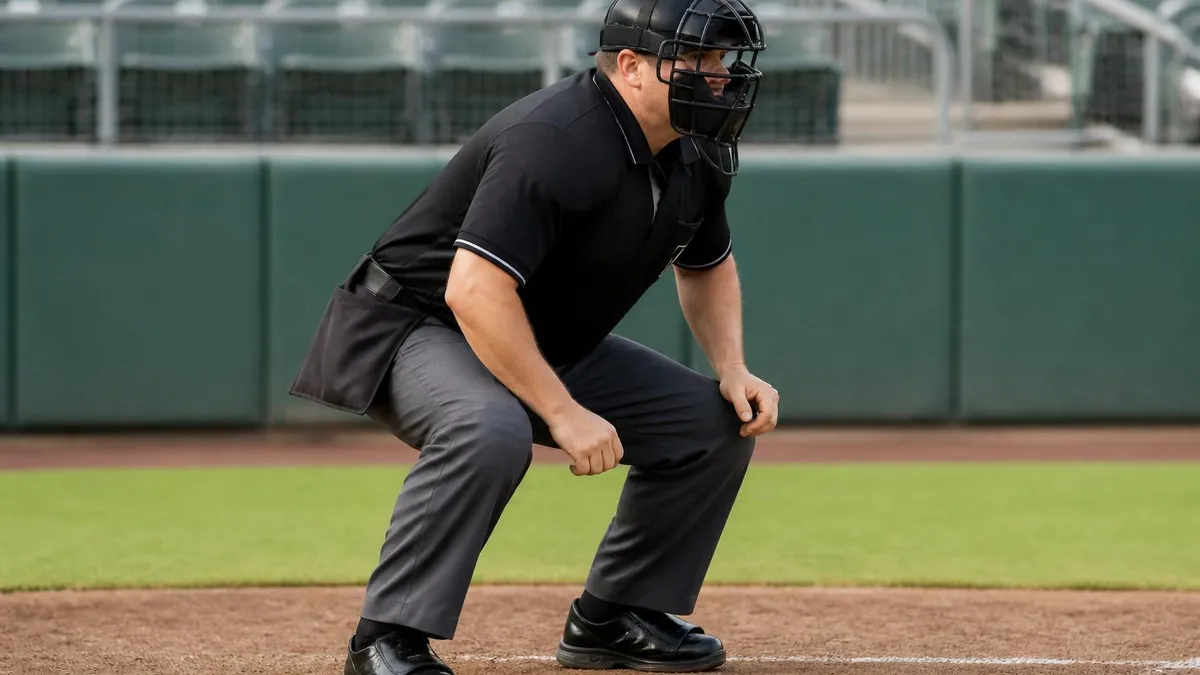
There are two primary positions on a baseball umpiring crew: the plate umpire and the base umpires. The plate umpire, often called the home plate umpire, is stationed behind home plate and is responsible for calling balls and strikes on every pitch, ruling on hit batters, passed balls, wild pitches, catcher interference, and plays at home plate. The plate umpire also has ultimate authority over the pace of play, substitutions, and ejections. It is the most visible and highest-pressure position on any umpiring crew at any level of baseball.
Base umpires are positioned near first base, second base, and third base depending on the size of the crew. Their primary duties involve ruling on plays at their assigned base — safe or out on force plays and tag plays, fair or foul on balls hit near the foul lines, and catch or no-catch on fly balls in their zone. In a two-umpire crew, the base umpire must cover multiple bases and rotate into position as runners advance, which demands exceptional athleticism, anticipation, and knowledge of mechanics protocols that vary by situation and runner configuration.
Umpires also manage the human element of baseball. They have authority to eject players, coaches, and managers for arguing balls and strikes, using profane language, throwing equipment, or engaging in unsportsmanlike conduct. They may award bases to runners when interference, obstruction, or illegal pitches occur. They can declare a balk, suspend play for rain or darkness, and in rare situations they can declare a forfeit if a team refuses to continue play or cannot field nine players. These enforcement powers make umpires the ultimate authority on the field during any game.
The path to becoming a professional umpire requires years of dedicated study, formal umpire school training, and experience working hundreds of games at progressively higher levels. However, anyone can begin umpiring at the youth or recreational level with basic certification training available through organizations like Little League Baseball, PONY Baseball, and the National Association of Sports Officials. Whether you aspire to call games at Yankee Stadium or simply want to officiate Little League on weekends, understanding the full scope of what umpires do is the essential first step toward earning the respect of players and coaches alike.
Baseball Umpiring by the Numbers

Core Roles and Positions on an Umpiring Crew
The crew chief of each game, responsible for calling every pitch as a ball or strike, ruling on catcher interference, hit batters, plays at home, and managing pace of play, substitutions, and ejections throughout the entire game.
Positioned near first base to rule on force plays, tag plays, fair and foul balls down the right field line, catch or no-catch decisions on fly balls, and runner-batter interference or obstruction situations in their coverage zone.
Covers plays at second base including force outs, tag plays, stolen base attempts, and double play pivots. In two-umpire systems, the base umpire must rotate to cover second and third depending on the runner configuration and developing play.
Rules on plays at third base, fair and foul balls down the left field line, tag-up plays after fly balls, and interference or obstruction calls on the third base side. Works closely with the plate umpire on calls near home plate.
The rules that baseball umpires are responsible for enforcing span an official rulebook that runs to more than three hundred sections, covering everything from the dimensions of the playing field to the precise definition of what constitutes a legal pitch. While most fans are familiar with the basics — balls and strikes, safe and out, fair and foul — the actual rule set that umpires must master includes dozens of nuanced situations that arise only rarely but require instant and accurate judgment when they do occur in a live game environment.
One of the most fundamental responsibilities of any umpire is the ball and strike zone. According to the official MLB rulebook, the strike zone is defined as the area over home plate between the midpoint of the batter's torso and the hollow below the knee cap when the batter is in their natural batting stance.
This zone changes for every batter and must be recalibrated in real time. Calling balls and strikes accurately over a nine-inning game with pitchers throwing 90-plus miles per hour is one of the most cognitively demanding tasks in all of officiating, requiring exceptional focus and visual acuity sustained over three or more hours.
Beyond the strike zone, umpires must understand and apply the infield fly rule, balk rules, interference and obstruction rules, rules governing illegal pitches, rules for substitutions and re-entry, and rules addressing equipment failures, rain delays, protests, and forfeits.
The infield fly rule alone — which declares a batter automatically out on a fair fly ball that can be caught by an infielder with ordinary effort when first and second or all three bases are occupied with fewer than two outs — is misunderstood by the vast majority of fans and even some players, yet umpires must apply it correctly and instantly.
Balk rules are another area where umpires must exercise careful judgment. A balk occurs when a pitcher makes an illegal motion on the mound while in contact with the pitching rubber with runners on base, and it results in all base runners advancing one base.
There are thirteen distinct ways a pitcher can be called for a balk under MLB rules, including faking a throw to third base, failing to come to a complete stop in the set position, and dropping the ball while in contact with the rubber. At lower levels of play, balk enforcement varies, but umpires working at certified levels must know every scenario.
Interference and obstruction rules cover some of the most complex situations in baseball. Batter interference occurs when the batter hinders the catcher from fielding the ball or throwing to a base, and the penalty depends on whether runners advance safely. Catcher interference occurs when the catcher's equipment or body makes contact with the batter's swing, resulting in the batter being awarded first base. Runner interference involves a base runner hindering a fielder attempting to make a play, which results in the runner being declared out and, in some cases, a double play being called regardless of where the ball traveled.
Obstruction is the counterpart to interference — it occurs when a fielder who is not actively fielding the ball or about to receive a throw impedes the progress of a base runner. When obstruction occurs, the umpire signals the play continues and then, after the play is over, awards any bases the runner would have reached had the obstruction not occurred. This requires the umpire to simultaneously track the live play while mentally computing where each runner would have ended up absent the illegal impediment — a remarkable feat of multi-tasking under live game conditions.
Fair and foul ball rulings are among the most visually memorable calls in baseball, requiring umpires to be in precise position to determine whether a batted ball first touched the ground in fair or foul territory. A ball that rolls or bounces past first or third base is judged fair or foul based on where it was when it passed the bag, not where it ends up.
A batted ball that hits the foul pole — so named despite being in fair territory — is ruled a home run. These spatial judgments happen in real time, and the ability of umpires to position themselves for the best possible angle is the foundation of sound umpiring mechanics taught in every certification program across the country.
Umpire Signals, Mechanics, and Communication
Baseball umpires use a standardized set of hand signals to communicate every decision clearly to players, coaches, and fans in all parts of the ballpark. The right fist punched upward or to the side signals a strike or an out, while an open hand with palm facing down signals a safe call or a ball in some crew systems. The fair ball signal is a point into fair territory, while no signal at all — combined with a verbal call — is used for foul balls. These signals must be delivered with authority, confidence, and at a size visible from the dugout and outfield stands.
Beyond the basic safe, out, fair, and foul signals, umpires have specific signals for special situations: awarding bases due to obstruction or interference, signaling a time-out, calling an infield fly, invoking the balk rule, and indicating that a hit ball is a home run. The home run signal — typically a circular motion with the index finger pointed upward — is one of the most recognizable in all of sports. Umpires are also trained to use their voice in coordination with signals, combining visual and audio communication to eliminate any ambiguity about the call being made in noisy stadium environments.

Pros and Cons of Becoming a Baseball Umpire
- +Direct involvement in America's most storied sport at any level from youth leagues to the major leagues
- +Steady supplemental income at the amateur level — certified umpires typically earn $25-$75 per youth game
- +Clear career progression path with defined milestones from local certification to professional school
- +Develop deep mastery of baseball rules that most fans and even players never fully understand
- +Work outdoors in a dynamic, competitive environment rather than being confined to an office setting
- +Strong officiating networks provide camaraderie, mentorship, and access to higher-level game assignments
- −Constant public criticism and argument from coaches, players, and fans who disagree with judgment calls
- −Weekend and evening schedule demands that can conflict with family commitments, especially during peak season
- −Physical demands are significant — plate umpires crouch behind the plate for every pitch over a full nine-inning game
- −Income at the amateur level is modest and inconsistent, making it difficult to rely on as primary income
- −Professional umpiring career paths are extremely competitive — fewer than 100 MLB umpiring jobs exist nationwide
- −Weather exposure is unavoidable, requiring umpires to work in heat, humidity, cold, and wind with no shelter
Pros and Cons at a Glance
| Pros | Cons |
|---|---|
| Direct involvement in America's most storied sport at any level from youth leagues to the major leagues | Constant public criticism and argument from coaches, players, and fans who disagree with judgment calls |
| Clear career progression path with defined milestones from local certification to professional school | Weekend and evening schedule demands that can conflict with family commitments, especially during peak season |
| Develop deep mastery of baseball rules that most fans and even players never fully understand | Physical demands are significant — plate umpires crouch behind the plate for every pitch over a full nine-inning game |
| Work outdoors in a dynamic, competitive environment rather than being confined to an office setting | Income at the amateur level is modest and inconsistent, making it difficult to rely on as primary income |
| Strong officiating networks provide camaraderie, mentorship, and access to higher-level game assignments | Weather exposure is unavoidable, requiring umpires to work in heat, humidity, cold, and wind with no shelter |
Baseball Umpire Certification Checklist
- ✓Research certification requirements for your target league or governing body (Little League, NFHS, NCAA, etc.)
- ✓Complete an approved umpire training clinic or certification course before your first official game
- ✓Purchase required equipment: chest protector, shin guards, mask, plate shoes, and ball/strike indicator
- ✓Study the official rulebook for the level you plan to officiate — rulebooks differ across organizations
- ✓Pass the written rules examination required by your governing body with the minimum passing score
- ✓Observe at least three games as a trainee with an experienced umpire mentor before working independently
- ✓Join your local umpire association to access game assignments, training resources, and mentorship
- ✓Complete annual rules update training each season — rule changes occur every year at most levels
- ✓Develop and practice your strike zone consistency by working bullpen sessions or simulated plate work
- ✓Log your games each season and track your development toward advancement to higher-level competition
Umpires Who Start Early Advance Faster
Statistics from professional umpire development programs show that umpires who begin officiating at the youth level before age 25 and work at least 50 games per year consistently reach high school varsity and college levels within three to five seasons. Starting early, seeking feedback actively, and working a high volume of games are the three factors most strongly correlated with rapid advancement in any umpiring career pathway.
The professional pathway to becoming an MLB umpire is one of the most structured and competitive career tracks in sports officiating. Aspiring professional umpires must first attend one of the two major professional umpire schools — the Wendelstedt Umpire School in Daytona Beach, Florida, or the Minor League Baseball Umpire Training Academy in Vero Beach, Florida. These intensive programs run for several weeks and combine classroom rule instruction with on-field training, physical conditioning, and evaluation by professional scouts from the MLB Development system who assess each student's potential for advancement.
Students who graduate from professional umpire school and earn one of the coveted placement spots enter the Minor League Baseball system at the lowest level, typically working in short-season leagues or rookie-level leagues. From there, advancement through the Single-A, Double-A, and Triple-A levels depends entirely on annual performance evaluations conducted by MLB umpire supervisors who observe games, review video, and score umpires on categories including judgment accuracy, mechanics, positioning, and professional demeanor under pressure. Only a small percentage of umpires who enter the minors ever reach the major leagues.
At the Major League Baseball level, umpires are represented by the World Umpires Association and work under a collective bargaining agreement that governs salaries, benefits, scheduling, and dispute resolution. Entry-level MLB umpires earn approximately $120,000 per year, with experienced veterans earning well over $300,000 annually. MLB umpires work approximately 142 regular season games per year, plus potential postseason assignments, which are awarded based on seniority and performance evaluations. Postseason umpiring assignments — particularly the World Series — are among the most coveted honors in the profession.
Below the professional level, umpires working in high school and college games are governed by the National Federation of State High School Associations (NFHS) and the NCAA respectively. High school umpires must complete state-specific certification through their state's athletic association and typically work under the authority of a local board of approved officials. College umpires working at the Division I level are assigned by conference officials coordinators and must meet higher standards for mechanics, rules knowledge, and professional presentation than their high school counterparts.
The college umpiring pathway is increasingly viewed as a legitimate alternative to the professional minor league track for umpires who want to work high-level baseball without pursuing an MLB career. NCAA Division I baseball games feature elite talent, fast-paced action, and sophisticated coaching staffs that challenge umpires to apply complex rules under realistic game conditions. Many former college umpires have gone on to careers as professional umpire instructors, rules officials, and supervisors for state and regional amateur baseball associations across the United States.
Amateur and recreational umpiring through organizations like Little League International, PONY Baseball, Babe Ruth League, and USSSA provides opportunities for umpires of all ages and backgrounds to get involved in the game. These organizations offer their own certification programs, rulebooks, and training resources, and they actively recruit new umpires to address a nationwide shortage that has affected youth baseball significantly over the past decade. In many regions, volunteer umpires who complete basic certification can begin working games within just a few weeks of starting their training.
The umpire shortage affecting youth sports across America has created real opportunities for anyone willing to invest the time to get certified and work games consistently. Local umpire associations in most cities and towns are actively seeking new members and will often match new umpires with experienced mentors who help them develop quickly. For anyone passionate about baseball who wants to stay involved in the game beyond playing days, umpiring offers a meaningful, rewarding path that keeps them at the center of the action for as long as they choose to pursue it.
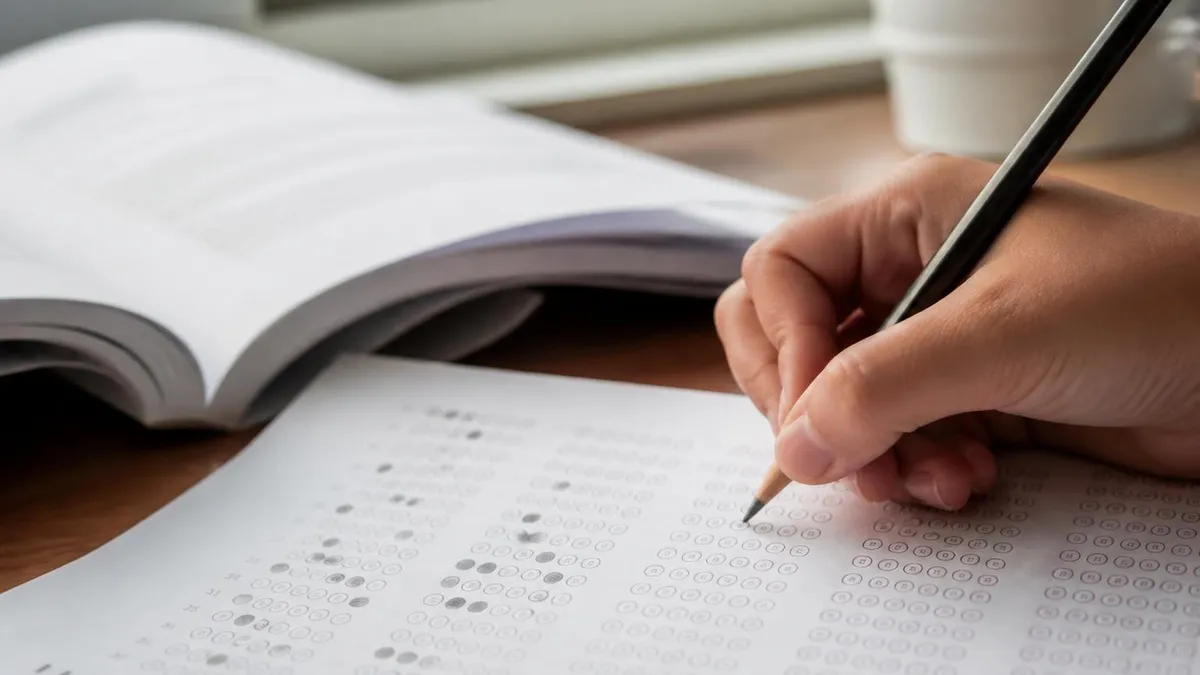
The rulebooks used at Little League, high school (NFHS), college (NCAA), and professional (MLB/MiLB) levels differ in important ways. The infield fly rule thresholds, balk definitions, equipment specifications, and mercy rule applications all vary across organizations. Always confirm which rulebook governs your game before stepping onto the field — using the wrong set of rules can create disputes, protests, and disciplinary issues with your assigning board or local association.
Managing the human element of baseball is arguably the most underappreciated aspect of an umpire's role. Every experienced umpire will tell you that rule knowledge and correct mechanics account for only half of what makes someone an effective official. The other half is conflict management — the ability to listen to complaints from coaches and players without losing composure, to de-escalate heated arguments before they become ejections, and to project the calm, authoritative presence that earns respect even from people who disagree with your call.
Veteran umpires develop a toolkit of communication strategies that help them manage difficult situations. Acknowledging that you heard a complaint — even without agreeing with it — is often enough to defuse tension. Setting clear verbal boundaries early in a confrontation, such as stating that arguing balls and strikes is not permitted, gives coaches and players fair warning before the conversation escalates to an ejection.
Experienced umpires also know when to grant a brief audience to a manager who comes out to discuss a ruling, as this often satisfies the need for the manager to demonstrate to their team that they are fighting for them without requiring the umpire to reverse any call.
Ejections are a necessary tool that umpires use when players, coaches, or managers cross behavioral boundaries that cannot be tolerated. Grounds for ejection include arguing balls and strikes after being warned, using profane or threatening language directed at an umpire, throwing equipment onto the field, making contact with an umpire, and continuing to argue after being directed to return to the dugout. Umpires are trained to eject firmly and without hesitation once the threshold has been crossed, because delayed or reluctant ejections signal uncertainty and can embolden further misconduct from both teams.
Pre-game preparation is a critical but invisible part of what umpires do to perform at a high level. Before every game, experienced umpires review the special ground rules for the specific ballpark or field they are working, particularly any unique features such as removable fences, flagpoles in play, or non-standard outfield wall configurations.
They discuss potential rule situations with their crewmates, agree on communication protocols for difficult plays, and ensure all equipment is functional and properly fitted. Plate umpires often warm up their eyes by tracking objects at game speed before the first pitch, and all umpires review any rule point of emphasis that their assigning organization has communicated for the current season.
Post-game reflection is equally important for umpires who want to improve. Reviewing difficult calls, discussing borderline situations with crewmates, and — at levels where video is available — watching replay of plays they were uncertain about are all habits that separate improving umpires from those who plateau. Many state and regional umpire associations conduct formal clinics where plays are replayed and discussed by experienced instructors, providing structured learning opportunities that accelerate development far beyond what any individual umpire could achieve through game experience alone.
The physical demands of umpiring should not be underestimated by anyone considering the role. Plate umpires assume a crouched position for every pitch — which can be 250 to 300 pitches in a typical nine-inning game — and must spring up quickly to rule on plays at home plate, batted balls in the infield, and third strikes in the dirt.
Base umpires must move quickly and decisively across the infield and into outfield territory to establish correct angles on developing plays. Physical fitness, joint health, and endurance are genuine performance factors that the best umpires take seriously through off-season conditioning, stretching, and appropriate protective equipment usage.
For those researching the broader landscape of officiating careers and opportunities, the diversity of roles within baseball officiating is remarkable. Beyond on-field crews, there are observer programs that evaluate umpire performance, replay center operators who review challenged calls, rules educators who train the next generation of officials, and assignors who coordinate schedules and ensure games are covered at every level. Baseball officiating is an ecosystem, and understanding the full picture helps aspiring umpires see not just where they can start, but where their involvement in the game can take them over a full career in officiating.
For anyone preparing for umpire certification exams or looking to sharpen their rules knowledge before working games, structured practice is the single most effective preparation strategy available. Umpire certification exams at most levels test knowledge of rules, mechanics procedures, signal identification, and scenario-based judgment across a written format that ranges from multiple choice to short-answer situations. Understanding not just what the rule says but why it exists and how it interacts with other rules is the level of mastery that separates passing scores from outstanding ones.
One of the best ways to build rules mastery quickly is to work through scenario-based questions that mirror the types of situations umpires encounter in actual games. For example: With runners on first and second, one out, a pop fly is hit near the second baseman — is the infield fly rule in effect?
What signal does the plate umpire give? Where do base runners go if the ball is dropped? Working through these multi-step scenarios builds the mental connective tissue between individual rules that makes umpires effective decision-makers under live game pressure when there is no time to consult a rulebook.
Mentorship from experienced umpires accelerates skill development faster than any study material alone. Most local umpire associations have formal mentorship programs where newer officials are paired with veterans who observe their games, provide immediate feedback after plays, and answer questions about rule applications and mechanics choices. If your local association does not have a formal mentorship program, simply asking an experienced umpire to observe one of your games and debrief with you afterward can provide tremendous developmental value that is difficult to replicate through solo study.
Equipment knowledge is another area where aspiring umpires should invest attention. Proper fitting of a chest protector, shin guards, and mask is not just about comfort — it directly impacts a plate umpire's ability to assume the correct stance, see the entire strike zone, and protect themselves from the inevitable foul tips that will strike their equipment throughout any plate assignment. Well-fitted equipment allows umpires to focus entirely on the game rather than adjusting gear or managing discomfort, and investing in quality protective equipment from the start is widely recommended by experienced umpire trainers and clinicians across the country.
Rules study should be an ongoing commitment rather than a pre-exam sprint. The best umpires read their rulebook during the off-season, flag any rules that have changed since the previous year, and discuss rule changes with their local association before the new season begins. Many umpire organizations publish annual rules updates that summarize changes, and attending rules interpretation meetings offered by your state or regional association ensures you are applying the most current interpretations — not last year's understanding of a rule that may have been modified or clarified by governing bodies at the national level.
Working a high volume of games during your first several seasons is irreplaceable experience. New umpires who work twenty games a year develop far more slowly than those who work eighty or more, because the sheer variety of situations encountered in a larger sample of games exposes officials to edge cases and unusual rule applications that simply never appear in a limited schedule.
Many experienced umpire instructors recommend that new officials say yes to every available assignment during their first three years, accepting challenging assignments that push them beyond their comfort zone rather than sticking only to situations where they feel fully confident in their preparation.
The rewards of becoming a competent, respected baseball umpire are significant and lasting. Players, coaches, and league administrators who work with skilled officials recognize the difference immediately, and umpires who consistently earn positive evaluations find themselves in high demand for prestigious assignments, tournament work, and all-star games. Beyond the professional recognition, there is a quiet satisfaction that comes from administering a game fairly and well — from knowing that every team on the field that day had an equal opportunity to compete because the rules were applied consistently, impartially, and with complete integrity from first pitch to final out.
Umpire Questions and Answers

Umpire Jobs: A Complete Career Overview, Duties, and Path to the Field
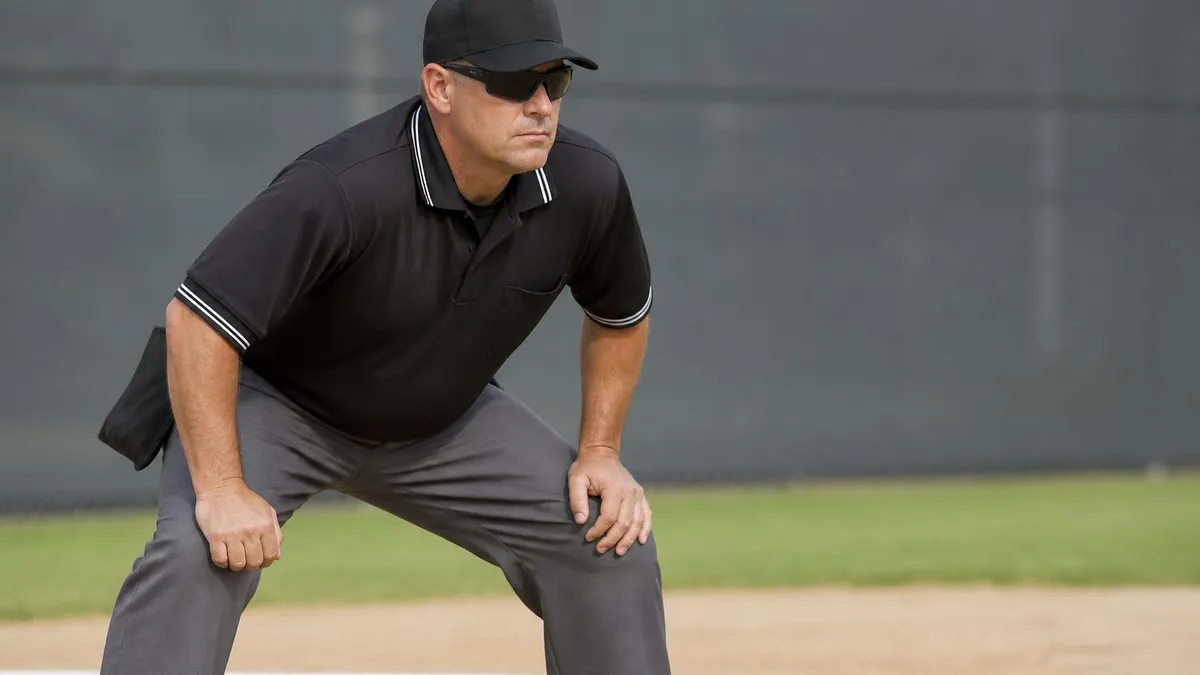
Umpire Signals: The Complete Visual Guide to Every Call Behind the Plate and on the Bases

Umpire Positioning: The Complete Guide to Field Coverage, Mechanics, and Crew Coordination
Umpire News: Profession, Career, and Industry Updates

Umpire in Arkansas: How to Get Certified, Find Games, and Build Your Career
About the Author

Educational Psychologist & Academic Test Preparation Expert
Columbia University Teachers CollegeDr. Lisa Patel holds a Doctorate in Education from Columbia University Teachers College and has spent 17 years researching standardized test design and academic assessment. She has developed preparation programs for SAT, ACT, GRE, LSAT, UCAT, and numerous professional licensing exams, helping students of all backgrounds achieve their target scores.