
How Many Baseball Umpires Are There? A Complete Guide to MLB, Minor League, and Amateur Crews
How many baseball umpires are there? 🎯 MLB, minor leagues, and amateur totals explained — crew sizes, career paths, and certification tips.
If you have ever wondered how many baseball umpires are there across every level of the game, the answer is far larger than most fans realize. Major League Baseball alone employs 76 full-time umpires on its active roster, supported by a pool of roughly 100 additional umpires available for call-up assignments and playoff expansion crews. When you factor in the entire professional pipeline — Triple-A, Double-A, High-A, Single-A, and the complex leagues — that figure climbs to well over 300 salaried officials working on any given summer day.
Amateur baseball multiplies those numbers exponentially. The United States alone has an estimated 20,000 to 25,000 registered amateur umpires working everything from Little League and travel ball to high school varsity games and college conference play. National governing bodies such as Little League International, USA Baseball, and the National Federation of State High School Associations (NFHS) all maintain their own certification pipelines, each producing hundreds of new officials every year to keep pace with the demand generated by millions of youth players across the country.
Understanding the number of umpires required at each level reveals a great deal about how the sport is structured and governed. A standard Major League game uses a four-person crew covering home plate, first base, second base, and third base. During the postseason, that crew expands to six umpires, adding two additional officials on the foul lines to catch fair-or-foul calls that can decide championships. This expansion model is not unique to MLB — many high-stakes amateur tournaments also deploy extra officials at critical positions to reduce the chance of a missed call altering the outcome of an important game.
The path from a brand-new umpire working a Saturday youth league game to a veteran MLB official calling a World Series game is long, competitive, and highly structured. Most professional umpires spend an average of seven to ten years working in the minor league system before earning a major league contract, and only a small fraction of those who enter the profession ever reach the highest level. The funnel is narrow by design: MLB wants officials who have seen every conceivable game situation thousands of times before they set foot on a big-league diamond.
Career longevity at the top level means that roster turnover is slow. In any given year, MLB may open only a handful of new staff positions, making each vacancy intensely competitive among the pool of experienced minor league umpires waiting for their opportunity. Retirements, medical leaves, and occasional disciplinary removals are the primary drivers of openings. The result is a profession where patience and sustained excellence over many seasons in the minors are just as important as raw talent and knowledge of the rulebook.
For aspiring officials, knowing the landscape of how many umpires exist and where they work is essential career intelligence. It helps set realistic expectations, identify the certification steps required at each level, and understand which organizations hold the authority to advance an umpire's career. Whether you are targeting a local high school assignment or dreaming of the major leagues, grasping the full scope of the umpiring workforce gives you a clearer picture of where you fit and what it will take to move up through the ranks.
This guide breaks down umpire counts by level, explains crew configurations at every tier of the game, and examines what those numbers mean for anyone pursuing a career in officiating. By the time you finish reading, you will have a comprehensive, data-driven understanding of baseball's umpiring workforce from youth diamonds all the way to the grandest stages in the sport.
Baseball Umpires by the Numbers

MLB Umpire Roster Breakdown
MLB employs 76 full-time umpires organized into 17 four-person crews. Each crew travels together throughout the regular season, rotating through all 30 ballparks on a schedule designed to prevent any crew from working the same team too frequently.
Approximately 100 Triple-A umpires are eligible for MLB call-ups when staff umpires take medical leave, personal time, or vacation days. These officials earn a daily rate and gain critical big-league experience while waiting for permanent roster openings.
During the Wild Card, Division Series, Championship Series, and World Series, MLB assembles six-person crews that add two line umpires at the foul lines. Assignments are merit-based, rewarding the highest-rated umpires from the regular season.
Within the 76-member roster, a select group of experienced umpires serve as crew chiefs who are responsible for on-field authority, crew coordination, and official communications with team managers during disputes or rule interpretations.
The professional minor league umpiring system underwent a major structural transformation in 2021 when MLB took direct control of all affiliated minor leagues, eliminating the independent offices that had previously managed officiating at each level. Under the new structure, MLB manages umpire assignments, evaluations, and development across Triple-A, Double-A, High-A, and Single-A leagues. This consolidation means that every professional umpire below the major league level is now part of a single unified development pipeline overseen directly by the commissioner's office in New York.
Triple-A, the highest minor league level, employs three-person umpiring crews for regular season games. There are roughly 90 to 100 umpires working Triple-A assignments at any given time across the two Triple-A leagues — the East and the West — which together field 30 affiliated teams. These officials represent the top tier of the developmental system and are the primary pool from which MLB draws its call-up replacements throughout the 162-game regular season schedule.
Double-A baseball also uses three-person crews and employs approximately 80 to 90 umpires spread across its 30 teams in the Double-A Central and Double-A Northeast leagues. At this level, umpires are still building fundamental mechanics and learning to manage the faster pace and higher skill level of advanced professional hitters and pitchers. The jump in talent from High-A to Double-A is considered one of the largest in the system, which means umpires must also sharpen their judgment and positioning significantly to keep up.
High-A and Single-A leagues use two-person crews — a significant operational difference that changes how games are managed and how umpires must position themselves to cover the field. With only a plate umpire and one base umpire, each official is responsible for covering considerably more territory on any given play, which demands greater athleticism, faster footwork, and sharper anticipation. MLB estimates that roughly 120 to 140 umpires are active across High-A and Single-A leagues combined during a full season.
At the entry level of professional baseball, the Complex Leagues — formerly known as the Arizona League and Gulf Coast League — provide the first taste of professional officiating for newly trained umpires. Games in these leagues are worked by single umpires or two-person crews depending on the importance of the contest. The complex leagues serve as the initial proving ground where umpire school graduates learn to apply classroom instruction in real professional game environments against players who are themselves just beginning their professional careers.
Independent professional leagues add another layer of employed umpires who fall outside the MLB system entirely. Leagues such as the Atlantic League, American Association, Pioneer League, and Frontier League collectively employ several hundred additional officials who work under separate governance structures. Many of these umpires are former minor leaguers who were released from the affiliated system but continue working because of their passion for the game, while others use independent ball as a parallel development path that occasionally leads back to affiliated or even MLB opportunities.
When you add every level together — MLB staff, Triple-A, Double-A, High-A, Single-A, complex leagues, and independent leagues — the total number of active professional baseball umpires in the United States on any summer day is conservatively estimated at 600 to 700 individuals. That figure represents the full scope of paid professional officiating in America's pastime, a workforce that operates largely out of the public spotlight but whose presence is absolutely essential to the integrity and continuity of every game played.
Umpire Crew Sizes by Level
Major League Baseball uses four-person crews for every regular season game, with one umpire stationed at home plate and one at each of the three bases. The home plate umpire carries the greatest workload, calling balls and strikes on every pitch while also ruling on plays at the plate, check swings, catchers' interference, and foul tips. Base umpires handle force plays, tag plays, fly ball catches, and fair-or-foul determinations along the lines, coordinating coverage rotations when batted balls pull them away from their base positions.
During the postseason, crews expand to six umpires by adding two line umpires positioned at the left and right field foul lines. This expansion reduces the margin for error on critical fair-or-foul calls in high-stakes elimination games. Postseason assignments are considered the highest honor in umpiring, and MLB's evaluation staff carefully reviews season-long performance grades to determine which officials earn the right to work in October. Typically, the same crew chiefs and senior umpires who earned top marks throughout the 162-game regular season receive priority for postseason work.

Pros and Cons of Pursuing an Umpiring Career
- +Front-row access to high-level baseball at every stage of your career
- +Stable MLB salary ranging from $150,000 to $450,000 for veteran officials
- +Clear developmental pathway from youth leagues through professional ranks
- +Strong union representation under the World Umpires Association at the MLB level
- +Opportunity to travel extensively and experience ballparks across the country
- +Retirement benefits and health coverage for long-tenured MLB staff umpires
- −Extremely competitive pipeline — only a handful of MLB openings per year
- −Years of low minor league pay before reaching a livable professional salary
- −Constant public scrutiny and criticism from fans, coaches, and media
- −Physically demanding role requiring sustained fitness and quick reflexes
- −Extensive travel schedule means significant time away from family
- −Risk of career-ending injuries from foul tips, collisions, and overexertion
Becoming a Certified Umpire: Step-by-Step Checklist
- ✓Register with your state's high school athletic association or a recognized amateur governing body such as Little League International.
- ✓Complete a certified umpire training clinic or umpire school approved by your target organization.
- ✓Pass the written rules examination for your certification level with the required minimum score.
- ✓Attend on-field mechanics and positioning workshops to practice plate and base umpire duties.
- ✓Complete a supervised game observation or mentored assignment with an experienced certified umpire.
- ✓Submit your official certification application along with any required background check documentation.
- ✓Purchase approved uniform equipment including chest protector, shin guards, plate shoes, and indicator.
- ✓Accept initial game assignments from your local assigning secretary and attend all scheduled games on time.
- ✓Track and log your game hours to meet any annual re-certification requirements.
- ✓Pursue advanced clinics and ratings evaluations to qualify for higher-level assignments and promotions.
The Minor League Path Takes Longer Than Most Candidates Expect
The average MLB umpire spends seven to ten years in the minor league system before earning a full-time major league contract. During that time, they work over 1,000 games, receive annual performance evaluations, and compete directly against peers for a limited number of advancement slots. Candidates who treat every minor league assignment as an audition — not just a paycheck — are the ones who ultimately reach the top.
The salary landscape for baseball umpires varies dramatically depending on the level of play and years of service. Entry-level amateur umpires working youth and recreational leagues typically earn between $25 and $75 per game, with high school varsity assignments paying somewhat more — often $60 to $120 per game depending on the state, conference, and level of competition. These per-game rates are not hourly wages; they compensate the official for travel, preparation, and the time invested in maintaining their certification through clinics and examinations throughout the year.
At the college level, compensation improves significantly. Division I baseball conference games pay assigned umpires between $200 and $450 per game, with College World Series assignments at the top of the amateur pay scale. Division II and Division III games pay considerably less, typically in the $75 to $175 range, but they represent valuable experience for officials building credentials toward professional school applications. Many college umpires also receive travel reimbursements and per diem allowances that partially offset the cost of attending assignments far from their home areas.
Minor league professional umpires earn annual salaries rather than per-game fees. As of the most recent publicly available data, entry-level professional umpires working Single-A and High-A games earn approximately $19,800 to $26,400 per season. That figure covers a five-to-six month season and does not include off-season income, which most lower-level minor leaguers must supplement with other employment. Double-A umpires earn roughly $26,400 to $37,400, while Triple-A officials receive between $36,800 and $50,200 annually under the current structure.
Major league salaries represent a dramatic step up from the minor league compensation scale. First-year MLB umpires earn a base salary of approximately $150,000, and veteran officials with 10 or more years of service can earn $450,000 or more annually. These figures are negotiated through the World Umpires Association, the union that represents all MLB staff umpires. In addition to base salary, MLB umpires receive per diem allowances of several hundred dollars per day when traveling, comprehensive health insurance, and a defined pension plan that rewards long service with substantial retirement income.
Beyond regular season compensation, MLB umpires earn additional fees for postseason work. League Championship Series assignments pay a bonus in the range of $20,000 to $25,000, while World Series umpires earn approximately $20,000 on top of their regular salary. Division Series assignments and Wild Card games also carry bonus compensation. These postseason fees are divided among the six-person crew and represent a meaningful financial reward for the officials who earn the most prestigious assignments in the sport each October.
The financial trajectory of an umpiring career makes early-stage patience essential. An official who starts working youth games at age 22, attends umpire school at 24, enters the affiliated professional system at 25, and reaches MLB at 33 or 34 will have spent roughly a decade earning below the national median income before breaking through to the profession's top earning tier.
Understanding this timeline helps aspiring umpires plan financially, set realistic expectations, and recognize that the long developmental arc is not a flaw in the system but a deliberate quality filter that ensures only the most skilled and dedicated officials reach the highest level.
State-level high school officials' associations play an important role in the amateur compensation ecosystem by standardizing pay scales, issuing assignments through centralized assignors, and maintaining the certification databases that allow umpires to accept games across a wide geographic area. An umpire who is certified at the state level gains access to a much larger pool of potential assignments than one who relies solely on local league contacts, which directly translates into higher annual earnings and more opportunities to log the game experience needed to advance toward the professional pathway.

The two primary professional umpire schools — the Minor League Baseball Umpire Training Academy and the Harry Wendelstedt Umpire School — accept only a limited number of students each January. Enrollment typically opens months in advance and fills quickly. If you are serious about a professional career, apply well before the deadline and be prepared for a rigorous five-week curriculum that ends with MLB evaluators grading every student on every day of the program.
Postseason umpiring represents the pinnacle of a baseball official's career, and the selection process for these coveted assignments is among the most competitive evaluation exercises in professional sports. Throughout each 162-game regular season, every MLB umpire receives a performance grade on every game they work, assessed by a supervisor assigned to travel with their crew or by video evaluators reviewing footage of key plays from the league's central office. These evaluations cover ball-strike accuracy using technology like Automatic Ball-Strike tracking data, positioning mechanics, communication with managers, and overall game management effectiveness.
At the conclusion of the regular season, the league's umpiring department compiles a full-season ranking of all 76 staff umpires based on their cumulative performance grades. The umpires with the highest scores receive priority consideration for postseason assignments, with crew chief experience, specific expertise in challenging venues, and overall longevity also factored into the final selections.
This merit-based system replaced older seniority-only models and is widely credited with raising performance standards across the entire MLB umpiring workforce, since every official now knows that consistent excellence throughout the season — not just political connections or time served — determines who works in October.
Special event assignments such as the All-Star Game, the Home Run Derby, and international series games — including those played in London, Tokyo, and Mexico City — represent additional opportunities beyond the standard postseason rotation. These assignments are made by the league's umpiring department based on a combination of performance record, promotional considerations, and the practical need to send experienced officials to venues where the logistical challenges of international travel require particular adaptability and professionalism. Being selected for an international series game is considered both an honor and a significant career milestone for any MLB umpire.
The expanded six-person crew format used in postseason play also creates an opportunity for umpires who typically serve as base umpires during the regular season to work as line umpires for the first time. The left and right field line positions require a specific skill set focused almost entirely on fair-or-foul determinations and catch-or-trap calls on balls hit near or along the foul lines. Officials who work these positions must develop exceptional depth perception and judgment while operating in loud, hostile postseason crowd environments where the pressure of every call is magnified by elimination-game stakes and national television coverage.
The World Series specifically assigns its crews through a formal announcement process that has become one of the most anticipated administrative events of the baseball postseason. When the league announces its World Series umpiring crew — typically several days before the first game — the names represent officials who have demonstrated the highest combination of skill, experience, and consistent excellence over their entire careers. For most MLB umpires, earning a World Series assignment is the single greatest professional achievement possible, equivalent in symbolic weight to a player being selected for the roster of the team that makes the Fall Classic.
For amateur and lower-level professional officials, championship tournament assignments serve the same function as postseason MLB work. A high school umpire selected to work the state championship tournament, or a college official assigned to the NCAA Regional or Super Regional rounds, has earned that honor through a competitive evaluation process overseen by their state association or the NCAA's umpire selection committee. These assignments carry significant prestige within the amateur officiating community and are often a prerequisite for advancing to higher-level work or receiving consideration for professional umpire school recommendations from evaluators who track promising officials across the amateur landscape.
Retired MLB umpires frequently remain connected to the game through roles in umpire development and training. Many former major league officials serve as instructors at the professional umpire schools, as traveling supervisors who evaluate active minor leaguers, or as consultants to MLB's umpiring department on rule interpretation and mechanics development. This institutional knowledge transfer from experienced veterans to the next generation of officials is a vital part of what makes the umpiring profession self-sustaining, ensuring that the accumulated wisdom of thousands of career games does not disappear when an official hangs up his gear for the last time.
For anyone preparing to enter the umpiring profession, developing a strategic approach to certification and early career development is just as important as mastering the rulebook. The most effective early-career umpires treat every single assignment — regardless of how small or informal — as an opportunity to refine mechanics, build game management confidence, and demonstrate the professional demeanor that evaluators at every level are watching for.
Showing up on time, wearing a clean and complete uniform, communicating respectfully with coaches and players, and hustling into proper position on every batted ball are habits that separate officials who advance from those who plateau at the recreational or lower amateur level.
Networking within the umpiring community is another underappreciated element of career development that experienced officials frequently cite as a major factor in their advancement. Attending state and regional umpire clinics not only improves technical skills but also puts aspiring officials in the same room as the assigning secretaries, evaluation directors, and senior umpires whose recommendations carry real weight when higher-level assignments are being filled. Making a strong impression during a clinic drill or mechanics session can open doors to better games and faster progression through the certification levels long before any formal evaluation process takes notice.
Rules knowledge is the foundation on which every other umpiring skill is built, and officials who invest heavily in studying the Official Baseball Rules gain a measurable advantage over those who rely on memory and game experience alone.
The rulebook is revised annually, and staying current with even minor interpretive changes can be the difference between confidently handling an unusual situation and hesitating in a moment that requires immediate, authoritative decision-making. Many successful umpires read the rulebook cover to cover at the start of every season and keep annotated copies accessible for review during the long travel days that define a professional umpiring schedule.
Physical fitness is a dimension of umpire preparation that younger candidates sometimes underestimate. MLB plate umpires crouch into their receiving stance on average 150 times per nine-inning game — more in pitching-heavy contests — and base umpires sprint to coverage positions on virtually every ball put in play.
Maintaining strong leg and core strength, cardiovascular endurance, and hip flexibility is directly related to an official's ability to get into proper position for difficult calls, and poor physical conditioning is one of the leading causes of performance degradation in officials who are otherwise technically skilled. A structured off-season conditioning program is a professional investment that pays dividends in better positioning, faster recovery, and longer career longevity.
Mental resilience is the final and perhaps most difficult element of sustained umpiring excellence. Every official — from a Little League volunteer to a 20-year MLB veteran — will make a call that someone disagrees with, sometimes loudly and publicly. The ability to acknowledge mistakes internally, reset mentally before the next pitch or play, and maintain consistent standards regardless of crowd noise, manager complaints, or social media criticism is what separates officials who thrive under pressure from those who allow adversity to affect their performance.
Developing mental toughness is a deliberate practice, and officials who incorporate visualization techniques, pre-game routines, and post-game self-assessment into their preparation build the psychological armor that a long career in officiating demands.
Continuing education is a non-negotiable element of maintaining and advancing an umpiring career at every level. Most state associations require a minimum number of annual training hours for umpires to retain their certification, and professional minor leaguers receive ongoing instructional feedback from MLB supervisors throughout the season.
Treating these requirements not as bureaucratic hurdles but as genuine development opportunities accelerates growth and signals to evaluators that the official is invested in continuous improvement. The umpires who reach the top of the profession are, without exception, the ones who never stopped learning from every game, every clinic, and every piece of feedback they received along the way.
Finally, aspiring umpires should take full advantage of the practice test and certification study resources available through platforms like PracticeTestGeeks.com. Thorough preparation for written certification examinations — covering rules, mechanics, game management, and code compliance — gives candidates the knowledge base needed to pass with confidence and demonstrate to evaluators from their very first game that they understand the full scope of what the officiating role demands. Written knowledge and on-field execution are complementary skills, and officials who excel at both advance faster and farther than those who are strong in only one dimension of the profession.
Umpire Questions and Answers
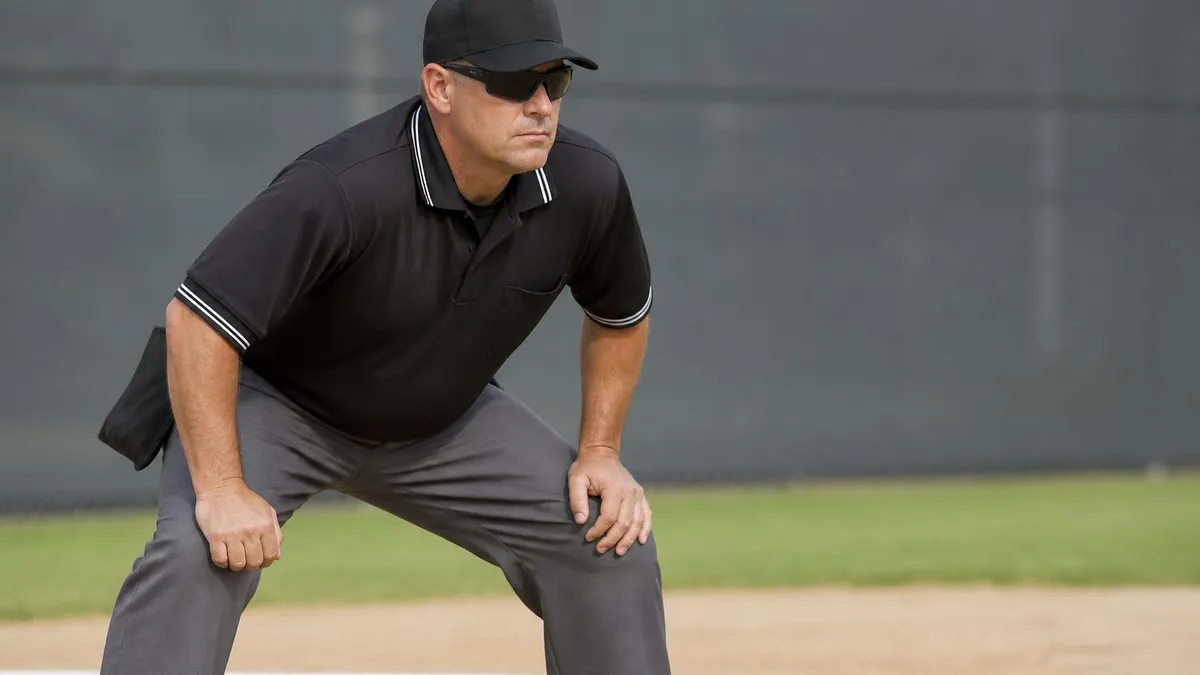
Umpire Signals: The Complete Visual Guide to Every Call Behind the Plate and on the Bases

Umpire Positioning: The Complete Guide to Field Coverage, Mechanics, and Crew Coordination
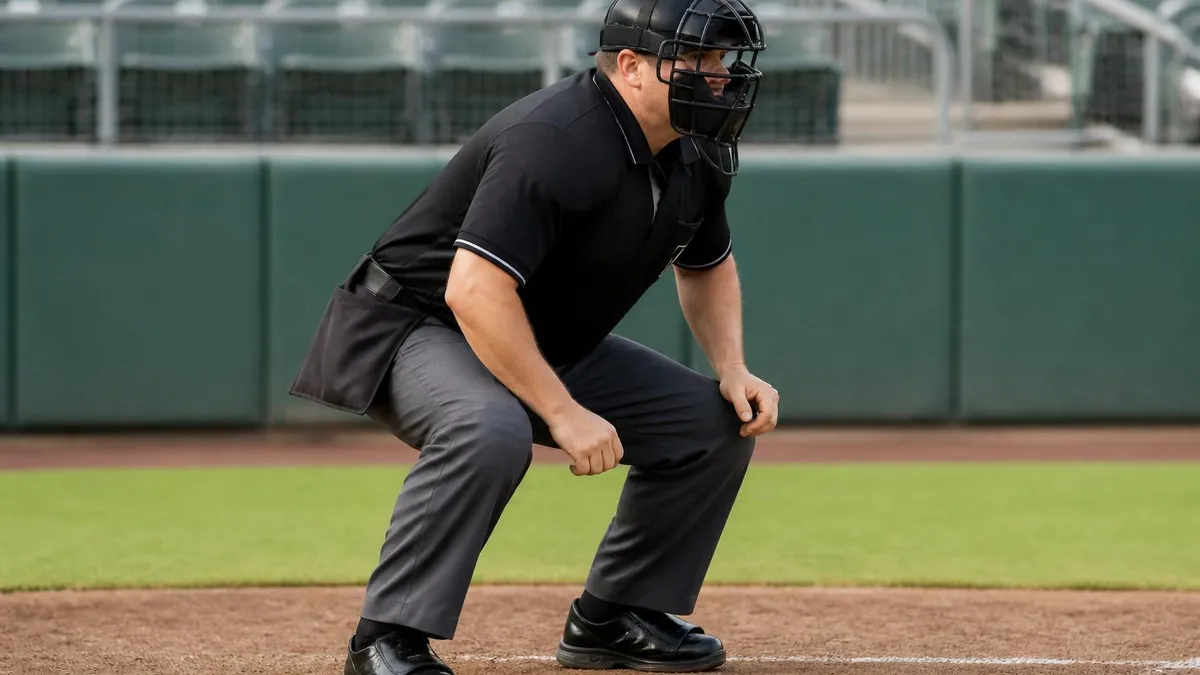
Umpire News: Profession, Career, and Industry Updates

Umpire Jobs: A Complete Career Overview, Duties, and Path to the Field

Umpire in Arkansas: How to Get Certified, Find Games, and Build Your Career
About the Author

Educational Psychologist & Academic Test Preparation Expert
Columbia University Teachers CollegeDr. Lisa Patel holds a Doctorate in Education from Columbia University Teachers College and has spent 17 years researching standardized test design and academic assessment. She has developed preparation programs for SAT, ACT, GRE, LSAT, UCAT, and numerous professional licensing exams, helping students of all backgrounds achieve their target scores.