
ASA Umpire Certification: Complete Training Guide and Requirements 2026 October
Master ASA umpire certification with our complete guide. Requirements, training steps, exam tips, and career advice. 🎯 Start your path today.

The ASA umpire certification program — now operating under USA Softball following the national governing body's 2019 rebrand — remains the gold standard for softball officiating in the United States. Whether you are stepping onto a recreational league field for the first time or eyeing elite tournament assignments at the national level, earning your ASA umpire credential signals to coaches, players, and tournament directors that you have mastered the rules, mechanics, and professionalism the game demands. Understanding the full certification pathway before you invest your time and money is the smartest first move any aspiring official can make.
ASA umpire certification is structured in progressive levels, typically labeled Level 1 through Level 5, with each tier unlocking higher-profile game assignments and greater earning potential. A new umpire begins at Level 1 with a local rules clinic and written exam, then advances by accumulating documented game experience, attending advanced clinics, and passing increasingly rigorous written and practical evaluations. The jump from recreational ball to sanctioned fastpitch or slowpitch tournaments is significant, and the certification ladder is designed to ensure officials are genuinely ready before they are given those responsibilities.
One aspect of the program that surprises many newcomers is just how much emphasis is placed on mechanics and positioning rather than pure rule knowledge. You can memorize every page of the ASA/USA Softball rulebook and still fail a practical evaluation if your footwork is wrong, your timing is rushed, or your signals are ambiguous. The certification process is holistic — evaluators watch how you move on the field, how you communicate with participants, and how you handle conflict, not just whether you can recite the infield fly rule on command.
The written examination component covers a wide range of topics including rules of play, definitions, approved equipment standards, pitching regulations, baserunning, and code of conduct provisions. Candidates who treat the written test as an afterthought routinely underperform, because the questions are scenario-based and require you to apply rules in context rather than simply recall isolated facts. Dedicating structured study time to practice tests and rule-book review pays dividends far beyond passing the exam — it builds the instant recall you need when a live play unfolds in three seconds.
Costs for ASA umpire certification vary by state association and level but are generally accessible. Most Level 1 clinics run between $40 and $80 when bundled with the written exam fee, while upper-level clinics and evaluation camps can reach $150 to $300. Annual membership dues to USA Softball and your local state association add another $30 to $60 per year. Compared to the earning potential — experienced certified umpires routinely earn $30 to $75 per game at the local level and significantly more at tournaments — the upfront investment is modest and recovers quickly once you are actively working games.
Aspiring officials should also plan to purchase approved equipment: a ball-and-strike indicator, a lineup card holder, a brush for cleaning bases, a timing device for applicable game formats, and the proper uniform. Your state association will specify uniform standards, which typically include navy or black slacks, a navy or sky-blue shirt, and a ball cap. Investing in quality equipment from the start communicates professionalism and helps you focus on officiating rather than fumbling with gear during play.
For those ready to deepen their knowledge of asa umpire certification signals and mechanics alongside the certification requirements, the combination of rule mastery and visual communication skills dramatically accelerates your development as a certified official. The sections below walk you through every stage of the process — from initial registration to advanced level progression — so you can approach your certification journey with complete confidence and a clear action plan.
ASA Umpire Certification by the Numbers

ASA Umpire Certification Levels: What Each Tier Requires
Entry point for new officials. Complete a state-association clinic (8–16 hours), pass the written rules exam with a score of 70% or higher, and register with USA Softball. Qualifies you for recreational and local league assignments.
Requires documented game experience (typically 50+ games), attendance at an advanced clinic, and a higher written exam threshold (often 75%). Opens doors to sanctioned local tournaments and higher-level league play.
A rigorous written and practical field evaluation by a certified evaluator. Candidates must demonstrate sound mechanics, correct positioning, and confident game management. Qualifies officials for state-level tournament assignments.
Invitation or application-based. Involves multi-day evaluation camps judged by national-level evaluators. Passing unlocks regional championship and national qualifying tournament assignments across all USA Softball disciplines.
The highest civilian certification tier. Reserved for officials who have demonstrated consistent excellence at national events. Qualifies umpires for USA Softball national championships and elite-level competition across the country.
The clinic and examination process is the foundation upon which every ASA umpire career is built. For Level 1 candidates, the journey begins with registering through your state's USA Softball association website, where you will find a schedule of upcoming clinics in your area.
These clinics are typically held in the early spring before the softball season ramps up, though many associations also offer fall clinics for officials who want to be ready for the following year. Some state associations offer online modules that must be completed before attending the in-person session, covering basic rule definitions and equipment standards to maximize the time spent on hands-on instruction at the clinic itself.
During the in-person clinic, you will work through the rulebook chapter by chapter with experienced instructor-umpires who highlight the scenarios most likely to appear on the written exam and most likely to arise in actual game situations. Special attention is paid to pitching regulations — one of the most frequently misunderstood areas of the softball rulebook — as well as baserunning awards, interference and obstruction, and the proper enforcement of the batting order.
Many clinics also dedicate a full session to field mechanics, where candidates practice pre-pitch positioning, fly-ball coverage, and base rotations with a partner in an empty parking lot or gymnasium before ever stepping onto an actual field.
The written exam itself is administered either at the conclusion of the clinic or online through the USA Softball testing portal within a set window after the clinic date. Questions are multiple choice and scenario-based, requiring you to identify the correct ruling given a specific play situation rather than simply recall a rule number.
Common high-difficulty areas include commitment line and scoring line rules in limited-play formats, illegal pitch enforcement, the appeal play process, and determining when a batted ball is fair versus foul on balls that bounce near the foul line. Candidates who score below the passing threshold — usually 70% at Level 1 — are permitted to retest after a waiting period specified by their state association.
One critical but often overlooked part of the certification process is the background check requirement. USA Softball mandates that all registered umpires submit to a criminal background screening as part of the SafeSport compliance program, which is the national initiative protecting youth athletes. This screening is typically processed through a third-party vendor designated by USA Softball and carries a modest fee of $15 to $30.
Additionally, all active umpires must complete the SafeSport online training course annually — a two-to-four-hour program covering recognizing and preventing abuse and misconduct in youth sports settings. Failing to complete either requirement results in a suspended registration that prevents you from accepting official game assignments.
After passing the written exam and completing all compliance requirements, you will receive a USA Softball umpire registration card and access to the member portal where your certification level, game logs, and clinic attendance records are maintained. Many state associations also issue a physical credential card or lanyard badge that you carry to games.
It is worth noting that your registration must be renewed annually — typically between October and January for the following season — and renewal requires maintaining your SafeSport training current. Lapses in renewal can result in having to re-complete certain clinic requirements depending on how long the registration has been inactive.
New umpires frequently ask how quickly they can advance from Level 1 to Level 2. The honest answer is that it depends almost entirely on the volume of games you work and the quality of mentorship you receive. Officials who actively seek out experienced mentors in their local association, attend optional scrimmage clinics during the preseason, and consistently self-evaluate their performance by taking written practice exams and reviewing positioning diagrams typically advance in one to two seasons.
Those who simply show up to games without deliberate self-improvement often plateau at Level 1 for several seasons before making the jump, or never advance at all because they do not realize how much intentional practice the higher levels demand.
The mentorship aspect of ASA umpire development cannot be overstated. Most state associations pair new Level 1 officials with experienced mentors for their first season, and taking full advantage of that relationship — asking questions after every game, requesting specific feedback on mechanics, and watching how your mentor handles difficult situations with coaches — accelerates your development more than any amount of solo rulebook study. Pairing that mentorship with structured self-study using practice tests and rulebook scenarios creates the most effective development path available to any new umpire entering the certification system.
ASA Umpire Study Strategies: Rules, Mechanics, and Game Management
Effective rules study for ASA umpire certification starts with reading the USA Softball rulebook from cover to cover at least once, then returning to the highest-frequency chapters — pitching, baserunning, batting, and interference — for deep scenario drilling. Use flash cards to memorize definitions and then test yourself with scenario-based questions that mirror the actual exam format. Spending 20 to 30 minutes per day over six weeks is more effective than cramming the night before your clinic date, because distributed practice builds the automatic recall you need mid-game.
Supplement rulebook reading with online practice tests that present realistic play situations: a runner misses second base, an outfielder deflects a fair ball into foul territory, a batter interference occurs on a steal attempt. Each of these scenarios has a specific rule and a specific mechanic attached to it. When you practice identifying the rule and then immediately visualizing the correct mechanic response, you build the cognitive pairing between rule knowledge and on-field action that separates certified officials from self-taught volunteers calling recreational games.

Is ASA Umpire Certification Worth Pursuing? Honest Pros and Cons
- +Earn supplemental income working games on evenings and weekends at your own schedule
- +Deepen your knowledge of softball rules and strategy beyond what most players ever learn
- +Gain professional recognition that opens doors to higher-level tournament assignments
- +Join a structured mentorship network of experienced officials who support your growth
- +Build transferable skills in conflict resolution, communication, and decision-making under pressure
- +Progression through certification levels provides clear, achievable career milestones
- −Early-level game fees are modest — recreational games typically pay $15 to $30 per game
- −Hot summer weather during peak softball season makes physical conditioning a real consideration
- −Verbal conflict with coaches and players is an unavoidable part of the job that some find draining
- −Annual recertification, SafeSport training, and dues create ongoing time and financial commitments
- −Advancement to higher levels requires significant game volume that can be hard to accumulate quickly
- −Equipment, uniform, and clinic costs represent meaningful upfront investment before first paycheck
Pros and Cons at a Glance
| Pros | Cons |
|---|---|
| Earn supplemental income working games on evenings and weekends at your own schedule | Hot summer weather during peak softball season makes physical conditioning a real consideration |
| Deepen your knowledge of softball rules and strategy beyond what most players ever learn | Verbal conflict with coaches and players is an unavoidable part of the job that some find draining |
| Gain professional recognition that opens doors to higher-level tournament assignments | Annual recertification, SafeSport training, and dues create ongoing time and financial commitments |
| Join a structured mentorship network of experienced officials who support your growth | Advancement to higher levels requires significant game volume that can be hard to accumulate quickly |
| Build transferable skills in conflict resolution, communication, and decision-making under pressure | Equipment, uniform, and clinic costs represent meaningful upfront investment before first paycheck |
ASA Umpire Certification Preparation Checklist
- ✓Register with your state USA Softball association and confirm upcoming clinic dates
- ✓Complete any required online pre-clinic modules before the in-person session
- ✓Read through the entire USA Softball rulebook at least once prior to your clinic
- ✓Submit your background check application and SafeSport training well before clinic day
- ✓Purchase required uniform items: approved pants, shirt, hat, and plate shoes
- ✓Acquire essential field equipment including indicator, lineup card holder, and base brush
- ✓Complete at least three full-length practice exams using scenario-based rule questions
- ✓Study the single-umpire and two-umpire mechanics diagrams from the USA Softball manual
- ✓Attend a scrimmage or preseason game to observe a certified umpire before working alone
- ✓Log every game you work in the USA Softball member portal to document advancement progress
Mechanics Score as Much as the Written Exam at Level 3 and Above
At Level 3 and higher, practical field evaluations carry equal or greater weight than written exam scores. Evaluators score your positioning, signal timing, partner communication, and game management in addition to rule knowledge. Officials who focus exclusively on written study and neglect mechanics rehearsal routinely pass the written test but fail the field evaluation — build both skills from day one.
Advancing from Level 1 to Level 2 and beyond requires a strategic approach that combines game volume, self-assessment, and deliberate skill development. The single most important thing a new umpire can do in their first season is accept every game assignment offered, even if it means working small recreational leagues on weekday evenings that pay very little.
Volume creates the repetition necessary to internalize mechanics, build situational awareness, and develop the confidence that evaluators look for when scoring you for advancement. Umpires who cherry-pick only the most convenient games accumulate experience far more slowly than those who treat every outing as a training opportunity.
After each game, take five to ten minutes to mentally replay the most challenging plays and evaluate your response. Did you have the correct angle on that close play at first? Did you communicate clearly with your partner before making the call on that fly ball? Were your signals clean and held long enough to be visible to everyone in the dugout?
This kind of structured self-evaluation, ideally combined with written notes, creates a personal development log that highlights recurring gaps for targeted improvement. Many experienced umpires keep a small notebook specifically for post-game reflections, and the pattern of growth visible in those notes over a full season is genuinely motivating.
Evaluator relationships are critically important for advancement to Level 3 and above. In most state associations, the path to a formal evaluation is not simply passing a time threshold — you need a recommending umpire or evaluator who has observed your work and believes you are ready. This means making yourself visible to evaluators by volunteering to work clinics as a demonstrator, attending association meetings, and networking with senior officials at tournaments. Treating every game as a potential observation opportunity keeps your performance consistently high rather than reserving your best effort for formal evaluation dates.
The practical field evaluation itself is a structured observation session where an evaluator assigned by the state association watches you work a real game — usually a competitive local or junior varsity game with meaningful stakes for participants. You will not be told exactly what the evaluator is scoring, but published evaluation rubrics cover plate mechanics and timing, base mechanics and rotations, signal quality, verbal communication, and overall game management impression. Scores are usually provided on a numerical scale, and candidates who do not pass receive written feedback identifying the specific areas that need improvement before a re-evaluation is attempted.
Between formal evaluations, advanced-level clinics offered by your state association or through USA Softball's national clinic program provide structured instruction from evaluators and national-level officials. These are not review sessions — they introduce more complex mechanics scenarios, multi-crew coordination techniques, and in-depth rules discussions on topics like the international tiebreaker rule, re-entry provisions, and tournament-specific code exceptions. Attending these clinics demonstrates initiative to association leadership and exposes you to the standards expected at the next certification tier before you are formally evaluated against them.
Many states also offer joint evaluation camps in partnership with neighboring state associations, which expose you to evaluators from outside your home state and to the regional norms that will matter if you pursue Level 4 regional assignments. Travel to these camps is an investment, but the networking, instruction quality, and cross-state perspective on officiating standards is uniformly reported by advancing umpires as one of the most valuable development experiences available. If your budget allows, prioritizing at least one out-of-state camp during your Level 2 to Level 3 transition window pays significant dividends in your evaluation performance.
It is also worth understanding how USA Softball's national rating system interacts with your state certification level. At Level 4 and Level 5, a national rating that is maintained through documented performance at qualifying events determines your eligibility for national championship assignments.
The rating is not automatic with certification — it requires consistent high-performance evaluations at regional events over multiple seasons. Planning your advancement trajectory with this long-term view helps you make strategic decisions about which tournaments to work, which associations to build relationships with, and how to position yourself for the most competitive national assignments the sport has to offer.

USA Softball umpire registrations must be renewed annually, typically between October 1 and January 31 for the following season. Allowing your registration to lapse — even by a few weeks — can result in suspended game eligibility and may require you to repeat SafeSport training or certain clinic components depending on your state association's reinstatement policies. Mark your renewal deadline in your calendar and complete it early to avoid disrupting your assignment schedule.
The career earnings and professional opportunities available to certified ASA umpires are far more substantial than most people realize when they first sign up for a Level 1 clinic. At the recreational level, game fees of $20 to $35 per game are typical for certified officials working adult slowpitch leagues, which can translate to $200 to $400 per month during peak season if you are working three to five games per week.
At the local travel ball and competitive fastpitch level, fees typically range from $45 to $75 per game, with multi-game tournament days potentially generating $150 to $300 in a single weekend. As you advance to state and regional tournament assignments, per-game fees and daily guarantees increase further, and the highest-level national assignments typically include travel reimbursement and housing in addition to competitive game fees.
Tournament directing organizations and sports complex operators actively seek certified umpires, and many experienced officials develop long-term relationships with specific tournament organizers who assign them preferentially to large events. Building this kind of relationship requires consistent professionalism, zero no-shows or last-minute cancellations, and the kind of composed demeanor that keeps tournament play moving smoothly even when weather, schedule delays, and difficult personalities create friction. Tournament directors talk to each other, and a reputation for reliability and composure travels quickly within regional softball organizing circles.
One often-overlooked revenue stream for certified umpires is rules clinic instruction. Many recreational leagues and travel ball organizations pay certified officials to run abbreviated rules clinics for coaches and players at the beginning of each season. These are typically two-hour sessions covering the most commonly misunderstood rules, and certified umpires with strong communication skills can charge $75 to $150 for a single clinic session. Building this into your annual income alongside game assignments diversifies your earnings and positions you as a subject-matter expert in your local softball community, which indirectly generates more game assignment opportunities.
The physical demands of umpiring are real and should factor into your career planning. Plate umpires in particular spend two or more hours in a crouched stance, track fast-moving balls, and must move quickly to cover plays at the plate.
Investing in quality plate shoes with proper arch support, wearing appropriate protective gear including a chest protector and shin guards for fastpitch assignments, and maintaining basic cardiovascular fitness extends your officiating career and reduces injury risk. Many umpires who began at age 25 or 30 are still actively working competitive games in their 50s and 60s because they prioritized physical health alongside professional development.
State associations also offer leadership roles for experienced certified umpires that provide additional income and professional recognition beyond game assignments. Association board positions, clinic instructor roles, and evaluator certifications are pathways into the administrative side of officiating that many senior umpires find deeply rewarding. Becoming a certified evaluator allows you to directly shape the next generation of officials while earning compensation for your expertise, and it builds the kind of association credibility that makes your game assignment requests a top priority for schedulers.
For umpires considering whether to pursue softball officiating as a primary career rather than supplemental income, it is important to understand the realistic ceiling. Only a very small number of officials reach the national level where full-time income from officiating alone is feasible, and even those officials typically supplement championship event income with clinic instruction, evaluator fees, and sports administration roles.
For the vast majority of certified umpires, it is an extraordinarily rewarding avocation that provides meaningful supplemental income, consistent physical activity, deep engagement with a sport they love, and a professional community of fellow officials who become genuine friends over years of shared experience on the diamond.
For officials who want to explore all dimensions of the role before committing to the certification pathway, reviewing resources on umpire careers, positioning standards, and news from the officiating profession provides a comprehensive picture of what a long-term investment in softball officiating looks like at every stage of the journey from new registrant to elite national official.
Practical preparation tips can make the difference between a candidate who passes their Level 1 exam on the first attempt and one who struggles through multiple retests before earning certification. The most impactful preparation habit is working through scenario-based practice questions daily in the weeks leading up to your clinic and written exam.
Scenario questions force your brain to connect abstract rule language to specific game situations, which is exactly what the exam tests and exactly what you need on the field when a play unfolds in real time. Passive reading of the rulebook is necessary but not sufficient — active retrieval practice through testing is what builds durable knowledge.
Time management on the written exam is a practical skill unto itself. Many candidates run out of time because they get stuck on a difficult question and spend several minutes debating two plausible answers. The correct strategy is to mark any question that requires more than 30 seconds of consideration, move to the next question, and return to flagged items only after completing the entire exam.
This ensures that you capture every question where you have confident knowledge before spending extra time on the genuinely difficult scenarios. Most candidates find that returning to flagged questions with fresh eyes after completing the rest of the exam results in better answers than the extended deliberation they were doing the first time through.
Equipment preparation for your practical evaluation deserves as much attention as study preparation for the written exam. Your uniform must be clean, pressed, and fully compliant with your association's specifications on evaluation day — showing up with a mismatched hat or the wrong color shirt creates an immediate negative impression before you have called a single pitch.
Your indicator should be fresh, your lineup card holder accessible, your brush ready. Eliminating equipment fumbles from your evaluation performance allows all of your mental attention to stay on the game rather than on logistics, and evaluators absolutely notice officials who are organized and professional in their preparation.
Physical warm-up before plate work is something experienced umpires consistently recommend but new candidates routinely skip. Squatting in the plate umpire position for two or more hours without preparation significantly increases fatigue and discomfort, which degrades your timing and your temper. A five-minute warm-up that includes leg swings, hip circles, and a few practice squats before the first pitch costs almost nothing in time but pays off across the entire game in better mechanics, faster reactions, and a more composed demeanor through late innings when your body starts accumulating fatigue.
Mental rehearsal is another high-use preparation tool that elite officials across all sports use consistently. Before your evaluation game or your first significant tournament assignment, take 15 minutes to visualize yourself handling the most challenging scenarios that commonly arise: a swipe tag play at second with both the runner and fielder reacting simultaneously, an infield fly ball in shallow center with multiple fielders converging, a coach approaching you after a judgment call you are confident about.
Mentally rehearsing your composed, professional response to these scenarios primes your nervous system to execute them calmly when they actually occur rather than reacting impulsively under pressure.
Building a study group with other certification candidates in your state association is a powerful force multiplier that most new umpires overlook. When two or three candidates work through rulebook scenarios together, debate the correct ruling, and explain their reasoning to each other, they all learn more effectively than they would studying alone.
Teaching a concept to someone else is the most reliable way to identify gaps in your own understanding — if you cannot explain why a ruling is correct, you do not yet understand it well enough to apply it confidently on the field. Study groups also create accountability that keeps preparation consistent in the weeks when motivation naturally fluctuates.
Finally, approach your first post-certification game season with a growth mindset rather than a performance mindset. You will miss calls. You will find yourself uncertain about a ruling in a live game. You will handle a conflict with a coach less smoothly than you wished. These are not failures — they are the inevitable and necessary experiences through which every umpire develops.
What separates officials who grow rapidly from those who plateau is the willingness to honestly evaluate those imperfect moments, identify what to do differently, and deliberately practice the improved response before the next game rather than simply hoping to do better next time.
Sample Umpire Certification Practice Questions
Try these questions from our free Umpire Certification practice tests. The correct answer and an explanation follow each question.
What verbal announcement must an umpire make when invoking the infield fly rule?
- A. 'Infield fly if fair!'
- B. 'Automatic out — batter is out!'
- C. 'Fly ball rule in effect!'
- D. 'Batter is out on infield fly!'
Answer: A. 'Infield fly if fair!'
The proper call is 'Infield fly if fair!' so all players understand the rule is invoked before the ball lands, since the batter is out regardless of whether the fielder catches it.
How should an umpire signal interference?
- A. Wave both arms above the head and call 'Interference!'
- B. Point at the player who interfered and call 'That's interference!'
- C. Blow a short whistle blast and hold up one finger
- D. Cross both arms in an X-shape at chest level
Answer: B. Point at the player who interfered and call 'That's interference!'
The umpire points at the offending player and clearly calls 'That's interference!' to identify who committed the violation and remove any ambiguity.
In a two-umpire system, how do umpires communicate coverage responsibilities before a play develops?
- A. The plate umpire calls out the base umpire's name to direct coverage
- B. Umpires use pointing gestures and eye contact to communicate coverage pre-play
- C. A predetermined whistle code signals which umpire covers which base
- D. No pre-play communication between umpires is permitted during the game
Answer: B. Umpires use pointing gestures and eye contact to communicate coverage pre-play
Umpires use subtle pointing gestures and eye contact to communicate coverage responsibilities in real time, keeping communication unobtrusive and quick.
What is the primary role of an umpire during a game?
- A. To cheer for the home team
- B. To enforce the rules and maintain fairness
- C. To assist players with strategies
- D. To manage team substitutions
Answer: B. To enforce the rules and maintain fairness
The primary role of an umpire or referee during a game is to ensure fair play by strictly enforcing the established rules of the sport. They make impartial decisions, call fouls or violations, and manage the game flow to maintain integrity and provide an equitable environment for all competitors. Their authority is crucial for the orderly conduct of the game.
Umpire Questions and Answers
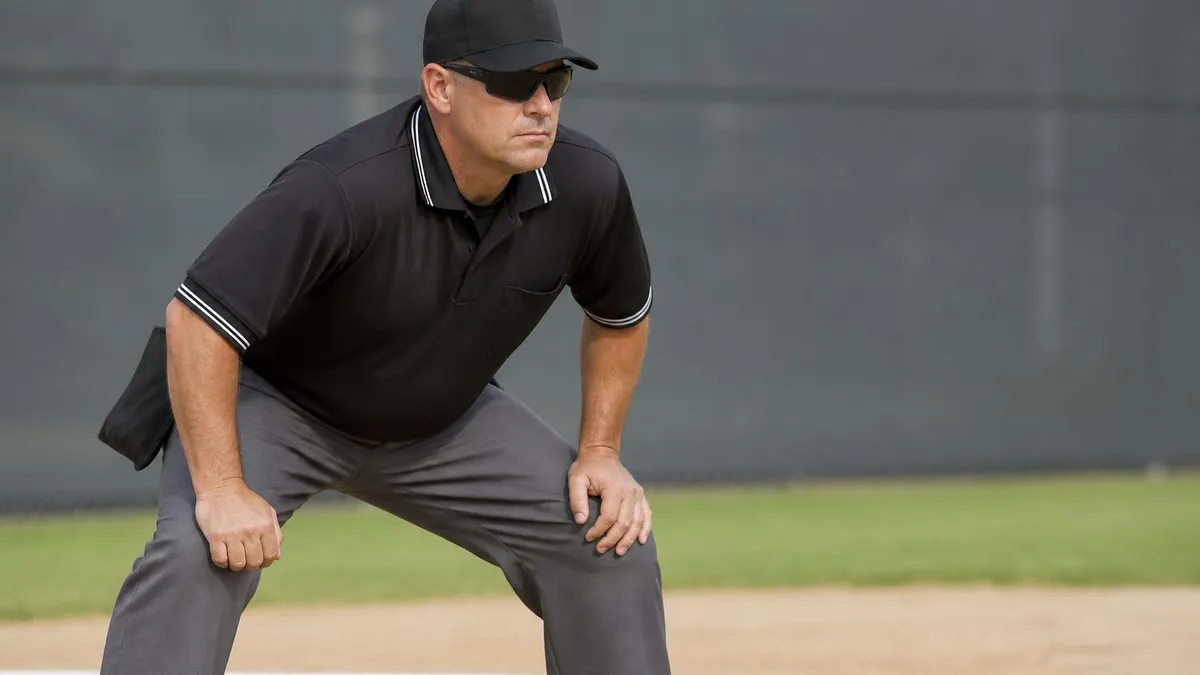
Umpire Signals: The Complete Visual Guide to Every Call Behind the Plate and on the Bases

Umpire Positioning: The Complete Guide to Field Coverage, Mechanics, and Crew Coordination
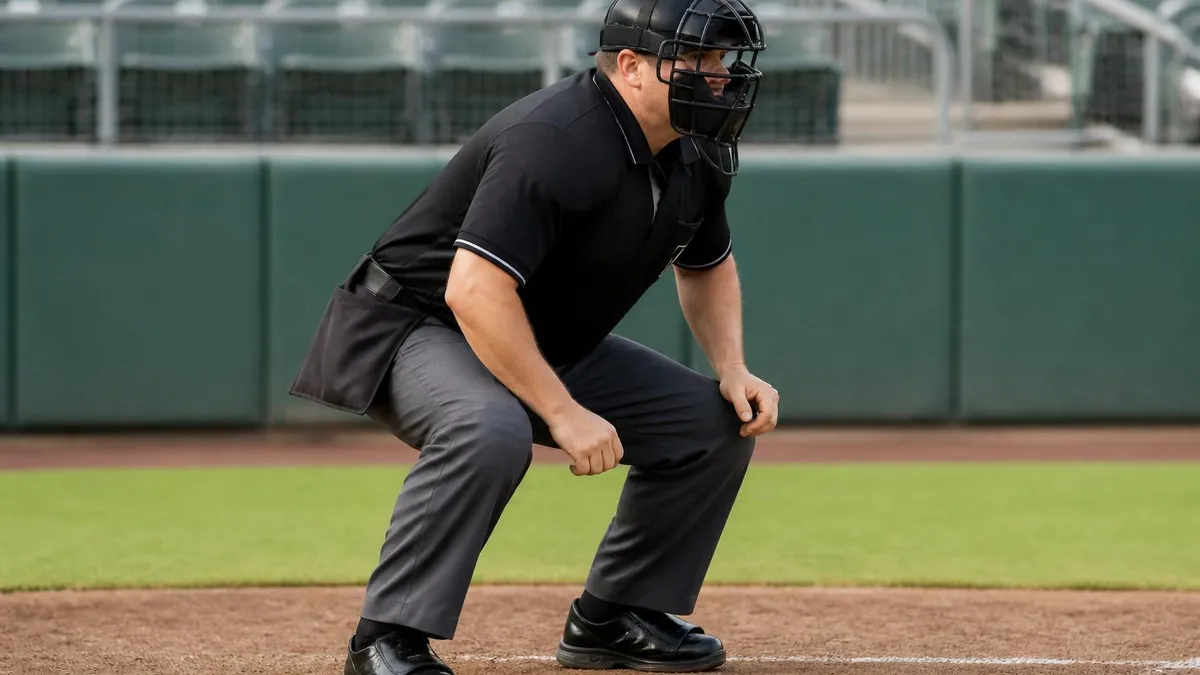
Umpire News: Profession, Career, and Industry Updates

Umpire Jobs: A Complete Career Overview, Duties, and Path to the Field

Umpire in Arkansas: How to Get Certified, Find Games, and Build Your Career
About the Author

Educational Psychologist & Academic Test Preparation Expert
Columbia University Teachers CollegeDr. Lisa Patel holds a Doctorate in Education from Columbia University Teachers College and has spent 17 years researching standardized test design and academic assessment. She has developed preparation programs for SAT, ACT, GRE, LSAT, UCAT, and numerous professional licensing exams, helping students of all backgrounds achieve their target scores.