
Umpire Hand Signals: The Complete Guide to Baseball's Visual Language
Master umpire hand signals for baseball. Learn every official gesture, what they mean, and how to use them confidently on the field. ✅

Umpire hand signals are the universal visual language that keeps baseball organized, safe, and fair across every level of play — from Little League to the Major Leagues. Every time a plate umpire punches out a strikeout or a base umpire thrusts a fist skyward to signal an out, they are communicating a ruling to players, coaches, fans, and fellow officials in a way that transcends the noise of a packed stadium. Understanding these gestures is not just useful knowledge — for anyone pursuing umpire certification, it is absolutely essential material.
The history of umpire hand signals stretches back to the early twentieth century, when the need to communicate rulings clearly in loud ballparks became apparent. Before formal signals were standardized, umpires relied primarily on voice calls, which could be misheard or misinterpreted. The development of a codified signal system brought consistency to the game and reduced disputes at every level. Today, the signals used by Little League officials mirror those used in professional baseball, creating a unified visual vocabulary that anyone on the field can read instantly.
What makes hand signals so critical in umpiring is their function as a definitive, unambiguous statement of a ruling. A called strike is not just spoken — it is signaled with authority, giving the catcher, batter, and pitcher a clear confirmation. A safe call involves both an outward arm extension and a verbal call, reinforcing the ruling through two sensory channels simultaneously. This redundancy reduces confusion and helps maintain the rhythm of the game, which is especially important during high-pressure moments in close contests.
For aspiring umpires preparing for certification exams, mastering the full catalog of hand signals is a foundational requirement. Certification bodies including Little League International, NASO, and various state high school associations all test candidates on their knowledge of proper mechanics and signal execution. Getting the signals wrong during a practical evaluation — or misidentifying a signal on a written exam — can cost candidates their certification. The stakes are real, and preparation must be thorough and systematic.
Beyond the exam room, proper signal execution builds credibility on the field. A crisp, confident out signal commands respect from players and coaches in a way that a hesitant or poorly executed gesture simply cannot. Experienced umpires know that body language and signal clarity are just as important as rulebook knowledge — you can know every rule perfectly, but if your signals are weak or inconsistent, you will face unnecessary challenges and arguments from coaches who interpret ambiguity as an invitation to dispute the call.
This guide covers every major umpire hand signal used in baseball, explains the proper mechanics for executing each one, and provides context for when and why each signal is used. Whether you are a brand-new umpire working through your first certification course or a veteran looking to sharpen your mechanics, this resource will give you a complete and practical framework. You can also explore the latest developments in officiating by visiting our coverage of umpire hand signals and related topics across the officiating world.
By the end of this guide, you will understand not just what each signal looks like, but why it exists, how it fits into the broader system of game management, and what common mistakes to avoid. Strong signal mechanics are a hallmark of professional umpires at every level, and mastering them early in your career will set a strong foundation for everything that follows.
Umpire Hand Signals by the Numbers

Core Categories of Umpire Hand Signals
The most frequently used signals in baseball, executed by the plate umpire on every pitch. Proper mechanics include a clenched fist punch for strikes and a verbal ball call without a hand signal for balls, keeping the rhythm of the game crisp and clear.
Base and plate umpires use these signals after every play involving a baserunner. The out signal is a raised fist or pointing thumb; the safe signal is two outward sweeping arms held parallel to the ground. Both require confident, full-extension execution.
Used when a batted ball lands near a foul line. Fair balls are signaled by pointing down the line toward fair territory; foul balls are indicated by raising both arms overhead or pointing toward foul territory. Timing and positioning are critical.
These are situational signals used when a fielder or runner commits interference or obstruction. The umpire typically calls time and points to the offending player, then administers the proper penalty according to the rulebook before play resumes.
Umpires signal 'Time' by raising both hands above the head with palms outward to freeze all action on the field. The 'Play' signal restarts action, typically with a pointed arm and verbal 'Play ball.' These bookend every stoppage in the game.
The plate umpire carries the heaviest signal workload in any baseball game. On every single pitch — and there can be more than two hundred in a nine-inning game — the plate umpire must deliver a clear, decisive call using both voice and body.
The strike signal is perhaps the most recognized gesture in all of sports: a sharp, punching motion with the right hand, fist clenched, arm driving outward from the body at roughly chest height. The motion should be decisive and full-extension, not a lazy flick of the wrist that might be misread from the dugout or the press box.
For balls, the standard mechanic is verbal only — the plate umpire calls 'Ball' clearly but does not use a hand signal for balls in most organized baseball formats. This distinction matters on certification exams, where candidates are tested on knowing when signals are required versus when they are not. In some youth leagues, plate umpires may extend a hand signal for balls to assist scorekeepers and new players, but at the high school level and above, the ball call is strictly verbal, keeping the game moving efficiently without unnecessary gestures.
The called third strike is one of the most dramatic moments in baseball officiating. The plate umpire has several accepted mechanics for signaling a called third strike, and different umpires develop personal styles within the boundaries of accepted mechanics. The classic 'punch out' involves a cross-body arm extension with the fist driving from the left shoulder across to the right, often accompanied by a verbal call of 'Strike three!' or simply 'He's out!' Some umpires use a straight-ahead punch motion; others use a hammer motion. What matters is consistency, clarity, and authority.
Fair and foul calls at the plate level require the plate umpire to make a rapid determination based on where the ball first contacts the ground relative to the foul lines extending from home plate. For a fair ball, the umpire points emphatically toward fair territory — down the first or third base line — and typically does not verbalize the call, allowing the play to continue.
For a foul ball, the umpire raises both arms with fists clenched overhead or points toward foul territory while calling 'Foul!' loudly. The verbal component on foul balls is important because it immediately stops play.
The checked swing is one of the more nuanced calls at the plate, requiring the plate umpire to judge whether a batter completed a swing — legally defined as the bat passing the front of the body or the wrist rolling over — or held up. If the plate umpire rules no swing, the catcher or manager may appeal to the base umpire, who has a better sightline along the first or third base line.
The base umpire then signals either 'Yes, he went' (out signal or 'Yes' with a fist) or 'No, he didn't' (safe signal or a shake of the head). Knowing when to appeal and how to signal the appeal response is tested material on certification exams.
Batter interference is another plate umpire responsibility that requires a specific signal sequence. When the batter interferes with the catcher's throw — typically by making contact with the catcher or the throw while remaining in the batter's box — the plate umpire calls time, points to the batter, and signals 'Out.' The runner is typically returned to the base they occupied before the pitch, and the plate umpire must communicate clearly to both the offense and defense what the ruling is. This type of play often generates questions from coaches, so clear signal mechanics help prevent extended arguments.
Plate umpires also manage the infield fly rule, which requires a specific verbal announcement and, in many formats, a signal pointing upward to alert fielders, runners, and coaches that the rule is in effect. When an umpire declares the infield fly rule, the batter is automatically out regardless of whether the fielder catches the ball. The umpire's clear signal here prevents runners from being confused about whether they should tag up or advance. Mastering the timing and execution of this call is a mark of an experienced plate umpire who understands both the rulebook and game management.
Base Umpire Signal Mechanics in Detail
The out signal is one of the most important tools in a base umpire's arsenal. Executed correctly, it involves raising the right hand with a clenched fist, arm extended upward at approximately a 45-degree angle, and holding the signal for one to two full seconds before relaxing. The umpire should be set in a stationary position before making the signal — moving while signaling creates ambiguity and invites arguments from coaches and players who may question whether the umpire was in proper position to make the call.
In two-umpire mechanics, the base umpire stationed at second base must cover a wide range of plays, including steals at second, pick-off attempts, and tag plays on balls hit to the outfield. Each of these scenarios requires the umpire to read the play, move to an optimal position, set their feet, and then deliver a clear, confident out signal when applicable. Umpires who rush their signal before they are properly positioned often misjudge plays, while those who pause an extra beat to get set consistently make cleaner, more defensible calls.

Visual Signals vs. Verbal-Only Calls: Strengths and Limitations
- +Visual signals are universally readable regardless of crowd noise or field conditions
- +Simultaneous voice and signal calls reinforce accuracy and reduce misinterpretation
- +Consistent signal mechanics build umpire credibility with players and coaches
- +Signals allow coaches and players far from the play to immediately understand the ruling
- +Standardized signals create a shared language across all levels of baseball
- +Clear signals reduce the frequency and duration of on-field arguments from coaches
- −Poor signal mechanics can be misread from a distance, especially in dim or bright lighting
- −Overly theatrical signals can appear showboating and undermine professional credibility
- −Signals must be held long enough to be seen, which can slow game pace slightly
- −Inconsistent signal execution creates confusion when umpires vary mechanics mid-game
- −Signals can be misread by base coaches if the umpire's positioning is suboptimal
- −New umpires may signal before getting set, leading to poor positioning and bad calls
Umpire Hand Signal Execution Checklist
- ✓Get set with feet stationary before delivering any signal on a close play.
- ✓Use full-extension arm movements — never a partial or lazy gesture.
- ✓Hold each signal for one to two full seconds before relaxing the arm.
- ✓Pair every signal with the appropriate verbal call at full volume.
- ✓Use the right-hand punch for strike calls, keeping the motion crisp and cross-body.
- ✓Sweep both arms outward fully for safe calls, not just one arm.
- ✓Raise both fists overhead for foul ball calls to immediately stop all baserunner movement.
- ✓Point emphatically toward fair territory for fair ball calls near the lines.
- ✓Use the time signal (both hands raised, palms outward) clearly before any dead-ball situation.
- ✓Maintain a neutral facial expression while signaling to avoid projecting emotion on close calls.
Signal Confidence Is Evaluated as a Separate Competency
On practical certification evaluations, signal mechanics are graded independently from rulebook knowledge. An umpire who knows every rule but delivers signals with hesitation, weak extension, or poor timing will lose points in the mechanics category. Practice your signals in a mirror, record yourself on video, and get feedback from experienced umpires before your practical exam — strong mechanics take deliberate repetition to build.
Common signal mistakes are a major focus of umpire training programs because they are both easy to develop and surprisingly hard to break once ingrained. The most pervasive error among new umpires is signaling before getting set — that is, delivering a call while still moving toward the play.
This happens because new umpires feel pressure to signal quickly and feel that waiting makes them look uncertain. In reality, the opposite is true: an umpire who stops, sets their feet, and then signals with authority looks far more decisive than one who signals on the run with a weak, rushed gesture.
Another frequent mistake is the dropped signal — relaxing the arm or hand too quickly after delivering a call, especially on plays where immediate argument begins from the defensive team. When an umpire drops a safe signal the moment a fielder begins to argue, it creates the impression that the umpire is reconsidering the call or lacks confidence in the ruling. The correct response is to hold the signal firmly and maintain eye contact with the arguing party, then calmly explain the ruling once the signal is fully delivered and the initial reaction has subsided.
Inconsistent signal mechanics are another red flag for evaluators and experienced coaches alike. If a plate umpire uses three different strike signals in the same game — a punch one inning, a hammer motion the next, and a side-arm sweep in the third — coaches and players will notice. Inconsistency suggests a lack of training or preparation and erodes the umpire's authority over the course of the game. Every umpire should develop a consistent, repeatable set of mechanics and stick to them, game after game, until they become second nature and require no conscious thought.
Over-signaling is a less common but equally damaging mistake. Some umpires develop the habit of adding extra flourishes to their signals — elaborate wind-ups, multiple repetitions of the same gesture, or theatrical pauses before delivering a call. While some personality is acceptable and even enjoyable for fans, excessive theatrics can come across as disrespectful to players, shift attention away from the game, and invite scrutiny from supervisors and certification evaluators. The standard is authority and clarity, not entertainment.
Under-signaling is the mirror problem. An umpire who delivers signals with minimal arm extension, quiet verbal calls, and a hesitant body posture will consistently face more arguments and challenges than one who projects confidence. On a busy weekend tournament with multiple games and tired umpires, under-signaling is a common fatigue response — but it is precisely when umpires need to double down on mechanics to maintain control of the game. Developing the physical and mental stamina to signal with full authority in the seventh inning of a doubleheader is part of what separates good umpires from great ones.
Miscommunication between umpire partners is another signal-related issue that affects two and three-umpire crews. When base umpires and plate umpires do not communicate clearly before and during the game about who has responsibility for specific calls — such as the catch/no-catch call on pop flies in the infield or the fair/foul call near the first base bag — conflicting signals can result. Pre-game conferences between umpire partners should always cover signal assignments and communication protocols to prevent these situations from arising mid-game.
Finally, one of the subtler signal errors involves the timing of dead-ball signals. Umpires sometimes fail to call time quickly enough after an injury, a fan interference situation, or a ground rule double, allowing baserunners to advance when the play should have been stopped. The time signal — both hands raised with palms outward, voice call of 'Time!' — must be immediate and authoritative in these situations. Delayed time calls create complicated administrative situations that are difficult to unwind and can generate significant controversy, particularly in competitive games where baserunner position matters enormously for run-scoring.
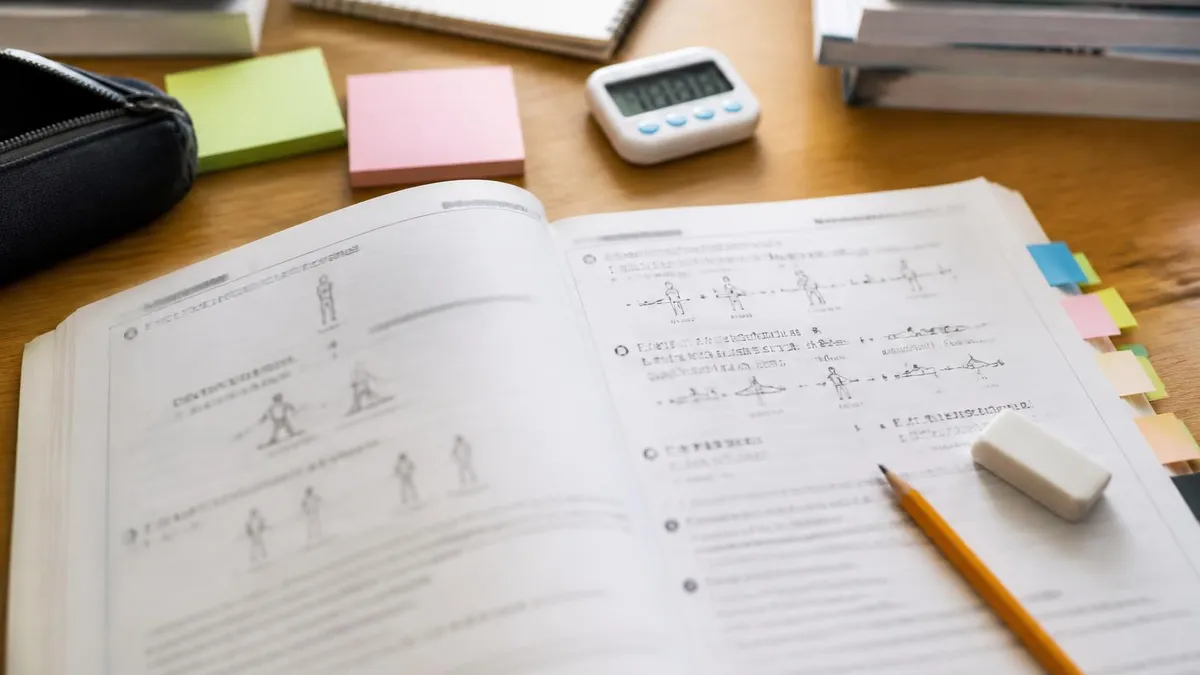
Most umpire certification programs include a practical field evaluation where trained evaluators grade your signal mechanics separately from your rulebook knowledge. Weak, inconsistent, or incorrectly timed signals can cause candidates to fail the practical component even if their written exam score is high. Practice your mechanics with a partner or in front of a mirror at least two weeks before your evaluation date to build muscle memory and consistency.
Umpire hand signals take on additional complexity at higher levels of play, where the speed of the game, the sophistication of coaches and players, and the scrutiny of fans and media all increase simultaneously. At the high school varsity level and above, umpires are expected to execute signals with a level of precision and authority that goes beyond simple correctness — the signals must project unquestioned confidence and command.
Coaches at this level are experienced enough to probe for hesitation or inconsistency, and an umpire who signals weakly on a critical call in the late innings of a playoff game can expect that hesitation to be tested immediately.
In two-umpire and three-umpire mechanics, the coordination of signals between crew members becomes a significant part of game management. For example, when a potential catch and tag play occurs simultaneously — say, an outfielder diving for a ball while a runner attempts to score — the umpires must communicate their responsibilities instantaneously and deliver their respective signals without creating confusion. Pre-game conferences and clear communication protocols are essential, and experienced crews develop a shared rhythm that allows them to cover the field efficiently without stepping on each other's calls.
Amateur umpires working youth baseball leagues face a different set of challenges. In these settings, the signals serve a dual educational function: they communicate rulings to players and coaches, but they also model correct officiating behavior for players who are still learning the game. A plate umpire working a ten-and-under game who signals strikes with authority and consistency is helping young players understand what a strike looks like, building their baseball literacy alongside their competitive skills. This educational dimension of umpiring is often underappreciated but is one of the most meaningful aspects of officiating at the youth level.
Umpire signal mechanics also intersect with electronic review systems at higher levels of play. In Major League Baseball, replay review has changed some aspects of how umpires communicate during reviewed plays — umpires may now make an initial call and then communicate with the replay crew via headset before confirming or reversing the ruling. At the collegiate and professional levels below MLB, replay systems are being introduced incrementally. Understanding how signals interact with these review systems — including when to hold a signal pending review and when to make a definitive call — is an emerging area of umpire training.
Weather and field conditions can also affect signal execution in practical ways. Bright afternoon sunlight directly in the line of sight between an umpire and the third base dugout can make signals harder to see. Rain can make holding a clenched fist uncomfortable. Cold weather affects grip and arm extension. Experienced umpires adapt to these conditions without compromising signal quality, sometimes repositioning slightly to improve visibility or adjusting signal intensity to compensate for reduced visibility. Being aware of environmental factors and proactively managing them is a mark of professionalism.
The relationship between signal mechanics and game tempo is another dimension worth understanding. Umpires who signal efficiently — delivering clear, decisive calls without unnecessary delay — contribute to a faster, more fluid game experience. Conversely, umpires who pause excessively before signaling, or who repeat signals multiple times, can slow the pace of play meaningfully over the course of a game. At a time when baseball at every level is actively working to improve pace of play, umpires who understand and contribute to game tempo management are seen as assets to the sport.
For those actively preparing for certification exams, staying current on how signal mechanics are taught and evaluated is important. Resources like ongoing coverage of umpire hand signals in the broader officiating community can help you understand how mechanics evolve over time and what evaluators at different certification levels are looking for in practical demonstrations. The standards are not static — they evolve as the game evolves, and the best umpires make a commitment to continuous improvement throughout their careers.
Preparing for the signal mechanics portion of your umpire certification exam requires a deliberate, structured approach. Written exams will test your ability to identify what each signal means, when it is used, and what the correct mechanic is for specific situations — such as whether to signal a ball call, when to use both arms versus one arm, and how to communicate an appeal play ruling. The practical evaluation adds a performance dimension: you must demonstrate these mechanics in real time, often under observation conditions that simulate the pressure of an actual game.
One of the most effective preparation strategies is video study. Watching high-level umpires — Major League or top college games — with a specific focus on signal mechanics will quickly reveal patterns and best practices that textbook descriptions alone cannot fully convey. Pay attention to how umpires set their feet before signaling, how long they hold each signal, how they project their voice alongside their gestures, and how they respond when their signals are immediately challenged by coaches or players. Video study turns abstract mechanics descriptions into concrete, observable behaviors you can replicate.
Partner practice is equally valuable. Working with another umpire in training — running through simulated play scenarios, calling signals, and receiving feedback — is the fastest way to build the muscle memory and the real-time decision-making skills that game situations require. Set up a camera to record practice sessions so you can review your own mechanics objectively. Self-critique based on video review is often more effective than relying solely on partner feedback because it allows you to see exactly what evaluators will see when they observe you in the field.
Flashcard study for the written exam should cover every standard signal in the official mechanic guide used by your certifying organization. Know the correct mechanic for each signal — which hand, which arm position, whether a verbal call accompanies it, and how long the signal should be held. Also study the scenarios in which signals are not used, such as ball calls at the plate level in standard high school and adult amateur play, since knowing when not to signal is just as testable as knowing how to signal correctly.
Physical preparation is an often-overlooked component of signal readiness. Umpires who are not physically comfortable executing full-extension arm movements under protective gear — chest protector, mask, shin guards — sometimes develop signal habits that are constrained by the equipment rather than shaped by proper mechanics. Practice your signals while wearing your full plate gear to ensure that your mechanics translate from the practice field to the game field without modification. The gear should never be an excuse for weak or partial signals.
Mental preparation is the final piece. On game day, umpires who are anxious or distracted will often rush their signals or second-guess their calls. Developing a pre-game mental routine — reviewing your signals, visualizing difficult plays, and setting an intention to be decisive and confident — is something that experienced umpires treat as just as important as physical warm-up.
The best umpires approach every game with a clear mindset: they are the authority on the field, their signals are the final word on every ruling, and their job is to communicate those rulings as clearly and consistently as possible for the benefit of the game.
As you advance through certification levels and gain on-field experience, your signal mechanics will evolve from something you think consciously about to something that happens automatically — a deeply ingrained set of physical habits that activate the moment your eyes and brain process a play.
Reaching that level of automaticity takes hundreds of games and thousands of repetitions, but every umpire who has achieved it will tell you that it is exactly what allows them to focus on the most difficult and nuanced part of the job: making the right call, every time, under pressure, in a game that never stops moving.
Umpire Questions and Answers
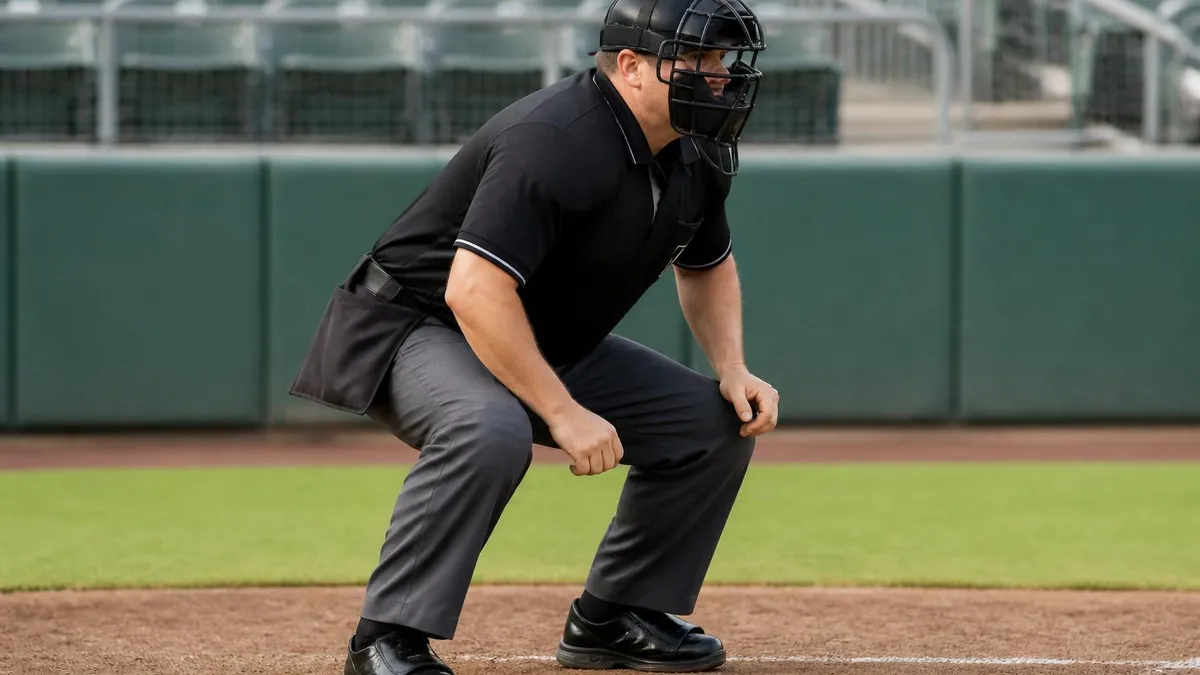
Umpire News: Profession, Career, and Industry Updates

Umpire in Arkansas: How to Get Certified, Find Games, and Build Your Career

Umpire Clipart: A Complete Guide to Finding, Using, and Understanding Umpire Imagery
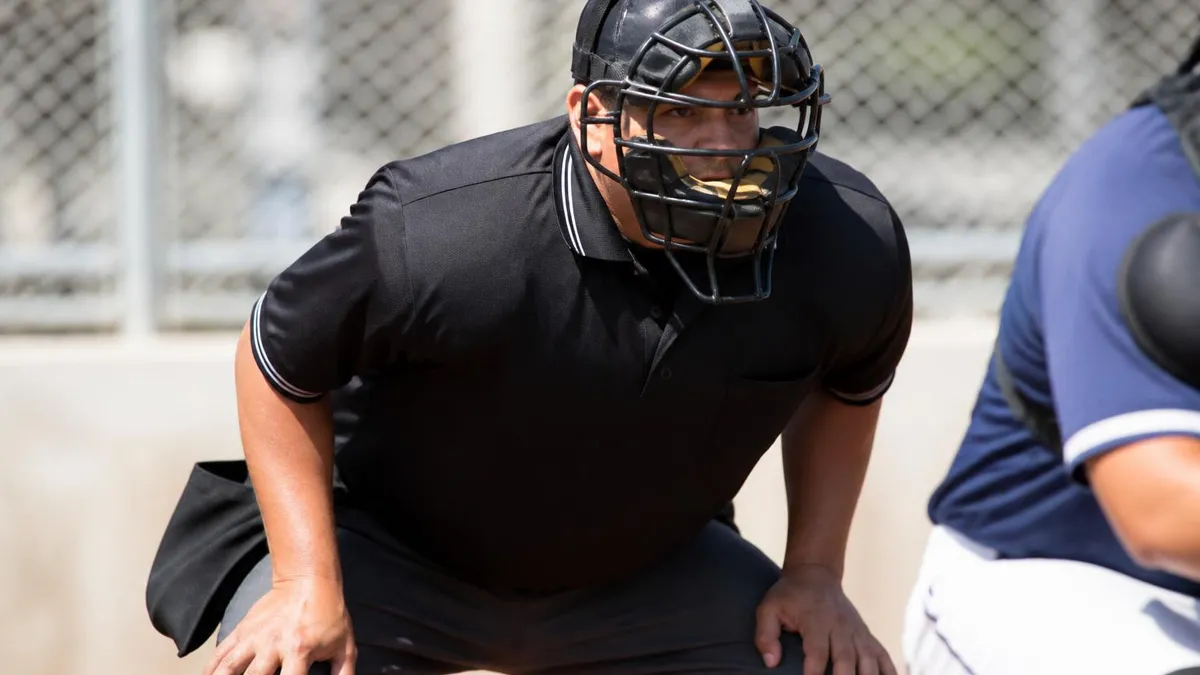
Baseball Umpire Overview: Certification, Levels & Career Path
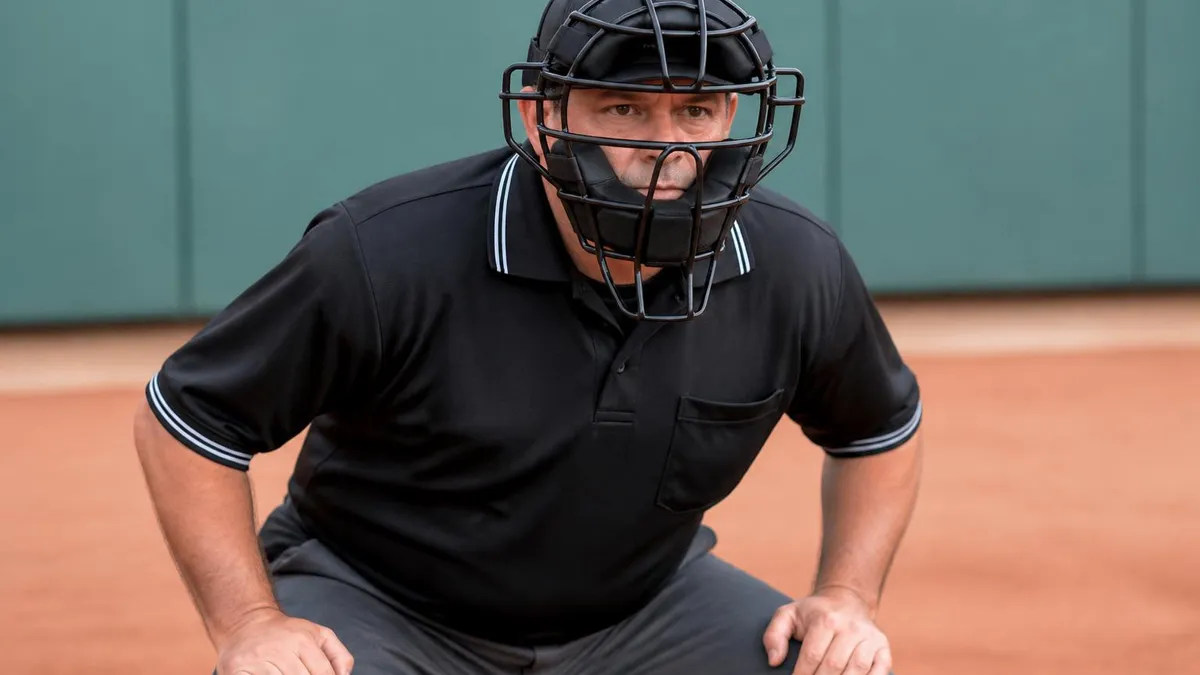
Umpire: What It Means, Types, and How to Get Certified
About the Author

Educational Psychologist & Academic Test Preparation Expert
Columbia University Teachers CollegeDr. Lisa Patel holds a Doctorate in Education from Columbia University Teachers College and has spent 17 years researching standardized test design and academic assessment. She has developed preparation programs for SAT, ACT, GRE, LSAT, UCAT, and numerous professional licensing exams, helping students of all backgrounds achieve their target scores.